

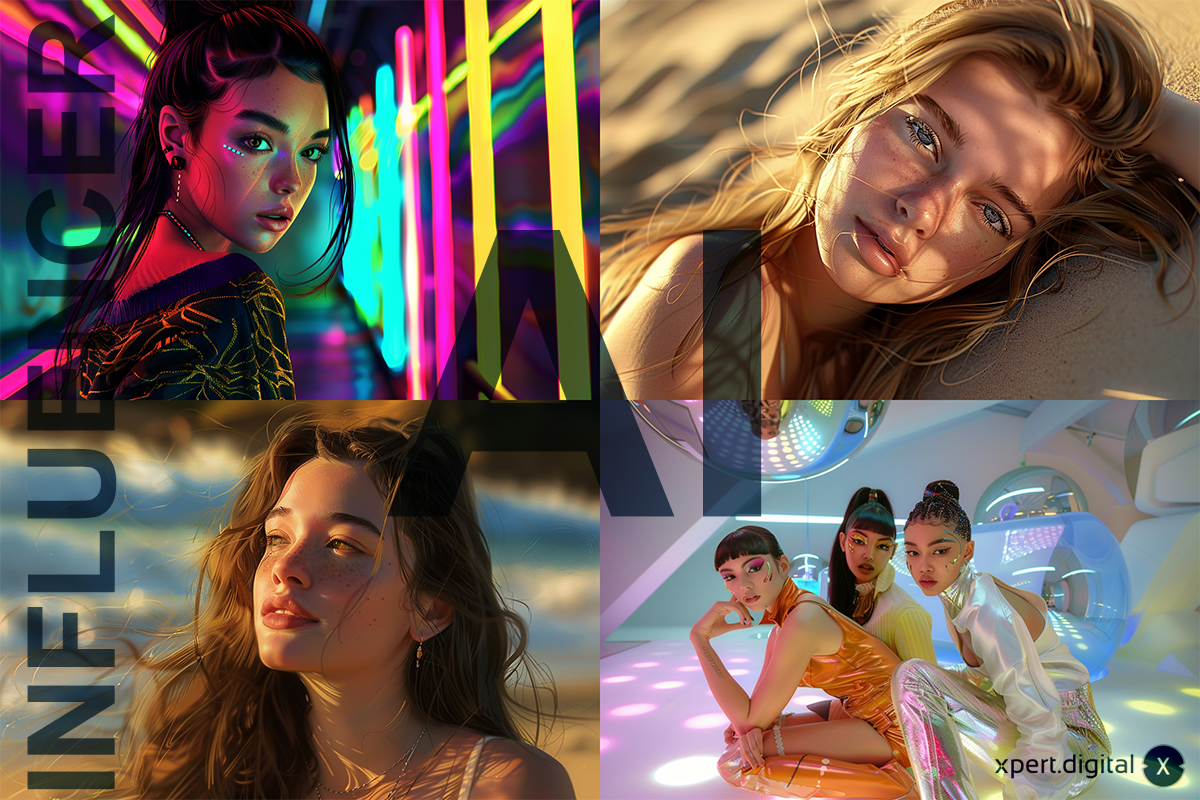
AI Influencers: Artificial intelligence in digital marketing and social media – Image: Xpert.Digital
The Top 10 AI Influencers: Artificial Intelligence in Digital Marketing and Social Media
Virtual influencers, also known as AI influencers, are revolutionizing the world of digital marketing and social media. These computer-generated personalities are rapidly gaining popularity and influence. Brands and companies are recognizing the immense potential of this new form of influencing and are increasingly integrating it into their marketing strategies.
The most well-known virtual AI influencers (Top 10-12)
Based on the number of followers, the quality of the content, and brand partnerships, the following virtual influencers are currently the most influential (not in order):
1. Lu of Magalu
Lu is the virtual face of the Brazilian retail chain Magazine Luiza. With millions of followers across various platforms, she serves as a brand ambassador and regularly interacts with the company's customers.
2. Noonoouri
Known for her distinctive style and collaborations with luxury brands such as Dior and Versace, Noonoouri is also committed to social and environmental causes.
3. Lil Miquela Sousa
Miquela, one of the pioneers among virtual influencers, has over three million followers on Instagram. She is a singer, model, and has already been hired by renowned brands such as Calvin Klein and Prada.
4. Bermuda
Bermuda is known for her controversial opinions and extravagant lifestyle. She regularly makes headlines in the digital world and has built up a loyal following.
5. Blawko
As a virtual influencer with a preference for streetwear and gaming, Blawko primarily appeals to a younger audience and collaborates with various lifestyle brands.
6. Shudu
Shudu is considered the first virtual supermodel. Created by photographer Cameron-James Wilson, she has already worked for brands such as Balmain and Fenty Beauty.
7. Aitana Lopez
Spanish virtual influencer Aitana specializes in fashion and lifestyle. She regularly shares content about her travels and collaborates with various fashion brands.
8. Imma
This Japanese influencer is known for her unique style and pink hair. Imma collaborates with global brands and symbolizes the fusion of technology and culture.
9. Rozy
Rozy is a South Korean virtual influencer who has gained prominence through her collaborations with local brands and her participation in various campaigns.
10. Leya Love
Leya is committed to positive messages and social issues. She uses her platform to talk about love, peace, and sustainability.
11. Kyra
As India's first virtual influencer, Kyra represents the modern Indian woman and shares content about fashion, travel and lifestyle.
12. Milla Sofia
Finnish influencer Milla is known for her aesthetic content and her collaborations with Scandinavian brands.
The rise of virtual influencers
The increasing popularity of virtual influencers is no coincidence. With technological advancements and the growing interest in artificial intelligence and virtual reality, these digital personalities have found a niche. Studies show that 58% of US consumers follow virtual influencers, indicating a lasting trend.
A lasting trend or a passing fad?
The question of whether virtual influencers will be a permanent fixture in marketing or just a passing fad is a concern for many experts. However, the growing integration of AI into the influencer marketing industry suggests a lasting trend. Major brands like Prada, Gucci, and Versace are already using virtual influencers in their campaigns. AI enables the creation of personalized and targeted content that appeals to specific audiences. Furthermore, virtual influencers offer the opportunity to disseminate brand messages without the risks that can be associated with human influencers.
Authenticity and personality
A common argument against virtual influencers is their perceived lack of authenticity. Consumers value genuine interaction and the personality behind an influencer. Nevertheless, many virtual influencers have managed to develop a personality and character with which followers can identify. Through skillful storytelling and consistent content, they build an emotional connection with their audience.
Related to this:
Can an AI influencer be honest?
Integrity is crucial in influencer marketing. An AI influencer can be considered ethical if it operates transparently and the content appears authentic. It's important for followers to understand that the influencer is a virtual character in order to build and maintain trust. The technology allows for content personalization and real-time interaction with the audience. However, integrity depends heavily on the ethical use of the technology by brands and developers.
AI influencing in the industrial influencer sector
While virtual influencers have primarily been used in the B2C sector so far, there is also potential in the B2B sector. Companies can use AI to create expert virtual personalities who share information, host webinars, or act as digital brand ambassadors. Virtual influencers could be a particularly valuable addition in industries such as technology, finance, or healthcare, where expertise and credibility are crucial.
The advantages for brands
Virtual influencers offer brands several advantages:
Control over the brand message
Companies can fully control the content and image of the influencer.
Cost efficiency
In the long run, virtual influencers can be more cost-effective than human influencers, as they do not incur fees or travel expenses.
flexibility
They can be used anytime and anywhere, without being bound by physical limitations.
adaptability
Content can be quickly adapted to current trends or events.
Challenges and ethical considerations
Despite the advantages, there are also challenges:
transparency
It must be clearly communicated that this is a virtual influencer in order to avoid deception.
authenticity
The lack of a genuine personality can impair the connection with the audience.
Ethical concerns
Questions regarding consumer manipulation and the loss of human jobs must be taken into account.
The future of influencer marketing
The integration of AI into influencer marketing is a sign of ongoing technological progress. It's likely that we'll see an increase in hybrid models in the future, where human influencers work with virtual elements, or vice versa. The line between reality and virtuality will become increasingly blurred.
AI influencers offer new opportunities
Virtual influencers are more than just a passing fad; they represent a new era in digital marketing. While it's important to address the ethical questions involved, AI influencers offer exciting opportunities for brands and consumers. They allow companies to disseminate their messages in innovative and controlled ways, while simultaneously engaging audiences in new ways.
Developments in this area are rapid, and it will be exciting to see how virtual influencers shape the marketing strategies of the future. One thing is certain: the fusion of technology and creativity opens doors to previously unimagined possibilities.
Related to this: