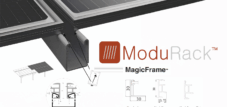
ModuRack: Patent protection for solar parks in Europe marks the start of a new mounting standard – Image: Xpert.Digital
How a clever framework protects itself legally and shakes up the solar industry
The end of the line: This patented invention turns the solar world upside down
The photovoltaic industry is facing a paradigm shift: While prices for solar modules have fallen rapidly in recent years due to mass production in Asia, installation costs are increasingly proving to be a costly bottleneck. This is precisely where ModuRack comes in with a groundbreaking innovation. Instead of laboriously screwing or clamping solar modules, a special frame extension enables simple "clip-in" mounting. The module is simply clicked into the rail. This not only saves valuable installation time and significantly reduces labor costs, but also protects the sensitive solar cells from mechanical stresses such as microcracks. Now, this technology has reached a crucial milestone: official patent approval in six jurisdictions. This transforms a clever technical idea into a solid, internationally protected foundation, securing exclusive marketing rights for ModuRack – and giving it the potential to redefine the global standard for module mounting.
Related to this:
- ModuRack- Partner and contact person for Europe
- Espacenet Patent: Solar panel and rail with edge connectors
ModuRack conquers the solar market: Ingenious clip system receives patent in six countries and regions
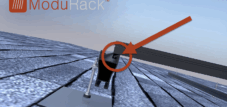
A solar module consists of a glass pane, cells, a backsheet, and a surrounding aluminum frame. It is precisely at this seemingly unremarkable point that a technical innovation comes into play, one that is currently causing quite a stir in the photovoltaic industry. Beneath the actual module structure, the ModuRacksolution features an additional frame extension that eliminates the need for laborious screw and clamp fastening. Instead, the module is simply placed on a mounting rail and snapped into place. This clip-in method promises significantly shorter installation times, less mechanical stress on the cells, and consequently, a lower failure rate over the entire lifespan of the system.
The real milestone, however, lies not only in the technical idea itself, but in the fact that this idea has now been officially granted a patent in six jurisdictions. A good technical solution without patent protection is economically vulnerable because any competitor could copy, replicate, and offer it at a lower price as soon as it proves successful in the market. Only the granted patent protection transforms the clever design into a truly defensible competitive advantage: It gives ModuRack the exclusive right to market and license this solution and to legally exclude imitators in the relevant countries. This is precisely why the patent application itself is the relevant news, not just a footnote to the technical details.
Specifically, MagicFrame's central mechanical interface invention is now in the
- United States,
- the European Union,
- China,
- Japan,
- Australia
- and Vietnam
The technology has been patented in six of the world's most economically significant solar markets. This protection covers established sales markets in North America and Europe, as well as the world's largest production and growth markets in Asia and the Pacific region. Furthermore, additional applications have been filed in Brazil, India, and Malaysia, but not yet granted, demonstrating ModuRack consistent expansion of international protection and its commitment to securing access to additional growth markets for the future.
The scope of protection becomes particularly clear when looking at the American patent number US 12,470,169 B2, granted under the title "Solar Panel and Rail with Edge Connectors." Specifically, it protects a solar module and rail system based on integrated edge connectors instead of traditional point clamps, thus precisely describing the mechanical core that enables faster and gentler installation. That this invention is no longer just an isolated concept is evident from the manufacturing side: Several major module manufacturers, including LONGi and JinkoSolar, have already developed their own MagicFrame module series, which are being used in joint, real-world photovoltaic projects. Thus, the originally purely mechanical interface invention has quickly evolved into a more widely used system component, actively supported by some of the biggest names in module production.
Turning a clever idea into a solid economic foundation
The importance of this legal protection becomes particularly clear when considering the difference between a patent application and a patent grant. An application is initially only a declaration of intent with an uncertain outcome, whereas a grant establishes an enforceable, valuable exclusive right. The relevant patent offices have carefully examined the submitted claims for the ModuRackdesign and declared them eligible for protection, thus transforming the original invention into a legally secured asset. The patent holder can now prohibit other market participants in the relevant countries from offering a technically similar solution without a license, thereby securing a clear competitive advantage.
This geographical diversification across six jurisdictions sends a strong economic signal. Patent applications abroad are expensive, requiring translations, local attorneys, ongoing maintenance fees, and often years of examination time. The fact that this investment was pursued and successfully completed simultaneously in several countries demonstrates a clear, forward-looking international growth strategy. For investors, suppliers, and potential licensees, this is a reliable indicator because it involves verifiable, publicly accessible legal acts that can be traced, for example, through databases such as those of the World Intellectual Property Organization or the European Patent Office.
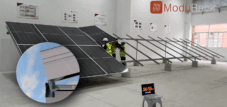
New: Patent from the USA – install solar parks up to 30% cheaper and 40% faster and easier – with explanatory videos!

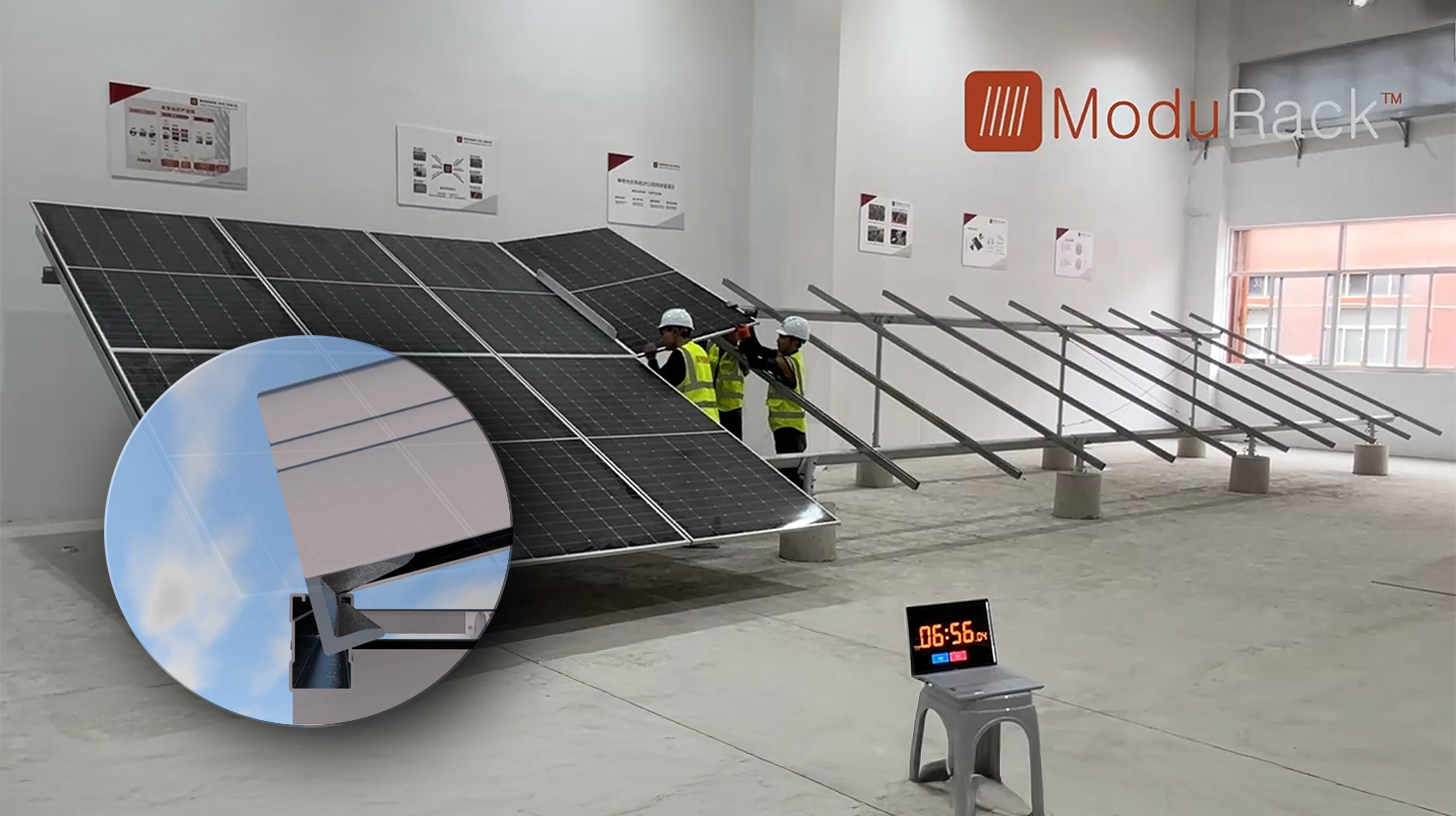
New: Patent from the USA – Install solar parks up to 30% cheaper and 40% faster and easier – with explanatory videos! - Image: Xpert.Digital
The core of this technological advancement is the deliberate departure from conventional clamp mounting, which has been the standard for decades. The new, more time- and cost-effective mounting system addresses this with a fundamentally different, more intelligent concept. Instead of clamping the modules at specific points, they are inserted into a continuous, specially shaped support rail and held securely in place. This design ensures that all forces – whether static loads from snow or dynamic loads from wind – are distributed evenly across the entire length of the module frame.
More information here:
Revolution in solar panel mounting: Why click systems are changing the industry
Why click-mounting gives the solar industry a real cost advantage
The economic relevance of this technology stems from a structural development within the entire solar industry, bringing this innovation to the right place at the right time. While module prices themselves have fallen drastically over the past decade and a half, primarily due to massive economies of scale in Chinese cell manufacturing, non-module-related costs have declined much more slowly. Studies by the American National Renewable Energy Laboratory and various industry associations show that these so-called balance-of-system costs can account for up to three-quarters of the total costs for rooftop installations, while installation labor alone often costs between twenty and forty cents per watt.
If the installation time per module is significantly reduced, the personnel requirements per installed megawatt decrease considerably, which generates a substantial economies of scale, especially for large-scale ground-mounted systems with hundreds of thousands of modules. In addition, there is a qualitative advantage that could become even more important in the long term: Conventional clamping systems create localized mechanical stresses on the module frames, which in the worst case can lead to microcracks in the cells or glass. The more even load distribution of the ModuRackdesign specifically counteracts this effect, which should have a positive long-term impact on the actual energy yield and thus on the economic viability of a power plant. It is precisely this tangible cost advantage that the patent protection now exclusively secures for ModuRack .
A multi-billion dollar market with plenty of room for growth
To realistically assess the significance of this innovation, it's worth considering the scale of the market being addressed. Market analyses from various providers estimate the global market for solar mounting systems, depending on the definition used, to be worth between the low and mid-double-digit billions of US dollars, with expected annual growth rates in the high single digits to low double digits in the coming years. Such a market offers a specialized provider with proprietary technology and a clear cost advantage excellent opportunities to establish itself as a new benchmark standard, rather than remaining a niche application.
What originally began as a new mechanical interface has long since transitioned into broader system applications: Several module manufacturers, including LONGi and JinkoSolar, have already developed their own MagicFrame module series, which are being used in joint, real-world photovoltaic projects. The economic leverage of a patent grows with each additional licensee and each additional large-scale project that relies on this solution. The current expansion of patent protection to six countries lays the necessary legal foundation for precisely this and creates planning certainty for future partnerships.
Patents as a strategic lever for ambitious technology companies
From a corporate strategy perspective, patents fulfill several valuable functions for high-growth technology providers that extend far beyond mere legal protection. First, they serve as a strong negotiating point with larger, more financially powerful partners in the supply chain, such as module manufacturers or project developers, who are more likely to enter into a collaboration when it is clear who holds the exclusive rights to the underlying technology. Second, they significantly increase the intangible value of the company, which is a crucial advantage for innovative firms, especially during financing rounds. Third, they create valuable time resistance against imitation, because developing technically equivalent alternatives ties up both time and substantial development budgets, giving ModuRack a comfortable head start.
Furthermore, the consistent international protection strategy demonstrates entrepreneurial maturity: Instead of relying on a single domestic market, the company has consciously opted for a global protection strategy. This is a clear commitment to long-term, international growth and signals to competitors and market observers alike that a serious new standard-setter is emerging.
Good conditions for a leading market position
Another positive aspect concerns the anticipated market response to this innovation. Should the clip-in principle prove superior, which seems likely given its clear cost advantages, established suppliers of conventional clamping and rail systems will face the choice of either developing their own costly alternatives or directly acquiring a license from ModuRack . Particularly in an industry with relatively standardized interfaces between modules and substructures, a solid patent portfolio provides the rights holder with a comfortable starting position to become the preferred partner for the entire industry.
Should the solution actually establish itself as a new industry standard, ModuRack could earn a significant portion of the revenue from licensing fees on all future installations, which would be extremely attractive from a business perspective. The current expansion of patent protection is an important and logical intermediate step on the path to achieving precisely this market position.
What module manufacturers and project developers are now specifically gaining
For module manufacturers, the broad granting of patents is primarily one thing: a free pass for integration without legal risk. Those who license the MagicFrame interface don't have to fear that a competitor will simply copy the same design and undermine their own cost advantage, because exclusive rights in the six key markets are already secured. This is precisely what apparently convinced LONGi and JinkoSolar to launch their own MagicFrame module series instead of relying on an uncertain interim solution, and it creates a clear incentive for other manufacturers to follow suit so as not to miss out on an emerging standard.
Project developers and EPC companies benefit at a completely different point in the value chain: in the cost calculation of large ground-mounted solar installations. Less assembly time per module means fewer labor days, less scaffolding and tooling required, and a lower risk of delays due to assembly errors, which is directly reflected in the project cost calculation. Anyone planning a gigawatt project today can plan with MagicFrame-compatible modules from established manufacturers like LONGi or JinkoSolar, without having to rely on an experimental niche provider, because the technology has already reached a certain level of market maturity thanks to its broad patent base and manufacturing partnerships.
Why now is the right time to get started
For investors and strategic partners not yet involved, this moment marks an interesting window of opportunity. Legal protection in six key markets has already been secured, and the first manufacturing partnerships with major players are in place, but widespread market penetration has only just begun. Those who enter into a licensing agreement or a supply relationship now secure favorable terms and access at a time when demand for MagicFrame-compatible modules typically hasn't yet reached the price level expected for an established industry standard.
For plant operators and asset managers deciding on the selection of modules for new solar parks, the patent situation also provides a concrete selection criterion: A technology with secured legal protection in the most relevant markets and already proven implementation by industry leaders offers greater planning certainty than an unpatented copy whose long-term availability and service quality remain uncertain. Anyone faced with a choice between two technically similar mounting solutions will generally opt for the one that is legally protected and already supported by several major manufacturers.
This current step is therefore far more than a mere formality at the patent office: it is an invitation to all relevant players in the supply chain to adopt a solution early on that is evolving from a niche product to a widely used assembly standard. Any module manufacturer, project developer, or investor who contacts us today is positioning themselves at the forefront of a development that could make the solar industry cheaper, faster, and more reliable in one of its most expensive areas in the coming years.
📈🚀 From visibility to trust 👀🤝 Your scalable path with Xpert.Digital


From visibility to trust: Your scalable path with Xpert.Digital - Image: Xpert.Digital
In industrial B2B, sustainable business relationships rarely emerge overnight. They develop step by step – through visibility, professional relevance, recurring touchpoints, and growing trust. Xpert.Digital's 4-stage model addresses precisely this: It offers a structured path that begins with a manageable entry point and can evolve into deeper collaboration in business development if needed.
Instead of relying on loud marketing promises, this model puts the relationship at the forefront. Companies start with clearly defined, easily calculable measures and then decide, based on their own experience, how far they want to expand the collaboration. A key factor for this undisturbed trust-building process: The platform completely avoids annoying advertising ads, so the editorial focus remains solely on the companies' expertise.
More information here:
Your partner for business development in the fields of photovoltaics and construction
From industrial rooftop PV to solar parks and larger solar parking lots
☑️ Our business language is English or German
☑️ NEW: Correspondence in your native language!

Konrad Wolfenstein
I and my team are happy to be available to you as your personal advisor.
You can contact me by filling out the contact form here wolfenstein@xpert.digital:or simply call me at +49 7348 4088 965. My email address is
I'm looking forward to our joint project.