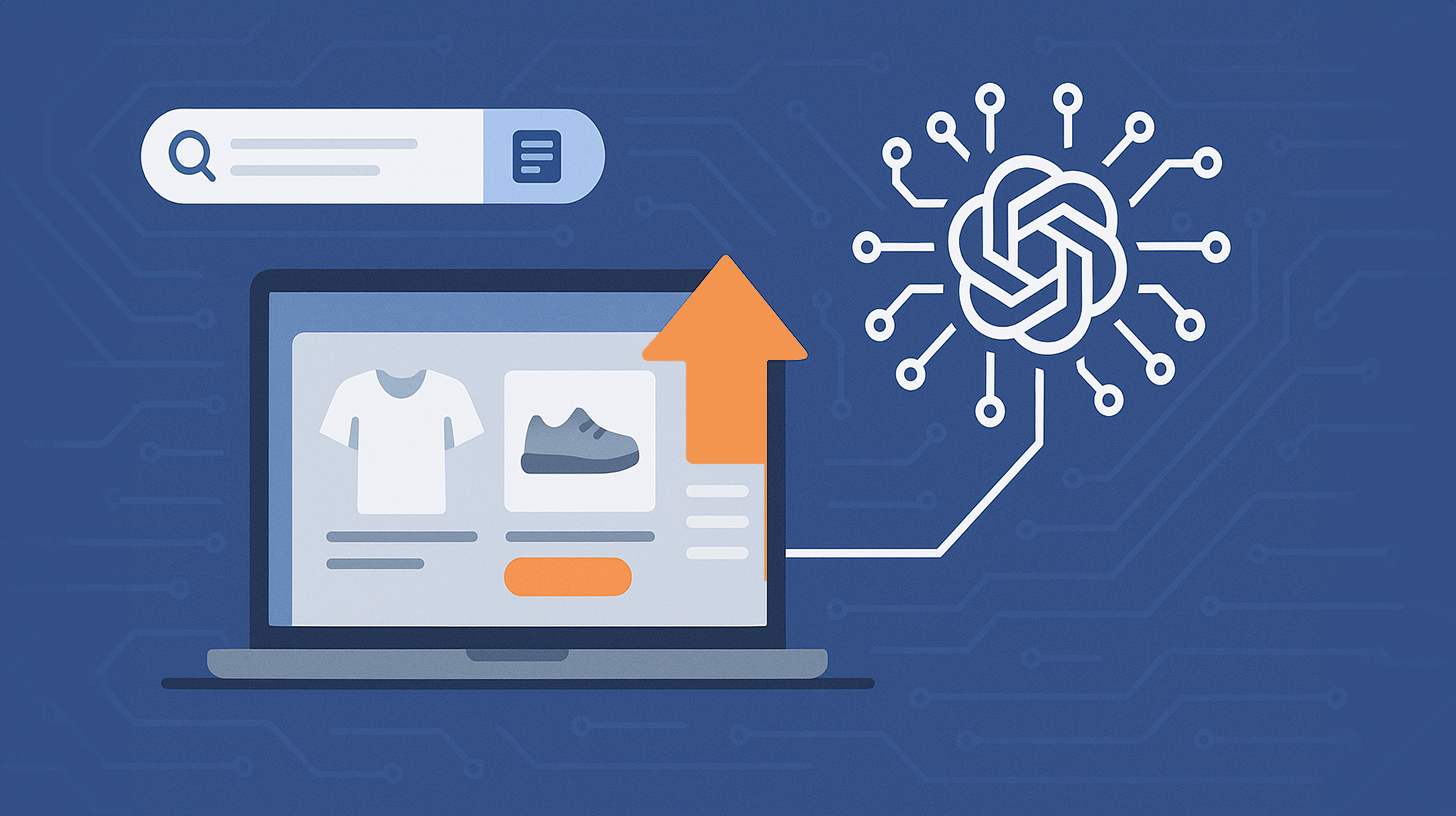
The silent redistribution of visibility and the new power of AI search: Those not quoted by ChatGPT disappear from the internet – Image: Xpert.Digital
Why websites are losing millions of clicks – and who benefits from the new AI trend
Sudden crash: This is why ChatGPT is secretly penalizing popular sites like Reddit
The era of the classic search engine, as we've known it for three decades, is rapidly drawing to a close. Where Google and its ilk once acted merely as guides, distributing traffic to external websites, AI models now deliver ready-made, summarized answers directly on a silver platter. This is convenient for users, but for the open internet ecosystem, it's a tectonic shift. When the answer is already there before the question has even been fully considered, established publishers and companies lose millions of clicks. At the same time, giants like OpenAI are pushing into the European market with new advertising models for ChatGPT, while initial court rulings—such as a landmark decision from Munich—are completely redefining the question of liability for AI-powered search engines. This is a comprehensive analysis of how artificial intelligence is radically reshaping the power dynamics on the internet and why traditional search engine optimization (SEO) must now give way to "generative visibility optimization.".
Related to this:


When the answer is already there before the question has been fully thought through
The search engine, as it has functioned for three decades, is undergoing a fundamental transformation, and faster than most brands, agencies, and publishers can react. Today, when someone enters a question into Google, they no longer see a list of links first in a significant number of cases, but rather a summary formulated by artificial intelligence that already provides a complete answer. According to data from the SEO analytics tool Sistrix, these so-called AI Overviews now reach more than two billion users worldwide every month (as of mid-2025). In Germany, they appear in about one-fifth of all search queries, and in almost one-third of so-called long-tail queries—that is, very specific and rarely asked questions. Nearly 80 percent of these AI summaries appear above the classic organic results, so users see the machine-generated answer before they even scroll to the usual list of results.
This shift is not merely a cosmetic change to a search engine's design. It impacts the fundamental economic logic of the entire web, because since its commercialization, the open internet has been financed primarily through attention, which is converted into clicks, advertising revenue, or leads. If the answer is already on the search results page, many users lose the reason to click further. This changes not only how information is found, but also who remains financially involved in this process and who falls out of the value chain.
The figures behind the decline in clicks
Sistrix conducted a comprehensive study analyzing over 100 million keywords to measure the actual impact of AI overviews on click-through rates in Germany. The result is clear, though more nuanced than the headline alone might suggest. Across all search engine positions, the average organic click-through rate drops from 57 percent without a visible AI summary to 33 percent when one is displayed. In the highly sought-after top position, the click-through rate plummets from 27 percent to a mere 11 percent, a relative decline of approximately 60 percent. Extrapolated to the entire German search market, this effect equates to roughly 265 million lost organic clicks per month, a significant figure in absolute terms, but representing just under 6.6 percent of the total number of organic clicks.
These averages, however, mask significant differences between individual sectors. According to Sistrix data, prescription websites, whose content can hardly be meaningfully summarized in a short paragraph, lose only about one percent of their clicks. Specialized health portals, on the other hand, lose between 24 and 30 percent of their organic clicks because medical information can be effectively condensed into compact, AI-generated explanations. For topics requiring explanation and consultation, such as financial services or insurance, this pattern suggests that the actual loss of organic visibility is likely closer to the upper end of this range than the lower, because here, too, content can often be summarized in short, general explanations without replacing individual consultation.
Once you're in, you stay in
A stability study conducted by Sistrix over 17 weeks, analyzing more than 82,000 prompts, yielded a finding far more important for strategic business planning than simply the loss of clicks. For 53 percent of the prompts classified as stable, the cited sources remained identical throughout the entire observation period, while only 19 percent exhibited high fluctuation in the cited domains. Even more remarkable is a second finding: For 87 percent of the stable prompts, the actual response text changed from week to week, while the underlying cited domains remained the same.
This observation has far-reaching strategic consequences. It means that for a brand, being included once as a trusted source in an AI search engine's reference system is significantly more valuable than constantly producing new, perfectly worded content. The AI will continuously rewrite its response anyway, as long as the underlying domain remains considered trustworthy. This shifts the strategic focus away from simply optimizing individual phrases and toward the more fundamental goal of being perceived as a citable, authoritative source in the first place. Those who achieve this status benefit from a kind of visibility rent for many weeks, while competitors who are never included in this reference system have virtually no realistic chance of catching up in the short term.
A court draws red lines for Google
Parallel to these technological and economic shifts, the legal assessment of AI summaries is also evolving, and a recent ruling from Munich marks a turning point. In a final judgment on May 28, 2026, the Munich I Regional Court ruled that Google is directly liable for false and defamatory statements appearing in automatically generated AI Overviews. The court prohibited the company from falsely associating two publishing houses with fraudulent schemes and threatened a fine of up to €250,000 per violation.
The legal reasoning is particularly insightful because it directly addresses the workings of generative AI systems. According to the responsible 26th Civil Chamber, the artificial intelligence does not simply relay the underlying information, but processes it independently, rephrases it in its own words, and structures it according to its own framework, which typically begins with an affirmative confirmation of the search query and ends with a concrete recommendation for action. The court therefore considers this an independent presentation for which Google bears full responsibility, meaning the company could not invoke the liability privileges for mere intermediaries under the Digital Services Act. For companies in highly regulated sectors such as financial services and insurance, this provides an additional, very concrete reason to systematically monitor how their own content, products, and brands are represented in AI summaries, because, in case of doubt, it is legally considered a new, independent statement by Google and not merely the forwarding of third-party content.
OpenAI opens the advertising floodgates for Europe
While Google is redesigning its search results page with AI summaries, OpenAI is also consistently pushing ahead with the commercialization of its chatbot. On August 18, 2026, the company announced the expansion of ChatGPT Ads to 31 European markets, including Germany, Austria, France, Italy, Spain, the Benelux countries, and the Scandinavian countries. The actual rollout began on August 24, 2026, exactly six months after the initial test run in the United States, which had already started in February 2026. The UK was the only European market to have been active since June 6, 2026, before the remaining 31 countries followed suit.
For advertisers in Germany and Austria, the launch initially means limited accessibility. Ads can only be booked through the OpenAI Ads Solutions team and a small group of select agency and technology partners, including major communications holding companies such as Publicis, WPP, Omnicom, Havas, dentsu, and Mediaplus. According to OpenAI, true self-service access via the Ads Manager, which would allow smaller companies to create campaigns independently, is planned for later this summer. Ads will only be shown to users of the free Free and low-cost Go plans, while paid Plus, Pro, and Enterprise subscriptions will remain ad-free. Particularly noteworthy for the European market is that the rollout is closely linked to a consent model according to the General Data Protection Regulation (GDPR), which has been in force across Europe since August 14, 2026, and that the ads in Europe will initially be displayed without personalization – i.e., solely based on the current conversation context and general information such as language or region, without reference to previous chats or the user's memory.
The initially approved advertising categories include consumer goods, lifestyle, local services, travel, digital products, and education, while sensitive sectors such as finance, health, and law will only be permitted through separate individual approvals. Companies already working with one of the aforementioned partner agencies are advised to actively inquire about available test budgets now, as competition for the initially limited advertising space is expected to be particularly low in the first few weeks.
🎯🎯🎯 Data-driven B2B industry hub as a quasi-in-house solution

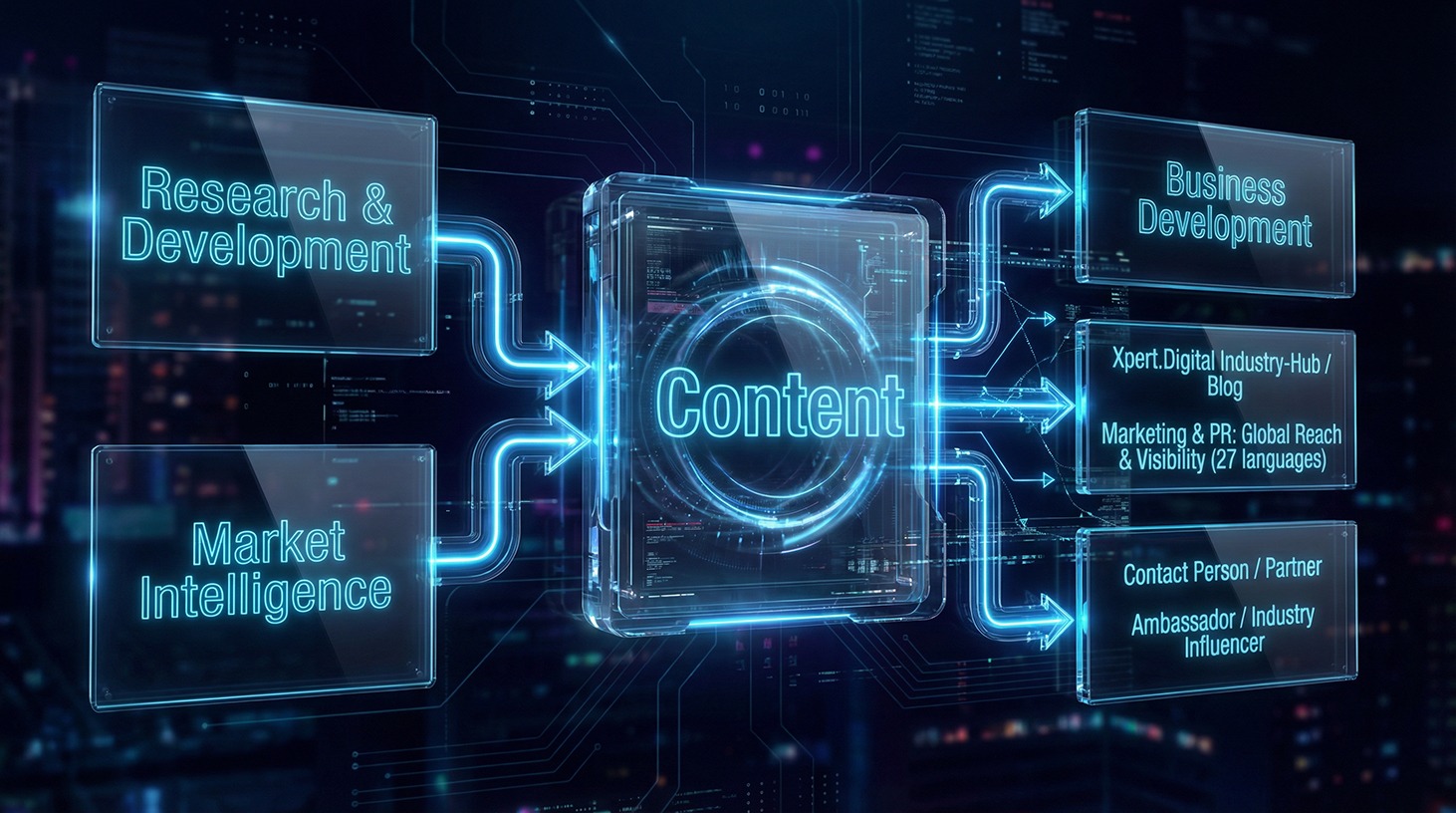
The quasi-in-house solution: How Xpert.Digital closes operational gaps in B2B marketing and sales – Smart Content-Driven Business - Image: Xpert.Digital
Xpert.Digital is a data-driven B2B industry hub led by Konrad Wolfenstein . The company acts as an external, quasi-in-house solution for industrial partners, closing operational gaps in marketing, content, and sales – without requiring additional resources on the client side.
More information here:
The new AI search logic: Why ChatGPT now prefers to use brand sources
The site operator becomes the trust filter
One of the most technically interesting developments of summer 2026 concerns how ChatGPT searches for information in the background when answering a user question. Several independent analyses of the so-called fan-out mechanism—the process by which a single user question is split into multiple background searches—show a consistent pattern. David Konitzny of the analytics tool Peec AI measured an increase in the use of the site operator, which restricts a search to a single domain, from about 0.3 percent to around 23 percent of all fan-out requests on the day GPT-5.6 became the default model, while the number of sources retrieved in the background doubled from around 12 to around 24. Chris Long from the analytics provider Nectiv comes to an even clearer picture with his own comparative dataset: The number of fan-out requests per user query rose from an average of 2.17 to 7.61, with the site operator now appearing in 64 percent of all queries and the longest observed search chain growing from four to 29 individual search queries.
Suganthan Mohanadasan conducted his own study, analyzing 3,554 pages retrieved in the background and finding that only 110 of them, or a mere 3.1 percent, were actually cited as sources in the final answer. In contrast, brands explicitly mentioned in the user's original search query made it into the answer as quotes in 68.9 percent of cases. The analytics provider Resoneo simultaneously observed a decrease in the number of uniquely cited domains per answer from an average of 19 to 15. Taken together, this data suggests that ChatGPT is increasingly using the site operator as a targeted filtering mechanism to preferentially access sources already deemed trustworthy, mostly official or brand-owned, rather than conducting a broad search across the open web.
Related to this:

Reddit disappears from the answers almost overnight
This new selection logic is particularly striking in the case of Reddit. Since the rollout of GPT-5.6 as the standard model on August 8, 2026, analyst Tomek Rudzki of Peec AI has observed a massive decline in the citations of individual platforms in ChatGPT responses: Reddit has seen a decrease of 88 percent, the preprint platform arXiv has lost 84 percent, and YouTube has fallen by 78 percent. Furthermore, Reddit is now accessed 63 percent less frequently as a background candidate source, demonstrating that the effect begins in the system's research layer and does not only occur during the final formulation of the response.
Interestingly, this effect is highly model-specific and not a general devaluation of Reddit by AI systems overall. Google AI Overviews, Perplexity, and the AI chatbot Grok continue to display Reddit with the same frequency in their responses. The reason for the decline in ChatGPT is therefore not a cross-platform reassessment of Reddit's credibility, but rather a specific change in OpenAI's internal search logic, which has presumably become more heavily weighted towards official, brand-owned, and institutional sources. For brands that have relied heavily on visibility in Reddit discussions as a lever for AI citations, this means that diversification across multiple platforms is becoming more important, because the weighting of individual sources within individual AI systems can apparently shift very quickly and without official announcement.
Information search leads to purchase intention
Another structural change concerns the types of questions users ask ChatGPT. An analysis of 7.5 million ChatGPT prompts by Josh Blyskal reveals a significant shift in the underlying search intent year-over-year. The share of commercial prompts, meaning those with a clear purchase or comparison intent, rose from 13.9 percent to 19.2 percent, representing a relative increase of 38 percent. Informational prompts remained almost stable, changing from 40.1 to 41.2 percent, while purely generative prompts, where the AI, for example, recreates text or code, declined from 46.0 to 39.6 percent.
The analysis identifies two specific events in May 2026 as triggers for this shift: the launch of the OpenAI Self-Serve Ads Manager as a beta version on May 5th, and, starting May 7th, a significantly more prominent and clickable display of brand names within the generated responses. Together, these two measures led to a dramatic increase of 40 to 60 percent in ChatGPT referral traffic for monitored brands—that is, the flow of visitors directly from ChatGPT to the respective brand websites—within a short period. This development suggests that OpenAI is strategically adjusting several factors simultaneously to develop ChatGPT more effectively as a commercially viable channel, which is both in its own economic interest and essential for the sustainability of the company's advertising business.
Each AI platform works differently
One of the key misconceptions surrounding AI search is treating it as a single, homogeneous channel. Analyst Emilia Möller explicitly warns against this, as her analysis shows that the sources cited by ChatGPT and Perplexity for the same queries overlap by only 11 percent on average. The overlap between Google's classic AI Overviews and the more experimental AI Mode is only slightly higher at 13.7 percent.
The reason lies in significantly different platform preferences when selecting sources. According to these observations, ChatGPT tends to favor authoritative sources and, despite the recent decline in certain prompts, continues to favor community-based content like Reddit. Perplexity, on the other hand, relies more heavily on particularly current, recently published content, while Claude tends to favor deeper sources considered especially credible. Google Gemini remains tightly bound to its own Google ecosystem, and the classic Google AI Overviews still correlate strongly with a page's traditional organic SEO ranking. For companies, this fragmented landscape means that a visibility strategy tailored exclusively to a single AI platform is unlikely to work in practice, because each system decides, based on its own, sometimes opaque, criteria, which sources are considered trustworthy enough to be cited.
What these developments mean for companies
Looking at the developments described in their entirety, a clear pattern emerges that extends far beyond individual technical curiosities. Traditional search engine optimization, which for decades focused on achieving the highest possible positions in link lists, is losing its sole significance, though it is not becoming obsolete. It is increasingly being replaced by a discipline that could be described as generative visibility optimization, where the primary goal is to be recognized by AI systems as a trustworthy, citable source and permanently included in their internal reference system.
At the same time, the economic pressure on traditional publishers and content providers is intensifying because a growing number of users simply see no reason to click through to the original source beyond the AI summary, even if that source provides the actual content basis for the answer. This effect is particularly hard on topics requiring explanation but which can still be summarized, such as health, finance, and insurance, while highly transactional or action-oriented content like recipes remains significantly more resilient. Legally, the Munich ruling also creates a new lever that affected companies can use to take action against erroneous or defamatory AI summaries, which is likely to further sharpen the accountability of major platform operators in the coming years.
Finally, from a commercial perspective, ChatGPT Ads and the increasingly commercial orientation of prompts represent the establishment of a completely new advertising channel. While this channel is currently heavily regulated and only accessible to a limited extent, its strategic importance is likely to grow as users become accustomed to making purchasing decisions directly through dialogue with AI. Those who understand these shifts early on and diversify their content and brand presence accordingly, instead of relying solely on a single system or optimization approach, will gain a structural advantage during this transition phase over competitors who continue to operate exclusively according to the rules of traditional search engine optimization.
📈🚀 From visibility to trust 👀🤝 Your scalable path with Xpert.Digital


From visibility to trust: Your scalable path with Xpert.Digital - Image: Xpert.Digital
In industrial B2B, sustainable business relationships rarely emerge overnight. They develop step by step – through visibility, professional relevance, recurring touchpoints, and growing trust. Xpert.Digital's 4-stage model addresses precisely this: It offers a structured path that begins with a manageable entry point and can evolve into deeper collaboration in business development if needed.
Instead of relying on loud marketing promises, this model puts the relationship at the forefront. Companies start with clearly defined, easily calculable measures and then decide, based on their own experience, how far they want to expand the collaboration. A key factor for this undisturbed trust-building process: The platform completely avoids annoying advertising ads, so the editorial focus remains solely on the companies' expertise.
More information here:
Your global marketing and business development partner
☑️ Our business language is English or German
☑️ NEW: Correspondence in your native language!

Konrad Wolfenstein
I and my team are happy to be available to you as your personal advisor.
You can contact me by filling out the contact form here wolfenstein@xpert.digital:or simply call me at +49 7348 4088 965. My email address is
I'm looking forward to our joint project.