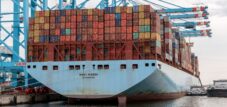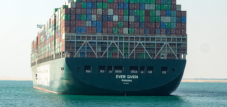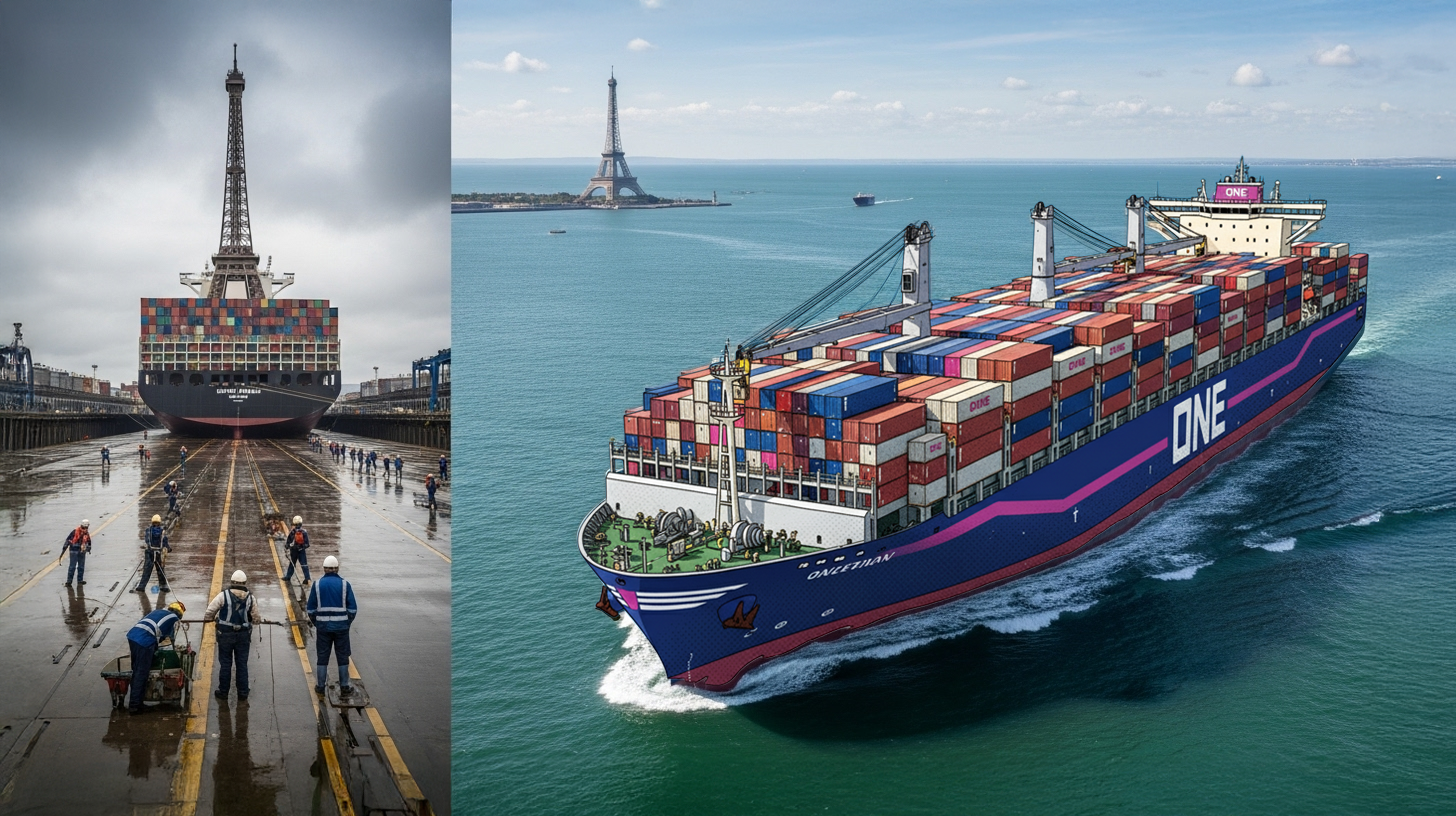
Container ship ONE Innovation: A ship taller than the Eiffel Tower – efficiency marvel or expensive risk? – Creative image: Xpert.Digital
More than just a record: How the high-tech giants of the seas are changing our world
Container shipping: Global container capacity reaches new heights
Container shipping has reached a new milestone with the ONE Innovation. This enormous vessel, operated by Ocean Network Express, is currently transporting the largest container load in the history of modern shipping and simultaneously highlights the immense logistical challenges faced by these maritime megacarriers.
The new world record in numbers
With 22,233 standard containers on board, the ONE Innovation has set a historic record. The ship departed from the port of Singapore and, via a stopover in Felixstowe, UK, is heading for the port of Rotterdam, where it is expected to arrive in mid-October. This cargo surpasses the previous record of 22,000 containers set by the same ship in December 2023.
The ONE Innovation belongs to the new generation of mega-container ships with a theoretical maximum capacity of 24,136 TEU. At 400 meters long and 61.4 meters wide, it is one of the largest container ships in the world. The distinctive magenta-colored vessel was built in 2023 by Japan Marine United Corporation at the Kure shipyard and is the first of six mega-max ships in the ONE fleet.
Ocean Network Express: Japanese power on the world's oceans
Ocean Network Express was formed in 2017 from the merger of the container operations of three long-established Japanese shipping companies: Nippon Yusen Kaisha (NYK), Mitsui OSK Lines (MOL), and K Line. This strategic merger immediately created one of the world's largest container shipping companies, with a combined fleet of initially 1.4 million TEU. Today, ONE operates with more than 260 vessels and a total capacity of approximately 2.0 million TEU.
The shipping company is now the sixth largest container shipping company worldwide, operating over 165 shipping routes to more than 120 countries. Headquartered in Singapore, the company employs over 8,000 people in more than 50 countries. As a member of the Premier Alliance, ONE collaborates with other major shipping companies to optimize shipping routes between Asia and Europe.
Technological innovation and sustainability
The ONE Innovation embodies the latest in maritime technology. The vessel features a modern hull design that maximizes cargo capacity while minimizing fuel consumption. Environmentally friendly technologies include a bow windscreen, energy-saving devices, and an exhaust gas cleaning system that complies with the emission regulations of the International Maritime Organization.
These technological innovations are part of ONE's Green Vision, which aims to achieve net-zero emissions by 2050. The shipping company is relying on dual-fuel technology that can utilize both conventional heavy fuel oil and clean liquefied natural gas (LNG). These approaches enable ultra-large container vessels to significantly reduce CO2 emissions per ton of cargo.
The challenges of superships
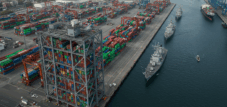
While these enormous ships offer impressive economies of scale, they also present significant logistical challenges. Not all ports can handle these giants – they require special deep-water berths, oversized cranes, and expanded terminal capacities. The Port of Rotterdam, the destination of ONE Innovation, has four fully automated terminals and a water depth of 24 meters, enabling the handling of the world's largest container ships.
Loading and unloading such mega-ships presents port operators with unique challenges. Handling a vessel with a capacity of 20,000 to 24,000 TEU can take between two and four days. During this time, containers with a total value exceeding one billion euros are handled. These timeframes require precise coordination and, in the event of delays, can trigger domino effects in global supply chains.
Singapore as a hub of world trade
The port of origin, Singapore, plays a central role in this system. As the world's second-largest container port after Shanghai, Singapore handled a new record volume of over 40 million TEU in 2024. The port functions as the world's most important transshipment hub, processing containers from all over Asia for onward distribution to Europe and other continents.
The ongoing challenges posed by geopolitical crises, particularly the Red Sea crisis, have further enhanced Singapore's importance. Many shipping companies are bypassing the Suez Canal and instead taking the route around the Cape of Good Hope, adding approximately two weeks to transit times. This places additional strain on Singapore as a stopover and logistics hub.
Singapore is investing heavily in the future of its port infrastructure. The Tuas Mega Port project will gradually replace all existing terminals and reach an annual capacity of 65 million TEU by 2040. The fully automated terminal will then be the world's largest container port.
Your container high-bay warehouse and container terminal experts
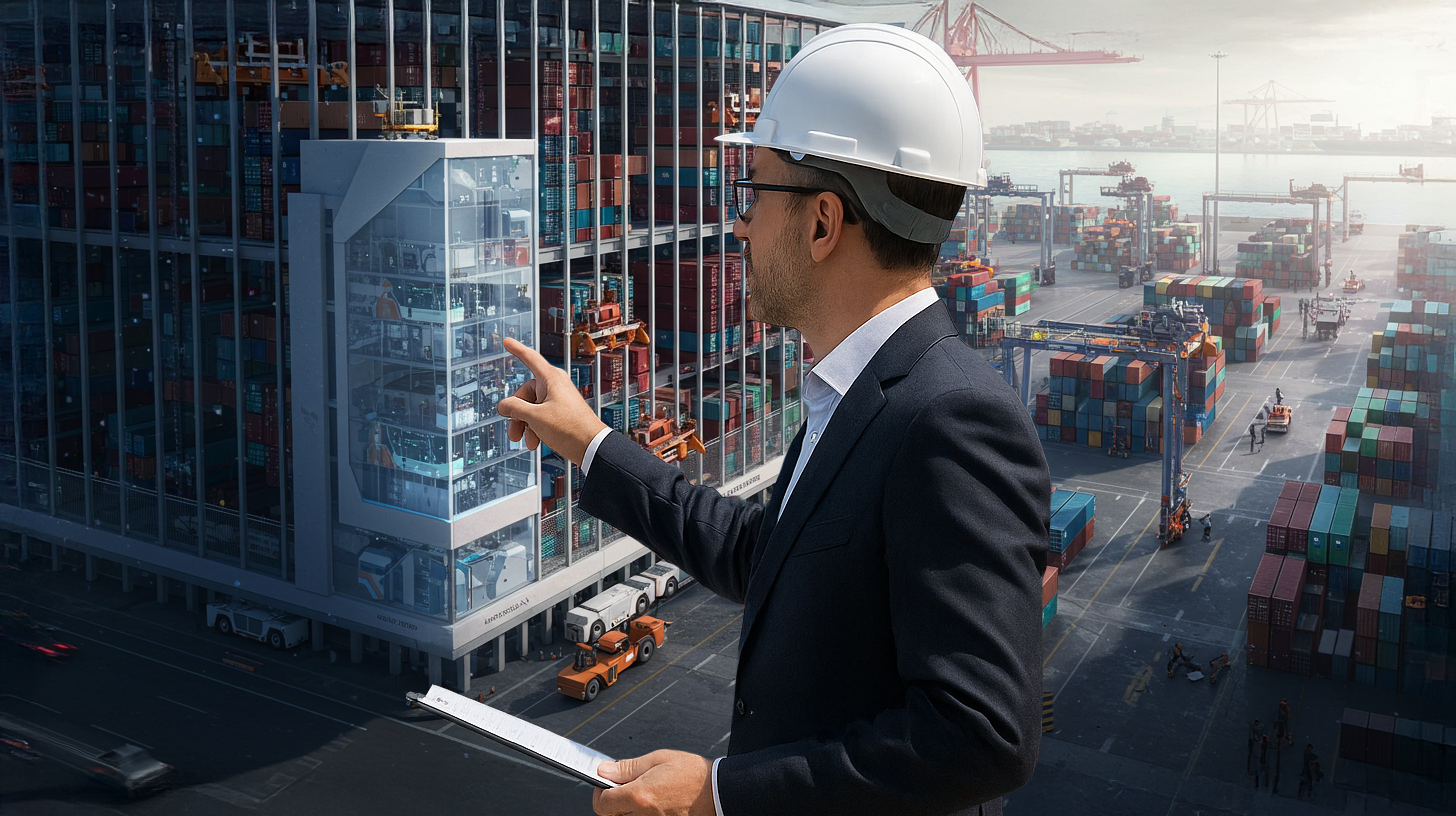
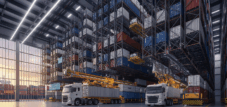
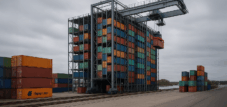
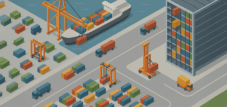
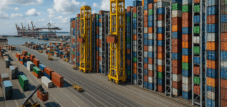
Container high-bay warehouses and container terminals: The logistical interplay – expert advice and solutions - Creative image: Xpert.Digital
This innovative technology promises to fundamentally change container logistics. Instead of stacking containers horizontally as before, they will be stored vertically in multi-story steel racking structures. This not only allows for a drastic increase in storage capacity within the same area, but also revolutionizes all processes at the container terminal.
More information here:
Smart Ports & Automation: How Port Logistics is Changing
The economic efficiency of the giants
Ultra-large container vessels like the ONE Innovation are based on the principle of economies of scale. By transporting enormous quantities of containers in a single voyage, the transport costs per container can be significantly reduced. The operating costs for a 23,000 TEU vessel are approximately €5 per TEU per day, depending on the fuel used.
However, these economies of scale have their limits. Experts argue that for ships of this size, the cost savings are practically exhausted, and further enlargements incur additional infrastructure costs that negate the advantages. The high initial investments required to build such ships—often several hundred million euros per unit—and the necessary port modernizations pose additional economic challenges.
Rotterdam as a European destination port
The Port of Rotterdam is the ideal destination for ONE Innovation. As Europe's largest port, Rotterdam boasts a port area of 100 square kilometers and a total length of 42 kilometers. Its 24-meter depth allows the world's largest container ships to dock around the clock.
Rotterdam operates 14 container terminals for various ship types and has 20 container depots covering an area of more than 120 hectares. The port continuously invests in expanding its capacity. The planned expansion of the Maasvlakte II terminal will be able to handle an additional 7 million TEU annually from 2026 onwards.
Rotterdam's strategic location makes it an ideal distribution center for Europe. The port is surrounded by Europe's densest population and industrial centers, including Germany's Ruhr region, Paris, and London. This location enables efficient onward distribution of containers by rail, inland waterway, and truck throughout Europe.
Challenges and risks of overcapacity
The container shipping industry is facing the problem of structural overcapacity. The global order backlog for new container ships reached a record level of 9.6 to 10.4 million TEU in 2025. This represents more than 30 percent of the active fleet. For 2028 alone, 3.3 million TEU of new capacity is planned, resulting in average fleet growth of over 6 percent per year.
These excess capacities can lead to significant economic problems. During periods of low demand, the operating costs of ultra-large container vessels can exceed revenues, resulting in financial losses. Shipping companies must carefully align the size of their fleets with global trade volumes to avoid overcapacity, especially during economic downturns.
Environmental impact and sustainability
Despite their size, mega-ships offer significant environmental benefits. Their high transport capacities allow them to considerably reduce CO2 emissions per ton of cargo. Maritime shipping remains the most sustainable mode of transport for international trade. Modern ultra-large container vessels use advanced engines with dual-fuel technology, capable of running on both conventional heavy fuel oil and clean liquefied natural gas.
The ships are also equipped with air lubrication systems that reduce water resistance, as well as waste heat recovery systems for onboard power generation. Emission control systems such as scrubbers and selective catalytic reduction significantly reduce sulfur oxides and nitrogen oxides.
Global trade flows and geopolitical influences
The ONE Innovation's route from Singapore via Felixstowe to Rotterdam reflects major global trade flows. The Asia-Europe route is one of the world's busiest container shipping routes, transporting everything from electronics to automobiles and raw materials.
Geopolitical tensions significantly impact these trade routes. The ongoing crisis in the Red Sea is forcing many shipping companies to alter their routes and circumnavigate the Cape of Good Hope. This adds approximately 18 days to transit times and requires two to three additional ships per rotation. Trade wars and sanctions are also forcing companies to develop new logistics strategies.
Technological trends and automation
The future of container handling lies in automation. Rotterdam is planning fully automated terminals that operate with autonomous cranes and driverless ground vehicles. Singapore's Tuas Mega Port already uses over 200 automated vehicles that operate around the clock, using RFID technology for precise positioning and collision avoidance.
Smart port technologies utilize Internet of Things devices, artificial intelligence, and digital twins to manage berths and optimize port operations. These systems enable real-time data processing and instant communication for uninterrupted operations.
The future of container shipping
The ONE Innovation marks both a high point and a turning point in the development of container shipping. While the vessel sets impressive efficiency gains and records, it also highlights the limits of gigantism in shipping. The industry faces the challenge of finding the right balance between size, efficiency, and flexibility.
Future developments will likely focus on more sustainable propulsion technologies, improved port automation, and more flexible fleet structures. Diversification of vessel sizes is gaining importance, as demonstrated by the increase in orders for smaller feeder vessels. At the same time, shipping companies continue to invest in ultra-large container vessels to benefit from economies of scale and meet the growing global demand for container transport.
The ONE Innovation and similar mega-ships will continue to dominate major trade routes for many years to come, but their role will need to evolve in a changing global trade environment. The balance between efficiency, sustainability, and operational flexibility will be crucial for the long-term success of these maritime giants.
Consulting - Planning - Implementation

Markus Becker
I would be happy to serve as your personal advisor.
Head of Business Development
Consulting - Planning - Implementation
Konrad Wolfenstein
I would be happy to serve as your personal advisor.
You can contact me at wolfenstein∂xpert.digital or
Just call me on +49 7348 4088 965 .
Your dual-use logistics experts
Dual-use logistics experts - Image: Xpert.Digital
The global economy is currently undergoing a fundamental transformation, a watershed moment that is shaking the foundations of global logistics. The era of hyper-globalization, characterized by the relentless pursuit of maximum efficiency and the "just-in-time" principle, is giving way to a new reality. This new reality is marked by profound structural breaks, geopolitical power shifts, and increasing fragmentation of economic policy. The once taken-for-granted predictability of international markets and supply chains is dissolving and being replaced by a period of growing uncertainty.
Related to this:
Our global industry and economic expertise in business development, sales and marketing
Our global industry and economic expertise in business development, sales and marketing - Image: Xpert.Digital
Industry focus areas: B2B, digitalization (from AI to XR), mechanical engineering, logistics, renewable energies and industry
More information here:
A thematic hub offering insights and expertise:
- Knowledge platform covering global and regional economies, innovation and industry-specific trends
- A collection of analyses, insights, and background information from our key areas of focus
- A place for expertise and information on current developments in business and technology
- A hub for companies seeking information on markets, digitalization, and industry innovations