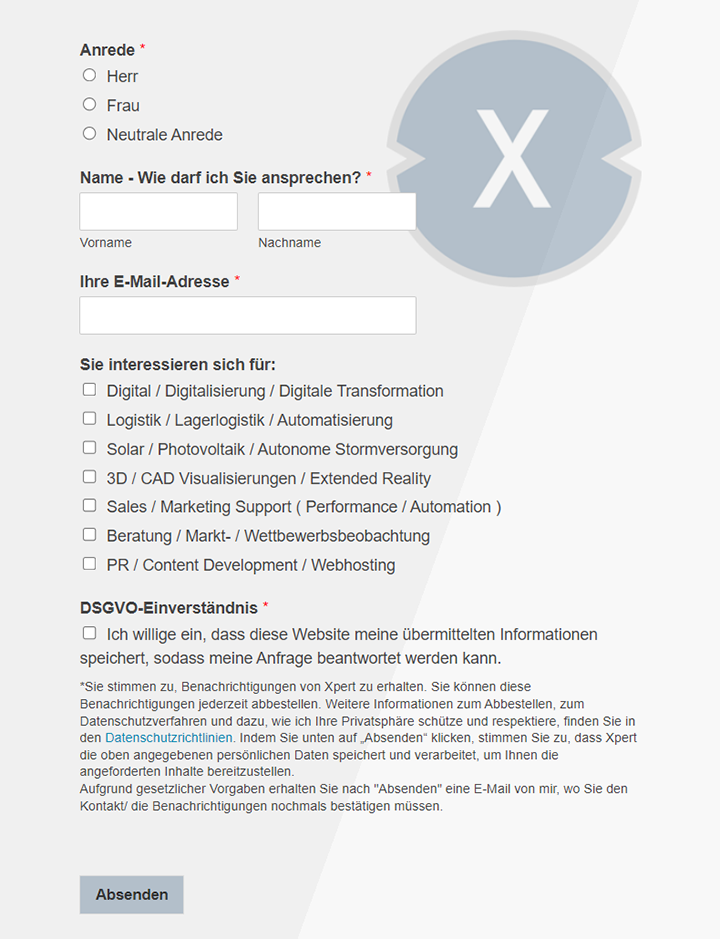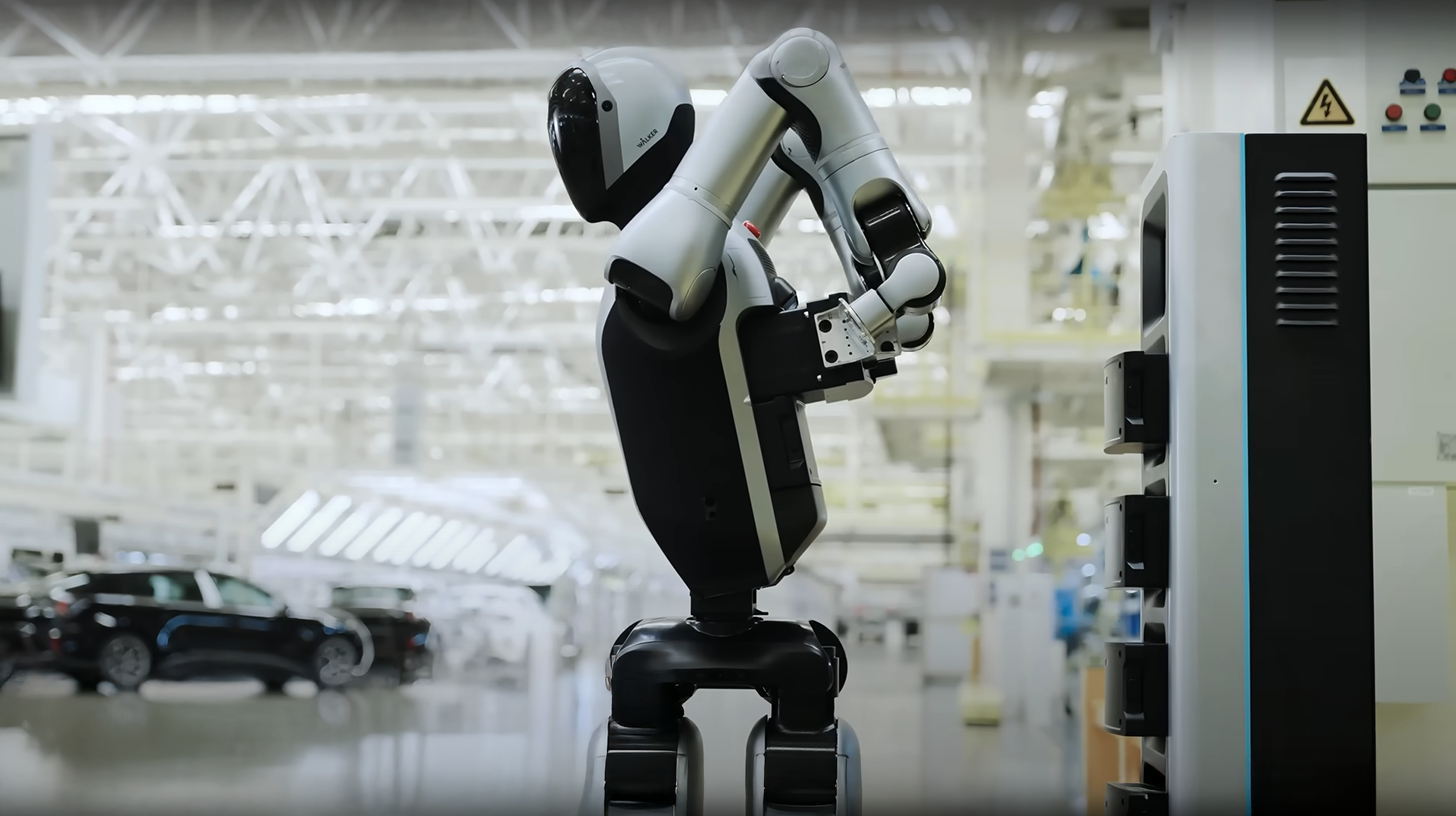
The robot that never sleeps: No more charging breaks – How a robot solves automation's biggest energy problem – Image: UBTech Robotics
Human- robot workforce around the clock? Questions and answers about the UBTech Walker S2 and its autonomous battery swapping.
What makes the Walker S2 so special?
According to UBTech Robotics, the Walker S2 is the first humanoid robot capable of changing its own batteries without human assistance, theoretically enabling it to operate continuously. This capability combines a dual-battery system with a precisely calibrated gripping and sensor system that completes the battery swap in approximately three minutes.
Related to this:

Why is this being discussed?
Autonomous battery swapping addresses a fundamental problem in mobile robotics: charging time. By outsourcing charging and simply removing one battery while the second remains operational, the Walker S2 eliminates downtime that would otherwise cost productive hours. This concept therefore sparks debate about "dark factories"—largely unmanned production facilities where machines operate around the clock under minimal lighting.
Basic concept and origin
Who is behind the project?
UBTech Robotics was founded in Shenzhen, China, in 2012 and specializes in humanoid service robots. The company went public in Hong Kong in 2023 and has since invested heavily in industrial applications of its Walker series. The Walker platform has undergone several generations since 2018; the Walker S2 succeeds the Walker S1, which was already deployed in automotive factories as part of a pilot project.
What are the technical specifications of the Walker S2?
The Walker S2 is an advanced piece of technology with remarkable specifications. It stands 1.62 m tall and weighs 43 kg. Its number of degrees of freedom varies between 20 and 52, depending on the source and configuration. Powered by a dual 48V lithium battery, it delivers impressive performance. A single charge allows for approximately 2 hours of walking and up to 4 hours of standing. Each battery takes 90 minutes to charge, and swapping batteries takes about 3 minutes. Its arms can carry loads of up to 15 kg, highlighting its versatility and functionality.
Each value was verified by taking data from at least two independent reports. Slight variations in degrees of freedom result from different counting methods (included or excluded finger and hand systems).
How does the dual battery work in practice?
As soon as a battery's voltage drops below a defined threshold, the energy management system signals that action is required. Based on its task priority, the robot decides whether an immediate battery swap or a later charging cycle is advisable. During the actual swap, the second battery remains operational, guaranteeing an uninterrupted power supply. Upon returning to the workstation, the charging station recharges the previously removed battery, ensuring a constant supply of charged modules.
Battery replacement steps
How can I follow the process step by step?
- The robot registers decreasing remaining capacity and initiates the battery swap task.
- It navigates autonomously to the nearest loading rack.
- After the back-to-station maneuver, he secures the empty battery with both arms.
- He mechanically unlocks the module, pulls it out, and places it in the charging station.
- A fully charged battery is grabbed, aligned, and inserted into the free battery bay.
- Locking and self-testing complete the process; the robot returns to its task.
What does the time profile look like?
The purely mechanical handling takes just under three minutes; during this time, the second battery buffers the energy demand. Since the charging station has multiple slots, many batteries can be charged simultaneously, so bottlenecks would only occur under exceptionally high load.
Comparison with traditional charging strategies
What are the disadvantages of wired charging?
Wired charging has several significant disadvantages compared to autonomous battery swapping. Downtime is considerably longer with wired charging, averaging around 90 minutes per charging slot, whereas autonomous battery swapping takes only about 3 minutes. In terms of infrastructure, wired charging requires charging stations, cable routing, and waiting areas, while the autonomous approach relies on battery racks and quick-locking systems. Scalability is limited with wired charging due to the finite number of charging stations, whereas autonomous battery swapping is flexible and depends on the size of the battery pool. Another crucial difference lies in energy flow: with wired charging, vehicles are inactive for approximately two hours per charge, while autonomous battery swapping enables continuous operation with only brief micro-pauses.
How does this affect operating costs?
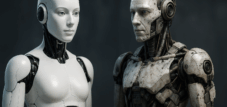
In highly automated assembly or logistics lines, every additional operating cycle pays off because the robot's fixed costs are spread over more productive hours. UBTech states that its predecessor, the Walker S1, was already able to increase sorting performance by up to 120% in pilot factories. If downtime is reduced to just three minutes every four hours, theoretical machine availability increases to over 98%, approaching that of conventional industrial robots.
Industrial and societal consequences
Which industries will benefit in the short term?
Manufacturing companies with diverse product ranges, where human jobs are difficult to fill for ergonomic or safety reasons, could particularly benefit. Examples include automotive assembly, electronics manufacturing, and logistics hubs. Service sectors, such as hotels or reception areas, also benefit because the robot can cover night shifts without additional pay.
What role do "Dark Factories" play?
The term describes factories so highly automated that humans are only required for remote monitoring and maintenance. The Walker S2, with its energy autonomy, provides a missing piece of the puzzle, enabling even nighttime power peaks and allowing plants to operate without lighting. Forecasts from the International Federation of Robotics indicate that by 2022, China would account for more than half of all industrial robots installed worldwide, setting a new benchmark for global production costs.
What will happen to the jobs?
Economists predict that around 23% of traditional jobs will be affected by AI-driven automation within the next five years. While simple tasks will disappear, new jobs will simultaneously emerge for the planning, maintenance, and optimization of robots. However, qualification requirements are shifting towards technical and data skills, which, according to the World Economic Forum, necessitates targeted retraining.
🎯🎯🎯 Benefit from Xpert.Digital's extensive, five-fold expertise in one comprehensive service package | BD, R&D, XR, PR & Digital Visibility Optimization

Benefit from Xpert.Digital's extensive, five-fold expertise in a comprehensive service package | R&D, XR, PR & Digital Visibility Optimization - Image: Xpert.Digital
Xpert.Digital possesses in-depth knowledge across various industries. This allows us to develop tailored strategies precisely aligned with the requirements and challenges of your specific market segment. By continuously analyzing market trends and monitoring industry developments, we can act proactively and offer innovative solutions. The combination of experience and expertise generates added value and provides our clients with a decisive competitive advantage.
More information here:
24/7 production: How humanoid robots are redefining the world of work
What ethical questions arise?
The ability to work without interruption raises questions about fair competition, energy consumption, and responsibility. If robots operate 24/7, human employees could be pressured to accept longer shifts or be relegated to lower-paying service sectors. At the same time, manufacturers emphasize that robots will take over monotonous or dangerous tasks, while humans will be responsible for more creative roles.
Technical details
How does the robot achieve its precision?
UBTech utilizes a 52-degree-of-freedom RGB stereo camera system that processes depth information similarly to the human eye. Combined with a proprietary co-agent system, the robot plans movement sequences, assesses collisions, and learns from deviations. The servo actuators cover a torque range from 0.2 Nm to 200 Nm, enabling both delicate manipulation and powerful lifting.
How robust is the battery replacement mechanism?
UBTech tested the gripping systems for over 80,000 cycles without significant wear. The locking mechanisms on the battery compartment utilize redundant sensors: mechanical limit switches, magnetic field sensors, and impedance monitoring of the motors all report successful engagement. This minimizes the risk of a loose battery, especially since the system issues an error message and switches to a safe standby mode if necessary.
How does the robot decide between charging and swapping?
An energy management algorithm compares the remaining capacity $$E_{\text{rest}}$$ with the anticipated energy requirement of the next job $$E_{\text{task}}$$. It calculates the difference $$\Delta E = E_{\text{rest}} – E_{\text{task}}$$. If $$\Delta E$$ is below a threshold $$\varepsilon$$, the robot performs the battery swap; otherwise, it starts the job and postpones charging. This logic also takes into account the availability of charged batteries in the rack to avoid bottlenecks.
Perspectives for further development
Will the system shrink further?
UBTech announced it is working on a more compact Walker S Lite, based on the same battery concept but designed for smaller logistics units. The company is also experimenting with faster charging chemistries that should reduce charging time from 90 to under 60 minutes.
Could solar or fuel cell systems be integrated?
Experts consider this unlikely in the short term, as the energy requirement for active walking in humanoid robots is relatively high: approximately 300 W on average. Solar cells would only provide a fraction of this power. Fuel cells, in turn, increase weight and require hydrogen infrastructure, which is why modular batteries currently remain more economical.
Are there any patent applications for battery swapping?
UBTech has filed several patents for a "Standardized Battery Bay Quick-Swapping Device for Bipedal Robots"; the Chinese database CNIPA lists applications from 2024 and 2025. The patents cover self-locking mechanisms and battery swapping protocols, making it difficult for competitors to enter the market.
Economic indicators
What is UBTech's financial situation?
UBTech's financial situation in 2025 was challenging, but not unusual for a young technology company in the robotics industry. The company reported revenues of 1.95 million yuan (approximately €242 million) and a net loss of 1.04 million yuan (approximately €129 million). Despite these financial challenges, UBTech already boasted a substantial robotics portfolio with over 500 Walker units on pre-order and employed 2,191 people.
Market analysts at MarketScreener predict that UBTech will continue to invest heavily in research and development despite current expectations of losses – a typical approach for innovative technology companies. The strategy aims to achieve initial profitability from 2027 onwards, particularly if large orders from the automotive industry can be secured. This investment strategy underscores the company's long-term potential and development ambitions in the dynamic robotics sector.
What competing models exist?
Other manufacturers such as Figure.ai, Tesla Optimus, and the China-based Unitree are also developing humanoid platforms. However, none of the competitors have yet implemented fully autonomous battery swapping; instead, wireless charging via docking stations remains the norm. This gives UBTech a unique selling point in terms of energy continuity for the time being.
Legal framework
How is security regulated?
In 2024, China adopted guidelines for the safety of autonomous robots in industrial environments, which mandate, among other things, emergency stop switches, energy locks, and defined emergency routines. The Walker S2 meets these requirements with an easily accessible emergency stop on its back and software-based forced stops for position deviations exceeding ±5 mm.
Are there international standards?
At a global level, ISO 10218-1 applies to industrial robots and ISO/TS 15066 to collaborative systems. At the same time, the International Electrotechnical Commission is working on amendments for mobile humanoid platforms. UBTech is seeking CE marking for the European market but must undergo additional electromagnetic compatibility testing to achieve this.
Is the Walker S2 a milestone?
The combination of humanoid mobility, a dual-battery system, and autonomous swapping capabilities is pushing the boundaries of industrial robotics. The elimination of charging breaks significantly increases availability and enables true 24/7 operation. Nevertheless, challenges such as high acquisition costs, complex maintenance, and ethical debates remain.
If UBTech achieves its projected production figures and forges further partnerships with major corporations, the Walker S2 could become the benchmark for energy-autonomous factory robots. At the same time, the international regulatory framework is likely to become more precise in order to guarantee safety and liability in a factory environment dominated by machines.
The shift towards virtually fully operational humanoids is therefore no longer a futuristic vision, but a concrete development path. The crucial factor will be how quickly companies, policymakers, and society integrate the emerging opportunities and risks into a balanced overall system.
We are here for you - Consulting - Planning - Implementation - Project Management
☑️ SME support in strategy, consulting, planning and implementation
☑️ Creation or realignment of the digital strategy and digitization
☑️ Expansion and optimization of international sales processes
☑️ Global & Digital B2B trading platforms
☑️ Pioneer Business Development

Konrad Wolfenstein
I would be happy to serve as your personal advisor.
You can contact me by filling out the contact form below or simply call me on +49 7348 4088 965 .
I'm looking forward to our joint project.
Write to me


Xpert.Digital - Konrad Wolfenstein
Xpert.Digital is a hub for industry focusing on digitalization, mechanical engineering, logistics/intralogistics and photovoltaics.
With our 360° Business Development solution, we support renowned companies from new business to after-sales.
Market intelligence, smarketing, marketing automation, content development, PR, mail campaigns, personalized social media and lead nurturing are part of our digital tools.
You can find more information at: www.xpert.digital - www.xpert.solar - www.xpert.plus
Keep in touch