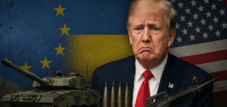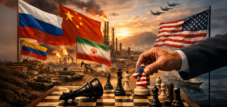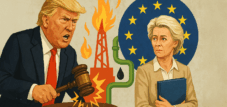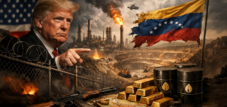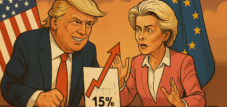
The return of the American empire: The Donroe Doctrine – After Venezuela, now Mexico and Cuba in Donald Trump's sights – Image: Xpert.Digital
After Maduro's fall: These two countries are now on Trump's hit list (Reading time: 44 min / No advertising / No paywall)
Battle for lithium: How the USA wants to push China out of its “backyard”
In January 2026, the United States under Donald Trump ushered in a new era of power politics in Latin America with its military intervention in Venezuela. What was outwardly portrayed as a humanitarian mission to liberate Venezuela from the authoritarian regime of Nicolás Maduro, on closer inspection reveals itself as a hard-line policy of self-interest with far-reaching geopolitical consequences. The aggressive realignment of US foreign policy toward Mexico and Cuba fits seamlessly into a broader picture characterized by securing vital resources, expanding spheres of influence, and curbing Chinese influence.
Related to this:

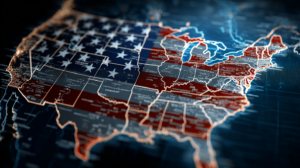
The economic background of the Venezuela intervention
Venezuela possesses the world's largest proven oil reserves, estimated at 303 billion barrels, surpassing even Saudi Arabia, the leading member of the Organization of the Petroleum Exporting Countries (OPEC). This enormous quantity represents approximately 17 percent of global reserves. However, these reserves consist primarily of heavy crude oil, which can only be extracted and processed using specialized technology. Several refineries on the US Gulf Coast, traditionally designed for this type of crude oil, possess precisely this technology.
However, the reality of Venezuelan production shows a dramatic decline. While the country produced nearly three million barrels per day two decades ago, current production is only around one million barrels daily. This collapse is due to decades of mismanagement at the state-owned energy company PDVSA, widespread corruption, a lack of investment in infrastructure, and, not least, the devastating effects of American sanctions, which have been crippling the country economically for years.
Immediately after Maduro's arrest on January 3, 2026, Trump announced that Venezuela would supply the US with between 30 and 50 million barrels of sanctioned oil. This amount roughly corresponds to Venezuela's total oil production for one to two months. However, the crucial factor is not just the quantity of oil supplied, but who controls it. Trump stated unequivocally that he, as president, would personally oversee the revenue from the oil sales to ensure that the money was used for the benefit of the Venezuelan people and the United States.
Total financial control: When your partner becomes the ruler
US Energy Secretary Chris Wright further elaborated on this strategy. The sale of Venezuelan oil would be placed in the hands of the US indefinitely. The proceeds would be deposited into accounts at US-controlled banks worldwide, with disbursement solely at the discretion of the Trump administration. This effectively amounts to the complete takeover of Venezuela's most important source of revenue and foreign exchange by a foreign power.
US Vice President JD Vance articulated the underlying logic with remarkable candor. Venezuela could only sell its oil if it served the interests of the United States. The US controlled the energy resources and told the regime it could sell the oil as long as it benefited America's national interest. The choice of words is revealing. This is not a partner speaking, but a ruler addressing his vassal.
Foreign Minister Marco Rubio also announced a three-phase plan for Venezuela. The first phase is the stabilization of the country. This will be followed by a phase of recovery and reconstruction, which will consist of ensuring that American, Western, and other companies have fair access to the Venezuelan market. The third step is, of course, the political transition, with Rubio emphasizing that this is a matter for the Venezuelan people. The irony of this statement, given the total American control over public finances, was hardly lost on anyone.
Restrictive contracts and geopolitical blackmail
The US government has also imposed clear conditions on Venezuela for increased oil production. According to reports from government sources, Caracas is being asked to sever its economic and political ties with China, Russia, Iran, and Cuba before it is allowed to resume large-scale oil production. This would represent a radical break with long-standing partnerships. Furthermore, Venezuela is to cooperate exclusively with the US in the areas of oil production and heavy fuel oil sales.
Trump also announced that Venezuela had agreed to use the proceeds from its oil sales exclusively to purchase American-made goods. These include agricultural products, medicines, medical equipment, and equipment to improve the power grid and energy infrastructure. This mechanism is eerily reminiscent of colonial economic structures, where raw material suppliers were forced to spend their earnings only on goods from the colonial power.
The White House announced a meeting with oil executives for January 6, 2026, to discuss investment opportunities in Venezuela. Trump had previously stated that US oil companies should return to the South American country after Maduro's overthrow. The American oil giant Chevron has been operating in Venezuela for some time now with a special permit and, according to Bloomberg reports, has sent eleven more ships to the region to export more oil than before.
Naval blockades and the severing of Chinese ties
The US has significantly increased its military surveillance of the region. In two military operations, oil tankers suspected of violating US sanctions were seized. One of the ships, the Russian-flagged Marinera, was impounded in the North Atlantic. The other, the supertanker Sophia, was seized in the Caribbean. US Homeland Security Secretary Kristi Noem stated that both tankers had either recently docked in Venezuela or were en route there. According to the US, the Sophia was carrying not only Venezuelan oil but also Iranian crude oil.
The geopolitical dimension of this intervention becomes particularly clear when one considers Venezuela's previous trade relations. China has been the largest buyer of Venezuelan crude oil. However, Venezuelan crude oil accounted for only about four percent of China's oil imports last year. Furthermore, the Caribbean nation primarily supplies high-sulfur crude oil, which is difficult to process and is used, for example, in the production of asphalt. The oil is also offered at heavily discounted prices, making it attractive to smaller and privately owned refineries in China.
China's Foreign Ministry condemned the US's violent actions and abuse of power to manage Venezuela's oil reserves for its own benefit. According to ABC News, the US government has called on Venezuela's interim president, Delcy Rodriguez, to expel former partners such as China, Russia, and Iran from the country and sever economic ties. However, the US actions could have far-reaching consequences for China. In recent years, Venezuela has not only been a major supplier of raw materials but also a debtor and a location for Chinese infrastructure projects aimed at expanding global influence and challenging the US.
“Drill baby drill”: Profit interests versus climate protection
The economic consequences for the US itself are decidedly mixed. Access to Venezuelan oil, with its approximately 300 billion barrels, fits perfectly with Trump's energy policy vision under the motto "Drill, baby drill." However, the confirmed US oil reserves, at around 46 to 48 billion barrels, are significantly lower. Recent high production has been made possible primarily through fracking. Nevertheless, the price of crude oil on world markets is currently relatively low, costing less than $60 per barrel, a historically rare occurrence. This considerably reduces the immediate financial gains from the Venezuelan oil deal.
For global climate protection, which the "drill baby drill" president has openly abandoned, this development sends a disastrous signal. The development and increased exploitation of Venezuela's gigantic oil reserves runs counter to all efforts toward an energy transition and the reduction of fossil fuels. It is becoming clear that under Trump, short-term economic and geopolitical interests take absolute priority over long-term ecological necessities.
Mexico and the militarization of drug policy
The second target of Trump's aggressive strategy in Latin America is Mexico. Several spheres of interest overlap here. The drug problem, particularly the fentanyl crisis, provides the official pretext. Behind this, however, lie complex economic ties and the impending renegotiation of the most important trade agreement between the two countries.
The fentanyl crisis in the United States has now reached dramatic proportions. Between July 2021 and June 2022, more than 107,000 people died in the US as a result of an overdose. In 2022, the number was estimated at 111,029, and in 2023, for the first time since 2018, it fell to 107,543 deaths. According to the US Centers for Disease Control and Prevention (CDC), almost 841,000 people died from drug overdoses between 1999 and March 2021. The majority of them had become addicted to painkillers that had previously been prescribed by doctors.
More recently, the crisis has been driven primarily by synthetic fentanyl, which is inexpensive to produce and extremely potent, displacing other, more expensive and harder-to-obtain substances such as heroin, which is about 50 times weaker. During the opioid epidemic, fentanyl poisoning became the leading cause of death among Americans aged 18 to 45. The death toll from this epidemic far exceeds that of the crack cocaine epidemic in the US during the 1980s and early 1990s.
Fentanyl is 50 times more potent than heroin and 100 times stronger than morphine. Even the amount contained in a grain of salt can be fatal. Anne Milgram, head of the US Drug Enforcement Administration (DEA) from 2021 to 2025, noted that fentanyl is particularly prevalent among very young people. Every week, 22 teenagers between the ages of 14 and 18 die from it. That's practically the equivalent of an entire school class succumbing to the drug each week.
The drug is primarily manufactured in Mexico, often using precursor chemicals from China, and then smuggled into the United States. According to the Drug Enforcement Administration, the main sources of fentanyl in the US are the Mexican drug cartels of Sinaloa and Jalisco. During the COVID-19 pandemic, Mexican cartels largely shifted their trade from heroin or cocaine to fentanyl. They obtain the chemicals necessary for fentanyl production primarily from China and India.
Declaration of war on the cartels: The threat to sovereignty
Trump is using this dramatic situation to justify an unprecedented militarization of drug policy. In January 2025, he officially designated eight drug cartels, six of them in Mexico, as terrorist organizations. This designation has far-reaching legal and military consequences. It allows the US government to use military force against these organizations, even on foreign soil.
In August 2025, Trump signed an executive order authorizing the US military to target drug cartels and other groups designated as foreign terrorist organizations. This move has raised concerns about diplomatic relations and presidential authority. According to insiders from the active and former US military, the Justice Department, and intelligence agencies, the White House, the Pentagon, and the CIA are in the early stages of planning military operations against cartels in Mexico. Trump is reportedly hoping for Mexican approval, but covert unilateral action has not been ruled out.
The US military and CIA have already expanded their intelligence gathering on Mexico with the approval of President Claudia Sheinbaum's administration. The goal is to compile a list of potential targets, including drug depots or even individual cartel members. However, a final decision is still pending. According to US media reports, Donald Trump is considering using drones in the fight against the deadly drug fentanyl to curb smuggling across the US southern border and to attack Mexican drug cartels.
In January 2026, Trump announced in an interview with Fox News that the US would also take action against drug cartels on land. "We're going to start hitting land now," the US president declared. Trump presented this move as a response to what he described as the cartels' control over Mexico and cited an annual death toll in the US of 250,000 to 300,000. This figure, however, is significantly exaggerated and primarily serves to dramatize the situation. The actual figures, as previously mentioned, are around 107,000 to 111,000 drug-related deaths annually.
In the interview, Trump emphasized that the cartels rule Mexico. "It's very, very sad to see what has happened to this country. But the cartels are in control, and they kill 250,000 to 300,000 people every single year in our country. The drugs, it's terrible. It has destroyed families. You lose a child or a parent. Parents also die from drugs."
Mexican President Claudia Sheinbaum has repeatedly and unequivocally stated that she will not tolerate any US military operations on Mexican soil. "The United States will not come to Mexico militarily," she said. "We are cooperating, but there will be no invasion. That is out of the question, absolutely out of the question." Mexico reaffirmed this position after Trump signed the directive in August 2025. Sheinbaum explained at the time that the Mexican government had been informed that an order had been issued against the cartels and that it did not involve the participation of military personnel.
Trump's remarks about striking on land suggest a possible escalation that goes beyond the administration's primarily sea-based anti-drug operations to date. These new operations could potentially affect Mexican territory or infrastructure linked to cartels. Such a scenario raises serious questions regarding sovereignty, congressional authority, and possible responses along the US-Mexican border.
Experts have warned that a military operation against cartels in Mexico could be interpreted as aggression and could have unintended consequences such as displacement and increased migration pressure. Unilateral action would be problematic under international law. Former Mexican ambassador Arturo Sarukhan said that if Mexico were to act unilaterally, it would send bilateral relations into freefall.
Nevertheless, Mexico is showing a degree of willingness to cooperate, likely because it wouldn't be the first time the two countries have joined forces in the fight against the cartels. In March 2025, Mexico deployed 10,000 soldiers to its northern border to search vehicles for fentanyl. Twenty-nine suspected drug traffickers were extradited to US authorities, but so far without any measurable success.
The US, for its part, has massively increased its military presence on the border. The US Department of Defense has sent additional troops to the southern border with Mexico. According to multiple US media reports, this involves approximately 3,000 additional soldiers. With these deployments, there are now around 9,000 US troops stationed on the border with Mexico. Among the equipment also deployed were armored vehicles, known as Strykers.
The soldiers are intended to make efforts to curb illegal immigration and drug trafficking at the southern border even more flexible and effective. The tasks of the additional forces include detection and surveillance, administrative support, transportation assistance, warehousing, and logistical support. Trump has described the influx of migrants at the southern border as an invasion and has declared a national emergency.
Trade war instead of drug war: The pressure on the USMCA agreement
Behind the rhetoric of the war on drugs, however, lie very real economic interests. First, Trump can score political points domestically by taking a hard line and promising to get the drug crisis under control at home. Second, and more crucially from an economic perspective, he can use his threats to force Mexico to halt oil deliveries to Cuba. This would severely damage the Cuban regime and fits seamlessly into the overall strategy of isolating Cuba.
Third, the USMCA, the trade agreement between the US, Mexico, and Canada, is due for its contractual review in July 2026. While the agreement, signed in 2020, runs until 2036, it stipulates an initial review after six years. The outcome is of fundamental importance for the Mexican economy, which is directly dependent on the US economy.
Trump wants to renegotiate the North American Free Trade Agreement (NAFTA) ahead of schedule. Trump himself negotiated the agreement in 2018 and at the time hailed it as the best trade deal in the world. Renegotiation is not actually scheduled until July 2026. However, Trump wants immediate renegotiations with the goal of increasing the US share of North American auto production from the current 75 percent to 85 percent. In plain terms, this means that Trump wants to bring more auto jobs back to the US.
Insiders expect Mexican companies to prepare for higher minimum local value-added requirements and wage regulations. Mexico's economy feels disadvantaged in international competition, as countries like the EU and Japan were able to negotiate tariffs of only 15 percent with the US. There are concerns that the US government will approach this process as a complete renegotiation of the agreement.
Mexican President Claudia Sheinbaum must continue her diplomatic balancing act—asserting Mexico's interests confidently while avoiding antagonizing its large neighbor—under increasingly difficult conditions. This will continue until June 11, 2026, when Mexico City hosts the opening match of the FIFA World Cup, with Canada, Mexico, and the USA. Donald Trump will undoubtedly be in attendance as a guest of honor. Until then, Sheinbaum will strive to create the best possible conditions for negotiations regarding the review of the USMCA.
Trump's strategy toward Mexico is thus multifaceted. The threat of military intervention against cartels primarily serves domestic political mobilization and as leverage for economic concessions. The actual implementation of such operations would entail enormous diplomatic costs and would severely strain relations with the US's third-largest trading partner. At the same time, the dramatic staging of the fentanyl crisis allows for the justification of virtually any measure under the banner of national security.
Similar to his criticism of Venezuela, Trump repeatedly criticized the Mexican government's supposedly lenient policies toward drug crime in the country. Just hours after Maduro's capture, Trump questioned the authority of Mexican President Claudia Sheinbaum, who had rejected US intervention against drug cartels in Mexico. "She doesn't run Mexico, the cartels do," Trump said. "We have to do something with Mexico."
Our US expertise in business development, sales and marketing
Our US expertise in business development, sales and marketing - Image: Xpert.Digital
Industry focus areas: B2B, digitalization (from AI to XR), mechanical engineering, logistics, renewable energies and industry
More information here:
A thematic hub offering insights and expertise:
- Knowledge platform covering global and regional economies, innovation and industry-specific trends
- A collection of analyses, insights, and background information from our key areas of focus
- A place for expertise and information on current developments in business and technology
- A hub for companies seeking information on markets, digitalization, and industry innovations
Covert battle of the superpowers: For the USA, Cuba is only about one thing – China
Cuba as a strategic target
Cuba occupies a special position in Trump's Latin America strategy. Of all the countries currently in the US president's sights, Cuba should actually be the most concerned. Firstly, the island has been a target of every US administration since the communist revolution of 1959. Secondly, Foreign Minister Marco Rubio has a particular, and also personally motivated, focus on the regime in Havana. His parents were born in Cuba, and Rubio has long worked towards regime change in Havana.
Thirdly, Cuba is Venezuela's closest ally in the region and would also likely be easy prey for the US. Finally, the island lies barely 145 kilometers from Florida, placing it within the immediate sphere of influence of the US according to the new Donroe Doctrine. Due to its geographical proximity to the southern tip of Florida, its communist ideology, the Cuban Missile Crisis of 1962, and not least the political power of the large Cuban community in South Florida, the island has long held special significance for Washington.
Cuba's political situation is similar to that of Venezuela. The regime lacks democratic legitimacy and employs harsh repression against its own population. Therefore, Trump would likely face similarly little international criticism or consequences as after the attack on Caracas. Trump declared that Cuba was ready to fall. He claimed that military action was unnecessary because the regime on the Caribbean island could not survive much longer without Venezuela's support. "Cuba is a failed state; it will fall on its own," Trump stated.
Related to this:

Dark days for Havana: The fatal dependence on oil
The economic basis for this assessment is Cuba's total dependence on Venezuelan oil deliveries. Since 2021, Cuba has been experiencing a chronic energy crisis, which is primarily noticeable to the population through frequent, extended power outages. On October 18, 2024, this culminated in a nationwide blackout, the first in a series of five total blackouts within just one year. By the end of June 2025, the electricity production deficit was almost two gigawatts, while demand was 3.6 gigawatts.
Cuba has been in a severe economic crisis since the 2020s, which began with the Covid-19 pandemic. This was compounded by a botched currency reform at the turn of the year 2020/21. The state lacks the funds to purchase crude oil or heating oil to operate its power plants, or even the necessary spare parts to properly maintain the power plant facilities. Furthermore, retirements and emigration have led to a shortage of skilled workers. Chronic financial constraints also mean that imports of crude oil, gasoline, and diesel fuel for the power plants and generators are insufficient.
Only five percent of Cuba's energy needs are met by renewable energy sources. This leads to an increased number of disruptions due to technical malfunctions or shutdowns due to fuel shortages. The result is a persistent electricity production deficit and often hours-long power outages in Cuban households. As of the end of October 2024, the daily electricity production deficit fluctuated around 1,000 megawatts. A demand of approximately 3,000 MW was met by a supply of 2,000 MW, representing a deficit of about 35 percent and resulting in corresponding planned power outages.
According to the International Energy Agency, Cuba's electricity supply relies on oil for over 80 percent of its needs. The most critical factor is the fuel shortage. The country's two largest power plants, Felton and Antonio Guiteras, are in urgent need of maintenance and are producing less electricity than planned, according to official figures. The government blames the decades-long US embargo for the difficulties in obtaining spare parts and fuel.
Havana has been closely linked to Caracas for decades, particularly through energy cooperation. The US government under President Donald Trump is now increasing pressure on Venezuela, directly involving Cuba. According to reports from government sources, Caracas is to sever its political and economic ties with China, Russia, Iran, and Cuba. The US administration's goal is to realign Venezuela's foreign policy and establish the United States as a central, if not sole, partner in Venezuela's oil sector.
US Secretary of State Marco Rubio stated in a confidential briefing to members of Congress that Washington considers itself in a strong negotiating position. Many Venezuelan oil tankers are loaded but unable to unload their cargo. Without rapid sales, the country faces imminent insolvency within a few weeks. The demands would have far-reaching consequences for Cuba. For Cuba, an end to close energy cooperation with Venezuela would have significant economic repercussions and could further exacerbate its already strained supply situation.
But even so, the island will likely have its oil supply completely cut off simply because the US, with its massive military presence in the Caribbean, intends to continue blocking all Venezuelan oil exports, especially those destined for Cuba. And because Trump is claiming Venezuelan oil for the US. The US, with its massive presence in the Caribbean, wants to control all Venezuelan oil exports, particularly those to Cuba.
Strategy of starvation and the Russian unknown
But now the rulers in Washington are convinced they don't need to do anything more, but simply wait. Cuba's days are numbered, Trump recently said. They won't last, he explained, because they will no longer have any revenue. When asked about a possible US military intervention on the island, the US president replied that he didn't consider it necessary. The arrest of Nicolás Maduro has thrown Cuba into great turmoil. Trump predicts the imminent end of the Cuban government.
Both President Donald Trump and Foreign Minister Marco Rubio left no doubt over the weekend following Maduro's arrest that the collapse of the communist regime in Cuba was not only to be expected as a consequence of Maduro's removal, but also as a desired goal. "I think some action has to be taken," Trump stated. Without Maduro and Venezuelan oil supplies, he added, "it looks like Cuba is doomed."
The strategy of economic strangulation by cutting off energy supplies is cynical, but efficient from a US perspective. Without direct military intervention, which would draw international criticism, the Cuban regime is to be brought down through economic pressure. This siege strategy deliberately accepts the risk of driving the Cuban population, already suffering from massive shortages, further into misery and despair.
However, there is a geopolitical factor that could complicate Trump's calculations. Cuba maintains extensive cooperation with Russia, including economic and military partnerships. According to several allegations, the regime is also sending mercenaries to the war in Ukraine. President Vladimir Putin is unlikely to welcome a change of power in Havana. The two countries have intensified their military and economic cooperation in recent years. They have signed defense agreements, and Russian warships have docked in Havana.
In 2024, two years after Russia's invasion of Ukraine, Cuban President Miguel Diaz-Canel wished Russia success in carrying out its "special military operation." The two countries have signed trade agreements, and Russian investment in Cuban oil and agriculture has increased. Above all, Russia's close ties with Cuba could keep Trump in check. This is presumably what the regime is now hoping for.
Neither Russia nor Iran appears capable of filling the oil gap. However, Russia is likely Cuba's best hope for a lifeline in general. Russian support might delay the collapse of the Cuban regime, but it is unlikely to prevent it if Venezuelan oil supplies cease entirely and the US maintains its blockade. Cuba is a potential bridgehead for China and Russia, something the US under Trump is not willing to tolerate. Russian warships, including submarines, have repeatedly docked in Cuban ports, setting off alarm bells in Washington.
Trump's statement that Cuba could fall on its own might not be entirely wrong. Without oil and support from Venezuela, the regime in Havana could indeed implode. The economic situation is already desperate. Nationwide power outages are causing productivity to plummet. The dilapidated power grid often generates barely half the electricity it was designed for. The persistent shortage of spare parts, the lack of investment in maintenance and repairs, and the emigration of many technicians are all contributing factors.
Experts do not expect a quick solution. President Diaz-Canel had promised improvements for the second half of 2025. However, even in July, the power plants were unable to provide as much energy as expected. Economists anticipated some relief only by the end of the year. This has not materialized, and the situation has worsened dramatically with the intervention in Venezuela.
One or two modern 300-megawatt oil-fired power plants are intended to provide the initial boost for Cuba's electricity system. The remainder of the system, designed for 3,500 to 4,000 megawatts, is to be generated primarily from renewable energy sources by 2030. This would mean decommissioning all nine dilapidated oil-fired power plants, between 30 and 40 years old, located between Santiago de Cuba and Pinar del Rio. How the necessary investments will be raised is unclear. Under the current conditions of total economic isolation, such a transformation is entirely unrealistic.
The Donroe Doctrine as an ideological framework
The aggressive realignment of US policy toward Latin America is by no means improvised, but follows a clearly formulated geostrategic doctrine. The US National Security Strategy, published in 2025, states that after years of neglect, the United States would reaffirm and implement the Monroe Doctrine in order to regain American hegemony in the Western Hemisphere.
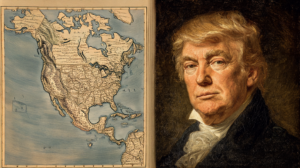
Shortly after Maduro's capture by American forces, Trump referred to this doctrine, saying, "The Monroe Doctrine is a big deal, but we've surpassed it many times over. Now we call it the 'Donroe Doctrine.'" This neologism, a portmanteau of Donald and Monroe, is by no means meant as a joke, but rather signals a radical reinterpretation and intensification of the original doctrine.
In 1823, President James Monroe declared Latin America to be within the sphere of influence of the United States and prohibited any colonial interference from Europe on the subcontinent. The doctrine was originally formulated defensively and directed against European colonial powers. Theodore Roosevelt significantly strengthened this strategy in 1904 with the "Roosevelt Corollary." He derived from it a right of intervention for the United States. In the Western Hemisphere, the fulfillment of the Monroe Doctrine could compel the United States, albeit reluctantly, to exercise "international police power" in "flagrant cases of such wrongdoing or incompetence.".
Related to this:
The Trump corollary: Military force as a legitimate means
Trump has now formulated a further expansion with the "Trump Corollary." "We will deny non-continental competitors the ability to establish armed forces or other threatening capabilities, or to own or control strategically important assets in our hemisphere," the corollary states. With this, Trump deliberately echoes the Roosevelt Corollary of 1904 and intensifies it even further.
Trump's accompanying document states that the US will expand its military presence in the Western Hemisphere, reserving the right to conduct targeted operations, including, where necessary, the use of lethal force. The goal is to control sea lanes and secure access to strategic locations. Trump uses this explicitly military option to justify his current actions against Venezuela.
The imperial objective is clear. Latin America is to contribute to the reconstruction, strengthening, and further development of the productive, technical, strategic, and military forces and capabilities of the United States in order to maintain a balance of power with other actors recognized as equals, primarily China, but also Russia. Ministers from Trump's inner circle have repeatedly emphasized that Washington once again considers Latin America an exclusive sphere of US influence.
Although China is never explicitly named, it is the global rival of the US and its economic, financial, and technological influence in Latin America that is constantly targeted between the lines. To counter Beijing's influence, Trump is pursuing a new trade diplomacy with Latin American countries and urging them to follow Washington's line both domestically and in foreign policy.
The National Security Strategy assigns the highest geopolitical priority to Latin America. This term refers to the countries of Central and South America. The strategy document surprisingly clearly articulates the American claim to power. The Western Hemisphere is of vital importance to the United States and must therefore be protected from hostile foreign invaders.
The economic focus of the strategy is to prioritize regions that benefit domestic industry and to discard those considered a burden. One of these regions is the Americas, particularly Latin America, as it provides the mineral resources and raw materials needed for industrial production and simultaneously represents a market for manufactured US products. Trump has never made a secret of his interest in Venezuela's oil resources, Canada's and Greenland's rare earth elements, and the Panama Canal.
The strategy relies on building a new class alliance of industrial, energy, defense, and technology capital. In his new security strategy, Donald Trump surprisingly clearly articulates his claim to power in Latin America and outlines drastic measures to enforce it. It is now official that Trump gives the Western Hemisphere the highest geopolitical priority for the US.
China as an invisible adversary
The aggressive US strategy in Latin America is primarily driven by the systemic conflict with China. China's influence in Latin America has been growing since the turn of the millennium, paralleling the People's Republic's rise to superpower status. The "Middle Kingdom" is now the region's largest trading partner and is expanding its presence at all levels. A look at the dynamics of the last 20 years shows that Washington is in danger of losing the race against its strategic rival, China, in Latin America.
As recently as 2000, less than two percent of the region's exports went to China. By 2010, the export volume had already grown to US$80 billion, and by 2021, it had reached US$450 billion. Other major trading partners, including the US and Germany, cannot keep pace with this growth. The export list includes many raw materials such as copper and oil. In return, China supplies finished goods with higher added value.
The focus of China's engagement in Latin America has traditionally been on securing food and raw material supplies, such as beef and soy, or copper and iron. This year, free trade agreements between China and Chile, Costa Rica, Ecuador, and Peru came into effect. Talks are underway with Uruguay regarding a free trade agreement. To date, 21 Latin American countries have joined China's Belt and Road Initiative (New Silk Road).
Beijing's growing influence is evident not only in trade. The People's Republic is readily available with direct investments and loans. In 2022, Chinese direct investment in Latin America and the Caribbean amounted to approximately US$12 billion, representing about nine percent of total direct investment in the region. Between 2000 and 2018, China invested US$73 billion in the Latin American raw materials sector, including the construction of refineries and processing plants in countries with large reserves of coal, copper, natural gas, oil, and uranium.
Lithium has also been on the agenda for several years. Chinese companies are particularly active in Argentina, Bolivia, and Chile, the three countries of the "Lithium Triangle," where roughly half of the world's reserves of this sought-after battery metal are believed to lie. In Bolivia, President Luis Arce declared the beginning of the era of Bolivian lithium industrialization in January 2023. This was prompted by the signing of an agreement with the Chinese consortium CBC for the development of two industrial complexes for extracting the raw material.
Argentina, along with Chile and Bolivia, forms part of the so-called Lithium Triangle, a region that holds more than half of the world's reserves of this valuable metal. Argentina is therefore of great importance to China's raw materials policy. To ensure the supply for its own industry, companies such as Ganfeng, Zijin Mining, Tibet Summit Resources, and Tianqi have secured access to lucrative deposits in Argentina.
Concerns are therefore growing in the US. Beijing could use its increasingly close ties to pursue its own geopolitical goals, such as isolating Taiwan. There are also fears that China could bolster governments in countries like Cuba or Venezuela. President Biden launched the "Build Back Better World" initiative with the G7. The initiative aims to counter China's expansion by developing infrastructure in low- and middle-income countries, including those in Latin America. However, the US government has not yet allocated more than six billion US dollars to the project.
Battle for lithium and control of the Panama Canal
The reason for the clear formulation of the new security doctrine is also China's growing influence in Latin America. Over the past decades, the leadership in Beijing has invested billions in expanding infrastructure in Latin America, thereby securing access to critical raw materials and agricultural imports. Therefore, Washington intends to attach conditions to new agreements in order to curb foreign influence, from access to military installations and ports to the purchase of strategic assets. Foreign infrastructure companies are to be pushed back. American leverage in the financial and technological spheres will be used as a means of exerting pressure.
Although China is not explicitly mentioned in the strategy paper, it is clear between the lines that the People's Republic is the primary target. It states that non-European powers have already made significant progress in both "disadvantaging us economically and harming us strategically." Lithium from the south of the continent and copper from the Andes are of strategic importance not only to China but to the entire global economy. The energy transition is intensifying competition for resources, which is already leading to social and environmental tensions in the region.
Critical minerals are at the heart of this new phase. Lithium, copper, and even rare earth elements are the subject of investments and agreements aimed at securing China's supply of raw materials for batteries, electric vehicles, and renewable energy. While the volume of Chinese financing has reportedly decreased, economic relationships have become more diverse. Companies are now playing an increasingly important role, while the Chinese state is less involved as a direct lender.
Latin American countries continue to supply strategic raw materials to the Chinese economy, such as agro-industrial products and energy. This relationship model is not new, but it is gaining importance in a global scenario characterized by the acceleration of the energy transition, the pursuit of food security, and geopolitical tensions between China and the United States.
China maintains its position as the most important trading partner of countries like Brazil, Chile, and Peru, while the region increasingly imports Chinese-made products, ranging from consumer goods to industrial and technological equipment. For many Latin American countries, this dynamic increases their dependence on raw materials at the expense of higher value-added exports and deepens trade deficits.
The case of Panama illustrates the geo-economic dimension of the National Security Strategy. The strategy document makes it clear that ownership and control of strategic assets such as ports, hubs, and transit routes are not merely economic or developmental concerns, but rather matters of hard security policy. Reports of US pressure on the Panamanian government to review concessions granted to Chinese-controlled port operators and to distance itself from the Belt and Road Initiative have been seen in the region as the first concrete implementation of the Trump amendment.
In the dispute with the US over control of the Panama Canal and China's influence, President Jose Raul Mulino has made some concessions, but made it clear that sovereignty over the waterway is non-negotiable. The canal is "not available," Mulino stated. Next year, however, Panama will end its cooperation with China's extensive Belt and Road Initiative. The agreement, signed with China in 2017, will not be renewed in 2026. Panama was the first country in Latin America to join the initiative, having previously severed diplomatic ties with Taiwan to establish them with Beijing.
US President Trump has expressed concern that a Hong Kong-based company operates two of the four ports of the Panama Canal. Foreign Minister Rubio had called on the Panamanian government to immediately reduce China's influence and control over the canal. Of particular concern to the US government is that Hutchison Ports, headed by billionaire Li Ka-shing, has operated two of the ports since 1997. Trump claims, without providing evidence, that the operator is an extension of the Chinese government.
Control of the waterway, however, lies with the Panamanian Canal Authority (ACP), which is contractually bound to neutrality. Despite this, Rubio pointed out that the US could amend the Panama Canal treaty if it so desired. Approximately six percent of global trade and 58 percent of goods transported by container ship from Asia to the US East Coast pass through this waterway.
China has long sought to expand its influence across Latin America to gain access to raw materials and food. It is now the region's second-largest trading partner and even the largest in South America. According to the World Economic Forum, trade volume between China and Latin America has increased from $12 billion in 2000 to $315 billion in 2020.
Our global industry and economic expertise in business development, sales and marketing
Our global industry and economic expertise in business development, sales and marketing - Image: Xpert.Digital
Industry focus areas: B2B, digitalization (from AI to XR), mechanical engineering, logistics, renewable energies and industry
More information here:
A thematic hub offering insights and expertise:
- Knowledge platform covering global and regional economies, innovation and industry-specific trends
- A collection of analyses, insights, and background information from our key areas of focus
- A place for expertise and information on current developments in business and technology
- A hub for companies seeking information on markets, digitalization, and industry innovations
Trump's "Donroe Doctrine": How Latin America is once again becoming the backyard of the USA
Economic diplomacy as a reward and punishment system
Trump pursues a clear strategy of economic diplomacy based on a system of rewards and punishments. US companies are to receive privileged access to the domestic markets of Latin American countries through reciprocal trade agreements. "Governments and movements that largely conform to our principles and strategy would be rewarded." Conversely, this implies that governments pursuing different political convictions are to be punished.
In Argentina, Trump has already demonstrated how his reward system works. Washington supported Javier Milei's libertarian government with loans exceeding $40 billion. Without this funding, the president would likely have lost the midterm elections by a significant margin. Furthermore, Trump and Milei concluded a comprehensive trade and investment agreement that goes far beyond the usual US agreements in South America. It opens the US market to Argentine agricultural products and, in return, grants US companies extensive access to Argentina's economy.
What this narrative omits is that without a financial injection from the US, Argentina would no longer have been able to meet its payment obligations in the fall of 2025. The central bank's reserves are at a critical level. The peso is only holding up thanks to external support. The aid is ideological and strategic. Washington wanted to send a signal to Beijing: Argentina should remain Western.
Furthermore, in a trade agreement signed after the October 2025 elections, Argentina made dozens of concrete concessions, from recognizing US certificates for pharmaceuticals and cars to opening the market for live cattle and poultry, while the US only yielded on two points. The election campaign was also dominated by fears of a "Black Monday" with a peso crash and a return to Peronism. Trump threatened: "If Milei wins, we'll help. If not, we're out." This has proven to be a clever manipulation. Whether and when, and how much money will be disbursed, remains unclear.
Thanks to the unequal partnership with the US, the Milei government is now relatively secure in its position. As long as Washington supports Argentina, there is no threat of collapse. But the price is a surrender of sovereignty, without any guarantee of smooth governance. Trump, in turn, has a clear agenda to reorganize the US's "backyard." Anyone who speaks out, like Colombian President Gustavo Petro, is summarily labeled a drug trafficker without evidence. Milei, however, is Trump's crony. Milei's expensive trips to the US are controversial domestically, especially since they repeatedly end without concrete diplomatic or economic results.
New agreements are intended to enforce US standards, patent law, and security regulations. Large amounts of data are to be exchanged. Countries possessing deposits of critical industrial raw materials such as rare earths or important ores will guarantee US access to these resources. US tech companies will be exempt from new local taxes. Just a few days ago, the US government announced its intention to pursue similar agreements with Ecuador, Guatemala, and El Salvador.
Related to this:
Friend or foe: How to deal with Milei, Petro and Lula
Given the general shift to the right in Latin America, Trump will not run out of new partners. In Bolivia, after 20 years of socialism, the center-right candidate Rodrigo Paz Pereira was elected; he urgently needs foreign loans and could offer the world's largest lithium reserves in return. In Chile, another right-wing candidate, José Antonio Kast, is likely to assume the presidency. The country is the world's largest copper exporter.
Trump has already increased pressure on the left-wing authoritarian regimes in Cuba and Nicaragua, attempting to politically isolate them. Colombian President Gustavo Petro also threatened Trump with intervention to destroy the country's drug labs. Previously granted military aid to Bogotá has already been cut. The Republican had told reporters that Colombia was very sick and run by a sick man who loved producing cocaine and selling it to the United States. He wouldn't be doing that much longer, Trump said, without elaborating on what he meant.
Following his threats against Colombia, US President Donald Trump spoke by phone with Colombian President Gustavo Petro and announced a meeting at the White House. Petro said shortly afterward that he had spoken with Trump for about an hour. "Without dialogue, there will be war," he told demonstrators at a rally for his country's sovereignty. He said his first conversation with the US president since taking office focused on Venezuela and drug trafficking.
Petro reacted sharply to Trump's latest threats. He wrote that the statements constituted an illegitimate threat and that he would examine them closely. Petro warned of serious consequences should action be taken against him personally. He rejected accusations that Colombia was not doing enough to combat drug trafficking. Even after his phone call with Trump, Petro still sees an attack by the US military as a real threat. "The US treats other nations like part of a US empire. In doing so, they risk not being a world power, but instead becoming isolated from the rest of the world."
When asked how and whether Colombia would defend itself against an American attack, Petro replied that he would like to engage in dialogue, adding: “It’s not about facing a large army with weapons we don’t have. We don’t even have anti-aircraft systems. Instead, we rely on the masses, our mountains, and our jungles, as we always have.”
Brazil is a particularly interesting case study. The Brazilian situation initially seems bizarre. With tariffs of up to 50 percent, the South American country is the undisputed leader on Washington's blacklist. In the current round of tariffs, the US government has added another 40 percent to the 10 percent that has been in place since April 2025, due to an alleged "witch hunt" against Lula's far-right predecessor, Jair Bolsonaro.
Washington's current interference in Brazil's internal affairs goes far beyond what is customary in long-suffering Latin America. Apparently, Trump wants to make an example of Brazil and return to the days when the subcontinent was seen by Washington as a virtually natural sphere of influence. Trump supporters are already in power in Argentina, El Salvador, and Ecuador. The left-wing leaders in Chile, Colombia, and Brazil could soon be succeeded by right-wing extremists.
However, relations between Trump and Brazilian President Lula have recently improved. Trump said that his phone call with Luiz Inácio Lula da Silva went "very well." "We will have further talks and meet soon in both Brazil and the United States." Lula called for the removal of tariffs on Brazilian goods and the end of sanctions. The two presidents spoke for 30 minutes in a friendly tone. Vice President Geraldo Alckmin described the conversation as "better than expected.".
Lula and Trump exchanged contact numbers to facilitate direct communication. They also agreed to meet as soon as possible. According to the Brazilian government, Lula suggested meeting during the ASEAN summit in Malaysia but indicated his willingness to travel to the United States. The right-wing populist President Trump and the left-leaning Lula had previously met in September 2025 on the sidelines of the UN General Assembly in New York. Trump subsequently praised the "excellent chemistry" between them, despite the strained relations between the two countries at the time.
Lula told reporters in the capital, Brasília, that after initial differences, he had been able to build a good relationship with Trump. "Trump has become my friend, we just talk a little. Two men in their eighties have no reason to argue." Lula wants to mediate in the Venezuela conflict. He will ask Trump how Brazil can contribute to a diplomatic solution to the crisis. The conflict between the US and Venezuela is escalating. Lula said, however, that he doesn't fully understand what's behind it. "Every day there are new threats in the newspapers, and we are worried. Nobody is saying specifically why this war has to be fought. I don't know if it's about oil or rare minerals. Nobody is revealing what they want."
Trump is now treating the left-leaning presidents Claudia Sheinbaum in Mexico and Luiz Inácio Lula da Silva in Brazil as partners again. He speaks with Lula almost weekly and recently reduced most of the tariffs on Brazilian exports. Both countries were initially subjected to high tariffs, but he is now treating them more cooperatively.
Long-term economic and geopolitical impacts
The aggressive realignment of US policy toward Latin America under the Donroe Doctrine marks a fundamental turning point in relations on the continent. What Trump is staging as a revival of American hegemony is, in fact, a return to a colonial pattern that will shape the region for decades to come.
The economic consequences are multifaceted. In the short term, the US secures access to critical resources, particularly oil from Venezuela and potentially lithium from southern Latin America. Control over these raw materials does indeed give Washington a strategic advantage in systemic competition with China. However, the affected countries pay a high price. The complete takeover of the Venezuelan oil industry by American interests deprives the country of its economic sovereignty and makes genuine development impossible.
In the medium term, the entire region is threatened with destabilization. The militarization of drug policy in Mexico, the economic isolation of Cuba, and the aggressive interference in the internal affairs of sovereign states like Colombia and Brazil are creating a climate of uncertainty and instability. Investments are being withheld, capital is flowing out, and economic development is stagnating.
The migration that Trump claims to want to combat will, in the long run, be exacerbated rather than alleviated by his policies. When entire economies collapse due to sanctions, blockades, and enforced isolation, even more people will be forced to leave their homes. Increasing poverty in Mexico could trigger further migration north to the United States. The fentanyl crisis will not be solved by military strikes against cartels, but merely shifted. As long as demand exists in the US and the economic incentives for production and smuggling persist, new actors will emerge.
The geopolitical consequences could prove even more serious. China will not relinquish its influence in Latin America without a fight. Beijing possesses considerable economic resources and can offer Latin American governments alternatives to one-sided dependence on the US. Paradoxically, aggressive American policy could lead more countries in the region to turn to China in order to preserve their room for maneuver.
Russia is already using the situation to strengthen its presence, particularly in Cuba and Venezuela. Military cooperation between Moscow and Havana has intensified in recent years. A complete collapse of the Cuban regime could prompt Russia to intervene more directly, dangerously escalating tensions between the major powers. The Caribbean could become a new arena for great power rivalry, with all the associated risks.
This development presents Europe with significant challenges. The transatlantic partnership, already severely strained under Trump, is being further eroded. Washington's brutal power politics in Latin America fundamentally contradict European notions of a rules-based international order and multilateral cooperation. At the same time, Europe is too weak economically and in terms of security policy to play an independent role in the region or to offer the affected countries a credible alternative.
The recent approval of the Mercosur agreement by EU member states could at least allow for some diversification of trade relations for Brazil, Argentina, Uruguay, and Paraguay. However, it is questionable whether this agreement will actually be implemented given the massive American pressure and internal European resistance. France and other EU member states continue to reject the agreement for protectionist reasons.
The erosion of democracy and the ecological time bomb
Democratic institutions in Latin America are under immense pressure from Trump's policies. The system of rewarding compliant right-wing governments and punishing left-wing or independent governments undermines democratic electoral decisions. Open interference in election campaigns, as in the case of Argentina, and support for authoritarian tendencies, as seen with Milei or Bukele in El Salvador, are causing lasting damage to the democratic fabric of the region.
Trump's economic diplomacy amounts to a recolonization of Latin America. Countries are forced to sell their raw materials under conditions dictated by Washington. They must spend their profits on American products and grant American companies privileged market access. Their foreign policy is determined by Washington. They lose control over strategic infrastructure. This is the antithesis of a partnership on equal terms.
The impact on the global energy transition is devastating. The massive exploitation of fossil fuel resources in Venezuela, the continued dependence on oil throughout the region, and the blocking of investments in renewable energies undermine all climate goals. Trump makes no secret of his contempt for climate protection. His "drill baby drill" policy is a deliberate rejection of any form of sustainable development. Control over Venezuela's 300 billion barrels of oil means that these reserves will sooner or later be extracted and burned, with catastrophic consequences for the global climate.
The outlook is bleak for the affected populations in Latin America. Ordinary people in Venezuela, Mexico, Cuba, and other countries are paying the price for geopolitical power games. In Venezuela, after decades of mismanagement under Maduro, the threat of direct foreign rule by American corporations now looms. The oil revenues, which should actually benefit the people, are personally controlled by Trump and distributed according to his discretion. Hope for democratic renewal and economic recovery is fading.
In Cuba, the population is facing a complete collapse of basic services. Chronic power outages make normal life impossible. Without electricity, neither refrigeration nor communication nor medical care functions. Businesses cannot produce, and shops cannot open. This economic strangulation through the cutting off of the energy supply is a form of collective punishment that is ethically unjustifiable, even if the Cuban regime is authoritarian and repressive.
In Mexico, violence is threatening to escalate further. Military operations against cartels, whether conducted by Mexican or American forces, invariably result in civilian casualties. The cartels will not simply disappear; they will adapt, relocate, and potentially operate even more brutally. The civilian population is caught in the crossfire. Simultaneously, economic insecurity and dependence on American support are increasing poverty, which in turn expands the recruitment base for criminal organizations.
The long-term costs of this policy may also affect the US itself. The brutal pursuit of American interests creates enemy images that will last for generations. Anti-American sentiment is strengthened, making cooperation with future administrations in Washington more difficult. The international reputation of the US, already damaged, suffers further. America's image as a champion of democracy and human rights is definitively dismantled.
Economically, this strategy could prove counterproductive. Venezuela's forced isolation from China, Russia, and other partners may favor American corporations in the short term. In the long run, however, Venezuela's ailing oil industry requires massive investment to significantly increase production. This investment must come from American sources, as sanctions deter other investors. It is questionable whether American oil companies are willing to invest the necessary billions in a politically unstable country whose revenues are already controlled by Washington.
The increase in production itself could drive down oil prices on the world market, which would harm American producers, especially fracking companies, whose break-even point is at significantly higher prices than with conventional extraction. An oversupply of oil due to restarting Venezuelan production would negatively impact the profitability of the American energy sector.
Renegotiating the USMCA could also prove to be a double-edged sword. Higher local value-added rates and stricter wage regulations increase production costs and make North American products less competitive in the global market. The North American auto industry would grind to a halt within a week if Trump were to actually impose drastic tariffs on components from Canada and Mexico. The supply chain integration is so tight that disentangling it would entail massive costs and efficiency losses.
The return of the American empire under Trump to Latin America follows a clear economic logic. Securing resources, especially oil and critical minerals, is central. Pushing back Chinese influence is a strategic goal. The militarization of drug policy provides the domestic pretext and leverage for economic concessions. The Donroe Doctrine forms the ideological framework for a policy of naked power demonstration.
Venezuela, with its gigantic oil reserves, is the main prize. Complete control over production, sales, and revenues amounts to the de facto colonization of a sovereign state. Mexico is being pressured into making concessions in the renegotiation of the USMCA and into cooperating in the isolation of Cuba through the threat of military intervention. Cuba itself is to be brought to collapse through economic strangulation, without the need for direct US military intervention.
The system of rewards and punishments applied to various Latin American governments aims to transform the entire region into a compliant hinterland for American interests. Right-wing, authoritarian regimes like those of Milei, Bukele, or Kast are supported with loans and trade agreements. Left-wing or independent governments like those of Petro or, at times, Lula, are subjected to tariffs, sanctions, and public humiliation.
The long-term costs of this policy are enormous. Economic instability, political division, social upheaval, increased migration, a deepening climate crisis, and the risk of geopolitical confrontations with China and Russia are predictable consequences. The affected populations pay the highest price, while the promised benefits for the US itself remain dubious.
What is presented as "America First" is in fact an imperial overextension that creates more problems than it solves. History teaches us that empires that ruthlessly assert their power ultimately generate resistance and collapse from overextension. Whether Trump's Donroe Doctrine will accelerate this decline or whether a correction is still possible will become clear in the coming years. For Latin America, at least, a new era of dependency has begun, the end of which is not in sight.
Your global marketing and business development partner
☑️ Our business language is English or German
☑️ NEW: Correspondence in your native language!

Konrad Wolfenstein
I and my team are happy to be available to you as your personal advisor.
You can contact me by filling out the contact form here wolfenstein@xpert.digital:or simply call me at +49 7348 4088 965. My email address is
I'm looking forward to our joint project.
☑️ SME support in strategy, consulting, planning and implementation
☑️ Creation or realignment of the digital strategy and digitization
☑️ Expansion and optimization of international sales processes
☑️ Global & Digital B2B trading platforms
☑️ Pioneer Business Development / Marketing / PR / Trade Fairs
🎯🎯🎯 Benefit from Xpert.Digital's extensive, five-fold expertise in one comprehensive service package | BD, R&D, XR, PR & Digital Visibility Optimization

Benefit from Xpert.Digital's extensive, five-fold expertise in a comprehensive service package | R&D, XR, PR & Digital Visibility Optimization - Image: Xpert.Digital
Xpert.Digital possesses in-depth knowledge across various industries. This allows us to develop tailored strategies precisely aligned with the requirements and challenges of your specific market segment. By continuously analyzing market trends and monitoring industry developments, we can act proactively and offer innovative solutions. The combination of experience and expertise generates added value and provides our clients with a decisive competitive advantage.
More information here: