Xpert study on "The Smart Glasses Market" – Analysis of market penetration, competition and future trends – Image: Xpert.Digital
Smart glasses on the rise: How AI is revolutionizing the industry (Reading time: 37 min / No advertising / No paywall)
Growth and competition: The multibillion dollar market for smart glasses
The global smart glasses market is currently experiencing a remarkable renaissance, driven by significant advances in artificial intelligence (AI) and the successful launch of products like Ray-Ban Meta smart glasses. After a period of disillusionment following initial hype, the market is now experiencing impressive growth rates, with forecasts indicating continued strong momentum. Compound annual growth (CAGR) estimates range from approximately 27% to over 60% for the coming years, suggesting substantial market potential. This development is attracting a host of new competitors, leading to intensified competition described as a "battle of hundreds of smart glasses." The market is increasingly differentiating into two main segments: consumer-oriented AI glasses that focus on style, basic assistance features, and media integration, led by Meta. On the other hand, there are more technologically advanced augmented reality (AR) and extended reality (XR) devices aimed at immersive experiences, productivity, and specialized enterprise applications, with players such as Apple, Microsoft, Vuzix, and Xreal. Despite the optimism, fundamental challenges remain, particularly regarding cost, battery life, design, and comfort, as well as the critical aspects of data privacy and social acceptance. The continued development of key technologies such as displays, processors, batteries, and software platforms, especially the integration of AI, will be crucial for overcoming these hurdles and realizing the full market potential.
Related to this:

The revival of the smart glasses market
This report analyzes the global smart glasses market, which encompasses a wide range of devices – from simple glasses with information displays to fully immersive augmented reality (AR) and extended reality (XR) experiences. It examines key players, technologies, applications, market trends, challenges, and future prospects.
After initial hype and subsequent disillusionment, symbolized by the failure of early products like Google Glass in the consumer market, the smart glasses market is currently experiencing a significant revival. Global shipments saw impressive increases of 156% in 2023 and an estimated 210% in 2024 compared to the previous year. For the first time, the two million unit shipment mark was surpassed, marking an unprecedented growth rate. This growth is largely driven by the success of AI-integrated consumer devices.
The primary catalyst for this upswing is the integration of artificial intelligence (AI), which transforms smart glasses from passive display devices into interactive and useful assistants. The success of specific products like the Ray-Ban Meta smart glasses has validated the concept of AI-powered consumer glasses and significantly boosted demand. At the same time, maturing component technologies (displays, chips, batteries) and developing software platforms provide the necessary technological foundation. A growing interest in AR and mixed reality (MR) applications in both the corporate and consumer sectors is further driving demand.
However, current market dynamics point to more than simple growth; they represent a redefinition of the market. Previous generations of smart glasses failed, among other things, due to a lack of compelling use cases beyond notifications, social awkwardness stemming from bulky designs, and privacy concerns. The new wave, spearheaded by AI-powered features like voice assistance, contextual information, and real-time translation, integrated into stylish designs like Ray-Ban's Meta glasses, directly addresses these past weaknesses. This suggests that the current growth phase could be more sustainable, as it builds on lessons learned from past failures and overcomes fundamental adoption barriers.
Technology Understanding: Concepts, Components and Trends
Differentiation of devices
The term "smart glasses" encompasses a growing variety of devices with different capabilities and objectives. For better classification, three main categories can be distinguished, although the boundaries are becoming increasingly blurred.
Pure “Smart Glasses”
Concept: These devices focus on discreetly displaying information within the user's field of vision (e.g., notifications, navigation instructions, fitness data) and offering basic connectivity and media functions. They often resemble traditional glasses and primarily function as companions for smartphones.
Key features: Information display, Bluetooth/Wi-Fi connectivity, basic sensors (accelerometer), hands-free voice control, and some models include cameras for basic photography. Examples could be early versions of Google Glass or current glasses focused on audio and notifications, such as the Solos AirGo 3 or Xiaomi Mijia Smart Audio Glasses, which do not offer significant AR overlays.
Target audience: Everyday users who are looking for convenient access to information, hands-free communication and basic assistance functions.
Augmented Reality (AR) glasses
Concept: AR glasses go beyond simply displaying information by directly and interactively overlaying digital content onto the real world. They merge virtual elements with the physical environment and aim to enhance spatial understanding and interaction.
Key features: AR overlays, interactive virtual elements, 3D rendering, spatial understanding (using cameras/sensors such as DoF tracking), contextual information. Examples include Microsoft HoloLens, Magic Leap, Vuzix Blade/M400 (focusing on enterprise) and Xreal Air/One (focusing on consumers).
Target group: Professionals in industry (assembly, maintenance), medicine (surgery, diagnosis), education (interactive learning), gaming and entertainment (immersive experiences), retail (virtual fitting), as well as for remote maintenance and developers.
Extended Reality (XR) glasses
Concept: XR is an umbrella term encompassing AR, Virtual Reality (VR), and Mixed Reality (MR). XR devices aim to enable experiences across this entire spectrum, potentially by switching between or blending different modes. MR is often implemented through passthrough video, where the real-world environment is captured by cameras and combined with virtual elements on the display.
Key features: Ability to use AR overlays and/or fully immersive VR, often employing passthrough cameras for MR, advanced spatial tracking (e.g., 6DoF), and hand tracking. Examples include the Meta Quest 3 (primarily VR, but with strong MR capabilities), the Apple Vision Pro (high-end MR/spatial computing), and potentially future high-end devices from Samsung/Google.
Target audience: Broad potential, from gamers and entertainment consumers to professionals who need versatile tools for simulation, collaboration and visualization.
Comparative analysis of smart, AR and XR glasses concepts
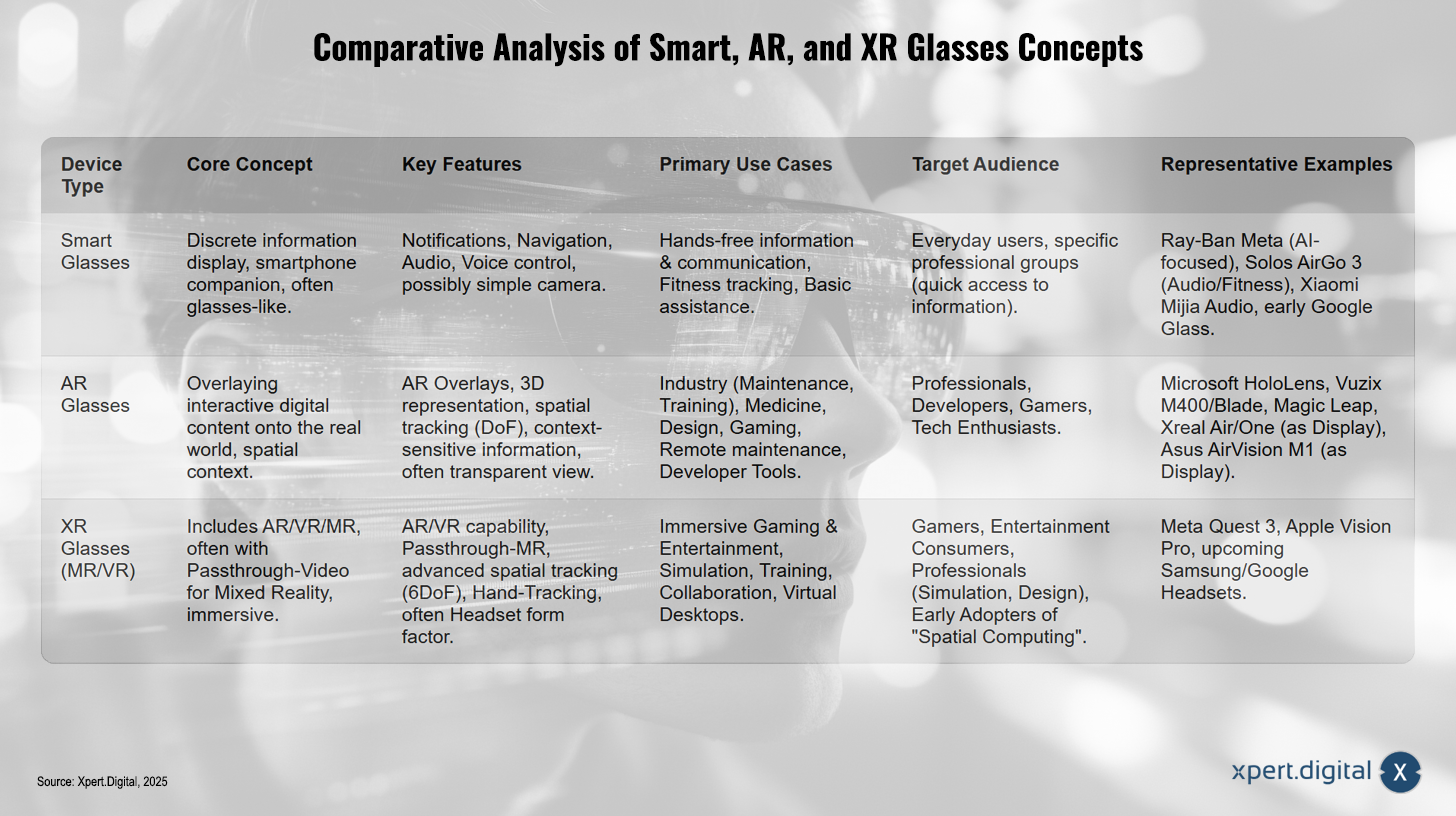
Comparative analysis of smart, AR and XR glasses concepts – Image: Xpert.Digital
A comparative analysis of various smart wearable eyewear concepts reveals three main categories with different applications and target groups. Smart glasses primarily function as discreet information display devices and smartphone companions in a glasses-like design. They offer features such as notifications, navigation, audio, and voice control, sometimes also including a basic camera. These devices are aimed at everyday users and specific professional groups who require quick access to information. Well-known examples include the Ray-Ban Meta with AI Focus, the Solos AirGo 3 for audio and fitness, the Xiaomi Mijia Audio, and the early Google Glass.
AR glasses, on the other hand, overlay interactive digital content onto the real world with spatial context. Their main features include AR overlays, 3D rendering, spatial tracking, and context-sensitive information, often offering a transparent view. This technology is particularly prevalent in industry for maintenance and training, medicine, design, gaming, and remote maintenance. The target audience consists of professionals, developers, gamers, and technology enthusiasts. Representative examples include Microsoft HoloLens, Vuzix M400/Blade, Magic Leap, as well as Xreal Air/One and Asus AirVision M1 as display solutions.
XR (Mixed Reality/Virtual Reality) glasses form the most comprehensive category, combining AR and VR technologies, often with passthrough video for highly immersive mixed reality experiences. They are characterized by AR/VR capabilities, passthrough MR, advanced spatial tracking, and hand tracking, and frequently feature a headset form factor. Their applications include immersive gaming and entertainment, simulation, training, collaboration, and virtual desktops. The target audience includes gamers, entertainment consumers, simulation and design professionals, and early adopters of spatial computing. The MetaQuest 3, Apple Vision Pro, and upcoming Samsung/Google headsets are representative examples.
The "XR" category represents not just a device type, but rather a technological direction of development toward the integration of different levels of reality. Devices like the Meta Quest 3 and Apple Vision Pro are pushing the boundaries and suggesting that future devices may no longer fit neatly into "AR" or "VR" categories. Instead, they will offer a fluid spectrum of experiences, enabled by advanced passthrough technology and sophisticated software platforms. While this convergence complicates simple categorization, it points to a future with more versatile hardware that moves away from rigid AR/VR definitions and toward a unified, flexible platform for digital interaction.
Key basic technologies and innovations
Progress in the smart glasses market is largely driven by innovations in key technologies.
1. Display technologies
Display technology is crucial for the user experience. Advances focus on brightness, resolution, field of view (FoV), energy efficiency, and form factor (transparency, weight). Key technologies include:
- Micro-OLED: This technology is commonly used in current consumer AR glasses such as the Xreal Air/One and Viture Pro. It offers high resolution and contrast in a compact size. Brightness is an important factor for outdoor use; the Viture Pro claims peak brightness of 4000 nits (1000 nits perceived), while the Xreal One reaches 600 nits. The field of view (FoV) affects immersion, with current models achieving values around 46° (Viture Pro) to 50° (Xreal One).
- LCoS (Liquid Crystal on Silicon): Used, for example, in the Vuzix Ultralite Pro OEM platform and enables colored 3D AR experiences.
- MicroLED: Considered a promising future technology with potential for high brightness and efficiency, but still faces challenges in mass production and yield. Vuzix uses monochrome MicroLEDs in its Ultralite Audio OEM platform for longer battery life.
- Waveguides (light guides): These optical components are essential for projecting the image from a microdisplay source compactly and transparently in front of the user's eye. Developments are focused on higher efficiency, reduced thickness (Vuzix showcases 1.0 mm thin waveguides), and enabling full color with a wider field of view. Various types exist, such as reflective waveguides, with LetinAR focusing on cost-effective plastic versions. Integration with AI to optimize energy efficiency is a research area. Vuzix also highlights its "Incognito" technology for discreet displays.
- Electrochromic Dimming: Technologies for adjusting lens tint, as used in Viture Pro and XREAL Air 2 Pro, increase versatility in different lighting conditions.
The choice of display technology significantly determines the primary use case and the device's form factor. High-resolution micro-OLEDs with a moderate field of view, as used in Xreal and Viture glasses, are well-suited as wearable monitors for media consumption and gaming – they offer an AR-like display, but not a complete overlay of the real world. More complex systems with waveguides and projectors, as used in HoloLens or potentially the Vuzix Ultralite Pro, enable true AR overlays, but often result in bulkier or more expensive designs. The trend toward thinner waveguides and more efficient microdisplays is therefore crucial for realizing consumer-friendly AR glasses. This technological choice thus fundamentally segments the current capabilities and target applications in the market.
Related to this:

2. The role of artificial intelligence (AI)
AI is transforming smart glasses from passive display devices into interactive, intelligent assistants and is the main driver behind the recent market surge. AI features include:
- Natural Language Processing (NLP): Enables intuitive voice control, understanding of complex commands, and hands-free operation. Examples include Meta AI ("Hey Meta"), ChatGPT integration in Solo's AirGo 3, and the planned integration of Google Gemini.
- Computer vision allows the glasses to "see" and understand their surroundings. This enables object recognition, real-time translation, the provision of contextual information, as well as precise AR tracking and spatial understanding. On-device processing (directly on the glasses) is becoming increasingly important, as seen in Rokid glasses.
- Proactive & Context-Based Assistance: AI analyzes sensor data, location and user behavior to offer timely, relevant information without explicit request.
- Multimodal AI: Combines different AI models (e.g., sound recognition + object recognition + calorie estimation) for complex applications.
AI integration occurs both directly on the device (requiring efficient processors with NPUs) and via connections to smartphones or the cloud. AI is considered fundamental to the future of XR. Generative AI also plays a role in improving realism in AR and represents a huge market.
AI is not just another feature; it's evolving into a core value proposition in the consumer smart glasses segment. It differentiates these devices from simple wearables and potentially paves the way for them to become the primary interface for interacting with AI assistants, challenging smartphones in certain contexts. Competition is increasingly shifting from pure hardware specifications to the intelligence of the glasses and the integrated user experience. The linking of AI-driven growth with detailed AI capabilities and the discussion surrounding their potential to replace smartphones underscores this strategic shift.
3. Computing power and chipsets
Powerful yet energy-efficient processors are needed to handle AI tasks, sensor fusion, and graphics rendering, especially for AR/XR. Qualcomm is a key player with its purpose-built Snapdragon XR platforms (XR1, XR2, XR2+ Gen 2, AR1 Gen 1). These chips integrate CPUs, GPUs, and NPUs (Neural Processing Units) for AI tasks. Companies like Google (Tensor) and potentially Apple are relying on their own chips. Xreal uses its own X1 chip for spatial computing capabilities. Balancing performance, power consumption, and heat dissipation in a small form factor presents a significant challenge.
4. Battery life and energy efficiency
Battery life remains one of the biggest challenges. Current devices often offer only a few hours of active use (e.g., Ray-Ban Meta approximately 4 hours; Anzu 5 hours; Solos AirGo 3 up to 11 hours, but that's audio only). Using features, especially the camera, significantly impacts power consumption. Improvements come from more efficient components (chips, displays), better power management in the software, and advances in battery technology (higher energy density, smaller form factor). Charging cases are standard to extend usability. Energy efficiency is also a selling point for smart glass in construction, which utilizes related technologies such as electrochromism, highlighting the industry's broader focus on energy conservation.
Battery life acts as a fundamental constraint on functionality and acceptance. The trade-off between features (especially display brightness/complexity, continuous sensor data collection, and AI processing) and battery life dictates device design and use cases. Achieving an "all-day" battery life is a critical milestone for smart glasses to move beyond niche applications or short usage intervals and become truly integrated everyday companions. This constraint drives innovation in energy-saving components and optimized software, as evidenced by the numerous mentions of it as a challenge and the efforts to improve efficiency.
5. Connectivity
Connectivity is essential for accessing data, cloud AI, and interacting with other devices. Standard technologies include Bluetooth (for smartphone pairing and audio) and Wi-Fi. The rollout of 5G is seen as a significant opportunity, as it offers high speeds and low latency, crucial for demanding AR/XR experiences and offloading computing power to the edge/cloud. A seamless and robust connection in a compact form factor remains a technical challenge. Wi-Fi dominates in industrial applications that require high bandwidth.
6. Software Platforms & Ecosystems
Dedicated operating systems for XR are becoming established. Google has announced Android XR and is working with partners like Samsung, Qualcomm, Sony, Lynx, and XREAL to create a broad platform for various device types. The goal is to provide the operating system, APIs, and AI foundations. Meta uses its own platform (likely Android-based) for Quest headsets and Ray-Ban glasses, integrated with the Meta View app. Apple relies on visionOS for the Vision Pro. Qualcomm offers the Snapdragon Spaces XR Developer Platform for application development. Developer SDKs (Meta SDK, Lens Studio, XReal NRSDK, Rokid SDK) are crucial for creating applications and content. The availability of compelling apps and content is a key factor for adoption.
The smart glasses market is entering a phase of platform competition, similar to the battle of smartphone operating systems (iOS vs. Android). Google's Android XR strategy aims to create an open ecosystem to counter Apple's closed visionOS and Meta's established platform. The success of these platforms will depend heavily on attracting developers and enabling seamless experiences across hardware from different manufacturers. OEMs' choice of platform, such as Samsung's decision to adopt Android XR, is a significant strategic move.
Technological trends and developments in smart glasses
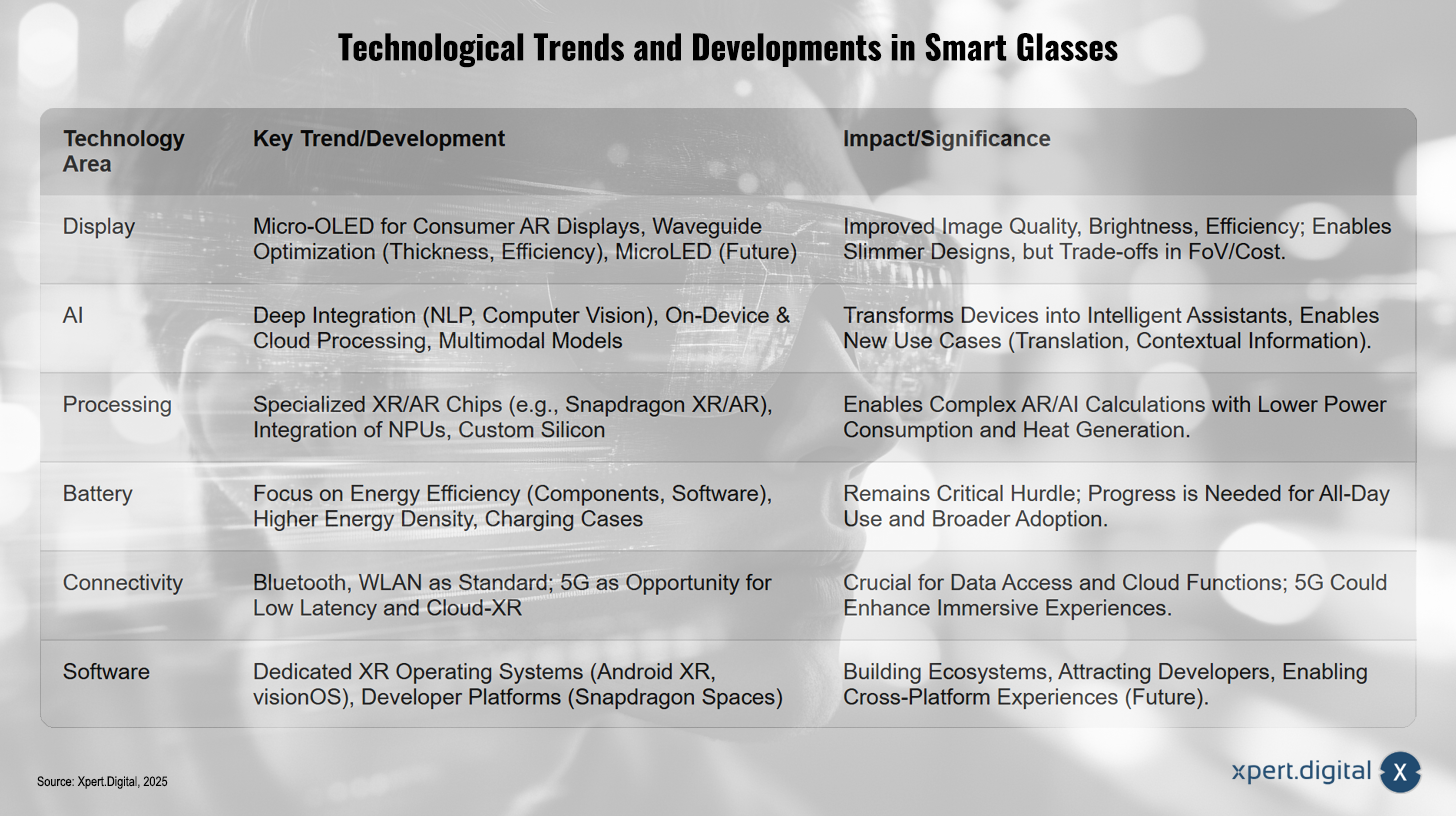
Technological trends and developments in smart glasses – Image: Xpert.Digital
Several significant development trends are currently emerging in the field of smart glass technology. Micro-OLED solutions dominate display technologies for consumer AR displays, while at the same time, work is underway to optimize waveguides in terms of thickness and efficiency. MicroLED is considered a promising future technology. These advancements lead to improved image quality, higher brightness, and increased efficiency, enabling slimmer device designs – albeit with certain compromises in terms of field of view and cost.
AI integration is becoming a central element of modern smart glasses. Deep implementations of natural language processing and computer vision, combined with on-device and cloud processing as well as multimodal models, are transforming these devices into intelligent assistants. This opens up innovative application possibilities such as real-time translations and context-aware information provision.
In the processor sector, manufacturers are increasingly relying on specialized XR/AR chips, such as the Snapdragon XR/AR, with integrated neural processing units and custom-designed silicon. These technologies enable complex AR and AI calculations while simultaneously reducing power consumption and heat generation.
Battery technology remains a critical hurdle for the widespread adoption of smart glasses. The focus here is on improved energy efficiency in both hardware components and software, higher energy density, and innovative solutions such as charging cases. Nevertheless, further advancements are needed to enable all-day use.
Bluetooth and Wi-Fi are the current connectivity standards, while 5G is considered a promising technology for low latency and cloud XR applications. These connectivity technologies are crucial for seamless data access and cloud functionalities, with 5G having the potential to significantly enhance immersive experiences.
On the software side, dedicated XR operating systems like Android XR and visionOS, as well as developer platforms like Snapdragon Spaces, are emerging. These systems are essential for building functioning ecosystems to attract developers and, in the future, enable cross-platform experiences.
🎯🎯🎯 Benefit from Xpert.Digital's extensive, five-fold expertise in one comprehensive service package | BD, R&D, XR, PR & Digital Visibility Optimization

Benefit from Xpert.Digital's extensive, five-fold expertise in a comprehensive service package | R&D, XR, PR & Digital Visibility Optimization - Image: Xpert.Digital
Xpert.Digital possesses in-depth knowledge across various industries. This allows us to develop tailored strategies precisely aligned with the requirements and challenges of your specific market segment. By continuously analyzing market trends and monitoring industry developments, we can act proactively and offer innovative solutions. The combination of experience and expertise generates added value and provides our clients with a decisive competitive advantage.
More information here:
Smart Glasses/AR/VR Market: The Greatest Growth Opportunities by 2030
Market analysis: Size, growth and forecasts
Assessing the global market size for smart glasses is complex, as the definitions and scope of the analyzed segments vary greatly between different market research companies.
Market size
Estimates for the smart glasses market alone in 2024 range from USD 878.8 million (MarketsandMarkets) to USD 1.93 billion (GrandViewResearch) and up to USD 5.98 billion (Cognitive Market Research). These discrepancies are likely due to differing definitions of which device types (from audio glasses to simple AR glasses) are included. GrandViewResearch forecasts a value of USD 2.47 billion for 2025. Technavio expects growth of USD 90.6 million between 2024 and 2029. Forecasts for 2030 are USD 4.13 billion (MarketsandMarkets) and USD 8.26 billion (GrandViewResearch), respectively.
The broader market for AR/VR smart glasses was estimated at USD 16.6 billion in 2023 and USD 45.6 billion in 2024 (Straits Research). Future projections range from USD 41.6 billion by 2029 (The Business Research Company) to USD 47.9 billion by 2032 and USD 120.87 billion by 2033 (Straits Research).
It is important to distinguish this from the smart glass market (for architecture and automotive), which is estimated at USD 6.42 billion in 2025 and projected to grow to USD 10.42 billion by 2030. Market Research Future estimated this market at USD 6.5 billion for 2022, with a forecast of USD 16.10 billion by 2030.
The overall market for wearable technology was valued at USD 70 billion in 2023 and is projected to grow to USD 94 billion by 2025 and USD 231 billion by 2032. The IoT (Internet of Things) market is worth hundreds of billions of dollars, and the market for generative AI is forecast to reach USD 1.3 trillion by 2032.
Related to this:

Growth rates (CAGR)
Forecasts for annual growth are consistently high, but also vary considerably. For smart glasses, CAGR estimates range from 14.5% (Technavio, 2024-2029) to 29.4% (MarketsandMarkets, 2024-2030), with Cognitive Market Research predicting 27.5% (2024-2031) and GrandViewResearch 27.3% (2025-2030). Driven by the success of the Ray-Ban Meta, Counterpoint Research even forecasts a CAGR of over 60% by 2029.
For the AR/VR smart glasses market, CAGR forecasts are 11.44% (Straits Research, 2025-2033), 12.5% (2023-2032), and 18.0% (until 2029). IDC forecasts a CAGR of 89% for the AR market alone (2022-2027).
The market for smart glass (architecture) is expected to grow at a CAGR of 10.2% (MarketsandMarkets, 2025-2030) or 13.84% (Market Research Future, 2024-2030).
segmentation
The market is segmented according to various criteria:
- Device type: Monocular vs. binocular; basic vs. advanced features. Binocular glasses are expected to hold a prominent share. Models with advanced features (audio, camera, sensors) are projected to achieve the largest share by 2030.
- Technology: AR, VR, MR. AR glasses currently lead the AR/VR glasses market.
- Connectivity: WLAN, Bluetooth, cellular. WLAN dominates in industrial environments.
- Application: Consumers vs. businesses (healthcare, industry, gaming, logistics, etc.). The consumer goods industry is expected to be a major growth driver, although business applications, especially in the AR sector, will account for a large share.
Regional analysis
- North America currently dominates the market share (33.8% for wearables; 35.4% for industrial smart glasses by 2025; over 40% for AR/VR glasses). This is due to the strong presence of key players (Meta, Google, Apple, Microsoft, Vuzix), high technology adoption, and favorable regulatory environments. Lucrative growth opportunities are expected.
- Asia-Pacific: Expected to experience the fastest growth. CAGR estimates are 29.5% (Smart Glasses, 2024-2031) and 14% (Smart Glass – Architecture, 2021-2026). Drivers include a strong manufacturing base (China, India, South Korea), large consumer markets, the presence of manufacturers (Xiaomi, Huawei, TCL, Samsung, Japanese companies), and lower manufacturing costs. A CAGR of 104% is projected for the Chinese AR market. Japan is expected to ship 415,000 XR units in 2023.
- Europe: Holds a significant market share (25.4% for wearables). Growth is driven by technological advancements, demand for energy-efficient products (driving the adoption of smart glass), and potentially by regulatory frameworks (e.g., the EU AI Act). The UK holds 9% of the global immersive reality market.
The considerable variation in market size and CAGR estimates highlights the lack of a standardized market definition and significant uncertainty. The term "smart glasses" can encompass everything from audio glasses to full-fledged MR headsets. This ambiguity makes direct comparisons difficult but underscores the young and fragmented nature of the market. The extremely high CAGR forecasts from some sources (such as Counterpoint's 60%+) are likely heavily influenced by the currently low base and the anticipated impact of AI-powered glasses. This suggests potentially volatile growth rather than steady, predictable expansion.
Competitive dynamics and strategies of the main players
General competitive landscape
The smart glasses market is becoming increasingly complex and competitive. Fueled by the success of the Ray-Ban Meta and the perceived potential of AI integration, numerous new players are entering the market. The forecast for 2025 is "battle of hundreds of smart glasses." Competition is taking place across various segments: consumer AI glasses, consumer AR glasses (often used as wearable displays), enterprise AR/MR solutions, and high-end XR headsets. Key players include established technology giants, specialized AR/VR companies, and numerous new entrants, particularly from China.
Market share analysis
Meta has established a dominant position, particularly after the launch of the Ray-Ban Meta, and held over 60% of the global market share for smart glasses in 2024. In the broader VR/AR headset market (revenue share Q4 2022), Meta held 81%, well ahead of DPVR and Pico, each with 7% (this data is older and VR-focused).
In the specific segment of AR glasses, XREAL claims a leading position with a market share of 47.3% in the first half of 2024. Previous data for Q3 2023 showed XREAL at 51%. Another source, focusing on the Chinese AR market (likely older data), placed Nreal (XREAL) in first place with 34.5%, followed by Thunderbird (RayNeo/TCL) with 28.6%, Rokid with 24.4%, and Xiaomi with 8.5%. In the broader wearables market, competitors include Sony, Apple, Huawei, Adidas, Nike, Alphabet, Samsung, and Xiaomi.
Estimated market shares of leading smart/AR glasses providers
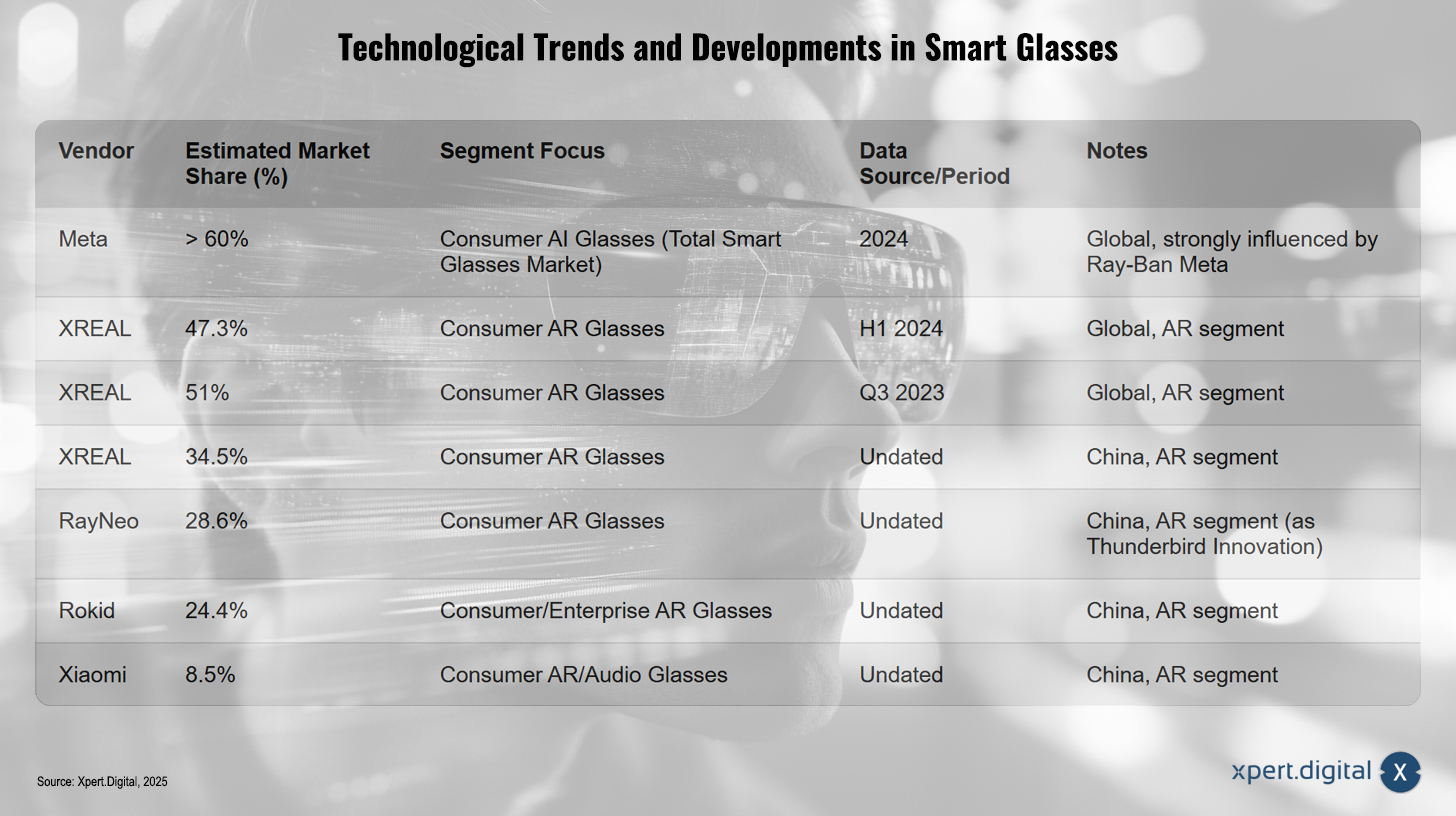
Estimated market shares of leading smart/AR glasses providers – Image: Xpert.Digital
The landscape of smart and AR glasses providers currently shows clear market leaders. Meta dominates the overall consumer smart glasses market with over 60%, according to 2024 data, largely due to the success of the Ray-Ban Meta models. In the specific AR glasses segment, XREAL holds a leading position, with a global market share of 47.3% in the first half of 2024 and even 51% in the third quarter of 2023. In the Chinese AR glasses market, XREAL holds a 34.5% share, followed by RayNeo (under the company Thunderbird Innovation) with 28.6% and Rokid with 24.4%, the latter serving both consumer and enterprise customers. Xiaomi completes the list of significant providers in China with an 8.5% market share in the AR/audio glasses segment. The exact time periods for the Chinese market data could not be specified in the sources available to us.
The most important smart/AR glasses manufacturers right now
1. Meta
- Strategy: Leads the consumer AI glasses market through its partnership with EssilorLuxottica (Ray-Ban, Oakley). Focus is on fashionable design, camera/audio features, and an integrated meta AI assistant. Plans aggressive expansion starting in 2025, likely through expanding its product portfolio. Also developing advanced AR glasses (Orion prototype) but faces cost challenges. Dominant player in the VR sector with its Quest line.
- Products: Ray-Ban Meta Smart Glasses (Wayfarer, Skyler Styles), Meta Quest VR/MR Headsets.
- Strengths: Strong brand partnership (Ray-Ban), leading AI integration, established ecosystem (meta-platform, social media integration), market leadership and momentum, strong financial resources (although Reality Labs is under pressure).
- Weaknesses: Data privacy concerns related to Meta, limited AR capabilities of current glasses, potential battery life limitations, high costs for advanced AR development (Orion).
2. Google
- Strategy: Currently focused on providing the software platform (Android XR) and AI (Gemini) to partners (Samsung, Qualcomm, Sony, Lynx, XREAL) rather than leading the market with its own hardware. Leveraging the Android ecosystem. Previous hardware ventures (Google Glass, Project Iris AR headset) encountered challenges and were discontinued or refocused. Exploring concepts for AI glasses. The focus on enterprises with the Glass Enterprise Edition has decreased.
- Products: Android XR platform. Potentially future AI glasses (unconfirmed).
- Strengths: Strong AI capabilities (Gemini), dominant mobile operating system (Android), established developer ecosystem, important partnerships (Samsung, Qualcomm).
- Weaknesses: Previous hardware failures damage credibility, lack of current proprietary consumer hardware, platform strategy dependent on the success of partners.
3. Samsung
- Strategy: Re-enters the XR market in partnership with Google and Qualcomm. Develops both an XR headset (Project Moohan, targeting Apple Vision Pro) running Android XR, and AI-powered smart glasses (Project Haean, targeting Ray-Ban Meta). Leverages the Galaxy ecosystem and AI capabilities (Galaxy AI, Gemini integration).
- Products: Upcoming XR Headset (Project Moohan), upcoming XR Smart Glasses (Project Haean).
- Strengths: Strong hardware manufacturing capabilities, global brand recognition, existing mobile ecosystem (Galaxy), important partnerships (Google, Qualcomm).
- Weaknesses: Late re-entry into the XR market, dependence on Google's platform, success of the new products still unproven.
4. Apple
- Strategy: Currently focused on high-end spatial computing with the Apple Vision Pro. Not pursuing simpler, Mac-compatible AR smart glasses for the time being. Exploring the potential for simpler, more cost-effective smart glasses (similar to Meta Ray-Ban, potentially with Siri, camera, audio, and health features) through internal studies and employee surveys. Leveraging the strong ecosystem (iOS, visionOS) and brand loyalty.
- Products: Apple Vision Pro. Potentially future smart glasses (unconfirmed).
- Strengths: Strong brand, loyal customer base, established ecosystem (hardware, software, services), expertise in chips and design, leader in wearables (watch).
- Weaknesses: Vision Pro is very expensive and a niche product; there is currently no cheaper smart glasses offering; the closed ecosystem limits partnerships.
5. Xiaomi:
- Strategy: Pursues a dual strategy that appeals to both the mass market and high-end users. Offers affordable audio glasses (Mijia) and more advanced AR glasses (Wireless AR Glass Discovery Edition). Focuses on wireless connectivity (NFC, Wi-Fi 6E) and energy efficiency, often utilizing the processing power of smartphones. Plans to launch AI glasses in 2025. Holds a strong position in the Chinese AR market. Portfolio management focuses on improving features, UX, market reach, and brand positioning.
- Products: Mijia Smart Audio Glasses, Wireless AR Glass Discovery Edition, upcoming AI glasses.
- Strengths: Competitive prices, strong presence in Asia, diverse product portfolio, innovation in connectivity/design.
- Weaknesses: Brand perception outside Asia may be lower than for Apple/Samsung; some models may potentially rely on smartphone computing power.
6. Asus:
- Strategy: Focuses on productivity and gaming use cases with its portable AirVision M1 display. Positions it as a multi-monitor replacement for laptops and as a companion for gaming devices like the ROG Ally. Emphasizes ergonomics, data privacy (embedded display), ease of use (USB-C port), and virtual screen capabilities.
- Products: Asus AirVision M1.
- Strengths: Strong brand in the PC/gaming sector (ROG), focus on specific, high-quality use cases (productivity, gaming), innovative multi-screen software.
- Weaknesses: Niche product focus, not a provider of general-purpose smart/AR glasses, market acceptance unproven.
7. Solos:
- Strategy: Targets fitness enthusiasts and athletes (cyclists, runners) with lightweight audio glasses that offer AI coaching and tracking. Integrates ChatGPT for voice assistance and features such as real-time translation and posture monitoring. Focus on comfort, audio quality, and app-based AI features.
- Products: Solos AirGo 3 (multiple frame options).
- Strengths: Clear target group (fitness), unique AI coaching features, lightweight design, good audio quality, integration of leading AI (ChatGPT).
- Weaknesses: Niche market focus, lack of a visual display/AR overlay, dependent on connected phone and app.
8. Vuzix:
- Strategy: Primarily focused on enterprise, industrial, medical, and defense markets. Offers rugged AR smart glasses (M-Series, Blade) for applications such as remote maintenance, logistics, and telemedicine. Also develops advanced waveguide technology and display engines for ODM/OEM partners and positions itself as a key supplier to the broader market, including consumer AI glasses. Partners with companies such as Quanta.
- Products: M400, Blade series, Ultralite OEM platforms, waveguides & display engines.
- Strengths: Strong position in corporate/industrial niches, extensive IP portfolio (patents), advanced optical technology (waveguides), growing ODM/OEM business.
- Weaknesses: Lower brand awareness in the consumer market, recently reported decline in sales, increasing competition in the enterprise sector.
9. RayNeo (TCL):
- Strategy: Entering the consumer AR/smart glasses market under the RayNeo brand. Offering both AR glasses with displays (X series) and simpler XR glasses (Air series). The RayNeo X3 Pro aims to compete with high-end smart glasses (like Meta Ray-Ban, but with a display) by integrating AI, color micro-LED displays, and a more conventional design. Also offering more affordable options (Air 3S) and camera-based glasses (V3). Leveraging TCL's display expertise.
- Products: RayNeo X3 Pro, RayNeo Air 3S, RayNeo V3, older X2/Air models.
- Strengths: TCL's background in display manufacturing, improved design/comfort, integration of AI and color displays, competitive positioning against Meta.
- Weaknesses: RayNeo's brand awareness is still being built up, market acceptance of display-based consumer AR glasses is still uncertain, concerns regarding battery life have been mentioned.
10. Xreal (formerly Nreal):
- Strategy: Focus on consumer AR glasses primarily positioned as wearable displays for gaming, streaming, and productivity. Aggressive global expansion and retail partnerships (Smartech, Micro Center, SoftBank C&S). Competing with higher-end MR/VR headsets in terms of price and ease of use. Developing spatial computing capabilities (Nebula software, X1 chip in Xreal One). Claiming a significant AR market share.
- Products: Xreal Air, Air 2, Air 2 Pro, Xreal One (formerly Light).
- Strengths: Leading market share in consumer AR glasses, good display quality (Micro-OLED), relatively affordable price, broad device compatibility, strong retail presence.
- Weaknesses: Limited true AR capabilities (more suited to wearable displays), requires connection to a phone/device (although Beam accessories add wireless/spatial functionality), smaller FoV than some competitors.
11. Lenovo:
- Strategy: Appeals to both gaming/consumer and enterprise segments. Offers Legion Glasses as a wearable display accessory for the Legion Go handheld and other devices. Targets businesses with its ThinkReality AR glasses (A3 PC Edition), focusing on creating virtual workspaces in conjunction with compatible laptops. Leverages existing strengths in the PC and enterprise markets.
- Products: Legion Glasses, ThinkReality A3 PC Edition.
- Strengths: Established brand in the PC/Enterprise sector, synergy with existing products (Legion Go, ThinkPads), focus on specific productivity/gaming use cases.
- Weaknesses: Smart glasses are likely to be a smaller part of the overall business, acceptance level unclear, ThinkReality A3 has limited compatibility.
Related to this:

SWOT analysis of selected key players in the smart glasses market
Meta
- Strengths: Market leader (Consumer AI), strong brand (Ray-Ban), AI integration, ecosystem, financial resources.
- Weaknesses: Data privacy image, limited AR functions (currently), battery life, high AR development costs.
- Opportunities: Portfolio expansion, deeper AI integration, metaverse vision, cross-selling with the platform.
- Risks: Increasing competition (“Battle of Hundreds”), regulation (data protection, AI), social acceptance, profitability pressure (Reality Labs).
- Strengths: Strong AI (Gemini), Android dominance, developer ecosystem, strategic partnerships (Samsung, Qualcomm).
- Weaknesses: Previous hardware failures, no current consumer hardware, dependence on partners.
- Opportunities: Establishment of Android XR as a standard, AI glasses concepts, use of the Android ecosystem.
- Risks: Failure of the platform strategy, slow partner adoption, competition from integrated ecosystems (Apple, Meta).
Samsung
- Strengths: Hardware expertise, global brand, Galaxy ecosystem, partnerships (Google, Qualcomm).
- Weaknesses: Late re-entry, dependence on Android XR, product success still unproven.
- Opportunities: Successful launch of Moohan/Haean, use of the Galaxy platform, synergies with Google/Qualcomm.
- Risks: Strong competition (Apple, Meta), possible delays, acceptance problems with new products.
Apple
- Strengths: Strong brand & loyalty, ecosystem (iOS/visionOS), design/chip expertise, wearable experience (watch).
- Weaknesses: Vision Pro is very expensive/niche, no affordable smart glass, closed ecosystem.
- Opportunities: Potentially cheaper smart glasses, integration of health functions, use of the developer base.
- Risks: High expectations, cannibalization of other products, slow diffusion of high-end XR, competition in the lower price segment.
Xiaomi
- Strengths: Competitive prices, strong presence in Asia, broad portfolio, innovation (connectivity).
- Weaknesses: Brand perception outside Asia, dependence on smartphones (partially).
- Opportunities: Expansion into western markets, success with upcoming AI glasses, use of the IoT ecosystem.
- Risks: Intense competition (especially from China), margin pressure, global brand building.
Vuzix
- Strengths: Strong position in enterprise/industry, IP portfolio, optics technology (waveguides), ODM/OEM business.
- Weaknesses: Lower consumer brand awareness, recent decline in sales, increasing enterprise competition.
- Opportunities: Growth in the ODM/OEM market (suppliers for AI glasses), development of new enterprise niches, partnerships.
- Risks: Loss of ODM customers to competitors, price pressure in the enterprise market, slow enterprise adoption.
Xreal
- Strengths: Market leader in consumer AR displays, good display quality, affordable price, broad compatibility, retail presence.
- Weaknesses: Limited true AR capabilities, requires connection to devices, smaller FoV than competitors.
- Opportunities: Improvement of spatial computing features, expansion into new markets/retailers, expansion of the software ecosystem.
- Risks: Competition from AI glasses (meta) and cheaper MR headsets, perception as a mere display instead of a true AR platform.
Our recommendation: 🌍 Limitless reach 🔗 Connected 🌐 Multilingual 💪 Sales power: 💡 Authentic with strategy 🚀 Innovation meets 🧠 Intuition


From local to global: SMEs conquer the world market with a clever strategy - Image: Xpert.Digital
In an era where a company's digital presence determines its success, the challenge lies in creating an authentic, personalized, and far-reaching presence. Xpert.Digital offers an innovative solution that positions itself as the intersection of an industry hub, a blog, and a brand ambassador. It combines the advantages of communication and sales channels in a single platform and enables publication in 18 different languages. Cooperation with partner portals and the ability to publish articles on Google News and a press distribution list with approximately 8,000 journalists and readers maximize the reach and visibility of the content. This represents a crucial factor in external sales and marketing (SMarketing).
More information here:
Smart Glasses Market Dynamics: AR Glasses Between Consumer and Industry
Application areas and adoption patterns
Enterprise and industrial applications
Although consumer applications are increasingly attracting attention, the enterprise sector still represents the most mature market for AR-based smart glasses, with demonstrable benefits across various industries.
1. Logistics and warehousing
One of the most established applications is "vision picking." Warehouse workers use smart glasses (e.g., Vuzix M-Series, Google Glass Enterprise Edition) to receive picking instructions via AR overlays, see the correct storage location, scan barcodes hands-free, and confirm picks. A case study by DHL demonstrates significant performance improvements through time savings and error reduction, as well as high employee acceptance when using Vuzix and Google Glass in conjunction with software from Ubimax (now TeamViewer Frontline). DHL has rolled out the technology globally and also uses the newer generation of Glass Enterprise Edition. Providers like ProGlove often supplement this with wearable scanners. Amazon is also exploring its use in logistics. The main advantages lie in increased productivity, accuracy, efficiency, and the ability to work hands-free.
2. Production
In manufacturing, smart glasses enable a wide range of applications: remote maintenance (experts guide on-site technicians via live video), training (displaying instructions directly on machines), quality control (comparing real objects with digital models using AR), hands-free access to circuit diagrams and manuals, and overall improvement in operational efficiency. Leading providers in this field include Vuzix, Microsoft (HoloLens), and RealWear. These developments are driven by trends such as Industry 4.0 and the Industrial Internet of Things (IIoT). Initiatives like "Made in China 2025" further promote adoption. Benefits include reduced downtime, improved first-response rates, more effective training, enhanced quality assurance, and increased workplace safety.
3. Healthcare
In healthcare, smart glasses are used for surgical support (displaying patient data or imaging as an overlay), remote diagnoses and consultations, medical training (VR/AR simulations), telemedicine (the Vuzix M400 is used during lengthy surgeries), and hands-free access to patient records. The devices often need to be disinfectable and HIPAA-compliant (e.g., the Vuzix M400). Adoption rates in large hospitals are increasing. Benefits include improved precision during procedures, more effective training, faster access to information, and remote access to expert knowledge. Providers include Vuzix, Microsoft, and ThirdEye Gen.
4. Field service and maintenance
Similar to manufacturing, smart glasses enable field service technicians to receive remote support from experts, view manuals and diagrams hands-free, document work with photos/videos, and increase efficiency. This is particularly relevant for industries such as energy supply, utilities, and equipment service.
5. Leading providers in the corporate sector
Established vendors in the enterprise sector include Vuzix (M-Series, Blade), Microsoft (HoloLens 1 & 2), RealWear (rugged headsets), formerly Google (Glass Enterprise Edition, now less prominent), ODG (an older vendor), and DAQRI (now defunct). Mid-sized vendors focus on cost-effective solutions (Upskill is mentioned).
Although the enterprise sector currently represents the most mature and best-validated market for AR glasses, demonstrating clear return on investment (ROI) in terms of productivity, efficiency, and security, the failure of some players (Daqri) and Google's withdrawal from the enterprise segment indicate that adoption in this sector also needs to overcome integration challenges, prove its value beyond niche applications, and ensure usability and comfort for workers. Success depends on tailored software solutions and the demonstration of tangible benefits.
Consumer applications
Various application areas are developing in the consumer market, often characterized by specific device types and functionalities.
1. Sports and Fitness
Smart glasses are used to track workouts, display performance data (speed, distance, heart rate), provide navigation while cycling or running, and offer AI-powered coaching. Meta is collaborating with EssilorLuxottica, the owner of Oakley, on this. Solos, with its AI features, specifically targets athletes. It has the potential to replace functions of bike computers or fitness trackers. The market potential is considered significant, as it builds on existing markets for sports glasses and fitness trackers.
2. Gaming and Entertainment
A key application is providing immersive gaming experiences (through AR overlays or full VR/MR) as well as functioning as large, virtual displays for console or PC games and video streaming. Key players in this segment include Xreal (Air/One), Viture (Pro XR), Lenovo (Legion Glasses), and Asus (AirVision M1). These devices are often connected to external devices (consoles, PCs, smartphones) via USB-C. Birdbath optics are common for this use case.
3. Communication and Social Media
Hands-free calling, messaging, capturing and sharing photos and videos, and live streaming are key features. These are central to Ray-Ban Meta glasses, which utilize the Meta ecosystem. Snap Spectacles were pioneers in the field of social capturing.
4. Navigation and Information Access
Displaying turn-by-turn navigation, points of interest, real-time translations, notifications, weather information, etc., was a core function of early smart glasses and remains relevant for AI-powered assistants.
Consumer applications are fragmenting based on device capabilities and primary value proposition. The following are emerging: (1) AI/camera glasses (Meta), focused on lifestyle photography and assistance; (2) wearable displays (Xreal, Viture), focused on media consumption and gaming; and (3) fitness glasses (Solos), focused on athletic training. This fragmentation suggests that the "one-size-fits-all" smart glass for consumers doesn't yet exist. Instead, success seems to stem from effectively addressing specific needs and user groups. The challenge lies in whether any one of these niches alone can achieve mass-market appeal.
Adoption dynamics: Consumers vs. companies
The dynamics of adaptation differ significantly between the consumer and business markets.
- Historical context: After the failure of consumer products like Google Glass, the focus initially shifted strongly to the enterprise market. Adoption by companies was driven by a clear ROI (productivity, efficiency), despite high costs and less elegant design.
- Current status: Enterprise AR/MR remains an important market, especially for specialized tasks. The consumer market is experiencing a revival thanks to more affordable, fashionable, and AI-focused glasses. Nevertheless, overall shipments of AR glasses are still significantly lower than those of VR headsets. Consumer adoption is still in its early stages and is largely limited to early adopters.
- Differing requirements: Businesses demand robustness, security, specific software integrations (e.g., ERP systems), long battery life, and a demonstrable ROI. Consumers value style, comfort, ease of use, affordability, compelling apps/content, and increasingly, AI features. Data privacy concerns are high in both sectors but manifest differently (employee monitoring vs. public recordings).
- Statistics/Trends: Enterprise applications make up a large portion of the AR market (an older report cites 97%). AR/VR adoption in retail shows generational differences (Gen Z/Millennials are more open to it). Smart glasses adoption in the US workplace was projected to reach approximately 8.8 million users in 2021 (note the date). The consumer wearables market is large and growing, representing a potential foundation.
The consumer and enterprise markets are currently evolving along parallel but distinct paths. Enterprises are focusing on deep integration for specific, high-value tasks using more robust (often AR/MR) hardware. The consumer market is being revitalized by simpler, stylish AI glasses that function as companions/accessories for smartphones. While convergence may eventually occur, manufacturers need different strategies, product designs, and value propositions for each market in the short term. Success in one sector does not guarantee success in the other due to fundamentally different needs and adoption drivers. This becomes clear when comparing the different use cases, hardware requirements, and market leaders in each segment.
Related to this:
Market challenges and adoption barriers
Despite positive market dynamics and technological advances, significant challenges and barriers remain that hinder wider adoption of smart glasses.
Technological hurdles
- Battery life: This remains a significant limitation, restricting usage time and requiring frequent charging. Finding the right balance between features/performance and battery life is difficult.
- Display limitations: Issues such as a limited field of view (FoV), insufficient resolution or brightness, edge blurring, and visual discomfort can negatively impact the user experience. Manufacturing high-quality, transparent displays is complex.
- Performance/Processing Power: Powerful yet efficient chips are needed to handle AI, graphics, and sensors in a small form factor without overheating or excessive power consumption.
- Miniaturization: Integrating all necessary components (sensors, cameras, processors, batteries, displays, optics) into a small, lightweight frame is technologically challenging.
Cost and affordability
High purchase costs remain a barrier to mass adoption, especially for advanced AR/XR models. Prices range from approximately €200 (basic) to over €3,000 (advanced/enterprise). Even consumer models like the Ray-Ban Meta start at $299, while the Xreal/Viture are priced at around $400-$550. High material costs (Bill of Materials, BOM) impact profitability and pricing (Meta Orion >$10,000 BOM).
Design, comfort and ergonomics
Devices must be lightweight, comfortable for extended wear, and aesthetically pleasing. Early designs were often perceived as "clunky" or "uncool." The balance between functionality and acceptable design is crucial. Weight distribution plays a role. Potential health concerns such as eye strain, headaches, or neck pain exist.
Data protection and data security concerns
This is perhaps the biggest hurdle. Integrated cameras fuel fears of covert recordings without consent (the "glasshole" effect) and surveillance. Constantly active microphones for voice control also pose risks. Data security (storage, transmission) is crucial to prevent data leaks and misuse. Clear regulations, user controls, and transparency (e.g., recording notifications) are needed. This is particularly sensitive for players like Meta/Facebook.
Social acceptance and ethical questions
Closely linked to privacy concerns, the fear of being secretly recorded can lead to negative social reactions and resistance. Establishing social norms for acceptable use is necessary. The potential for distraction, especially in situations like driving, is also a problem.
Content ecosystem and application availability
A lack of compelling, diverse content and applications can hinder adoption, especially for AR/VR headsets. Users need clear reasons ("killer apps") to use the devices beyond the novelty factor. Robust developer tools and platforms are essential.
Market fragmentation and standardization
A lack of interoperability between platforms and devices can lead to friction for users and developers. Competing software platforms (Android XR, visionOS, Metas OS) could fragment the market (implied by).
Data privacy is not merely a technical or legal challenge; it fundamentally represents a social and psychological barrier. The failure of Google Glass demonstrated that even technically functional devices can fail if they violate social norms and generate discomfort. Overcoming this hurdle requires more than just privacy policies; it demands designs that signal intent (such as recording lights), clear communication about data usage, and the building of public trust—which can be more difficult for companies burdened with existing privacy concerns. This social barrier could significantly slow mass adoption, regardless of technological advancements.
Related to this:
Strategic Outlook and Recommendations
Synthesis of the most important market trends
The smart glasses market is being redefined by the integration of AI, leading to a resurgence of interest and significant growth, particularly in the consumer segment through products like the Ray-Ban Meta. This is attracting intense competition (the "Battle of the Hundreds"). At the same time, the market is differentiating between consumer AI glasses and more sophisticated enterprise/immersive AR/XR devices. The technological boundaries between categories are blurring, while fundamental challenges such as data privacy, battery life, and cost remain. Software platforms and ecosystems are gaining strategic importance.
Future growth opportunities
Untapped application areas such as education and accessibility offer potential. Deeper integration with the Internet of Things (IoT) could create new synergies. In the long term, smart glasses could complement or partially replace other devices such as smartphones or smartwatches. Regional expansion, particularly in the rapidly growing Asia-Pacific region, is a key growth driver. Technological breakthroughs in core components (e.g., solid-state batteries, microLED displays, more efficient AI chips) could trigger further growth spurts.
Potential future scenarios
Future developments depend on several factors. Will smart glasses remain primarily companions to smartphones or evolve into standalone computing platforms? Will AR achieve a breakthrough in the mass market or remain a niche technology for businesses? How will regulatory frameworks, particularly regarding data protection and AI, affect development? The answers to these questions will significantly shape the market landscape.
Strategic Recommendations
For manufacturers
- Clear segment focus: Clearly define the target segment (Consumer AI, Consumer AR Display, Enterprise AR/MR) and align your product and strategy accordingly.
- AI as a core competency: Invest heavily in AI capabilities as a differentiating factor and focus on useful applications beyond novelty.
- Consumer focus: Prioritize design, comfort, and battery life. Proactively address privacy concerns through design and transparency.
- Enterprise focus: Concentrate on ROI, robustness, security, and seamless integration into existing workflows. Build strong software partnerships.
- ODM/OEM strategy: Consider ODM/OEM partnerships if economies of scale or brand awareness are lacking for direct market entry (see Vuzix model).
For software developers
- Platform selection: Choose the development platform (Android XR, Meta, Apple) strategically.
- Use Cases: Focus on creating compelling use cases that leverage the unique capabilities of smart glasses (hands-free operation, contextual awareness, AR overlays).
- Optimization: Optimize applications in terms of performance and energy efficiency.
- Data protection: Consider data protection aspects during application development.
For businesses (potential users)
- ROI focus: Identify specific use cases with clear ROI potential and start with pilot projects.
- Integration & Acceptance: Focus on integration into existing systems as well as employee training and acceptance.
- Security: Prioritize solutions with robust security and data management.
- Partnerships: Work with experienced suppliers and integrators.
For investors
- Risk assessment: Recognize the high growth potential, but also the significant risks and market uncertainties.
- Evaluation criteria: Evaluate companies based on technological differentiation (optics, AI, battery), strategic partnerships, target market focus, and the ability to overcome adoption barriers (data protection, design).
- Value chain: Consider investments along the entire value chain (components, hardware, software platforms, applications).
The Future of Smart Glasses: From Failure to Breakthrough
The smart glasses market is at a crucial juncture. Driven by the transformative power of artificial intelligence and learning from past mistakes, the sector is experiencing renewed, strong growth and significant future potential. The successful launch of AI-powered consumer glasses by companies like Meta has triggered a new wave of interest and competition. Simultaneously, development is progressing in the enterprise segment, where AR and MR solutions are already delivering tangible value.
The future, however, will depend significantly on the industry's success in overcoming persistent challenges. Conquering the technical hurdles of battery life and display technology, reducing costs to a mass-market level, and creating comfortable and aesthetically pleasing designs are essential prerequisites. Crucially, though, addressing the profound data privacy and acceptance issues will be paramount. Only by gaining the trust of users and society and establishing clear ethical and social norms can smart glasses reach their full potential as the next generation of personal computing technology. The path to this goal requires not only technological excellence but also strategic vision, robust ecosystems, and a deep understanding of users' needs and concerns. The "battle of hundreds of smart glasses" has only just begun.
We are here for you - Consulting - Planning - Implementation - Project Management
Xpert.Digital - Pioneer Business Development
Smart Glasses & AI - XR/AR/VR/MR industry expert
Consumer Metaverse or Metaverse in general
If you have any questions, require further information or advice, please feel free to contact me at any time.

Konrad Wolfenstein
I would be happy to serve as your personal advisor.
You can contact me by filling out the contact form below or simply call me on +49 7348 4088 965 .
I'm looking forward to our joint project.
Write to me



Xpert.Digital - Konrad Wolfenstein
Xpert.Digital is a hub for industry focusing on digitalization, mechanical engineering, logistics/intralogistics and photovoltaics.
With our 360° Business Development solution, we support renowned companies from new business to after-sales.
Market intelligence, smarketing, marketing automation, content development, PR, mail campaigns, personalized social media and lead nurturing are part of our digital tools.
You can find more information at: www.xpert.digital - www.xpert.solar - www.xpert.plus
Keep in touch