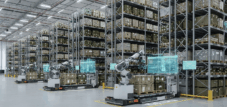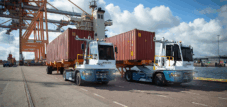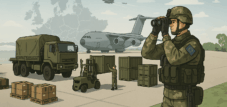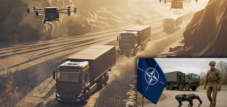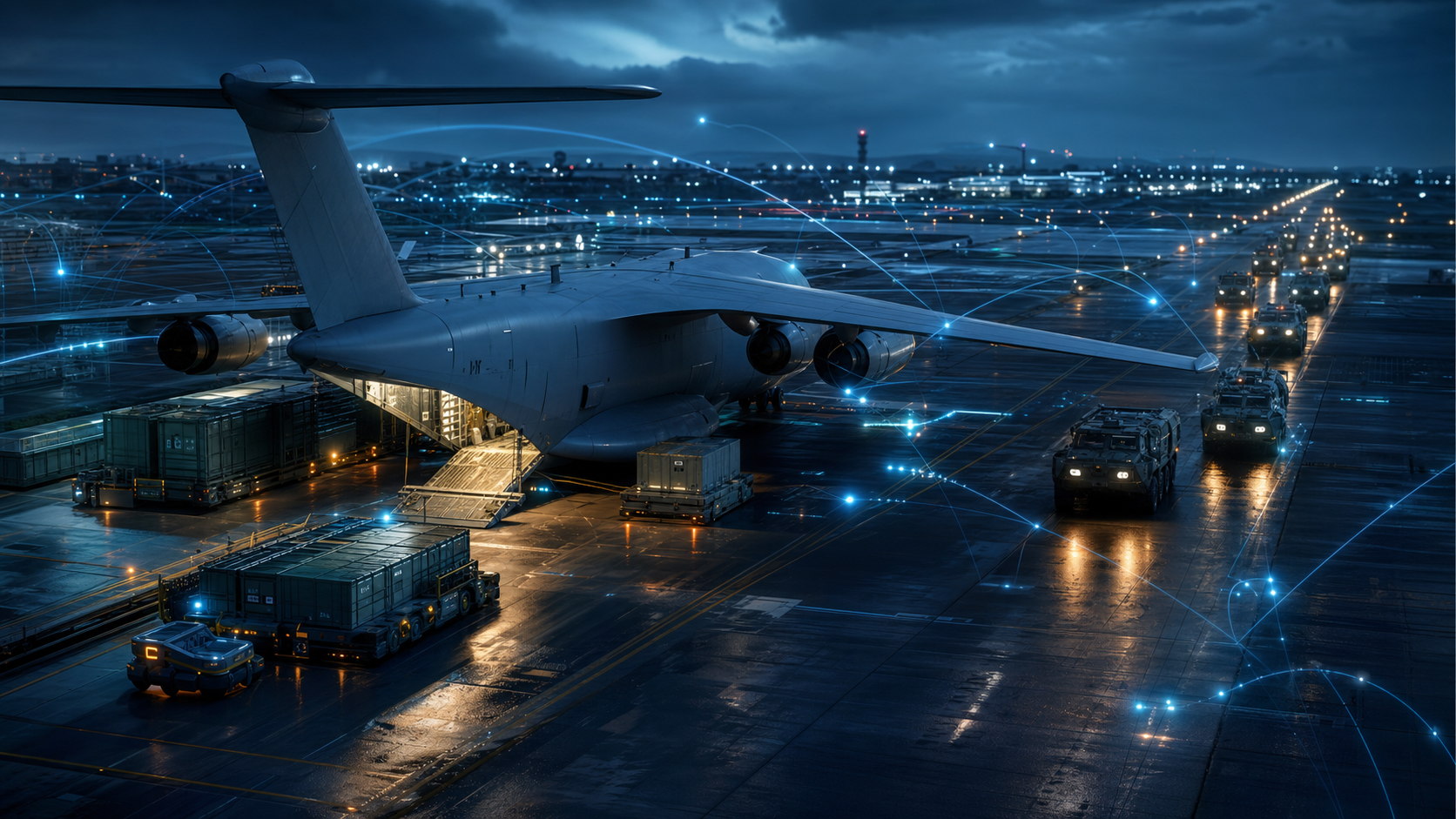
The defense logistics market: When war becomes a logistics problem and logistics a weapon – Creative image on the topic, with AI: Xpert.Digital
The secret weapon in the Ukraine war: How logistics suddenly decides victory and defeat
When supplies become a weapon: The multi-billion dollar transformation of global defense logistics
For a long time, it was considered the invisible, often neglected backbone of the armed forces – but defense logistics has finally stepped out of the shadow of fighter jets and tanks. The war in Ukraine, at the very latest, has ruthlessly demonstrated to military planners worldwide: those who cannot secure their supplies under the most difficult conditions lose. What was once a purely supportive process has become a crucial strategic power factor and a rapidly growing multi-billion-dollar market, projected to more than double to over US$344 billion by 2034. Driven by exploding defense budgets, massive geopolitical tensions, and revolutionary technologies such as drones, artificial intelligence, and 3D printing, the military supply chain is currently reinventing itself. Learn how robots and data are conquering supply routes, what bureaucratic hurdles the industry faces, and why established defense giants are now sharing a fiercely competitive field with civilian logistics giants.
Without them, even the best tanks are useless: Why arms giants are now investing massively in logistics
For decades, defense logistics was considered the quiet, supportive function of military operations, far removed from the attention given to fighter jets, tanks, or missile systems. This perception has fundamentally changed. The movement, storage, and maintenance of personnel, equipment, and supplies under adverse, sometimes contested conditions has become a strategic enabler of military capability, a decisive factor in victory or defeat. Unlike in the civilian economy, where logistics is primarily optimized for cost-efficiency and speed, military logistics must also function under the pressure of vulnerable, contested supply lines, where resilience is just as crucial as speed. The global market for these services has been estimated at US$182.50 billion for 2025 and is projected to nearly double from US$195.90 billion in 2026 to US$344.35 billion by 2034, representing an average annual growth rate of 7.3 percent.
This dynamic is not an isolated industry phenomenon, but rather an expression of a profound shift in security policy priorities. The scope of defense logistics ranges from the transport of weapons, fuel, and spare parts to medical supplies, technical maintenance, and the support of forward operating bases. With the increasing complexity of modern weapons systems and the expansion of warfare across multiple domains simultaneously—from land and sea to air and cyberspace—logistics has evolved from a mere support process to the very enabler of military reach. Those who cannot supply their troops will lose, regardless of the quality of their weapons systems.
Ukraine as a blueprint for reinventing military supply routes
The war between Russia and Ukraine has proven to be a painful but instructive test case for global defense logistics, revealing both serious weaknesses and remarkable innovations. The initial Russian offensive largely failed due to classic logistical deficiencies: long-neglected and unprotected supply lines, insufficient fuel and spare parts stockpiles, and inadequate maintenance planning significantly hampered the advance and weakened the combat effectiveness of the deployed units. Ukraine, on the other hand, demonstrated how distributed and adaptable logistics can function under pressure, supported by small, mobile repair teams, pre-positioned stockpiles, and even civilian support networks. These operational lessons have not gone unnoticed by military planners worldwide and have triggered a fundamental overhaul of military doctrines as well as substantial investments in redundant, resilient supply networks.
Massive shifts also occurred at the industrial level. The sanctions imposed on Russia disrupted established supply flows of fuels, metals, and components, accelerating the shift toward regionalized supply chains. European and allied states have since prioritized the secure procurement and storage of critical defense materials to reduce their dependence on contested or politically unstable regions. This realignment has created new demand for logistics service providers capable of delivering compliant, secure, and rapid solutions.
The conflict also underscored the importance of coalition-based logistics on an unprecedented scale. The massive Western aid shipments to Ukraine required cross-border coordination, which quickly revealed bottlenecks in customs, transport capacity, and internal distribution. Air and sea freight capacities came under considerable strain, forcing an increasing reliance on commercial cargo charters and temporary logistics centers. These experiences are now shaping the procurement strategies of NATO and its partners, who are considering expanded strategic transport fleets and improved crisis management mechanisms.
In parallel, the use of technology increased noticeably. Drones are no longer used solely for reconnaissance, but also for limited resupply, highlighting the future potential of unmanned logistics systems. Additive manufacturing and contractor-provided forward repair kits gained importance as means of reducing dependence on vulnerable supply lines. Cybersecurity also became a priority, as logistics networks increasingly became targets of digital disruption. Overall, warfare has definitively transformed logistics from a supporting function to a crucial factor in warfare and will continue to shape the global market dynamics of defense logistics for a long time to come.
Robots, printers, and data are conquering the supply chain
Defense logistics is undergoing a profound technological transformation, driven by digitalization and widespread technology adoption. Real-time equipment tracking, predictive maintenance, and integrated logistics management systems are becoming increasingly prevalent. Autonomous systems, including drones and unmanned ground vehicles, are being increasingly tested for frontline supply to reduce the risk to deployed personnel. Additive manufacturing is gaining relevance as it enables on-demand production of spare parts near operational locations, thereby reducing supply chain bottlenecks. Another notable trend is the emergence of Logistics-as-a-Service, where armed forces outsource complete maintenance packages to industry, transferring risks and demanding defined performance outcomes.
The resilience and regionalization of supply chains is increasing as states seek to reduce their dependence on individual suppliers or regions deemed hostile, particularly for critical materials. Cybersecurity is also gaining prominence, with tamper-proof tracking, encrypted logistics systems, and hardened IT infrastructure becoming increasingly standard requirements. Finally, sustainability is gradually being integrated into defense logistics, from biofuels and hybrid fleets to energy-efficient base operations, as militaries must respond to both cost pressures and climate policy requirements. Taken together, these developments signal a shift toward smarter, more resilient, and more sustainable logistics systems.
Why defense budgets fire up the growth machine
Several key factors are driving the growth of the defense logistics market. Rising global defense budgets, particularly in NATO countries, the Indo-Pacific, and the Middle East, are generating increasing demand for sustainability and supply chain support. The growing complexity of modern platforms, advanced combat aircraft, naval vessels, and unmanned systems necessitates sophisticated maintenance, accurate spare parts forecasting, and integrated logistics support, further fueling the demand for specialized contractors.
Geopolitical tensions and the lessons learned from current conflicts underscore the importance of operational readiness and flexible resupply, driving investments in distributed logistics hubs, pre-positioned deliveries, and rapid deployment capabilities. Ongoing digitalization also enables smarter logistics: predictive analytics reduces equipment downtime, while blockchain technologies and secure communication networks ensure supply chain transparency and integrity. Technological advancements such as autonomous ground vehicles, resupply drones, and 3D-printed spare parts are pushing armed forces toward new logistics models that enhance efficiency and resilience. Finally, joint coalition operations are increasing the need for interoperable logistics systems that facilitate the secure exchange of resources and information between allied forces. Taken together, these drivers position defense logistics as a distinct growth segment within the broader defense industry.
Bureaucracy, sanctions and skills shortage as a brake on growth
Despite positive growth prospects, the defense logistics sector faces several structural constraints. The volatility of defense budgets remains a key issue, as governments must balance investments in logistics with the acquisition of new weapons systems, sometimes leading to underfunding of sustainability programs. Lengthy procurement processes and regulatory compliance requirements raise barriers to entry for commercial market participants and significantly slow the adoption of innovations.
Export controls, sanctions, and stringent procurement regulations further complicate global supply chains, drive up costs, and reduce operational flexibility. The shortage of skilled personnel, particularly qualified maintenance staff and certified technicians, poses its own set of operational risks. Cybersecurity threats are also playing an increasingly significant role, as logistics IT systems represent attractive targets for attack, and securing them further increases costs and complexity. Integrating advanced technologies such as predictive analytics or additive manufacturing into existing systems presents another challenge, as armed forces often have to operate with outdated infrastructure. Furthermore, political considerations and industrial policy requirements restrict supplier diversification, leaving critical parts and materials dependent on single sources. Taken together, these constraints slow the pace of change in defense logistics and significantly raise the barriers to entry for new market participants.
Modernization pressure opens doors for new providers
Opportunities in defense logistics are expanding considerably as armed forces modernize their capabilities and adapt to new threat landscapes. Amidst growing geopolitical tensions, governments are increasingly prioritizing resilient and distributed logistics networks capable of supporting cross-domain operations. This creates attractive business opportunities for companies offering mobile depots, rapidly deployable storage systems, and unmanned supply solutions. Digitalization opens up another growth avenue: predictive maintenance, blockchain-enabled supply chains, and digital twins allow armed forces to minimize downtime and improve operational readiness. Furthermore, the increasing reliance on external contractors for base operations, maintenance services, and training creates opportunities for commercial logistics companies with secure civil-military dual capabilities.
Additive manufacturing allows components to be produced in close proximity to their point of use, thus reducing dependence on long supply chains. Furthermore, sustainability initiatives such as alternative fuels, hybrid military vehicles, and energy-efficient basic infrastructure offer new niches for innovation. An increasing number of countries are exploring the Logistics-as-a-Service model by outsourcing complete supply chain packages to industry instead of building them internally, creating long-term opportunities for providers with integrated delivery capabilities. Companies that can combine agility, technology integration, and regulatory compliance are likely to benefit disproportionately from this development.
Hub for Security and Defense - Advice and Information


Hub for Security and Defense - Image: Xpert.Digital
The Security and Defence Hub offers expert advice and up-to-date information to effectively support companies and organizations in strengthening their role in European security and defence policy. Working closely with the SME Connect Defence Working Group, it particularly promotes small and medium-sized enterprises (SMEs) that wish to further develop their innovative capacity and competitiveness in the defence sector. As a central point of contact, the Hub thus creates a crucial bridge between SMEs and European defence strategy.
Related to this:
Logistics as a key factor: How global arms markets react to geopolitical crises
The fine line between speed and vulnerability
The central challenge of defense logistics is ensuring both agility and security. Armed forces must guarantee that supply chains remain protected from disruption, sabotage, or cyberattacks, while simultaneously remaining flexible enough to meet rapidly changing operational requirements. In coalition operations, interoperability becomes a significant hurdle, as differing logistics standards, incompatible IT systems, and political sensitivities complicate the joint maintenance of supply chains.
Operating in contested environments also presents its own set of challenges: Supply convoys and depots are vulnerable to long-range precision attacks and necessitate new tactics such as distributed storage, robust logistics centers, and covert delivery systems. The introduction of new technologies like autonomous supply vehicles or additive manufacturing requires profound changes in doctrine, training, and regulatory frameworks, the development of which, based on experience, takes years. Another structural challenge is the fragility of the supply chain itself, as many high-tech components depend on a limited number of suppliers or vulnerable transport routes. Environmental and infrastructure constraints, such as damaged ports, disrupted fuel supplies, or contested sea lanes, further increase complexity. Addressing these challenges requires long-term investments, policy reforms, industry partnerships, and new operational concepts that must be validated through practical exercises.
Roads and armaments dominate value creation
When considering transport modes, the largest share is accounted for by the road segment, which captured the largest market share in 2025 and is projected to remain dominant in 2026 with a share of 53.49 percent. This dominance stems from the crucial role of road transport for troop mobility, equipment transport, and supply distribution across diverse terrains. Armies rely on military trucks, armored vehicles, and fuel convoys for rapid resupply and operational flexibility, with road logistics remaining indispensable for both domestic training missions and overseas deployments, particularly where air or rail transport options are limited. The air transport segment is expected to experience above-average annual growth of 7.4 percent during the forecast period.
Looking at product categories, the defense segment dominates with a projected share of 52.86 percent for 2026. This high share is explained by the priority that armed forces place on the safe, timely, and efficient transport of weapons, ammunition, and explosives. With increasing global tensions and the ongoing modernization of armed forces, the need for specialized storage, handling, and distribution systems has risen significantly. Advanced tracking systems, security protocols, and rapid resupply capabilities are essential to ensure operational readiness and sustained firepower in both peacetime and combat scenarios. The remaining product category is expected to experience the most dynamic growth during the forecast period, with an annual growth rate of 8.5 percent.
Based on end-use, the market is segmented into Army, Navy, and Air Force. The Army segment captured the largest market share in 2025 and is projected to maintain its dominance with a 52.51 percent share in 2026. This leading position stems from the extensive need for troop movements, equipment maintenance, and continuous resupply across diverse operational theaters. Large-scale land operations, training exercises, and border security missions require robust logistical support, including fuel, weapons, and maintenance services. With ongoing modernization efforts and evolving combat doctrines, armed forces worldwide are increasingly reliant on agile and technology-driven logistics systems to maintain operational readiness. The Air Force segment is expected to experience an annual growth rate of 8.0 percent over the forecast period.
North America leads, but Asia is rapidly catching up
Geographically, the market is segmented into North America, Europe, the Asia-Pacific region, the Middle East and Africa, and the rest of the world. The North American market was valued at US$60.57 billion in 2025, representing 33.19 percent of global demand, and is projected to grow to US$64.53 billion by 2026. North American demand is primarily driven by the United States, which has the world's largest defense budget and a substantial global military presence. The US Department of Defense is investing heavily in sustainability, supply chain modernization, and pre-positioned assets to support overseas operations and alliances. Canada, for its part, contributes through NATO missions and Arctic defense initiatives, focusing on fuel, maintenance, and infrastructure logistics. The US market alone is estimated to reach US$52.95 billion by 2026, with the United States accounting for nearly half of global demand.
The European region captured a 21.57 percent share of the global market in 2025, generating revenue of US$39.37 billion. Revenue of US$42.29 billion is projected for 2026. In Europe, demand for defense logistics is accelerating as a result of NATO modernization, the Russia-Ukraine war, and collective defense commitments. Germany, France, and the United Kingdom are increasing their investments in strategic air transport, armored vehicle maintenance, and fuel supply infrastructure to ensure readiness for a potential high-intensity conflict. The UK market is expected to reach US$9.99 billion by 2026, and the German market US$8.32 billion.
The Asia-Pacific region reached a market volume of US$53.34 billion in 2025, representing a share of 29.23 percent, and is projected to reach US$57.95 billion in 2026. The region is experiencing particularly strong growth, driven by military modernization, territorial disputes, and strategic competition in the Indo-Pacific. China, India, Japan, South Korea, and Australia are investing heavily in sustainable infrastructure, supply chain resilience, and logistics technologies to support large standing forces and maritime operations. The Japanese market is estimated at US$14.34 billion, the Chinese market at US$19.26 billion, and the Indian market at US$9.87 billion by 2026.
The Middle East and Africa together reached a volume of US$15.29 billion in 2025, while Latin America generated US$13.93 billion in the same year. Saudi Arabia and the United Arab Emirates place particular emphasis on logistical infrastructure, maintaining contractual relationships, and secure supply networks to support advanced weapons platforms and regional operations. African countries face unique geographical challenges and limited infrastructure, leading to investments in mobility and maintenance support. In Latin America, Brazil and other states are improving their logistics to strengthen peacekeeping and border security operations. The rest of the world as a whole generated revenue of US$29.22 billion in 2025, representing 16.01 percent of the global market, with an expected increase to US$31.13 billion in 2026.
Arms companies and logistics giants share the field
The defense logistics market is characterized by a diverse group of players, encompassing traditional defense corporations, specialized contractors, and global logistics providers. Leading defense companies such as Lockheed Martin, Boeing, Raytheon Technologies (now RTX), Northrop Grumman, General Dynamics, and BAE Systems dominate the integrated sustainability and lifecycle support sector. These companies leverage decades of platform expertise to deliver comprehensive logistics solutions, including maintenance, parts forecasting, training, and integrated logistics support for complex aircraft, naval vessels, and land systems.
In addition, companies like KBR, Amentum, and Leidos have specialized in outsourcing logistics services, base operations, and contract maintenance. On the commercial side, providers such as DHL and Kühne + Nagel have carved out their own niches in defense transportation and supply chain management. The collaboration between leading defense companies and commercial logistics specialists is noticeably increasing, resulting in end-to-end military solutions that are increasingly technology-driven.
The market's dynamism is also evident at the level of specific contracts. In August 2025, the Defense Logistics Agency selected a partnership with Google Public Sector to improve its global supply chain operations, marking the agency's first partnership with a commercial, AI-enabled cloud provider. In March 2025, the Defense Logistics Agency and the Veterans Health Administration entered into a ten-year, interagency agreement valued at $3.6 billion, aimed at synchronizing supply chain requirements and consolidating logistical support for all Veterans Health Administration facilities nationwide. Also in March 2025, AAR Corp., a leading provider of aviation services to civilian and governmental entities, expanded its sales support through a supplier capacity agreement with the Defense Logistics Agency's aviation division. As early as May 2024, the Defense Logistics Agency, together with the Directorates of Land and Naval Supply and ASRC Federal, established a partnership to improve supply chain support for combat aircraft, with the aim of implementing joint strategies and process improvements that would increase responsiveness to deployed forces.
A sector that redefines security
Defense logistics has evolved from a secondary, support function to one of the most dynamic growth areas within the entire defense industry. Driven by rising global defense spending, the increasing technical complexity of modern weapons systems, and the immediate lessons learned from the war in Ukraine, the market is undergoing a structural shift towards more digital, autonomous, and resilient systems. At the same time, budget volatility, regulatory hurdles, cybersecurity risks, and a structural shortage of skilled personnel remain as limiting factors, slowing the pace of this transformation without, however, jeopardizing the fundamental direction of growth.
For companies seeking to operate in this field, this has a clear strategic implication. Those who want to remain relevant in the future must combine physical logistics expertise with digital visibility, cybersecurity, and the ability to deliver rapidly in a distributed manner. The increasing convergence of traditional defense companies with commercial logistics specialists and technology providers from the civilian cloud and AI sectors suggests that the boundaries between military and civilian logistics will continue to blur. Given ongoing geopolitical tensions in Eastern Europe, the Indo-Pacific, and the Middle East, the demand for robust, secure, and technologically advanced logistics solutions is likely to remain strong well beyond 2034.
Consulting - Planning - Implementation

Markus Becker
I would be happy to serve as your personal advisor.
Head of Business Development
Chairman SME Connect Defense Working Group
Consulting - Planning - Implementation
Konrad Wolfenstein
I would be happy to serve as your personal advisor.
You can contact me at wolfenstein∂xpert.digital or
Just call me on +49 7348 4088 965 .