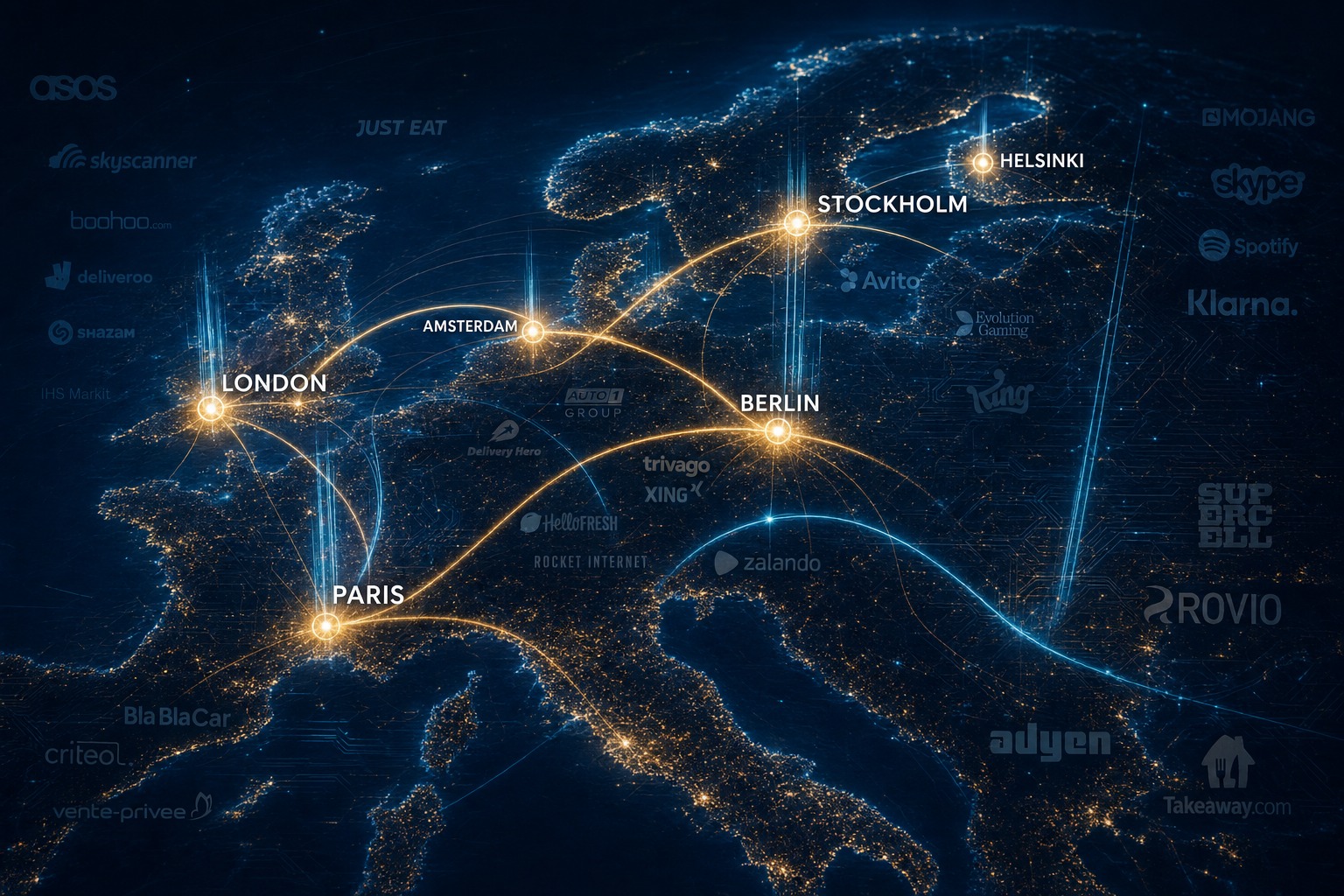
Europe's biggest tech companies: Silicon Valley has underestimated us for long enough – but is that still enough? – Image: Xpert.Digital
75 billion bank & AI wonder: How Europe is secretly building tech giants
Europe's tech illusion: Why we're running out of money despite Revolut & Spotify
From Freiburg to Paris: How Europe's new AI elite is breaking US dominance
Anyone looking at the European tech ecosystem today sees a continent undergoing radical transformation. As recently as 2017, Europe resembled a fragmented patchwork quilt compared to the dominant Silicon Valley. Hopes rested on relatively few shoulders, and valuations seemed almost modest on a global scale. Nearly a decade later, the picture has changed dramatically: With megacorporations like the British neobank Revolut, the Swedish streaming giant Spotify, and the Dutch payment giant Adyen, Europe has proven its ability to scale globally. Moreover, thanks to the rapid development of artificial intelligence, startups from Paris to London to Freiburg in Baden-Württemberg are preparing to directly challenge US dominance.
But the allure of these new unicorns is deceptive. Behind the impressive growth figures lies a structural gap that threatens the entire ecosystem. While European talent is developing world-class technology, there is a glaring lack of late-stage capital. A thicket of national regulations and a hesitant capital market still force Europe's most valuable companies to seek their fortune on US stock exchanges. This in-depth analysis traces the path of Europe's largest tech nations from 2017 to the present day. It reveals who the winners and losers of recent years are, how artificial intelligence is completely reshuffling the deck – and why overcoming these economic policy hurdles is no longer an option for Europe, but a matter of sheer survival.
Silicon Valley is laughing, but Europe's tech scene is striking back with artificial intelligence
A snapshot that made history
In April 2017, Statista published an infographicthat, at first glance, seemed unremarkable, but upon closer inspection provided a precise picture of the European tech ecosystem at the time. The message was unambiguous: while Europe had caught up, the gap to the American tech giants remained enormous. Measured by the cumulative market value of all digital companies with a valuation of more than one billion US dollars, Great Britain led the European field with 49.9 billion US dollars, followed by Sweden with 35.9 billion and Germany with 27.3 billion US dollars. France came in at just 8.1 billion, the Netherlands at 3.8 billion US dollars, while Finland, with Supercell and Rovio, managed a respectable 14.2 billion US dollars.
What these figures couldn't reveal at the time was the dynamic behind them. Companies like Klarna, Spotify, Zalando, and Delivery Hero were only at the beginning of their growth trajectories. At the same time, the graph exposed structural weaknesses that have not been fully overcome to this day: a geographically fragmented corporate landscape, a deep dependence on external capital, and a tendency for the most valuable European startups to choose American markets for their IPOs rather than their domestic ones.
This analysis takes the Statista data point from 2017 as its starting point and examines what has become of the companies identified at that time, which new players have shaped the landscape, and how the structural foundation of the European tech ecosystem should be assessed today. It is a story of breathtaking rise, painful fall, tenacious recovery, and a new era dominated by artificial intelligence.
Great Britain: Fintech metropolis with global leadership aspirations
In 2017, the UK maintained its leading position in the European tech rankings by a wide margin, and this basic situation has changed little since then. What has fundamentally changed, however, is the quality and valuation scale of the companies based there. The most striking example is Revolut: The British neobank, which launched in 2015 as a simple travel money card service, was valued at US$75 billion in November 2025 after successfully completing an oversubscribed funding round of €2.57 billion. This puts Revolut in a valuation bracket previously reserved for traditional major banks – and has completely redefined the benchmarks for European fintechs.
The UK produced more new unicorns than any other European nation in 2025: nine newly valued companies with a market capitalization exceeding one billion US dollars, including Isomorphic Labs, an AI-driven drug development company. Isomorphic Labs, a spin-off from Google DeepMind, initially secured 600 million US dollars in its first external funding round in 2025, led by Thrive Capital; that same year, the company's total funding raised exceeded 2.1 billion US dollars. Meanwhile, UK-based AI data center company Nscale closed the largest Series B funding round in European history, raising 818 million pounds. Overall, UK tech companies attracted around 11.7 billion pounds in funding in 2025. Within the AI sector alone, UK companies raised an impressive 8.3 billion pounds in 2025.
While Brexit has changed the landscape – making skilled immigration and market access to the EU more complicated – London has retained its appeal as a global financial center and its status as a preferred location for late-stage funding rounds. The city, along with Paris and Berlin, is among the three most active startup ecosystems in Europe.
Sweden: The exceptional case that is no coincidence
In 2017, Sweden was already remarkably strong for a country with just under ten million inhabitants at the time. Spotify, Klarna, King, Skype, Mojang, Avito, and Evolution Gaming – a concentration of globally relevant technology companies that astonished even experienced economists. Today, it's clear that Sweden wasn't simply lucky, but rather developed a replicable model.
Spotify has impressively solidified its position as Europe's leading stock market performer on a global scale. The music streaming giant's market capitalization reached peak values of over €120 billion in 2025. By May 2026, it stood at around €77 billion – a decline of approximately 25 percent compared to the previous year. However, this does not jeopardize its medium-term growth story, as the value was still at €50.84 billion in 2024. Klarna, which appeared in the 2017 infographic as one company among several, experienced one of the most spectacular valuation roller coasters in European corporate history: hailed at US$45 billion in 2021, its value plummeted to around US$6.7 billion in 2022 before the Swedish fintech went public on the New York Stock Exchange in September 2025. The issue price was $40 per share, and the valuation at the IPO was around $15.1 billion – significantly more modest than the hyped valuation of 2021, but still a remarkable new beginning. The IPO was oversubscribed 25 times, and the opening price exceeded the issue price by approximately 30 percent.
Sweden demonstrated its remarkable startup productivity once again in 2025: with four new unicorns from a population of just 10.7 million, the country produced the third-highest number of unicorns in Europe, including companies like the AI-powered workplace system Sana and the AI programming tool Lovable. The recipe for success is based on a unique combination of world-class engineering education, a culture of risk-taking, a highly developed welfare state that provides social support in the event of entrepreneurial failure, and a close network between established companies and the startup scene.
Germany: Between losers of the pandemic correction and new AI hopes
The German figures from the Statista infographic for 2017 seemed solid: 27.3 billion US dollars, driven by Trivago, Delivery Hero, Zalando, HelloFresh, Xing, Auto1 and Rocket Internet. What followed was a period of growth – and then a sobering correction that several of these companies have not fully recovered from to this day.
Zalando, considered an e-commerce flagship in 2017, is projected to have a market capitalization of approximately €5.1 to €5.4 billion in May 2026 – a fraction of the valuations achieved during the pandemic euphoria, when values briefly exceeded €20 billion. The decline from 2024 to 2025 alone amounted to roughly 24 percent, from €8.56 billion to €6.47 billion. This downward trend is expected to continue into 2026. Zalando has responded strategically, recently focusing more strongly on its platform model and entering into a partnership with its Danish competitor Bestseller – but structurally, the company remains under considerable margin pressure.
The share price correction at HelloFresh was even more dramatic: The Berlin-based meal-kit company, which had joined the DAX during the pandemic and at times traded at over €97 per share, was trading below €4 in March 2026. Revenue fell by almost twelve percent to around €6.76 billion in fiscal year 2025, and management expects further declines in 2026. The withdrawal from the Italian market and the initiated termination proceedings in Spain signal that the company is significantly streamlining its geographic reach. Delivery Hero faces similar structural challenges: An analyst downgrade by Bank of America with a price target of €26 – below the then-current share price of €28.50 – reflects growing risks in Korea, the Middle East, and rising delivery costs in Spain.
These downward revisions, however, should not obscure the new dynamics. Since 2024, Germany has been experiencing an impressive wave of AI startups. At the beginning of 2026, Bitkom counted 29 active unicorns in Germany, six of which were founded in 2025 alone. Among the most notable newcomers is Black Forest Labs from Freiburg: Founded in August 2024, this AI startup, specializing in image generation and working with clients such as Adobe, Canva, Microsoft, and Meta, closed a $300 million funding round at the end of 2025, achieving a total valuation of $3.25 billion with a total of $450 million raised. This makes Black Forest Labs the most valuable AI company in Germany and one of the fastest-growing AI startups in all of Europe. New unicorns were also awarded in Germany in 2025: Parloa (AI-supported corporate communications), n8n (workflow automation), Quantum Systems (drone technology) and Isar Aerospace (space travel).
Despite these encouraging signs, Berlin, long considered a clear unicorn stronghold, is slowly losing its dominant position. While over 50 percent of German unicorns were recently based in Berlin, this figure has now fallen to around 45 percent. This shows that the startup ecosystem is becoming more geographically dispersed – which is positive in some ways, but also weakens the network effects of a concentrated metropolis. Regarding pan-European venture capital, Germany maintained its central role in the first quarter of 2026, with $2.2 billion invested in 189 deals.
Finland: Game developers and the next technology frontier
Finland made it into the ranking in 2017 with a startup market capitalization of US$14.2 billion – almost entirely thanks to Supercell and Rovio. This picture is now more nuanced. Rovio was acquired by Sega in 2023 and no longer exists as an independent startup. Supercell remains under Chinese ownership (Tencent) but continues to operate its development center in Helsinki.
The more interesting development, however, lies elsewhere: Finland is now among the leading European locations for quantum computing and satellite technology. With IQM Quantum Computers and ICEYE, two new Finnish unicorns emerged in 2025, operating in cutting-edge technological fields. ICEYE has been commercially active for years and is considered a global technology leader in SAR (Synthetic Aperture Radar) satellites, which are used for Earth observation, disaster relief, and defense applications. Finland exemplifies how a small country with excellent technical higher education and a strong government investment framework can establish world-class positions in niche technologies.
Our EU and German expertise in business development, sales and marketing

Our EU and German expertise in business development, sales and marketing - Image: Xpert.Digital
Industry focus areas: B2B, digitalization (from AI to XR), mechanical engineering, logistics, renewable energies and industry
More information here:
A thematic hub offering insights and expertise:
- Knowledge platform covering global and regional economies, innovation and industry-specific trends
- A collection of analyses, insights, and background information from our key areas of focus
- A place for expertise and information on current developments in business and technology
- A hub for companies seeking information on markets, digitalization, and industry innovations
From unicorns to champions: The new map of the European tech scene
France: From laggard to AI industrial powerhouse
France appeared modestly positioned in the 2017 Statista graphic with just $8.1 billion and three companies – BlaBlaCar, Criteo, and vente-privée. Since then, the country has undergone a remarkable transformation. Paris has become one of Europe's most dynamic tech hubs, and no other nation has established such a strong presence in the AI sector in such a short time.
Mistral AI is the prime symbol of this transformation: Founded in April 2023 by three former Google DeepMind and Meta researchers, the company reached a valuation of approximately €12 billion in September 2025 following a €2 billion funding round. Lead investor ASML, the Dutch semiconductor company, acquired an 11 percent stake and contributed around €1.3 billion. This makes Mistral not only the most valuable AI company in Europe, but also one of the most technologically ambitious: The company pursues an open-source strategy and explicitly positions itself as a European alternative to OpenAI and Anthropic – with a focus on data sovereignty and regulatory compliance in accordance with EU requirements.
Overall, France even achieved the top position in the Tech Tour Growth 2025 ranking of the 50 fastest-growing venture capital-backed technology companies in Europe, ahead of Germany in second place. Thirteen of the 50 selected growth companies were from France, and nine from Germany. Criteo, which was already listed on the stock exchange in 2017, continues to operate as an independent performance marketing company but has remained under the radar of public interest. BlaBlaCar, on the other hand, has consolidated its status as a profitable European mobility company.
Netherlands: Adyen as a quiet champion in payment processing
In 2017, the Netherlands appeared to be at the bottom of the list of countries considered, with just $3.8 billion and two companies – Adyen and Takeaway.com. This picture is now completely outdated. Adyen has evolved into one of the world's most significant payment infrastructure providers. The company generated revenue of €2.38 billion in fiscal year 2025 and is currently valued at a market capitalization of around €31 to €35 billion. This valuation is significantly lower than its peak in 2021, when Adyen was temporarily valued at over €70 billion, but its core business remains strong. Adyen is considered a technologically superior alternative to traditional payment service providers and has systematically acquired major global clients, including numerous DAX-listed companies and American tech platforms.
Framer, a tool specializing in browser-based web design, also achieved unicorn status in 2025, underscoring the growing depth of the Dutch tech ecosystem. Amsterdam has established itself as a hub for European tech companies with global ambitions, partly because it took over parts of London's financial infrastructure after Brexit.
The scale of Europe in 2025: What has it really achieved?
Comparing the current figures with the Statista snapshot from 2017 reveals a mixed picture. While Europe has made significant progress – the total number of European unicorns has risen to over 134 active, privately funded companies – the gap with the US remains structurally substantial. While Europe will have around 134 unicorns in 2025, the US will have 611. The two American cities of San Francisco and New York alone are home to more unicorns than the entire European continent.
Total venture capital invested in European startups in 2025 amounted to almost €62 billion. This is significantly less than the record years of 2021 (€88 billion) and 2022 (€75 billion), but a clear recovery from the weaker years of 2023 and 2024. However, the number of funding rounds fell in 2025 to 7,738 – a decrease of 16 percent compared to the previous year. Capital is flowing into fewer, but considerably larger rounds: the average investment ticket is increasing, and investors are concentrating their capital on a few, well-positioned companies with clear scaling potential.
Artificial intelligence has become the absolute focus: AI absorbed around 35.5 percent of all venture capital invested in Europe in 2025. Europe produced a total of 27 new unicorns in 2025 – more than twice as many as in the previous year, which can be seen as a clear sign of revival. Among the new unicorns were several defense and dual-use technology companies, a segment previously underserved in Europe: Defense technology grew by 26 percent in the first half of 2025, with Helsing emerging as a new European defense technology unicorn, achieving a valuation of €12 billion.
The structural gap: Why Europe is still losing out
Despite the impressive developments of recent years, a fundamental problem persists, overshadowing all individual success stories: Europe is not producing tech companies on the scale of Apple, Microsoft, Alphabet, Amazon, or Meta. The reason for this is not a lack of ideas or talent, but rather structural deficiencies that affect multiple dimensions.
First, there is the weakness of the capital markets: Between 2016 and 2024, European startups raised a total of US$133 billion in venture capital – compared to almost US$1 trillion in the US during the same period. While Europeans have more than €20 trillion in savings, a significant portion of this flows to the US rather than to European growth companies. The completion of the European Capital Markets Union, called for by Mario Draghi in September 2024, remains an urgent strategic project. Draghi estimated the annual investment requirement for a competitive European economy at €750 to €800 billion – otherwise, he warned, Europe's economic strength risks a slow decline.
Secondly, there is regulatory fragmentation: While Europe has a legally unified single market, it effectively comprises 27 different ecosystems with diverging national rules, tax systems, labor laws, and investment cultures. A startup that successfully scales in Germany faces significant adaptation costs for the British, French, or Polish markets. At the same time, the EU is driving up compliance costs through the AI Act, the GDPR, and numerous other regulatory initiatives – disproportionately burdening smaller companies. Deutsche Bank CEO Christian Sewing aptly described Europe as the Silicon Valley of regulation. As a result, global tech companies are delaying or even foregoing the introduction of certain AI services in Europe: Meta did not launch its AI assistant, Meta AI, in Germany or the EU, and Apple initially held back new AI applications.
Thirdly, the IPO culture: The most valuable European startups systematically choose American markets for their stock market launches. Klarna went public in New York, Spotify is listed on the NYSE, and numerous European tech companies prefer Nasdaq and the NYSE to the Frankfurt Stock Exchange or the London Stock Exchange. This deprives European investors of returns and weakens the liquidity and attractiveness of European capital markets in the long term.
Fourth, the scarcity of funding for late-stage growth: European unicorns take an average of eight years and 3.2 funding rounds to reach a billion-euro valuation. They receive less equity financing than comparable US or Chinese companies, and the number of funds making large late-stage bets in Europe is limited. Fundraising for new venture capital funds in Europe reached its lowest level in a decade in 2025 at €12 billion – which could lead to a serious capital shortage within 18 to 24 months if the situation does not improve.
AI as a turning point: Europe's last and best chance
The shift in the global tech investment paradigm driven by AI offers Europe a rare historical opportunity for repositioning. AI infrastructure and applications scale faster than physical products, can be developed by small teams, and benefit from European strengths in fields such as mathematics, physics, and engineering.
The examples are encouraging: Black Forest Labs from Freiburg, Germany, is among the world's leading developers of AI-powered image generation models in the Flux series, competing technologically with Google's AI image tools and supplying companies like Adobe, Microsoft, and Meta. The team around Robin Rombach and Andreas Blattmann, who previously co-developed the world-renowned Stable Diffusion model at Stability AI, demonstrated that world-class achievement is possible from Freiburg. Mistral AI from Paris has established itself as the most credible European challenger to OpenAI and has achieved a valuation of €12 billion. Isomorphic Labs from London, which focuses on AI-driven drug development and builds on the Nobel Prize-winning AlphaFold breakthrough, raised over US$2 billion in funding in 2025 and is considered one of the most technologically compelling data value stacks in existence.
Added to this is the emerging defense technology sector, where Europe has long suffered from a structural vacuum: With Helsing (AI defense), Isar Aerospace (space), and Quantum Systems (drones), European deep-tech champions are emerging in strategically relevant areas. These companies are not primarily driven by consumer market logic, but by government contracts and geopolitical security needs – a robust, less cyclical foundation.
Strength in detail, weakness in scale
Europe underwent an impressive technological maturation process between 2017 and 2026. The Statista graphic from 2017, showing a cumulative value of around 139 billion US dollars for six countries, has transformed into a continent that boasts a single company, Revolut, with a market capitalization of 75 billion US dollars – and whose Spotify reached a market capitalization of over 120 billion euros in its peak year of 2025.
And yet, the fundamental gap remains. With 134 active unicorns, Europe clearly lags behind the US with 611. The ability to build truly global platform powerhouses from startups is structurally lacking. This is not due to a lack of inventiveness, but rather to a system that systematically stifles growth after a certain threshold: too little late-stage capital, too much regulatory burden, and overly fragmented markets. The Draghi report confirmed this diagnosis with European authority and outlined an investment agenda, the implementation of which, however, requires political will and institutional reforms that are still pending.
What Europe makes of this in the next ten years will determine the economic prosperity of an entire generation. The ingredients for world-class technology are there – in Freiburg, in Stockholm, in Paris, in London, in Amsterdam. What's missing is the economic environment that can transform outstanding companies into true global champions. Closing this gap is not an option, but a matter of economic policy survival.
🎯🎯🎯 Data-driven B2B industry hub as a quasi-in-house solution

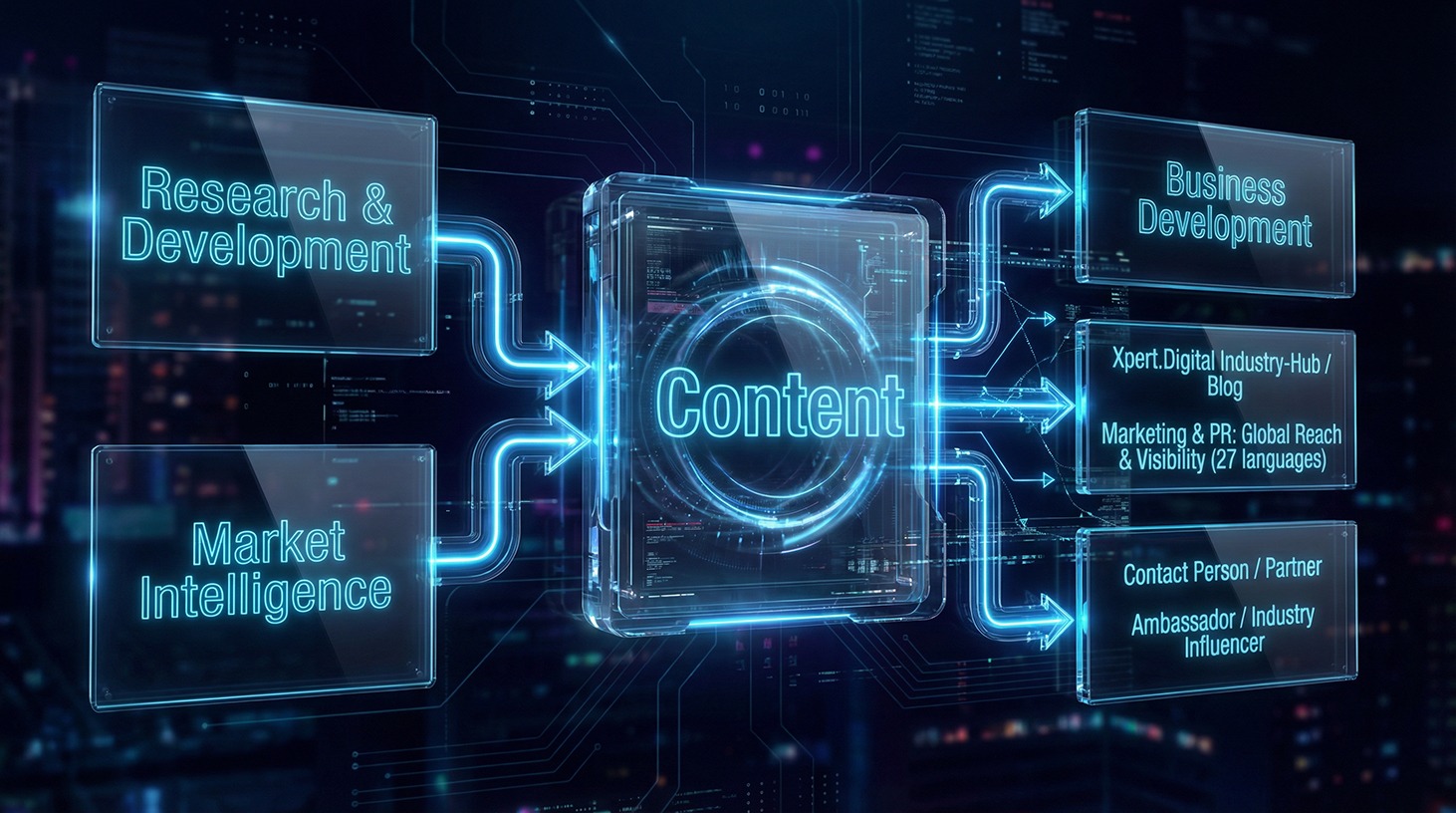
The quasi-in-house solution: How Xpert.Digital closes operational gaps in B2B marketing and sales – Smart Content-Driven Business - Image: Xpert.Digital
Xpert.Digital is a data-driven B2B industry hub led by Konrad Wolfenstein . The company acts as an external, quasi-in-house solution for industrial partners, closing operational gaps in marketing, content, and sales – without requiring additional resources on the client side.
More information here:
Your global marketing and business development partner
☑️ Our business language is English or German
☑️ NEW: Correspondence in your native language!

Konrad Wolfenstein
I and my team are happy to be available to you as your personal advisor.
You can contact me by filling out the contact form here wolfenstein@xpert.digital:or simply call me at +49 7348 4088 965. My email address is
I'm looking forward to our joint project.