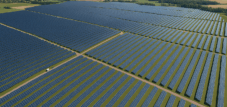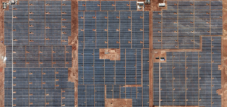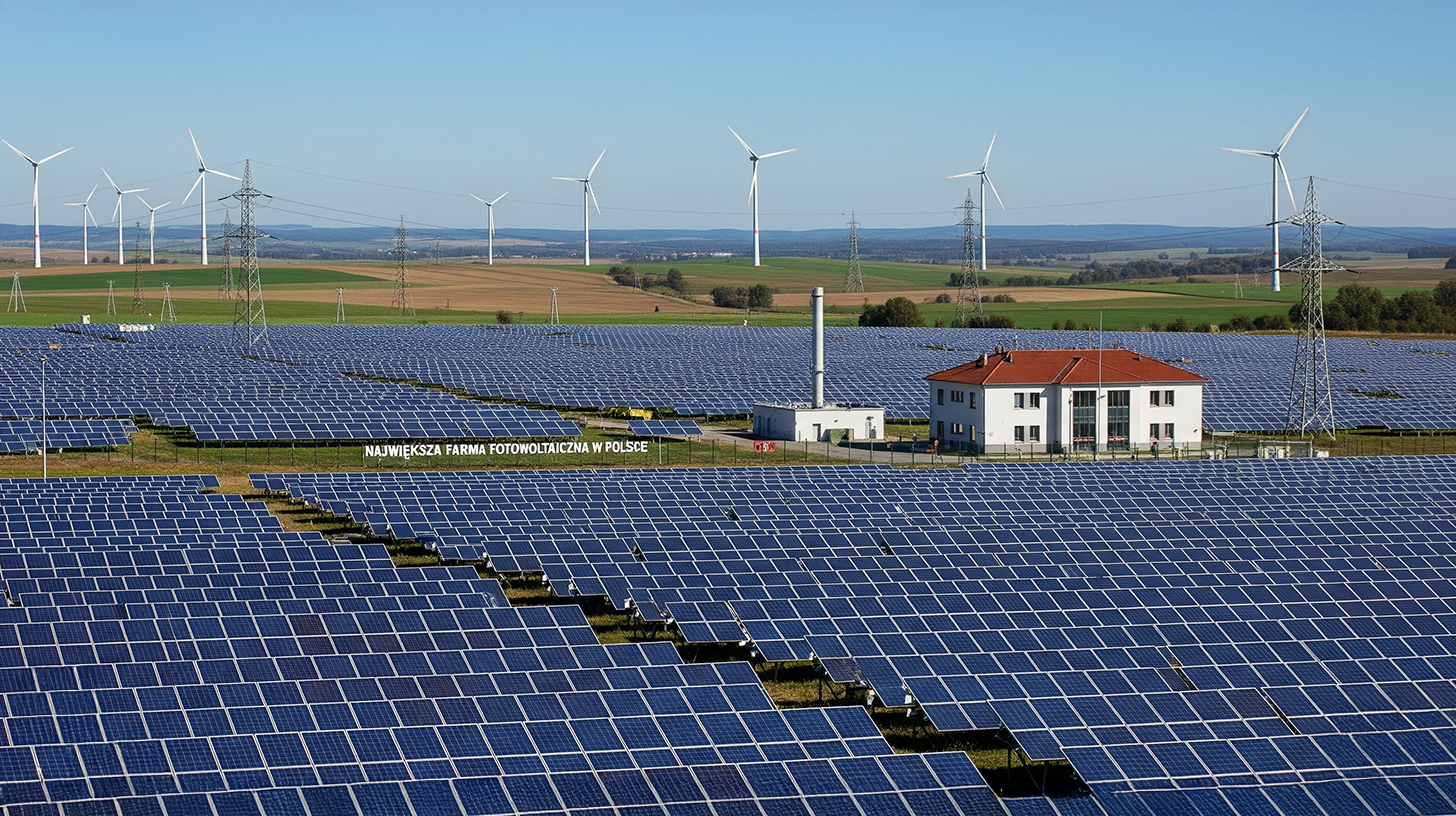
The largest solar parks in Poland in 2025 (Top Ten): A comprehensive analysis of the solar energy landscape | Park Słoneczny – Creative image: Xpert.Digital
New energy giant in the East: Poland is building more solar parks than ever before
Poland's Solar Miracle: The Country Becomes a Hidden Green Energy Superpower ### From Coal Mine to Solar Field: How Poland Is Reinventing Its Energy Future ### 422 Football Fields in Size: These Are Poland's 10 Largest Solar Giants in 2025 ### New Energy Giant in the East: This Country Is Building More Solar Parks Than Ever Before ### Poland's Next Record-Breaking Park: A 303-Megawatt Plant Aims to Surpass Everything to Date ###
Not just coal: Why Poland's giant solar farms are now impressing all of Europe
When people think of Poland, coal often comes to mind first. But that image is changing rapidly: The country has developed into one of Europe's leading solar energy markets in record time and is driving the energy transition forward with impressive momentum. With an installed capacity of over 22 gigawatts by 2025, Poland is playing in the top league of European solar nations. This enormous growth is no longer driven solely by small rooftop installations, but increasingly by huge photovoltaic farms that shape entire landscapes.
In this comprehensive overview, we present Poland's largest solar power plants – from the gigantic 204-megawatt plant in Zwartowo, which covers an area equivalent to 422 football fields, to innovative projects on the sites of former lignite mines, where retrained miners now generate clean energy. But we don't just look at the existing top 10. We also analyze ambitious future plans that envision projects with over 300 megawatts, examine new concepts such as the "virtual prosumer," and place Poland's solar boom in an international context.
Discover the fascinating transformation of Poland's energy landscape and learn which projects and technologies will shape the future of solar energy in the heart of Europe.
Current situation of photovoltaics in Poland
How is the photovoltaic industry developing in Poland, and what position does the country hold in Europe? The figures speak for themselves: Poland has become one of the leading markets for solar energy in Europe. At the end of May 2025, the installed photovoltaic capacity in Poland was 22,636.3 MW, representing an impressive growth of 19.6 percent compared to the previous year.
What makes the Polish photovoltaic landscape so dynamic? The market shows a clear shift from micro-installations to larger systems. While micro-installations accounted for 74.9 percent of installed capacity in 2022, this share fell to 63.9 percent by 2024. At the same time, the share of large photovoltaic farms grew from 11 percent of total capacity in March 2024 to an even larger share.
How significant has photovoltaics become in the Polish energy mix? With a share of 64.16 percent of renewable energies, photovoltaics holds first place in the renewable energy sector. In May 2025, solar power plants produced approximately 18 percent of all electricity generated in Poland, underscoring the central role of photovoltaics in Poland's energy transition.
The top 10 largest photovoltaic farms in Poland
First place: Photovoltaic farm Zwartowo
Which farm tops the ranking of Poland's largest solar power plants? The Zwartowo photovoltaic farm in the Pomeranian Voivodeship leads the pack with an installed capacity of 204 MW. This plant, operated by Respect Energy, is considered the largest photovoltaic farm in Central and Eastern Europe.
What makes the Zwartowo farm so remarkable? The facility covers an area of 300 hectares, which is roughly equivalent to 422 football fields. With over 370,000 photovoltaic modules, the farm produces approximately 270 GWh of clean energy annually, enough to power 153,000 homes.
How is the project progressing? The first phase, with 204 MW, was completed in September 2022. The planned second phase is intended to increase the total output to 290 MW, which would further solidify the plant's leading position.
Second place: Przykona Solar Park
What distinguishes Poland's second-largest solar farm? The Przykona farm, owned by the Portuguese company EDPR, has an installed capacity of 200 MW and produces approximately 220 GWh of energy annually. This plant was built on the site of a former open-cast lignite mine.
What are the farm's technical features? The installation consists of almost 380,000 bifacial (two-sided) photovoltaic modules that can capture sunlight from both the front and the back. The farm covers an area of 270 hectares, which is equivalent to 375 football fields.
How does the farm contribute to regional development? EDPR emphasizes the positive economic impact on the local community through increased tax revenue and support for local initiatives in the areas of sports, education, and security.
3rd place: Elektrownia PV Brudzew
What's the story behind the third largest solar farm? The Elektrownia PV Brudzew, with a capacity of 70 MW, was built by ZE PAK SA on the site of the former Adamów open-cast lignite mine. The farm produces 68,188 GWh annually, thereby avoiding 56,700 tons of CO2 emissions.
What makes this farm socially significant? During its construction, retrained miners were employed who had previously extracted coal at this site until 2021. This exemplifies how the energy transition can be implemented in a socially responsible manner.
What are the technical details of the plant? The farm consists of 155,554 photovoltaic modules, each with a power output of 455 Wp, and includes 306 inverters as well as over 900 kilometers of cable and fiber optic cable. The plant covers approximately 100 hectares.
4th place: Witnica photovoltaic park
What characterizes the fourth largest solar power plant in the country? The Witnica farm in the Lubusz Voivodeship has an installed capacity of 64.6 MW and produces 68 GWh of energy annually. Developed by BayWa r.e., the plant consists of approximately 160,000 photovoltaic modules from Jinko Solar.
What area does the farm occupy? The entire installation covers 80 hectares, with each module being 2 meters long and 1 meter wide.
5th place: Elektrownia fotowoltaiczna w Wielbarku
How did this Mazuri solar farm develop? The Wielbark photovoltaic farm was opened in 2023 by Energa OZE, part of the Orlen Group. Originally starting with approximately 12 MW, the plant was quickly expanded by another 50 MW to a total capacity of 62 MW.
What is the output of each individual module? The farm produces 62 GWh of energy annually, with each individual module having an output of 520 Wp.
6th place: Stępień PV open-field plant
What characterizes this other large solar power plant? The Stępień farm, operated by Wento, has an installed capacity of 58 MW and produces 61 GWh of energy annually. This amount of energy corresponds to the consumption of 31,000 households.
What are the dimensions of the facility? The farm covers approximately 65 hectares and consists of 100,000 solar panels.
7th place: Postomino photovoltaic open-field system
What are the special features of this project? ZPUE SA's Postomino farm has an installed capacity of 29.961 MW and produces 28 GWh annually. It is noteworthy that the planned total capacity is 90 MW.
What makes this project technically interesting? It is Tauron's first project using the "cable pooling" method, in which the solar farm is connected to an existing wind farm in Marszewo.
8th place: Photovoltaic farm Gryf
Where is this solar power plant located and what is its output? The Gryf farm, operated by Energa from the Orlen Group, is located near Konin and has a capacity of 25 MW. The plant produces 20 GWh annually and is situated in the immediate vicinity of the Przykona wind farm.
When was the farm completed? Construction was finished in the first quarter of 2023. The installation consists of approximately 46,000 photovoltaic modules with a total weight of around 1,500 tons.
9th place: Bogucice Solar Park
What are the technical specifications of this farm? The Bogucice farm, operated by EkoEnergia Polska in the municipality of Pińczów, has a capacity of 8 MW and produces 8 GWh annually. The facility covers 11.6 hectares.
What does the technical equipment include? The farm consists of 23,687 Ja Solar modules, each with 340 Wp, 66 Huawei inverters, and 4 transformer stations, each with a capacity of 2000 kVA. The system can supply approximately 2,000 households with electricity.
10th place: Solar farm Jaworzno
What makes this farm historically significant? The Tauron Group's first farm was built in Jaworzno on the site of the former Jaworzno I coal-fired power plant. With a capacity of 5 MW and an annual production of 5 GWh, it symbolizes the transition from fossil fuels to renewable energy.
What environmental contribution does the plant make? Its annual production of 5 GWh reduces CO2 emissions by approximately 4,900 tons. The farm consists of over 12,000 photovoltaic modules.
Virtual Prosumers – A new model for photovoltaics
What is the concept of the virtual prosumer? The virtual prosumer is a new model that allows energy to be produced in a different location than where it is consumed. This system is scheduled to be introduced in Poland from July 2025, following a postponement of the implementation of the Central Information System for the Energy Market (CSIRE).
How does the virtual prosumer system work? Participants can either build their own systems at other locations or purchase shares in larger photovoltaic farms. The maximum output per consumption point is limited to 50 kW.
What experience already exists with this model? In Lithuania, the Ignitis Group has been successfully operating a virtual prosumer system for two years. There, 14 percent of all prosumers are already virtual prosumers, and the demand for shares in shared photovoltaic farms exceeds the supply.
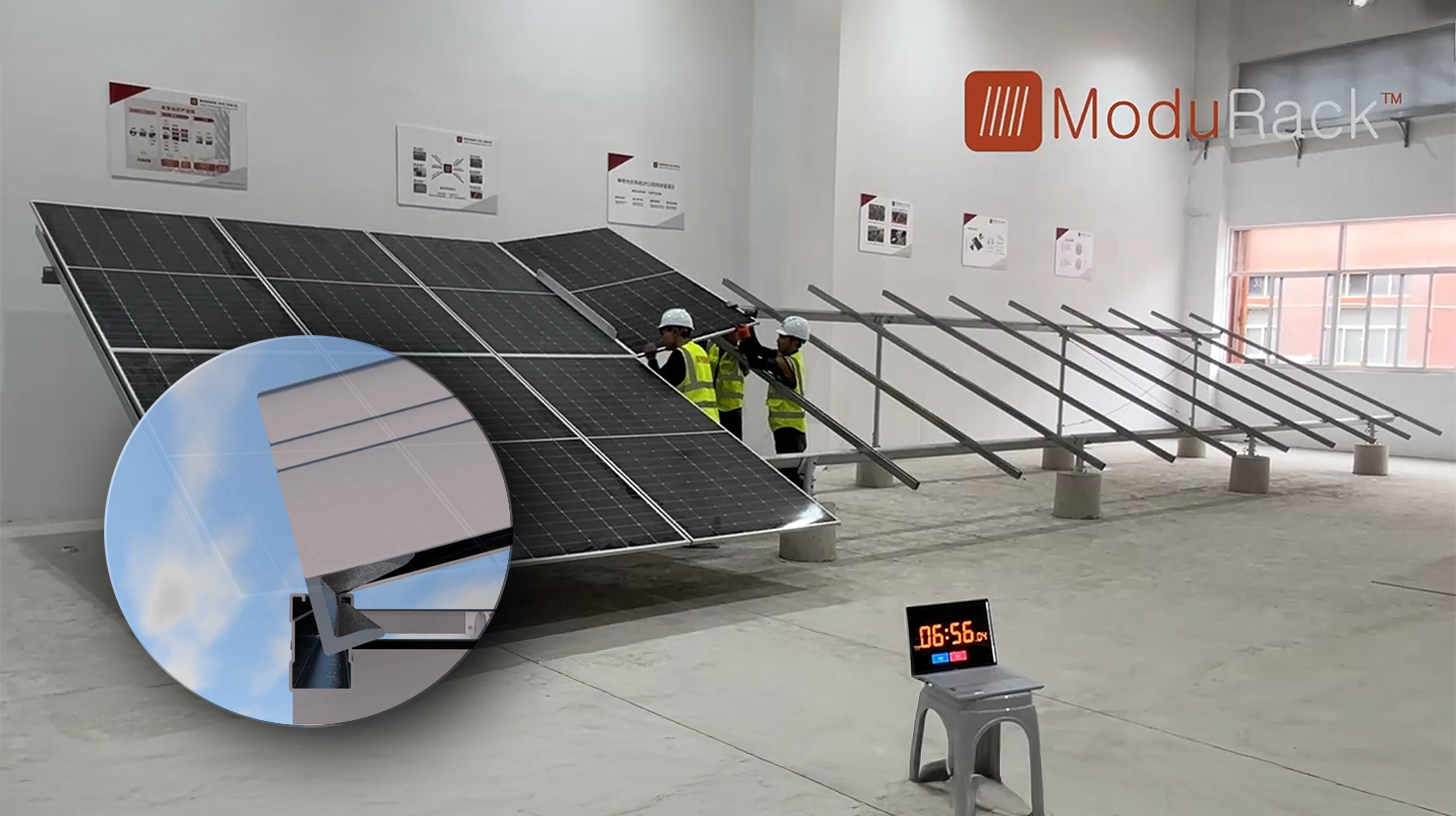
New: Patent from the USA – install solar parks up to 30% cheaper and 40% faster and easier – with explanatory videos!

New: Patent from the USA – Install solar parks up to 30% cheaper and 40% faster and easier – with explanatory videos! - Image: Xpert.Digital
The core of this technological advancement is the deliberate departure from conventional clamp mounting, which has been the standard for decades. The new, more time- and cost-effective mounting system addresses this with a fundamentally different, more intelligent concept. Instead of clamping the modules at specific points, they are inserted into a continuous, specially shaped support rail and held securely in place. This design ensures that all forces – whether static loads from snow or dynamic loads from wind – are distributed evenly across the entire length of the module frame.
More information here:
Gigantic photovoltaic projects: How Poland is accelerating the energy transition
Photovoltaic farms under construction and planned for 2025
PGE Energia Odnawialna projects
What major projects is PGE planning? The company is currently developing 14 photovoltaic farms with a total capacity of 180 MW. The largest planned farm is PV Kleszczów with 50 MW. All projects are scheduled for completion by 2026 and will be able to supply approximately 90,000 households.
What makes the Bełchatów project special? The farm in Kleszczów is being built as a joint venture between PGE Energia Odnawialna and the municipality of Kleszczów, with each partner holding a 50 percent stake. The plant is planned to cover 50 hectares and produce 53 GWh annually.
RWE Project Borek
What are the dimensions of the RWE project? The Borek project in the municipality of Deszczno in the Lubusz Voivodeship will have a capacity of 24 MWac. Completion is planned for the second half of 2025, and the farm will be able to supply up to 10,500 households annually.
Orlen Farm in Kotla
What are the special features of the Orlen project? The farm in the municipality of Kotla in Lower Silesia is designed to reach a capacity of 130 MW, with the possibility of expansion to 170 MW. Completion is planned for the end of 2025. Energa Wytwarzanie took over the project from the British company Lightsource bp.
VSB Grupa – The Mega Project
Which could become Poland's largest photovoltaic farm? VSB Polska, a subsidiary of TotalEnergies, is planning a 303 MW farm in Lower Silesia. Construction is scheduled to begin in October 2025, with completion expected by the end of 2026.
What makes this project particularly ambitious? The farm is intended to become part of a hybrid renewable energy system that could later also include wind power and energy storage. The project covers 260 hectares northeast of Wrocław.
Goldbeck Solar expansion in Choczewo
What expansion plans exist for existing sites? Goldbeck Solar plans to expand its farm in the municipality of Choczewo in Pomerania to approximately 86 MWp. Work is scheduled to begin in the second quarter of 2025.
The world's largest photovoltaic farms
China as world market leader
Why does China dominate the global photovoltaic market? China is not only the largest producer of solar cells, but also home to the world's largest photovoltaic farms. In 2023, the country installed more photovoltaic systems than the rest of the world combined.
The world's largest solar farm – Midong
What are the dimensions of the world's largest solar farm? The Midong Solar Farm in China's Xinjiang region of the Gobi Desert has an installed capacity of 5 GW. The plant covers 809 square kilometers and can produce 6.09 TWh of energy annually.
What does this amount of energy mean in practice? The energy produced would be enough to fully power a small country like Papua New Guinea. The farm consists of over 5.26 million bifacial monocrystalline photovoltaic modules, each with a power output of 650 W.
Mengxi Lanhai Solar Plant – The Number Two
Which plant comes in second place? The Mengxi Lanhai Solar Plant in Inner Mongolia has a capacity of 3 GW, making it the second largest solar farm in the world. The plant was connected to the grid in November 2024 after a construction period of 14 months.
What makes this project particularly remarkable? The farm was built on land damaged by coal mining and comprises 5.9 million solar panels covering an area of 70 square kilometers. Its annual production of 5.7 TWh can power approximately 2 million households.
Al Dhafra Solar Farm – Record holder outside of China
What is the largest solar farm outside of China? The Al Dhafra Solar Farm in the United Arab Emirates, about 35 kilometers from Abu Dhabi, has a capacity of 2 GW. The plant was commissioned in 2023 and was considered the world's largest single-site solar farm at the time of its completion.
What technology is used? The farm utilizes nearly 4 million bifacial solar panels, which can capture sunlight from both the front and back. The plant can supply approximately 200,000 households in the UAE and avoids 2.4 million tons of CO2 emissions annually.
Technological developments and trends
Bifacial technology on the rise
Why are modern photovoltaic farms increasingly relying on bifacial modules? Bifacial solar panels can capture sunlight from both the front and the back, which can increase efficiency by up to 30 percent. This technology is particularly effective in desert regions, where the sand reflects sunlight.
Agri-photovoltaics as a new trend
How does agrivoltaics combine energy production with agriculture? This concept makes it possible to produce energy and carry out agricultural activities on the same land. In China, this technology is already being used at the Mengxi Lanhai Solar Plant, where livestock is raised beneath the solar panels.
Energy storage integration
What role do energy storage systems play in modern photovoltaic projects? Approximately 10 percent of planned photovoltaic projects in Poland integrate energy storage systems. A quarter of the large projects plan to incorporate battery storage to compensate for fluctuations in solar energy.
Economic and environmental impacts
Jobs and regional development
How does the photovoltaic industry affect the job market? The expansion of solar energy creates new jobs, not only in production, but also in installation, maintenance, and operation. The Brudzew farm serves as an example of how former miners can be successfully employed in the solar industry.
CO2 reduction and climate protection
What contribution do Polish photovoltaic farms make to climate protection? The Przykona farm alone prevents the emission of over 208,000 tons of CO2 annually. The largest plants together save several million tons of CO2 emissions per year.
Investment volume and financing
What are the investment figures for photovoltaics in Poland? The Zwartowo farm cost approximately 200 million euros, while the planned VSB project in Lower Silesia requires investments of several hundred million euros. These projects are often financed by consortia of international banks.
Challenges and future prospects
Network integration and infrastructure
What challenges does the massive expansion of photovoltaics bring? The rapidly growing solar energy sector places high demands on the grid infrastructure. Overloading of the electricity grid is already a problem that must be solved by expanding the transmission networks and integrating energy storage systems.
Land use and spatial planning
How is Poland solving the problem of land competition? Many large photovoltaic farms are being built on former mining areas or other industrially used land. This reduces conflicts with agriculture and other land uses.
Technological innovation
What technological developments will shape the future? New technologies such as perovskite solar cells promise higher efficiency at lower costs. Intelligent energy management systems and improved storage technologies will further optimize the integration of solar energy.
International classification and comparisons
Poland's position in Europe
How does Poland compare to other European countries? Poland is among the leading countries in photovoltaic expansion in Europe. With an installed capacity of over 22 GW, the country ranks among the top markets on the continent.
Comparison with other European projects
How large are photovoltaic farms in other European countries? Spain operates large solar farms such as "Nunez de Balboa" with 500 MW and "Mula Photovoltaic Power Plant" with 494 MW. The French "Cestas Solar Park" has a capacity of 300 MW. Poland's largest farms can certainly compete with these international projects.
Regulatory framework
Auction system and promotion
How is the expansion of photovoltaics promoted in Poland? The Polish auction system for renewable energies offers developers long-term power purchase agreements. In addition, programs such as "Mój Prąd" and "Czyste Powietrze" support private investments in solar energy.
Net billing and prosumer regulations
What changes does the new legislation bring? The transition from net metering to net billing will alter the economic viability of photovoltaic systems. At the same time, new regulations for collective and virtual prosumers will enable more people to access solar energy.
Environmental and sustainability aspects
Recycling and circular economy
How is the industry addressing the issue of sustainability? Modern photovoltaic projects already consider the later recycling of the modules during the planning phase. For example, the Brudzew farm processed the transport pallets of the modules into plywood panels for furniture production.
Biodiversity and landscape conservation
What impact do large solar farms have on the environment? Modern projects integrate measures to protect biodiversity. The Mengxi Lanhai Solar Plant in China demonstrates how solar farms can be combined with agricultural use and nature conservation.
Digitalization and Smart Grid Integration
Automation and Artificial Intelligence
What role does digitalization play in modern solar farms? New plants increasingly rely on robot-assisted assembly, drones for inspections, and intelligent cleaning systems. These technologies increase efficiency and reduce operating costs.
Predictive maintenance and monitoring
How do digital technologies optimize operations? Intelligent monitoring systems can predict maintenance needs and continuously optimize plant performance. This increases availability and extends the lifespan of the equipment.
Socioeconomic aspects of the energy transition
Public acceptance
What is the Polish public's attitude towards photovoltaics? Awareness of renewable energies and acceptance of solar power are steadily increasing. Local participation models and transparent communication are fostering public support for large-scale solar projects.
Regional value creation
What economic effects do photovoltaic farms have on their regions? Large solar farms not only generate tax revenue for municipalities, but also create direct and indirect jobs in the region. The local added value through maintenance, service, and ancillary businesses is considerable.
The Polish photovoltaic landscape is showing impressive dynamism, with continuously growing installations and innovative projects. From the largest farm, Zwartowo, with 204 MW, to planned megaprojects exceeding 300 MW, Poland is developing into a leading solar market in Europe. The combination of favorable regulatory frameworks, technological innovations, and public acceptance creates optimal conditions for further growth. At the same time, international comparisons, particularly with Chinese gigaprojects, demonstrate the remaining potential for further expansion of solar energy in Poland. The integration of new concepts such as the virtual prosumer and the increasing importance of energy storage will significantly shape developments in the coming years.
Look, this little detail saves up to 40% installation time and reduces costs by up to 30%. It comes from the USA and is patented.


NEW: Ready-to-install solar systems! This patented innovation significantly accelerates your solar construction project
The core of ModuRack 's innovation lies in the departure from conventional clamp fastening. Instead of clamps, the modules are inserted and held in place by a continuous support rail.
More information here:
Your partner for business development in the fields of photovoltaics and construction
From industrial rooftop PV to solar parks and larger solar parking lots
☑️ Our business language is English or German
☑️ NEW: Correspondence in your native language!

Konrad Wolfenstein
I and my team are happy to be available to you as your personal advisor.
You can contact me by filling out the contact form here wolfenstein@xpert.digital:or simply call me at +49 7348 4088 965. My email address is
I'm looking forward to our joint project.