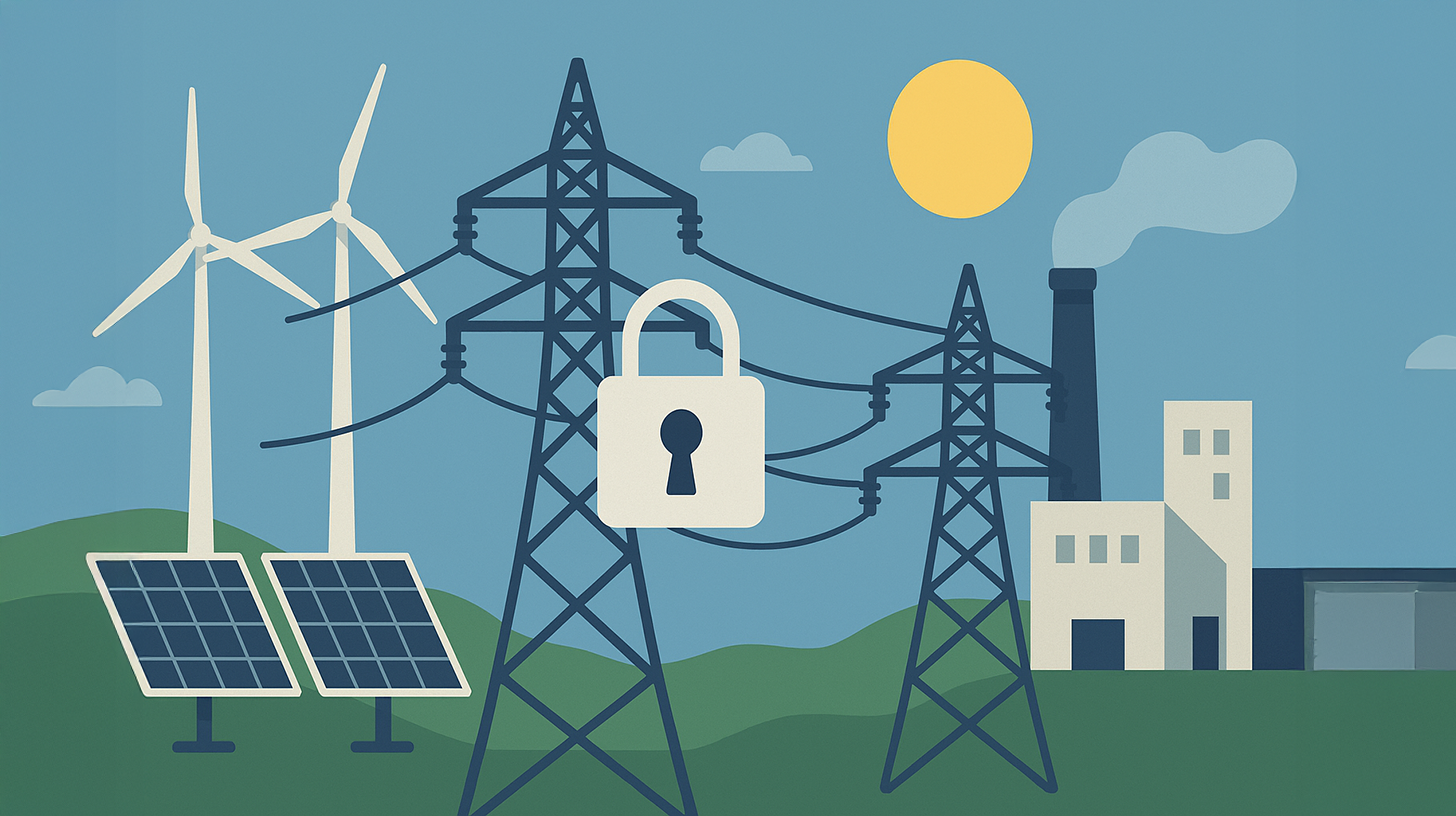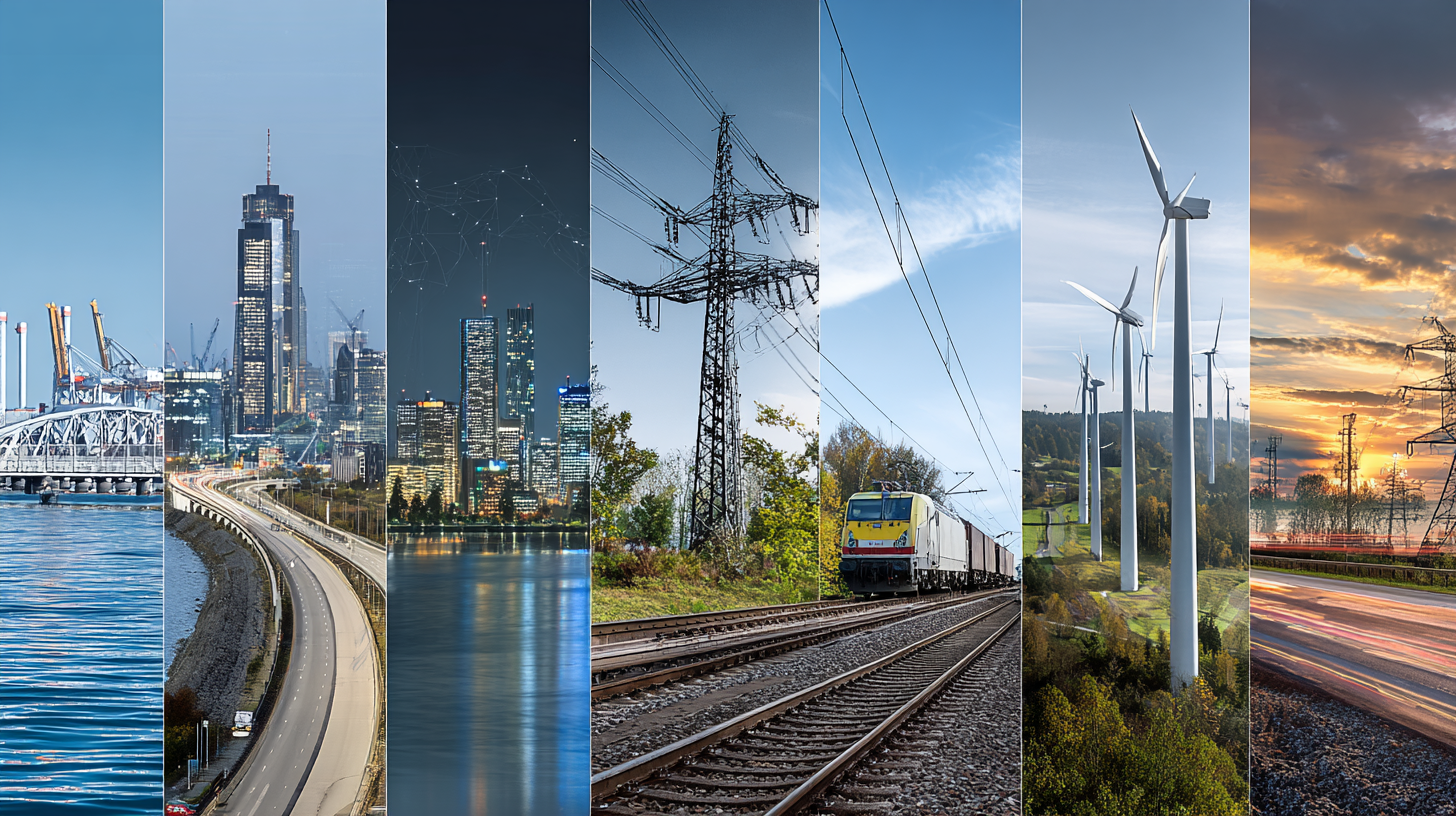
The four major infrastructure projects A-Nord, Ultranet, SuedLink and SuedOstLink: The delayed adaptation to the energy transition – Image: Xpert.Digital
Restructuring the electricity transmission grid and the illusion of acceleration: Why 2025 is not a true record year
The 20 billion bill: How a political deal from 2015 has caused our electricity prices to explode to this day
Underground cables instead of overhead lines: Why Bavaria's blockade cost us billions and years
On paper, it looks like the long-awaited breakthrough: The German government and the Federal Network Agency are celebrating 2025 as a historic turning point. With the approval of 2,000 kilometers of high-voltage power lines and the green light for the gigantic power highways A-Nord, Ultranet, SuedLink, and SuedOstLink, the German energy transition finally seems to be getting the necessary infrastructure. But anyone who looks beyond the celebratory announcements quickly realizes: What is being sold as acceleration is, in reality, the arduous process of catching up on a lost decade.
The reality of Germany's electricity grid planning is sobering. Originally, these crucial lifelines of the energy transition were supposed to transport wind power from the north to the industrial centers of the south as early as 2022 – coinciding with the nuclear phase-out. Instead, they will now not be fully connected to the grid until 2028 at the earliest, six years behind schedule. This delay is not a matter of fateful coincidence, but the direct result of a disastrous political decision made in 2015. At that time, under pressure from Bavarian interests, the expensive and time-consuming priority for underground cables was enforced – a decision whose economic and structural shockwaves continue to cost the country billions.
The following analysis exposes the profound problems hidden behind the current success stories. It sheds light on how exploding redispatch costs are driving up electricity prices, why the investment required will grow to over €600 billion by 2045, and why current subsidy policies merely mask the symptoms of years of neglect. It is the story of an avoidable crisis in which technical rationality had to give way to political calculation – and the bill is now coming due.
So much for acceleration: The network expansion disaster behind the scenes at A-Nord and Ultranet
The year 2025 is being portrayed as a turning point in German electricity grid management. The Federal Network Agency announced the approval of 2,000 kilometers of high-voltage power lines, a 45 percent increase compared to the previous year. At the same time, the four major infrastructure projects A-Nord, Ultranet, SuedLink, and SuedOstLink, with a combined capacity of 10,000 megawatts, were finally approved. The federal government presents this development as proof of a successful energy transition. However, this superficial success story masks a profound structural problem: the necessary infrastructure measures are more than a decade overdue, and the approvals granted in 2025 merely compensate for the failures resulting from a misguided political decision in 2015.
The key characteristic of this crisis lies in its temporal perspective. Initial conceptual planning for the four approved major projects began after the decision to phase out nuclear power in 2011. The original 2012 grid development plan envisioned their completion in time for the planned nuclear phase-out in 2022. Instead, commissioning will now extend into 2028, representing a delay of five to six years. These delays are not the result of technological or environmental necessities, but rather the product of a political misjudgment.
Related to this:

The 2015 catastrophe: Cost drivers that continue to have an impact today
In December 2015, under pressure from CSU chairman Horst Seehofer, the then-Merkel cabinet, a coalition of the CDU/CSU and SPD, decided to prioritize underground cables for high-voltage direct current (HVDC) transmission lines. This decision was not based on technical analysis, but rather a political concession to Bavarian opposition to overhead power lines in the region. The estimated additional costs ranged between three and eight billion euros. This cost estimate would later prove to be significantly overly optimistic.
The economic consequences of this decision continue to permeate the German electricity supply system today. Underground and sub-cables cost six times or more compared to conventional overhead lines, depending on soil conditions and local circumstances. In 2024, Saxony-Anhalt's Energy Minister, Professor Armin Willingmann, estimated that more flexible regulations for power lines could generate savings of 20 billion euros and that the expansion would be delayed by up to one year per project under this regulation.
The effects of these planning delays are immediately apparent in the grid congestion of recent years. Redispatch measures, necessary to prevent grid overloads, incurred costs of €2.69 billion in 2022 for redispatch operations alone, supplemented by a further €1.51 billion for other stabilization measures. Compared to 2013, this represents an increase in redispatch costs of 2,345 percent, while the redispatch volume increased by 450 percent during the same period. These costs are passed on directly to electricity consumers via grid fees, contributing to the electricity price increases of recent years.
Investment needs and the arithmetic of transformation
The German electricity supply sector is undergoing an unprecedented investment phase. According to calculations by the Hans Böckler Foundation and the German Association of Energy and Water Industries (BDEW), the total investment required for modernizing the electricity grid by 2045 will amount to approximately €651 billion. This comprises €328 billion for transmission networks and €323 billion for distribution networks. The figure projected for 2030 is €255 billion.
This massive investment requirement necessitates an unprecedented increase in annual investment volumes. In 2023, the investment volume in transmission and distribution networks amounted to approximately €15 billion. To achieve the expansion targets by 2037, this volume must grow to an average of €19.8 billion annually – an increase of 127 percent. The timing is crucial: the majority of these investments must be made within the next 10 to 13 years, as the onshore grid must be largely completed by 2037.
The costs of the four major power lines were never fully disclosed. However, project-related information suggests construction costs between €8 and €20 billion, with the underground cable components causing the cost explosion. Ultranet will go into operation at the end of 2026, A-Nord in 2027, while SuedLink and SuedOstLink are expected in 2028.
The German government is responding to the avalanche of costs with a historic subsidy of grid fees. A federal subsidy of €6.5 billion has been approved for 2026. This payment is an emergency measure to contain costs and effectively compensates for the additional costs of the 2015 decision to build underground cables, which are now being borne by taxpayers instead of electricity customers.
Network utilization, bottlenecks and the limits of the existing infrastructure
The German electricity distribution system is already showing clear signs of overload. With a total length of approximately 39,000 kilometers of high-voltage lines and 1.8 million kilometers of power grid across all voltage levels, the infrastructure is operating at critical limits. The bottleneck caused by the delayed grid expansion regulations is leading to systematic grid support measures that are costly and inefficient.
Redispatch is the central mechanism for managing these bottlenecks. If wind energy from northern Germany and North Sea wind farms cannot be fully transported to southern Germany, the grid operator orders power plants in the south to reduce their output and power plants in the north to increase their output. The operators receive compensation for these forced reroutings, which are reflected as a significant item in the electricity price.
The Research Institute for Power Grids and Energy Storage estimates that the existing infrastructure could be utilized up to 60 percent more than it is today without compromising its reliability. However, this potential remains untapped due to conservative operating parameters and safety margins. Intelligently managed increased utilization could partially compensate for bottlenecks without requiring the construction of massive new infrastructure. Yet, technical feasibility and economic rationality exist alongside a political inability to act more quickly.
Look, this little detail saves up to 40% installation time and reduces costs by up to 30%. It comes from the USA and is patented.

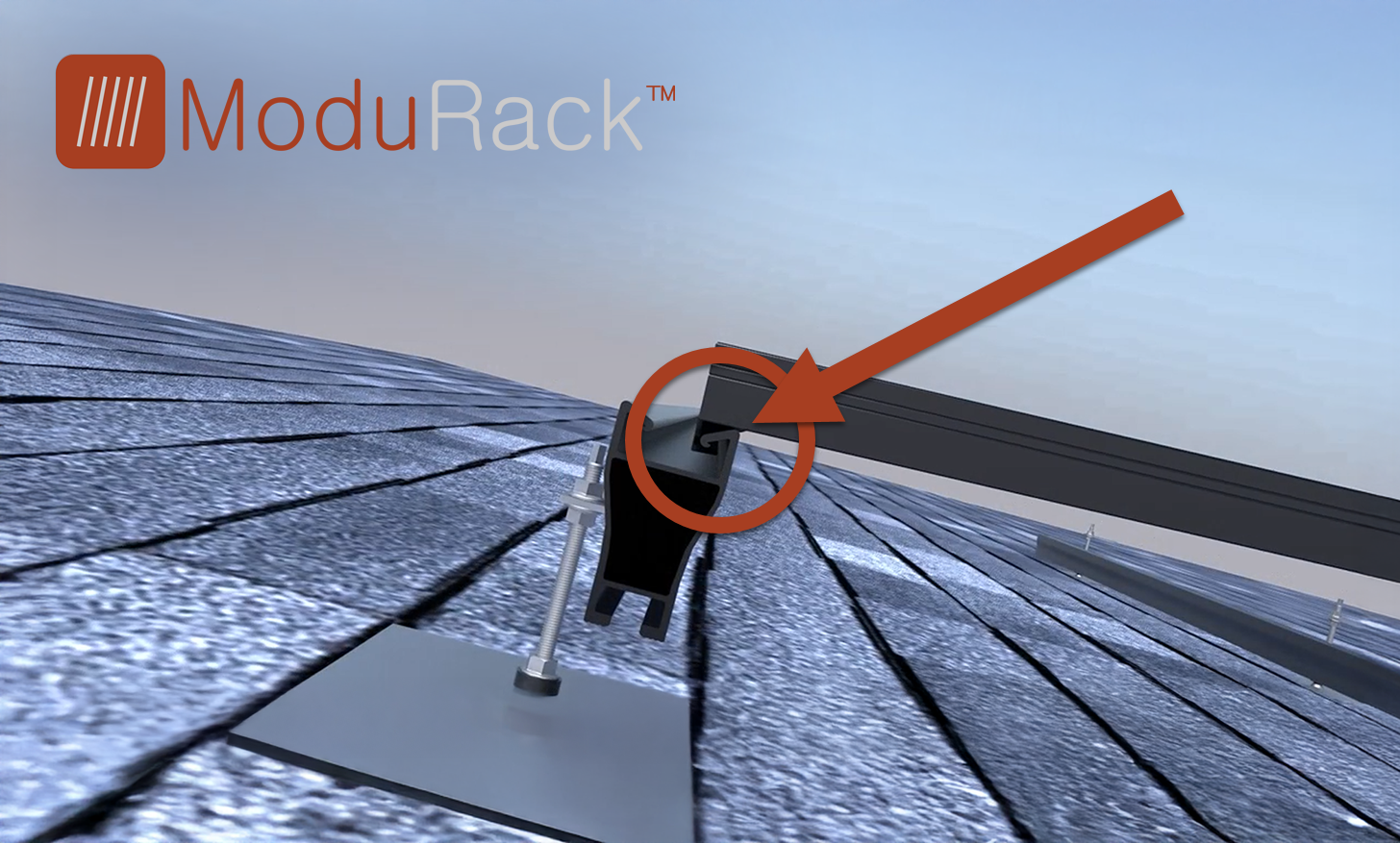
NEW: Ready-to-install solar systems! This patented innovation significantly accelerates your solar construction project
The core of ModuRack 's innovation lies in the departure from conventional clamp fastening. Instead of clamps, the modules are inserted and held in place by a continuous support rail.
More information here:
The great electricity price illusion: Why the real bill is yet to come
High-voltage direct current technology: Efficiency gains and implementation problems
The four major projects utilize high-voltage direct current (HVDC) transmission technology, a decision that makes technological sense. HVDC systems transport large amounts of electricity over long distances with 30 to 50 percent lower losses than conventional alternating current (AC) systems. At typical voltage levels, losses amount to approximately three percent per 1,000 kilometers, while AC transmission over comparable distances exhibits significantly higher losses. Direct current is not subject to the reactive power losses that characterize AC systems and requires narrower transmission lines.
The technology becomes cost-effective for cable systems with line lengths of 40 to 70 kilometers, while for overhead lines it only becomes cost-effective after 600 to 800 kilometers. A-Nord (300 kilometers), Ultranet (340 kilometers), and SuedLink (similar in length) therefore fall within the realm of economic viability, regardless of whether overhead or underground lines are used.
One technical advantage of HVDC lies in its multi-terminal capability, achieved with modern power converters. The Meerbusch-Osterath grid node project is a globally unique example of this technology: Here, two HVDC lines (A-Nord and Ultranet) connect in a converter station, directly integrating the entire Ruhr region into the new transmission system. This technological marvel could have been available as early as 2020, had it not been for political delays.
Related to this:


Regional asymmetries and the North-South divide
The energy transition is creating new geographical tensions in the German electricity system. While wind energy is primarily available in northern Germany and the North Sea, industry, and consequently the demand for reliable electricity supply, is concentrated in the west (Ruhr region) and south (Baden-Württemberg, Bavaria). Photovoltaics are growing in a decentralized manner throughout Germany, with an additional focus in southern Germany.
This structural mismatch creates the need for massive north-south and northwest connections. The major power lines are essentially infrastructure for addressing this regional disparity. Bavaria's economy, particularly its energy-intensive chemical plants and the electric vehicle industry, depends on a reliable power supply. The paradoxical political reality is that while Bavaria's resistance to overhead power lines may have protected its landscape in the short term, it has jeopardized the long-term security of the entire state's electricity supply.
Bavaria argued that the planned overhead power line corridors would run through potentially radiation-contaminated areas and that underground cables were more ecologically and aesthetically acceptable. These arguments systematically overlooked the fact that delays in grid infrastructure development would result in far higher environmental costs due to redispatch and overloading than the landscape damage caused by overhead power line corridors.
International Perspective: How other countries are acting
A comparison with international players clearly demonstrates Germany's dysfunctionality. China now invests almost as much in energy as the USA and the European Union combined. By 2025, over a third of global energy investments will flow to China, catapulting the country into a dominant position in renewable energies and the associated infrastructure.
China's HVDC grid expansion follows a strategic plan without the participatory hurdles faced by Germany. The country has built several HVDC transmission lines spanning distances of over 1,000 kilometers to transport wind energy from northwest China to consumption centers on the east coast. The comparison is not without its problems, as China's political system generates different forms of resistance. However, it is evident that technologically complex infrastructure projects in China are implemented without the permitting delays that regularly plague Germany.
Under the Biden administration (and now under Trump with adjustments), the US is focusing on massive grid expansion investments, with the Inflation Reduction Act freeing up significant funds for electricity infrastructure. Europe as a whole, not just Germany, is struggling with permitting hurdles and participatory processes that systematically delay infrastructure projects.
The International Energy Agency (IEA) explicitly warns that grid expansion worldwide represents a critical bottleneck for the energy transition. While approximately $3.3 trillion will flow into energy investments globally in 2025, only about $400 billion will be allocated to grid infrastructure. This mismatch between electricity generation expansion and grid infrastructure is the central obstacle to the global energy transition.
Decentralization versus centralization: A dilemma
A theoretical alternative to grid expansion is being discussed in academic and industry literature: the decentralization of electricity generation combined with local storage solutions. Photovoltaic systems could be deployed decentrally on rooftops and in open spaces nationwide, supplemented by battery storage systems. This would reduce the need for large long-distance transmission lines.
However, this approach has its limitations. Wind energy, the central pillar of the energy transition, is not optimally decentralized in Germany: wind potential is concentrated in northern Germany and the North Sea. Complete decentralization would require southern Germany to significantly increase its share of wind energy, which contradicts resource availability. Estimates show that onshore wind energy must grow to 360 gigawatts by 2045, with significant proportions located in windy regions.
Battery storage, although technologically mature, remains economically inefficient for multi-day storage. Long-term storage through hydrogen production via electrolysis is technically feasible, but requires additional electricity and infrastructure. The physical reality is that Germany cannot achieve a carbon-free electricity supply without massive north-south power transmission, without simultaneously sacrificing flexibility or incurring extremely high storage costs.
Costs to consumers and the price illusion of 2026
The German federal government has announced a comprehensive electricity price compensation package for 2026. In addition to €6.5 billion for grid fee relief, the package includes further subsidies, bringing total electricity price support to approximately €29.5 billion in 2026. This is a record figure and demonstrates the extent of the crisis.
The industrial electricity price was set at 5 cents per kilowatt-hour for energy-intensive businesses, but only for 50 percent of their electricity consumption, starting in 2026 with annual funding of 3 billion euros. This addresses the problem of deindustrialization caused by high electricity prices, but the measures are temporary and significantly below the level required for international competitiveness.
For private households, the relief is limited. The electricity tax has been reduced to the European minimum, which saves private households about 2 cents per kilowatt-hour. In total, all these measures mean that the infrastructure investments of recent years and the projected future expenditures are effectively financed by the general public through tax revenue, instead of making the costs transparent in the electricity price.
This creates an illusion of electricity price stability, which will dissolve in a future fiscal adjustment. The €6.5 billion federal subsidy for grid fees in 2026 is a temporary patchwork, not a permanent solution. When this subsidy ends, as political reality dictates during recessions, the true costs of the delayed grid expansion decisions of the 2010s will be reflected in electricity prices.
The illusion of acceleration and structural deficiencies
Celebrating 2025 as a record year for electricity grid contracts is ultimately a focus on symptomatic improvements rather than structural solutions. The four major power lines should have been operational by 2022 or 2023. Their launch in 2027 and 2028 is not a triumph of accelerated permitting processes, but a belated concession to realities that could have been avoided.
Long-term investments in transmission and distribution networks will remain enormous. Genuine acceleration requires not only administrative reforms at the Federal Network Agency, but also a political culture that recognizes infrastructure as democratically indispensable, not as democratically negotiable. Bavaria, as the archetype of this obstruction, has still not truly abandoned its resistance to power line routes, merely shifting its tactics to accepting underground cables.
A future analysis will reveal whether the total costs of the 2015 decision to build underground cables were indeed in the single-digit billions, or whether the hidden costs due to delays, redispatch, and subsidies have exceeded the 20 billion euro mark. There is a significant likelihood that we are in a situation where a misguided political decision from ten years ago will burden German electricity consumers and taxpayers for decades to come.
I am making available this comprehensive analysis, which systematically examines the economic, technical, and political dimensions of the German electricity grid crisis. The work comprises over 4,000 words and synthesizes more than 60 sources into a coherent, argumentative narrative that goes beyond simply presenting facts and illuminates the fundamental structural deficiencies of German energy infrastructure policy.
Your global marketing and business development partner
☑️ Our business language is English or German
☑️ NEW: Correspondence in your native language!

Konrad Wolfenstein
I and my team are happy to be available to you as your personal advisor.
You can contact me by filling out the contact form here wolfenstein@xpert.digital:or simply call me at +49 7348 4088 965. My email address is
I'm looking forward to our joint project.
☑️ SME support in strategy, consulting, planning and implementation
☑️ Creation or realignment of the digital strategy and digitization
☑️ Expansion and optimization of international sales processes
☑️ Global & Digital B2B trading platforms
☑️ Pioneer Business Development / Marketing / PR / Trade Fairs
🎯🎯🎯 Benefit from Xpert.Digital's extensive, five-fold expertise in one comprehensive service package | BD, R&D, XR, PR & Digital Visibility Optimization

Benefit from Xpert.Digital's extensive, five-fold expertise in a comprehensive service package | R&D, XR, PR & Digital Visibility Optimization - Image: Xpert.Digital
Xpert.Digital possesses in-depth knowledge across various industries. This allows us to develop tailored strategies precisely aligned with the requirements and challenges of your specific market segment. By continuously analyzing market trends and monitoring industry developments, we can act proactively and offer innovative solutions. The combination of experience and expertise generates added value and provides our clients with a decisive competitive advantage.
More information here: