The fatal Mercosur mistake: Duty-free entry to South America – Anyone still waiting on the EU-Mercosur agreement will pay the price – Image: Xpert.Digital
The fatal Mercosur mistake: Why German exporters are giving away millions in potential revenue to China
The 700-million-customer market is open: How to crack the Mercosur code without a nasty surprise
Mechanical engineering & automotive industry in focus: The secret levers of the new EU-Mercosur trade pact
Since May 1, 2026, it's official: The long-awaited EU-Mercosur interim trade agreement is in force – opening the doors for European companies to one of the world's largest free trade areas with over 700 million consumers. But while the first movers are already benefiting from massive tariff reductions, strategic raw material advantages, and new public tenders, a large portion of German-speaking SMEs remain in a precarious waiting position. Many make the mistake of automatically equating reduced tariffs with easy market access, thus falling unprepared into costly distribution traps. This article ruthlessly analyzes where the true potential and obstacles lie in the Mercosur region – from risky distributor dependency to complex bureaucracy – and outlines concrete strategic steps that exporting companies must now take. Those who wait for ratification are surrendering the field to their competitors without a fight.
Lower tariffs, higher chances: What German SMEs urgently need now for Mercosur exports
The EU-Mercosur Interim Trade Agreement (ITTA) has been provisionally in force since May 1, 2026. This marks the end of over a quarter-century of negotiations and the beginning of a new era in the transatlantic economic relationship between Europe and South America. Four countries – Argentina, Brazil, Paraguay, and Uruguay – have ratified the agreement, fulfilled all the requirements for provisional application, and submitted the necessary notifications on time. In concrete terms, this means that companies from Germany, Austria, and Switzerland that are currently exporting already pay reduced tariffs in certain categories. Companies that are still waiting will continue to pay the full tariff rates – while their competitors gain a foothold in the market.
The agreement formally creates one of the world's largest free trade areas, encompassing over 700 million people. But the real explosive potential lies not in these headlines. It lies in the asymmetry between companies that are now preparing operationally and those still waiting for final political clarity. The latter will miss that moment.
How 26 years of negotiations culminated in one date
The agreement has an unusually long history. Initial talks between the EU and Mercosur began in the late 1990s. Political agreements repeatedly failed, primarily due to resistance from European agricultural lobbyists, especially from France. A first political agreement was reached in June 2019, but it remained inconsequential because France and other states blocked ratification. Only the changed geopolitical context—Trump's aggressive tariff policies, China's growing infrastructure presence in Latin America, and Europe's dependence on raw materials—provided the decisive impetus.
A new agreement was reached at a Mercosur summit in Uruguay on December 6, 2024. The partnership agreement was formally signed on January 17, 2026. To bridge the gap until full parliamentary ratification, the interim trade agreement was structured as a standalone EU-only agreement – an instrument that does not require the approval of the national parliaments of EU member states. Although the European Parliament decided on January 21, 2026, to refer the agreement to the European Court of Justice to examine its compatibility with EU law, this merely delayed final ratification by up to 24 months without blocking provisional application.
The decisive step was taken on March 23, 2026, when the European Commission announced that it would provisionally apply the agreement from May 1. On April 29, the final diplomatic note was sent to Paraguay, the guardian of the Mercosur agreements. Since then, tariff reductions have been in effect – real, immediate, and usable.
What tariff reductions actually mean – and what they don't mean
The agreement provides for the gradual elimination of import tariffs on over 91 percent of EU goods exported to Mercosur. The pace of this elimination varies considerably depending on the sector. Some reductions take effect immediately, while others will be implemented over transition periods of 10 to 15 years.
The following effects are particularly relevant for export-oriented industries in the DACH region:
- Automotive sector: Tariffs on electric and hybrid vehicles will immediately drop from 35 to 25 percent, and on combustion engine vehicles from 35 to 17.5 percent. Tariffs on automotive parts will be phased out to zero over ten years for 90 percent of EU exports, with the first reduction taking effect on the day the measures come into force.
- Mechanical and plant engineering: Current tariffs of 14 to 20 percent will be phased out for 93 percent of EU exports over ten years, with an initial reduction of 1.3 to 1.7 percentage points from May 1, 2026.
- Pharmaceutical industry: Tariffs of up to 14 percent begin their ten-year transition period to zero, with an initial cut of up to 1.3 percentage points.
- Textiles: Tariffs of 35 percent will begin to be phased out over eight years to zero, with an initial reduction of 3.9 percentage points.
According to the European Commission, European exporters could save approximately €4 billion annually through the complete elimination of tariffs. Germany is estimated to save between €400 and €500 million of this per year. Based on a global trade model, Deloitte projects that German exports to the Mercosur countries could increase by up to €15 billion in the medium term, representing a 93 percent increase compared to 2024 levels. For comparison, Germany's total trade volume with the Mercosur countries in 2024 was over €26 billion, of which over €13 billion was exports.
These figures are impressive. However, they shouldn't obscure the fact that tariff reduction is the only thing the agreement directly regulates. Everything else – distribution structures, local partners, payment infrastructure, regulatory requirements – remains unchanged.
The operational bottleneck: What the agreement doesn't solve
The most common mistake DACH companies make when entering the Mercosur region is equating tariff reductions with market access. A lower tariff opens the door. It says nothing about what lies behind it. Four structural barriers remain, regardless of how low the tariffs are.
First, the four Mercosur countries do not constitute a single economic area, even if they are portrayed as such in political terms. Brazil is by far the largest market – almost 80 percent of the additional German exports triggered by the agreement are attributable to this country. However, Brazil is also the most complex market in the region: federal tax structures (ICMS), significant regional differences between São Paulo, Rio Grande do Sul, and the Northeast, and a distribution ecosystem that is virtually impossible to operate without a local legal entity make rapid market entry an illusion. Despite political volatility and high inflation, Argentina offers pragmatic adjustments for purchasing power and a strong affinity for digital technology, but requires reliable local distributors as an absolute prerequisite. Uruguay is considered an institutionally stable entry market with a high degree of legal certainty, but remains limited in size. Paraguay, on the other hand, is often underestimated: low taxes, free trade zones, and a well-developed re-export sector make the country strategically attractive for certain product categories and distribution models.
Secondly, distributor dependency is perhaps the most dangerous structural risk. The typical pattern: A German SME finds a local distributor, delegates all market development, and waits for results. What emerges is not market presence – it is distributor dependency. The distributor builds its own digital presence, optimizes for its own brand name, and systematically renders the actual manufacturer invisible in the market. The agreement even exacerbates this risk: The more attractive the Mercosur region becomes due to lower tariffs, the more DACH companies simultaneously seek distributors – and the greater the competition becomes for the few qualified local partners.
Thirdly, proving preferential origin requires considerable bureaucratic preparation. To benefit from customs preferences, exporters must either be registered in the REX (Registered Exporter System) or, for shipments valued at less than €6,000, include a corresponding origin declaration on the invoice. The goods must meet the agreement-specific rules of origin, which vary depending on the HS code and can be looked up in the EU customs database Access2Markets. Anyone who does not yet have an EORI number and REX registration is effectively unable to use the customs preferences – even if their products would, in principle, qualify.
Fourth, the agreement does not change the decision-making logic of buyers in the target markets. Cultural market understanding, language, local sales presence, and reference customers remain crucial for sales success – especially in B2B industrial business, where purchasing decision cycles are long and personal relationships are fundamental.
The resource equation: Why this corridor is strategically unique
Beyond the immediate export opportunities for European industrial goods, the true strategic significance of the agreement lies in securing critical raw materials. The Mercosur countries are key suppliers of raw materials that are indispensable for Europe's green and digital transformation.
The data is clear: Brazil supplies 88.8 percent of global niobium processing, thus securing 82 percent of the EU's demand for this mineral, which is essential for high-performance alloys in transport and infrastructure. Brazil is also responsible for 15.9 percent of global tantalum extraction (16 percent of EU procurement), 10.4 percent of aluminum/bauxite extraction, and 7.5 percent of natural graphite extraction – key raw materials for battery technologies. Argentina, in turn, accounts for 11 percent of global lithium processing, covering 6 percent of the EU's demand for this metal, which is crucial for batteries, glass, and ceramics.
The geopolitical dimension of these figures is considerable. China has built up a de facto monopoly in the processing of critical minerals over decades. Brazil's share of around 20 percent of global critical mineral reserves makes the country a key new player in a period of increasing dependence on China. It was precisely in this context that a German-Argentine memorandum of understanding on cooperation in the mining and raw materials sector was signed in early July 2026 – with an explicit focus on critical minerals and rare earth elements to reduce dependence on China.
The agreement also contains a clause of significant importance for raw materials: Exceptions are permitted for a limited number of products from Brazil, provided that EU buyers are granted preferential export tax treatment compared to non-EU buyers. This is not a technical footnote – it is a competition policy instrument that secures structural advantages for European buyers over the Chinese and Americans. Those who fail to utilize this advantage leave it to others.
The competition for these raw materials is real and intense. China is building the Chancay container port in Peru, which will halve shipping times from China to Latin America's west coast and serve as a hub for all Latin American raw material trade with Asia. As early as 2024, the Kiel Institute for the World Economy analyzed the situation precisely: those who are too slow in Latin America will not only lose market share, but also strategic raw material security to China.
The geopolitical reorder: Free trade as a security architecture
The EU-Mercosur agreement is far more than a trade instrument. In South America, it is primarily perceived as a tool for geopolitical repositioning. Brazil's Finance Minister Fernando Haddad described the agreement as historic, mainly because of its geopolitical significance. Concerns about increasingly aggressive US and Chinese influence in the region—from Trump's interventionist rhetoric toward Venezuela and Cuba to China's infrastructure investments—have shifted the assessment of the agreement: it is simultaneously an insurance policy, a diversification tool, and a safeguard of autonomy.
For European companies, this geopolitical tension means, specifically, that the Mercosur countries are motivated to make the agreement a success. They need Europe as a counterweight. This creates a political climate that is favorable for new market entrants – at least for now. In a sensational interview, Uruguay allowed its Foreign Minister Mario Lubetkin to warn that if the EU does not fully ratify the Mercosur agreement, Europe will lose its influence in South America to China. It is a clear invitation – and one with an expiration date.
The logic of diversification applies not only to South America but also to Europe. German exports to the US were severely impacted by Trump's tariff policies in 2025; exports to China have declined by almost a quarter since 2022. In this context, Deloitte models that the Mercosur and India agreements alone could compensate for around 80 percent of the €35 billion in export losses threatened by US tariffs. Mercosur is therefore not merely a supplement, but rather an integral part of the strategic response to a world order that feels increasingly deglobalized.
Our South America and Latin America expertise in business development, sales and marketing

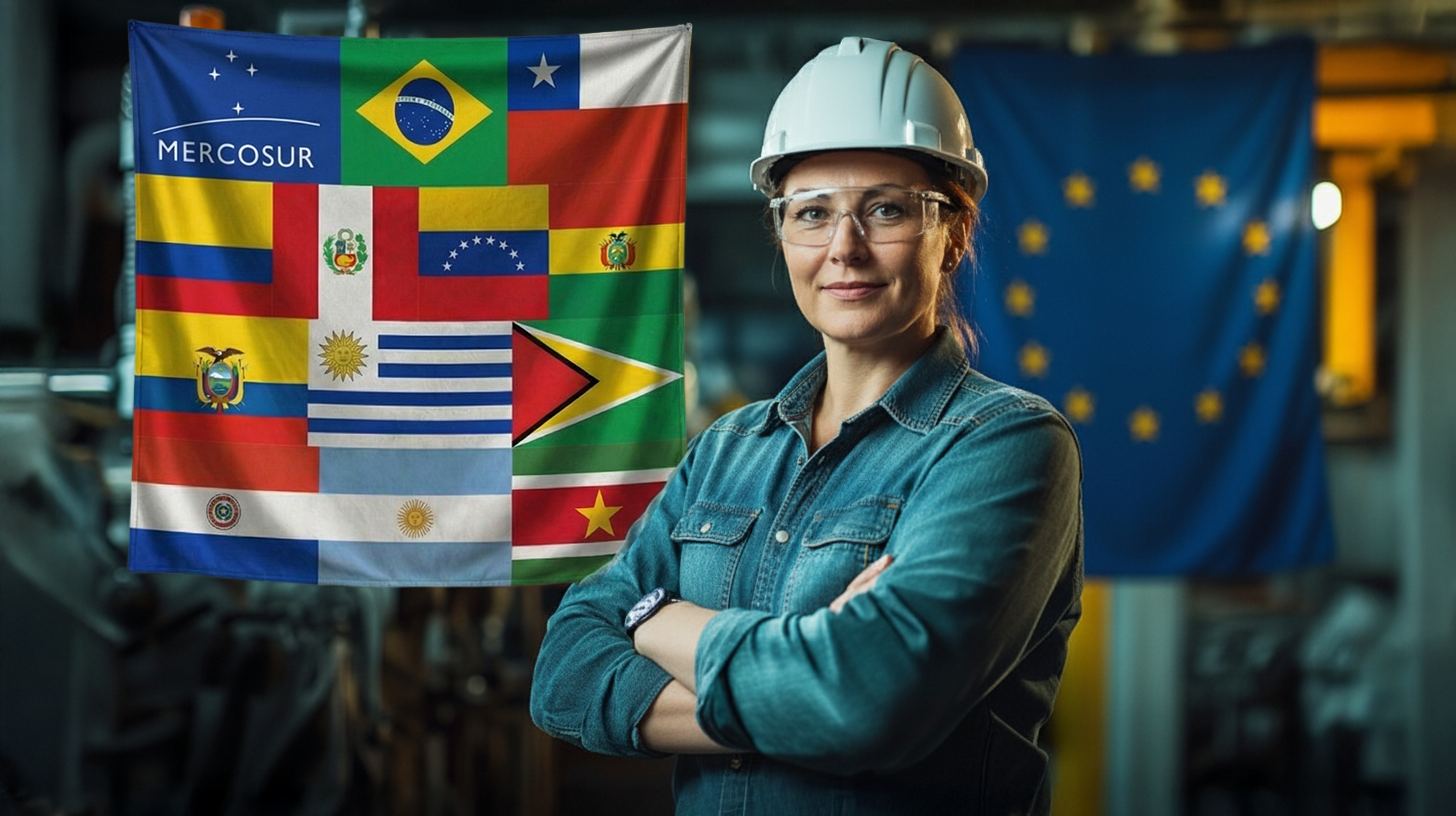
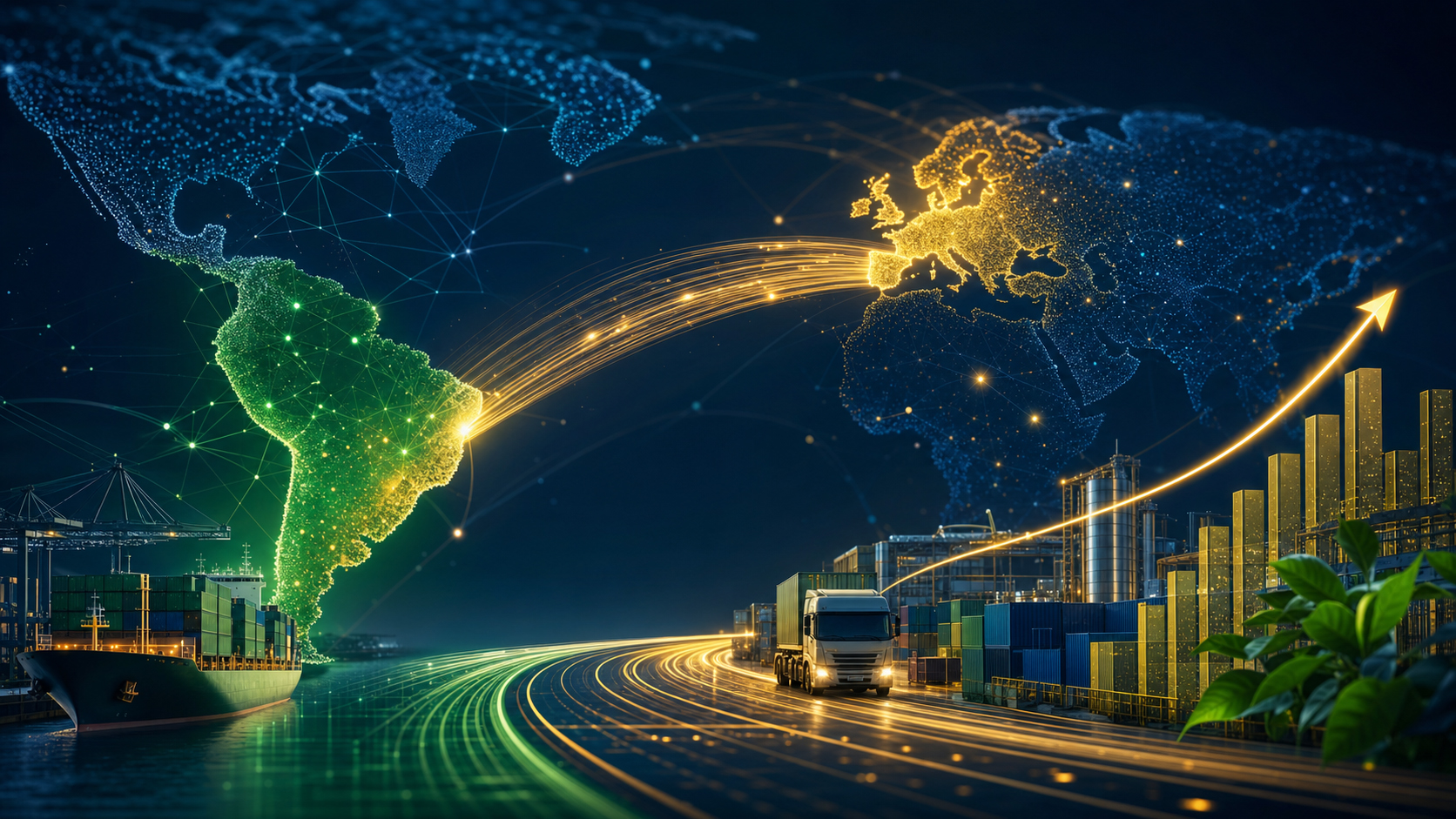
Our Latin America expertise in business development, sales and marketing - Image: Xpert.Digital
Industry focus areas: B2B, digitalization (from AI to XR), mechanical engineering, logistics, renewable energies and industry
More information here:
A thematic hub offering insights and expertise:
- Knowledge platform covering global and regional economies, innovation and industry-specific trends
- A collection of analyses, insights, and background information from our key areas of focus
- A place for expertise and information on current developments in business and technology
- A hub for companies seeking information on markets, digitalization, and industry innovations
Early opportunities, real risks: How DACH companies are conquering Brazil and Argentina
Market volume: What Mercosur is really about
Anyone who views Mercosur merely as a regional growth market for Latin American consumers fundamentally underestimates the importance of this trade relationship. The EU is the most important trading and investment partner of the Mercosur countries: EU goods exports to Mercosur alone amounted to €56.3 billion in 2023. EU investment in the region totals approximately €340 billion.
Brazil is already a key foreign location for Germany. The metropolis of São Paulo is one of the largest centers of German industry worldwide. Over 8,500 German companies export to the Mercosur region, and 74 percent of these are SMEs. According to EU figures, German exports to the region alone secure almost 250,000 jobs in Germany.
The projected growth resulting from the agreement is clearly distributed across three main sectors: Mechanical engineering leads with a potential of €4 billion in additional exports, followed by the automotive industry with €2.6 billion and electrical engineering with €1.8 billion. The chemical industry contributes a further €1.4 billion. For German SMEs, which are particularly strong in mechanical engineering, specialty chemicals, and industrial automation, these are not abstract figures – they describe a concrete market of expertise.
Geographically, the potential is highly concentrated: almost 78 percent of the additional German exports resulting from the agreement are destined for Brazil, with another 19 percent coming from Argentina. Uruguay and Paraguay together account for only around 3 percent. Therefore, anyone planning to enter these markets should prioritize – and not try to address all four markets simultaneously.
The logic of competition: Whoever acts now sets standards
In an opening market, first-mover advantages don't arise from better products alone. They arise from early market presence, established customer relationships, well-functioning supply chains, and visibility before the competition floods the market. This isn't a metaphor—it's the measurable logic of market entry dynamics.
The Coburg Chamber of Industry and Commerce (IHK Coburg) has stated unequivocally: A delayed ratification or even a failure of the agreement risks relinquishing a trade policy advantage and leaving Latin America to other competitors like China. This warning applies to states as well as companies. The logic of ratification directly impacts the logic of market entry: Those who wait until all legal issues are definitively resolved will be starting too late.
For companies in the DACH region, this competitive pressure means answering three questions honestly before investing: First, is there validated demand in the target market? Not as an assumption, but as a proven signal. Import data, search volume, and industry activity provide verifiable indicators. Second, is the company's visibility built independently of a distributor? If the answer is no, the perceived market presence is an illusion. Third, does the market logic of the target country align with the company's own sales structure? A model that works in Germany does not automatically scale to all four Mercosur countries simultaneously.
The consequence for operational setup is clear: market validation before the first pitch, local process validation before the first order. These are not options for particularly cautious companies – they are minimum requirements for anyone who seriously wants to operate in the region.
The supply chain perspective: More than exports
The agreement not only opens up export opportunities but also changes the logic of procurement and supply chain design. For many companies in Germany, Austria, and Switzerland (DACH region) that rely on critical raw materials, the Mercosur corridor will become a procurement channel. Conversely, the reduction of EU tariffs on imports from Mercosur countries means that raw materials, intermediate goods, and natural resources will become cheaper.
The dynamics are particularly interesting for companies in the battery, semiconductor, and energy technology sectors. Graphite, niobium, manganese, silicon metal, tantalum, and lithium – Brazil and Argentina supply substantial portions of the EU's demand for these materials. Companies that establish supplier relationships today secure access to raw materials under conditions that will no longer be available to future market entrants.
The agreement also includes provisions on the public procurement market that are particularly relevant for B2B companies with project-based business. EU companies can now bid on public and government tenders in Mercosur countries under the same conditions as local companies – at the federal level in Argentina, at the federal and regional levels in Brazil, and at the federal level in Uruguay. This opens up tender markets for suppliers of infrastructure equipment, industrial plants, and technology services that were previously de facto closed.
Sustainability architecture: Not greenwashing, but a contractual obligation
The EU-Mercosur agreement is the first of its kind to enshrine the Paris Climate Agreement as a key element. Violations of this agreement can therefore, in principle, be treated as breaches of contract. In addition, the agreement contains provisions on forest protection that directly address years of criticism from environmental organizations and agricultural lobbyists.
This is not merely regulatory symbolism. For exporting companies in Germany, Austria, and Switzerland (DACH region), it means that the sustainability standards under which raw materials are sourced from Mercosur are contractually enshrined. At a time when the EU Supply Chain Due Diligence Directive and the Corporate Sustainability Due Diligence Directive (CSDDD) are looming, the agreement also serves as a compliance tool: it simplifies the process of demonstrating sustainable raw material sourcing to European regulators.
At the same time, it is important to note that the credibility of these sustainability clauses depends on actual implementation monitoring. The FGV study has pointed out that the agreement carries the risk for the Mercosur countries of remaining stuck in their role as suppliers of low-value raw materials. European companies that support technology transfer and local processing will mitigate this risk and simultaneously build deeper partnerships.
The path to usage: What companies need to do now
Knowledge of the agreement is not enough. Operational implementation is crucial. For exporters from Germany, Austria, and Switzerland (DACH region), the necessary steps can be divided into three priority levels.
As immediate preparation – if not already done – the following steps are essential: Registration in the REX system (Registered Exporter System) is a prerequisite for being able to independently issue preferential origin declarations for shipments valued at over €6,000. In parallel, all relevant HS codes of your own products must be checked for preferential eligibility in the EU customs database Access2Markets. Anyone supplying or importing must also ensure that their supply chains comply with the rules of origin of the agreement – which requires a review of sources of supply and production processes.
The second step involves strategic market validation: a country-specific analysis of the actual demand situation, competitive structures, and regulatory requirements. The Chambers of Industry and Commerce (IHK) networks, the German Chambers of Commerce Abroad (AHKs), and the German government's investment agency Germany Trade and Invest (GTAI) offer detailed market reports and personalized consultations for all four Mercosur countries. For SMEs, the SME chapter of the agreement itself is also recommended, as it contains specific relief measures and transparency obligations for small businesses.
The third step – and the crucial one for long-term success – is building local structures that function independently of a single distributor. This means establishing your own digital presence in the target market, building your own reference customers, ideally a legal presence, or a qualified partner network that strengthens the manufacturer's brand – not your own. In Brazil, this almost necessitates a local legal entity capable of navigating the complex federal tax system (ICMS).
What the four brakes mean in everyday business
The four bottlenecks identified in the initial brief – export opportunities, supply chains and raw materials, local partnerships, and lack of priority – are not equivalent categories. They describe different levels of maturity in Mercosur's engagement.
Lack of priority is the most common and dangerous situation. It stems from a rational calculation – why launch a complex, uncertain foreign market project when day-to-day business is already saturated? But this calculation ignores the comparative time advantage. Anyone prioritizing Mercosur now is operating in a market where competitors haven't yet arrived. In three to five years, that will be different.
Export opportunities are the starting point of the thought process – they are the easiest entry point. But they are incomplete as long as they are not supported by market validation. A potential sales market is not a real market. Demand must be demonstrated, not assumed.
Supply chains and raw materials are the most underestimated lever. For many companies in electrical engineering, battery technology, semiconductors, and specialty metallurgy, the real strategic value of the agreement lies here – not in the sales market, but in the procurement market. Those who establish supplier relationships now secure access to raw materials under conditions that will become more expensive in the future.
Local partnerships are the operational bottleneck that determines all other constraints. Without reliable local partners, there is no market presence, no sales, no scalable supply chain. Building them takes longer than filling out customs forms – and is therefore the lever that needs to be addressed earliest.
Nuances and risks: What too much optimism ignores
A complete analysis cannot be achieved without assessing the limits and risks. From a purely economic perspective, the agreement – given its geopolitical implications – initially brings about manageable macroeconomic effects. The FGV study projects long-term GDP growth of only 0.3 to 0.5 percent for the Mercosur countries. This is not a transformative growth boost, but rather a moderate optimization.
Furthermore, the transition periods are considerable. Most significant tariff reductions, for example in mechanical engineering, only take full effect after 10 to 15 years. In the first few years after entering the market, companies therefore still operate largely under the old tariff conditions or with only marginal relief. Anyone basing their calculations on the final zero tariffs is working with the wrong timeline.
Another risk lies in the legal uncertainty caused by the ECJ review. The European Parliament has submitted the agreement for judicial review, which can last up to 24 months. While it has been clarified that provisional application remains unaffected, an unfavorable ECJ ruling could theoretically alter the basis for final ratification. This is a tail risk that should be considered in business planning scenarios.
Finally, the question of political volatility in individual countries remains. Argentina has undergone several extreme shifts in its economic policy in the recent past. Uruguay and Paraguay are stable, while Brazil fluctuates between institutional resilience and populist tensions. The agreement provides a framework – it does not protect against national policy shifts in sensitive areas.
A window with a defined opening and closing period
Trade policy windows have opening and closing periods. The EU-Mercosur window opened on May 1, 2026. It will not remain open indefinitely – at least not in the configuration of a first-mover advantage. As European competitors increasingly utilize the agreement, with Chinese counter-investments in infrastructure, and with the gradual market maturity of local industrial structures in the Mercosur countries, conditions for newcomers will become more challenging.
The strategically correct response is not a hasty expansion, but a structured and data-driven market assessment – now. The question is not whether the Mercosur corridor is relevant. It is. The question is how mature your company is when entering it: with or without market validation, without or with a local partner structure, without or with origin certification. The difference between these starting positions determines whether the agreement becomes a real competitive advantage – or just another untapped opportunity on the strategy page.
For many medium-sized companies in Germany, Austria, and Switzerland (DACH region), Mercosur is not a new topic – but it has rarely been as concrete as it is today. The agreement is no longer under negotiation. It is no longer in the ratification process. It is in force. And every week that the tariff potential remains unused is a week in which competitors gain an advantage.
Your global marketing and business development partner
☑️ Our business language is English or German
☑️ NEW: Correspondence in your native language!

Konrad Wolfenstein
I and my team are happy to be available to you as your personal advisor.
You can contact me by filling out the contact form here wolfenstein@xpert.digital:or simply call me at +49 7348 4088 965. My email address is
I'm looking forward to our joint project.
☑️ SME support in strategy, consulting, planning and implementation
☑️ Creation or realignment of the digital strategy and digitization
☑️ Expansion and optimization of international sales processes
☑️ Global & Digital B2B trading platforms
☑️ Pioneer Business Development / Marketing / PR / Trade Fairs
🎯🎯🎯 Data-driven B2B industry hub as a quasi-in-house solution

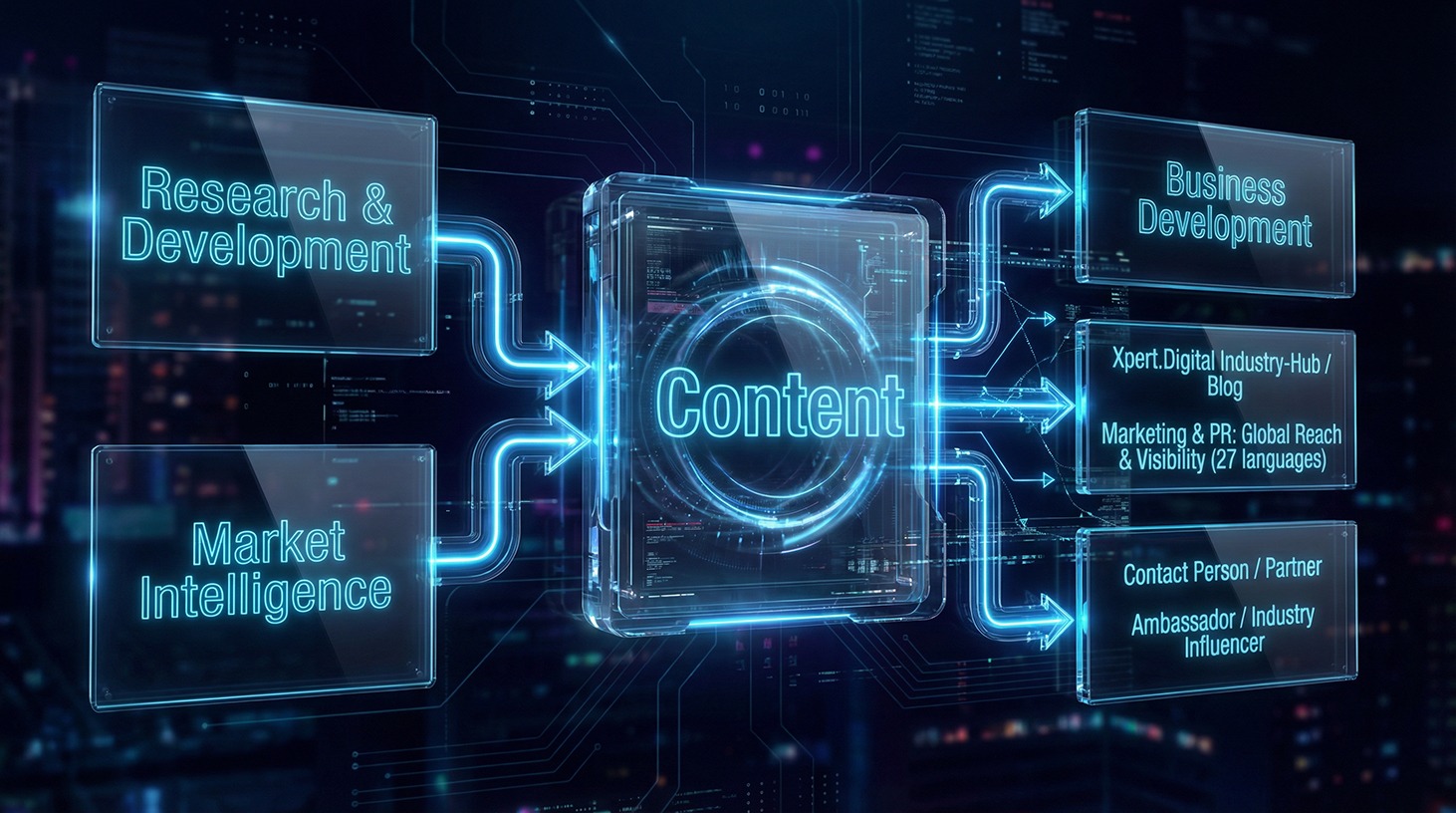
The quasi-in-house solution: How Xpert.Digital closes operational gaps in B2B marketing and sales – Smart Content-Driven Business - Image: Xpert.Digital
Xpert.Digital is a data-driven B2B industry hub led by Konrad Wolfenstein . The company acts as an external, quasi-in-house solution for industrial partners, closing operational gaps in marketing, content, and sales – without requiring additional resources on the client side.
More information here: