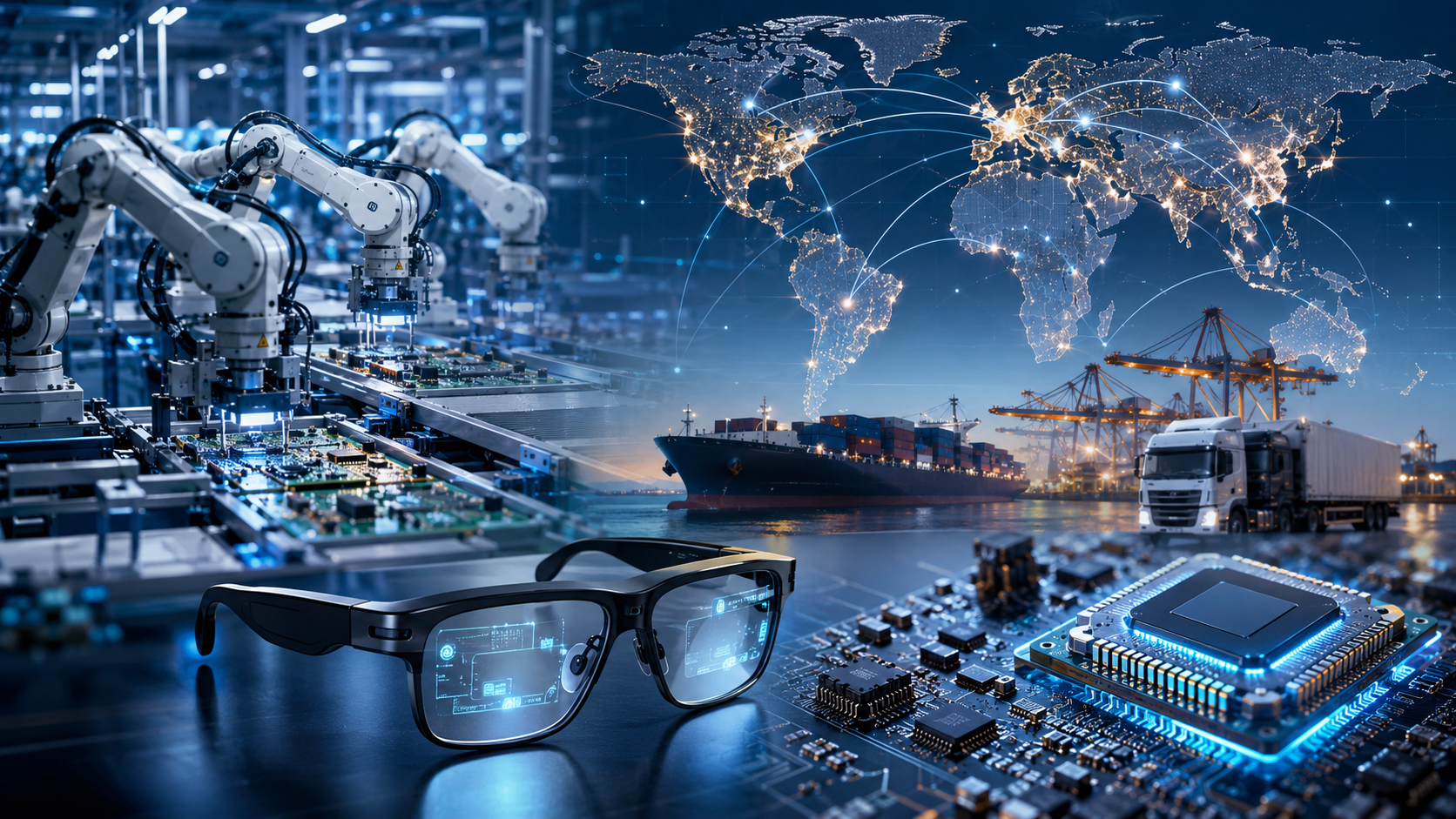
The EMS Giants: The true winners of the AI boom – Why even the best chip is worthless without Foxconn and Co. – Image: Xpert.Digital
Forget Apple and Nvidia: How these invisible factories are secretly dominating the AI world
Billions in the shadows: How Asian manufacturing giants will reshape the global tech industry in 2026
Apple, Microsoft, Tesla – and who builds all of this? That's why the EMS industry will be the true ruler of the tech world in 2026
Behind gleaming brands like Apple, Nvidia, Tesla, and Microsoft lie the true architects of our digital future: the global manufacturing giants of the EMS (Electronic Manufacturing Services) industry. While the world watches with bated breath as new AI chips, smart algorithms, and groundbreaking software innovations emerge, the real battle for power is being fought in the state-of-the-art, gigantic factories of Foxconn, Quanta, Wistron, and Luxshare. These companies are no longer just cheap, extended workbenches for smartphones and traditional laptops.
In 2026, the industry will undergo an unprecedented structural transformation: The rapid, global expansion of AI data centers is catapulting the demands on server architectures, network technology, and sophisticated cooling systems into entirely new dimensions. Those who can integrate the highly complex hardware for the age of artificial intelligence on time, flawlessly, and in gigantic quantities will become the indispensable bottleneck of the entire tech industry. The following text delves into how these seemingly invisible factories are currently reshaping the global electronics market. It reveals why traditional revenue rankings are often misleading, why supply chains are drastically changing, and why physical hardware, overshadowed by software, has long since reclaimed its position as the most important strategic resource of the global economy.
The invisible factories of the AI era: How EMS giants will reshape the global electronics industry in 2026
Those who only look at chips, software, and brands overlook the real question of power: Without the manufacturing giants, even the best AI remains a product on paper
Public perception of the global technology industry is dominated by names like Apple, Nvidia, Microsoft, Tesla, Meta, Amazon, Google, and Samsung. These companies control the headlines, develop platforms, control operating systems, design chips, and own the world's most valuable brands. However, a large portion of the physical value creation takes place in another, far less visible industry: Electronic Manufacturing Services (EMS) and closely related ODM and contract manufacturing companies.
These companies produce smartphones, servers, network technology, industrial electronics, medical technology, vehicle components, computers, communication hardware, and increasingly, complete systems for artificial intelligence. They organize procurement, manufacturing, quality control, logistics, repair, product launches, and, in some cases, development. Without this industrial infrastructure, many of the best-known technology companies would be unable to bring their products to the global market in the required quantities or with the necessary speed.
The year 2026 clearly demonstrates that the economic importance of these manufacturing companies is considerably greater than traditional rankings suggest. The explosively increasing demand for AI servers, high-performance computers, network technology, power supplies, cooling systems, and data center infrastructure is shifting the industry's focus. While smartphones and traditional PCs were long the dominant growth drivers, the physical infrastructure of artificial intelligence is evolving into the new industrial center.
This also changes the hierarchy within the EMS and ODM industries. Companies with a strong position in servers and cloud infrastructure are growing significantly faster than providers more dependent on smartphones, notebooks, or traditional consumer electronics. At the same time, it's becoming clear that revenue rankings alone only explain part of the actual economic power.
Why the widely circulated top 10 list for 2026 is only partially reliable
A simple ranking of the ten largest EMS companies initially sounds straightforward. In practice, however, it is methodologically problematic. Even the definition of the term EMS is not uniform. Foxconn is both a contract manufacturer and a component manufacturer and platform provider. Quanta and Wistron are often classified as ODM companies because, in addition to manufacturing, they also undertake significant development work. Luxshare produces not only complete devices but also connectors, precision components, cable systems, and automotive technology. BYD Electronic belongs to a corporate group strongly linked to the automotive industry. Flex and Jabil, on the other hand, are classic, highly diversified manufacturing service providers.
A second problem arises: fiscal years are not synchronized. While many Asian companies report according to the calendar year, the fiscal year of other providers ends in March, August, or September, for example. A ranking using the year 2026 could therefore contain either revenues from the calendar year 2025, fiscal year figures for 2025/2026, projections for 2026, or current twelve-month figures. Mixing these figures creates seemingly precise rankings that are only comparable to a limited extent from an economic perspective.
The figures mentioned in the source material also significantly underestimate several companies. Foxconn reported annual revenue of approximately 8.1 trillion New Taiwan dollars for 2025, or, according to the company, around 259 billion US dollars. Wistron achieved revenue of approximately 2.187 trillion New Taiwan dollars in 2025, nearly doubling its revenue compared to the previous year. Quanta reached approximately 2.124 trillion New Taiwan dollars. Both companies were thus already well above the figures of just around 20 billion US dollars. Celestica achieved revenue of approximately 12.39 billion US dollars in 2025, not just around eight billion. At the same time, many popular lists completely omit major producers like Quanta and Compal.
The crucial conclusion, therefore, is not that every existing ranking is wrong. Rather, the result depends significantly on which companies are counted as EMS providers and which reporting period is used. Anyone wanting to understand the market from an economic perspective should therefore focus less on a rigid ranking and more on revenue size, product mix, customer structure, technological position, regional presence, and growth rate.
The true scale: Foxconn is in a league of its own
Foxconn, or rather Hon Hai Precision Industry, remains by far the world's largest electronics manufacturer. Its scale is extraordinary. With annual revenue of approximately US$259 billion in 2025, the company is larger than many well-known industrial firms and operates in a revenue bracket far exceeding the typical image of a pure contract manufacturer. Revenue increased by around 18 percent in 2025. At the same time, operating profit improved more than revenue. While the operating margin remained at just over three percent, with a revenue base of several hundred billion dollars, even a change of a few tenths of a percentage point translates into billions of dollars in savings.
Economically, Foxconn demonstrates a fundamental characteristic of the EMS industry: Margins are low compared to software, chip design or digital platforms, but the absolute profit amounts can still be very large due to the enormous volume.
Even more important is the shift in the product mix. For decades, Foxconn was primarily known as a manufacturing partner for smartphones and consumer electronics. Now, its business with cloud and network products is growing massively. According to the company, in the first quarter of 2026, cloud and network products already accounted for almost half of its revenue. In the first half of 2026, group revenue rose to approximately 4.65 trillion New Taiwan dollars, 35 percent more than in the same period of the previous year. Operating profit even grew by around 65 percent.
This development illustrates why AI is more than just another electronics cycle for EMS companies. A modern AI data center requires more than just processors. It needs complex server boards, high-speed connections, network switches, power supplies, cooling systems, enclosures, racks, cables, connectors, backup systems, and a large number of mechanical and electronic components. As the power density of modern AI systems increases, so does the manufacturing process.
Foxconn therefore benefits not only from increasing production volumes, but also from the increasing technical complexity of the systems supplied.
Quanta and Wistron: The AI server boom is creating a new industrial elite
The shift is particularly evident in the cases of Quanta and Wistron. Both companies were long associated primarily with notebooks, PCs, and traditional computer manufacturing. Now, they are among the most important manufacturers of servers and data center infrastructure for major cloud providers.
Quanta achieved sales of approximately 2.124 trillion New Taiwan dollars in 2025. The development in 2026 is even more remarkable. From January to July 2026, cumulative sales reached approximately 2.212 trillion New Taiwan dollars, exceeding the total for 2025. Compared to the same period of the previous year, this represented growth of approximately 93 percent.
Wistron shows a similar trend. Revenue rose to approximately 2.187 trillion New Taiwan dollars in 2025, an increase of more than 100 percent compared to 2024. The company attributed this rise primarily to strong growth in AI and general servers. From January to July 2026, revenue had already reached approximately 2.05 trillion New Taiwan dollars.
This fundamentally changes the size of these companies. Anyone still working with older revenue figures of around 20 billion US dollars is significantly underestimating the structural change brought about by AI.
From an economic perspective, the AI server boom is accelerating an industry traditionally characterized by high volume and comparatively low margins. AI systems have a significantly higher average sales value than typical PCs or standard servers. At the same time, the demands on integration, testing, cooling, and power supply are increasing. This can increase the value-added share of the manufacturing partner.
The crucial question for the coming years is therefore not just how many AI chips Nvidia, AMD, or other vendors sell. Equally important will be who is capable of integrating these chips quickly, reliably, and in large quantities into complete systems.
Luxshare: China's rise from component supplier to system manufacturer
Luxshare Precision is one of the most impressive rising stars in the Chinese electronics industry. The company started strong in connectors, cables, and precision components and has gradually evolved into a comprehensive manufacturing and technology provider.
In 2025, Luxshare achieved a revenue of approximately 332.34 billion renminbi, representing a year-on-year increase of 23.64 percent. The shift in the business structure is particularly noteworthy. While consumer electronics still accounted for nearly 80 percent of revenue, the automotive electronics business grew by approximately 185 percent. The communications and data center segment expanded by roughly 34 percent.
This development is strategically significant. Luxshare is thus gradually reducing its dependence on individual electronics segments and building expertise in areas whose growth rates can be structurally higher.
The Chinese company also exemplifies a shift in the global division of labor. Previously, Chinese manufacturers often specialized in labor-intensive production or individual components. Today, leading companies possess their own development departments, automation expertise, toolmaking capabilities, materials knowledge, and global production networks.
This shifts the competition from pure cost leadership to technology, speed and system integration.
Pegatron: Large scalability, but more dependent on the classic electronics cycle
Pegatron remains one of the largest manufacturing companies in the electronics industry. Revenue in 2025 was approximately 1.117 trillion New Taiwan dollars, slightly below the previous year's figure. At the same time, profits declined. The company cited weaker demand in certain consumer electronics segments and currency effects as contributing factors. In contrast, the server business performed well.
The comparison with Quanta and Wistron is revealing. While all three companies were historically strongly associated with computers and consumer electronics, Quanta and Wistron are currently benefiting significantly more from the AI infrastructure cycle.
This shows that size alone is no guarantee of growth. What matters is in which product categories an EMS company is positioned and which customers it supplies.
A manufacturer heavily reliant on smartphones or PCs can stagnate in a weak end market, even with large production capacity. Conversely, a company with access to hyperscalers, AI server projects, and cloud infrastructure can achieve exceptional growth rates in a short period.
Jabil and Flex: Why Western-oriented manufacturers remain strategically important despite lower sales
Jabil and Flex have a significantly smaller revenue base compared to Foxconn, but remain among the most important global manufacturing service providers.
Jabil generated approximately US$29.8 billion in revenue in fiscal year 2025. Demand was particularly strong in the areas of data centers, semiconductor manufacturing equipment, and networking technology. The company also operates in sectors such as healthcare, packaging, automotive, and industrial technology.
Flex achieved approximately $27.9 billion in revenue in fiscal year 2026, which ended in March 2026. The operating margin improved to 4.9 percent on a GAAP basis and 6.3 percent on an adjusted basis. In the summer of 2026, the company raised its revenue forecast for fiscal year 2027 to between $33.7 billion and $35.2 billion. A key growth driver remains data center infrastructure, particularly power supplies, cooling, and IT systems.
The strategic advantage of these companies lies less in maximum production volume than in their broad industrialization expertise. Customers in medical technology, industry, aerospace, energy, or automotive manufacturing often require smaller production runs, higher regulatory compliance, and more complex manufacturing processes. These projects can enable higher margins than traditional mass production of consumer electronics.
This means that two economically different models exist within the EMS industry: extreme scaling with very high sales and low margins on the one hand, and more specialized manufacturing with higher added value on the other.
BYD Electronic: The boundary between the electronics and automotive industries is disappearing
BYD Electronic generated approximately 179.5 billion renminbi in revenue in 2025. While revenue only increased slightly compared to the previous year, the company's strategic importance stems from its position at the intersection of consumer electronics, automotive technology, and smart hardware.
This connection will become more important in the coming years. Modern electric vehicles are increasingly electronic systems on wheels. Power electronics, sensors, cameras, control units, displays, communication modules, and driver assistance systems increase the amount of electronics per vehicle.
The automotive market is so attractive to EMS companies because it combines long-term supply contracts, high quality requirements, and large production volumes. At the same time, the barriers to entry are higher than for many consumer products. Certification, traceability, and functional safety play a significantly larger role.
Those who successfully establish themselves in this market can build more stable customer relationships than in fast-paced consumer electronics segments.
Celestica and Sanmina: Lower sales, higher specialization
Celestica and Sanmina appear significantly smaller in sales rankings than the Asian giants. However, their economic importance should not be underestimated.
Celestica generated approximately $12.39 billion in revenue in 2025. Particularly noteworthy was the growth in the Communications and Cloud Solutions segment, which saw a significant increase in revenue compared to 2024. This growth was primarily driven by communication and data center hardware.
Sanmina achieved approximately $8.1 billion in revenue in fiscal year 2025. The company is increasingly focusing on complex manufacturing in sectors such as industrials, medical technology, defense, aerospace, communications, and cloud infrastructure. Its GAAP operating margin was approximately 4.4 percent in 2025.
Such suppliers demonstrate that lower sales volume does not automatically equate to a weaker market position. In specialized markets, expertise, certifications, production quality, and long-term customer relationships can be more important than sheer volume.
Especially in defense, medical technology, or aerospace, production processes cannot be arbitrarily shifted between suppliers. This increases the negotiating power of established manufacturing partners.
🎯🎯🎯 Data-driven B2B industry hub as a quasi-in-house solution

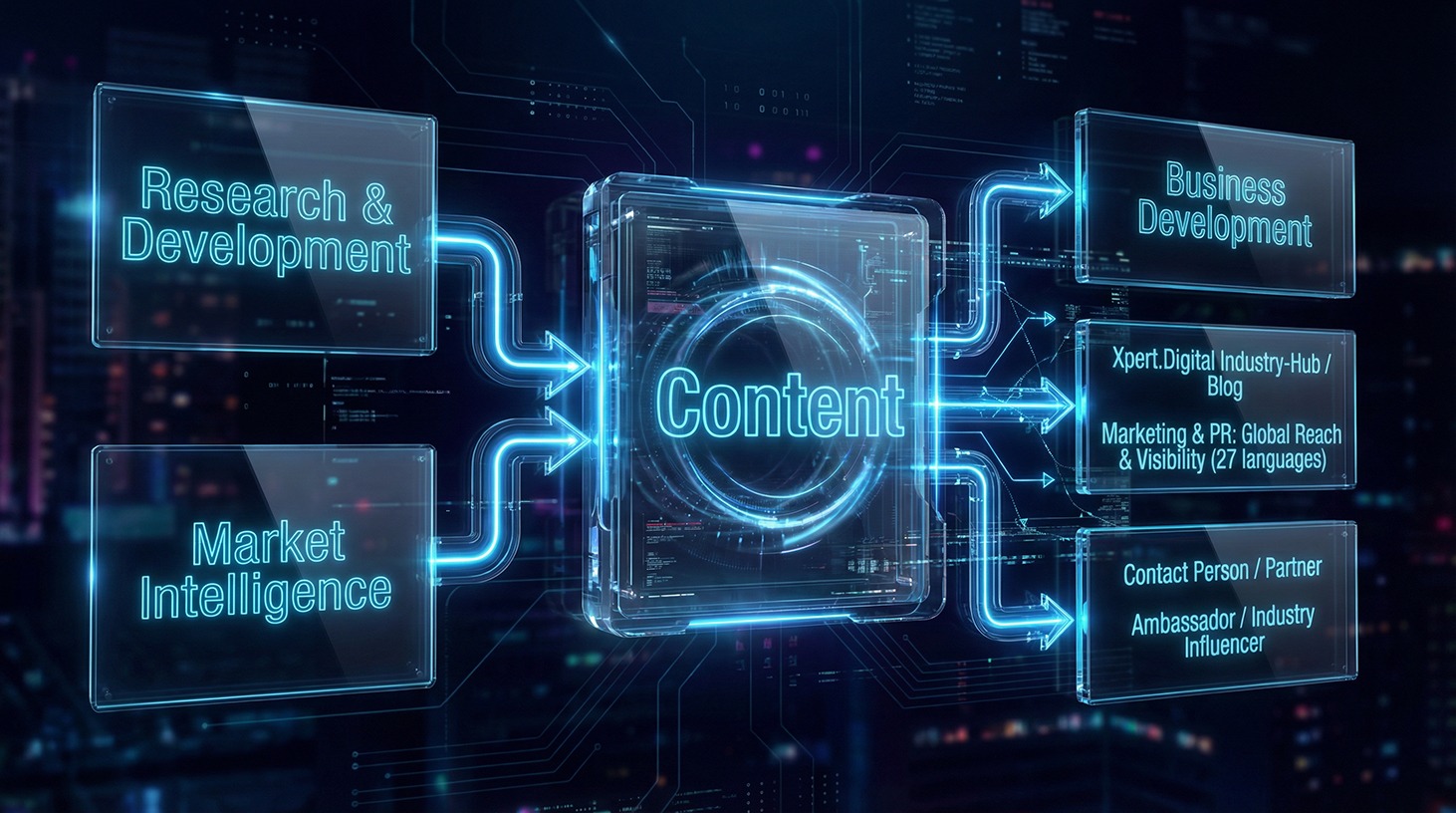
The quasi-in-house solution: How Xpert.Digital closes operational gaps in B2B marketing and sales – Smart Content-Driven Business - Image: Xpert.Digital
Xpert.Digital is a data-driven B2B industry hub led by Konrad Wolfenstein . The company acts as an external, quasi-in-house solution for industrial partners, closing operational gaps in marketing, content, and sales – without requiring additional resources on the client side.
More information here:
How AI infrastructure is changing the strategies of the world's largest electronics manufacturers
Revenue does not equal market power
One of the most significant misconceptions in the analysis of the EMS industry arises from the fixation on revenue.
A manufacturer can generate enormous revenues yet achieve only low margins. This is because a large portion of the revenue comes from purchased components. Processors, memory, displays, circuit boards, camera modules, or battery cells are often procured by the EMS provider and then billed to the customer. This increases revenue without the manufacturer having created all the value themselves.
Several other key figures are therefore more economically decisive: operating margin, return on capital, cash flow, customer concentration, investment needs and the ability to sell additional engineering services.
A company that only assembles products is in a weaker negotiating position than a supplier that handles product development, design for manufacturing, test systems, material management, and logistics.
The strategic development of many EMS companies is therefore clearly moving towards higher value creation. They no longer just want to operate factories, but rather be involved in their customers' product development as early as possible.
The earlier a manufacturer is involved, the more difficult it becomes to switch suppliers later. This is precisely where a significant economic advantage lies.
AI servers are changing the profit logic of electronics manufacturing
Artificial intelligence is not simply a new sales market for the EMS industry. It is changing the economics of the entire business model.
A standard laptop costs only a fraction of a sophisticated AI server at wholesale prices. Modern AI systems can be equipped with multiple high-performance accelerators, complex networking technology, and liquid cooling. Complete server racks can therefore reach correspondingly high prices.
This significantly increases revenue per system delivered. At the same time, the technical effort increases.
Assembling high-performance AI hardware requires precise thermal design, high-speed connections, and rigorous quality assurance. Errors can be significantly more costly than with traditional consumer electronics. The supply chain is also becoming more complex because numerous high-quality components are scarce or available from only a few manufacturers.
This creates new opportunities for EMS companies to achieve higher margins. However, the risk also increases. A company that builds up large capacities for a single customer or a specific AI platform can face significant overcapacity in the event of a shift in technology or demand.
The current boom should therefore not be extrapolated linearly.
Data centers are becoming large-scale industrial projects
Another change concerns the scope of services offered.
Previously, electronics manufacturers often focused on individual devices. In the age of AI, value creation is increasingly shifting towards complete data center systems.
A modern AI data center needs more than just servers. It needs power distribution, transformers, uninterruptible power supplies, network infrastructure, liquid cooling, racks, cabling systems, and control technology.
That is precisely why companies like Flex, Foxconn, Quanta and Wistron are investing in adjacent areas.
The economic opportunity is enormous. The larger a manufacturer's share of a complete data center becomes, the larger the addressable market per customer.
At the same time, a new competitive situation is emerging. EMS companies are increasingly entering areas that have traditionally been served by specialists in energy supply, cooling, networks, or data center technology.
The lines between electronics manufacturers, system integrators and infrastructure companies are beginning to blur.
Automation does not simply replace work, but rather changes the location economy
A key trend in the industry is automation. Robots, machine vision, digital twins, automated quality control, and AI-supported production planning are being used more and more.
It is often concluded from this that labor costs will become unimportant in the future. That would be too simplistic.
Even highly automated factories require personnel for maintenance, process development, quality management, logistics, and engineering. At the same time, setting up highly automated production remains capital-intensive.
Automation therefore changes not so much the meaning of costs as their composition. The share of direct labor costs decreases, while capital, software, energy, and technical know-how become more important.
This could make high-wage countries more competitive again, especially for complex products with smaller production runs. However, a complete relocation of electronics manufacturing back to Europe or North America is unlikely.
Asia continues to possess a decisive cluster advantage. In regions such as Taiwan, Shenzhen, Dongguan, Suzhou, and Vietnam, manufacturers, component suppliers, toolmakers, logistics companies, and engineers are located in close geographical proximity.
This level of industrial density cannot be replicated in the short term.
Regionalization does not replace globalization – it makes it more expensive
Since the recent trade conflicts, the pandemic and geopolitical tensions, many technology companies are trying to diversify their supply chains geographically.
Production is increasingly being relocated to India, Vietnam, Mexico, Eastern Europe and other regions, or additional facilities are being established there.
However, this is not a true deglobalization. Rather, a more complex form of globalization is emerging.
Companies often maintain large production capacities in China and supplement these with additional locations. Instead of a single globally optimized supply chain, several regional production networks emerge.
Economically, this increases resilience, but also costs. Factories need to be built multiple times, suppliers qualified, and logistics systems duplicated.
The last few decades were characterized by maximum efficiency. The new phase is characterized more by redundancy.
This is generally positive for EMS companies. Their customers need partners who can produce in multiple regions simultaneously. This gives large providers an advantage over smaller competitors.
Globalization will therefore not end. It will be transformed into a kind of industrial insurance.
India, Vietnam, and Mexico are gaining ground – but China remains central nonetheless
The expansion into India is particularly evident. Major electronics manufacturers are expanding their smartphone and component production there. Vietnam has also developed into a significant location for electronics manufacturing.
Mexico, in turn, benefits from its proximity to the US market and from regional trade structures. Server and data center hardware, in particular, can be produced there for the North American market.
Nevertheless, it would be wrong to conclude from this that China is rapidly losing importance.
China continues to possess one of the world's densest electronics ecosystems. Components, tools, machinery, material suppliers, and specialized labor are readily available in many locations.
The crucial development is therefore not "China or the rest of the world", but "China plus additional regions".
This development is ideal for the largest EMS companies. They have sufficient capital and customer volume to operate several production networks in parallel.
Smaller providers will find it significantly more difficult to finance this geographic diversification.
The power of the supply chain is shifting
EMS companies were long considered interchangeable service providers. Brand companies designed products and had them manufactured as cheaply as possible by suppliers.
This relationship is changing.
The more complex products and supply chains become, the more valuable the industrial knowledge of manufacturing partners becomes.
An EMS provider knows which components are available, which materials cause problems, how to reduce waste, and how to quickly produce a new product in the millions.
In AI systems, the additional question arises of how extremely powerful components can be integrated thermally and electrically.
This skill cannot be completely replaced by software.
While major brands remain the economically stronger partners, the dependence has become more mutual.
A technology company cannot simply replace a supplier if that supplier has several years of experience with a highly complex product.
This increases the strategic importance of EMS companies, even if their brands remain virtually invisible to the end customer.
Why low margins don't automatically mean a bad business model
At first glance, operating margins of three to six percent seem unattractive. Software companies sometimes achieve many times that amount.
However, a direct comparison is misleading.
EMS is a capital- and volume-intensive industrial business. The crucial factor is how efficiently capital and working capital are used.
Many manufacturers operate with extremely fast material flows. Components are purchased, processed, and resold at short notice.
If a company manages its working capital well, even a small margin on very large sales can generate attractive returns on capital.
The model becomes particularly problematic when high investments are required, but customers simultaneously exert strong price pressure.
Therefore, companies that combine high capacity utilization, technological know-how and long-term customer relationships are in the best position.
The AI boom is currently improving this position for several leading manufacturers.
The biggest danger is customer concentration
A structural risk of the EMS industry is its strong dependence on a few large customers.
A single technology company can account for a significant share of the revenue of some manufacturers.
This creates economies of scale, but also dependency.
If a customer relocates production, a product flops, or a second supplier is established, billions in revenue can disappear within a relatively short period of time.
Therefore, many EMS companies are trying to diversify.
Automotive electronics, medical technology, industry, energy, aerospace and defense are particularly attractive because product cycles are longer and customer switching is more difficult.
The strategic direction of the industry is therefore not only growth, but also risk diversification.
Competition for capital is intensifying
Building modern electronics and AI factories is expensive.
New production lines require buildings, machines, test systems, automation and energy infrastructure.
In addition, companies often have to pre-finance before full production volumes can be achieved.
The AI boom is therefore leading to a significant investment cycle.
This could lead to a new consolidation.
Large suppliers have better access to capital markets, can spread investments across multiple customers, and possess greater negotiating power vis-à-vis suppliers.
Smaller manufacturers, on the other hand, could face difficulties if customers simultaneously demand a global presence, high automation, and short-term capacity expansion.
Scaling thus becomes a barrier to entry.
Energy is becoming a new location factor for the electronics industry
With the increasing importance of AI infrastructure, the importance of energy is also changing.
Electronics manufacturing has always relied on a stable power supply. This need is further increased in the production of complex server and data center systems.
More importantly, however, many EMS companies are increasingly offering complete energy and cooling systems for data centers.
This merges two industries: electronics manufacturing and energy infrastructure.
For future production sites, therefore, not only wages and logistics will be crucial, but also network capacity, electricity prices and the availability of renewable energy.
Regions with a reliable, affordable electricity supply gain a structural advantage.
Sustainability is shifting from an image factor to a cost factor
The electronics industry is under increasing pressure to reduce energy consumption, emissions, water consumption and material usage.
For EMS companies, sustainability is increasingly becoming an economic issue.
Large customers demand detailed data on emissions in their supply chain. At the same time, regulatory requirements are increasing.
Those who produce in an energy-efficient manner therefore not only reduce emissions, but often also operating costs.
Automation, improved process control and reduced waste can lower material consumption and energy requirements.
Sustainability and productivity do not have to be contradictory.
On the contrary: In an industry with low margins, small efficiency gains can have a significant impact on the result.
Smart glasses, robotics and new device classes remain important – but AI infrastructure is currently the stronger lever
The original headline "Smart Glasses" only partially fits the actual topic. While smart glasses are an interesting future product segment for EMS companies, they do not explain the current economic dynamics of the industry.
Should smart glasses eventually supplement or replace smartphones, very large production volumes could result. Displays, sensors, cameras, processors, batteries, and optical systems would require new manufacturing capacities.
The same applies to humanoid robots, drones, and autonomous systems.
However, the decisive revenue driver in 2026 is clearly the infrastructure behind artificial intelligence.
AI servers and data centers are currently growing faster than many traditional electronics markets.
Therefore, the focus of the EMS industry is increasingly shifting from the production of individual end devices to the manufacturing of complex digital infrastructure.
What a realistic ranking in 2026 should actually show
Anyone creating a ranking for 2026 should therefore not simply use older dollar values.
Based on the most recently fully reported annual figures and the available financial years, Foxconn is by far the number one.
Following these – depending on the exchange rate, definition and reporting period – are large Taiwanese ODM manufacturers such as Wistron and Quanta, whose annual sales in 2025 were each well over two trillion New Taiwan dollars.
With more than 330 billion renminbi, Luxshare is also clearly among the global top group.
Pegatron continues to operate at a very high level with a market capitalization of more than one trillion New Taiwan dollars.
Jabil and Flex each have annual sales of around 28 to 30 billion US dollars.
BYD Electronic, Compal and Inventec also operate at a scale that, depending on the definition, places them in or close to a global top 10 group.
Celestica and Sanmina are smaller in terms of revenue, but have strong positions in technically demanding segments.
This makes the idea of a stable and clearly defined global top 10 misleading. The real insight lies in the enormous concentration of industrial electronics production in the hands of a relatively small group of Asian and North American companies.
2026 is not a normal year of growth, but a structural turning point
The current growth rates of Quanta, Wistron and Foxconn show that the industry is in an exceptional phase.
Quanta had already achieved more revenue by July 2026 than in the entire previous year. Wistron had almost reached its full 2025 annual revenue after seven months. Foxconn increased its half-year revenue by approximately 35 percent.
Such growth rates are exceptional for companies of this size.
The reason lies in a historical investment cycle in data centers and AI infrastructure.
As long as hyperscalers and technology companies continue to increase their investments, manufacturing partners benefit directly.
However, the same applies here: investment cycles can weaken.
Should AI investments eventually normalize, companies with aggressively expanded capacities could suffer from oversupply.
The current expansion is therefore both an opportunity and a risk.
The crucial economic perspective: Hardware will once again become strategic
Over the past two decades, the impression has often arisen that the majority of added value lies in software, platforms, and chip design.
These areas will undoubtedly remain highly profitable.
But the AI revolution is leading to a rediscovery of physical infrastructure.
Without factories, there are no servers. Without network technology, there are no AI clusters. Without cooling, even the most powerful processors won't work. Without a power supply, data centers cannot operate.
This means that hardware regains strategic importance.
EMS companies are the industrial link between chip design and real-world infrastructure.
They transform digital architecture into physical systems.
That is precisely why their importance should not be judged based on their low level of awareness among end customers.
Outlook to 2030: The winners will not necessarily be the biggest
The EMS industry is likely to change further by the end of the decade.
Firstly, AI infrastructure will account for a significantly larger share of revenue.
Secondly, geographical diversification will continue.
Thirdly, automation will increase productivity and reduce the impact of purely labor cost advantages.
Fourthly, automotive engineering, robotics, medical technology and industrial automation will create additional growth markets.
Fifthly, the boundary between manufacturing and development is likely to become even more blurred.
Therefore, the most successful companies will not necessarily be those with the highest revenue.
The decisive factor will be who possesses a combination of global production capacity, technical expertise, financial strength, supply chain control, and access to high-growth customers.
Foxconn has exceptional scalability.
Quanta and Wistron have a strong position in AI servers.
Luxshare is evolving from a component manufacturer into a comprehensive system provider.
Jabil and Flex are strong in specialized industries and infrastructure markets.
Celestica and Sanmina benefit from technically demanding niche markets.
This will make the EMS industry more differentiated – and economically more important.
The invisible manufacturers are becoming a power center of the digital economy
The world's leading electronics manufacturers are no longer simply extended workbenches.
They control production capacities, supply chain knowledge, automation, quality processes and increasingly also technical development services.
The AI revolution is intensifying this trend.
With each new data center, the need for complex hardware increases. With each more powerful processor, the demands on power supply, cooling, and system integration also grow.
This shifts some of the strategic power back into industrial production.
Foxconn remains the dominant giant in the industry. But Quanta and Wistron demonstrate how quickly the hierarchy below the market leader can change. Luxshare showcases the technological rise of Chinese manufacturers. Jabil, Flex, Celestica, and Sanmina prove that specialization and engineering can be just as economically relevant as sheer size.
The most important finding is therefore: those who analyze the technology industry only through chip designers, software companies and well-known brands only see half the system.
The other half consists of factories, production networks and supply chains.
And precisely this half will once again become one of the most strategically important sectors of the global economy in the age of artificial intelligence.
📈🚀 From visibility to trust 👀🤝 Your scalable path with Xpert.Digital

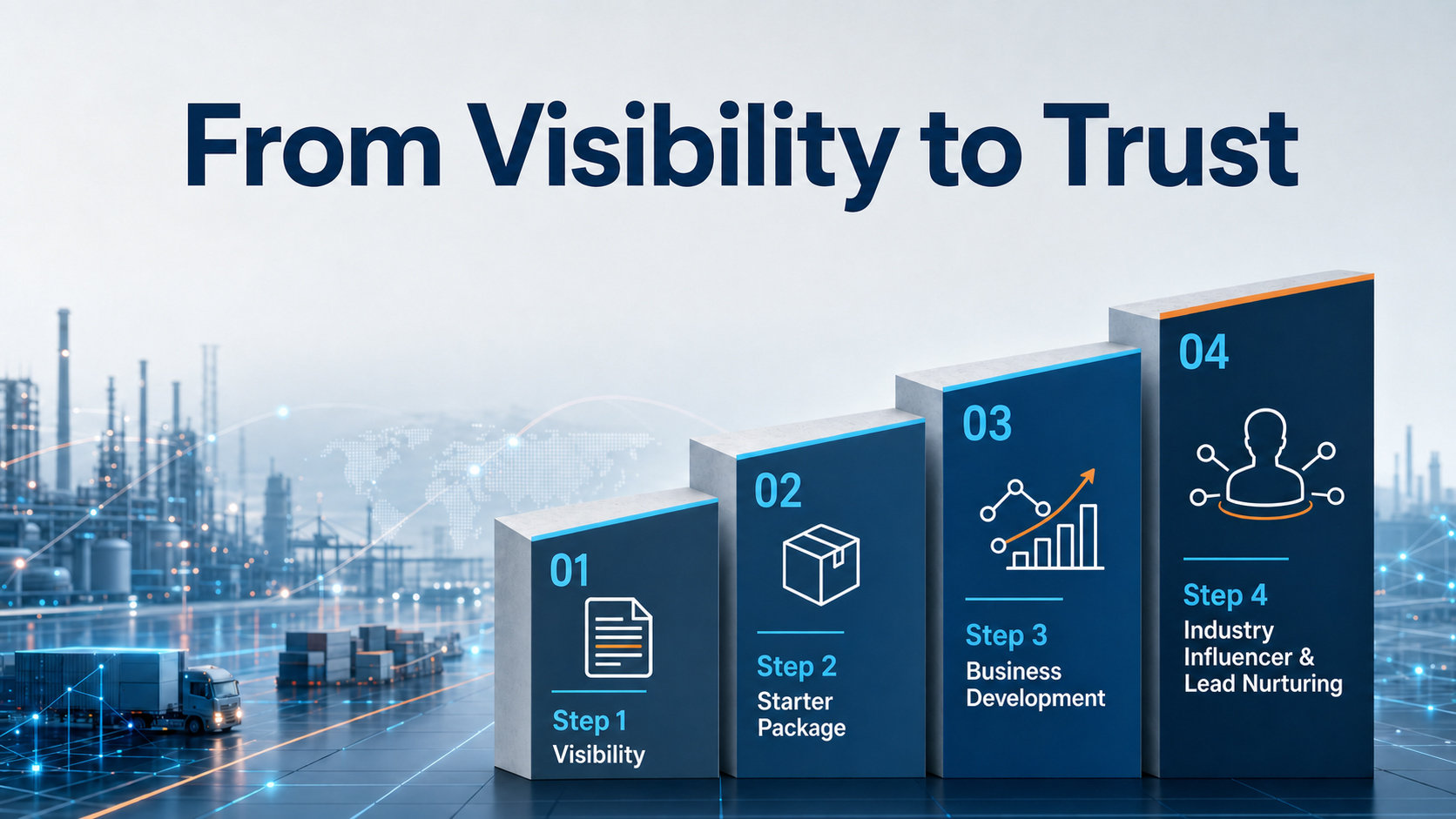
From visibility to trust: Your scalable path with Xpert.Digital - Image: Xpert.Digital
In industrial B2B, sustainable business relationships rarely emerge overnight. They develop step by step – through visibility, professional relevance, recurring touchpoints, and growing trust. Xpert.Digital's 4-stage model addresses precisely this: It offers a structured path that begins with a manageable entry point and can evolve into deeper collaboration in business development if needed.
Instead of relying on loud marketing promises, this model puts the relationship at the forefront. Companies start with clearly defined, easily calculable measures and then decide, based on their own experience, how far they want to expand the collaboration. A key factor for this undisturbed trust-building process: The platform completely avoids annoying advertising ads, so the editorial focus remains solely on the companies' expertise.
More information here:
Your global marketing and business development partner
☑️ Our business language is English or German
☑️ NEW: Correspondence in your native language!

Konrad Wolfenstein
I and my team are happy to be available to you as your personal advisor.
You can contact me by filling out the contact form here wolfenstein@xpert.digital:or simply call me at +49 7348 4088 965. My email address is
I'm looking forward to our joint project.