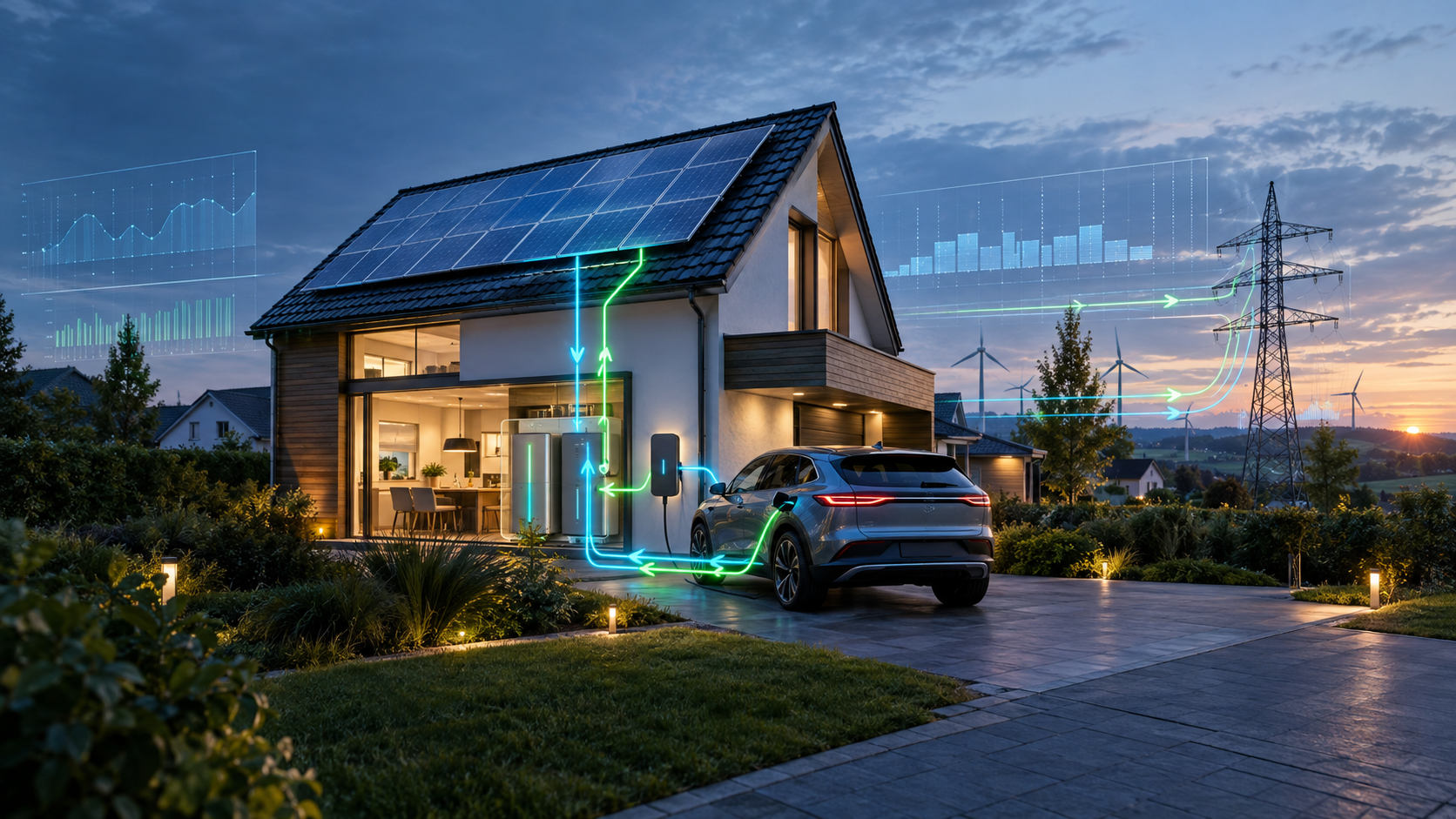
MiSpeL and the future of bidirectional loading: opportunities and challenges – creative image on the topic, with AI: Xpert.Digital
Rethinking energy: How MiSpeL turns electric cars into flexible energy storage devices
Electric cars in the power grid: How bidirectional charging becomes a goldmine for homeowners
Germany opens the door to the flexible electricity market: What MiSpeL means for households
The new MiSpeL regulation (Market Incentive System for the Storage of Electrical Energy) marks a significant step in the transformation of the German electricity market. It enables millions of households, photovoltaic systems, and electric vehicles to not only act as passive energy consumers but also to actively participate in electricity trading. This regulation creates a compelling framework for bidirectional charging, where electric vehicles can not only draw electricity but also function as decentralized storage units. By separating electricity volumes according to their origin—whether from a private solar system or the public grid—MiSpeL opens the door to a flexible and economically attractive energy market. This elevates the previous hardware-centric logic of the energy transition to a systemic level. In this article, we examine the opportunities arising from this regulation, how households can benefit from the new possibilities, and what challenges still need to be overcome to realize the vision of a decentralized and flexible electricity system.
MiSpeL turns the electric car into a power plant – but not yet into a self-sustaining success
Germany ends the regulatory wild goose chase on bidirectional charging – and discovers millions of private batteries as a commodity
The new MiSpeL regulation is far more than a technical billing rule for electricity storage systems. It changes the economic role of millions of households, photovoltaic systems, home storage units, and electric cars. For the first time, a robust framework is being created in which a storage system can simultaneously absorb self-generated solar power and electricity from the public grid without automatically losing the subsidies for solar power. This transforms what has so far been a largely passive self-consumption system into a potentially active flexibility market.
The crucial advancement lies not in the fact that batteries can now physically do something new. Charging, discharging, and shifting energy over time have long been technically possible. What is new is that different amounts of electricity can now be separated for regulatory and billing purposes, even though they mix within the same battery. The Federal Network Agency is thus solving a problem that has hampered the market ramp-up of flexible storage for years: once stored, electricity no longer has a visible origin, but subsidies, levies, and grid fees depend precisely on this origin and use.
Economically, MiSpeL therefore marks a transition from a hardware-centric to a systemic energy transition. The previous logic primarily rewarded the installation of a photovoltaic system and a storage unit. The new logic aims to additionally leverage the timing of charging and discharging, reactions to market prices, and the provision of flexibility. This is particularly relevant for Germany because the electricity market is experiencing an increasing frequency of periods with very low or negative prices and hours with high prices. In 2025, negative wholesale prices occurred for 573 hours, while simultaneously there were 40 hours with prices exceeding €300 per megawatt-hour. Such fluctuations are not a marginal phenomenon, but rather the price signal of a system that requires greater temporal flexibility.
From private storage to market player
Until now, a typical home energy storage system was primarily designed to maximize self-consumption. It absorbed solar power at midday and made it available to the household in the evening. This model reduces grid consumption and can improve the profitability of a photovoltaic system, but it only reacts to the overall power grid situation to a limited extent. For example, a storage system could already be full on a sunny midday, even though there was a surplus in the grid. At the same time, there was often a lack of economic and regulatory incentive to deliberately reserve capacity before an expected peak in generation.
With MiSpeL, the storage system can essentially combine several functions. It can optimize self-consumption, absorb grid electricity when market prices are low, supply electricity when prices are high, and still ensure the eligibility for subsidies for the stored solar power. This multiple use is often referred to as multi-use. It is economically important because a battery incurs high fixed costs, but its actual usage often remains low. The more meaningful revenue and savings sources can be bundled in the same system, the better the acquisition, installation, and operating costs are distributed.
The same principle applies to electric cars on an even larger scale. As of January 1, 2026, 2,034,260 purely battery-electric passenger cars were registered in Germany. Their batteries are usually significantly larger than typical home storage systems, but are not needed for driving for many hours of the day. If only a portion of these vehicles are regularly connected to bidirectional charging points, a considerable pool of decentralized storage capacity is created. MiSpeL does not yet transform this theoretical capacity into a nationwide market, but it does remove a key regulatory obstacle.
The expensive either-or ends
The previous system of exclusivity presented operators with a rigid choice. If electricity from a renewable energy plant was to remain eligible for feed-in tariffs after intermediate storage, the storage unit could only be charged with renewable electricity. As soon as electricity from the grid was also fed into the same battery, eligibility for subsidies was at risk. Conversely, exemption from levies for feeding electricity back into the grid required that grid electricity had been stored beforehand. The old option was fundamentally unsuitable for bidirectional charging points.
This structure was legally justifiable, but economically unproductive. It did not treat the storage system as flexible infrastructure, but rather forced it into a single function. This resulted in the loss of potential arbitrage revenues, grid-friendly load shifting, and additional benefits from self-consumption. The particularly problematic aspect was that the economically viable mixed operation failed not due to a lack of technology, but because of the risk of incorrect allocation of subsidies and tax relief.
MiSpeL does not replace this rigid logic with complete freedom, but rather with a predictable separation. The portion of grid feed-in that is mathematically allocated to previously stored solar power remains eligible for subsidies. For the portion based on previously drawn grid power, exemption privileges and corresponding relief from grid fees and other price components can be considered via legal references. The storage system can thus store both types of electricity without treating each kilowatt-hour equally.
This differentiation prevents both over-subsidization and double taxation. Solar power should not unjustifiably benefit from additional fees intended for stored grid electricity on top of the EEG subsidy. Conversely, electricity that is merely drawn from the grid, stored, and later fed back in should not be treated as if the entire amount had been permanently consumed. It is precisely at this juncture that the question of whether flexible storage systems can be operated economically is decided.
Two paths through the same current mixture
The regulation offers two different approaches: the delimitation option and the flat-rate option. Both pursue the same goal but have different priorities. The delimitation option prioritizes accuracy and broad applicability. The flat-rate option prioritizes simplicity and low measurement costs for smaller photovoltaic systems.
This two-tiered approach is economically sound because a uniform procedure would either over-regulate or inadequately address very different use cases. A single-family home with ten kilowatts peak photovoltaics, a wallbox, and an electric car does not require a billing architecture like a commercial enterprise with multiple generators, storage systems, charging points, and a heat pump. Conversely, blanket assumptions are insufficient when large amounts of energy, complex load flows, or industrial privileges are involved.
Theoretically, the option to choose reduces regulatory costs. Operators with simple systems can use a standardized model, while more complex systems receive a more precise allocation. In practice, however, success depends on whether metering point operators, grid operators, direct marketers, suppliers, aggregators, and energy management systems translate these options into scalable products. A rule alone is not a market offering. Only automated processes, understandable contracts, and interoperable technology make it suitable for mass adoption.
Precision requires additional measurement
The allocation option is available for systems of all types and sizes. Electricity generation and consumption are recorded every 15 minutes, and a separate meter measures the relevant flows at the storage or charging point. Mathematical formulas then allocate the electricity quantities proportionally to their origin and use. This makes it possible to determine what portion of a later feed-in is attributable to temporarily stored solar power and what portion to previously drawn grid power.
The major advantage of this model is its accuracy. It is suitable for photovoltaics as well as wind power, for storage systems alongside ground-mounted installations, for industrial applications, for combination with heat pumps, and for purely grid-connected storage systems without their own generation unit. Charging points in homes or businesses can also be integrated. In certain configurations without a solar array, the measurement effort can even be reduced to a single meter.
The disadvantage lies in the investment and transaction costs. An additional meter not only incurs ongoing metering fees. Depending on the existing electrical installation, modifications to the meter cabinet, new communication components, technical inspections, and adjustments to the energy management system may be necessary. Furthermore, there are costs for data processing, accounting, and billing. For large storage systems or commercial installations, these expenses are often justifiable because they are spread across larger energy volumes. For a private electric car, however, even a few hundred euros in additional costs per year can consume a significant portion of the potential revenue.
Therefore, while the delimitation option is universal, it is not automatically the most economically advantageous solution. Its strength lies where precise measurement generates measurable added value: with high electricity volumes, multiple flexibility sources, different market roles, or professional marketing. For the mass market of private households, however, the crucial factor is that the flat-rate option does not require additional meters at the storage facility or in the vehicle.
The flat rate as a door opener
The flat-rate option applies to smaller photovoltaic systems up to a peak output of 30 kilowatts and is primarily aimed at households and small businesses. A meter measuring in 15-minute increments at the grid connection point is sufficient. An additional meter at the storage unit or bidirectional charging point is not required. This eliminates annual metering costs, installation expenses, and, in many cases, the need for costly modifications to the meter cabinet.
This simplification is crucial for market ramp-up. By autumn 2026, Germany already had more than 2.7 million small home storage systems with a combined storage capacity of approximately 23.6 gigawatt-hours. In addition, there are millions of small photovoltaic systems and a growing fleet of electric vehicles. Therefore, the greatest economic leverage lies not only in technically perfect individual solutions, but in a process that can be applied millions of times with the lowest possible marginal costs.
The flat-rate option deliberately accepts a certain degree of imprecision. Instead of meticulously tracking every kilowatt-hour within the customer's installation, it derives eligibility for subsidies and relief claims from standardized limits and assumptions. This reduces administrative costs but creates a new problem: flat rates can over- or undercompensate in some cases. The regulation must therefore be simple enough for the mass market and, at the same time, restrictive enough to prevent perverse incentives.
The elimination of an additional meter is particularly significant for bidirectional charging. The electric car is not treated as a permanently installed, standalone storage device. The charging point is the determining factor. This means that, in principle, any technically compatible bidirectional vehicle can be integrated into the system at a suitable charging point without requiring a separate meter for billing purposes or an individual metering concept in the car. This is considerably more practical for households with multiple vehicles and, in the future, also for fleets.
The 500-kilowatt-hour limit
Under the flat-rate option, grid feed-in of up to 500 kilowatt-hours per kilowatt-peak of installed photovoltaic capacity is treated as eligible for funding. For a system with ten kilowatt-peak, this corresponds to 5,000 kilowatt-hours per year. This amount is based on a typical scenario where a significant portion of solar production is consumed within the household itself, and the remainder is fed into the grid directly or after intermediate storage.
This limit is administratively attractive because it eliminates the need for detailed certificates of origin. Economically, it forms a kind of secure funding corridor. Up to this amount, it is assumed that the feed-in can be attributed to eligible solar power. This creates planning certainty but should not be confused with a guaranteed return. The actual remuneration still depends on the chosen marketing method, the plant's status, market prices, and the applicable EEG regulations.
It is also important that the new options are tailored to market-active use and direct marketing. They are not simply an additional benefit within any fixed feed-in tariff. For small plant operators, this could mean a change in marketing logic and additional contractual relationships. The regulatory advantage will only become economically viable when direct marketers or aggregators offer products whose additional revenues outweigh the fees and increased complexity.
The limit of 500 kilowatt-hours per kilowatt peak is therefore not a license for unlimited feed-in. It is the first part of a three-stage logic. This is followed by a neutral zone in which neither EEG subsidies nor relief are granted for stored grid electricity. Only above this zone can any further feed-in be treated as a general return of previously charged grid electricity.
The zone of indifference as a political price
The indifference zone is the most controversial part of the flat-rate option. Within this zone, the operator receives neither EEG subsidies nor relief from levies and grid fees. This regulation is intended to prevent the same amount of solar power from receiving double economic benefits. Without such a buffer zone, an operator could attempt to formally classify solar power as stored grid electricity and thus receive relief in addition to the subsidies.
From a regulatory perspective, the zone serves as a safety buffer against windfall gains. From the operator's perspective, it initially represents a revenue-free amount. The larger the indifference zone, the more electricity fed into the grid remains without the expected economic benefit. This can render an otherwise plausible protective rule unattractive to the use of the storage system, especially if the potential arbitrage profits amount to only a few hundred euros per year anyway.
The size of the area is determined individually and depends on the ratio of photovoltaic output to storage capacity. A larger storage system reduces the relevant value because it can absorb and later release higher plausible feed-in quantities. For photovoltaic systems without stationary storage, where only the electric vehicle is used bidirectionally, a flat calculation factor of 0.5 was initially planned. In the final design, this value was reduced to 0.2.
This change is more economically significant than the abstract factor might suggest. A smaller indifference range shortens the period during which fed-in electricity receives neither subsidies nor relief. This increases the likelihood that vehicle-to-grid (V2G) will become viable even without additional stationary home storage. At the same time, this adjustment demonstrates how sensitive the business model is to regulatory parameters. Whether bidirectional charging is profitable depends not only on the electricity price difference but also on the order in which fed-in quantities are allocated to the various compensation and relief categories.
New: Patent from the USA – install solar parks up to 30% cheaper and 40% faster and easier – with explanatory videos!

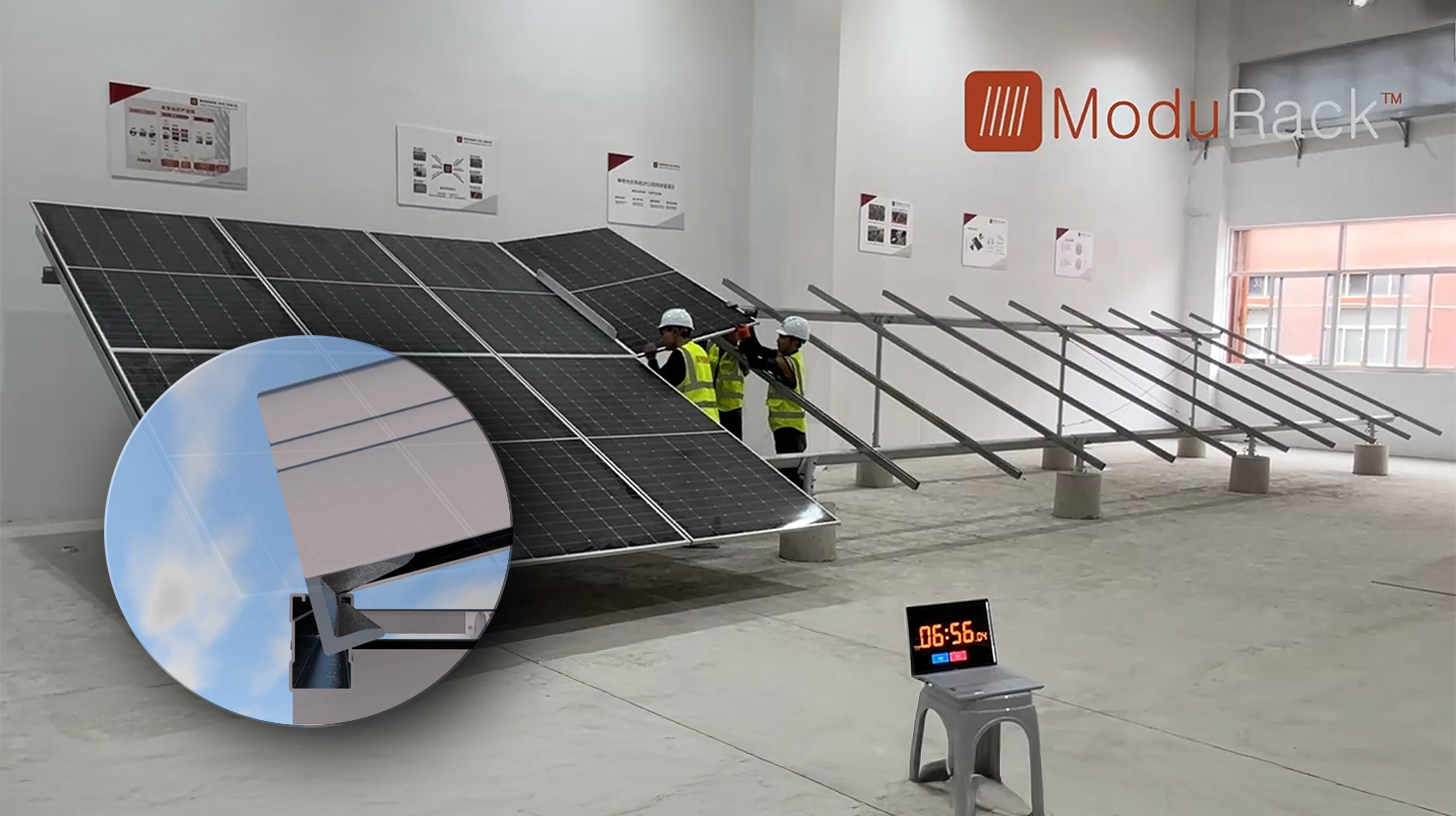
New: Patent from the USA – Install solar parks up to 30% cheaper and 40% faster and easier – with explanatory videos! - Image: Xpert.Digital
The core of this technological advancement is the deliberate departure from conventional clamp mounting, which has been the standard for decades. The new, more time- and cost-effective mounting system addresses this with a fundamentally different, more intelligent concept. Instead of clamping the modules at specific points, they are inserted into a continuous, specially shaped support rail and held securely in place. This design ensures that all forces – whether static loads from snow or dynamic loads from wind – are distributed evenly across the entire length of the module frame.
More information here:
The economic advantages of bidirectional charging
The electric car is coming of age in terms of energy efficiency
MiSpeL eliminates several structural disadvantages for electromobility. An electric car's battery can store both solar and grid power without this mixed operation alone jeopardizing the subsidies for the solar power fed into the grid later. If solar power from the owner's own roof is temporarily stored in the vehicle and later fed back into the grid, it can still be eligible for subsidies. The corresponding levies and grid fees for feeding back previously charged grid power are waived, provided the conditions of the regulation are met.
However, the electricity actually used for driving is not relieved of this burden. The usual levies and grid charges apply to this driving electricity, as well as to the associated storage losses. This distinction is economically essential. An electric car should not be charged twice for temporary energy storage, but it also must not receive an artificial cost advantage for normal mobility consumption.
Externally charged electricity is also treated separately. If a vehicle is charged at the workplace, for example, and later feeds energy back into the grid at home, this is considered "external charging electricity." This does not receive EEG subsidies because it cannot be demonstrably proven to originate from the owner's own eligible generation facility. While assigning the electricity to the charging point simplifies the technical processing, it does not eliminate the need to exclude unjustified subsidy claims.
This brings the regulation closer to the actual use of an electric car. Vehicles change locations, are charged at different charging points, and primarily serve a mobility purpose. At the same time, they can temporarily serve as storage units. A regulation that would treat them like a permanently installed home storage system would be unrealistic. Therefore, largely equating their functions while simultaneously taking the electricity used for driving into account is a viable compromise.
Where the real return is generated
The economic advantages of bidirectional charging can stem from several sources. The first is the optimization of self-consumption. Solar power is stored in the vehicle and later used in the home when the photovoltaic system is producing little or no electricity. This reduces the amount of electricity that needs to be purchased from the grid at the end-customer price. This avoided purchase is often more valuable than immediate feed-in, because household electricity prices include numerous additional components besides procurement costs.
The second source is arbitrage. The vehicle charges when prices are low and feeds energy back into the grid when prices are higher. However, the difference on the wholesale market is not the crucial factor. From this spread, efficiency losses, marketing fees, metering costs, taxes, potential battery aging, and the service provider's compensation must be deducted. Furthermore, the vehicle must be connected at the right time and maintain a sufficient charge for the next trip.
The third source is the marketing of system services, such as balancing power or other flexibility products. Individual vehicles are usually too small for such markets. However, an aggregator can combine thousands of cars and home storage systems into a virtual power plant. The economic value then arises from the statistical availability of a large fleet, not from the constant availability of a single household. For users, it will be crucial whether providers offer simple guarantees, such as a minimum charge level at a specified departure time.
Studies on potential revenues from electricity trading cite figures of up to approximately €500 per vehicle per year. Such values do not represent guaranteed savings. They are highly dependent on price volatility, connection times, battery capacity, charging power, efficiency, contract costs, and regulatory relief. Vehicle-to-home (V2H) charging alone may offer limited added value compared to smart, but one-way, charging if the bidirectional hardware is significantly more expensive. A combination of self-consumption, grid feed-in, and aggregated marketing is more economically attractive.
Negative prices set the limit
Under the MiSpeL logic, when market prices are negative, the levy privileges and, where provided for in the EEG (Renewable Energy Sources Act), also subsidies are forfeited. This is intended to prevent storage facilities from pushing electricity into the grid despite an existing surplus, simply to gain a regulatory advantage. The rule does not reward the mere movement of kilowatt-hours, but rather a market-based shift in timing.
This limitation makes economic sense. Negative prices signal that at a given time, more electricity is supplied than demanded, and that there are not enough flexible consumers, storage facilities, or curtailable generation available in the short term. If feeding electricity back into the grid were further subsidized during such hours, the regulation would exacerbate precisely the problem that flexible storage is actually intended to solve.
For operators, however, this regulation increases the demands on control and forecasting. A storage system cannot operate according to a rigid schedule, but must take into account prices, weather, expected solar production, household consumption, state of charge, and mobility needs. The real value therefore shifts from the battery to the software. Energy management systems, forecasting models, automated trading algorithms, and secure interfaces become central components of the business model.
This opens up opportunities for new providers, but also increases customer dependence. Anyone integrating a storage system or vehicle into a marketing model must be able to understand how revenues are calculated, losses are distributed, and usage limits are observed. Transparent billing and data access thus become competitive factors. Without them, there is a risk that the majority of the flexibility value remains with platforms and aggregators, while households provide the capital and bear the battery risk, but receive only meager returns.
The bigger dividend lies in the electricity system
Individual profit is only one aspect of the economic impact. Decentralized, coordinated storage systems can shift solar and wind power from periods of high generation to hours of lower supply. This reduces the need to curtail renewable energy plants or to temporarily ramp up conventional peak-load power plants. Price spikes can be dampened and negative prices reduced, provided that charging and discharging decisions actually respond to systemic signals.
The impact on the grid can also be positive, but it is not automatically positive. A storage system that reacts solely to the nationwide market price can charge or discharge simultaneously with many other systems in a locally already congested distribution network. A low market price does not necessarily mean that there is free capacity on a specific section of the grid. Market benefits and grid benefits can coincide, but they don't have to.
Therefore, in the long term, MiSpeL will need to interact with more dynamic grid fees, controllable loads, and local grid signals. Flexible grid connection agreements could offer operators economic advantages if they, in return, accept local capacity limits or temporary interventions. Without such coordination, a successful flexibility market can make grid expansion more efficient, but it cannot replace it.
The economic dividend arises primarily from scaling. A single car doesn't change the electricity market. Hundreds of thousands of coordinated vehicles, however, can provide significant power. With a discharge capacity of eleven kilowatts per vehicle, 100,000 simultaneously available vehicles would theoretically equate to 1.1 gigawatts. In practice, availability, grid restrictions, and mobility reserves would have to be factored in, but the scale illustrates the potential. The electric car will therefore not replace all power plants or grids, but it will become an important component of a more flexible system.
Winners, losers, and new business models
Potential beneficiaries include operators of photovoltaic systems who already have a storage system or a compatible electric vehicle. They can utilize existing technology more intensively and tap into additional revenue streams. Households with high photovoltaic output, regular vehicle charging, predictable driving times, and intelligent energy management are particularly attractive.
Vehicle manufacturers, wallbox providers, and energy service providers also gain new opportunities. One-time hardware sales can generate recurring revenue from flexibility contracts, electricity tariffs, software services, and aggregation. For automakers, value creation expands from the vehicle itself into the energy market. Energy companies, in turn, gain access to a growing pool of decentralized capacity without having to finance each battery themselves.
Direct marketers and aggregators play a key role. They pool small-scale installations, handle forecasting, trading, and accounting, and distribute the revenues. Competition for this customer interface is likely to intensify because long-term contracts provide access to valuable data and controllable capacity. The crucial question is whether standardized, easily terminable, and transparently priced offerings prevail, or whether closed ecosystems emerge that bind the vehicle, wallbox, electricity contract, and energy management to a single provider.
Business models that rely solely on stationary home storage systems could come under pressure. If an already purchased electric car takes over part of the storage function, the added benefit of a separate battery decreases in some households. However, the car will not completely replace home storage. The vehicle is mobile, not always plugged in, and must maintain a driving reserve. A stationary storage system is permanently available and can efficiently handle smaller daily charging cycles. Therefore, a coordinated combination, rather than an either-or approach, is likely to emerge more often.
Measurement systems are becoming a bottleneck
The MiSpeL regulation requires quarter-hourly meter readings and digital processing. This increases the importance of smart metering systems. Since 2025, electricity suppliers have been required to offer dynamic tariffs, for which a smart meter is necessary. The technical infrastructure thus combines several reforms: dynamic procurement, controllable consumers, flexible storage, direct marketing, and bidirectional charging.
However, the expansion of this infrastructure remains a potential bottleneck. While a regulatory framework can theoretically be implemented immediately, a mass market cannot emerge without available meters, standardized market communication, certified control boxes, and functioning processes. The transition period until the end of September 2027 addresses this issue. Until then, the consent of the respective network operator and metering point operator is required for the early use of the new options.
This interim solution prevents an abrupt system change but creates regional disparities. Innovative operators can start early if their local partners are technically prepared and willing to cooperate. Others have to wait, even though their hardware would be suitable. A nationwide, unified market can therefore only emerge when the processes are mandatory and standardized.
The flat-rate option presents a further uncertainty: its legal basis requires approval under state aid rules. This means that the formally adopted simplification cannot automatically be used widely immediately. Market participants should therefore not mistake the regulation for an immediately available product. A considerable period can elapse between regulatory approval, operational implementation, and commercial offering.
Easier than before, but not easy
MiSpeL reduces complexity but doesn't create a simpler consumer experience. Households still need to decide which option suits their system, whether direct marketing makes sense, what metering costs are involved, and how a contract affects battery usage, mobility reserve, and revenue distribution. Furthermore, there are technical questions regarding the compatibility of the vehicle, wallbox, inverter, smart meter, and energy management system.
Therefore, economic viability cannot be assessed in general terms. A household with a rarely connected company car, low photovoltaic output, and an expensive bidirectional wallbox has different requirements than a homeowner with a daily commute, a large rooftop solar system, and an existing smart meter. Similarly, fleets, commercial enterprises, and apartment buildings differ considerably.
A sound economic analysis must consider at least the purchase and installation of the bidirectional charging equipment, additional metering and contract costs, charging and discharging losses, expected charging cycles, potential battery aging, warranty provisions, tax implications, and the value of readily available mobility. These costs must be weighed against avoided grid electricity consumption, EEG (renewable energy) revenues, arbitrage gains, system services, and potential bonuses from the aggregator. Those who only consider extreme market prices overestimate the return. Conversely, those who focus solely on current self-consumption benefits underestimate the future value of pooled flexibility.
The distribution of risks should also be included in the contract. Price risks can lie with the customer or the provider. A fixed bonus offers planning security but leaves any potential additional revenue to the aggregator. A percentage-based share creates participation but makes income fluctuating. Minimum availability requirements can increase revenue but restrict spontaneous vehicle use. Good products will have to clearly address these conflicting objectives.
No free energy for privileged households
The regulation also has a distributional dimension. Initially, bidirectional charging primarily benefits households that own property, a photovoltaic system, a private parking space, an electric car, and investment capital. Tenants without their own charging point will find it significantly more difficult to benefit. Therefore, if relief measures are financed through levies or grid fees, the question arises whether costs are being shifted to consumers who themselves lack access to the new business models.
Against this backdrop, the indifference range and the precise allocation of electricity quantities are also important. They prevent the accumulation of subsidies and relief schemes without generating a corresponding benefit for the electricity system. Regulation must reward flexibility, but it must not merely maximize the private returns of already well-equipped households.
In the long term, the overall societal impact can still be positive if decentralized storage reduces system costs. Lower peak loads, less curtailment, and more efficiently used grids benefit all electricity customers in principle. The prerequisite is that these savings are greater than the relief provided and the additional processing costs. This is precisely why the impact of the regulation should be verified using real data: charging times, feed-in volumes, avoided peaks, grid effects, revenue distribution, and windfall gains.
For balanced development, we also need options beyond single-family homes. Bidirectional company fleets, neighborhood storage systems, charging hubs, multi-family dwellings, and shared energy concepts can broaden access. Commercial vehicles with predictable downtime offer particularly interesting possibilities because their availability is more predictable than that of privately owned cars.
Competition determines the breakthrough
Regulatory liberalization is a necessary but not sufficient condition for the mass market. Crucially, manufacturers will need to offer vehicles with standardized bidirectional interfaces, wallboxes will become affordable, and warranty conditions will permit regular grid usage. Differing technical standards or proprietary ecosystems could fragment the market and increase switching costs.
Equally important is competition among energy service providers. When multiple providers can access the same technical infrastructure, transparency and the pressure to innovate increase. Customers could choose between fixed payments, dynamic revenue sharing, self-consumption optimization, and grid-friendly tariffs. If, however, flexibility remains tied to the manufacturer of a vehicle or wallbox, a closed-off platform market is likely.
Data portability and clear interfaces are therefore becoming key industrial policy issues. The combination of vehicle data, state of charge, consumption profile, photovoltaic forecasts, and electricity prices is economically valuable. Whoever controls this data can steer optimization and marketing. An open market requires consent models, secure communication, and the ability to switch service providers without having to replace hardware.
Germany can indeed take on a pioneering role with MiSpeL if a functioning ecosystem develops from the regulatory framework. This includes not only regulatory requirements, but also available products, fast approvals, digital market processes, and trustworthy billing. The international competitive impact extends beyond the electricity market: Manufacturers who scale bidirectional charging in their domestic market can later export the technology and business models.
A breakthrough with a built-in test of resilience
MiSpeL represents substantial progress because the regulation breaks down the previous either-or dichotomy between eligibility for subsidies and market-active storage use. It largely equates bidirectional charging points with stationary storage systems, protects subsidies for stored solar power, and prevents double taxation of fed-back grid electricity. In particular, the option to use the flat-rate subsidy without a separate meter on the vehicle or storage system eliminates a key cost barrier.
At the same time, success remains uncertain. The demarcation option is precise but can be too expensive for small-scale installations. The flat-rate option is simpler, but with its funding limit and indifference range, it still contains economically sensitive thresholds. Reducing the factor for bidirectional charging points from 0.5 to 0.2 significantly improves the conditions but does not replace a realistic cost-benefit analysis.
The biggest challenge now lies less in the law itself than in its implementation. Network operators and metering point operators need functioning IT processes, the flat-rate option requires approval under state aid regulations, and providers must develop understandable products from complex formulas. Households will only provide flexibility if the compensation is transparent, mobility is not negatively impacted, and the technology functions reliably.
Economically, the general direction is correct. An electricity system with increasing shares of weather-dependent generation requires flexible demand and storage. It would be inefficient to exclude millions of already paid-for vehicle batteries and home storage systems from this task. MiSpeL makes these capacities systematically usable for the first time. However, the real breakthrough will only come when regulatory-permitted flexibility translates into an affordable, automated, and mass-market-ready offering. Germany has opened the door; whether millions of vehicles will drive through it now depends on technology, competition, and the speed of implementation.
Your partner for business development in the fields of photovoltaics and construction
From industrial rooftop PV to solar parks and larger solar parking lots
☑️ Our business language is English or German
☑️ NEW: Correspondence in your native language!

Konrad Wolfenstein
I and my team are happy to be available to you as your personal advisor.
You can contact me by filling out the contact form here wolfenstein@xpert.digital:or simply call me at +49 7348 4088 965. My email address is
I'm looking forward to our joint project.