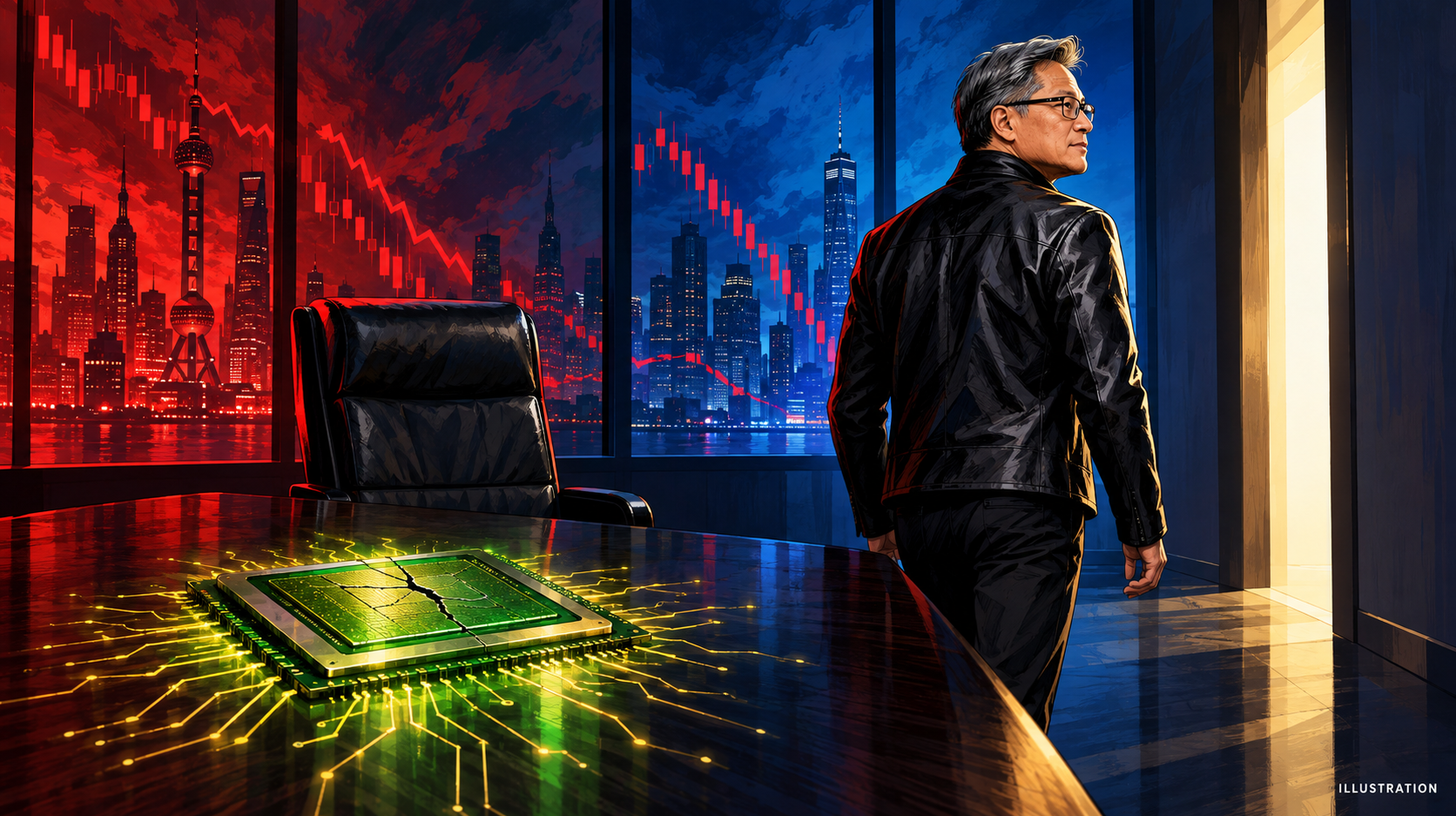
Jensen Huang resigns: The AI boom without its key driver – $600 billion lost – Creative image on the topic, featuring AI: Xpert.Digital
Why Huang's departure is shaking Nvidia: How big is the risk for Nvidia and the stock market?
Nvidia without Jensen Huang: What his resignation means for the AI industry
Who could succeed Jensen Huang: Espionage suspicions and conflicts of interest – The crisis that is changing Nvidia
Jensen Huang's resignation is more than just a surprising leadership change at Nvidia. After 33 years at the helm, the co-founder is leaving the company, which has become the most important supplier in the AI boom. The trigger was reports of personal relationships, including a connection to an Nvidia executive and allegations of espionage against a businesswoman with ties to a company that allegedly purchased Nvidia chips. The allegations have not been proven; Nvidia states that there is currently no reason to believe that company secrets or U.S. national security have been compromised.
The stock market reaction was nonetheless severe: Within a week, Nvidia lost around $600 billion in market capitalization. Now, the board of directors faces the task of regaining trust and finding a permanent successor. At the same time, questions are coming to the fore that extend far beyond Huang's personal future: How dependent is Nvidia on its founder? What consequences will his departure have for the company's business in China, US export controls, and the financing of the AI boom? And can the company maintain its technological leadership without the man who shaped it for decades?
Related to this:
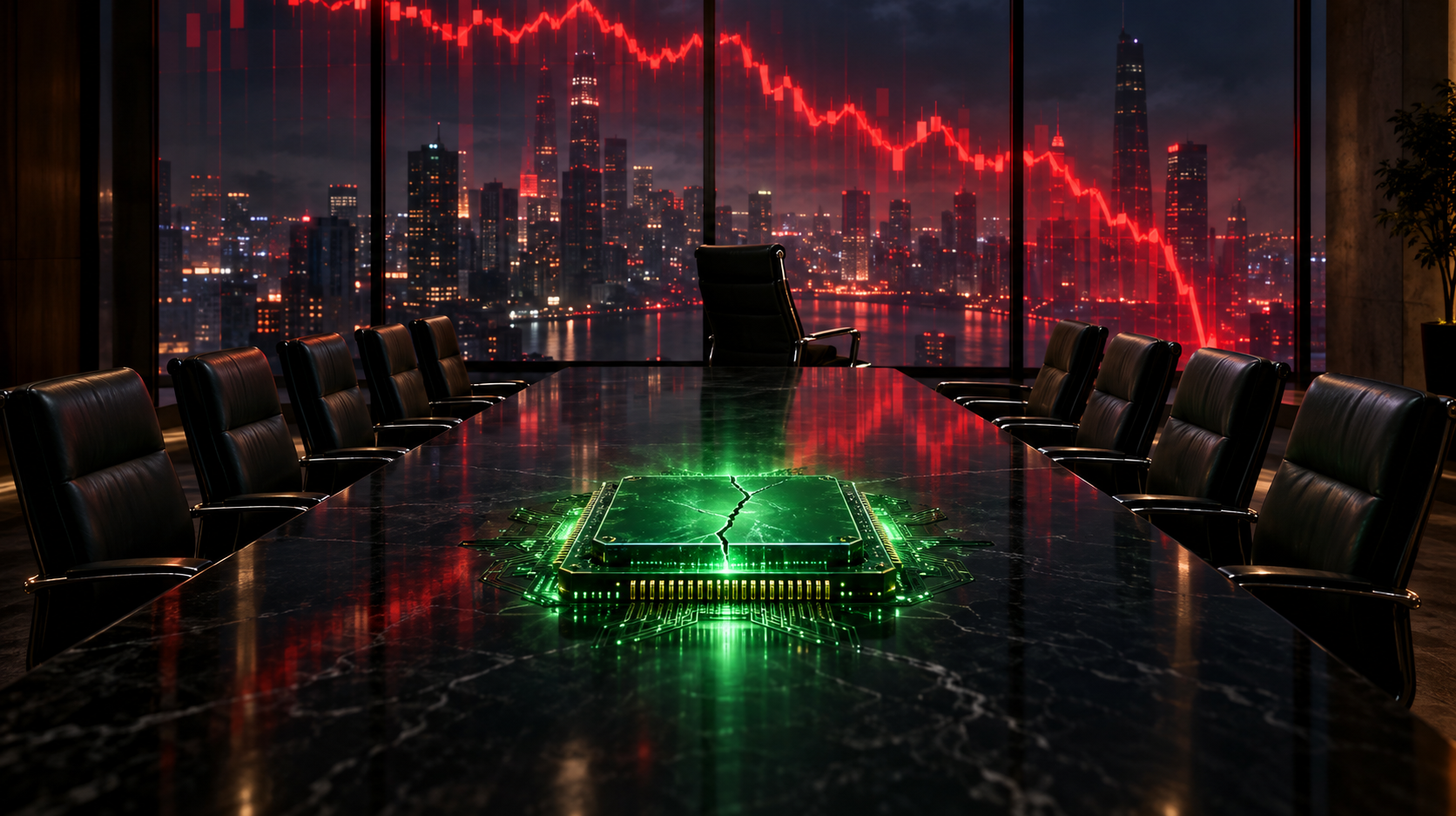
The fall of the AI king: What Jensen Huang's departure means for Nvidia, the markets, and the technology conflict
A Thursday that shakes up the AI economy
There are corporate news items that move a stock price, and then there are those that challenge the very self-image of an entire industry. The resignation of Jensen Huang as President, CEO, and board member of Nvidia clearly falls into the latter category. Effective immediately, the man who embodied the company for 33 years, transforming it into the most important equipment supplier of the artificial intelligence age, is leaving. Long-time CFO Colette Kress will take over on an interim basis, continuing in her current role concurrently. At the same time, Nvidia is appointing its first independent chairman of the board: Harvey C. Jones, technology entrepreneur, venture capitalist, and former head of the chip design software company Synopsys, was already a member of the board.
The trigger was two extramarital affairs, the revelation of which set off a cascade of events within a few days. The first involves businesswoman Alice Huang, also known as Huang Le, who is not related to Jensen Huang. From March to November 2023, she held a senior position at Megaspeed, a Singapore-based data center company and Nvidia customer. US intelligence agencies suspect her of having been recruited by the Chinese Ministry of State Security and of having passed information to Beijing. What this information might have been remains unclear. The FBI has launched an investigation, as the US president himself publicly confirmed. Beijing rejects the espionage allegations as completely unfounded. Nvidia emphasizes that, based on current information, there is no reason to believe that company secrets or the national security of the United States have been compromised.
The second relationship involves a vice president of the corporation who reported directly to Huang. This point likely proved decisive in the end, as it touches not on the difficult-to-prove issue of intelligence interference, but on the very concrete question of conflicts of interest within the management structure.
The stock market reacted sharply. Even before the official announcement, the share price fell by around eight percent in after-hours trading, and after the resignation was announced, it dropped by another ten percent. Over the course of the week, the loss in market capitalization totaled around 600 billion dollars. Nvidia is thus no longer the world's most valuable company, but only the second most valuable. This is a sum that dwarfs the combined market capitalization of most DAX companies, lost within just a few trading days because of the private life of a single manager.
Seven days from vote of confidence to change of power
Anyone who wants to understand the economic implications must consider the dynamics of the events, because they reveal how fragile the governance of a company can be that is seen externally as the epitome of technological superiority.
It began with a report alleging that US intelligence agencies had discovered a close relationship between Jensen Huang and Alice Huang. The following Sunday, Huang admitted in an email to all employees that he had been unfaithful to his wife of over four decades. He apologized to his family, employees, and shareholders but did not provide any details or names. That same day, the board of directors launched an independent investigation, led by a committee of independent directors with the assistance of the New York law firm Wachtell, Lipton, Rosen & Katz. A former federal prosecutor for the Southern District of New York headed the investigation. At the same time, the board explicitly expressed its confidence in Huang and stated that the CEO was determined to continue running the company without interruption.
On Monday, the stock fell by almost nine percent at one point and closed down more than four percent, wiping out roughly $190 billion in market capitalization. The president defended Huang at a press conference, stating that he believed her claim of having been unaware of the woman's alleged connections. In Congress, however, bipartisan resistance began to form. Senators from both sides demanded answers from Nvidia and stricter export restrictions on high-performance chips to China. One Republican senator spoke of a massive potential for blackmail and called for Huang's resignation. Huang was summoned to a closed-door joint hearing of several national security and foreign policy committees on November 18. Simultaneously, a class-action lawsuit was filed by shareholders accusing the company and its CEO of misleading investors about the connections to Alice Huang.
On Wednesday, the stock initially stabilized and rose by almost three percent to $173.73. Then reports surfaced about a second relationship with a subordinate executive. In after-hours trading, the stock slumped to around $160. The ten-member board of directors, excluding Huang, convened for an emergency meeting that evening that lasted several hours. The announcement of his resignation followed on Thursday. Only four days passed between the show of confidence and the change of power.
Also noteworthy is the development in the prediction markets. At the beginning of the week, traders estimated the probability of a resignation or dismissal by the end of the year at around 16 percent. By midweek, this figure had risen to 83 percent. This shift shows that the espionage allegations alone were not the deciding factor, but rather the combination of a security risk and a classic compliance violation.
Megaspeed and the grey area of export controls
The affair would be mere tabloid fodder were it not at the heart of the most important industrial policy conflict of our time. Since 2022, the United States has been gradually introducing export controls to deny China access to the most powerful AI chips. For Nvidia, this was a painful blow. Huang himself stated that his company's share of the Chinese market for AI accelerators had plummeted from around 95 percent to virtually zero. Accordingly, he was among the most vocal critics of this policy. His argument was consistently that export bans harm American companies, strengthen Chinese competitors like Huawei, and accelerate the development of an independent Chinese ecosystem.
This stance was economically understandable. China is the world's largest semiconductor market, and a technology provider excluded from it forgoes not only revenue but also economies of scale, developer loyalty, and the ability to set standards. In January, Huang achieved a partial victory when he secured government approval to sell H200 generation chips to China. In May, he traveled to China with the president. For years, Huang had engaged in a kind of shuttle diplomacy between Washington and Beijing and had a greater influence on American technology policy toward China than most government officials.
This is precisely where the issue lies. Since last year, Megaspeed has been suspected of circumventing export controls by forwarding Nvidia chips to China. Reports indicate that the company acquired Nvidia hardware worth approximately $4.8 billion. Company documents from Singapore reveal spectacular growth: Total assets increased roughly ninetyfold between the end of 2023 and 2024, reaching nearly $3 billion, while revenue climbed from zero to more than $294 million. Such figures are unusual for a young data center company and raise questions about the actual end customers. Singapore is also investigating. Nvidia stated that it had reviewed and refuted previous allegations against Megaspeed. Megaspeed itself emphasizes that it takes US export control laws extremely seriously, cooperates with the relevant Bureau of Industry and Security, and has commissioned an American law firm to conduct a complete inventory of its chips.
According to media reports, four US departments—the State, Defense, Energy, and Treasury Departments—had demanded that Megaspeed be excluded from deliveries. The Commerce Department reportedly repeatedly blocked stricter measures and inclusion on the blacklist. Whether political considerations regarding Nvidia played a role in this is unproven. However, the mere possibility that a person with a suspected intelligence background worked for a company that purchased large quantities of Nvidia chips and simultaneously maintained a personal relationship with the CEO makes it clear why security policymakers are alarmed. It's not just about potential trade secrets, but about gaining insight into the strategic considerations of the man who significantly shaped American export policy.
From an economic perspective, the crucial point is that the political landscape is now shifting. Any relaxation of export controls that Nvidia seeks in the future will be viewed with suspicion, as if it were influenced by compromised lobbying. Its business in China, already severely restricted, is likely to become virtually untouchable politically for the foreseeable future.
The founder's premium and its shadow price
In the capital markets, there's a concept called the "founder's premium." Companies still led by their founders often achieve better returns because founders think more long-term, invest more boldly, and identify more strongly with the company. Nvidia is perhaps the most striking example of this. Huang focused early on parallel data processing and artificial intelligence, when there were hardly any customers for the corresponding products. The CUDA software platform, which has kept developers tied to Nvidia hardware for almost two decades, was a gamble that only paid off many years later. When the company recruited its current interim CEO as CFO in 2013, annual revenue was $4.13 billion. By fiscal year 2026, it had reached $215.9 billion. Since the end of 2022, when the release of ChatGPT sparked the AI boom, the share price has increased approximately fourteenfold.
But the founder's bonus comes at a price, and now it's being paid. Huang had built an unusually flat organization, with around 60 executives reporting directly to him. There was no designated successor, and he rejected long-term succession planning. Until this Thursday, the board of directors had no independent chairman. The agenda was set by Huang together with a senior independent director, and the management prepared the information for the board. Three directors, including Huang, had served continuously on the board since its founding in 1993, and another since 1997. Formally, all except Huang were considered independent. In reality, such a long shared history likely weakened critical distance considerably.
Furthermore, several of Huang's family members hold senior positions at Nvidia, including his two children and son-in-law. They are considered relatively young and inexperienced. In a situation where personal relationships have become the core of the problem, this is also a factor that investors will be scrutinizing more closely in the future.
Particularly problematic for the corporation is its own code of conduct. Huang herself wrote the foreword, emphasizing high ethical standards and the protection of the company's reputation. The code explicitly requires avoiding situations that could create conflicts of interest, citing personal relationships as an example. Even the mere appearance of a conflict is to be reported and clarified with the legal department. A relationship with a directly subordinate vice president directly touches upon this principle, as it affects personnel decisions, budget allocation, and the credibility of internal rules. If the top executive fails to adhere to the very rules she herself promotes, the entire compliance system loses its authority.
This case is the latest in a series of leadership changes in American business where relationships with subordinates led to resignations. What is new is the scale. Never before has a company of this size and systemic importance hinged on such a single personnel decision.
What the stock market is pricing in: A confidence discount of 600 billion dollars
A share price drop of roughly $600 billion within a week demands a nuanced interpretation. From a purely fundamental perspective, nothing has changed in Nvidia's business in recent days. The order books are the same, the product pipeline remains unchanged, and the hyperscalers' dependence on Nvidia accelerators is unchanged. The loss, therefore, essentially represents a reassessment of risks that were previously not, or only minimally, priced in.
Three components can be distinguished. First, a key person risk. For years, investors had attributed to Huang a virtually irreplaceable ability to recognize technological turning points earlier than others. Part of the valuation premium over competitors was based on confidence in precisely this ability. Some fund managers had already announced they would sell their stock if he left. Second, a political risk. The company is losing its most effective advocate in Washington at a time when Democrats are poised to gain majorities in both houses of Congress and are announcing investigations into various aspects of Nvidia's business. Third, a legal risk, consisting of class-action lawsuits, potential investigations into export violations, and an independent inquiry whose results are still pending. A previous Commerce Department review into whether Nvidia assisted in the smuggling of chips into China has reportedly been referred to the Justice Department.
There's also a timing factor. The scandal comes at a time when the market is already nervous about AI stocks. Even before the revelations, a broader sell-off in the AI sector had begun, driven by doubts about whether the enormous investments in data centers would generate corresponding returns in the foreseeable future. In this environment, the resignation acts as an amplifier. The interim CEO held Nvidia shares worth around $750 million on Wednesday evening. At the stock's peak the previous month, this figure was over $1 billion. This alone illustrates how much the valuation had already declined before the latest drop.
November 17th will be crucial. On that day, Nvidia plans to present its figures for the third quarter of fiscal year 2027. It will be the first time in decades that Huang will not be shaping the company's narrative. If the company delivers solid figures and a credible outlook, some of the lost confidence could quickly dissipate. If it disappoints, a downward spiral threatens, in which fundamental and personnel doubts reinforce each other.
A new dimension of digital transformation with 'Managed AI' (Artificial Intelligence) - Platform & B2B solution | Xpert Consulting


A new dimension of digital transformation with 'Managed AI' (Artificial Intelligence) – Platform & B2B solution | Xpert Consulting - Image: Xpert.Digital
Here you will learn how your company can implement customized AI solutions quickly, securely and without high entry barriers.
A managed AI platform is your all-inclusive, worry-free solution for artificial intelligence. Instead of dealing with complex technology, expensive infrastructure, and lengthy development processes, you receive a ready-made solution tailored to your needs from a specialized partner – often within just a few days.
The key advantages at a glance:
⚡ Rapid implementation: From idea to ready-to-use application in days, not months. We deliver practical solutions that create immediate added value.
🔒 Maximum data security: Your sensitive data stays with you. We guarantee secure and compliant processing without sharing data with third parties.
💸 No financial risk: You only pay for results. High upfront investments in hardware, software, or personnel are completely eliminated.
🎯 Focus on your core business: Concentrate on what you do best. We take care of the entire technical implementation, operation, and maintenance of your AI solution.
📈 Future-proof & scalable: Your AI grows with you. We ensure continuous optimization and scalability, and flexibly adapt the models to new requirements.
More information here:
Future scenarios for Nvidia after Huang's departure
Colette Kress and the logic of the transitional solution
The choice of the CFO as an interim solution follows a clear logic. Kress is 59 years old and has been CFO since September 2013. Prior to that, she spent eight years in finance roles at Texas Instruments, worked at Microsoft from 1997 to 2010, where she was responsible for the finances of the Servers and Tools division from 2006, and then moved to Cisco. She studied finance at the University of Arizona and earned an MBA from Southern Methodist University. She is the company's second face to investors, as she appeared alongside Huang at every quarterly conference.
For the capital markets, her appointment signifies continuity in communication, predictability in financial management, and familiarity with major customers and financing partners. This is no small matter at a time when Nvidia not only sells chips but is also deeply interwoven into the financing architecture of the AI industry through equity stakes, lease agreements, and special delivery terms. The board of directors emphasizes that operations, customer commitments, and the product roadmap will continue without interruption.
The limitations of this solution are obvious, however. Nvidia is at its core a technology company whose value is based on architectural decisions made years in advance. A CFO who also continues to oversee finances can provide stability, but can hardly embody the technological vision that Huang shaped over three decades. Furthermore, there is a structural difficulty: Nvidia executives, according to the company, are employed without individual severance packages or control transfer agreements. This keeps costs down, but also makes the leadership team more vulnerable to poaching attempts by competitors during a period of uncertainty.
Engineer or administrator: The race for succession
The board of directors has announced it will review both internal and external candidates. At the center of speculation is Ian Buck, who has worked at Nvidia since 2004, holds a PhD from Stanford University, and played a key role in the development of CUDA. Today, he heads the hyperscale AI product business, representing the core of the company's current value creation. Many observers consider him the strongest internal candidate for a permanent position because his work has created precisely the software dependency that defines Nvidia's competitive advantage. He was recently ahead of Kress in prediction markets, albeit with low trading volume.
Rene Haas, currently CEO of chip architect Arm and formerly an Nvidia executive, is being mentioned as a leading external candidate. He brings industry expertise, a strong public profile, and experience leading a publicly traded semiconductor company. Also mentioned are Jeff Fisher, an Nvidia veteran with over three decades of service, and co-founder Chris Malachowsky, who led product development for many years. Some investors are also suggesting a dual leadership structure, with Kress stabilizing the business and finances, while Buck is responsible for product and technology.
The choice will be a strategic turning point. An engineer at the helm would signal that Nvidia intends to defend its self-image as a technological pacesetter. A manager with a financial or operational focus would be more likely to usher in a phase of consolidation, margin optimization, and risk minimization. Historical comparisons are apt. Apple after Steve Jobs demonstrated that a company under operationally oriented leadership can multiply its value, but also that expectations for revolutionary innovations diminish. Such a path wouldn't necessarily be bad for Nvidia. Its AI infrastructure is entering a phase where supply chain management, energy efficiency, manufacturing capacity, and customer financing are at least as important as the next architectural breakthrough.
The central bank of the AI industry and the risk of contagion
Perhaps the most important economic dimension of this case extends far beyond Nvidia. The company is no longer just a supplier. It is simultaneously a technology provider, customer, investor, financier, and partner of numerous AI companies. It invests in startups that subsequently purchase Nvidia chips, secures leasing contracts with its own balance sheet, and grants special delivery terms. Huang was not only the company's CEO within this network, but also a kind of informal central banker of the AI economy, whose word influenced investment decisions worth hundreds of billions of dollars.
This structure has long worried critics. It's called circular financing when capital flows from a chip supplier to an AI developer, who then uses it to purchase computing power from cloud providers, who in turn order chips from the original investor. As long as all participants grow, this cycle reinforces itself. If it falters, the losses increase accordingly. The weaker links in the chain are particularly vulnerable: AI labs like OpenAI and Anthropic, which have pledged hundreds of billions of dollars in computing power without yet generating comparable revenue, and heavily leveraged data center operators like CoreWeave.
Huang's departure doesn't immediately change this situation, but it does alter risk perception. New leadership might be more cautious with the balance sheet, scrutinize investments more critically, and be less willing to support customer demand with financing commitments. From a corporate governance perspective, this would be sensible. From the perspective of the industry as a whole, it could mean a withdrawal of liquidity, hitting precisely those companies that rely on a continuous flow of capital. For data center developers, energy providers, and project financiers who have based their planning on continued expansive demand for AI computing power, this is a signal to re-evaluate assumptions and take scenarios with slower growth more seriously.
Competitors will try to capitalize on the uncertainty. AMD's stock rose slightly on the day of the resignation. Hyperscalers, which are already developing their own accelerators to reduce their reliance on Nvidia, gain an additional argument for this strategy. A market share of around 90 percent in the high-performance AI chip segment is no guarantee for the future if customers conclude that dependence on a single vendor poses not only a price risk but also a governance risk.
The chip as a security policy asset
This case definitively marks the end of an illusion: the notion that high-performance chips are ordinary commodities whose distribution can be controlled solely by business criteria. The US president succinctly summarized Washington's position: whoever wins in AI, wins overall. The security policy concern is concrete: a Chinese lead in artificial intelligence could significantly strengthen military capabilities and surveillance capacities.
Following this logic, the management of chip companies themselves become a security-relevant factor. The question of with whom a CEO maintains private relationships is then no longer merely a matter of personal morality, but one of counter-espionage. It is to be expected that semiconductor companies will in the future introduce security clearances, reporting requirements, and contact rules for executives that are more reminiscent of defense contractors than traditional technology companies. This increases compliance costs, slows down decision-making processes, and changes the corporate culture of an industry that has long seen itself as open, global, and meritocratic.
At the same time, this case intensifies the debate about enforcing export controls. Circumvention via third countries like Singapore or Malaysia has been known for years. Following the revelations, concerns arose that Nvidia might have known that companies in these countries were circumventing export restrictions. This has not been proven. However, the political pressure to tighten end-user controls, fully document supply chains, and more closely monitor intermediaries will increase significantly. For the entire supply chain, from server manufacturers and distributors to data center operators in Southeast Asia, this means additional auditing efforts and legal risks.
For China, this development is a double-edged sword. On the one hand, Beijing loses Huang, one of the few Western CEOs who openly advocated for easing export controls. On the other hand, the case confirms the Chinese conviction that American technology cannot be relied upon and strengthens the arguments for accelerated domestic development. Ironically, the scandal could thus accelerate precisely the effect Huang had always warned against: the creation of a completely independent Chinese AI ecosystem.
Washington after Huang: The loss of political capital
Over the past few years, Huang had become one of the most influential voices in American AI policy. At the recent AI summit at the White House, attended by 42 technology leaders, he stood beside Elon Musk, at the president's side. At a major investor conference in August, he took a phone call from the president on stage, who publicly pledged his full support. This proximity was an enormous asset for Nvidia, one that didn't appear on any balance sheet but translated into political decisions regarding export licenses, subsidies, and regulation.
This political capital is now largely exhausted and cannot simply be transferred to a successor. Relationships of this kind are based on personal trust, public prominence, and years of cultivation. Moreover, the climate in Washington is likely to change anyway. Should the opposition win a majority in both houses of Congress, investigations into Nvidia's business dealings in China, the government's export decisions, and the role of lobbyists will be on the agenda. The protective shield provided by proximity to the president will weaken.
For the industry as a whole, this means a redistribution of influence. Other technology companies that develop their own chips or advocate for stricter export controls are gaining weight in the political debate. The narrative that the free sale of American chips worldwide is in the national interest has suffered a severe blow to its credibility.
What remains of the castle moat
Despite the dramatic circumstances, Nvidia's structural strengths should not be underestimated. Its competitive advantage is not based on a single individual, but rather on a complex interplay of hardware architecture, software, developer community, supply chain relationships, and customer loyalty. CUDA has been the de facto standard for accelerated computing for almost two decades; millions of developers are trained on it, and countless applications are optimized for it. Manufacturing takes place at TSMC, which produces more than 90 percent of the world's most advanced chips, and Nvidia is one of its most important customers, granting it correspondingly privileged access to scarce capacity. The product roadmaps for the coming generations are in place, and the development teams continue their work.
Furthermore, Nvidia has significantly diversified its business in recent years. Partnerships range from robotics and physical simulation to AI-powered music and speech processing. Just this week, an expanded collaboration with a provider of AI speech agents for governments was announced. The company is firmly established in a broad market that is unlikely to be shaken in the short term.
The real danger, therefore, lies less in the immediate business than in the ability to pursue long-term strategies. Huang had the capacity to make bets that analysts and investors initially considered excessive. Whether new leadership will possess the same courage remains to be seen. A more controlled, risk-averse organization might operate more efficiently, but miss the next major technological shift. In an industry where innovation cycles are short and investment volumes are enormous, that can be decisive for years to come.
Three scenarios for the next twelve months
In the first scenario, orderly stabilization, the transition proceeds largely smoothly. Quarterly results are solid, the independent investigation finds no evidence of compromised secrets or systematic export violations, and the board of directors presents convincing, long-term leadership within a few months, presumably with a strong technical profile. In this case, a significant portion of the trust discount should dissipate, and Nvidia could even benefit from more professional governance in the long run. The market would then answer the question of whether a company can function without its founder in the affirmative.
In the second scenario, gradual erosion, the business remains intact, but the uncertainty persists. The search for a successor takes time, key personnel leave the company, customers accelerate the development of their own chips, and the political fallout in Congress keeps the issue in the headlines for months. The valuation discount compared to previous levels would then solidify without a dramatic collapse.
In the third scenario, escalation, the investigations uncover incriminating evidence, such as leaks of sensitive information or systematic export violations via intermediaries. This could lead to substantial fines, supply restrictions, stricter regulations, and another wave of lawsuits. At the same time, the loss of trust could spread throughout the entire AI financing chain, triggering a broader correction that extends from data center operators to energy providers.
Based on current knowledge, the second scenario, with a tendency toward the first, appears most likely. The business model is robust, demand for AI computing power remains high, and the board of directors has at least sent initial positive signals with the swift interim solution and the separation of the CEO and supervisory roles. However, the uncertainty surrounding the results of the investigations is the crucial open factor, and it cannot currently be reliably quantified.
The end of personalization
The downfall of Jensen Huang is more than a corporate crisis. It ends an era in which the AI industry was largely defined by personalities: visionary founders in leather jackets, stage performances that moved stock prices, and the notion that the future of the technology depended on a handful of exceptional individuals. This narrative had a kernel of truth, as Huang's foresight did indeed make Nvidia what it is today. But it also had a dangerous flip side, because it misled regulators, investors, and policymakers into overlooking the risks of extreme concentration of power.
The sobering lesson is that systemically important companies need governance that reflects their systemic significance. A corporation that plays a role in the computing power of the global economy similar to that of major energy providers in electricity supply cannot afford a board of directors that expresses its confidence in the founder until the very end and only acts under the pressure of a second revelation. It cannot afford an organization in which 60 executives report to a single person and no one is groomed as a successor. And it cannot afford codes of conduct that apply to everyone except the person who wrote them.
For investors, this case serves as a reminder not to treat key person risks and governance quality as soft factors, but as hard valuation parameters. For policymakers, it demonstrates that technology policy and security policy have become inextricably linked and that close ties between corporate executives and government leaders are no substitute for institutional oversight. And for the industry as a whole, it marks the transition from a startup and growth phase to a phase of institutionalization, in which reliability, transparency, and oversight are at least as important as technological brilliance.
Nvidia will very likely survive this crisis. The question is not whether the company can exist without Jensen Huang, but whether it learns to function without the illusion of his indispensability. If it succeeds, this painful departure could, in retrospect, be seen as the moment when Nvidia transformed from a startup into a mature institution. If it fails, this November will be viewed as the beginning of a period in which the AI industry lost its most important driving force without finding a replacement.
I checked the report before writing it; it is corroborated by several sources, including the official Nvidia press release, CNBC, and the NZZ. The information is dated November 12, 2026. I have presented the espionage allegations as suspicions because they have not yet been proven. I am omitting the manager's name from the second relationship because it is irrelevant to the analysis.
🎯🎯🎯 Data-driven B2B industry hub as a quasi-in-house solution


The quasi-in-house solution: How Xpert.Digital closes operational gaps in B2B marketing and sales – Smart Content-Driven Business - Image: Xpert.Digital
Xpert.Digital is a data-driven B2B industry hub led by Konrad Wolfenstein . The company acts as an external, quasi-in-house solution for industrial partners, closing operational gaps in marketing, content, and sales – without requiring additional resources on the client side.
More information here:
Your global marketing and business development partner
☑️ Our business language is English or German
☑️ NEW: Correspondence in your native language!

Konrad Wolfenstein
I and my team are happy to be available to you as your personal advisor.
You can contact me by filling out the contact form here wolfenstein@xpert.digital:or simply call me at +49 7348 4088 965. My email address is
I'm looking forward to our joint project.