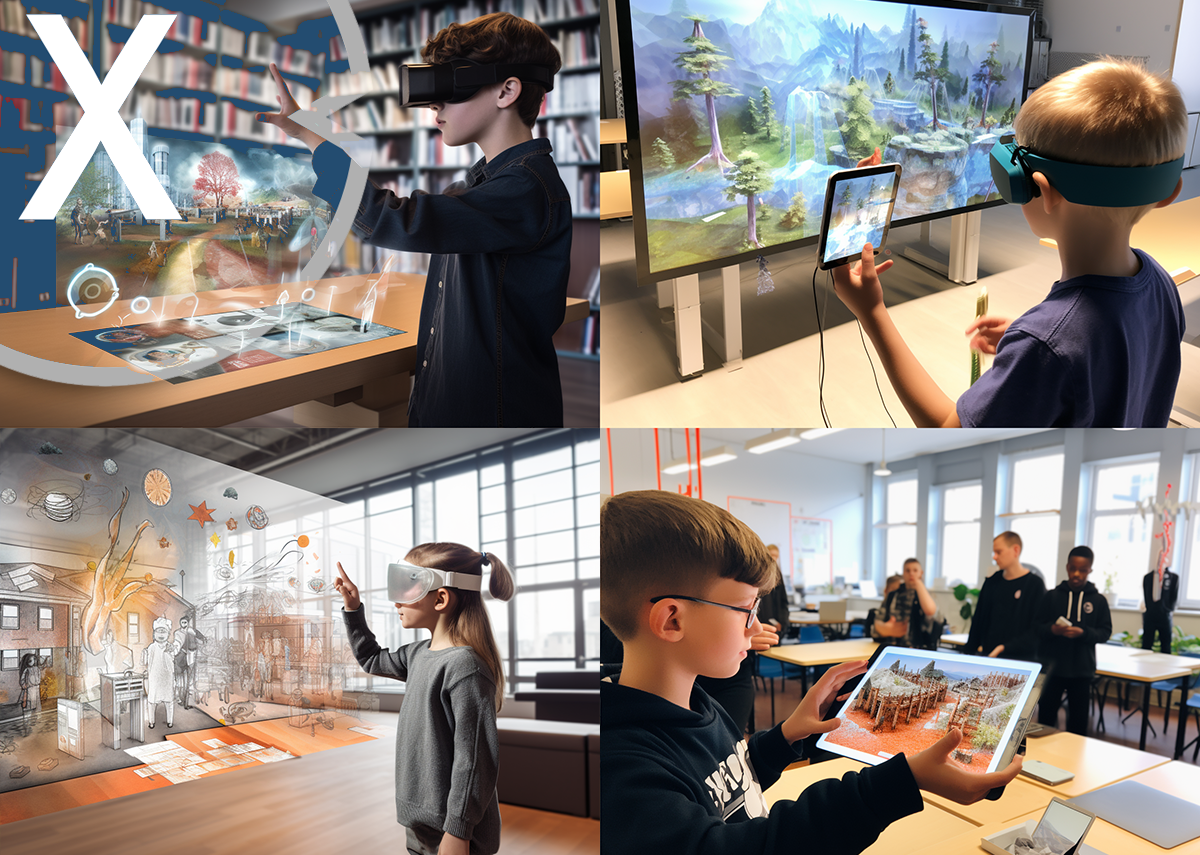
AI & XR 3D Rendering Machine: Augmented and Extended Reality – Teaching4Future with virtual elements – Image: Xpert.Digital
🎓📚 Augmented and Extended Reality: Teaching4Future with virtual elements
💡 “Teaching4Future” is an initiative of teachers committed to a sustainable future and environmental education. The name “Teaching4Future” derives from the goal of equipping students with the skills and knowledge to contribute to sustainable development and shape a better future.
🎮 Teaching4Future is an innovative approach that promotes the use of virtual elements in lessons with digital media. By using virtual elements, teachers and students can learn and teach in an interactive and engaging way.
Virtual elements offer a wide range of educational opportunities. Students can explore complex topics in virtual environments, conduct experiments, and collaborate on projects. By using simulations, virtual reality technology, and other virtual tools, students can develop a deeper understanding of the learning material.
⏰ One advantage of virtual teaching is its flexibility. Students can access virtual materials from anywhere and learn regardless of time and place. This enables personalized learning and ensures that students with different learning paces can be better supported.
💻 Another important component of virtual learning is the promotion of digital skills. The use of virtual elements allows students to familiarize themselves with digital tools and develop skills that are essential in today's digital world.
🙅♂️ Despite the many advantages, there are also challenges when using virtual elements in the classroom. Not all students have the necessary technical equipment at home to participate in virtual activities. It is important to ensure that all students have equal access to guarantee equal opportunities.
✏️ Furthermore, the use of virtual elements requires careful planning and preparation on the part of the teachers. Suitable virtual resources must be found or created, technical problems solved, and the pedagogical effectiveness of the virtual elements evaluated.
🎆 Virtual lessons with virtual elements have the potential to enrich and expand the learning experience. They enable an interactive and immersive learning environment that meets the needs of students and prepares them for the demands of the digital world.
🌍 An interesting aspect of virtual learning is the opportunity to raise students' awareness of global problems such as climate change and pollution. Virtual environments allow students, for example, to take virtual trips around the world and be directly confronted with the effects of climate change.
📚 Furthermore, virtual elements can also help increase students' interest and motivation in learning. By immersing themselves in virtual worlds, students can understand complex concepts more vividly and become more engaged in the learning process.
🤝 Virtual elements can also promote collaboration and exchange among students. They can work together on virtual projects, exchange ideas, and develop solutions together. This collaborative learning environment allows students to further develop their communication and social skills.
👁️ One example of the use of virtual elements in the classroom is the application of augmented reality (AR), where virtual objects are integrated into the real environment. For example, students can use AR glasses to visualize how the human body works or bring historical events to life by projecting virtual figures and objects into the real world.
👀 Another possibility is the use of virtual reality (VR), where students immerse themselves in virtual worlds. This allows them, for example, to experience historical sites or scientific phenomena firsthand. They can conduct virtual experiments or explore various works of art in a virtual art gallery. Through these immersive experiences, students become more involved in learning and can expand their knowledge in a new and fascinating way.
🧠️ In addition to AR and VR, there is also the concept of Extended Reality (XR), which encompasses various types of virtual elements. This includes not only visual and auditory elements, but also haptic (tactile) and olfactory (smell) sensations. By integrating these different sensory experiences, virtual elements can be made even more immersive and realistic.
⚠️ It is important to note that the use of virtual elements in the classroom should not replace traditional teaching methods. Rather, virtual elements should be seen as a complement to and enrichment of lessons. A balanced combination of traditional and virtual teaching methods can offer students a varied and comprehensive learning experience.
🎉 Virtual learning with virtual elements offers many opportunities to make learning more engaging, interactive, and practical. It allows students to develop their digital technology skills, better understand global challenges, and prepare themselves for the demands of the digital world. With careful planning and equitable access, virtual learning can be a valuable addition to a modern education system that considers the needs and future of students.
📣 Similar topics
- 🚀 Virtual Future: Teaching and Learning with Augmented Reality
- 🌍 Global Challenges: Climate Change in the Virtual Classroom
- 🖥️ Digital skills: Empowering students through extended reality
- 🌐 Teaching for the Future: Experiencing sustainability in the virtual space
- 💡 Innovative teaching: Virtual elements in education
- ✈️ Virtual Expeditions: Learning about the environment through immersion
- 🤝 Collaborative learning: Learning together in virtual worlds
- 🎨 Expanded Art Worlds: Virtual Reality in Art Education
- 🔬 Interactive science: Experimenting in virtual reality
- 🌳 Environmental education: Explore the rainforest and Arctic virtually
#️⃣ Hashtags: #VirtualReality #DigitalEducation #AugmentedReality #SustainableLearning #FutureOfEducation
📚🏫🕶️ Virtual Reality: VR glasses in the classroom – North Rhine-Westphalia leads the way

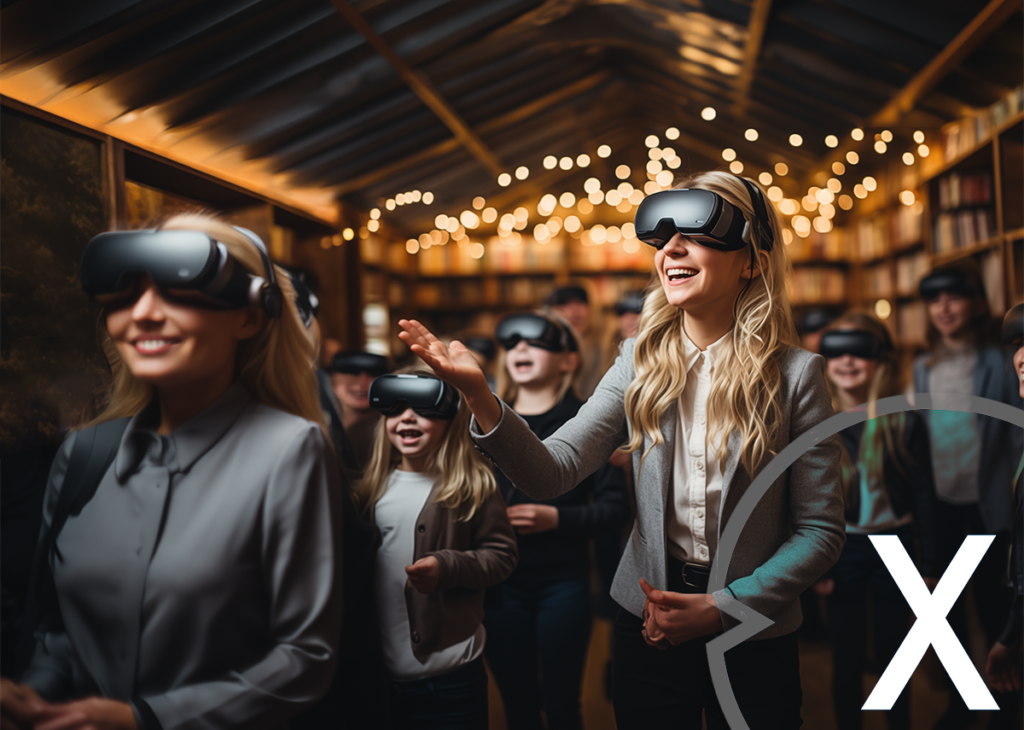
AI & XR 3D Rendering Machine: Virtual Reality in the Classroom – Image: Xpert.Digital
The use of virtual reality (VR) in teacher training in North Rhine-Westphalia represents a progressive development in education. Following the successful pilot project, the plan is now to test this technology more broadly and integrate it into everyday classroom practice. Future teachers will work with VR headsets during their training to explore and utilize their potential for interactive and multidimensional teaching.
More information here:
🚀👀 Inclusive future of education: The pathfinder through virtual technologies
🤖 The use of virtual elements in education can also address issues of accessibility and inclusivity.
Virtual environments can provide adaptations for students with different learning styles or disabilities, enabling them to fully participate in the learning process. For example, students with visual impairments can benefit from audio descriptions or haptic feedback in virtual experiences.
Virtual elements can also facilitate distance learning by enabling students to connect and collaborate with peers and educators from different locations. This opens up opportunities for intercultural exchange and global collaboration, fosters a deeper understanding of diverse perspectives, and promotes a sense of global citizenship.
📚 Integrating virtual elements into education requires ongoing professional development for teachers to ensure they have the necessary skills and knowledge to effectively incorporate these tools into their teaching practices. It is crucial to provide teachers with training on how to design and deliver virtual learning experiences that align with educational goals and encourage active student participation.
🤖 As with any technology, the ethical use of virtual elements in education should be a priority. Protecting student privacy, ensuring digital well-being, and fostering responsible digital citizenship are essential considerations when implementing virtual tools and environments.
🖼️ The use of augmented reality, along with other virtual elements in education, has the potential to enhance teaching and learning experiences. It enables immersive and interactive learning environments, fosters collaboration, and empowers students to become active participants in shaping their future. Through responsible and inclusive integration, virtual elements can contribute to a more sustainable and transformative education system, equipping students with the skills and knowledge they need to thrive in the digital age and contribute to building a better world.
📣 Similar topics
- 📚🌍 Virtual elements: Accessibility and inclusion in education
- 🖥️🏫 Global collaboration through virtual elements in education
- 👩🏫💡 Professional development for teachers: Effective integration of virtual elements
- 🔒👥 Ethics in education: Responsible use of virtual elements
- 🌈🔍 Augmented Reality in Education: Potential for Immersive Learning Environments
- 🌐🏢 Sustainable education system: Responsible integration of virtual elements
- 🎧💻 Virtual elements: Inclusion for students with visual impairments
- 💻🤝 Distance learning through virtual elements: Intercultural exchange and collaboration
- 📐👩🎓 Virtual elements in education: Adaptations for different learning styles
- 🛡️🔐 Protection and well-being: Ethics in the implementation of virtual elements
#️⃣ Hashtags: #VirtualElements #Accessibility #Inclusion #DistanceLearning #ContinuingEducation
🗒️ Xpert.Digital: A pioneer in the field of Extended and Augmented Reality
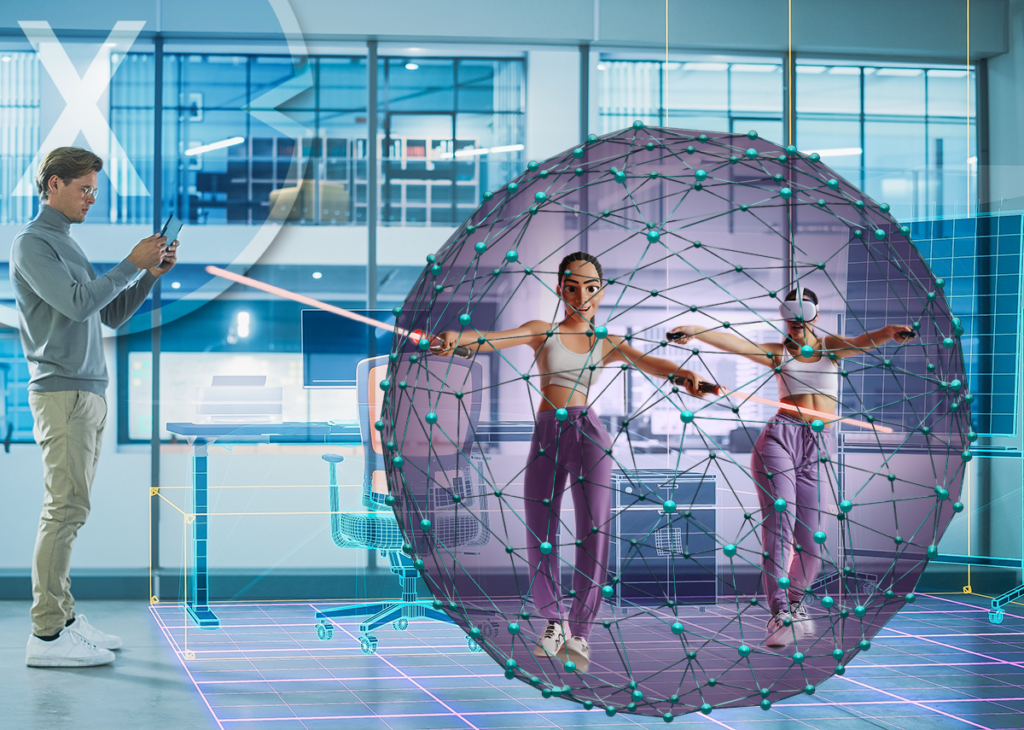
Finding the right Metaverse agency, planning office, or consulting firm - Image: Xpert.Digital
🗒️ Finding the right Metaverse agency, planning office, or consulting firm – Search and search: Top Ten Tips for Consulting & Planning
More information here:

Industrial & B2B Business Metaverse: Reduce costs with XR technology for photorealistic product images (XR 3D rendering machine)

Lathe in photorealistic rendering (3D product presentation) - Image: Xpert.Digital
XR technology offers a superior solution for creating photorealistic images, allowing companies to avoid the expensive fees charged by external media agencies. It's well known that media agencies charge high prices for creating such images, as this requires expertise, specialized software, and collaboration with various specialists.
More information here:
We are here for you - Consulting - Planning - Implementation - Project Management
Xpert.Digital - Pioneer Business Development
Smart Glasses & AI - XR/AR/VR/MR industry expert
Consumer Metaverse or Metaverse in general
If you have any questions, require further information or advice, please feel free to contact me at any time.

Konrad Wolfenstein
I would be happy to serve as your personal advisor.
You can contact me by filling out the contact form below or simply call me on +49 7348 4088 965 .
I'm looking forward to our joint project.
Write to me



Xpert.Digital - Konrad Wolfenstein
Xpert.Digital is a hub for industry focusing on digitalization, mechanical engineering, logistics/intralogistics and photovoltaics.
With our 360° Business Development solution, we support renowned companies from new business to after-sales.
Market intelligence, smarketing, marketing automation, content development, PR, mail campaigns, personalized social media and lead nurturing are part of our digital tools.
You can find more information at: www.xpert.digital - www.xpert.solar - www.xpert.plus
Keep in touch