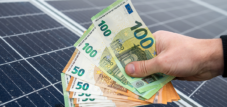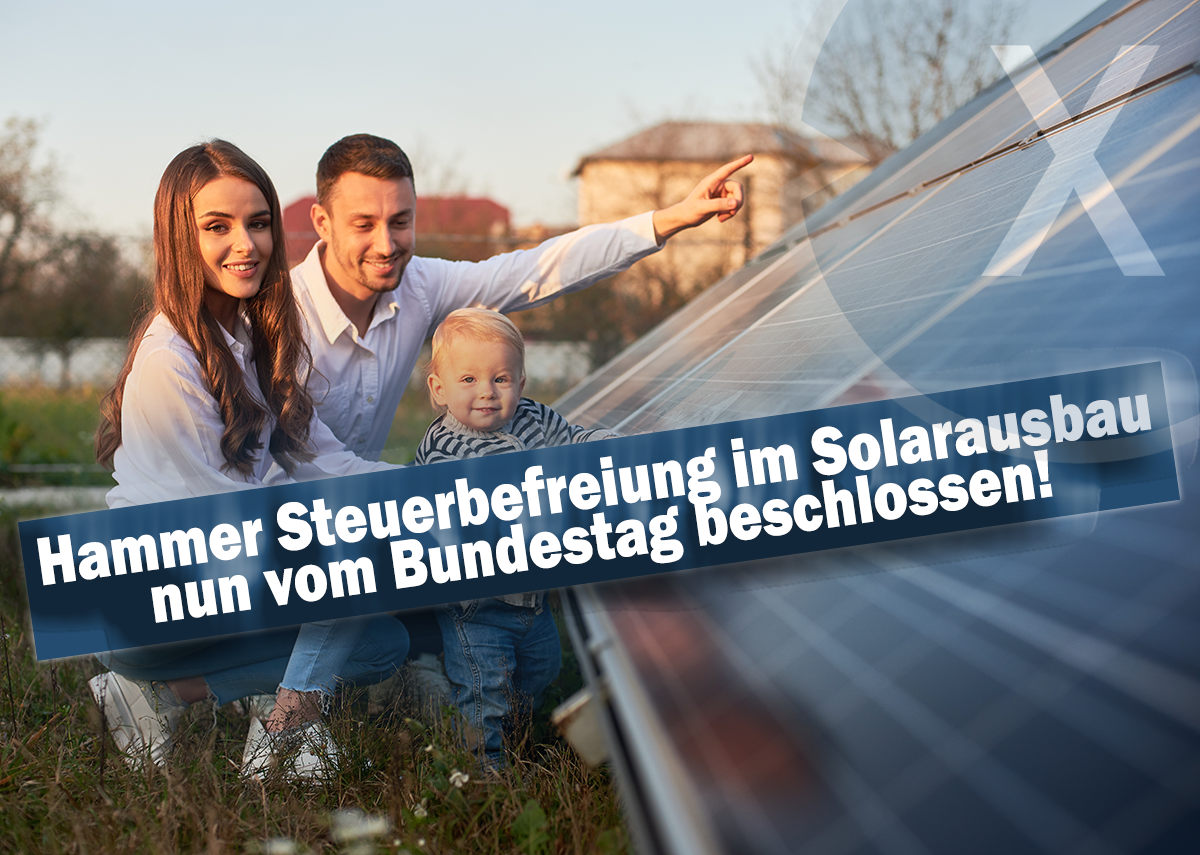
Tax exemption: Tax relief for solar power systems approved by the German Bundestag – Image: Xpert.Digital / anatoliy_gleb|Shutterstock.com
Photovoltaics is one of the fastest-growing industries in Germany and worldwide. The coalition government has finally created a very good and long-overdue incentive for homeowners to invest in solar energy. From now on, the installation of a photovoltaic system is tax-exempt for private households!
2023: Cheaper solar systems due to tax exemption
The first steps towards massively promoting the expansion of renewable energies have been taken: On Wednesday (November 30, 2022), the Finance Committee approved the controversial tax exemption for the construction of "smaller" solar power systems by private households (stage 2 of the federal legislative process). On December 2, the Bundestag held its final deliberations on the 2022 Annual Tax Act and only needs the approval of the Bundesrat on December 16, which is considered a certainty.
The funding is intended to enable the expansion of solar power in the coming years and thus make an important contribution to the energy transition.
The new regulation from the coalition government is a very welcome and long-overdue incentive for many homeowners to invest in solar energy. Until now, it has been difficult for private system operators to participate in photovoltaic systems, as the acquisition costs are high and the return on investment is often insufficient to justify the investment. The new tax exemption now changes this. Private photovoltaic systems are now tax-exempt, making the investment significantly more attractive.
The North Rhine-Westphalia State Association for Renewable Energies states in its latest press release:
- Operators of small solar power plants (up to 30 kWp) will not only have to pay income and trade tax on the revenue from the solar power remuneration in the future, but also retroactively to January 1, 2022 .
- The 19 percent value added tax on the purchase and installation of photovoltaic (PV) systems, including battery storage,.
- The VAT exemption already applies to orders placed this year, provided the plant goes into operation next year.
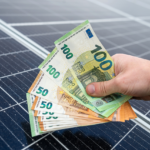

Top selling point for solar installers: No more tax on solar systems
Related to this:
The course of the federal legislative process
The federal legislative process is a three-stage process in which the draft law is debated in the Bundestag and subsequently either adopted or rejected.
The first stage, the so-called first reading, serves to debate the political significance of the proposed law and its objectives.
➡️ Debate in the Bundestag on the Federal Government's draft Annual Tax Act 2022 (JstG 2022; 20/3879) – 14 October 2022 (Friday)
In the second stage, the second reading, the bill is referred to the committees for consideration. Here, the draft law is examined in detail. The lead committee then presents a version of the bill, which is debated in plenary in the third and final stage, the third reading. At this stage, any member of parliament can propose further amendments.
➡️ The Finance Committee adopted the 2022 Annual Tax Act at its meeting on Wednesday (November 30, 2022).
The third reading is the last opportunity to propose amendments to draft legislation. Only parliamentary groups or at least five percent of the members of parliament can submit such amendments. These amendments may only concern provisions that were changed or newly added during the second reading. After the third reading, the Bundestag votes on the draft legislation.
➡️ In its third reading on December 2, 2022 (Friday), the German Bundestag held its final deliberations on the Annual Tax Act.
Once a law has been passed in the Bundestag, it must be sent to the Bundesrat immediately.
The Basic Law fundamentally distinguishes between laws requiring consent and laws subject to objection. If the Bundesrat (Federal Council) withholds its consent to a law requiring consent, the legislative proposal fails. In the case of a law subject to objection, the Bundestag (Federal Parliament) can, under certain conditions, override an objection from the Bundesrat.
➡️ Approval by the Federal Council on December 16 (Friday) is considered certain. The federal government has taken up the appeal from the states, particularly regarding income tax, to make the operation of small photovoltaic systems legally tax-exempt.
Once the final stage of the legislative process has been successfully completed, the Federal Government only needs to countersign it and have it confirmed again by the Federal President. After that, it is published in the Federal Law Gazette.
Zero tax rate: 0% VAT invoicing is equivalent to VAT exemption!
The planned zero VAT rate is something completely new in German VAT law. This means that deliveries and installations of these systems will be taxed at a rate of 0% starting next year. In other words, there will be no VAT, or rather, the VAT rate will be 0%. We are familiar with a similar (but entirely different) reduced VAT rate of 7% for food, books, and newspapers.
Background information:
The standard VAT rate is 19 percent. Certain services are taxed at a reduced rate of 7 percent according to Section 12 Paragraph 2 of the German VAT Act (UStG) or are exempt from VAT according to Section 4 of the UStG. The standard rate of 19 percent has been in effect since January 1, 2007, and the reduced rate of 7 percent since July 1, 1983. In addition, Section 24 of the UStG provides for average rates for agricultural and forestry businesses, which can be 5.5 percent or 10.7 percent. Furthermore, Section 23 of the UStG provides for average rates derived from these two rates for agricultural and forestry businesses, as well as certain companies and corporations.
The zero tax rate will now apply from 2023 onwards to installations and deliveries of solar modules, including electricity storage systems, to operators if the PV system is installed on or near private residences as well as public and other buildings.
In the future, it will be the responsibility of the solar installer or seller to determine whether the 0% or 19% VAT regulation applies. This can be done either through written prior confirmation from the customer that they will not be operating a system larger than 30 kWp and/or by providing proof via the market master register
⚠️ A solar system, energy storage unit, or completed installation that has already been purchased cannot be retroactively invoiced using the zero VAT rate. Logically, with the zero VAT rate, there is also no longer any possibility or need to claim a VAT refund.
⚠️ If the purchase and commissioning via a specialist company for the year 2022 has not yet been completed and advance payments have already been made, the commissioned company can still correct the 19% VAT calculated for 2022 accordingly in the final invoice for 2023.
⚠️ The fixed point in time for commissioning is, in addition to the confirmation from the solar installer, the entry in the market master data register.
There is a reporting obligation for the market master data register for both solar power plants and electricity storage systems – each separately
Every new plant must be registered in the market master data register within one month of commissioning.
You must register each electricity-generating system individually. This also includes battery storage . If you operate a photovoltaic system with battery storage, you must register both the solar panels and the battery storage separately .
More information can be found here:
Annual Tax Act passed with numerous amendments - 30.11.2022
In its meeting on Wednesday, the Finance Committee approved the Annual Tax Act, which includes a host of tax improvements and changes, as well as a profit tax for energy companies. The draft bill (20/3879, 20/4229), submitted to the Federal Government, was approved by the coalition parties SPD, Alliance 90/The Greens, and FDP. The CDU/CSU parliamentary group voted against it, while the AfD and The Left abstained. Previously, the coalition parties had submitted 39 amendments to the draft bill. The opposition parties had strongly criticized the coalition for the sometimes very late submission of these amendments.
Key aspects of the law include the creation of a direct payment channel for public benefits using the tax identification number. This is intended to facilitate the disbursement of certain future federal benefits, such as emergency aid or climate funds.
Furthermore, the draft law stipulates that small photovoltaic systems can be operated tax-free. This regulation applies from this year onwards. It was originally intended to take effect in 2023.
…
Furthermore, the draft includes provisions regarding the taxation of the energy price allowance for pensioners and recipients of social security benefits. This is expected to generate additional revenue of €520 million this year. The gas/heating price cap (December aid) is also to become taxable. A social compensation mechanism is planned here, so that only taxpayers who are required to pay the solidarity surcharge will see their taxable income increased by the relief provided by the gas price cap.
The EU regulation introducing an energy crisis levy will also be implemented through the Annual Tax Act. It stipulates that profits generated in the fiscal years 2022 and 2023 (or 2022/23 and 2023/24 for companies with different fiscal years) by companies in the oil, gas, coal, and refining industries, which exceed the average profit by 20 percent compared to the previous years (2018 to 2021), will be taxed. The tax rate will be 33 percent. The additional tax revenue is expected to amount to between one and three billion euros and will contribute to financing the electricity price cap.
…
The CDU/CSU parliamentary group described some of the regulations as rather half-baked. This concerns the EU energy crisis contribution and the taxation of the December aid payments. In 20 million cases, it will be necessary to examine whether the solidarity surcharge is payable and therefore the aid is subject to taxation. Determining tax liability will be extremely difficult in the case of shared accommodation. However, the tax exemption for small photovoltaic systems, the higher employee allowance, and the depreciation allowances for residential construction are important and welcome.
The Green Party parliamentary group stated that the amendments had made an already good law even better. They also noted "great approaches" for photovoltaics. The FDP parliamentary group also declared that an already good law had been improved. The tax exemption for small photovoltaic systems, they said, was a huge step towards reducing bureaucracy.
The AfD parliamentary group saw many positive aspects, such as the regulations on photovoltaics and working from home. However, they also pointed out that the tax exemption for photovoltaics meant that losses were no longer deductible. They disagreed with the de facto increase in inheritance tax resulting from a different valuation of real estate.
A motion for a resolution by the CDU/CSU parliamentary group was rejected. The group had criticized the fact that numerous coalition tax policy proposals, such as accelerated depreciation for climate protection and digitalization, as well as a tax-free allowance for real estate transfer tax, were not included in the annual tax law. They also called for postponing the start of full pension taxation until 2060 and increasing inheritance tax allowances.
Press release – German Bundestag – Finance/Committee – 30.11.2022 (hib 706/2022)

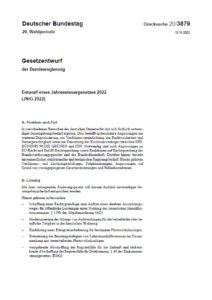
PDF German Bundestag – Printed Matter 20/3879
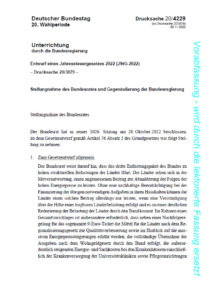
PDF German Bundestag – Printed Matter 20/4229
Lower taxes, more solar power - State Association for Renewable Energies NRW
The North Rhine-Westphalia Renewable Energy Association is counting on the tax breaks for smaller photovoltaic systems passed by the Bundestag to give a boost to the expansion of solar power across the state.
The German Bundestag today passed the 2022 Annual Tax Act, which includes a number of tax breaks for smaller solar power systems up to 30 kilowatts peak capacity. According to the law, operators of these small solar power plants will not only be exempt from income and trade tax on revenue from feed-in tariffs for solar power, but this exemption will also apply retroactively to January 1, 2022. Furthermore, the 19% value-added tax (VAT) on the purchase and installation of photovoltaic (PV) systems, including battery storage, will be eliminated starting next year. This VAT exemption already applies to orders placed this year, provided the system is commissioned next year. As a rule, potential solar system owners will save a four-figure sum on the purchase price.
“With the tax exemption for private photovoltaic systems, the coalition government is giving many homeowners a very good and long overdue incentive to invest in solar energy,” commented Reiner Priggen, Chairman of the North Rhine-Westphalia Renewable Energy Association (LEE NRW), on the changes. “The enormous bureaucratic effort associated with the regular VAT returns for the modest solar income has certainly deterred far too many homeowners from installing their own solar power system.”
Especially for owners of single-family and two-family homes, the new regulations offer the opportunity to generate up to 30,000 kilowatt-hours of clean electricity per year. Combined with switching to a heat pump for heating and potentially purchasing an electric vehicle, this presents a chance to produce the majority of the energy needed for electricity, heating, and driving. Given rising electricity prices, which are expected to average 50 cents per kWh nationwide soon, as well as the increasing prices of oil and gas, this is a good opportunity to reduce personal energy costs after making the necessary investments.
For climate protection, every solar power system means actively combating global warming. And given the more than 30-year warranty on the solar modules, investments in solar technology also offer a good long-term perspective.
The LEE NRW (North Rhine-Westphalia Renewable Energy Association) expects the tax breaks to provide a "strong boost" to the future expansion of solar energy in the state, according to its chairman, Priggen. Which is also necessary.
In the first ten months of this year, according to an analysis by the portal Solarbranche.de, almost 765 MW of new solar power capacity was installed across the state. This indicates that the expansion level of previous years will be surpassed by the end of the year (total expansion in 2021: approximately 656 MW gross, total expansion in 2020: approximately 605 MW gross). "This is encouraging, but still far too little," commented Priggen, Chairman of LEE NRW, on this development. "Statewide, we need an annual expansion of over 2,000 megawatts for the state government to achieve its own targets."
Press release dated December 2, 2022
State Association for Renewable Energies NRW eV
As the umbrella organization for the renewable energy sector in North Rhine-Westphalia, LEE NRW represents the interests of all sectors involved in the energy transition. Its members include medium-sized companies, associations, and citizens. Their shared goal: 100% renewable energy by 2045 – in the electricity, heating, and transportation sectors. Five regional LEE associations also serve as competent local contacts to achieve this goal. In North Rhine-Westphalia, the leading energy state, the sector is a major employer, providing 46,000 jobs and generating €10 billion in revenue in 2017.
Instead of just watching as before, everyone can now actively contribute to the energy transition and environmental protection
Instead of just watching from the sidelines as before, everyone can now actively contribute to the energy transition and environmental protection. This is not only energy-efficient, but alongside increasing one's own private energy independence, it's another important building block: the financial incentive, where everyone can only win. The environment, nature, people, and animals:
- A solar power system is more than just a generator of electricity. It is an important component of climate protection. Every solar power system contributes to stopping and limiting global warming.
- A solar power system operates emission-free and is based on solar energy. This renewable energy source is therefore not only environmentally friendly, but also climate-friendly.
- A solar power system has a lifespan of more than 30 years, guaranteeing a steady flow of electricity for your electronics. It also reduces CO2 emissions, thus protecting our atmosphere from climate change.
- Solar power systems are a very sustainable way to generate electricity because they use a renewable energy source: the sun. By installing a solar power system, you can therefore make a long-term contribution to climate protection.
- But solar panels offer even more advantages. They are very energy-efficient, as the solar modules convert sunlight directly into electricity. Furthermore, solar energy is also very environmentally friendly, since no emissions are produced during its generation. Thus, solar panels can help slow down global warming and protect the environment.
📣 Solar solutions for industry, retail and municipalities
Everything from a single source, specifically designed for solar solutions for large parking areas. Refinance or offset your future costs with your own electricity generation.
👨🏻 👩🏻 👴🏻 👵🏻 For private households
We're local! We provide consultation, planning, and installation services. We have attractive solar solutions for you, from your roof and patio to your parking space
🎯 For solar installers, plumbers, electricians and roofers
Consultation and planning including a non-binding cost estimate. We connect you with strong partners in photovoltaics.
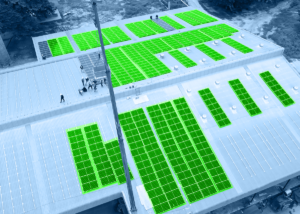
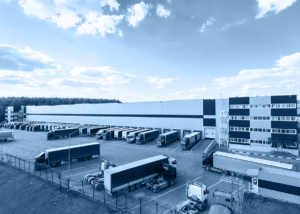
- Planning photovoltaics on warehouses, commercial buildings and industrial buildings
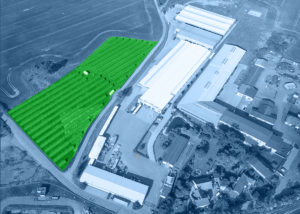
- Industrial plant: Planning a photovoltaic open-field system or open-area system
- Planning solar power systems with photovoltaic solutions for freight forwarding companies and contract logistics
- B2B Solar Systems and Photovoltaic Solutions & Consulting
That's why you should choose Xpert.Solar for your photovoltaic system consultation, planning and installation: Rooftop solar systems with electricity storage, solar terraces and/or solar carports!

Konrad Wolfenstein
I would be happy to serve as your personal advisor.
You can contact me by filling out the contact form below or simply call me on +49 7348 4088 965 .
I'm looking forward to our joint project.
Write to me


Xpert.Digital – Konrad Wolfenstein
Xpert.Digital is a hub for industry focusing on digitalization, mechanical engineering, logistics/intralogistics and photovoltaics.
With our 360° Business Development solution, we support renowned companies from new business to after-sales.
Market intelligence, smarketing, marketing automation, content development, PR, mail campaigns, personalized social media and lead nurturing are part of our digital tools.
You can find more information at: www.xpert.digital – www.xpert.solar – www.xpert.plus
Keep in touch