Panic before the IPO? 42 billion for the government: Why OpenAI suddenly offers the Trump administration 5 percent – Image: Xpert.Digital
State Capitalism 2.0: This deal will change Silicon Valley forever
Blackmail or master plan? How Washington is bringing the most powerful AI bosses to their knees
Global shutdown threatened: How the US is now taking absolute control over AI
The tech world is facing a historic paradigm shift. For years, Silicon Valley operated largely untouched by government interference, driven by an unwavering belief in the free market. But in the age of artificial intelligence, Washington is now taking a much tougher stance. To protect themselves from arbitrary regulations, potential breakups, and drastic export bans, the most valuable AI companies are resorting to unusual measures. At the center of this tectonic upheaval is OpenAI CEO Sam Altman. He has reportedly offered the Trump administration a multi-billion-dollar government stake in the company—a move that speaks volumes. Is this move a pragmatic maneuver to secure the company's massive IPO? A visionary concept to involve citizens in the technological revolution? Or simply political extortion in an era of asymmetrical power? This is an in-depth analysis of the new American state capitalism, forced deals, and the crucial question of who will ultimately hold absolute control over the AI of the future.
When the state becomes a shareholder: AI companies under pressure from Washington
Protection money or national interest? How the Trump administration is forcing Silicon Valley into partnership
At no point in recent US economic history has the tension between government power and private innovation been as pronounced as in the current debate surrounding artificial intelligence. What initially sounds like a pragmatic partnership, upon closer inspection, reveals itself to be a complex power structure in which regulation, national security, economic self-interest, and political calculation are inextricably intertwined. The recent report that OpenAI CEO Sam Altman allegedly offered the Trump administration a five percent government stake is not a spontaneous act of generosity, but rather the preliminary result of a negotiation process lasting more than a year between the world's most powerful AI company and the leading political power of the free world.
The backdrop for these negotiations could hardly have been more dramatic: Anthropic, OpenAI's fiercest competitor, had been forced to shut down its most advanced models for foreign users in mid-June 2026 by order of the US Department of Commerce – without any concrete explanation, based solely on security concerns. OpenAI itself had to restrict the general release of its latest model series, GPT-5.6, at the behest of the authorities, initially making it accessible only to a small circle of trusted partners. In such a climate of political unpredictability, the offer of government participation is no longer difficult to understand: It is the price of planning certainty.
The offer: $42 billion for political peace
The specific figure behind Altman's proposal is impressive. OpenAI was valued at $852 billion in its last funding round in March 2026—a record-breaking figure that underscores the company's importance to the global technology landscape. Five percent of that valuation equates to a stake worth approximately $42.6 billion. That's a substantial sum, even for a sovereign wealth fund. Altman reportedly discussed this idea with President Trump, Commerce Secretary Howard Lutnick, and Treasury Secretary Scott Bessent—and notably, Democratic Senator Bernie Sanders was also involved in the discussions, even though his perspective on government profit sharing differs fundamentally from that of the Trump administration.
The technical framework of the proposal stipulates that not only OpenAI, but all leading US AI developers – namely Anthropic, Google, and Meta – would each contribute five percent of their shares to a government fund. This fund would be structured along the lines of the Alaska Permanent Fund: a government vehicle that manages revenues from key strategic sectors and distributes the proceeds to the public. Whether the other companies mentioned would actually be willing to make such a contribution remains entirely unclear. From a purely market-oriented perspective, the prospect of Meta or Google voluntarily relinquishing company shares worth tens of billions of dollars seems rather unlikely, unless political pressure escalates significantly.
The precedent: How Intel gave 10 percent to the Trump administration
To understand how serious this scenario is, it's worth looking at the immediately preceding precedent. In August 2025, the US government under Donald Trump acquired approximately 9.9 percent of the shares in the struggling chip manufacturer Intel for a total of $8.9 billion, financed by undisbursed CHIPS Act subsidies that had been promised under the Biden administration. The purchase price of $20.47 per share was about four dollars below the closing market price at the time, effectively making the government a preferential investor.
The story behind this deal is revealing. President Trump had publicly and sharply criticized Intel CEO Lip-Bu Tan – particularly because of his past ties to China. However, after the government's investment was finalized, Trump demonstratively backed the company. Commerce Secretary Lutnick had previously articulated the logic of the deal: if the government invests billions in a company, it should also receive an equity stake in return. However, the government explicitly does not acquire voting rights or a seat on the board of directors with this investment, meaning it cannot directly influence corporate decisions. The shift in power occurs on a different level: whoever acts as a major shareholder wields informal influence – and sends a signal of loyalty to the outside world.
In return, Intel received the remaining $5.7 billion in subsidies, as well as $3.2 billion from the Secure Enclave program, thus securing an influx of fresh capital into a company that had posted an annual loss of $18.8 billion in 2024. The message of the deal was clear: cooperation is rewarded, resistance is punished.
The Alaska Fund as a blueprint: Resource returns for all citizens
The conceptual basis for Altman's proposed fund solution is not a Silicon Valley invention, but a proven policy instrument: the Alaska Permanent Fund, established in 1976 during the heyday of Alaskan oil production. Since then, the fund has managed 25 percent of the state's resource revenues and, since 1982, has distributed annual dividends directly to Alaskan residents. In 2025, assets under management totaled $83.3 billion, and every eligible Alaskan received a dividend of $1,000 – meaning that even in a year with low payouts, the fund directly benefited approximately 600,000 Alaskans.
The applicability of this model to the AI sector is conceptually appealing, but raises fundamental questions. In the case of the Alaska Fund, the state's legitimacy arises from the exploitation of natural resources belonging to the public. With AI companies, the situation is more ambiguous: While the foundations of AI progress—scientific findings, publicly funded research, and internet-based training data—were largely made possible through public funding, the resulting products are nevertheless the product of billions of dollars in private investment. The question of what share of these profits society can claim is highly complex, not only economically, but also from a legal-philosophical perspective.
Sam Altman has been actively promoting the idea of such a fund since early 2025, repeatedly emphasizing the societal role of the AI industry: the technology, which could dramatically increase humanity's productivity, should not solely benefit shareholders. This sounds like altruistic foresight – however, in conjunction with the simultaneous political pressure, it appears more like a calculated strategy for gaining legitimacy.
The other side: Anthropic and the “digital dividend”
While OpenAI is focusing on the fund solution, Anthropic has introduced another, no less interesting proposal into the discussion: the so-called digital dividend. This involves financing payouts to US citizens through a specific AI tax – an approach that conceptually lies somewhere between a sovereign wealth fund and a consumption tax. This proposal reflects Anthropic's particular situation, as it faced a considerably more strained starting position in its relationship with the Trump administration than OpenAI.
The Department of Defense temporarily classified Anthropic as a supply chain risk to national security after the company refused to release its AI models for domestic mass surveillance and fully autonomous weapons systems. Then, in June 2026, when Amazon researchers demonstrated that Anthropic's Fable 5 model could be tricked into revealing software vulnerabilities through targeted prompts, the situation escalated: Trump signed an executive order prohibiting foreign users from accessing Anthropic's latest models—effectively forcing the company to shut down its top-of-the-line products worldwide. Only after three weeks, and following a commitment to extensive security cooperation, were the export restrictions lifted.
Both incidents – involving OpenAI and Anthropic – illustrate a structural asymmetry: The US government possesses effective leverage to pressure technology companies, while the companies have few legal recourse when national security is invoked as justification. In this context, the offers of cooperation from both AI firms are less an expression of voluntary state loyalty than a rational adaptation to asymmetrical power structures.
Economic policy turning point: From market liberalism to industrial policy
The deepest contradiction in the current developments lies on the ideological level. Donald Trump has linked his entire political career to the credo of the free market and government restraint in economic decisions. The acquisition of government stakes in strategic technology companies, the targeted steering of research priorities through regulatory measures, and the de facto licensing of software models by government agencies are difficult to reconcile with this self-image – and are viewed with considerable skepticism by parts of his conservative base.
In economic policy literature, this development is more precisely described as an industrial policy shift: The state is once again taking an active role in shaping strategic industries, without necessarily declaring this a departure from the market principle. The pattern is not new. France, Germany, and South Korea have used state participation and direct intervention as instruments of economic policy for decades. What has changed is the speed and intensity with which the US is pursuing this path—in a sector that has hitherto been considered a prime example of private innovation.
The parallels to earlier eras of US industrial policy are undeniable. Government intervention in defense contractors, the direct subsidization of semiconductor production through the CHIPS Act, and now the government's stake in Intel all follow a recognizable logic: those who seek strategic control over key technologies must be prepared to combine market forces with government intervention. What is unique about AI regulation is that this logic is now being applied to software companies, which is historically unprecedented.
🎯🎯🎯 Data-driven B2B industry hub as a quasi-in-house solution

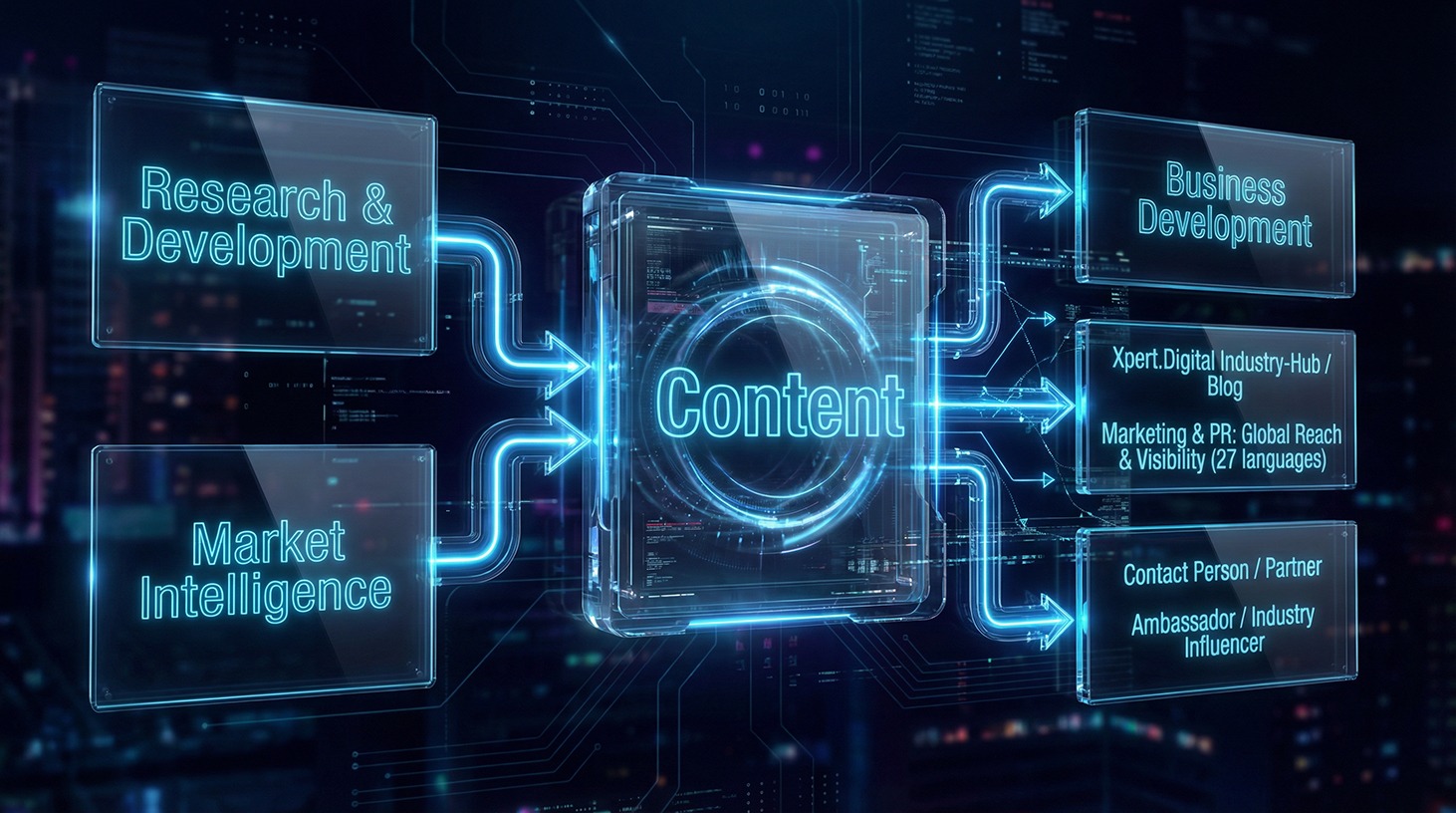
The quasi-in-house solution: How Xpert.Digital closes operational gaps in B2B marketing and sales – Smart Content-Driven Business - Image: Xpert.Digital
Xpert.Digital is a data-driven B2B industry hub led by Konrad Wolfenstein . The company acts as an external, quasi-in-house solution for industrial partners, closing operational gaps in marketing, content, and sales – without requiring additional resources on the client side.
More information here:
Government investment in OpenAI: Protection strategy or market control?
The question of IPO dynamics: Initial public offerings under political shadow
The economic implications of the current situation are compounded by the timing: Both OpenAI and Anthropic are in the crucial stages of their IPO preparations. OpenAI submitted the necessary documents to the US Securities and Exchange Commission (SEC) on June 8, 2026, formally initiating the IPO process. However, advisors have already recommended that management either postpone the IPO or lower its valuation targets, as volatile technology markets currently do not seem to justify the targeted valuation of one trillion dollars. Sam Altman apparently insists on the trillion-dollar valuation and prefers a postponement to 2027 to a reduction in the issue price.
The effects of this IPO uncertainty are already being felt: When reports of a possible IPO postponement began circulating in early July 2026, shares of Japanese investor SoftBank – one of the largest OpenAI investors with an investment of around $65 billion – plummeted by more than twelve percent. This demonstrates how closely global capital markets are already tied to the fate of AI companies that are not yet publicly listed. For investors, the precise IPO timeline is of immense practical importance: A later IPO delays the opportunity to realize value and prolongs the period of valuation uncertainty.
The government stake offered by Altman can also be interpreted in this context as a tool for IPO protection. If the US government is involved as a shareholder in OpenAI, the political likelihood increases that approval processes will be expedited, regulatory hurdles will remain low, and disruptive government interventions—such as the model shutdowns in June 2026—will be avoided. In other words, the five percent for the government is not a philanthropic gesture, but rather an insurance premium for the most valuable event in OpenAI's corporate history.
State Capitalism 2.0: When national security becomes an economic strategy
The increasing intertwining of national security and economic strategy in the AI sector is a global phenomenon – but in the US, it takes on a particularly acute form. In a strategy paper submitted to the White House, OpenAI itself defined AI as a matter of national security and called for far-reaching measures to secure America's leading position. Export controls for AI models were also promoted as a strategic instrument. This is noteworthy because the company is now suffering under the very regime it helped create: The export restrictions, primarily aimed at Chinese competitors, are now impacting OpenAI and Anthropic themselves in their international business.
This structural irony highlights a fundamental dilemma of AI policy: those who instrumentalize national security arguments to push competitors out of the market also create instruments that can be turned against themselves. The line between legitimate security regulation and economic protectionism is particularly difficult to draw with AI models, since security risks are diffuse, while economic interests are concrete and measurable.
From a European perspective, this development is viewed with mixed feelings. On the one hand, the US export restrictions on Anthropic models confirm European concerns about technological dependence on US providers – the European Commission reacted promptly with sharp criticism, describing the measures as potentially discriminatory trade practices. On the other hand, these developments show that Europe still has considerable ground to make up in developing its own AI capabilities. The Austrian initiative to urge the EU to seriously consider establishing Anthropic in Europe remains symbolic for now – but it clearly demonstrates that political risk perception, even in the target market of Europe, has noticeably increased the strategic importance of AI sovereignty.
Economic implications of competition: market, monopoly and state privilege
From a competition economics perspective, the scenario of government stakes in leading AI companies raises serious questions. If the US government holds shares in OpenAI, Anthropic, Google, and Meta, a structural convergence of interests arises between the state and precisely those companies that are supposed to be regulated. Such regulatory capture in reverse—where the regulator becomes a shareholder of the regulated—is well-documented in legal and economic scholarship and typically leads to a systematic undervaluation of competitive interests in favor of established players.
For emerging AI startups lacking the political access required for inclusion in the hypothetical sovereign wealth fund, such a system would effectively create higher barriers to market entry. The government-backed legitimacy of large AI corporations would cement their market position, while innovative challengers would have to contend not only with resource disadvantages but also with the political favoritism of established players. This dynamic would contradict the stated goal of boosting US economic growth through AI promotion.
Furthermore, there is the question of international competitiveness: If US AI companies operate de facto as quasi-state actors, their positioning in the international market becomes ambivalent. On the one hand, they enjoy government protection and subsidies; on the other hand, they become politically compromised suppliers for foreign partners and customers, whose products can be subject to restrictive export controls at any time. For corporate clients in Europe, Asia, or Latin America, this increases the sourcing risk and could cast alternative providers—including Chinese competitors like DeepSeek—in a more favorable light.
The societal dimension: Who benefits, who pays?
Beyond the corporate strategy and power politics perspective, the distributional dimension of the issue also deserves sober consideration. The core argument for government participation in AI companies is that the economic gains of the AI revolution should be distributed more broadly than in previous technological waves, where the fruits of progress primarily benefited investors. In a society with growing inequalities and increasingly visible consequences of automation, this argument has political appeal – across party lines, as demonstrated by the shared interest of Trump and Sanders in the topic.
The Alaska model, however, also reveals the limitations of this logic: In 2025, more than 600,000 Alaskans received a dividend of just $1,000—historically the lowest real amount since the fund's inception, adjusted for inflation. Had the original distribution formula been applied, the amount would have been around $3,800—but lawmakers opted for a lower payout to fund government education spending. Political control over the distribution amount thus means that the dividend is always weighed against other government spending in the democratic process—and is therefore under structural pressure.
At the same time, even if the government holds 5 percent of OpenAI's valuation, it remains unclear how and when this value will translate into actual payments to citizens. A privately held company does not pay dividends; a government stake in a startup is initially illiquid. Only a successful IPO would make the theoretical value realizable – further increasing the political and economic significance of the still-pending IPO.
Systemic Risks: Government Investment in AI in a Time of Technological Change
There is another, less discussed risk in the model of government investment in AI: the issue of technological obsolescence. The AI sector is characterized by extraordinary dynamism, in which today's market leaders can be overtaken within a few years by new competitors with superior architectures. OpenAI's valuation of $852 billion in March 2026 is based on current earnings expectations and a specific market positioning—both of which can change rapidly.
When the state holds a five percent stake in a company that shortly thereafter loses its market leadership, a classic problem of state industrial policy arises: the willingness to cling to a once strategic stake that has become economically devalued because a political withdrawal is more difficult than a private-sector one. The Intel example vividly illustrates this risk: Intel had recorded a loss of $18.8 billion in 2024 and was in deep crisis before the government intervened. The state's stake cannot now be sold again without political face loss, even if the economic recovery takes longer than hoped.
For a hypothetical sovereign wealth fund focused on AI, this risk multiplies with the number of companies involved. A fund holding OpenAI, Anthropic, Google, and Meta simultaneously diversifies individual company risk, but remains highly exposed to a sector-wide downturn in AI, which must be considered not a hypothetical but a real scenario. Technology bubbles and the subsequent valuation correction are historically regular occurrences, and there are no convincing arguments as to why the AI sector should be immune to them.
Power politics in real time – and its economic consequences
What is currently happening between Washington and Silicon Valley is far more than a debate about company shares. It is the constitution of a new economic and political order in which the state actively shapes the strategic development of the most transformative technology since the internet – employing instruments that are perceived by those affected as means of coercion, but are politically marketed as a partnership.
Altman's proposal for a five percent government stake is, in this context, a rationally calculated response to asymmetric political pressure. The Intel government stake has proven that the model works—at least in the short term, in that it can relieve immediate pressure on a company. Whether it will lead in the long term to a more efficient industry, broader societal gains, or a more stable geopolitical position for the US in the global AI race remains to be seen.
What is certain is this: The era of thinking that AI companies can be politically neutral toolmakers is over. They have become strategic players in a geopolitical competition whose rules are still being written—and whose creation they themselves are actively helping to shape. Sam Altman understood that political affiliation in Washington can be the most valuable resource, one that no venture capitalist in the world can offer. The offer to Trump should therefore not be interpreted as a weakness, but as a strategic move by an entrepreneur who has learned the true nature of the game he is playing.
Your global marketing and business development partner
☑️ Our business language is English or German
☑️ NEW: Correspondence in your native language!

Konrad Wolfenstein
I and my team are happy to be available to you as your personal advisor.
You can contact me by filling out the contact form here wolfenstein@xpert.digital:or simply call me at +49 7348 4088 965. My email address is
I'm looking forward to our joint project.
☑️ SME support in strategy, consulting, planning and implementation
☑️ Creation or realignment of the digital strategy and digitization
☑️ Expansion and optimization of international sales processes
☑️ Global & Digital B2B trading platforms
☑️ Pioneer Business Development / Marketing / PR / Trade Fairs
📈🚀 From visibility to trust 👀🤝 Your scalable path with Xpert.Digital


From visibility to trust: Your scalable path with Xpert.Digital - Image: Xpert.Digital
In industrial B2B, sustainable business relationships rarely emerge overnight. They develop step by step – through visibility, professional relevance, recurring touchpoints, and growing trust. Xpert.Digital's 4-stage model addresses precisely this: It offers a structured path that begins with a manageable entry point and can evolve into deeper collaboration in business development if needed.
Instead of relying on loud marketing promises, this model puts the relationship at the forefront. Companies start with clearly defined, easily calculable measures and then decide, based on their own experience, how far they want to expand the collaboration. A key factor for this undisturbed trust-building process: The platform completely avoids annoying advertising ads, so the editorial focus remains solely on the companies' expertise.
More information here: