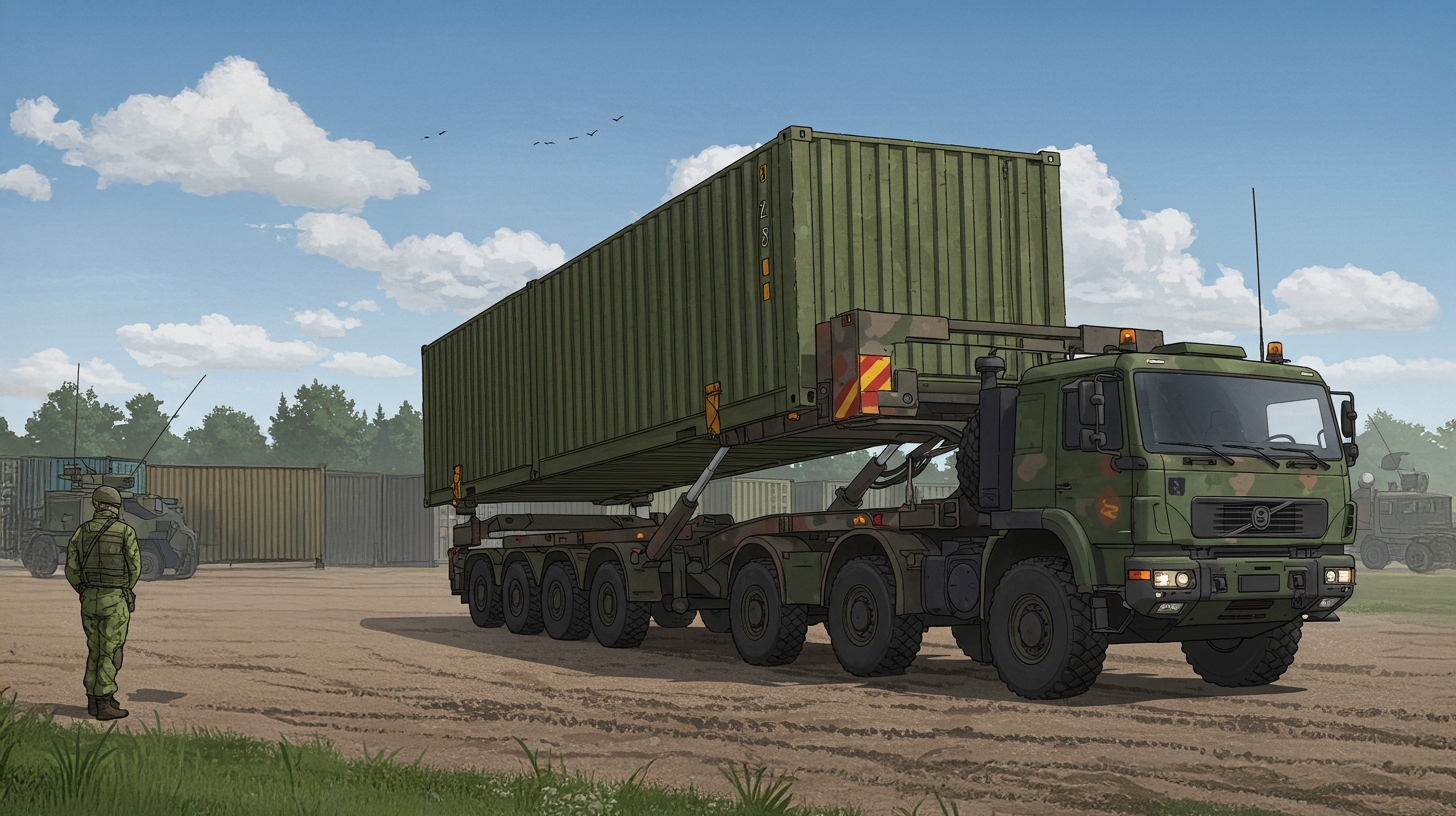
Swap body systems for containers with swap body platforms: The modern logistics of the German Armed Forces – Creative image: Xpert.Digital
Swap body systems for containers as a key technology for the realignment of the German Armed Forces
How the German Armed Forces are preparing for new security policy challenges with smart container logistics
The German Armed Forces are currently undergoing a comprehensive modernization of their logistical capabilities, driven significantly by the changing security situation in Europe. At the heart of this transformation is the procurement of innovative swap body systems for containers with swap body platforms, considered a key technology for the efficient and sustainable supply of the armed forces.
These technological innovations are not only a response to the increased demands of NATO membership, but also a direct result of the German Armed Forces' strategic realignment towards national and collective defense. The procurement projects, which are being handled via the parliamentary instrument of 25-million-euro proposals, represent one of the largest investments in military logistics in recent years.
Related to this:


The parliamentary control system for the 25 million euro proposals
German procurement of military equipment is subject to strict parliamentary oversight, ensured by the 25-million-euro approval process. This regulation, enshrined in the Federal Budget Code and the Federal Armed Forces Financing and Special Assets Act, obliges the Ministry of Defense to submit all procurement and development projects with an investment volume of 25 million euros or more to the Budget Committee of the German Bundestag for prior approval.
The process begins with the Federal Ministry of Defense drafting a substantive proposal, which is then formalized by the Federal Ministry of Finance and submitted to the Budget Committee. Only after parliamentary approval may the corresponding contracts with industry be concluded. This procedure ensures that major defense investments are subject to democratic control and are handled transparently.
The system has proven its worth in practice and enables Parliament to actively participate in shaping military procurement policy. In 2024, for example, a total of 38 such proposals with a total volume of over 20 billion euros were approved, underscoring the importance of this control mechanism.
Technical fundamentals of swap body systems
The German Armed Forces' modern swap body systems are based on highly developed wheeled vehicles in the 15-ton payload class, built on the proven HX vehicle family from Rheinmetall MAN Military Vehicles. These vehicles are characterized by their exceptional off-road capability and robustness, making them ideal for use in a wide variety of terrains and climatic conditions.
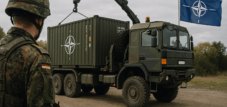
The core of the technology is the hook loader developed by the Finnish company Hiab, which enables swap body platforms and containers to be picked up and set down without external aids such as cranes or forklifts. This self-sufficiency is crucial for military operations, as it eliminates reliance on additional equipment and significantly increases tactical flexibility.
The vehicles are designed in an 8x8 configuration, meaning all eight wheels are driven, ensuring maximum traction in difficult terrain. With a top speed of 90 km/h and a range of 500 km, they offer the necessary mobility for extensive logistics operations.
Variety of transport solutions
The swap body systems can accommodate various types of load carriers, highlighting their versatility and adaptability to diverse transport requirements. Standard options include swap body platforms in various sizes, 20-foot ISO containers, tank containers for water and fuel, and specialized container accessories.
The swap body trucks are offered in two main versions: large and small, both optionally equipped with tarpaulin and frame. This flexibility allows for the selection of the optimal configuration depending on the cargo and operational scenario. Of particular note is the ability to transport standardized 20-foot ISO containers, ensuring interoperability with civilian logistics systems and allied armed forces.
An innovative element is the MuConPers container, a specially developed protected container for transporting personnel, offering secure transport for up to 18 soldiers. This development underscores the system's adaptability to various military requirements beyond mere material transport.
Protected and unprotected vehicle variants
The swap body systems are offered in two basic versions: protected and unprotected variants. The protected vehicles feature specially designed driver's cabins that offer protection for up to three occupants against the effects of shrapnel, infantry ammunition, and landmines. This protective equipment is particularly important for operations in crisis zones or for supplying forward positions.
The robust driver's cabins of the protected version are recognizable by their characteristic small side windows, which, while somewhat restricting the field of vision, simultaneously ensure maximum ballistic protection. Despite the additional weight from the armor, the vehicles retain their mobility, achieved through the powerful drivetrain and sophisticated chassis technology.
The unprotected variants, on the other hand, are designed for use in secure areas or in the hinterland, where the threat from enemy fire is low. Their lighter weight offers advantages in terms of transport capacity and fuel consumption, while they are also more cost-effective to procure and maintain.
Procurement scope and financing structure
The current procurement projects for swap body systems comprise several tranches, which are being handled via a framework agreement concluded in June 2020 with Rheinmetall MAN Military Vehicles. This framework agreement provides for the delivery of up to 4,000 vehicles over a period of seven years, representing one of the largest military vehicle procurements in the history of the German Armed Forces.
The latest orders comprise 1,515 vehicles, 265 of which are protected versions, as well as 500 swap body trucks and 500 tarpaulin and frame superstructures. The order is worth over €920 million and is largely financed from the special fund of the German Armed Forces, which was established after the Russian attack on Ukraine.
Another significant order comprises 933 unprotected and 30 protected swap body systems, as well as 400 swap body platforms and 1,000 tarpaulin and frame superstructures. This diversity in the orders underscores the Bundeswehr's systematic approach to modernizing its logistics capabilities.
Strategic importance for NATO commitments
The procurement of swap body systems is closely linked to the increased requirements of NATO membership. Germany has committed to providing a fully equipped division for the Alliance's Very High Readiness Joint Task Force (VJTF) by 2025. This VJTF requires particularly high-performance and reliable logistics systems to ensure rapid deployment and resupply.
The first vehicles from the procurement were already slated for deployment in the NATO rapid reaction force in 2022. This prioritization demonstrates the strategic importance of the systems for Germany's alliance commitments and underscores the need for accelerated procurement.
Interoperability with allied armed forces is another important aspect that was considered during the development of the systems. The use of standardized ISO containers and compatibility with international logistics standards significantly facilitate cooperation in multinational operations.
Hub for Security and Defense - Advice and Information


Hub for Security and Defense - Image: Xpert.Digital
The Security and Defence Hub offers expert advice and up-to-date information to effectively support companies and organizations in strengthening their role in European security and defence policy. Working closely with the SME Connect Defence Working Group, it particularly promotes small and medium-sized enterprises (SMEs) that wish to further develop their innovative capacity and competitiveness in the defence sector. As a central point of contact, the Hub thus creates a crucial bridge between SMEs and European defence strategy.
Related to this:
Major investments for rapid supply: The modernization of the German Armed Forces' logistics
Technological innovations and efficiency improvements
Modern swap body systems offer significant improvements over previous logistics solutions. The most important advantage lies in the considerably reduced handling time: While conventional systems require complex loading and unloading processes with additional equipment, the new vehicles can independently pick up or drop off their loads in just a few minutes.
This increase in efficiency has a direct impact on the tactical capabilities of the armed forces. Vehicles can switch between different transport tasks more quickly, thereby reducing the total number of vehicles required while simultaneously increasing transport capacity. This time saving can be crucial, especially in time-critical situations such as supplying ammunition to combat units.
The integration of modern communication and command systems into the vehicles also enables better coordination and monitoring of logistics operations. Systems such as SEM 80/90, Tetrapol, and SatCom, as well as ruggedized tablet PCs with MOBIKAN software, ensure a constant connection between the vehicles and the command centers.
Challenges in implementation
Despite the technical advantages, the introduction of the new swap body systems also presents several challenges. Training personnel on the new vehicles requires extensive training programs, which have already begun with the delivery of the first protected vehicles. The complexity of the systems, especially the protected versions with their special safety features, makes thorough training essential.
The upkeep and maintenance of these state-of-the-art vehicles also presents new challenges for the German Armed Forces. The integration of various systems, from the swap body system to the electronic communication systems, requires specialized maintenance personnel and appropriate workshop equipment.
Furthermore, existing logistics structures must be adapted to the new possibilities. The standardization of load carriers and the optimization of loading processes require a revision of established procedures and potentially investments in additional infrastructure.
Economic aspects and industrial cooperation
The procurement of the swap body systems has significant economic implications for the German defense industry. Rheinmetall MAN Military Vehicles, the joint venture of Rheinmetall and MAN Truck & Bus, benefits not only from the direct orders but also from the opportunity to export its technology and develop international collaborations.
The collaboration with international suppliers, such as the Finnish company Hiab for the hook loaders, demonstrates the global interconnectedness of modern defense projects. This international cooperation brings both advantages in the form of technology transfer and cost sharing, as well as dependencies that must be considered in strategic planning.
Using the German Armed Forces' special funds for financing allows for large investments to be made outside of regular budget constraints. This not only accelerates procurement but also provides long-term planning security for the companies involved.
Future developments and outlook
The current procurement projects are just the beginning of a comprehensive modernization of the German Armed Forces' logistics. With the option to procure up to 4,000 vehicles under the existing framework agreement, a gradual renewal of the entire transport fleet is planned. This long-term perspective allows for systematic planning of the rollout while simultaneously benefiting from economies of scale.
The integration of artificial intelligence and autonomous driving functions is expected to shape the next stage of development for swap body systems. Vehicles are already being prepared to accommodate future technologies in order to maximize their service life and facilitate retrofitting.
The experience gained from the initial rollout of the systems will be continuously incorporated into further development. In particular, feedback from users within the units will help to further optimize the systems and adapt them to practical requirements.
European dimension and international cooperation
The German Armed Forces' swap body systems are part of a larger European trend toward the standardization and interoperability of military logistics systems. Similar vehicles are already in use by Great Britain, Australia, New Zealand, Norway, Sweden, and Denmark, laying the foundation for international cooperation and joint operations.
The European Defence Agency plays a key role in coordinating such procurement programs and promotes cooperation between member states. This not only leads to cost savings through joint development but also strengthens the technological base of the European defence industry.
Compatibility with NATO standards also ensures that German systems can be seamlessly integrated into multinational operations. This interoperability is particularly important for credible deterrence and collective defense within the framework of the alliance.
Defense modernization: Container swap body systems strengthen the German Armed Forces and NATO partnership
The procurement of swap body systems for containers with swap body platforms represents a significant milestone in the modernization of Germany's defense capabilities. This multi-billion euro investment over the coming years will fundamentally transform the Bundeswehr's logistical capacities and adapt them to the requirements of the 21st century.
The technological innovations employed in these systems will not only increase the efficiency of military logistics but also open up new tactical possibilities. The ability to transport supplies quickly and flexibly is crucial for the sustainability of armed forces in modern conflicts.
The parliamentary oversight system for the €25 million procurement proposals has proven effective in this case, ensuring that democratic control and transparency are maintained even in large-scale armaments projects. This strengthens public trust in defense policy and contributes to the legitimacy of the investments.
International cooperation and adherence to NATO standards demonstrate that Germany takes its responsibility as a reliable alliance partner seriously and is prepared to make the necessary investments for collective security. The swap body systems are therefore not only a technological advancement, but also an important signal of Germany's readiness to fulfill its role in the European and transatlantic security architecture.
Your dual-use logistics experts
Dual-use logistics experts - Image: Xpert.Digital
The global economy is currently undergoing a fundamental transformation, a watershed moment that is shaking the foundations of global logistics. The era of hyper-globalization, characterized by the relentless pursuit of maximum efficiency and the "just-in-time" principle, is giving way to a new reality. This new reality is marked by profound structural breaks, geopolitical power shifts, and increasing fragmentation of economic policy. The once taken-for-granted predictability of international markets and supply chains is dissolving and being replaced by a period of growing uncertainty.
Related to this:
Consulting - Planning - Implementation

Markus Becker
I would be happy to serve as your personal advisor.
Head of Business Development
Chairman SME Connect Defense Working Group
Consulting - Planning - Implementation
Konrad Wolfenstein
I would be happy to serve as your personal advisor.
You can contact me at wolfenstein∂xpert.digital or
Just call me on +49 7348 4088 965 .