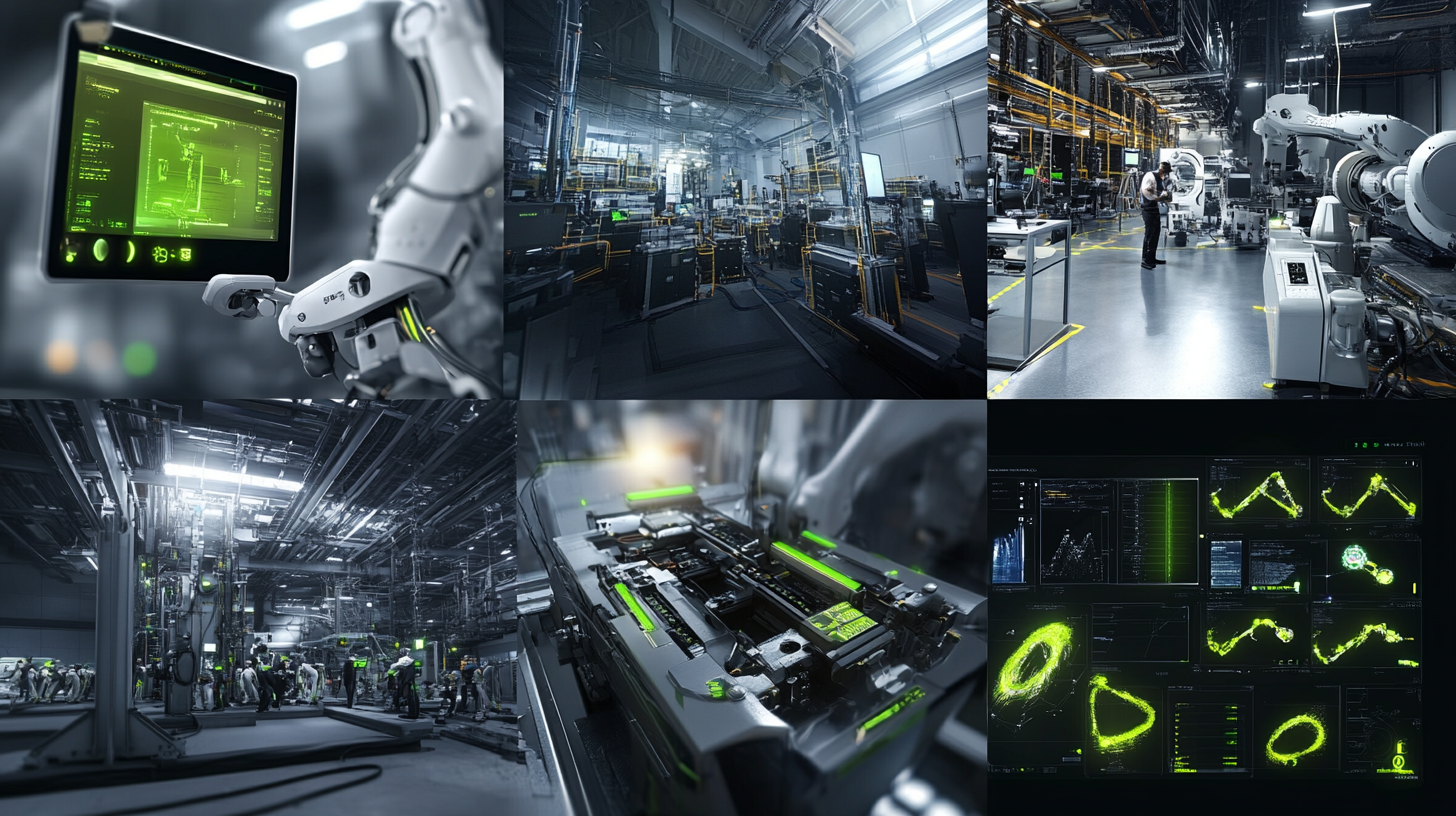
Supply chain optimization and predictive maintenance in the manufacturing industry: AI is changing the industry – Image: Xpert.Digital
Opportunities for the economy: How AI will further advance the manufacturing industry in 2025
The manufacturing industry is facing a fundamental shift, and one of the driving forces behind it is artificial intelligence (AI). By 2025, AI will be perceived not only as a supporting tool, but as a strategic engine that drives innovation, efficiency, and sustainability in the sector. This transformation will not only change work processes, but will also have a profound impact on business models, sustainability strategies, and the competitiveness of companies.
AI as a driving force of the manufacturing revolution
Automation in the manufacturing industry has reached a new level. While AI has primarily been used to automate repetitive processes, it is now capable of making complex decisions and dynamically adapting production systems. "AI is becoming a strategic partner for companies, not only optimizing processes but also enabling new business models," emphasizes an industry expert.
With its ability to analyze massive amounts of data in real time, AI enables manufacturing companies to achieve unprecedented agility. Machines learn to monitor and adjust their performance independently, while companies can make accurate predictions about future developments. Predictive maintenance is just one example of how AI can reduce costs and minimize downtime.
Sustainability as the top priority
One key area where AI will play a pivotal role by 2025 is sustainability. The importance of environmental, social, and governance (ESG) factors has increased significantly in recent years, and many manufacturing companies have set ambitious climate targets. However, a gap often exists between the investments companies make and the areas with the greatest environmental impact. AI helps to close this investment gap.
AI systems can analyze data along the entire value chain, from raw material procurement and production to logistics. This allows companies to use their resources more efficiently, reduce emissions, and minimize waste. "AI gives us the ability not only to make sustainable decisions but also to adapt them in real time," says an industry representative.
One example of this is the optimization of supply chains. AI can calculate CO₂ emissions along transport routes and help companies choose more environmentally friendly alternatives. At the same time, production processes are controlled to minimize energy consumption. Intelligent algorithms ensure that machines only run when they are actually needed and suggest energy-efficient alternatives.
Increased efficiency through intelligent automation
Besides promoting sustainability, AI is also driving efficiency gains in manufacturing. The use of AI-supported robots and production systems significantly increases productivity. These systems can flexibly adapt to changing production requirements, which is a major advantage, especially in times of global uncertainty.
AI-based solutions enable products to be brought to market faster while simultaneously ensuring quality. Production errors are detected and corrected early, thus minimizing waste. "AI is pushing the boundaries of what is possible in manufacturing. We are seeing a completely new dimension of flexibility and precision," says an industry expert.
New business models and opportunities through AI
AI also opens up new business models for manufacturing companies. Analyzing large amounts of data makes it possible to identify trends and customer needs early on. This allows companies to offer personalized products and services tailored to specific customer requirements. Servitization, the integration of services into products, will be easier to implement thanks to AI.
Another example is the so-called "lights-out manufacturing" factory, where fully automated production facilities operate without human presence. This vision is becoming a reality through AI technologies such as machine learning, image recognition, and autonomous robotics.
Challenges and opportunities in dealing with AI
Despite all its advantages, the use of AI also presents challenges. One of the biggest hurdles is integrating the technology into existing systems. Many manufacturing companies face the question of how to successfully implement AI without disrupting their existing processes. Strategic partnerships and collaboration with technology providers play a crucial role here.
Another aspect is the handling of data. "Data is the new oil of the manufacturing industry, but it must be processed and used correctly," explains one expert. Companies must ensure that their data quality is high and that data protection guidelines are followed.
The impact on the world of work should not be underestimated. While AI creates new jobs, it simultaneously renders some traditional tasks obsolete. Companies must therefore invest early in the further training of their employees to facilitate the transition. The role of humans will change: instead of manual labor, the focus will shift more towards monitoring and controlling intelligent systems.
A look into the future: The manufacturing industry in 2025
By 2025, AI will usher in a new era for the manufacturing industry. Companies that strategically adopt the technology will increase their competitiveness while simultaneously operating more sustainably. By integrating AI, they can not only reduce costs but also make a positive contribution to society.
In summary, AI will drive the following developments in the manufacturing industry:
- Sustainable production: Less resource consumption, fewer emissions, more efficiency.
- Flexibility and agility: Faster adaptation to market changes and individual customer requirements.
- New business models: From servitization to the fully automated "lights-out factory".
- Increased efficiency: Higher productivity at lower costs.
- Transformation of the working world: New opportunities for highly qualified jobs.
The use of AI is no longer an optional add-on, but a crucial factor for the future of the manufacturing industry. Companies that invest in this technology now are laying the foundation for sustainable success in a rapidly changing world.
🔄📈 B2B trading platform support – Strategic planning and support for export and the global economy with Xpert.Digital 💡


B2B trading platforms - Strategic planning and support with Xpert.Digital - Image: Xpert.Digital
Business-to-business (B2B) trading platforms have become a critical component of global trade dynamics and thus a driving force for exports and global economic development. These platforms offer significant advantages to companies of all sizes, especially SMEs—small and medium-sized enterprises—which are often considered the backbone of the German economy. In a world where digital technologies are increasingly prominent, the ability to adapt and integrate is crucial for success in global competition.
More information here:
Artificial intelligence in the manufacturing industry: Developments until 2025
The role of AI in the manufacturing industry
Artificial intelligence (AI) is playing an increasingly important role in the manufacturing industry and is expected to bring about profound changes in 2025. It is no longer just a practical tool for automating production steps, but an increasingly strategic enabler for the transformation towards greater competitiveness, efficiency, and sustainability. Wherever AI-supported systems demonstrate their capabilities, opportunities arise that extend far beyond mere process optimization. But what exactly does this mean for companies, the workforce, and the overall economic environment?
“AI doesn’t just automate processes; it can now make manufacturing companies more flexible overall and enable them to align technological progress with ESG goals.” This statement illustrates that AI should not be limited to individual aspects of production. Especially in a time when companies are increasingly being measured against environmental and social standards, artificial intelligence makes a significant contribution to the orientation and management of complex value chains. The following sections provide an insight into how AI could be used in the manufacturing industry by 2025 and what changes this will bring to the economy.
1. From automation to strategic transformation
AI-based automation processes are no longer a rarity in the manufacturing industry. Many companies already use robotics systems, machine learning algorithms, and data-driven platforms to make individual production steps more efficient and cost-effective. The next evolutionary step is to transform this targeted efficiency gain into a comprehensive strategic transformation. AI systems can independently optimize processes, react to changes in demand, and provide early warnings of potential risks through predictive analytics. This not only makes production itself more intelligent and flexible, but also enables the entire company to adapt more quickly to dynamic market demands.
"It is no longer just a tool, but a strategic enabler of change." This change is manifested above all in the fact that more and more companies are recognizing how much AI can contribute to sustainable, resource-efficient, and simultaneously competitive production. Even if implementation initially requires investments in time, money, and training, these efforts will pay off as soon as the corresponding AI solutions are efficiently and readily available integrated into daily operations.
2. Sustainability as a corporate focus and AI as a key
Interest in sustainability has increased significantly in recent years. At the same time, many companies are aware that they must be measured against clear climate targets and strict ESG criteria (Environment, Social, Governance). A growing gap is emerging between the desire to operate sustainably and its actual implementation. This is often because companies don't know precisely in which areas their investments could have the greatest impact. This is where AI comes in: With its ability to analyze vast amounts of data, draw conclusions, and provide real-time recommendations, it can help to more effectively direct capital to areas with high environmental and climate relevance.
AI analytics platforms, for example, make it possible to monitor a product's entire life cycle, from raw material selection and transportation to recycling. Based on this information, it's possible to assess which manufacturing steps are particularly resource-intensive. Furthermore, it reveals where optimizations can be made regarding energy and water consumption, pollutant emissions, or waste reduction. AI-based forecasts also show where relatively small changes can have a significant environmental impact. In this way, the investment gap in sustainability is gradually closed.
3. Optimization of production processes through predictive analysis
A key application of AI in manufacturing is predictive maintenance. This involves monitoring machines and equipment to predict and prevent errors and failures early on. Data science models continuously analyze measurements such as vibrations, temperature, and product-specific quality parameters, comparing them with historical data patterns. As soon as signs of an impending defect appear, the system can raise an alarm. This enables companies to prevent costly production downtime and extend the lifespan of their equipment. The result is less material wear, reduced energy consumption thanks to optimally functioning machines, and increased uptime. Thus, cost savings are not only a direct consequence of such AI applications, but also essential steps toward more sustainable resource use.
Production planning can also be made increasingly efficient with the help of AI. Fully integrated systems allow the entire manufacturing process to be networked: from order entry and warehouse management to delivery logistics. AI identifies bottlenecks and unused capacity, optimizes production plans, and thereby increases the utilization of machines and labor. At the same time, the risk of overproduction is reduced, which in turn lowers the need for storage space and reduces raw material consumption. When intelligent algorithms are used to predict sales and material requirements based on customer behavior or seasonal conditions, the entire supply chain can be managed much more flexibly and responsibly.
4. Adaptable value creation networks
Today's manufacturing companies increasingly operate within globally networked supply chains. This demands not only seamless coordination of suppliers, producers, and distributors, but also the ability to react flexibly to short-term external influences. Events such as natural disasters, economic crises, or political conflicts can lead to disruptions in supply chains. "AI is capable of monitoring the sustainability of the entire value chain and can help companies become more environmentally friendly." This is precisely one of the greatest advantages of AI-supported systems: through data analysis and simulations, they can identify potential bottlenecks in advance and suggest courses of action to minimize the risk of supply problems.
Furthermore, AI will play a more important role in the global coordination of transport routes. Intelligent route suggestions and real-time data will enable savings in kilometers, time, and fuel by, for example, avoiding traffic congestion and consolidating or combining deliveries. This not only reduces costs but also makes a valuable contribution to climate protection. For many companies, such optimizations are at the forefront of their ESG goals. AI can directly address this and enable fact-based decisions in favor of resource-efficient logistics.
5. New business models and increased value creation
Beyond efficiency improvements, AI opens up new perspectives for innovative business models in the manufacturing industry. One example is service models similar to the "Equipment as a Service" concept. In this model, the machine or system remains the property of the manufacturer, while the customer pays for its use. AI systems monitor maintenance intervals and performance in real time, ensuring optimal system availability. Both sides benefit: the customer receives reliable production conditions, and the manufacturer has a continuous revenue stream. Furthermore, this approach offers sustainable advantages, as manufacturers have a direct interest in keeping their equipment in perfect working order for as long as possible, thereby minimizing resource waste.
Furthermore, AI also enables data-driven services, such as digital twins. These create a virtual representation of the real-world production environment to run simulations and test potential optimizations before implementation. This allows for the targeted development of measures that accelerate production processes and reduce costs without incurring unforeseen risks. Such digital twins have already become established in pioneering industries and will be part of the standard repertoire in an increasing number of sectors by 2025.
6. Qualification requirements and employee training
With the increasing prevalence of AI in the manufacturing industry, the demands on the workforce are also changing. While certain routine tasks are becoming increasingly automated, the demand is growing for personnel with expertise in data analysis, machine learning, and process control. Employees must learn to understand, monitor, and optimize AI systems. It is therefore crucial that companies invest in training programs early on to equip their employees with the skills needed in these future-oriented fields. This not only benefits the employees themselves but also secures the company's long-term competitiveness.
At the same time, there is an opportunity for new job profiles to emerge in the manufacturing sector. AI specialists and data analysts often work closely with production experts to develop digital solutions and integrate existing systems. If implemented successfully, this will also increase the attractiveness of the entire sector, as the boundaries between traditional production and modern IT become increasingly blurred. The challenge lies in making this transformation socially responsible by involving employees in the process, offering them career prospects, and understanding further training as part of a future-oriented corporate strategy.
7. Transparency and acceptance
As promising as the opportunities offered by AI are, it is crucial that this technology is used responsibly. Particularly in areas where human error or incomplete data can have fatal consequences, it is essential to ensure that AI systems are reliable and robust. To achieve this, companies need transparent processes and clear guidelines on how AI solutions are developed, trained, and maintained. Trustworthy AI means not only that the results are accurate and comprehensible, but also that data protection and ethical guidelines are adhered to.
Experience shows that employee acceptance increases when the benefits are clearly explained and there is no fear of unexpected or "secret" AI decisions. Therefore, open communication about the potential and limitations of AI is essential. Training and information sessions help to alleviate anxieties and foster a shared understanding of these new technologies. Ultimately, AI will operate most effectively where it is perceived as a trustworthy support tool in daily work.
8. Future Outlook: Reorientation of Business Strategies
The changes that AI will trigger in the manufacturing industry by 2025 cannot be limited to isolated projects. Rather, companies are expected to adapt their entire business strategy to sustainably benefit from AI technologies. Production, logistics, research, development, and management are increasingly merging, as AI enables an integrated perspective on all business processes. Decision-makers and managers are tasked with embracing these developments and structuring their organizations in such a way that AI innovations can be rapidly tested and implemented.
At the same time, a long-term perspective is gaining in importance. "For many manufacturing companies, sustainability is a top priority." Unified AI platforms enable the networking of all departments, allowing information to be shared and analyzed in real time. Whether it's energy consumption, material procurement, or personnel planning – AI provides insights into how processes can be refined or restructured to become more economically efficient and sustainable. This continuous improvement process can become a significant competitive advantage and positively impact a company's image. Companies that commit to this early on are well-positioned to expand their market share and establish themselves as pioneers in green and innovative manufacturing.
9. Economic and social implications
The economic opportunities arising from the use of AI are enormous. At the same time, there are also societal impacts that cannot be ignored. Increased productivity and decreasing costs can lead to certain services becoming more affordable and thus accessible to a wider population. Examples include more durable products that require less frequent repairs or replacements, or innovative manufacturing processes that strengthen regional production and reduce long transport routes.
At the same time, a highly AI-driven manufacturing landscape could give rise to new technological conflicts if, for example, individual regions or countries have less access to relevant data or technical resources. International cooperation and responsible regulation can help to avoid such imbalances. Since many companies use global supply chains, collaboration with suppliers also plays a crucial role in ensuring that AI applications are used consistently and responsibly.
10. AI as an engine for sustainable progress
By 2025, AI will undoubtedly transform the manufacturing industry – both at the process and strategic levels. "The investment gap in sustainability will be closed." This forecast underscores the trend of using AI not only to reduce costs but also to specifically achieve environmental and social goals. The advantages are clear: Automated processes run more efficiently, reduce waste, and increase product quality. At the same time, AI systems enable informed decisions, the establishment of sustainable supply chains, and the development of new business models that seamlessly integrate into companies' ESG strategies.
A clear vision, transparent structures, and consistent employee training are crucial factors. Only then can the full potential of AI be realized without jeopardizing social acceptance or violating data privacy. Ultimately, it's about rethinking traditional production systems: AI offers a tremendous opportunity to combine economic success with environmental responsibility. If companies seize this opportunity, the manufacturing industry can truly become a pioneer by 2025 – demonstrating how technology, sustainability, and societal progress can go hand in hand and set new standards for the industrial sector.
We are here for you - Consulting - Planning - Implementation - Project Management
☑️ SME support in strategy, consulting, planning and implementation
☑️ Creation or realignment of the digital strategy and digitization
☑️ Expansion and optimization of international sales processes
☑️ Global & Digital B2B trading platforms
☑️ Pioneer Business Development

Konrad Wolfenstein
I would be happy to serve as your personal advisor.
You can contact me by filling out the contact form below or simply call me on +49 7348 4088 965 .
I'm looking forward to our joint project.
Write to me


Xpert.Digital - Konrad Wolfenstein
Xpert.Digital is a hub for industry focusing on digitalization, mechanical engineering, logistics/intralogistics and photovoltaics.
With our 360° Business Development solution, we support renowned companies from new business to after-sales.
Market intelligence, smarketing, marketing automation, content development, PR, mail campaigns, personalized social media and lead nurturing are part of our digital tools.
You can find more information at: www.xpert.digital - www.xpert.solar - www.xpert.plus
Keep in touch