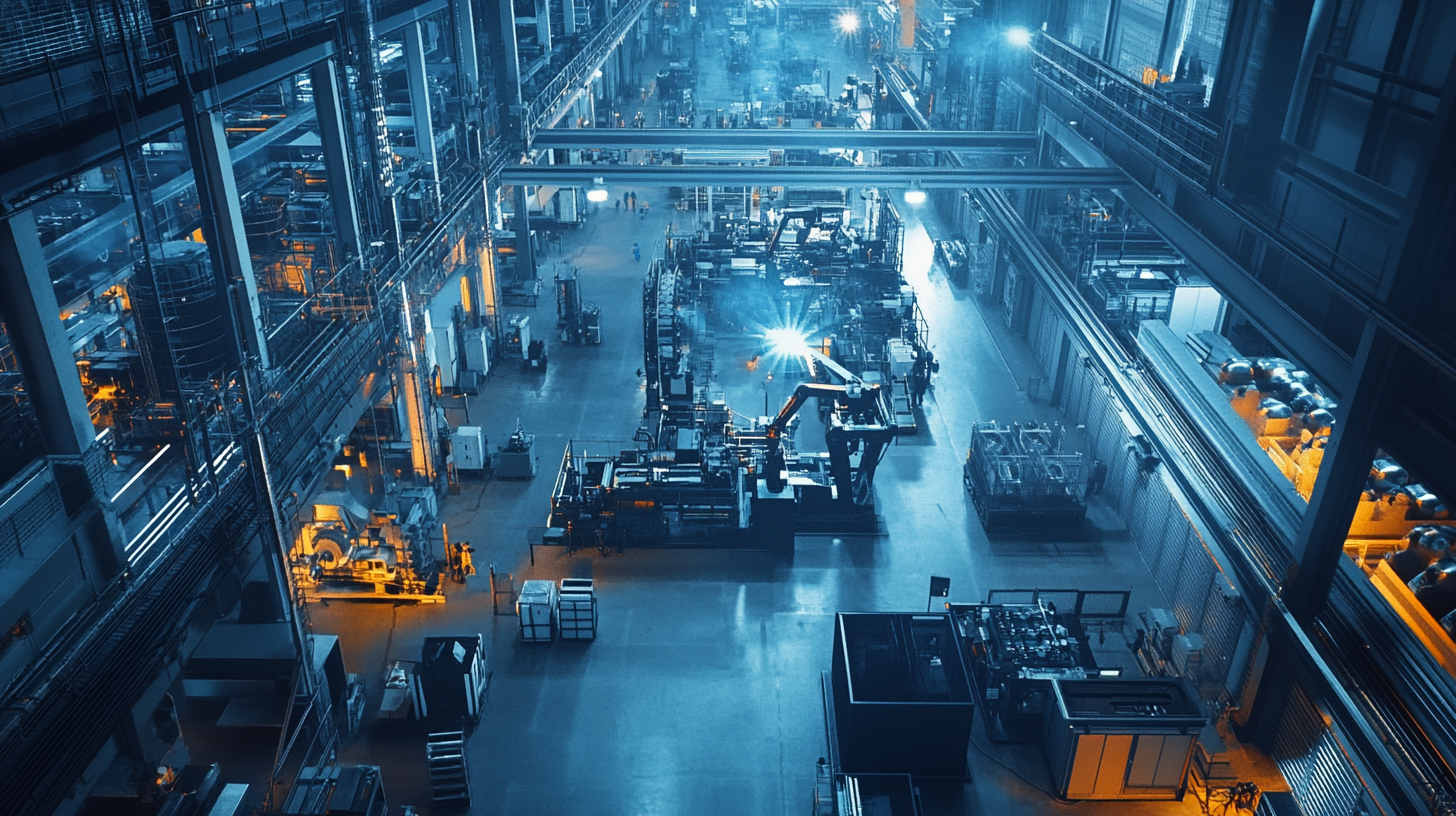
What accounts for the current success of some companies in the mechanical engineering sector despite the economic crisis in Germany? – Image: Xpert.Digital
Success in mechanical engineering despite the economic crisis: Export or foreign subsidiaries?
The German economy is in crisis. Gross domestic product is stagnating, and business sentiment is subdued. Industry is struggling with weak order books. Business associations are expressing their concern about the ongoing crisis and see no turnaround even by 2025. But what about mechanical engineering, one of Germany's most important sectors? What accounts for the success of some companies despite the economic crisis? Do exports or foreign subsidiaries play a decisive role? And in which country is the demand for German mechanical engineering expertise greatest?
The economic situation in Germany
The German economy is in a phase of stagnation, and gross domestic product is stagnating. While the ifo Business Climate Index shows some initial signs of improvement, industry continues to struggle with weak order books. Business associations do not foresee an end to the crisis even by 2025. In particular, weak domestic demand and persistent inflation are cited as reasons for the ongoing crisis mood.
DAX reaches new highs – what's really behind it?
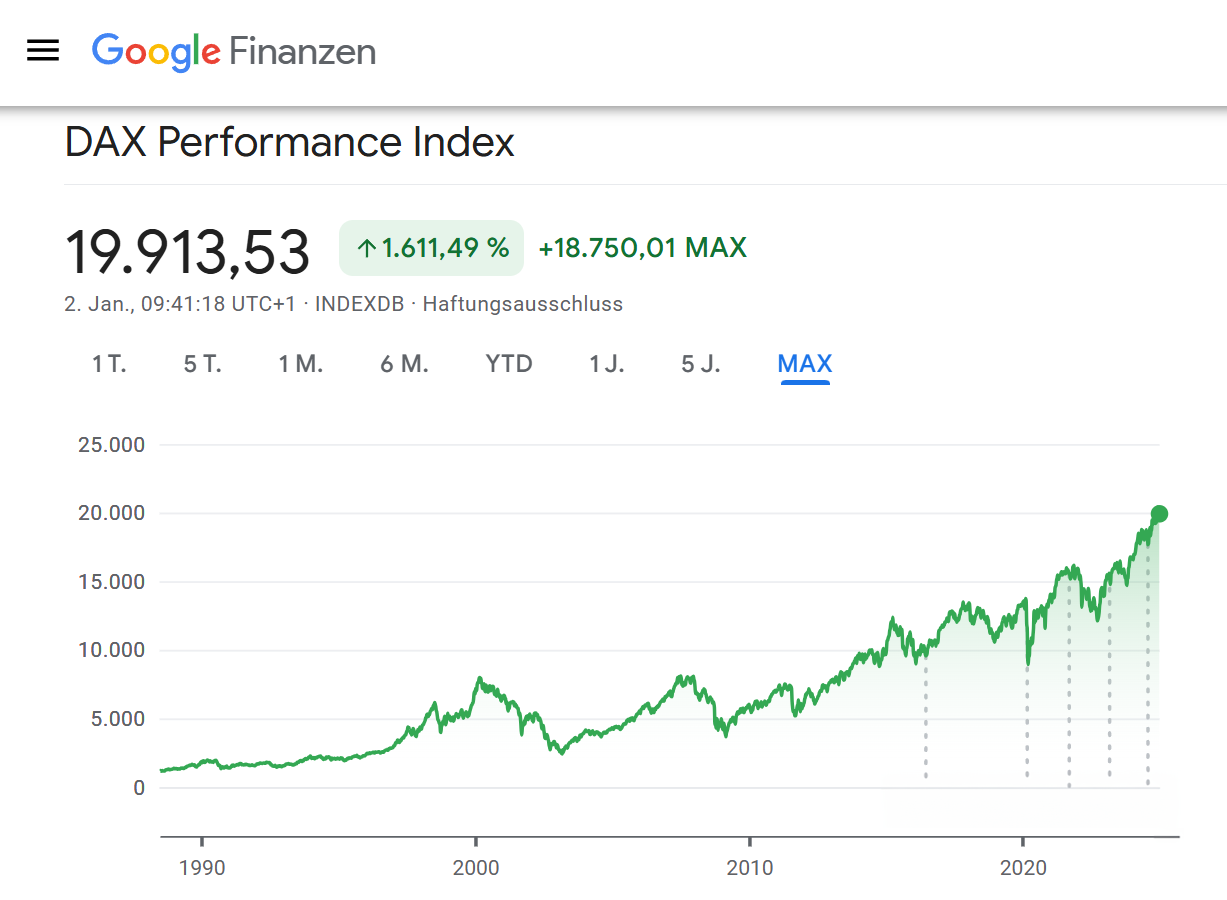
The German stock index (DAX) has reached a new record high in recent days, almost hitting the 20,000-point mark – Image: Google
The German stock index (DAX) has reached a new record high in recent days, nearly breaking the 20,000-point mark. While some political figures, particularly from the Green Party, attribute this success to the economic policies of Federal Minister of Economics Robert Habeck, a closer analysis reveals that this claim is misleading.
Reasons for the DAX record
The rise in the DAX can be attributed to several factors:
- International focus of DAX companies: The corporations listed in the DAX generate only about 23% of their revenue in Germany. The majority of their business takes place abroad, allowing them to benefit from global economic trends.
- Interest rate policy: Investors are reacting positively to the prospect of lower interest rates from the European Central Bank (ECB) and the US Federal Reserve (Fed).
- Technical factors: The DAX is a performance index that takes dividends into account, which leads to a natural increase over time.
- Global economic outlook: Positive developments in other markets, particularly in the USA and Asia, are influencing the share prices of DAX companies.
Discrepancy with the German economic situation
The DAX record stands in contrast to the current economic situation in Germany:
- The German economy shrank by 0.2% in 2024.
- Smaller and medium-sized companies listed in the MDAX and SDAX are reporting losses.
- The DAX does not represent the entire German economy, but mainly large, internationally active corporations.
The DAX record high is not a direct indicator of the success of German economic policy or the performance of Economics Minister Habeck. Rather, it reflects the global orientation of DAX companies and international economic trends. For a more realistic assessment of the German economic situation, other indicators such as GDP growth, the development of small and medium-sized enterprises (SMEs), and the performance of the MDAX and SDAX indices should also be considered.
Job boom despite economic downturn
Despite the ongoing economic downturn, the number of employed people in Germany reached a new record high of 46.1 million in 2024. This apparent contradiction between a job boom and economic weakness can be explained by several factors:
Service sector as a growth driver
The main reason for the increase in employment lies in the service sector:
- 75.5% of all employed people worked in service sectors in 2024
- The number of employees in this sector grew by 153,000 people (+0.4%)
- The increase was particularly strong in the public services, education and health sector, with +184,000 people (+1.5%)
Different developments in the industries
While some areas grew, others experienced declines:
- Business service providers, including temporary staffing agencies: -55,000 people (-0.9%)
- Manufacturing and construction industries: slight declines
This differing development shows that the economic downturn does not affect all sectors equally.
Skills shortage and demographic change
Many companies are sticking with their employees despite the weakening economy:
- The shortage of skilled workers remains acute in many sectors
- Companies do not want to lose qualified employees, even if the order situation is temporarily weaker
Mechanical engineering in Germany
Mechanical engineering is one of Germany's most important industries. It is strongly export-oriented and considered an innovation leader. However, the mechanical engineering sector is also feeling the effects of the economic crisis. Expansion investments in Asia are losing momentum. This is primarily due to geopolitical tensions and the shifting of supply chains. Despite these challenges, the German mechanical and plant engineering sector has full order books. In November 2021, order intake in the mechanical and plant engineering sector exceeded the level of the same month of the previous year by a real 23 percent.
The export share of German mechanical engineering companies is high. In 2020, German suppliers exported machinery worth approximately US$223 billion, representing almost 14 percent of global exports. However, Germany lost its leading position in mechanical engineering exports to China in 2020. Nevertheless, German mechanical engineering companies fared better than other traditional exporting nations such as the USA and Japan. While Germany lost only 0.8% of its global market share, the USA and Japan each lost half of their market share. This underscores the relative strength and resilience of the German mechanical engineering industry in global competition.
However, it is important to note that the high export share makes the German mechanical engineering sector vulnerable to global changes and trade conflicts. Protectionist measures and economic uncertainties in key sales markets can significantly impact German machinery exports.
Foreign branches of German mechanical engineering companies
Many German mechanical engineering companies have subsidiaries abroad. These enable the companies to be closer to their customers and better serve local markets. The German Chambers of Commerce Abroad (AHKs) offer a comprehensive database of German companies with branches abroad. For example, Bertrandt AG, an automotive engineering service provider, has numerous locations in Europe, Asia, and the Americas. Schüco, a manufacturer of window, door, and facade systems, also has a branch in the USA. Another example is Schaeffler, a global automotive and industrial supplier. Schaeffler has 170 locations worldwide in over 50 countries, including production facilities, research and development centers, and sales offices. This local presence allows companies to better understand the specific needs of their customers and offer tailored solutions.
Related to this:
Demand for German mechanical engineering know-how
The demand for German mechanical engineering expertise is high worldwide. German machines and systems are renowned for their quality, precision, and technological excellence. Key customer countries include the USA, China, and many European nations. China is Germany's most important trading partner and one of the largest buyers of German machinery. The continued demand for German machines and systems, even during the pandemic, demonstrates the industry's resilience and customers' confidence in German technology.
In global competition, however, the German mechanical engineering sector faces increasing competition. China and the USA are the biggest competitors in mechanical engineering, measured by revenue. To remain competitive internationally, German companies must continue to focus on innovation and the development of new technologies.
Success in mechanical engineering: Export or foreign subsidiaries?
The success of German mechanical engineering companies is attributable to both exports and their international presence. Exports enable companies to serve a large market and achieve economies of scale. Foreign subsidiaries allow companies to be closer to their customers and better serve local markets. Both factors contribute to the success of German mechanical engineering companies even during economic crises.
German mechanical engineering companies are distinguished by their technical expertise, the provision of high-quality, customer-specific solutions, and excellent service. Long-standing customer relationships, a broad regional presence, and a willingness to develop new markets and drive technological change are further success factors.
A key aspect for the future success of the industry is preventing the outflow of knowledge abroad. Protecting intellectual property and securing know-how are crucial for maintaining the competitiveness of German companies.
Historically, the German mechanical engineering sector has faced challenges in the past. The global slump in demand for capital goods in the 1990s and the appreciation of the Deutsche Mark led to a difficult situation for the industry. However, the German mechanical engineering industry successfully overcame this crisis and maintained its position in the global market.
Investments in innovation and technology are crucial
The success of some mechanical engineering companies despite the economic crisis in Germany can be attributed to several factors. Exports play a crucial role, enabling companies to serve a large market. Foreign subsidiaries allow companies to be closer to their customers and better serve local markets. China is the most important trading partner and one of the largest buyers of German machinery.
The German mechanical engineering industry, however, faces challenges. The economic crisis in Germany, increasing competition from other countries, and the risk of knowledge loss necessitate continuous adaptation and development. To remain successful in the future, companies must continue to focus on innovation, quality, and customer proximity.
Digitalization plays a crucial role in the future viability of the industry. German mechanical engineering companies must invest heavily in digital transformation to remain globally competitive and maintain their high quality standards. At the same time, German companies plan to further intensify their research and development activities both domestically and internationally. These investments in innovation and technology are essential for meeting the challenges of global competition and securing the position of German mechanical engineering as an innovation leader.
The German mechanical engineering industry has proven in the past that it can successfully overcome crises. By focusing on innovation, customer proximity, and the development of new markets, the sector can maintain its strong position in global competition in the future.
Our recommendation: 🌍 Limitless reach 🔗 Connected 🌐 Multilingual 💪 Sales power: 💡 Authentic with strategy 🚀 Innovation meets 🧠 Intuition


From local to global: SMEs conquer the world market with a clever strategy - Image: Xpert.Digital
In an era where a company's digital presence determines its success, the challenge lies in creating an authentic, personalized, and far-reaching presence. Xpert.Digital offers an innovative solution that positions itself as the intersection of an industry hub, a blog, and a brand ambassador. It combines the advantages of communication and sales channels in a single platform and enables publication in 18 different languages. Cooperation with partner portals and the ability to publish articles on Google News and a press distribution list with approximately 8,000 journalists and readers maximize the reach and visibility of the content. This represents a crucial factor in external sales and marketing (SMarketing).
More information here:
We are here for you - Consulting - Planning - Implementation - Project Management
☑️ SME support in strategy, consulting, planning and implementation
☑️ Creation or realignment of the digital strategy and digitization
☑️ Expansion and optimization of international sales processes
☑️ Global & Digital B2B trading platforms
☑️ Pioneer Business Development

Konrad Wolfenstein
I would be happy to serve as your personal advisor.
You can contact me by filling out the contact form below or simply call me on +49 7348 4088 965 .
I'm looking forward to our joint project.
Write to me


Xpert.Digital - Konrad Wolfenstein
Xpert.Digital is a hub for industry focusing on digitalization, mechanical engineering, logistics/intralogistics and photovoltaics.
With our 360° Business Development solution, we support renowned companies from new business to after-sales.
Market intelligence, smarketing, marketing automation, content development, PR, mail campaigns, personalized social media and lead nurturing are part of our digital tools.
You can find more information at: www.xpert.digital - www.xpert.solar - www.xpert.plus
Keep in touch