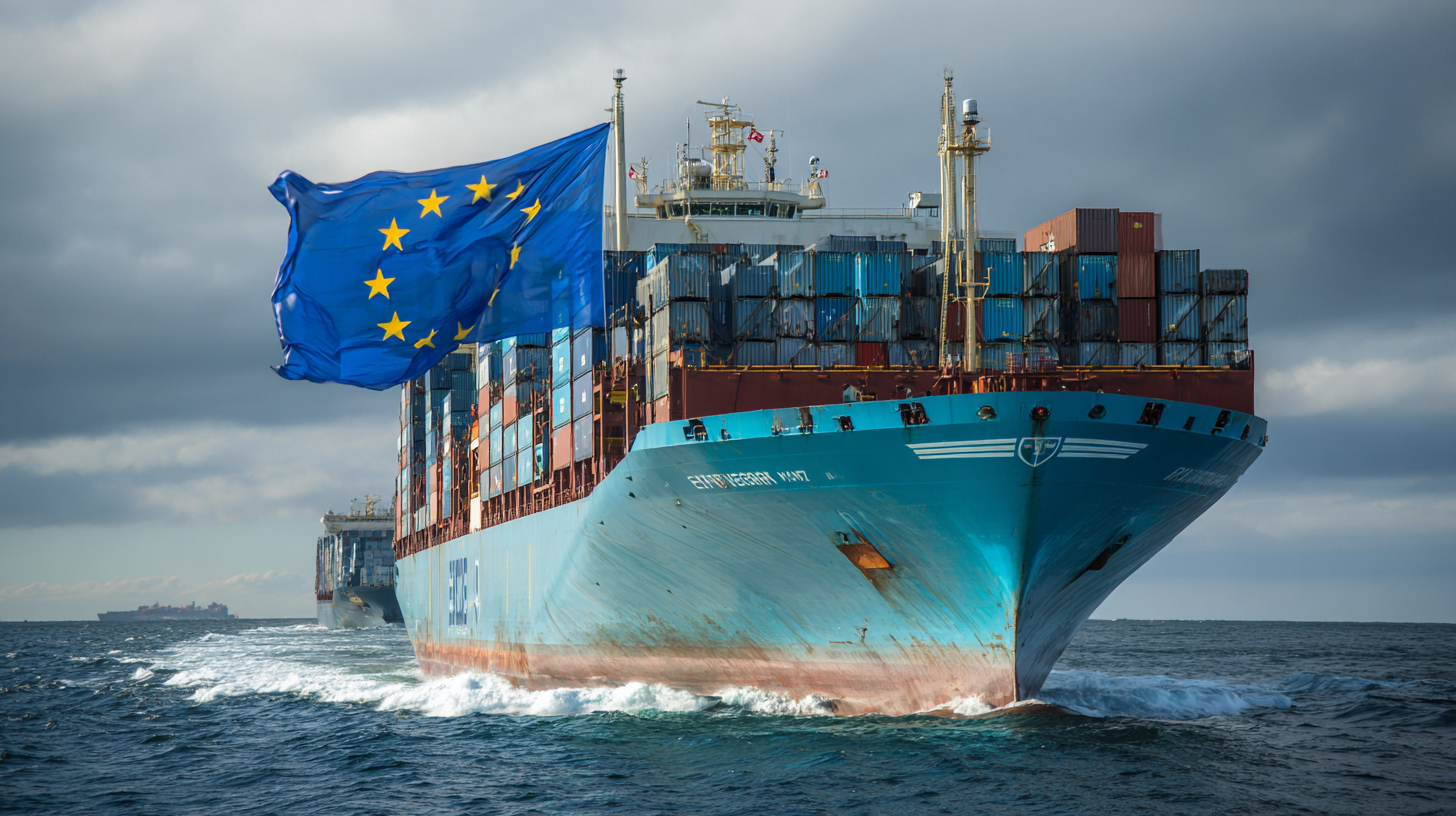
Battle for raw materials: Why the EU absolutely needs the Mercosur pact despite farmers' anger – Image: Xpert.Digital
The struggle over the Mercosur deal - power struggle in Brussels: Will the 700 million market fail over a few eggs and steaks?
Beef, sugar, honey: These “sensitive” foods could derail the world’s largest free trade agreement.
It is one of the most ambitious and, at the same time, most controversial trade projects in history: the planned free trade agreement between the European Union and the Mercosur countries (Brazil, Argentina, Uruguay, Paraguay). After more than two decades of negotiations, the deal is on the home stretch – yet it threatens to stumble at the last minute. The political fault line runs not only between continents, but right through Europe itself.
While European industry, particularly mechanical engineering and the automotive sector, hopes for the elimination of high tariffs and access to a market with over 700 million consumers, massive resistance is forming in the agricultural sector. Countries like France, Ireland, and Austria fear that their farmers will be driven out of business by cheaper imports from South America. At the heart of the dispute are a few, but politically highly sensitive products: beef, poultry, sugar, and ethanol.
To save the agreement, the EU has devised a complex system of "emergency brakes," alarm clauses, and strict monitoring mechanisms. But is this enough to allay concerns about price dumping and lower standards? In this analysis, we examine the critical agricultural commodities that could derail the deal, the billions in economic benefits for the EU economy, and the geopolitical dimension of an agreement that is far more than just a "cars for beef" swap.
Fear of price dumping: Are the planned EU tariffs on beef and poultry really sufficient?
Related to this:
The political outcome of the Mercosur agreement hinges primarily on a few sensitive agricultural products (beef, poultry, sugar/ethanol, rice, honey, eggs, etc.), while the major economic benefits for the EU lie in industrial exports (cars, machinery), services, public contracts, and tariff reductions. Politically, France and several other countries are resisting the agreement due to concerns about competitive disadvantages for their agricultural sectors, even though studies indicate only moderate overall effects on employment and prices.
Related to this:
Critical products that could derail the agreement
The most sensitive issues concern a small group of "sensitive" agricultural products, where EU farmers fear strong price pressure and standard dumping. The following are particularly crucial from a political standpoint:
- Beef (fresh and frozen, high-quality cuts) – a central concern in France, Ireland, Austria, Italy and Poland.
- Poultry (chicken, turkey) – similar dumping fears as with beef.
- Eggs and egg products are feared to be affected due to significantly lower production costs and laxer animal welfare and hygiene standards.
- Sugar and ethanol – particularly sensitive for France and other large sugar beet and bioethanol producers.
- Rice – especially relevant for southern EU member states (Italy, Spain, Portugal).
- Honey and garlic – smaller volumes, but symbolic of debates about quality and origin.
- Citrus fruits – sensitive for Mediterranean producers.
These products are at the heart of the "strong safeguard clauses" demanded by France, including mirror clauses (same environmental and agricultural standards as in the EU) and stricter import controls. Without politically credible safeguards in precisely these product categories, approval in the Council is at risk of failing.
Related to this:
Safeguard clauses and monitoring mechanisms
To prevent failure due to resistance from agricultural countries, special safeguards were introduced for these sensitive products. These include:
- Limited-quantity special tariff quotas, e.g. for beef approx. 99,000 tons per year at a reduced tariff rate; above that, regular tariffs apply again.
- “Alarm clauses”: If import increases exceed a defined threshold (e.g., more than 8 percent per year), the EU can suspend tariff reductions or temporarily raise tariffs again.
- List of sensitive products (including beef, poultry, rice, honey, eggs, garlic, ethanol, sugar, citrus fruits) for which particularly close market and price monitoring is planned.
- Regular impact reports (at least semi-annually) on agricultural imports from Brazil, Argentina, Uruguay and Paraguay.
However, France and other critics doubt whether these instruments will be triggered quickly and consistently enough politically – and whether “mirror clauses” on pesticides, antibiotics and animal welfare are actually enforceable.
In connection with the safeguard clauses, the EU speaks of a clearly defined group of “sensitive” agricultural products.
Our EU and German expertise in business development, sales and marketing
Our EU and German expertise in business development, sales and marketing - Image: Xpert.Digital
Industry focus areas: B2B, digitalization (from AI to XR), mechanical engineering, logistics, renewable energies and industry
More information here:
A thematic hub offering insights and expertise:
- Knowledge platform covering global and regional economies, innovation and industry-specific trends
- A collection of analyses, insights, and background information from our key areas of focus
- A place for expertise and information on current developments in business and technology
- A hub for companies seeking information on markets, digitalization, and industry innovations
EU-Mercosur: New sales opportunities for German mechanical and plant engineering
Core list of sensitive agricultural products
The following are considered sensitive agricultural products in the context of the EU-Mercosur agreement:
- beef
- Poultry meat (especially chicken, turkey)
- pork
- Various dairy products
- rice
- Maize and maize products
- eggs
- Honey
- Garlic
- Sugar
- Ethanol (mainly from sugar cane)
- Biodiesel
- spirits
- citrus fruits
This product group is subject to increased market surveillance, lower thresholds for intervention, and the possibility of temporarily suspending tariff preferences.
The wording essentially means: These products will be monitored much more closely, and the EU can intervene more quickly and decisively if problems arise. Specifically, this means:
Enhanced market surveillance
- The EU Commission closely monitors prices, import volumes and market shares of these products, with fixed routines and reports at least every six months, sometimes more frequently.
- It is being examined whether imports from Mercosur, for example, are increasing sharply or are significantly below EU prices, thus putting EU farmers under economic pressure.
Lower thresholds for intervention
- Even relatively “small” changes can (or must) prompt the Commission to launch an investigation, for example if import volumes increase by more than about 8–10 percent per year or if import prices fall significantly below EU levels.
- The deadlines are shortened: investigations should be completed more quickly and immediate measures should be possible within a few weeks if a serious risk of damage is identified.
Option to suspend tariff preferences
- Normally, these products would receive lower tariffs or duty-free access under Mercosur; the EU can temporarily revoke these benefits if there is a risk to its farmers.
- In practical terms, this means that tariffs can be increased again or quotas capped for the affected products until the market calms down and there is no longer a "harmful increase" in imports.
Key economic benefits for the EU
On the benefits side, the industrial and service sectors clearly outweigh agriculture for the EU. Important areas include:
Industrial goods exports
- Reduction of very high Mercosur external tariffs (sometimes 20–35 percent) on machinery, motor vehicles, motor vehicle parts, chemical and medical technology.
- The EU is expected to boost exports to Mercosur by up to around 40 percent; the mechanical engineering, automotive and food industries will particularly benefit.
Customs relief and competitiveness
- Overall, around 90 percent of all tariffs between the EU and Mercosur are to be eliminated, which could save EU companies an estimated 4 billion euros annually.
- Strengthening the position of European suppliers against US, Chinese and other competitors in the South American market.
Public procurement and services
- Access for European companies to public tenders in the Mercosur countries (with the exception of the health sector), for example in the infrastructure, transport and energy sectors.
- Reduction of technical barriers to trade (standards, certification, bureaucracy), which makes market entry easier, especially for SMEs from the EU.
Employment and macroeconomic effects
- Model calculations predict a moderately positive employment effect (around 100,000 additional jobs) and slightly positive growth impulses over 10–15 years in the EU.
- Mercosur countries are achieving significantly stronger relative employment growth, which is politically seen as a contribution to stability and partnership.
Strategic advantages for the EU
Besides its traditional trade effects, the agreement is also geostrategically relevant. Key points:
Access to critical raw materials
- Mercosur countries possess important raw materials and agricultural goods that Europe needs for its energy and raw materials transition (decarbonization, electromobility, chemicals) and wants to use for diversification away from China.
- Long-term supply relationships can reduce the EU's strategic vulnerability to one-sided suppliers.
Political and normative levers
- The agreement includes chapters on sustainability, environmental and climate protection, labor standards and public procurement, which will allow the EU to strengthen its “regulatory leverage” in South America.
- It sends a signal for rules-based multilateralism in a time of global protectionist waves and strengthens the EU's negotiating position vis-à-vis the USA, China and other blocs.
Industrial and technological cooperation
- Building closer value chains, e.g. in the automotive industry, renewable energies, chemicals, agritech and food processing.
- The world's largest free trade area, with over 700 million consumers, offers European companies economies of scale similar to NAFTA/USMCA or RCEP in other regions.
Political fault lines
Whether the agreement fails or comes to fruition ultimately depends less on its economic effects than on political and symbolic conflicts surrounding agriculture and standards. Particularly critical factors include:
- Opposition from France, Italy, Austria, Poland, Belgium and Ireland regarding the aforementioned agricultural products.
- Doubts remain as to whether mirror clauses and protective mechanisms are actually strictly applied or merely remain "paper tigers".
- Domestic political pressure from farmers' protests is forcing governments to demand the toughest possible guarantees or to block the agreement.
Consulting - Planning - Implementation

Konrad Wolfenstein
I would be happy to serve as your personal advisor.
You can contact me at wolfenstein∂xpert.digital or
Just call me on +49 7348 4088 965 .
🎯🎯🎯 Benefit from Xpert.Digital's extensive, five-fold expertise in one comprehensive service package | BD, R&D, XR, PR & Digital Visibility Optimization

Benefit from Xpert.Digital's extensive, five-fold expertise in a comprehensive service package | R&D, XR, PR & Digital Visibility Optimization - Image: Xpert.Digital
Xpert.Digital possesses in-depth knowledge across various industries. This allows us to develop tailored strategies precisely aligned with the requirements and challenges of your specific market segment. By continuously analyzing market trends and monitoring industry developments, we can act proactively and offer innovative solutions. The combination of experience and expertise generates added value and provides our clients with a decisive competitive advantage.
More information here: