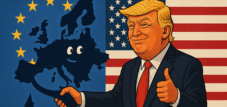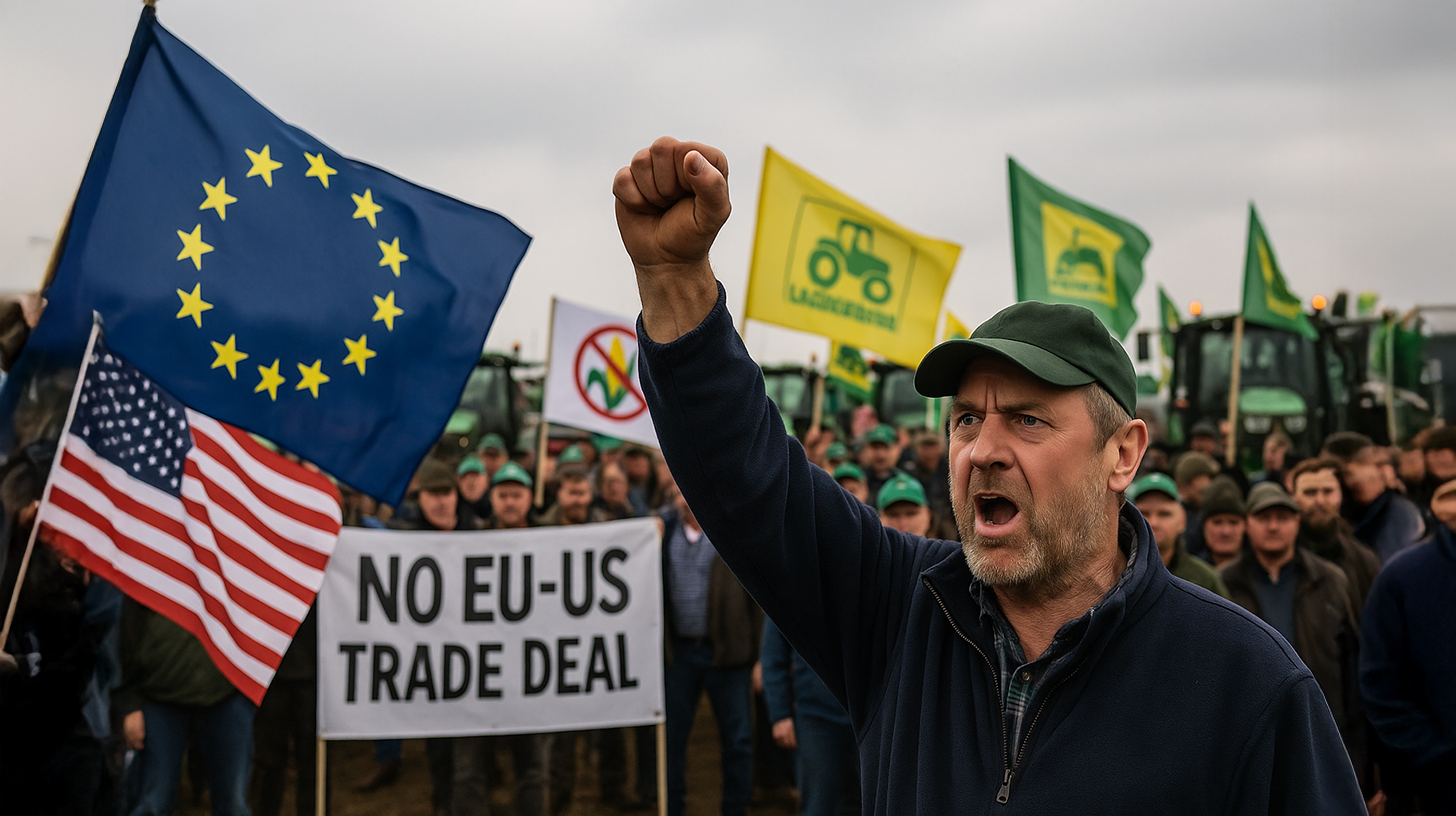
“One-sided and harmful”: European farmers protest against new US trade deal – Creative image: Xpert.Digital
Trade shock with the USA: This agreement will cost European farmers billions
### New EU Trump Deal: Why Wine Is Becoming More Expensive and US Meat Is Flooding the Market ### Fatal Agreement: How the EU Is Abandoning Its Own Farmers to Avoid a Trade War ### 15% Tariff on German Exports: The High Price Europe's Farmers Are Paying for Peace with Trump ### US at an Advantage, EU at a Disadvantage: The Unfair Pact That Is Dividing European Agriculture ###
EU farmers' association warns of devastating consequences of the trade agreement with the USA
The new trade agreement between the European Union and the United States, finalized in August 2025, is triggering a wave of outrage in European agriculture. Leading associations such as Copa and Cogeca, representing millions of farms, criticize the agreement, negotiated under EU Commission President von der Leyen and US President Trump, as fundamentally unbalanced and a threat to the livelihoods of domestic producers. The pact is seen as a strategic error that systematically disadvantages European agriculture and massively undermines its competitiveness.
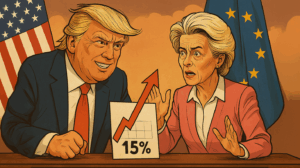
At the heart of the conflict lies a dramatic asymmetry in trade conditions: While European agricultural goods, including valuable export products such as wine and spirits, will be subject to a flat tariff of 15 percent, US products will enjoy easier and preferential access to the EU market. This regulation comes at a time when European farmers are already under enormous pressure due to the world's highest environmental and production standards, rising costs, and fierce global competition. The European Commission defends the deal as a necessary evil to avoid an escalating trade war, but for critics and affected farmers, the price for this supposed stability is far too high. The agreement not only jeopardizes the economic viability of key sectors but also raises fundamental questions about the strategic direction of EU trade policy and future food security.
Related to this:

Europe-wide protests against unilateral customs deal
The recent trade agreement between the European Union and the United States has triggered a wave of protests in European agriculture. Leading agricultural associations Copa and Cogeca, representing millions of European farmers and cooperatives, describe the agreement as fundamentally unbalanced and harmful to domestic producers. The agreement, finalized in August 2025 and the result of negotiations between European Commission President Ursula von der Leyen and US President Donald Trump, is, according to critics, a strategic error that systematically disadvantages European agriculture.
The German Farmers' Association has clearly expressed its disappointment with the joint declaration between the EU and the USA. The association's designated Secretary General, Stefanie Sabet, sharply criticized the EU Commission for unilaterally making agreements detrimental to European and German agriculture. She stated that this approach is unacceptable and will lead to a significant deterioration of the competitive position of European producers.
Dramatic deterioration of trading conditions
The new trade conditions reveal a clear asymmetry in favor of the US. While European agricultural and food exports to the US will now be subject to a uniform tariff of 15 percent, American producers will gain significantly improved market access to the EU. This tariff increase represents a tenfold rise compared to the previous average tariffs in place before Trump's second term and poses an unprecedented burden for European exporters.
Particularly painful is the fact that the US receives preferential market access for its agricultural and food products, while EU producers now face significantly higher tariffs. The agreement grants American producers improved export opportunities for pork products, fruit, vegetables, dairy products, and seafood to the EU, without any discernible safeguards regarding production and environmental standards.
The European Commission justifies this agreement by arguing that it creates stability and predictability and prevents a trade war. Critics, however, argue that this supposed stability has come at far too high a price. The Federation of German Industries (BDI) described the agreement as a disastrous signal, as the EU is accepting painful tariffs.
Wine and spirits are particularly affected
A particularly bitter aspect of the agreement is the treatment of the wine and spirits industry. Although the minimum expectation was tariff relief for wine and spirits, a solution supported by stakeholders in both the EU and the US, this demand remained unfulfilled. Instead, these high-quality European export products also fall under the 15 percent tariff.
This development is particularly problematic because the USA is traditionally one of the most important markets for European quality wines and spirits. Around 30 percent of wine and spirits exported from the EU are destined for the United States. European producers will now either have to accept shrinking margins or raise their prices, which significantly jeopardizes their long-term competitiveness in the American market.
At the same time, geographical indications of origin such as Champagne, Roquefort, and Parma ham, which are normally protected in EU trade agreements, were not strengthened. This neglect makes producers vulnerable to imitation and undermines the value of European food heritage abroad.
Unequal competition from third countries
The situation is further exacerbated by the unequal treatment of various US trading partners. While EU producers now face 15 percent tariffs, competing countries like Australia and Argentina continue to benefit from lower tariffs of only 10 percent. This discrepancy means that European producers are even more disadvantaged in a key segment, further weakening their market position compared to other international competitors.
This unequal treatment exacerbates the existing disadvantages for European producers and makes it clear that the agreement is far removed from the principles of reciprocity and fair trade that the EU normally strives for in its trade relations.
Structural challenges of European agriculture
The current trade problems come at a particularly inopportune time for European agriculture, which is already suffering from significant structural burdens. The sector is under pressure from rising costs, extensive regulatory requirements, and increasing global competition. This triple burden makes the additional trade barriers especially problematic.
European environmental and production standards are significantly higher than in many competing countries outside the EU. A study by the HFFA Research Institute and Ruhr University Bochum calculated that these standards cost German agriculture approximately €5.3 billion, or €315 per hectare. If comparable competitive conditions applied as in key competitor countries, the costs would be only about €1.2 billion, or €69 per hectare.
The structural transformation in European agriculture is accelerating steadily. Between 2020 and 2023, the number of farms in Germany fell by 7,800 to 255,000. While smaller farms are disappearing, the average farm size is growing from 63 to 65 hectares. This trend is evident throughout Europe, where fewer but larger farms are taking over production.
Economic impact on German agriculture
Germany occupies a special position in the European agricultural landscape. As the EU's largest producer of milk and pork, Germany achieves market shares of 21 and 20 percent, respectively, in these important product categories. With 15 and 12 percent of the beef and eggs market, Germany ranks second only to France. This strong position makes German producers particularly vulnerable to the new trade barriers.
The US is already one of the EU's most important trading partners in the agricultural sector. In 2024, almost 13 percent of all EU agricultural exports went to the US, with wine, spirits, and vegetable oils dominating the product range. Trade between the EU and the US in agricultural goods amounted to €45.8 billion in 2024, of which 72 percent was attributable to exports from the EU to the US.
The economic consequences of the new agreement are already foreseeable. Experts predict a negative effect of minus 0.2 percent on German gross domestic product. Sales of German goods to the USA could fall permanently by almost 16 percent, even though some goods could be redirected to other countries. Value added in German industry is expected to decline by around 1.5 percent.
Impacts on various agricultural sectors
Meat production, traditionally a strength of German agriculture, faces particular challenges. Germany produces 16 percent more meat than it consumes domestically; for pork, this figure is even higher at 19 percent. These export surpluses make the German meat industry particularly dependent on international markets and therefore vulnerable to trade barriers.
Dairy farming is another critical sector. Germany remains the largest producer of milk in the EU, with an annual output of around 32.6 million tons. Total milk production has remained virtually constant in recent years, even though the number of farms has decreased and is becoming concentrated in fewer but larger operations.
In contrast, meat production has been declining since 2016, reaching only 5.93 million tons in 2023. The situation is particularly dramatic for pork, where production and stocks fell by 25 percent by 2024. This already difficult market situation is further exacerbated by the new trade barriers.
🎯🎯🎯 Benefit from Xpert.Digital's extensive, five-fold expertise in one comprehensive service package | BD, R&D, XR, PR & Digital Visibility Optimization


Benefit from Xpert.Digital's extensive, five-fold expertise in a comprehensive service package | R&D, XR, PR & Digital Visibility Optimization - Image: Xpert.Digital
Xpert.Digital possesses in-depth knowledge across various industries. This allows us to develop tailored strategies precisely aligned with the requirements and challenges of your specific market segment. By continuously analyzing market trends and monitoring industry developments, we can act proactively and offer innovative solutions. The combination of experience and expertise generates added value and provides our clients with a decisive competitive advantage.
More information here:
Precautionary principle vs. remedial principle – Who wins the agricultural market? Is food security at risk?
Comparison of trading conditions and standards
A key aspect of the current discussion concerns the differing production and environmental standards between the EU and the USA. The EU operates on the precautionary principle, while the USA applies the reactive principle, which allows a substance to be used until a significant hazard is proven.
These differences manifest themselves concretely in areas such as the use of chlorinated chicken, hormone-treated meat, and genetically modified plants, the import of which the EU does not permit. The US has long objected to these products not having access to the European market, and American farmers had expected Trump's trade agreement to regulate this access.
European farmers must comply with significantly stricter environmental, climate, and animal welfare regulations than their American counterparts. These regulations include, among other things, the EU Water Framework Directive, the revised Fertiliser Ordinance, EU rules on the marketing of pesticides, and specific animal husbandry standards.
Related to this:

Political reactions and demands
The reactions from European agricultural policymakers to the trade agreement have been decidedly critical. Copa and Cogeca are urgently calling for an impact assessment of the agreement on the EU agricultural sector, including a detailed analysis of substitution effects. The associations are also demanding that the European Commission resume negotiations with the US on tariff reductions for key agricultural exports.
The German Raiffeisen Association is particularly concerned about price fluctuations resulting from American tariff policies. The direct tariffs imposed by Trump could be less problematic than potential retaliatory measures by the EU. If raw material imports from the US to the EU were subject to tariffs, this would have significant repercussions, especially for the corn market.
The think tank Farm Europe warns that the Commission has so far failed to defend the EU's assertive interests in the agricultural and food sector. If the agreement is considered as a starting point for future negotiations, it becomes clear that European agriculture is already lagging significantly behind.
Long-term perspectives and uncertainties
The long-term effects of the trade agreement are not yet fully foreseeable, but the trend is worrying. Transatlantic trade relations, which have so far been a lifeline of global trade, could fundamentally change. With an annual trade volume of €1.68 trillion, the US and the EU have the most extensive economic relationship in the world.
The EU is the world's largest exporter of agricultural and food products, while the US is a distant second. In 2023, the EU exported agricultural and food products worth €229 billion, primarily to the UK, the US, and China, resulting in a trade surplus of €70 billion.
Experts warn, however, of the unpredictability of the Trump administration. Erratic policies and sudden changes of direction make it difficult to predict whether the current agreement will hold up in the long term. Trump never completely withdraws tariff threats, and further disruptions from Washington are to be expected.
Impact on competitiveness
The new trade regime significantly exacerbates the already existing competitive problems facing European agriculture. Export-based business models of European companies for the US market will be severely limited in the future. A return to the old normal of a flourishing and largely barrier-free exchange of goods and services is not to be expected in transatlantic trade for the time being.
For many smaller European export companies, relocating production to the US is too costly, time-consuming, and, given the erratic US policies, also risky. Only large corporations may have the option of transferring European production to existing US plants to avoid tariffs.
The situation is complicated by the parallel efforts to simplify the EU's Common Agricultural Policy. The European Commission has presented a comprehensive package of measures that could save farmers up to €1.58 billion annually and national administrations €210 million. These simplifications are intended to support the competitiveness, resilience, and digitalization of the agricultural sector.
Systemic impacts on food security
The trade agreement also raises questions about Europe's long-term food security. EU Agriculture Commissioner Christophe Hansen emphasizes that food security has been taken for granted for too long and that the agricultural and food sector is of strategic importance for European security.
In this context, it is important to reduce dependencies, which represent vulnerabilities. The EU is working on a protein strategy to increase protein production within the EU and diversify suppliers. At the same time, the Commission is committed to greater reciprocity in trade relations and a stronger harmonization of production standards.
The discrepancy between high European standards and lower requirements in third countries remains a key problem. The Commission believes that a dangerous pesticide banned in the EU should not be permitted in imported products either.
Necessary reforms
The current situation makes it clear that fundamental reforms in European trade policy are necessary. The systematic disadvantage faced by agriculture in EU trade negotiations has become a worrying trend. The Commission must explain how the current outcomes are compatible with its stated objectives regarding the strategic role of the agricultural sector for Europe, the strengthening of rural areas, and fair trade.
European agriculture faces the challenge of maintaining its competitiveness in a deteriorating international environment. This requires not only a revision of trade strategy, but also a fundamental discussion about the balance between high environmental and production standards on the one hand and international competitiveness on the other.
The coming months will show whether the EU is able to mitigate the negative effects of the trade agreement and achieve a more balanced position in transatlantic trade relations. Without significant adjustments, European agriculture risks a further deterioration of its already difficult situation in an increasingly competitive global market.
Your global marketing and business development partner
☑️ Our business language is English or German
☑️ NEW: Correspondence in your native language!

Konrad Wolfenstein
I and my team are happy to be available to you as your personal advisor.
You can contact me by filling out the contact form here wolfenstein@xpert.digital:or simply call me at +49 7348 4088 965. My email address is
I'm looking forward to our joint project.