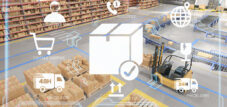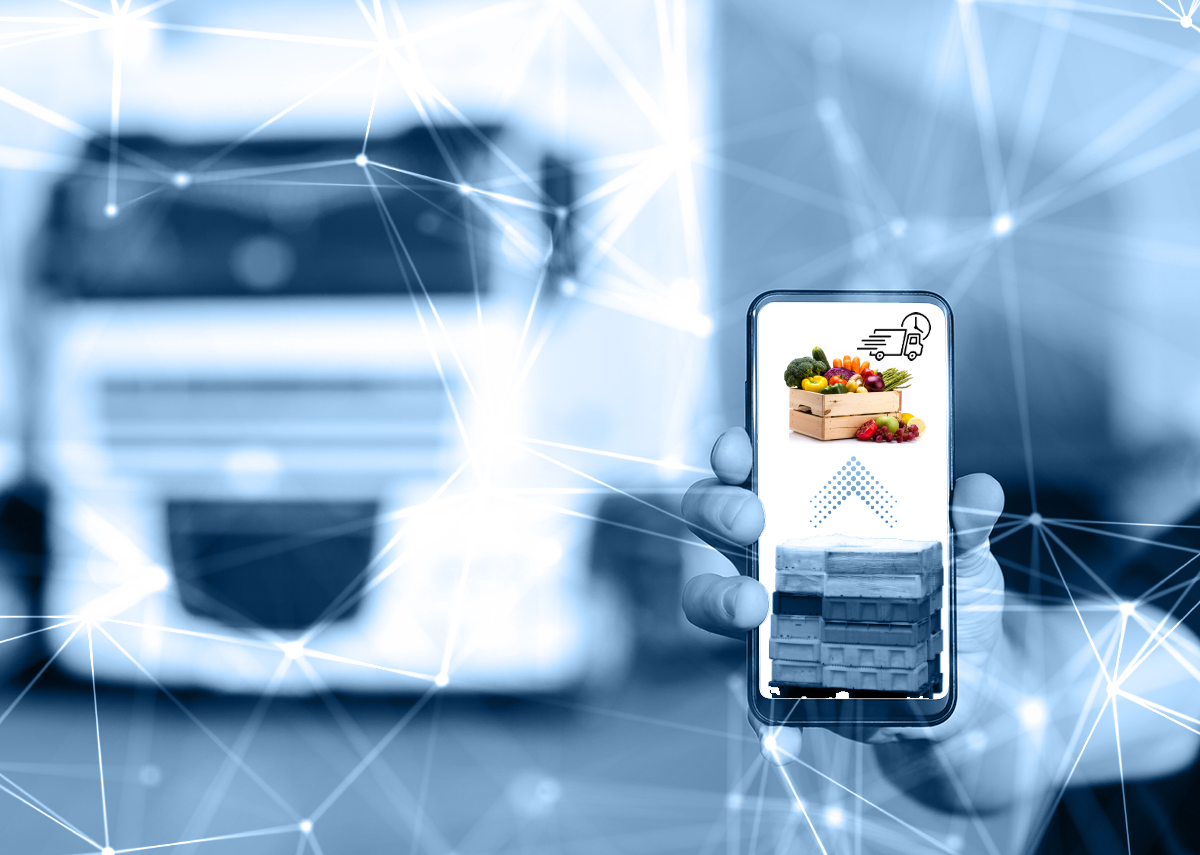
Standardized reusable containers – Image: GeometricNebula & Holos__8 & nehophoto & Victor Prilepa|Shutterstock.com
The market volume for fresh fruit and vegetables in Germany is €14.9 billion per year. Germany's self-sufficiency rate is 22% for fruit and 36% for vegetables. Vegetables are grown in Germany by slightly fewer than 6,000 farms in open fields and almost 1,700 farms in greenhouses.
In the German food market, consumers purchase almost half of all fruit and vegetable sales in discount stores.
Besides production, the processing of fruits and vegetables is an important economic sector and is considered a sub-sector of the food industry. It also includes the production of fruit and vegetable juices. Its approximately 250 companies employ more than 30,000 people and generate around eleven billion euros in revenue.
German consumers prefer shopping at the country's numerous discount supermarkets. The discount chain's network is among the largest in the German food retail sector.
Market shares in the German food retail sector have remained consistently distributed for years. The four major players – Edeka, Rewe, the Schwarz Group (Lidl/Kaufland), and Aldi – hold a combined market share of approximately 70 percent.
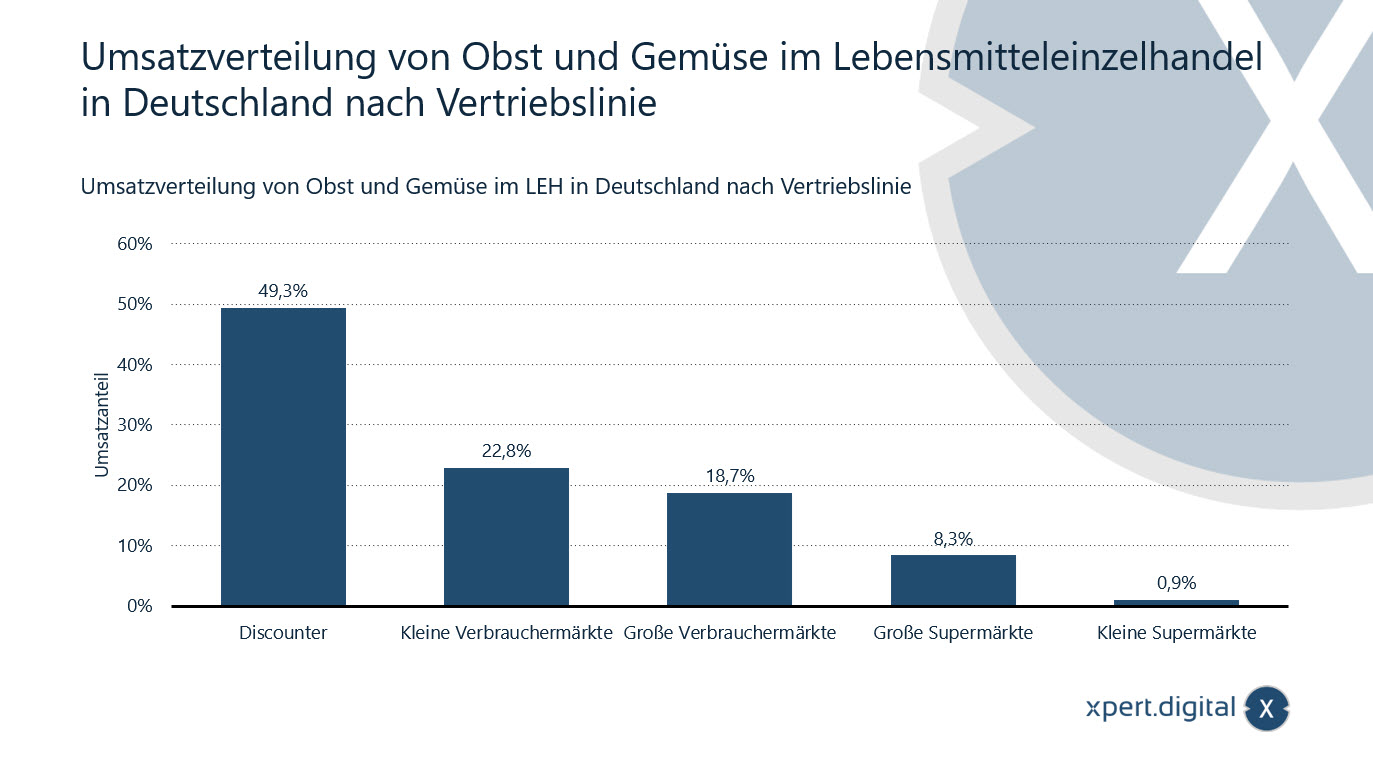
Sales distribution of fruit and vegetables in the food retail sector – Image: Xpert.Digital
Fruit and vegetables are not only a large sales market, they also contribute significantly to the image of freshness and quality.
Related to this:
Why reusable containers?
CO2 savings and resource conservation through reusable transport packaging? Reusable containers save raw materials and help to avoid environmental damage.
The year-round supply of fruit and vegetables requires a complex and extensive logistical infrastructure. Plastic, wooden, and cardboard crates are primarily used. Plastic crates are used as reusable containers, while cardboard crates are used as single-use containers.
According to a study by the Fraunhofer Institute for Material Flow and Logistics (IML), cardboard boxes experience 35 times (4.2%) more container damage (packaging breakage) than reusable containers (0.12%).
A reusable plastic packaging system is not only economically and ecologically superior to single-use cardboard containers, but it is also the most economical form of logistics for fruit and vegetables. This is the conclusion of the study "Sustainability of Packaging Systems for Fruit and Vegetable Transport in Europe – Based on a Life Cycle Analysis." The study was commissioned by the Stiftung Initiative (SIM) in 2009 and conducted by the Institute for Holistic Accounting, which is affiliated with the Fraunhofer Institute for Building Physics and the University of Stuttgart.
Why standardize?
Fruits and vegetables are among the most complex and demanding general cargo in logistics. They are highly sensitive, perishable, and require temperature-controlled handling. Cost pressures and adherence to quality standards also play a crucial role. Since nearly 50% of fruit and vegetable sales already occur through discount retailers, further development in this important product category is of paramount importance. This includes expanding market share, increasing customer acceptance (image), and developing the future market.
Every time saved, from supplier to consumer, is therefore crucial. As our logistics continuously evolve across the first, middle, and last mile, the optimization of the supply chain also requires further development.
Related to this:
Standardized reusable containers not only ensure fast and gentle delivery, they can also be better digitized for logistical processes and the entire inventory can be centrally controlled.
Standardized reusable containers fully realize their advantages in terms of speed, flexibility and organization when combined with a lifting storage system.
Why a hub system?
Whether it's head storage or cross-docking, they are essentially the same as the hub system used in micro-hubs for micro-fulfillment. Micro-hubs are considered the key solution of the future for e-commerce and brick-and-mortar retail within the network of autonomous retail systems (ARS).
Related to this:
Similar to a hub, all fruit and vegetable products are delivered by suppliers to a central location. From this central warehouse, the goods are distributed to the individual sites. This is intended to reduce transport distances and storage times.
This accelerated process allows for better utilization of the freshness of fruits and vegetables because the produce reaches the market more quickly. Whereas previously large quantities had to be kept in stock in regional warehouses, this is now only necessary under centralized control at the hub.
The advantages are obvious:
- Shorter lead times.
- Timely delivery.
- Improved needs-based quantity and time planning.
- The amount of fruit and vegetables kept in stock decreases (reduction of inventory), which contributes to an increase in quality, minimizes storage space and reduces storage costs.
- Thanks to centralized data collection and a broader database, branch-specific mixed pallets can be better tailored to regional differences.
- A central and comprehensive quality check is now possible and reduces costs.
- Single-use containers can be repackaged into reusable containers via a separate process. In further steps, suppliers can be "trained" to use the standardized reusable containers until the separate process for container exchange is only necessary in exceptional cases. This is best combined with quality control.
- Standardized reusable containers in the fruit and vegetable sector enable autonomous and automated control of the flow of goods. This leads to further cost reductions and time savings, which in turn improves the quality and freshness of the produce. Furthermore, resources are conserved and packaging breakage is minimized.
- In a further step, quality control and inventory management for fruits and vegetables can now be optimally accelerated using AI and RFID or similar technologies.
In 2005, Lidl consolidated its temperature-controlled goods in cross-docking warehouses. However, this did not include fruit and vegetables. In 2014, REWE opened its first cross-docking warehouse for fruit and vegetables in Leipzig.
What is electric vehicle logistics?
Logistics 4.0 is the foundation of Industry 4.0. Logistics is not only the backbone of industry and key sectors, but also of trade, and therefore operates in an interdisciplinary manner. Logistics 4.0 is characterized by the speed and flexibility in data collection and provision, as well as its implementation in the resulting outcomes.
The logistics sector, particularly in the non-food industry, has undergone breathtaking development in the area of e-business and e-commerce. Digital platforms such as Amazon are the big winners of this development.
Auto-E logistics does not refer to the trade in electric cars.
E-logistics describes the planning, solution and control of logistical tasks using the Internet and other information and communication systems and is part of electronic commerce.
The technical and organizational prerequisites for implementing e-logistics are:
- The integration of internet-based systems into existing IT systems.
- The further development of organizational workflows and processes.
- Focus on overcoming information barriers between individual partners in the value chain.
- A realistic assessment and evaluation of the complexity of integrating e-logistics solutions.
- Willingness to collaborate across company boundaries.
Auto-E-Logistics is the extended form of autonomous and automated e-logistics. It ranges from the autonomous partial control of specific areas and processes using AI to the full automation of logistics.
The crucial link between logistics/intralogistics and omnichannel commerce has been emphasized for some time. The best e-commerce platform is useless if the logistics don't function properly. The reverse is also true. Automated e-logistics represents an intermediate step between capturing and standardizing data and automating key logistical processes, leading to unified commerce, also known as no-line commerce.
Related to this:
E-Food
"Large fresh food logistics companies can no longer secure their business with large market shares alone," commented a logistics expert in 2004 on the changes in the food retail sector.
2004 was also the year of UMTS, the third generation (3G) mobile communications, the precursor to LTE (4G) and 5G. E-commerce was still in its infancy.
The development of e-commerce can best be seen in Amazon's revenue growth. While Amazon generated $6.02 billion in revenue in 2004, it had increased 56-fold 16 years later.
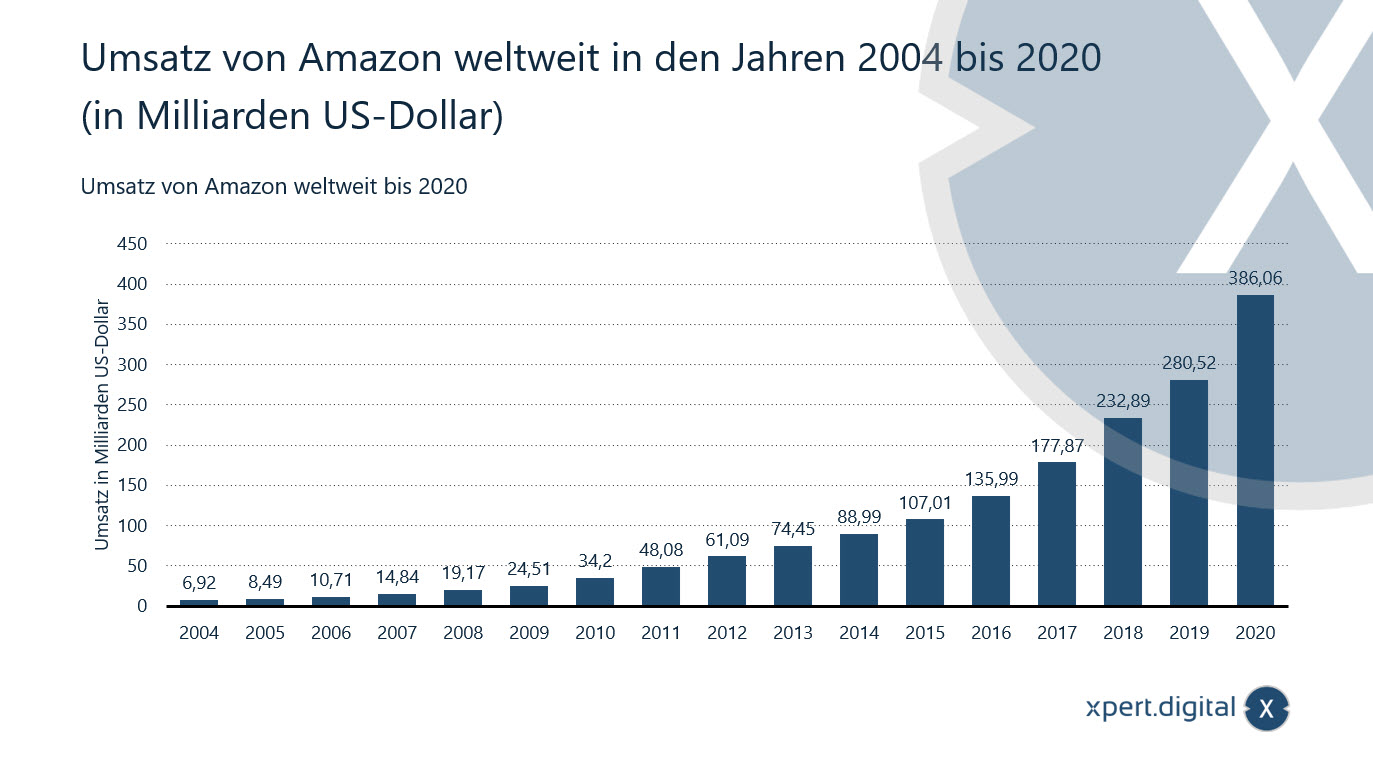
Amazon's worldwide revenue from 2004 to 2020 – Image: Xpert.Digital
“With large market shares, the food retail sector can no longer secure its business,” is how one must interpret the figures from the major e-commerce providers who, like in 2004 in the e-commerce market, are now tackling the e-food sector.
E-food is, so to speak, the last blank spot on the map of digital platforms and practically the pinnacle of online retail. The fruit and vegetable market, in particular, where discounters control almost 50% of the market, has moved into the focus of e-commerce.
For example, the e-commerce market for consumer electronics has, for the time being, been decided in Amazon's favor. Amazon is also already ahead in the grocery and drugstore segment. Compared to shop.rewe.de, Amazon is already 3.6 times ahead.

Top-selling online shops in the food and drugstore segment in Germany – Image: Xpert.Digital
However, on closer inspection, this doesn't have to remain the case. There are good reasons for this.
More information here:
Discount retailers have so far ventured into and explored the topic of e-commerce, but without playing to their strengths and advantages over Amazon.
Related to this:
- Why South Korea is a pioneering and successful online retail market worldwide
- Japan is already working on the future of tomorrow
Write to me



Keep in touch