
Special membership in the EU? Not quite EU accession, but almost: What's behind Canada's ingenious pact with Europe – a creative image on the topic, created with AI: Xpert.Digital
The Anti-Trump Alliance: How Europe and Canada are planning an alliance against the new world order
Raw materials, AI and defense: Europe's historic mega-deal with Canada
The next “EU country” is in North America: Why Canada is radically changing course
Triggered by trade pressure from Washington and the unpredictable actions of the US government, Canadian Prime Minister Mark Carney is seeking a historic rapprochement with Europe. While traditional EU membership is not on the table, the vision of an unprecedented "special membership" is electrifying both sides of the Atlantic. Whether it's direct access to critical raw materials, joint initiatives in artificial intelligence, the development of an integrated defense industry, or new rules for the free movement of skilled workers – the proposed association model promises both economic regions far-reaching strategic resilience. But how realistic is this undertaking? And where do these transatlantic dreams encounter harsh geographical and bureaucratic limits? This comprehensive analysis examines the opportunities and risks of a new transatlantic power axis that extends far beyond the CETA free trade agreement.
Canada is moving closer to the EU – but not into it
Canada and the European Union are forging a strategic alliance that could permanently change the geopolitical landscape
Canada and the European Union are on the verge of a strategic rapprochement that could extend far beyond a conventional trade agreement. However, it would be misleading to speak of imminent EU accession or a legally defined "special membership" for Canada. Prime Minister Mark Carney has explicitly stated that his country is not seeking regular membership in the European Union. His aim is a tailored alliance that will bring Canada and the EU closer together economically, technologically, in terms of security and society, without Ottawa ceding its national sovereignty to European institutions.
This distinction is crucial. The concept of associated membership currently lacks a clearly defined legal framework within the EU's institutional system. It is primarily a political code for attempting to create a new intermediate stage between traditional third-country relations and full membership. Underlying this is the question of whether democracies with similar interests can more closely integrate their markets, technologies, and strategic resources without forming a new central state or an isolated geopolitical bloc.
Economically, the move is understandable. Despite decades of diversification efforts, Canada remains extraordinarily dependent on trade with the United States. In 2024, the US accounted for approximately 75.9 percent of all Canadian exports and 62.2 percent of Canadian imports. This interconnectedness is based not only on political proximity but also on geography, integrated production chains, shared transportation routes, and investment structures that have developed over decades. While it represents a significant efficiency advantage, it has also become a concentration risk. If Washington uses tariffs as leverage, politicizes supply chains, or asserts its territorial and economic interests more aggressively, Canada will be affected more quickly and directly than almost any other industrialized nation.
Conversely, this presents an opportunity for the European Union. Europe is seeking reliable suppliers of energy, raw materials, and defense equipment; it needs partners for artificial intelligence, semiconductors, and space communications; and it wants to reduce its dependence on the United States, China, and Russia. Canada offers a rare combination of political stability, the rule of law, abundant natural resources, scientific expertise, clean energy production, defense industry capabilities, and geographical proximity to the Arctic. This closer partnership is therefore not merely a diplomatic gesture. It is an attempt to unite two hitherto disparate economic regions into a more resilient strategic network.
Not an accession, but a political experiment
The public debate is being intensified by the concept of special membership, but this very term can create false expectations. Current European treaty law generally stipulates membership for European states. Canada is not geographically a European state and, according to Carney's own account, is not seeking full membership. This eliminates key elements of regular accession: Canada would neither receive a seat and vote in EU institutions, nor would it automatically be subject to all European law, adopt the euro, or transfer its trade and foreign policy to Brussels.
A broad-based association model is more realistic. The EU can conclude agreements with third countries that establish mutual rights and obligations, common procedures, and institutionalized cooperation. The depth of such association depends on the political will of the contracting parties. A modular system would be conceivable, in which Canada would gain access to selected European programs, procurement markets, and strategic supply chains, but in return would be bound to common standards, control procedures, and financing rules.
Such a model would be neither identical to the European Economic Area nor to the Swiss solution. Norway, Iceland, and Liechtenstein adopt large parts of EU single market law without having any say in its creation as EU members. Switzerland regulates market access through numerous sectoral agreements, which has led to complex institutional disputes for years. Canada is unlikely to be interested in adopting European rules comprehensively and largely automatically. The enormous geographical distance and the continued dominance of economic integration with the USA argue against full integration into the European single market.
An alliance with selective depth is therefore more likely. In areas such as defense, research, critical raw materials, artificial intelligence, cybersecurity, payment systems, and the mobility of skilled workers, cooperation could go very far. In sensitive areas such as agriculture, financial supervision, data protection, public procurement, migration, or technical product standards, however, precise exceptions and dispute resolution mechanisms would have to be agreed upon. The political appeal of the term "special membership" lies precisely in summarizing this heterogeneity under a catchy label. Its risk is that it creates the impression of a fixed institutional status that does not yet exist.
Trump's pressure is accelerating the shift
The rapprochement between Canada and Europe would hardly have occurred at this pace without the change in American policy. Donald Trump's return to the White House has shaken the notion that North American economic integration functions independently of political conflicts. For Ottawa, it's not just about individual tariffs or temporary tensions. It's about the strategic realization that even the closest allies must expect economic pressure, regulatory uncertainty, and a politicization of mutual dependencies should Washington change course.
Canada cannot replace its close ties with the US in the short term. The so-called gravity model of trade explains why large, geographically close economies trade with each other particularly intensively. The shared border, existing pipelines, integrated automotive clusters, and short transport routes make the US market structurally more attractive than distant European markets. A container to Rotterdam or Hamburg is more expensive and slower than a truck to Michigan or New York. Differing standards and approval procedures also limit the spontaneous redirection of trade flows.
The European option is therefore not an alternative in the sense of a complete replacement, but rather an insurance policy against one-sided dependence. Even if the EU's share of Canadian trade increases significantly, the United States will remain Canada's most important trading partner for the foreseeable future. The benefit of diversification lies not in replacing the largest market, but in limiting the political and economic damage of a conflict with that market. Additional sales channels also improve Ottawa's negotiating position vis-à-vis Washington.
This approach aligns with Carney's concept of collective resilience. Autarky would be inefficient and virtually unattainable for medium-sized and open economies. Canada cannot produce all its own semiconductors, nor can it provide all its industrial components, pharmaceuticals, or digital services domestically. Even the EU, despite its size, is dependent on global supply chains. Resilience, therefore, arises not from isolation, but from multiple trusted suppliers, mutual investment, compatible standards, and the ability to collectively absorb production disruptions.
CETA was the beginning, not the goal
The economic foundation for rapprochement is already in place. The Comprehensive Economic and Trade Agreement (CETA) has been provisionally applied since September 2017. By 2024, 99 percent of tariff lines had been eliminated. Bilateral trade in goods and services reached approximately €130 billion in 2025, up from €72.1 billion in 2016. This represents an increase of about 80 percent within nine years. Trade in goods amounted to approximately €81.5 billion in 2025, while trade in services reached approximately €49 billion.
This development shows that institutional market opening produces measurable effects. CETA has reduced tariffs, opened up public procurement markets, facilitated the provision of services, and established rules for the temporary posting of certain skilled workers. At the same time, it has given companies a more reliable legal framework. An assessment published by the European Commission concluded that CETA has increased the EU's gross domestic product by approximately €3.2 billion annually and Canada's gross domestic product by around €1.3 billion.
Nevertheless, the potential remains incompletely exploited. In 2025, the EU achieved a trade surplus of almost €16 billion in goods and around €9.7 billion in services with Canada. This suggests that European companies have so far been more successful in accessing the Canadian market than Canadian suppliers have been in accessing the European market. Reasons for this include the structure of Canadian exports, the dominance of the US market, transport costs, limited distribution networks, and the complexity of a European market with 27 member states, different languages, and sometimes nationally specific approval procedures.
The use of preferential tariffs is also not complete. While the utilization rate on the European side rose to 63.2 percent by 2024, a significant portion of potentially preferential trade continues to be processed without preferential treatment. Smaller companies, in particular, are reluctant to provide proof of origin, obtain certifications, and deal with additional administrative burdens. A deeper partnership should therefore not only generate new political headlines but also improve the practical usability of the existing agreement. Digital customs procedures, more standardized proof of origin, better advisory services, faster recognition of conformity assessments, and greater involvement of small and medium-sized enterprises would often be more economically valuable than symbolic large-scale projects.
CETA is thus both a success and a warning. It proves that the EU and Canada can significantly expand their trade relations. But it also shows that formal market opening alone does not create full economic integration. The next stage must focus more on investment, infrastructure, financing, scaling, and concrete industrial projects.
Raw materials are becoming the new security currency
Canada's greatest strategic strength lies in its raw material base. The country possesses deposits of all 34 minerals on its national list of critical resources and is among the world's top five producers of ten of them. These include uranium, nickel, aluminum, cobalt, niobium, potash, and several platinum group metals. In 2025, Canadian exports of critical minerals reached a value of 49.4 billion Canadian dollars. For Europe, which is dependent on a few supplier countries for numerous strategic raw materials, this capacity has considerable security value.
The economic significance extends far beyond mining. Critical minerals are essential components of power grids, batteries, electric motors, wind turbines, semiconductors, data centers, aviation, aerospace, and military systems. The International Energy Agency points out that for 19 of the 20 strategically important energy-related minerals, a single country dominates processing. The average market share of this leading processing country is around 70 percent. As a result, export controls, trade conflicts, or political crises can affect entire industries.
Canada could offer European companies long-term supply contracts and participation in development projects. Europe, in turn, possesses the mechanical engineering, automation technology, environmental technologies, and capital needed to expand Canadian mines and processing facilities. A smart partnership should therefore not only involve shipping raw materials but also creating joint value chains. These include refining, chemical processing, recycling, cathode and anode materials, and the production of specialized intermediates.
This is precisely where a bottleneck lies. Canada is rich in raw materials but has gaps in its intermediate processing infrastructure. Many projects require new roads, railways, ports, power lines, and local processing capacity. Permitting processes are lengthy, investment costs are high, and Indigenous communities must be involved early and appropriately. Without purchase guarantees and government-backed financing, Western projects would struggle to compete on price with established Asian supply chains.
A Canada-EU alliance could solve this problem through joint investment funds, loan guarantees, and binding purchase agreements. The economic price of greater supply security would potentially be higher raw material costs. However, pure price optimization has created dependencies in recent decades whose geopolitical costs are now becoming apparent. Resilience doesn't come without a price. The central question, therefore, is not whether alternative supply chains are cheaper in the short term, but rather what insurability value they offer for strategic industries.
Energy promises meet tough infrastructure
Carney's suggestion that Canada could strengthen Europe's energy security through liquefied natural gas (LNG) and hydrogen sounds strategically plausible, but it shouldn't be confused with readily available large quantities. Canada has substantial natural gas reserves, but its export-oriented LNG infrastructure isn't automatically geared towards Europe, either geographically or logistically. Many projects are concentrated on the Pacific coast and thus on Asian markets. Extensive deliveries to Europe would require additional facilities on the Atlantic coast, new pipelines, long-term offtake agreements, and significant investment.
LNG can provide Europe with security of supply during transitional phases and reduce its dependence on individual suppliers. At the same time, the EU faces the goal of reducing its fossil gas consumption in the long term. However, new Canadian export projects often require lifespans of several decades to be economically viable. This creates a time conflict: Canada needs long-term security of demand, while Europe wants to avoid long-term commitments to fossil fuel infrastructure.
Flexible plants, lower-carbon production methods, methane monitoring, and the subsequent use of parts of the infrastructure for hydrogen derivatives could offer a solution. However, hydrogen is not a quick fix. Transporting pure hydrogen across the Atlantic is technically complex and expensive. Derivatives such as ammonia or synthetic fuels are more likely. Their production requires large quantities of inexpensive electricity, electrolysis capacity, port infrastructure, and reliable European demand.
Canada's advantage lies in its relatively low-emission electricity mix of hydropower and nuclear power in several provinces. This allows the country to produce hydrogen and energy-intensive raw materials with relatively lower CO₂ emissions in the future. For Europe, it could be more economically advantageous not only to import energy but also to source intermediate products such as green iron, ammonia, or certain chemicals from Canada. This would shift some of the energy-intensive processing to where electricity and raw materials are readily available.
The European-Canadian energy partnership should therefore be technology-neutral but realistic. In the short term, raw materials and selected LNG volumes can contribute to diversification. In the medium term, uranium, nuclear technology, electricity grids, storage, and hydrogen derivatives offer greater opportunities for cooperation. In the long term, success will depend not on political announcements but on the investability of concrete projects.
Our EU and German expertise in business development, sales and marketing

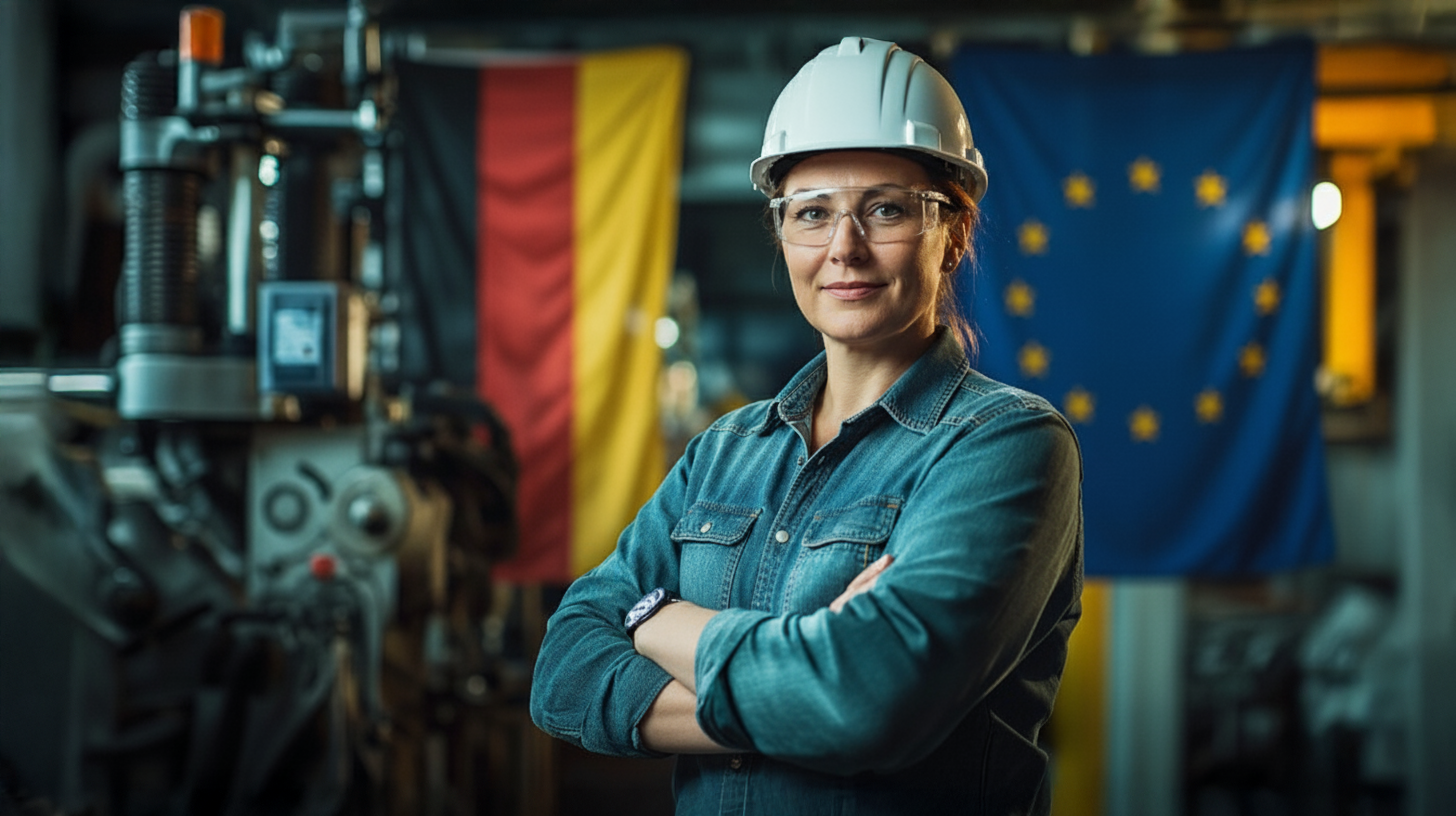
Our EU and German expertise in business development, sales and marketing - Image: Xpert.Digital
Industry focus areas: B2B, digitalization (from AI to XR), mechanical engineering, logistics, renewable energies and industry
More information here:
A thematic hub offering insights and expertise:
- Knowledge platform covering global and regional economies, innovation and industry-specific trends
- A collection of analyses, insights, and background information from our key areas of focus
- A place for expertise and information on current developments in business and technology
- A hub for companies seeking information on markets, digitalization, and industry innovations
Defense, AI and finance: The secret details of the new EU-Canada pact
Artificial intelligence needs more than values
Collaboration in artificial intelligence and semiconductors is particularly attractive from an economic perspective because the strengths of both sides complement each other. Canada boasts an internationally recognized AI research ecosystem with centers in Toronto, Montreal, and Edmonton. Europe has strong industrial users, highly specialized research institutions, expertise in mechanical engineering, and a large, regulated market. Both sides want to avoid becoming permanently dependent on a few American or Asian suppliers for computing power, cloud infrastructure, and advanced semiconductors.
Since 2024, Canada has participated in the second pillar of the European research program Horizon Europe. This allows Canadian institutions to participate in international consortia, lead projects, and receive direct funding. The second pillar encompasses collaborative research on global challenges and industrial competitiveness. This is complemented by the Digital Partnership, established in 2023, whose first ministerial meeting took place at the end of 2025. The agenda ranges from AI and high-performance computing to quantum research and semiconductors, as well as digital identity, data spaces, and cybersecurity.
However, political proximity should not obscure structural weaknesses. Neither Canada nor the EU possesses a complete value chain for leading AI chips on its own. Both depend on global suppliers for graphics processors, manufacturing facilities, cloud services, and specialized components. A joint strategy can reduce this dependency, but not eliminate it in the short term. It should therefore focus on realistic niches: energy-efficient data centers, secure cloud architectures, industrial AI, trusted models, quantum communication, semiconductor materials, and specialized chip development.
Canada's natural resources and affordable energy could be combined with European engineering and industrial demand. Joint data centers in regions with clean energy, mutual access to high-performance computing, and coordinated research programs are all conceivable. For companies, it would also be crucial that certifications and security requirements are as compatible as possible. Otherwise, differing regulatory approaches to AI, data protection, and data transfers could create new trade barriers.
Europe tends towards detailed regulation, while Canada often favors more flexible, principle-based approaches. A deeper partnership should not aim for complete legal harmonization, but rather verifiable equivalence. Companies could then demonstrate that their systems meet common security objectives without having to undergo identical procedures in both markets. In this way, regulation would transform from a hindrance into a competitive advantage over less trusted technologies.
Defense becomes the industrial link
Security and defence policy has become the fastest-growing area of integration. Canada and the EU concluded a Security and Defence Partnership in June 2025. This partnership encompasses, among other things, military mobility, maritime security, space security, cybersecurity, crisis management, and defence industry cooperation. Subsequently, Canada became the first non-European country to participate in the European procurement instrument SAFE.
Economically, this means access to a growing market. The SAFE instrument mobilizes up to €150 billion in loans for joint European defense procurement. Canadian companies can participate in supported projects as contractors or suppliers under agreed conditions. For Canada, this opens up sales opportunities, economies of scale, and closer integration with European manufacturers. For Europe, it expands the pool of trusted suppliers, which is significant given limited production capacity.
Cooperation is particularly beneficial in areas where Canada possesses existing capabilities or geographical advantages: aerospace, sensors, satellite communications, Arctic surveillance, cyber technology, munitions, vehicles, and raw materials for defense systems. Joint procurement can reduce unit costs and improve interoperability within NATO. At the same time, Europe should not simply purchase American systems through Canadian subsidiaries if the political goal is to build its own independent industrial capabilities.
Contract design must therefore precisely regulate rules of origin, intellectual property, security checks, and access to confidential information. The question of how much value creation must actually take place in Canada or Europe is also politically sensitive. Overly strict requirements increase procurement costs and slow down production. Overly lenient requirements could channel public funds into supply chains that remain strategically controlled outside of both regions.
For Canada, the cooperation also offers leverage to use its own defense spending more productively. Instead of financing small national production runs on its own, the country could participate in larger European programs. Conversely, the EU gains access to Canadian technology and production capacity. This transforms defense policy into industrial policy. However, success depends on whether declarations of intent translate into joint orders and long-term production plans.
Financial markets as an underestimated problem area
Carney's proposal to explore a more integrated market for financial services is particularly ambitious. Canada has a concentrated, relatively stable banking system, large pension funds, and considerable experience in long-term infrastructure investments. Europe has deep capital markets, but its financing remains highly fragmented. Differing national rules, regulatory frameworks, insolvency procedures, and tax regimes already hinder cross-border investment within the EU.
A complete integration of Canadian and European financial markets would therefore be difficult to achieve in the short term. More realistic are mutual recognition of selected regulatory rules, simplified licensing for financial service providers, improved fund distribution, and common standards for sustainable finance. Particularly relevant would be the mobilization of Canadian pension funds for European infrastructure, energy, digitalization, and defense. These investors possess long-term capital and experience with large-scale projects.
Conversely, European banks, insurers, and asset managers could increase their activity in Canada. Financing mines, power grids, ports, and data centers requires enormous sums that neither government budgets nor national banks should bear alone. A joint project pipeline with transparent permitting processes and reliable offtake agreements could attract institutional capital.
Payment systems also hold strategic importance. Europe and Canada are partly dependent on American card and technology companies for their digital payment infrastructure. Closer cooperation on instant payments, digital identity, fraud prevention, and central bank-backed infrastructure could reduce costs and increase sovereignty. Data protection, anti-money laundering controls, and cybersecurity must be designed to be compatible in this context.
Political resistance will nevertheless be considerable. Financial regulation touches upon national sovereignty, consumer protection, and fiscal risks. Furthermore, Canada possesses its own federal jurisdictions, while in Europe, national regulators and EU institutions operate alongside one another. An integrated market will therefore emerge more likely through individual regulatory corridors than through one major treaty.
Freedom of movement without European citizenship
The idea of making it easier for young people to live, work, and study on both sides of the Atlantic is likely to be particularly popular. However, it should not be confused with the free movement of workers within the EU. Canadian citizens would not become EU citizens through an association agreement and would not automatically receive unlimited residency or work rights in all 27 member states.
Realistic options include expanded youth mobility programs, longer residence permits, simplified work permits for shortage occupations, and improved regulations for students, researchers, and employees seconded within companies. CETA already contains provisions for the temporary entry of certain business travelers and professionals. This could be built upon. A common mobility framework could digitize application processes, shorten processing times, and facilitate the transition between studies and employment.
The biggest practical bottleneck is the recognition of professional qualifications. Doctors, nurses, architects, engineers, and other regulated professions are subject to partly provincial regulations in Canada, and partly to national or European regulations in Europe. A diploma alone does not guarantee access to a profession. Mutual recognition agreements must therefore be drawn up by the relevant professional associations and authorities. This is technically complex, but economically invaluable because both economic regions are suffering from skills shortages and aging populations.
Mobility also raises questions about distribution. Wealthy, highly qualified, and linguistically flexible individuals would benefit disproportionately. Regions with a shortage of skilled workers could fear emigration. A balanced system should therefore promote exchange in both directions and recognize qualifications not only for academic professions but also for technical and skilled trades.
Politically, a mobility agreement would be a powerful symbol of mutual trust. Economically, it could deepen innovation networks, facilitate business start-ups, and accelerate knowledge transfer. Its benefits would potentially be greater than those of further tariff reductions because modern value creation increasingly depends on skills, research, and personal networks.
The limits of Atlantic euphoria
As compelling as the strategic logic may seem, the partnership is not a sure thing. Geographical distance remains a persistent cost factor. Europe cannot replace the American sales market, nor can it replace Canada's North American production integration. Transshipment of trade across the Atlantic is limited, especially for heavy, low-value, or time-sensitive goods. LNG, hydrogen, and raw materials also require infrastructure, some of which does not yet exist.
Furthermore, there are regulatory conflicts. The EU places great emphasis on its food, environmental, data protection, and product standards. Canada, in many sectors, aligns itself with North American standards. Excessive European regulatory involvement could force Canadian companies to develop separate product lines for the US and Europe, thus reducing economies of scale. Conversely, the EU is unlikely to be willing to relax key standards simply to grant Canada preferential access.
Agriculture remains sensitive. European producers fear competition and differing production standards, while Canadian suppliers criticize existing quotas and European approval procedures. Similar conflicts are expected regarding public procurement, digital regulation, and state aid. The closer Canada gets to selected parts of the single market, the more pressing the question becomes of which rules apply and who decides on their interpretation.
Another limiting factor is political stability. The current rapprochement is being accelerated by geopolitical pressure. If Washington changes course, parts of the Canadian economy could once again rely more heavily on the more convenient American option. Governments and priorities also change in Europe. Long-term investments therefore require agreements and institutions that outlast political cycles.
Finally, the term "special membership" could have unintended consequences within the EU. Accession candidates on the European continent might question why a wealthy non-European country receives privileged access without assuming the same political commitments. Member States might also fear that an overly flexible external association would dilute the value of regular membership. The new partnership must therefore clearly demonstrate that it is not a substitute for the accession process of European candidate countries.
No third bloc, but a new axis of power
Carney emphasizes that Canada and the EU do not want to create a third bloc to dominate other major powers. This formulation is diplomatically understandable, but economically, a new axis of power is nevertheless emerging. Whoever coordinates supply chains, defense procurement, standards, research funding, and payment infrastructures concentrates market power. This power does not have to be used aggressively, but it does change the negotiating position vis-à-vis the US, China, and other actors.
The difference lies in the purpose. A closed bloc would systematically regulate trade according to political affiliation and discriminate against outsiders. An alliance of collective resilience, on the other hand, can remain open as long as partners meet common security and reliability criteria. The goal would not be autarky, but a more robust globalization with multiple sources of supply and clear minimum standards.
For Washington, the signal is unmistakable. For decades, the United States could assume that Canada had little economic recourse and that Europe would remain dependent on American leadership in security policy. A closer Canada-EU relationship reduces this asymmetry. It does not replace the US, but it does increase the costs of unilateral pressure.
For China, the partnership means increased competition for raw materials, technology, and standards. Canada and the EU could develop common rules for investment screening, export controls, and secure supply chains. This would not necessarily exclude Chinese companies, but it would limit access to particularly sensitive sectors. At the same time, both sides should avoid confusing economic security with blanket decoupling. China remains a significant market and production hub, and its complete exclusion would incur enormous costs.
The strategic art, therefore, lies in reducing dependencies without creating new, rigid ones. Canada should not simply replace its American focus with a European one. Europe should not view Canada merely as a source of raw materials. The alliance will only be successful if it generates mutual value creation, investment, and technological development.
What a viable model would have to achieve
A credible special partnership requires a clear institutional framework. First, Canada and the EU should define which areas will be formally integrated and which will merely be politically coordinated. Without this distinction, there is a risk of an overloaded agreement that raises high expectations but gets bogged down in national ratification processes.
A multi-tiered model would be sensible. The first tier could consolidate existing agreements: CETA, the strategic partnership, security and defense cooperation, the digital partnership, and participation in Horizon Europe. A second tier could include concrete sectoral agreements on critical raw materials, AI computing power, defense procurement, energy, and mobility. A third tier could establish a political council with regular summits and transparent progress reports.
Companies must see measurable benefits. These include shorter approval times, recognized certifications, interoperable digital identities, easier deployment of skilled workers, and reliable access to funding and procurement programs. Joint investment projects should be prioritized based on economic and security policy criteria. Prestige projects without demand or a viable business model would quickly damage credibility.
Equally important is a fair sharing of the burden. Canada cannot expect access to European programs without contributing financially or adhering to common rules. Conversely, the EU cannot demand that Canada adopt extensive European legislation without participating in its preparation. Consultation rights, observer status, and joint expert committees would be conceivable, but not regular voting rights in EU institutions.
Dispute resolution should be independent and predictable. Political differences over standards, subsidies, or market access should not lead to a fundamental crisis every time. At the same time, democratic control and national responsibilities must be preserved. Precisely because the alliance is breaking new ground, institutional precision is more important than a spectacular name.
An insurance policy with real returns
Economically, the planned alliance is best understood as strategic insurance. Insurance costs money: alternative supply chains are often more expensive, common standards require adjustments, and new infrastructure needs government support. The return on investment only becomes apparent in times of crisis, when deliveries continue, markets remain open, or political blackmail is reduced.
But the partnership can also generate growth under normal operating conditions. Larger procurement markets enable economies of scale. Joint research programs distribute costs and risks. Mobility improves the utilization of human capital. Long-term commodity contracts facilitate investment. Better-connected capital markets can channel private funds into infrastructure. Crucially, these benefits must not only be agreed upon between governments, but actually utilized by businesses, universities, and employees.
The developments under CETA so far provide positive, but not complete, evidence. Trade has grown significantly, but Canada's dependence on the US remains dominant, and regulatory barriers persist. A new alliance must therefore intervene more deeply in the structure of the economy than a traditional free trade agreement. It must change investment decisions, create industrial capacity, and share risks.
The provocative claim that the next EU member state will not be from Europe makes for a catchy headline, but it doesn't reflect reality. Canada will not become an EU member in the foreseeable future. Far more significant is the potential emergence of a new model of international integration: closer than a typical partnership, more flexible than membership, and more strategic than free trade.
Should this model prove successful, its implications extend beyond Canada. The EU would demonstrate its ability to closely integrate trusted democracies into its economic and security space without dissolving its geographical and institutional boundaries. Canada would prove that economic diversification can be achieved not by turning away from its most important neighbor, but by building additional, resilient relationships.
Success will not be measured by the title "associated member." What matters are additional trade and investment flows, actual infrastructure construction, secure raw material supplies, joint research projects, functioning defense programs, and concrete mobility rights. If these results are achieved, the name is secondary. If they fail to materialize, the special membership would be little more than a political narrative in a time of transatlantic uncertainty.
🎯🎯🎯 Data-driven B2B industry hub as a quasi-in-house solution


The quasi-in-house solution: How Xpert.Digital closes operational gaps in B2B marketing and sales – Smart Content-Driven Business - Image: Xpert.Digital
Xpert.Digital is a data-driven B2B industry hub led by Konrad Wolfenstein . The company acts as an external, quasi-in-house solution for industrial partners, closing operational gaps in marketing, content, and sales – without requiring additional resources on the client side.
More information here:
Your global marketing and business development partner
☑️ Our business language is English or German
☑️ NEW: Correspondence in your native language!

Konrad Wolfenstein
I and my team are happy to be available to you as your personal advisor.
You can contact me by filling out the contact form here wolfenstein@xpert.digital:or simply call me at +49 7348 4088 965. My email address is
I'm looking forward to our joint project.