
Why Europe's AI star Mistral is now building its own data centers: Sovereignty instead of US control – an attack on US tech giants – Image: Xpert.Digital
Mistral's billion-euro plan for Europe's digital independence: From model to metal – The radical change of strategy for Europe's AI hope
The US data trap: Why servers in Europe aren't enough – Why industrial giants like Airbus and BMW are suddenly relying on Mistral
Europe's most promising AI company is breaking with the unwritten rules of Silicon Valley: Instead of engaging in an endless battle for the most intelligent language model against giants like OpenAI and Google, Mistral AI is undergoing a profound strategic shift. Backed by billions in investment from renowned partners, the French startup is increasingly transforming itself from a pure software developer into an operator of its own European data centers. The decisive trigger for this move is an often underestimated legal detail that poses a massive threat to the data sovereignty of European companies – the US CLOUD Act. Learn below why the focus in the global AI race is now shifting from pure software to actual hardware and how this step is propelling Mistral to become an indispensable and legally secure alternative for European industry.
Mistral becomes an infrastructure provider: Sovereignty instead of chatbot show – Why Europe's AI future will be decided in the data center
Europe's most prominent AI company has shifted its strategic focus. Mistral AI, founded in 2023 by former researchers from Google DeepMind and Meta, is no longer primarily positioning itself as a provider of language models in the race against OpenAI, Google, and Meta, but increasingly as an operator of its own European computing infrastructure. This shift is not a marketing maneuver, but a reaction to a hardening geopolitical and regulatory reality in which the question of who owns the underlying hardware and legal control over data has become more important than which model performs best in benchmarks.
From start-up to heavyweight: The capitalization of a European exception
The turning point that brought this development to public attention was the Series C funding round in September 2025. The Dutch semiconductor equipment supplier ASML invested €1.3 billion, becoming Mistral AI's largest single shareholder with a stake of approximately 11 percent on a fully diluted basis. The total €1.7 billion round, which also included participation from DST Global, Andreessen Horowitz, Bpifrance, General Catalyst, Index Ventures, Lightspeed, and Nvidia, valued Mistral at €11.7 billion, or approximately US$13.8 billion, making it the most valuable AI company in Europe.
Compared to its US competitors, however, this valuation remains modest. OpenAI was valued at around $500 billion at the same time, exceeding Mistral's valuation by more than 40 times. This gap is the very starting point for the entire strategic realignment: Mistral cannot and does not want to win the pure capital race for the largest and most expensive language models against US hyperscalers with their virtually unlimited funding resources. As early as June 2026, reports circulated about talks for a new funding round of around €3 billion with a targeted valuation of approximately €20 billion, underscoring the company's continued capital accumulation, even if these figures were considered preliminary at the time.
The real change in strategy: From model to metal
The ASML partnership was more than just a financial injection. In addition to the capital, ASML gained a seat on Mistral's strategic committee through CFO Roger Dassen and agreed to a long-term collaboration to integrate AI models across the lithography specialist's entire product range, accelerating research, development, and operations. Analysts like Jan Frederik Slijkerman of ING pointed out that it made more economic sense for ASML to develop AI-based products through a partnership than to build them entirely in-house, while Mistral, in return, gained access to industry credibility and political connections.
However, the real break with its previous strategy only became apparent in the course of 2026. In March and May of that year, Mistral secured approximately US$830 million in debt financing from a consortium of seven banks, including Bpifrance, BNP Paribas, Crédit Agricole CIB, HSBC, La Banque Postale, MUFG, and Natixis, to build its own data center in Bruyères-le-Châtel, southwest of Paris. This facility was designed to house 13,800 Nvidia GB300 graphics processors and provide 44 megawatts of computing power, with a planned commissioning in the second quarter of 2026. With this move, Mistral transitioned from a company that trained and operated AI models on rented cloud infrastructure to a provider that assumed physical control over its own computing capacity.
European infrastructure development is gaining momentum
In parallel with the Paris data center, Mistral expanded geographically. As early as February 2026, the company, together with EcoDataCenter, completed a €1.2 billion investment in a second data center in Sweden. The long-term roadmap envisions a total capacity of 200 megawatts across Europe by the end of 2027, with an ambitious long-term goal of up to one gigawatt or more before 2030, to be achieved in partnership with companies such as Nvidia and the investment vehicle MGX. For comparison, one gigawatt of computing power is roughly equivalent to the electricity consumption of a medium-sized German city, illustrating the industrial scale of this project.
In August 2026, Mistral also presented its Regional Endpoints, which allow customers to specifically choose whether their inference calculations are performed in Europe or the USA to meet data residency, regulatory, and latency requirements. This is complemented by a new Priority Tier with guaranteed service-level agreements for business-critical workloads. Mistral thus positions itself as the only European AI lab to offer both a choice of processing region and a contractually secured operational guarantee. In addition, the company initiated a coalition of large companies and institutions that pool multi-year capacity commitments through so-called European Compute Units to finance the development of additional infrastructure in Europe, without any single participant having to bear this burden alone.
Another significant step followed in May 2026 with the announcement of a separate, ten-megawatt inference computing center in Les Ulis south of Paris, which aimed for an operational start in the third quarter of 2026, as well as the acquisition of the Austrian spin-off Emmi AI, which specializes in physics-based AI models for industrial simulations, for around 300 million euros.
The legal breaking point: Why server location alone is not enough
The central economic driver of this development lies in a legal detail that has long been underestimated: the US CLOUD Act of 2018. This law obligates companies subject to US jurisdiction to hand over data in their possession or control to US authorities, regardless of whether this data is physically stored in the US or in Europe. The decisive factor is not the server location, but the provider's legal presence in the United States. A data center in Frankfurt, Dublin, or Amsterdam does not alter this obligation as long as the operator is subject to US law.
This realization was further reinforced by several political and legal events throughout 2026. A legal opinion commissioned by the German Federal Ministry of the Interior and published by the University of Cologne confirmed that the extraterritorial access rights of US authorities fundamentally undermine the basic principles of European data sovereignty, regardless of the physical location of the data. Particularly explosive was an admission by Microsoft's chief legal officer in France, who, under oath before the French Senate, admitted that the company could not guarantee the transfer of European data to US authorities, even if the servers were located exclusively in European data centers. This statement unequivocally confirmed what data protection lawyers had argued since the Schrems II ruling by the European Court of Justice: contractual commitments regarding data residency cannot override foreign legal access rights.
At the political level, the European Union responded with concrete measures. On May 27, 2026, the European Commission presented a Tech Sovereignty Package, the centerpiece of which is the Cloud and AI Development Act (CADA). This law introduces a four-tiered Union Assurance System, obligating member states to conduct rigorous risk assessments and restricting the use of US cloud providers for sensitive public sector data in the areas of healthcare, finance, and justice. The rationale behind this regulation is the recognition that three US corporations, commonly referred to as hyperscalers, control approximately 70 percent of the European cloud market—a concentration that has itself become a systemic risk. The situation was further exacerbated by political developments in the US: surveys by Kiteworks revealed that 44 percent of European organizations no longer fundamentally trust their cloud provider's sovereignty assurances, while a diplomatic initiative by the US government against European data sovereignty laws further fueled this distrust.
A new dimension of digital transformation with 'Managed AI' (Artificial Intelligence) - Platform & B2B solution | Xpert Consulting

A new dimension of digital transformation with 'Managed AI' (Artificial Intelligence) – Platform & B2B solution | Xpert Consulting - Image: Xpert.Digital
Here you will learn how your company can implement customized AI solutions quickly, securely and without high entry barriers.
A managed AI platform is your all-inclusive, worry-free solution for artificial intelligence. Instead of dealing with complex technology, expensive infrastructure, and lengthy development processes, you receive a ready-made solution tailored to your needs from a specialized partner – often within just a few days.
The key advantages at a glance:
⚡ Rapid implementation: From idea to ready-to-use application in days, not months. We deliver practical solutions that create immediate added value.
🔒 Maximum data security: Your sensitive data stays with you. We guarantee secure and compliant processing without sharing data with third parties.
💸 No financial risk: You only pay for results. High upfront investments in hardware, software, or personnel are completely eliminated.
🎯 Focus on your core business: Concentrate on what you do best. We take care of the entire technical implementation, operation, and maintenance of your AI solution.
📈 Future-proof & scalable: Your AI grows with you. We ensure continuous optimization and scalability, and flexibly adapt the models to new requirements.
More information here:
The new power of sovereignty: How Mistral is changing the AI market in Europe
Sovereign AI as an award criterion instead of mere lip service
This tightening of regulations is fundamentally changing market dynamics. What until recently was considered a political commitment to digital sovereignty is increasingly becoming a concrete condition for public tenders and company policies. A particularly significant date was August 2, 2026, when the enforcement powers of the EU AI law for general-purpose AI systems and the transparency obligations under Article 50 came into effect. For European companies, this transformed the question of where an AI application actually runs and who is liable in the event of damage from a philosophical debate into a concrete procurement issue with clear deadlines.
In this changing environment, Mistral strategically positioned itself as a provider of structural sovereignty, offering a complete stack consisting of headquarters within GDPR jurisdiction, announced EU inference capabilities, and openly accessible model weights under the Apache license, which customers can also fully self-host. Paying industrial clients now include companies such as Airbus, BMW, ASML, and the shipping company CMA CGM. This approach allows Mistral to clearly differentiate itself from US providers who, while increasingly operating European data centers, remain subject to the CLOUD Act due to their US corporate structure. It is important to clarify that sovereignty is not synonymous with data residency: While a data center in Frankfurt fulfills the residency requirement, if the operator is US-owned, the fundamental vulnerability to the CLOUD Act remains.
Interestingly, even US technology companies have recognized this market dynamic and are attempting to position themselves as partners rather than competitors in European sovereignty efforts. In July 2026, Microsoft and Mistral announced an expansion of their strategic partnership, under which Microsoft is co-financing the development of Mistral's own computing infrastructure with several billion US dollars over several years, including thousands of next-generation Nvidia Vera Rubin graphics processors. This seemingly paradoxical situation, in which a US hyperscaler finances European sovereignty infrastructure, can be explained by the fact that Microsoft gains access to sought-after European enterprise customers who insist on sovereign computing solutions, while Mistral gains additional capital for its own infrastructure expansion. The Mistral Medium 3.5 and OCR 4 models have since been available via Microsoft Foundry and Copilot Studio, allowing companies to choose between full cloud usage, hybrid, cloud-connected on-premises environments, and fully isolated installations.
Economic reality behind the sovereignty narrative
Despite the compelling strategic narrative, the economic reality is stark. Sovereignty doesn't come cheap. According to Mistral's own pricing documents, using the Mistral Large model via the standard API costs two US dollars per million input tokens and six US dollars per million output tokens, while the more affordable batch processing, with a 50 percent discount, costs one US dollar and three US dollars, respectively. While this pricing structure is in line with comparable offerings, it demonstrates that the sovereignty premium is real, and companies must carefully consider how much control over legal territory and infrastructure is worth to them.
From a business perspective, it's also important to consider that building its own data centers requires enormous capital intensity, which represents a significant financial burden for a company the size of Mistral. The combination of equity financing from institutional investors and debt financing from a banking consortium demonstrates that Mistral is deliberately combining different sources of capital to diversify risk and limit shareholder dilution. This model differs significantly from the pure equity financing that dominated recent funding rounds for companies like OpenAI and Anthropic, and may reflect a more realistic assessment of its own growth momentum.
The role of Amadeus and other anchor customers
The role of companies like Amadeus as part of the infrastructure alliance, mentioned in the original article, cannot currently be substantiated with the same level of detail in publicly available sources as the ASML partnership or the Microsoft collaboration. However, the participation of Airbus, BMW, ASML, and CMA CGM as paying industrial customers within Mistral's European Sovereign AI strategy is documented and has been repeatedly confirmed. These companies specifically represent sectors with particularly high demands regarding data protection, intellectual property, and regulatory compliance, such as aerospace, automotive, semiconductor manufacturing, and international logistics. This customer structure underscores that Mistral's sovereignty offering is resonating with European industrial groups with complex, often internationally distributed value chains, precisely because these companies would be most affected by the uncertainties surrounding the CLOUD Act.
Competitive landscape: Mistral is not alone
The trend toward European sovereignty infrastructure is not limited to Mistral. In May 2026, the consulting group BearingPoint launched its own fully autonomous sovereignty stack with a data center in Graz, Austria, specifically designed for sensitive EU AI workloads, thus positioning itself as an established European full-service provider outside the hyperscalers. The European Parliament also responded to the changing landscape, launching its EPGenAI Hub in July 2026. This partially autonomous AI infrastructure for approximately 10,500 employees integrates models from Mistral, OpenAI, Meta, and Anthropic, with data remaining within the institution's internal private cloud. These examples demonstrate that the demand for European-controlled AI infrastructure is a broader phenomenon than a single company, even though Mistral occupies a particularly prominent position due to its dual role as model developer and infrastructure operator.
Classification: Between opportunity and structural vulnerability
Mistral's strategic repositioning as an infrastructure provider can be interpreted economically as a rational response to three parallel developments: the practical impossibility of keeping pace with US hyperscalers in the pure capital race for ever-larger cloud models, the increasing regulatory tightening in Europe towards US cloud providers, and a growing demand from industrial customers for verifiable, architecturally embedded sovereignty rather than mere contractual assurances. The construction of its own data centers, the partnership with ASML, and the combination of equity and debt financing are consistent building blocks of this strategy.
At the same time, a certain structural vulnerability remains. Mistral's current valuation of around twelve to twenty billion euros is far below the capital strength of its US competitors, which limits the scope for the parallel expansion of model development and physical infrastructure. Moreover, the fundamental legal question of whether European cloud and AI providers are truly completely immune from foreign legal recourse remains unresolved, especially given the continued involvement of international supply chains, semiconductor manufacturers, or cloud partners with US connections. The dependence on Nvidia chips, which are themselves subject to US export controls, demonstrates that complete technological sovereignty remains, in practice, a matter of degree and is not absolutely achievable. Nevertheless, Mistral's development marks a turning point in the European AI debate, moving away from mere model rhetoric and toward a sober assessment of hardware, the legal framework, and control over critical digital infrastructure.
Your global marketing and business development partner
☑️ Our business language is English or German
☑️ NEW: Correspondence in your native language!

Konrad Wolfenstein
I and my team are happy to be available to you as your personal advisor.
You can contact me by filling out the contact form here wolfenstein@xpert.digital:or simply call me at +49 7348 4088 965. My email address is
I'm looking forward to our joint project.
☑️ SME support in strategy, consulting, planning and implementation
☑️ Creation or realignment of the digital strategy and digitization
☑️ Expansion and optimization of international sales processes
☑️ Global & Digital B2B trading platforms
☑️ Pioneer Business Development / Marketing / PR / Trade Fairs
📈🚀 From visibility to trust 👀🤝 Your scalable path with Xpert.Digital

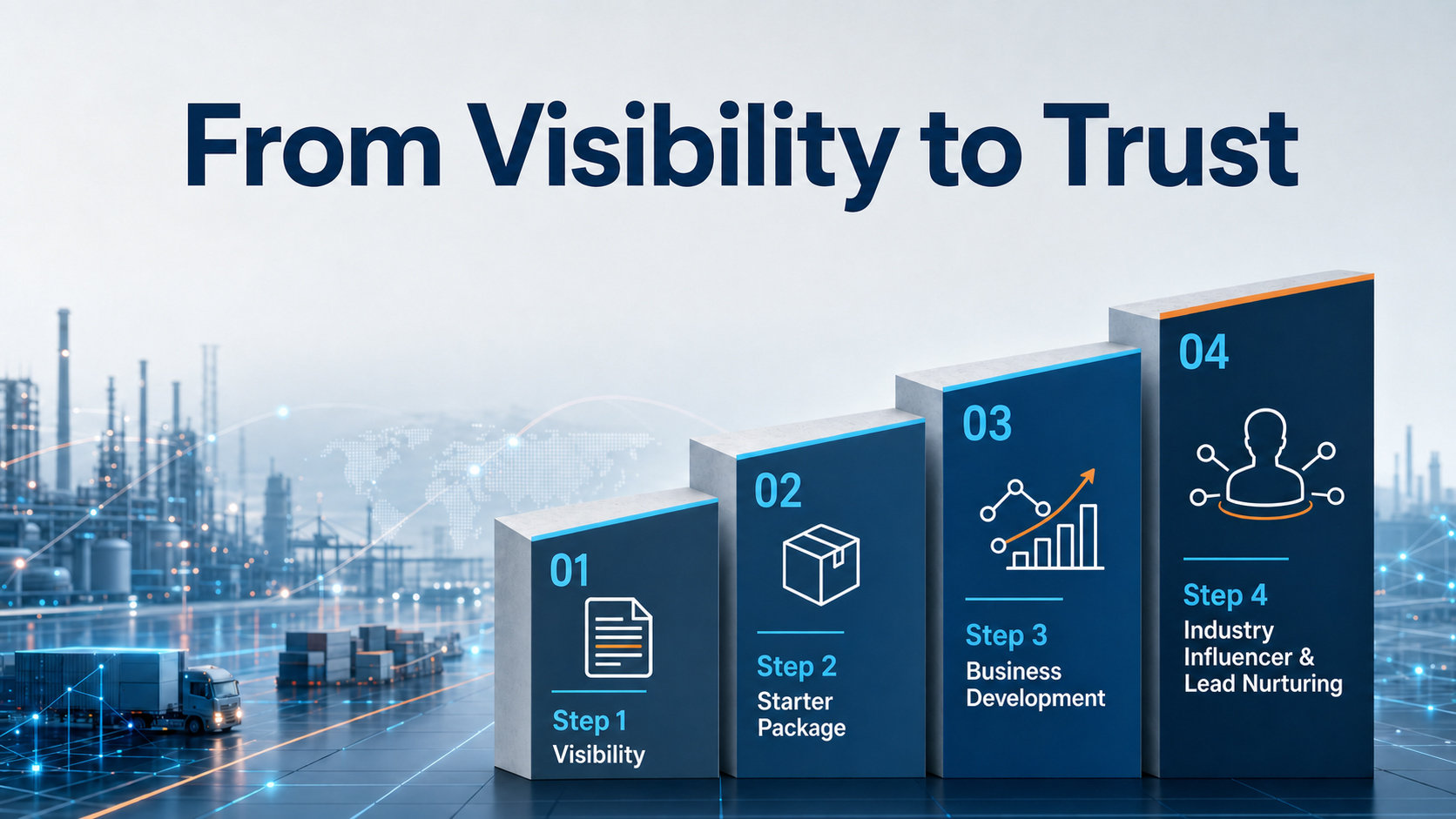
From visibility to trust: Your scalable path with Xpert.Digital - Image: Xpert.Digital
In industrial B2B, sustainable business relationships rarely emerge overnight. They develop step by step – through visibility, professional relevance, recurring touchpoints, and growing trust. Xpert.Digital's 4-stage model addresses precisely this: It offers a structured path that begins with a manageable entry point and can evolve into deeper collaboration in business development if needed.
Instead of relying on loud marketing promises, this model puts the relationship at the forefront. Companies start with clearly defined, easily calculable measures and then decide, based on their own experience, how far they want to expand the collaboration. A key factor for this undisturbed trust-building process: The platform completely avoids annoying advertising ads, so the editorial focus remains solely on the companies' expertise.
More information here: