Tax rate with 0% VAT on solar power systems – Image: Xpert.Digital
The Federal Council's approval of the 2022 Annual Tax Act is still pending, but is expected on December 16, 2022. More information on the current status of the federal legislative process can be found below.
The 2022 Annual Tax Act (Section 12 Paragraph 3 of the new VAT Act) provides a 0% VAT reduction for the supply of solar modules, including components (e.g., inverters, but not the mounting system) and electricity storage systems for operating a photovoltaic system, if it is installed on or near private residences, apartments, as well as public and other buildings used for the common good. The installed gross capacity of the photovoltaic system must not exceed 30 kWp, as per the Market Master Data Register.
Furthermore, the DIHK (Association of German Chambers of Industry and Commerce) is working to obtain clarification and further details from the Federal Ministry of Finance as quickly as possible. No further information is currently available beyond what is presented here.
The current development

The current progress in the federal legislative process
Related to this:


Tax exemption: Tax boost for solar expansion now approved by the Bundestag!
Related to this:

Top selling point for solar installers: No more tax on solar systems
Related to this:
The subtle difference between tax exemption and zero tax rate
A '0% tax rate' differs from a tax exemption in that the supplier does not charge VAT on the consideration for its services (e.g., sales), but can claim full input tax deduction for all input services (e.g., purchases) related to its services.
How does the 0% tax rate work – input tax & sales tax?
Zero rate only applies to services provided to operators or end customers
End customer = customer for whom a product or service is ultimately intended, also called consumer.
The reduction of the tax rate to 0% applies only to services provided to the operator of the photovoltaic system (generally the end consumer or private household). Deliveries from manufacturers, wholesalers, or retailers to individuals and companies that are not operators of the photovoltaic system remain subject to the standard tax rate.
The application of the 0% tax rate is limited to the following services (according to § 12 para. 3 UStG):
- Delivery of solar modules, including all components necessary for the operation of a solar power system, as well as energy storage systems, to the operator of the solar power system. This applies if the solar power system is installed on or near private residences, apartments, and public or other buildings used for activities serving the common good.
- The intra-Community acquisition of eligible goods.
- The import of eligible parts.
- The installation of subsidized facilities and electricity storage systems.
19% tax rate: Application example for companies
Purchase of a solar module from a wholesaler. The solar module costs €120 net at the wholesaler. (Gross invoice amount from the wholesaler = €120 + €22.80 / 19% VAT)
This results in input tax (19%) of €22.80 (from the purchase price of €120) for the purchasing retailer.
The retailer now sells the solar module to the end customer for €160 net, plus 19% VAT. This totals €190.40 (including €30.40 from 19% VAT).
The sales tax is therefore stated on the invoice that is issued when a sale or service is completed, while the input tax is noted on the invoice for the purchase.
The retailer therefore incurs a tax liability of €30.40 minus the €22.80 input tax that was previously paid to the wholesaler.
This leaves a remaining tax debt of €7.60.
This must be reported to the tax office in the next VAT return, which will then be collected by the tax authorities.
0% tax rate: Application example for companies
Purchase of a solar module from a wholesaler. The solar module costs €120 net at wholesale.
This results in input tax (19%) of €22.80 (from the purchase price of €120) for the purchasing retailer.
The retailer now sells the solar module to the end customer for €160, taking into account the 30 kWp presumption rule. Therefore, the customer will not be charged any additional taxes. The VAT is 0% and €0.
Sales tax is a so-called consumption tax. It is also called 'value-added tax'.
The retailer is now entitled to a VAT refund, which was previously paid to the wholesaler.
The input tax of €22.80 already paid to the wholesaler can be reclaimed from the tax office via the next VAT return.
What is the preliminary VAT return?
Many businesses are required to submit preliminary VAT returns monthly or quarterly, among other things to report and pay VAT already incurred to the tax office or to receive a refund in the case of a VAT surplus. In the final VAT return at the end of a calendar year or a possibly shortened period, the VAT prepayments already made are credited.
Meaning and purpose
Value-added tax (VAT) is an annual tax. Submitting preliminary VAT returns reduces the risk of payment defaults for the government and provides it with an interest advantage. It also allows businesses to spread their VAT burden more evenly throughout the year, thus avoiding payment difficulties at the beginning of the following year. Conversely, businesses benefit from an interest advantage when receiving VAT refunds.
Period, deadline and extension of deadlines
The filing period for preliminary VAT returns is generally based on the previous year's VAT liability. The tax office determines the filing obligation; if the filing period changes, the business owner will be notified. The standard filing period is the calendar quarter. However, if the previous year's VAT liability did not exceed €1,000, the tax office may exempt the business owner from the obligation to file preliminary returns and make advance payments for the following calendar year. If the previous year's VAT liability exceeded €7,500, preliminary VAT returns must be filed monthly in the following year. Newly established businesses must always file monthly preliminary returns for the first two years (Section 18 Paragraph 2 of the German VAT Act).
If the total surplus from refunds exceeds €7,500, the business owner may voluntarily submit monthly preliminary VAT returns. With the exception of this regulation, the filing period is not freely selectable (§ 18 para. 2a UStG).
The preliminary tax return must be submitted to the responsible tax office by the 10th day after the end of a preliminary tax return period.
Upon application, a permanent extension of the deadline can be granted, extending the deadline for submitting a preliminary VAT return by one month (§ 46 UStDV). No justification is required for the application for a permanent extension.
For monthly filing requirements and extended filing deadlines, a special advance payment of 1/11 of the total advance payments from the previous year is due annually. For newly established companies, the special advance payment is based on the anticipated sales in the founding year and, in the following year, on the total sales of the previous year projected to a calendar year (§ 47). The special advance payment is credited against the tax liability for the December filing period. No special advance payment is required for quarterly filing requirements.
Reporting characteristics and transmission format
The taxpayer must calculate the value-added tax (VAT) liability or refund themselves (self-assessment), declare it in a preliminary VAT return, submit it to the tax office, and pay any VAT liability on time. Because the tax is self-calculated, VAT is a self-assessment tax (§ 150 para. 1 sentence 3 AO). Thus, it is essentially a self-assessment tax. The submission of the preliminary VAT return is equivalent to a tax assessment subject to review (§ 168 sentence 1 AO). If the tax return results in a refund or a reduction of tax already due, it is only equivalent to a tax assessment once the competent tax authority approves it (§ 168 sentence 2 AO).
Until 2004, data was submitted using a paper form or, voluntarily, electronically. Since 2005, advance tax returns must be submitted online via the ELSTER system. This can be done either directly through the ELSTER portal or using third-party software. Electronic transmission was possible years before the introduction of the ELSTER procedure. This was based on the "Ordinance on the Submission of Tax Returns on Machine-Readable Data Carriers and on Remote Data Transmission" (Tax Return Data Transmission Ordinance – StADÜV of October 21, 1998).
Since January 1, 2013, electronic transmission must be authenticated.
If there is no possibility of submitting the tax return electronically, a preliminary VAT return can still be submitted in paper form under certain conditions (hardship case).
What is the 30 kWp presumption rule?
According to the DIHK (Association of German Chambers of Industry and Commerce), suppliers and installers of PV systems will in future have to differentiate between small systems for which the zero tax rate applies or not.
Due to the 30 kilowatt-peak presumption rule, suppliers and installers of PV systems generally do not to inquire about the building's intended use from the buyer. However, documentation is required confirming that the system in question is under 30 kilowatt-peak (kWp).
It is not yet clear whether a simple note on the invoice is sufficient to indicate that the purchase is for a system under 30 kWp.
📣 Solar solutions for industry, retail and municipalities
Everything from a single source, specifically designed for solar solutions for large parking areas. Refinance or offset your future costs with your own electricity generation.
👨🏻 👩🏻 👴🏻 👵🏻 For private households
We're local! We provide consultation, planning, and installation services. We have attractive solar solutions for you, from your roof and patio to your parking space
🎯 For solar installers, plumbers, electricians and roofers
Consultation and planning including a non-binding cost estimate. We connect you with strong partners in photovoltaics.
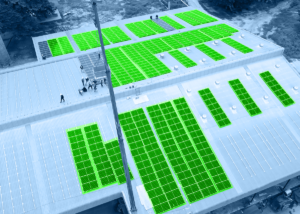
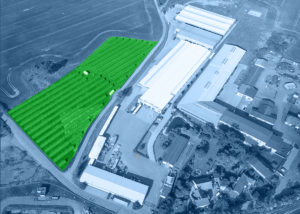


- Planning photovoltaics on warehouses, commercial buildings and industrial buildings
- Industrial plant: Planning a photovoltaic open-field system or open-area system
- Planning solar power systems with photovoltaic solutions for freight forwarding companies and contract logistics
- B2B Solar Systems and Photovoltaic Solutions & Consulting
That's why you should choose Xpert.Solar for your photovoltaic system consultation, planning and installation: Rooftop solar systems with electricity storage, solar terraces and/or solar carports!

Konrad Wolfenstein
I would be happy to serve as your personal advisor.
You can contact me by filling out the contact form below or simply call me on +49 7348 4088 965 .
I'm looking forward to our joint project.
Write to me


Xpert.Digital – Konrad Wolfenstein
Xpert.Digital is a hub for industry focusing on digitalization, mechanical engineering, logistics/intralogistics and photovoltaics.
With our 360° Business Development solution, we support renowned companies from new business to after-sales.
Market intelligence, smarketing, marketing automation, content development, PR, mail campaigns, personalized social media and lead nurturing are part of our digital tools.
You can find more information at: www.xpert.digital – www.xpert.solar – www.xpert.plus
Keep in touch