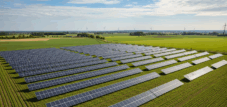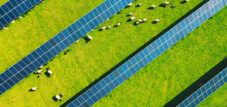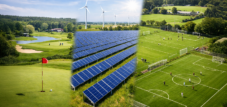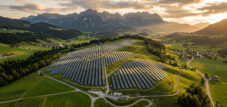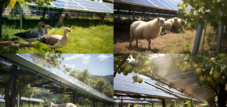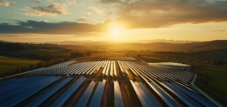
Solar parks as pastureland – Study refutes the land myth: Why solar parks and agriculture are actually partners – Creative image: Xpert.Digital
Sheep under solar panels: How this simple idea could end the biggest dispute of the energy transition
Lease shock and land battle: Why we need to completely rethink classic solar parks
More than just electricity: A controversial study shows that solar parks are real pastureland
The energy transition needs space – but the dispute over valuable agricultural land often hinders the expansion of photovoltaics. Are solar parks and agriculture truly natural enemies? A new, groundbreaking study by the German Association of New Energy Industries (bne) now refutes one of the most persistent assumptions of German land-use policy. The researchers show that conventional solar parks are by no means wasted space for food production, but are ideally suited as biodiverse pastureland for sheep and cattle. From this simple insight arises a demand with enormous political and economic implications: Grazing in solar parks must be legally recognized as full-fledged agriculture. Our comprehensive analysis sheds light on why this step has the potential to defuse the land conflict, open up lucrative prospects for farmers, and challenge Germany's strict building regulations.
When photovoltaics and agriculture are not enemies, but partners: How a study is changing what politicians have so far refused to acknowledge
A new study by the German Association of New Energy Industries (bne) has reignited a debate in early March 2026 that has been raging in Germany for years with increasing intensity: How much agricultural land should the energy transition be allowed to claim – and does it even have to be an either-or question? The answer presented by the bne in its research report "Agricultural Value of Solar Parks" is as simple as it is politically explosive: Even conventional, structurally unmodified solar parks can be used as pastureland – and this form of land use should be legally recognized as fully-fledged agriculture. This finding may sound innocuous, but it has the potential to fundamentally shake one of the most persistent assumptions of German land-use policy.
The study and its key findings – scientific basis and research design
The research project "Agricultural Value of Solar Parks" was led by Dr. Dina Hamidi (University of Göttingen) and Dr. Christoph Hütt (University of Cologne). A total of five different ground-mounted photovoltaic systems at locations across Germany were examined: the Lottorf and Klein-Rheide solar parks in Schleswig-Holstein, the Gottesgabe solar park in Brandenburg, the Lauterbach solar park in Hesse, and the Dwergte experimental solar park in Lower Saxony. The study systematically analyzed the forage quality and availability of the grassland within these systems, as well as the vegetation under and between the rows of modules, and compared these findings with conventional reference areas.
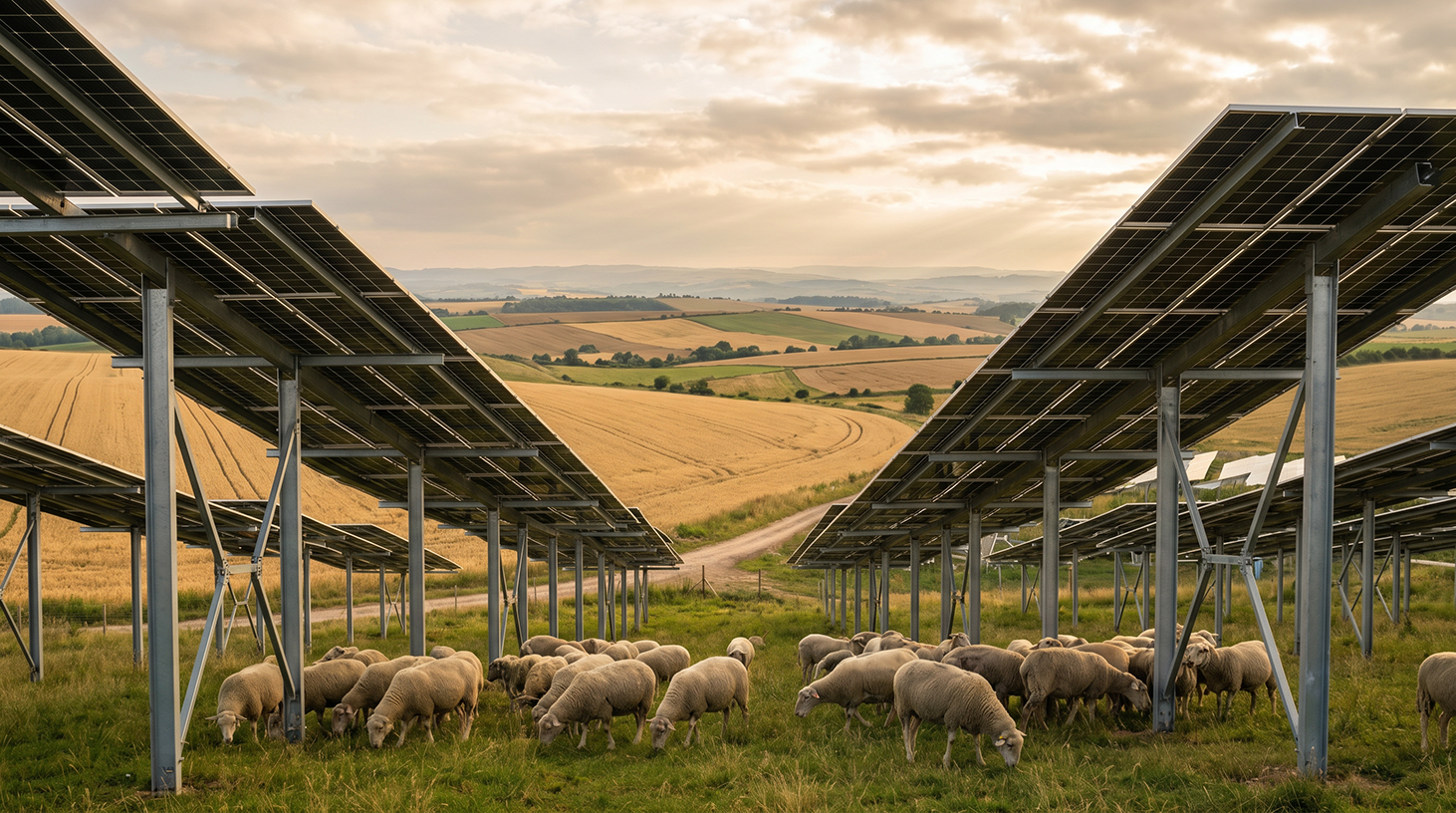
The results are clear: The grassland in the solar parks studied has sufficient forage quality to feed grazing animals such as sheep and cattle. Furthermore, the researchers found that the spatial heterogeneity within the installations – that is, the different growth conditions under the modules compared to the open spaces between them – actually produces a higher biodiversity of vegetation than conventional grassland areas. Increased biodiversity and a higher protein content were observed under the modules themselves, while a greater total biomass was found between the module rows. According to the authors, this combination makes the vegetation a heterogeneous mosaic well-suited for grazing.
Dr. Dina Hamidi and Prof. Dr. Johannes Isselstein from the University of Göttingen put it this way: The PV modules increase the heterogeneity of the growth conditions for the turf, thereby creating niches for plants and animals and promoting biodiversity – measurable by the forage yield, the diversity of plant species and the behavior of grazing animals.
The political demand of the bne
The German Renewable Energy Federation (bne) draws a clear legal policy conclusion from these findings: The management of solar park areas as pastureland should be recognized as agriculture – in addition to existing agri-PV concepts and without requiring special agri-PV construction methods. Robert Busch, Managing Director of the bne, sums up the core issue: Grassland in ground-mounted PV systems is suitable as pasture for sheep and cattle. The animals benefit in two ways: The solar modules offer protection from the sun and weather, and at the same time, a greater diversity of vegetation grows there than on conventional pastureland.
This demand is therefore relevant not only from an agricultural policy perspective but also from a regulatory one. Currently, Germany maintains a strict legal distinction: anyone wishing to classify land as agriculturally used – with corresponding implications for subsidies, direct payments, and area-based premiums under the Common Agricultural Policy (CAP) – must demonstrate compliance with certain requirements. Under current law, a conventional solar park does not fall under this category, even if animals graze on its land. The bne study now provides the scientific basis for challenging this classification.
The debate on land use: Facts beyond the hysteria
How much arable land is actually affected?
Anyone following the public debate about solar parks and farmland in Germany might get the impression that fields will disappear under solar panels within a few years. The figures paint a much more sobering picture. At the end of 2024, ground-mounted photovoltaic systems were installed on approximately 45,000 hectares in Germany. Of this, around 34 percent – or about 15,200 hectares – was on arable land, and around 16 percent was on field margins and grassland. The share of PV systems in the total nationwide arable land area of 11.7 million hectares thus corresponds to a mere 0.1 percent.
The expansion target program envisions a total installed photovoltaic capacity of 215 gigawatts by 2030. Even in this ambitious scenario – and assuming that a significant number of the new installations are built on open land – a maximum of 95,000 to 109,000 hectares in Germany would be covered with photovoltaic systems. This corresponds to a share of at most 0.6 to 0.9 percent of Germany's arable land. RWE's fact check puts it succinctly: Even with full expansion to 215 GW, a maximum of 0.6 percent of Germany's arable land would be affected.
These figures are not a license for uncontrolled growth, but they are crucial for an objective discussion. The actual land use is marginal on a national scale – and it is further reduced by technological efficiency gains: The land requirement per installed megawatt has fallen from around 4 hectares per MW in 2006 to less than 1 hectare per MW in 2024.
Cumulative surface pressure as a real problem
At the same time, it would be wrong to downplay the competition for land. Germany has been continuously losing agricultural land for decades – on average, more than 50 hectares per day. This trend is caused by settlement and transport infrastructure, not primarily by solar parks. But the pressure is increasing from several sides: By 2030, more than 200,000 hectares are slated to be needed for settlement and transport; at the same time, further areas are required for biodiversity and climate protection measures. In total, the Thünen Institute estimates that around 109 hectares of agricultural land could be lost daily by 2030 due to all these competing land uses.
Against this backdrop, any approach that mitigates land-use competition deserves serious political attention. The bne study provides such an approach: If solar parks are used as pastureland and recognized as agricultural land, a significant portion of the land-use competition effectively disappears – at least for grassland management and grazing.
Traditional solar parks vs. agri-PV: An underestimated difference
The debate so far has been too narrowly focused
Anyone following the ongoing discussion about combining agriculture and photovoltaics will almost exclusively encounter the term Agri-PV. This refers to a specific design: In Agri-photovoltaics, modules are positioned so that a maximum of 15 percent of the area is permanently occupied by technology, while at least 85 percent remains available for agricultural production such as arable farming, specialty crops, or pasture. In contrast, with traditional ground-mounted photovoltaic systems, it was previously assumed that land was lost for food production.
This binary distinction has shaped thinking in energy policy: agri-PV good, conventional ground-mounted systems problematic – at least from an agricultural perspective. The Federal Ministry of Agriculture reinforced this framework by providing agri-PV and extensive ground-mounted PV with dedicated tendering segments and higher feed-in tariffs in the 2023 solar package. Conventional ground-mounted systems on arable land, on the other hand, remained under regulatory pressure.
What the study conceptually shifts
The bne study challenges this dichotomy by showing that even conventional solar parks, not designed and approved for agri-PV, can actually be used as pastureland – and in many places, they already are. Grazing with sheep has become a common method of vegetation management in solar parks; sheep are the ideal size to graze under the modules without damaging the technology. They thus act as natural lawnmowers, replacing costly mechanical or chemical maintenance measures.
What was previously considered a side effect – sheep grazing as a practical maintenance solution for solar plant operators – is now viewed in a different light by this study: it is a fully-fledged form of livestock farming on land that simultaneously produces electricity. The conceptual difference to agri-PV is less fundamental than previously assumed. Both forms of land use achieve dual utilization; the difference lies primarily in the design of the module tables and the regulatory framework.
Technical and economic implications
From an operator's perspective, recognizing pasture management in traditional solar parks as agriculture has tangible economic consequences. Farmers who lease their land for solar parks currently receive between €3,000 and €4,500 per hectare per year for conventional ground-mounted solar installations – compared to average agricultural leases of €357 per hectare for grassland in 2023. Arable land averaged €407 nationwide. This massive difference in lease prices – sometimes more than tenfold – is one of the main drivers of social conflict in rural areas.
If solar park areas were simultaneously recognized as agricultural land, farmers could potentially claim direct payments from the CAP – provided they meet the minimum management requirements. This would significantly improve the economic balance of land use for agricultural businesses and strengthen the political acceptance of solar parks in rural areas.
Reactions from agriculture and politics
Farmers' association between skepticism and pragmatism
The German Farmers' Association (DBV) has taken a generally constructive stance in the debate surrounding agri-photovoltaics: It welcomes the integration of agri-photovoltaics as a special type of solar power plant within the Renewable Energy Sources Act (EEG), but simultaneously advocates for the removal of bureaucratic hurdles and greater flexibility regarding self-consumption options. Its basic position is pragmatic: Farmers should have the opportunity to become part of the energy sector without having to completely abandon their land use.
The German Farmers' Association (DBV) has taken a nuanced stance on the specific demand from the German Association for Sustainable Energy (bne) for the recognition of conventional solar park areas as equivalent agricultural land. Theresa Kärtner from the DBV participated in the bne's expert conference on March 11, 2026, where the research findings were presented – together with representatives from nature conservation, science, and state ministries. The central question raised there – whether a combined area should be considered commercial or agricultural land and whether a new legal classification is necessary – remains open.
The Mecklenburg-Western Pomerania Farmers' Association exemplifies this tension: It has long criticized the development of valuable farmland with solar panels, demanding that priority be given to utilizing rooftops, brownfield sites, and conversion areas. In April 2026, the state of Mecklenburg-Western Pomerania responded accordingly, tightening the soil quality limits for solar parks on agricultural land: Large-scale solar installations on arable land and grassland may now only be built on low-yield soils with a maximum soil rating of 25 points for arable land and 30 points for grassland. This represents a significant reduction compared to the previous limit of 40 soil points.
Nature conservation: Scientific consensus with limitations
The Competence Centre for Nature Conservation and Energy Transition (KNE) takes a nuanced position in this debate. It acknowledges the scientific progress represented by the bne studies – both the 2025 biodiversity study and the research report on agricultural value – but cautions against drawing general conclusions. Whether biodiversity and agricultural value actually materialize depends heavily on the location, construction, equipment, and maintenance management of the specific facility. Individual assessments and the definition of compensatory measures remain essential.
The 2025 biodiversity study by the German Association for Sustainable Energy (bne) had previously shown that solar parks on former agricultural land can offer measurable added value for biodiversity: In 31 studied sites, over 380 plant species, 30 grasshopper species, 36 butterfly species, 32 breeding bird species, and 13 bat species were identified. Well-planned solar parks on former agricultural land can create a mosaic of new habitats in the structurally poor agricultural landscape.
New: Patent from the USA – install solar parks up to 30% cheaper and 40% faster and easier – with explanatory videos!

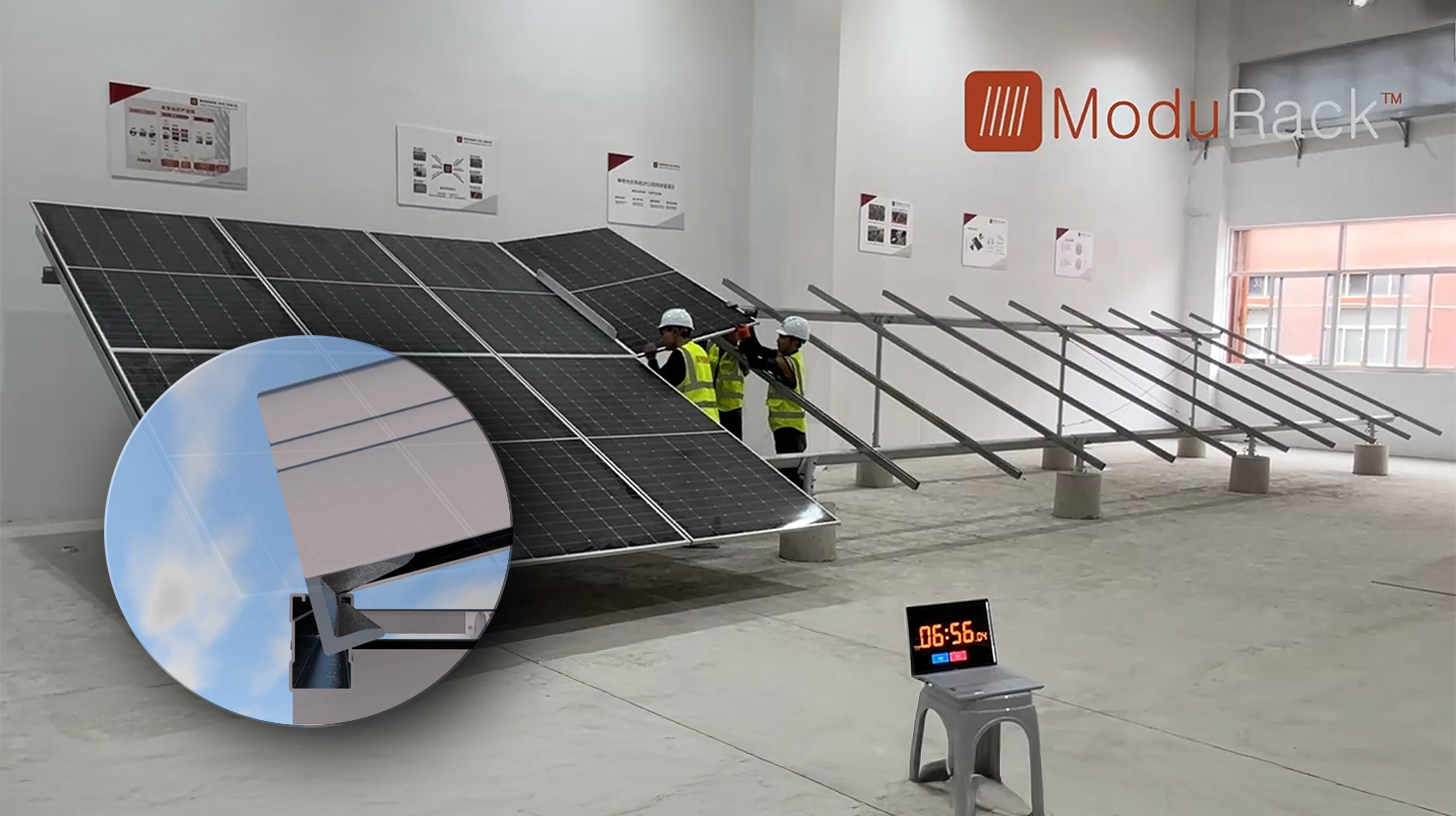
New: Patent from the USA – Install solar parks up to 30% cheaper and 40% faster and easier – with explanatory videos! - Image: Xpert.Digital
The core of this technological advancement is the deliberate departure from conventional clamp mounting, which has been the standard for decades. The new, more time- and cost-effective mounting system addresses this with a fundamentally different, more intelligent concept. Instead of clamping the modules at specific points, they are inserted into a continuous, specially shaped support rail and held securely in place. This design ensures that all forces – whether static loads from snow or dynamic loads from wind – are distributed evenly across the entire length of the module frame.
More information here:
Solar parks as new grassland: How photovoltaics improve soils and relieve the burden on farmers
Soil ecology and reversibility
What happens to the soil
One of the central questions in the debate is the long-term impact of solar parks on soil quality. Research presents a nuanced picture. In well-planned installations, substructures are driven or bolted in place – without concrete or permanent sealing. The soil remains permeable, rainwater can seep into the ground, and the microclimate beneath the modules is often cooler and less windy, which helps retain soil moisture for longer. By foregoing fertilizers, pesticides, and intensive farming, many solar parks create grassland, which represents an improvement in soil functions compared to previous intensive arable farming. When intensively farmed land is converted to permanently vegetated areas, soils can build up humus and improve their filtering capacity.
The German Federal Environment Agency states in its position paper that, compared to pure arable farming, grassland use under ground-mounted photovoltaic systems can promote better filtering and buffering functions in the soil and bind more carbon in the form of humus. This applies provided that construction and operation are carried out in a soil-conserving manner according to the relevant DIN standards.
After the end of their operational life – typically after 20 to 30 years – solar parks can be completely dismantled: piles are removed, modules dismantled, cables removed, access roads dismantled, and the rootable soil layer restored. These dismantling obligations are contractually and financially secured for the owner. The land can then be fully returned to agricultural use – potentially with improved soil properties compared to its original state.
Economic analysis: Who wins, who loses?
The lease price dilemma
The fundamental economic tension in the land-use debate lies in a simple price mechanism: A hectare of arable land leased for agricultural use yields an average of around €407 per year across Germany. For permanent grassland, this figure is considerably lower, averaging €212 per hectare per year. A comparable hectare leased for a conventional solar park, however, fetches between €3,000 and €4,500 per year – sometimes even up to €5,000 in favorable locations. This means that the solar industry can typically pay eight to twenty times the agricultural lease price.
This price difference is the structural cause of the social conflict. Farmers who have leased land and are now losing it to solar investors face existential competition against which they simply cannot compete with the resources of a normal agricultural operation. A grain or beet grower in Rheinhessen or the Hunsrück region who cannot offer his landlords €3,000 to €4,000 in solar park lease fees loses the land – and thus potentially the foundation of his farm.
This displacement logic also has an ambivalent dimension for municipalities. On the one hand, solar parks are economically attractive: they generate revenue for local governments through business taxes, allowing smaller municipalities to create financial flexibility. On the other hand, residents fear the loss of landscape quality and identity. Brandenburg introduced a so-called "solar euro" as a special levy on operators of new ground-mounted photovoltaic systems starting in 2025; similar models now exist in Lower Saxony and Saxony-Anhalt.
Systemic implications of the demand for recognition
The German Association of Energy and Water Industries (bne) is calling for pasture management in conventional solar parks to be recognized as agriculture, with systemic economic consequences that extend beyond individual farms. If this classification were to become reality, farmers who lease or operate their land for solar parks could continue to claim CAP direct payments for the grassland – provided they fulfill the minimum management requirements through sheep or cattle grazing. This would significantly improve the income situation of these farms and could create a model for cooperative land-use agreements between energy project developers and farmers.
At the same time, the legitimacy of such subsidies is questionable: If an area primarily serves electricity generation and grazing is a secondary use, agricultural policy support could be interpreted as subsidy circumvention. At its expert conference on March 11, 2026, the KNE (German Association for Sustainable Development) explicitly pointed out that double funding – i.e., simultaneous EEG (Renewable Energy Sources Act) subsidies for electricity and CAP (Common Agricultural Policy) direct payments for the land – is problematic from a regulatory perspective and should not be a solution based on existing agricultural or subsidy law. Instead, alternative solutions must be developed that combine both forms of land use in a legally sound manner.
Political consequences and levels of action
The framework of the EEG 2023 and its limits
The Renewable Energy Sources Act (EEG) as amended in 2023 establishes a clear regulatory framework: at least half of the annual PV capacity additions must be rooftop installations; the maximum nationwide net addition of ground-mounted PV systems on agricultural land is capped at 80 gigawatts by 2030 and 177.5 gigawatts by 2040. Agri-PV and extensive ground-mounted systems receive their own tender segments with higher feed-in tariffs; in contrast, conventional ground-mounted systems on arable land are at a regulatory disadvantage.
This structure has a clear political logic: it aims to minimize competition for land, incentivize multiple uses, and ensure that the majority of PV expansion occurs on rooftops. However, what the 2023 Renewable Energy Sources Act (EEG 2023) fails to address is how to manage the grassland actually used in existing and future conventional solar parks – and whether grazing on these areas should be recognized under agricultural policy. This represents a regulatory gap that the bne research report directly addresses.
Federal states acting unilaterally
Since the federal government has not yet found a unified answer to the question of dual land use, the German states are increasingly acting independently – sometimes in different directions. Mecklenburg-Western Pomerania is tightening its land value criteria, thereby protecting fertile farmland from being developed by the solar industry. Brandenburg is introducing a financial levy for solar park operators to involve municipalities. Other states are pursuing more pragmatic approaches and allowing more flexibility for ground-mounted solar installations.
This regulatory fragmentation is a disadvantage from an investor's perspective: companies planning projects nationwide are confronted with a patchwork of different state regulations. At the same time, it reflects the genuinely different starting points – in Mecklenburg-Western Pomerania, with its large agricultural areas and a different land-use culture than in Bavaria or Baden-Württemberg, political sensitivities are fundamentally different.
What recognition would specifically mean
The German Association of Sustainable Energy (bne)'s demand for the legal recognition of pasture use in conventional solar parks as agriculture would have four main consequences. First, it would increase the acceptance of solar parks in the agricultural sector because farmers would no longer have to choose between agriculture and energy production. Second, it would unlock potential CAP subsidies for land where livestock are grazed – with corresponding incentive effects for agricultural policy. Third, it would simplify the legal treatment of these areas and create planning certainty for project developers. Fourth, it would credit the agricultural sector with the ecological added value resulting from the combination of grassland development and biodiversity promotion – and thus make it usable in the context of agri-environmental measures and contractual nature conservation.
Comparison with agri-PV: Not competition, but complementarity
Agri-PV remains the more efficient instrument
It would be a misunderstanding to interpret the bne findings as an argument against agri-PV. Agri-PV in its classic form – with elevated or vertically mounted modules that allow for simultaneous mechanical cultivation – remains the more efficient tool for arable farming. The land-use efficiency of agri-PV can reach up to 175 percent when electricity generation and crop yield are combined. Furthermore, for specialty crops such as fruit, wine, or vegetables, agri-PV offers active protection against hail, frost, heavy rain, and sunburn.
The German Farmers' Association considers agri-PV to be the more suitable concept for the genuine integration of agriculture and electricity generation, but calls for the removal of the restriction to arable land and the elimination of the prohibition on using the generated electricity on-site. Ground-mounted PV, on the other hand, achieves the highest electricity yield per hectare, but is considered a competitor for land used in food production.
Classic solar parks as a grassland solution
The framing suggested by the bne study is different: Conventional solar parks on grassland or on formerly intensively farmed arable land that is being converted to extensive farming should not be primarily viewed as competitors for land used for food production if grazing is practiced there. In practice, the distinction between a conventional solar park with sheep grazing and an extensive agri-PV system with sheep grazing is often minimal – while the regulatory differences are considerable.
This raises a fundamental question: Should regulation focus on the form of use (pasture farming) or the design (modular table type, module height)? The bne study implicitly advocates for regulation based on the form of use. This is not trivial – it would mean that the actual agricultural output (grazed area, animals kept, forage biomass produced) would be the benchmark, not the technical specifications of the system.
Economic and social perspective
The energy transition needs social acceptance
Perhaps the most economically significant aspect of the entire debate is an indirect one: the social acceptance of solar parks in rural areas. In many German communities, solar park projects fail not because of technical or economic obstacles, but because of local resistance. This resistance stems from various sources: concerns about landscape changes, worries about the future of farms, and a general unease about the industrialization of rural areas.
When solar parks are recognized as areas where livestock grazing takes place and which therefore retain a recognizably agricultural appearance, these fundamental perceptions change. Sheep grazing under solar panels appear different than empty, fenced-off fields of modules. This effect on acceptance is difficult to quantify, but it is real – and it has direct economic consequences for project development and planning timelines.
Climate adaptation as an additional factor
Another aspect that has received little attention so far is the climate adaptation effect of solar parks combined with grazing. Research from the Potsdam Institute for Climate Impact Research shows that grazing areas will come under significant pressure due to climate change: Depending on the emissions scenario, between 36 and 50 percent of today's climatically suitable grazing areas could lose their usability by 2100. Solar parks combined with grazing offer an interesting synergy here: The modules reduce heat stress for the animals through shading, stabilize feed intake, and can even maintain milk production in increasingly hot summers. This is not an argument that is prominently featured in the current debate – but it deserves to be.
A demand with structural explosive potential
The bne study on the agricultural value of solar parks is more than just another research contribution to an overcrowded debate. It is a conceptual attack on a regulatory dead end: the categorical separation between energy infrastructure and agriculture on open land.
The figures speak for themselves: at the end of 2024, solar parks occupied 0.1 percent of Germany's arable land; even with the ambitious 215 GW expansion target, it would be a maximum of 0.6 to 0.9 percent. There is no question of agriculture being displaced at the national level. The real conflicts arise locally and sectorally – and there they must be taken seriously, as the example of pressure on lease prices shows.
The core message of the bne research report – that conventional solar parks can be used as fully-fledged pastureland and that this form of use should be recognized as agriculture – is scientifically sound and makes logical sense from an agricultural policy perspective. It would create acceptance, open up subsidy instruments, and break down the binary logic of energy versus agriculture.
What's missing is the political will to create a new category: that of agriculturally integrated solar areas, defined not by their module architecture but by their actual use. Research has done its part. Now it's up to the legislature.
Your partner for business development in the fields of photovoltaics and construction
From industrial rooftop PV to solar parks and larger solar parking lots
☑️ Our business language is English or German
☑️ NEW: Correspondence in your native language!

Konrad Wolfenstein
I and my team are happy to be available to you as your personal advisor.
You can contact me by filling out the contact form here wolfenstein@xpert.digital:or simply call me at +49 7348 4088 965. My email address is
I'm looking forward to our joint project.