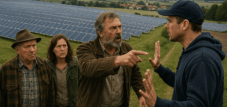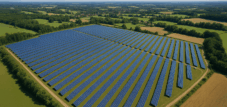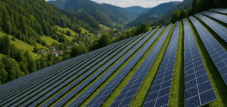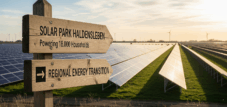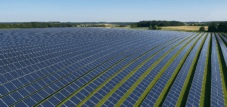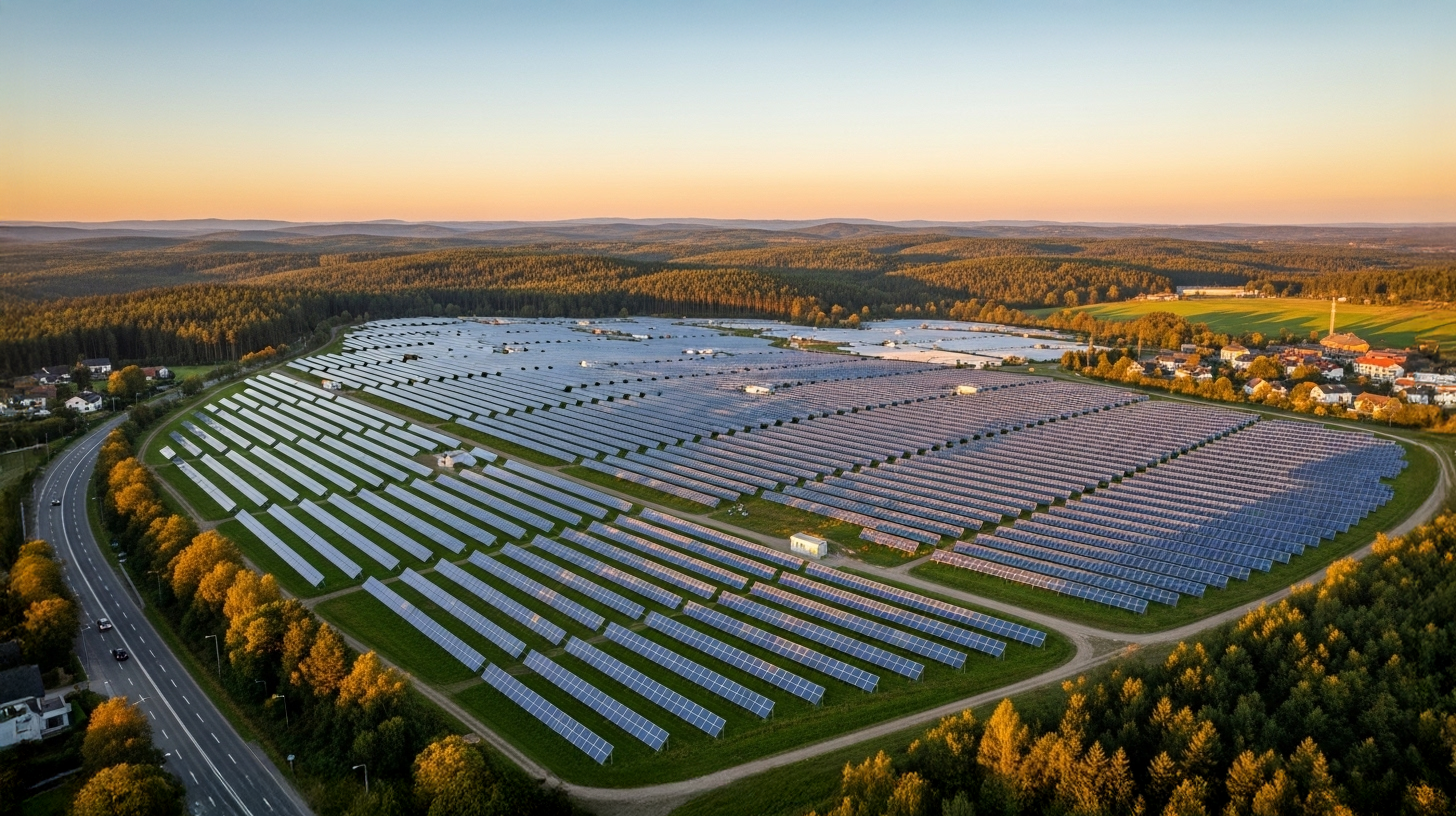
Kronos Solar Projects GmbH from Munich is planning a solar park in Holste (municipality of Hambergen, Lower Saxony) – Creative image: Xpert.Digital
Electricity for thousands of households: Why this 66-hectare solar field in the Ore Mountains is now causing discussion
Solar park development in Germany: Between potential and challenges
The development of solar parks in Germany is undergoing a remarkable transformation. With over 4.2 million installed photovoltaic systems and a total capacity of 98 to 107 gigawatts, solar energy accounts for approximately 18 to 20 percent of the German electricity mix. At the same time, ambitious expansion targets and complex permitting processes are creating new challenges for project developers like Kronos Solar Projects GmbH from Munich, which is currently advancing projects such as the planned solar park in Holste.
The current market situation in Germany
Germany has developed into one of Europe's most important solar markets in recent years. Annual installations reached a new record high of 16.7 gigawatts in 2024. This dynamic is reflected in the regional distribution, with Bavaria continuing to lead with over 26,000 megawatts of installed capacity, followed by Baden-Württemberg and North Rhine-Westphalia.
The energy transition has given the solar industry a tremendous boost. Vattenfall, for example, plans to install around 500 megawatts of solar power and 300 megawatts of large-scale batteries annually, often in the form of agrivoltaic systems that combine energy production and agriculture. This development shows that solar energy has evolved from a niche technology to a key pillar of the German energy system.
Project development and approval process
Developing a solar park is a multi-year process that involves significant planning and legal challenges. The process is typically divided into three main phases: planning and development, construction, and operation.
The planning phase begins with land acquisition and an assessment of the suitability of potential sites. Factors such as solar radiation, soil conditions, proximity to utility connections, and local circumstances play a crucial role. A key aspect is the early involvement of all relevant stakeholders, particularly municipalities, authorities, and the local population.
The approval process itself is complex and time-consuming. Most ground-mounted photovoltaic systems require a zoning plan procedure, which takes an average of 12 to 24 months. This zoning plan forms the basis for the subsequent building permit and must be submitted to the local decision-making bodies for approval.
Privileged areas and accelerated procedures
A significant simplification came with the law for the immediate improvement of the framework conditions for renewable energies in urban planning law, which has been in force since January 2023. Solar parks along highways and railway lines are now considered privileged projects under the building code, meaning that a development plan is generally no longer required.
This preferential treatment allows for significantly faster approval processes and makes projects more economical. However, restrictions apply, such as the 40-meter no-planting zone along highways, which reduces the usable area from 200 to 160 meters.
Financial participation of the municipalities
A key element for the acceptance of solar parks is the financial participation of the host communities. The Renewable Energy Sources Act 2023 allows plant operators to pay up to 0.2 cents per kilowatt-hour of solar power fed into the grid to the affected municipalities. This regulation applies to both subsidized EEG projects and subsidy-free projects with power purchase agreements.
The financial benefits for municipalities are not limited to these direct payments. Additional revenue is generated from leasing municipal land, involving local companies for maintenance and upkeep, and positive image effects from innovative energy projects.
New: Patent from the USA – install solar parks up to 30% cheaper and 40% faster and easier – with explanatory videos!

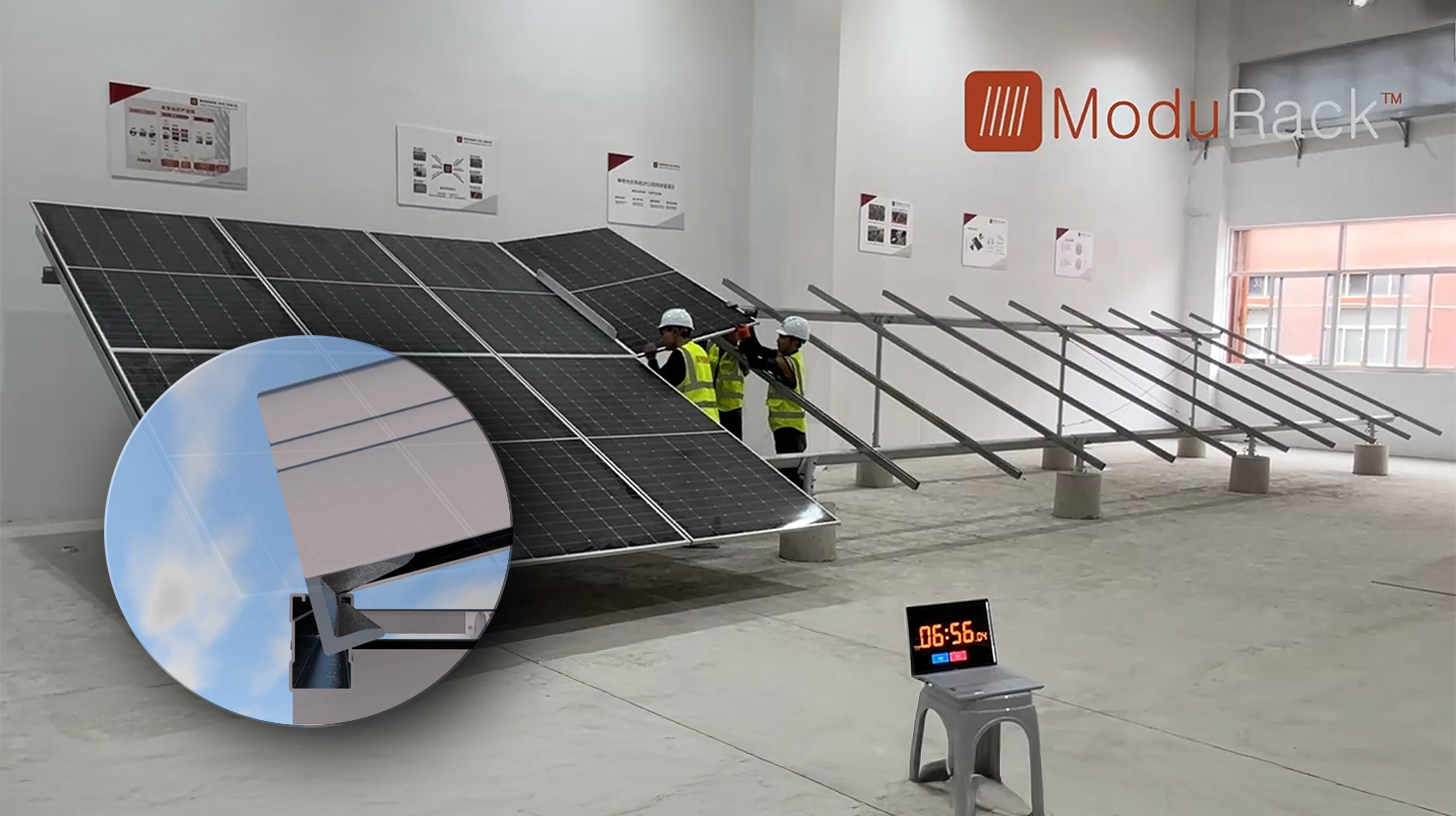
New: Patent from the USA – Install solar parks up to 30% cheaper and 40% faster and easier – with explanatory videos! - Image: Xpert.Digital
The core of this technological advancement is the deliberate departure from conventional clamp mounting, which has been the standard for decades. The new, more time- and cost-effective mounting system addresses this with a fundamentally different, more intelligent concept. Instead of clamping the modules at specific points, they are inserted into a continuous, specially shaped support rail and held securely in place. This design ensures that all forces – whether static loads from snow or dynamic loads from wind – are distributed evenly across the entire length of the module frame.
More information here:
Bottlenecks, falling market values and new technologies: Setting the course for solar projects
Grid connection as a critical success factor
Grid connection is increasingly becoming a bottleneck in solar park development. Although the Renewable Energy Sources Act (EEG) generally guarantees priority grid access for renewable energy sources, the rapid expansion is leading to capacity constraints in the electricity grid.
The grid connection must be clarified with the responsible grid operator as early as the initial planning phase.
Key questions include the availability of nearby grid connection points, existing grid capacity, and the associated connection costs. High investment requirements for long grid connections can significantly impact the profitability of projects.
Innovative solutions such as the shared use of grid connections for different energy sources are gaining importance. One example is the combination of solar and wind farms, where the complementary generation profiles enable more efficient utilization of the grid infrastructure.
Agri-photovoltaics as a future-oriented technology
Agrivoltaics represents an innovative solution to the land competition between energy production and agriculture. This technology utilizes agricultural land for both food production and electricity generation.
The 2023 Renewable Energy Sources Act (EEG 2023) introduced explicit regulations for agrivoltaic systems for the first time. Systems up to 2.5 hectares in size are privileged under building law and do not require a development plan, provided they are spatially and functionally connected to an agricultural operation. Electricity generation may occupy a maximum of 15 percent of the agricultural land.
Market developments and price trends
Market developments are showing mixed signals. While installed capacity is growing steadily, electricity prices on the exchange have fallen significantly. The annual market value for solar power dropped from a record high of 20.8 cents per kilowatt-hour in 2022 to just 5.9 cents in 2024. This trend makes self-consumption more attractive than feeding electricity into the grid.
The price decline continued into 2025. In May 2025, the market value reached a historic low of just 2.0 cents per kilowatt-hour. This development is mainly due to the rapid growth of installed solar capacity and the associated oversupply on sunny days.
Technological developments and innovation
Photovoltaic technology is constantly evolving. Modern bifacial modules, which can also utilize indirect light on their backside, increase energy yield. Advances in storage technologies improve grid integration and enhance the predictability of solar power generation.
Innovative concepts such as floating photovoltaics on bodies of water or integration into transport infrastructure are opening up new potential areas for solar energy use. This diversification is important because suitable areas are becoming increasingly scarce.
Challenges and future prospects
The German solar industry faces significant challenges. Bureaucratic hurdles in permitting processes, grid connection bottlenecks, and competition for land necessitate innovative solutions. At the same time, many companies are suffering from high payment defaults and bankruptcies.
The political framework remains fundamentally favorable. The 2023 Renewable Energy Sources Act (EEG 2023) envisages an expansion to 215 gigawatts by 2030 and 400 gigawatts by 2040. However, achieving these ambitious goals requires both technological innovations and improvements to the permitting processes.
The importance of solar energy for Germany's energy transition is undisputed. On sunny days, photovoltaics already cover over 90 percent of electricity demand. However, with the further electrification of transport and industry, electricity demand will increase significantly, necessitating additional expansion.
Outlook for projects like Holste
Projects like the planned solar park in Holste exemplify current developments in the German solar industry. Julien Stoffers of Kronos Solar Projects GmbH's assessment that the approval process will take another two to three years reflects the reality of German permitting practices.
Several factors are crucial for the successful implementation of such projects: early and transparent communication with all stakeholders, consideration of local concerns, professional project management, and, last but not least, favorable market conditions for grid connection. The combination of proven development strategies and innovative technologies will determine whether Germany can achieve its ambitious expansion targets in the field of solar energy.
Look, this little detail saves up to 40% installation time and reduces costs by up to 30%. It comes from the USA and is patented.

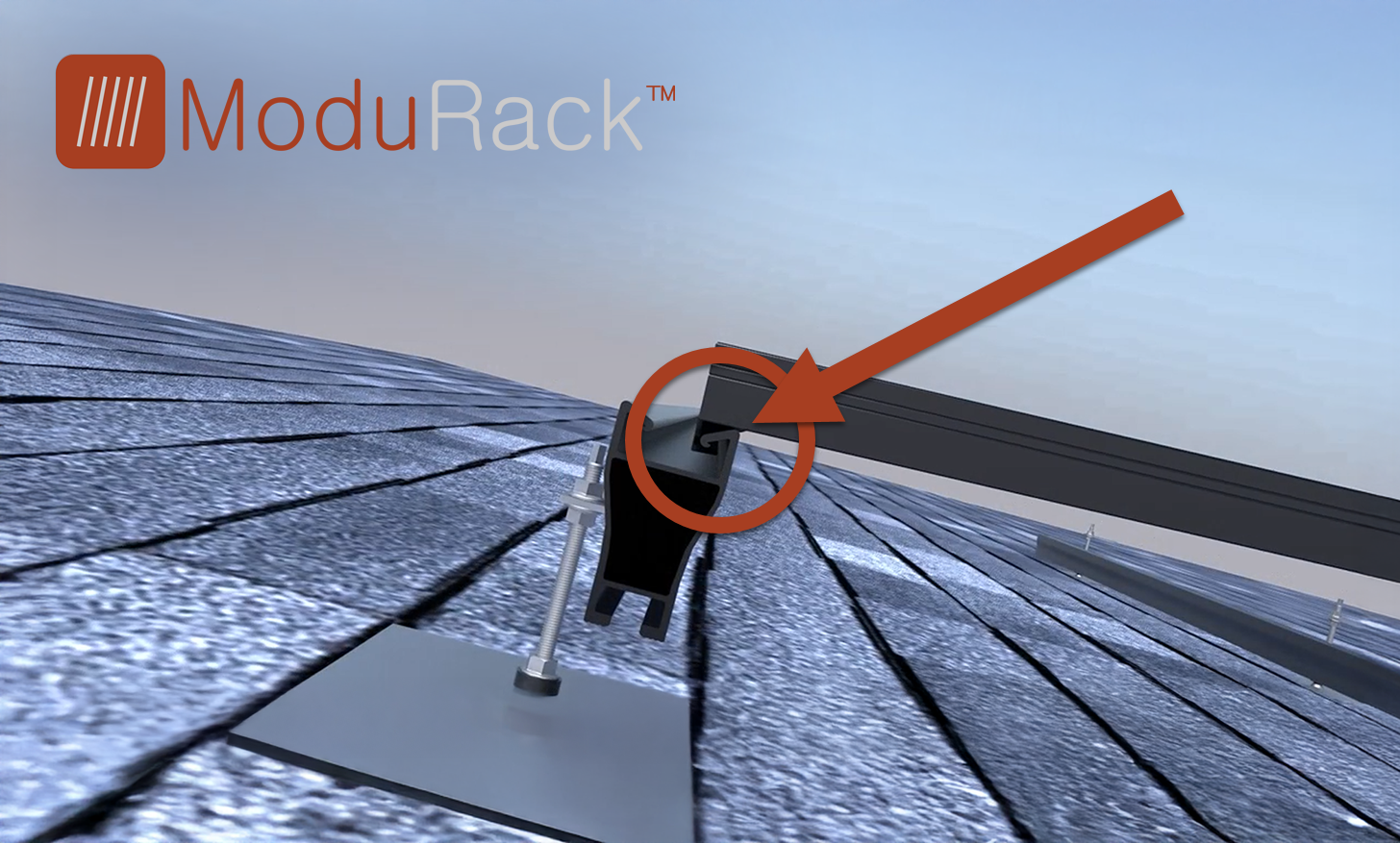
NEW: Ready-to-install solar systems! This patented innovation significantly accelerates your solar construction project
The core of ModuRack 's innovation lies in the departure from conventional clamp fastening. Instead of clamps, the modules are inserted and held in place by a continuous support rail.
More information here:
Your partner for business development in the fields of photovoltaics and construction
From industrial rooftop PV to solar parks and larger solar parking lots
☑️ Our business language is English or German
☑️ NEW: Correspondence in your native language!

Konrad Wolfenstein
I and my team are happy to be available to you as your personal advisor.
You can contact me by filling out the contact form here wolfenstein@xpert.digital:or simply call me at +49 7348 4088 965. My email address is
I'm looking forward to our joint project.