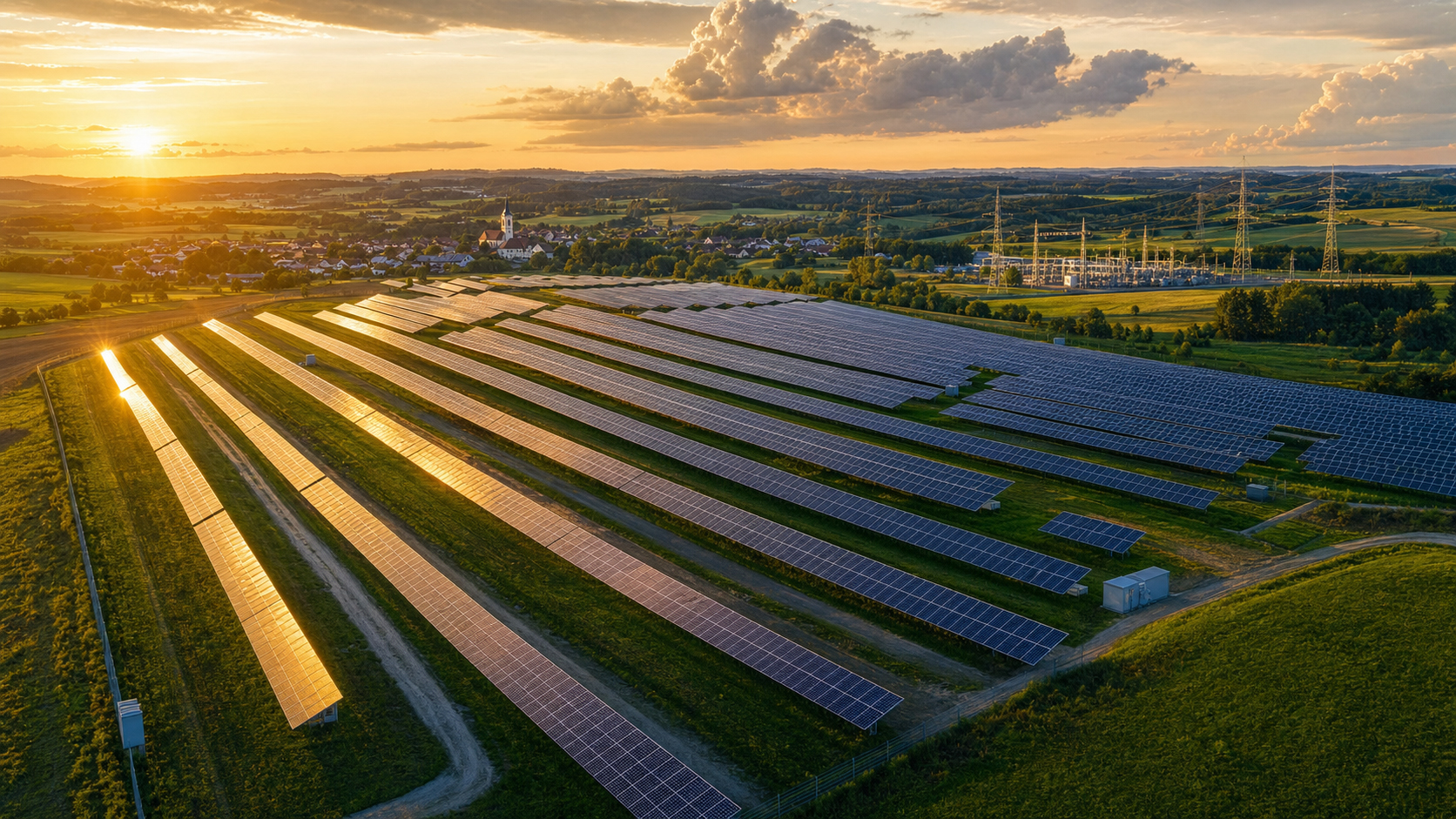
Record-breaking solar park in Schafhöfen, Bavaria: 370,000 modules, 268 megawatts, and the secret beneficiary Deutsche Bahn – creative image on the topic, created with AI: Xpert.Digital
Surprising solar figures: This region in the Palatinate is leaving almost everyone else behind in photovoltaic expansion
Bureaucratic miracle in Ramstein: How a small town is setting an example for German solar energy expansion
Not just a US airbase: Why this region is now becoming a real-world laboratory for the energy transition
What at first glance appears to be a dry, local administrative act is in reality a crucial piece of the puzzle in Germany's energy transition: In Ramstein-Miesenbach, fields will soon give way to a new solar park. But before an agricultural area can be transformed into a high-performance open-air power plant, enormous bureaucratic hurdles, looming grid bottlenecks, and inevitable conflicts over land use must be overcome. Fueled by ambitious federal legislation from Berlin and a smart municipal strategy, the Palatinate region is currently demonstrating how the transformation of our energy supply works in practice. Our comprehensive analysis reveals why this project holds enormous symbolic significance for thousands of communities across Germany and what surprising figures underscore the rapid solar boom in the region.
When farmland becomes a power plant: The solar park near Ramstein as a test case for the German energy transition
Bureaucracy defeated, excavators waiting: Why a small planning process has great symbolic power
The town of Ramstein-Miesenbach in the Kaiserslautern district has reached a significant administrative milestone. The town council has paved the way for the construction of a ground-mounted photovoltaic system in the so-called Lange Gewanne area, thus bringing a multi-year municipal planning process to a preliminary conclusion. Simultaneously, the Ramstein-Miesenbach municipal association has made the corresponding development plan, entitled "Solar Park in the Lange Gewanne," available for public comment. Authorities, public bodies, and the interested public were able to submit comments until August 20, 2026. What at first glance appears to be a minor, local administrative announcement is, in reality, a microcosm of what is currently taking place in thousands of municipalities across Germany: the gradual, often protracted, but now significantly accelerated conversion of agricultural land into sites for industrial power generation.
What is remarkable about this case is the density of similar projects in the immediate vicinity. Just a few kilometers away, in the district of Katzenbach, the municipality of Hütschenhausen had recently adopted the development plan for the "Hütschenhausen Solar Park" by ordinance, while the municipal council simultaneously approved the necessary amendment to the land-use plan. Significantly, this area is located opposite existing industrial sites belonging to the companies Rettenmeier and Amazon, demonstrating how closely energy infrastructure, logistics, and industrial areas are now spatially intertwined in this region. The region around Ramstein, characterized by the nearby US airbase, growing logistics operations, and a noticeable need for regional power supply, is thus developing into a small but revealing real-world laboratory for the energy transition in rural areas.
From farmland to power plant: How a development plan is created
The process that led to the approval of the solar park near Ramstein follows a well-established, but complex, procedure under German urban planning law. Before a single module can be installed on an open space, the municipality must draw up a development plan that establishes the planning law framework for the respective project. This development plan is generally initiated by a resolution to prepare the plan, then undergoes early public and expert participation, is subsequently revised and made publicly available, before finally being adopted by a resolution that gives the plan its final legal force.
In the case of Ramstein-Miesenbach, the overarching land-use plan must also be amended in parallel with the development plan, as a ground-mounted solar power plant of this size typically does not align with the existing agricultural land use designation in the land-use plan. The municipal council in the neighboring town of Hütschenhausen has already taken precisely this step by approving the amendment to the land-use plan, thereby definitively enabling the construction of the plant. This dual planning level—a municipal development plan on the one hand and an inter-municipal land-use plan on the other—explains why such projects, even when political will and public acceptance exist, often require one to two years before they are ready for construction.
It is also noteworthy that the municipality of Ramstein-Miesenbach has had its own open-space photovoltaic concept since 2016, which serves as a strategic basis for selecting suitable locations. Such a concept categorizes the municipal area into zones with varying suitability for solar parks, taking into account criteria such as soil quality, grid connection options, sightlines, nature conservation concerns, and proximity to settlements. The fact that the municipality developed such a management tool around a decade ago suggests that the current solar park is not a spontaneous, isolated decision, but rather the logical result of a long-term municipal energy strategy.
A federal law as a tailwind: Why Berlin sets the pace
The real driving force behind projects like the solar park in Ramstein, however, lies not in local politics, but in federal legislation. With the so-called Easter Package, the German government passed what it considers to be the most significant energy policy amendment in decades in the spring of 2022, with the stated goal of accelerating and consistently expanding renewable energies. Specifically, the legislative package sets the target of increasing the share of renewable energies in Germany's gross electricity consumption to at least 80 percent by 2030.
This federal policy objective has its effect not only through financial support instruments such as feed-in tariffs under the Renewable Energy Sources Act, but also through a changed logic of consideration in municipal land-use planning. Open-field solar installations have been legally and politically upgraded in recent years, so that local councils, when weighing competing land-use interests, can now argue much more strongly in the public interest than they could a few years ago. The Ramstein case exemplifies how a federal policy decision can have a direct impact on the specific plot level of an individual municipality within just a few years.
In this context, a parallel development at the state level is also interesting. The Rhineland-Palatinate Ministry of the Interior has issued a new directive stipulating that the approval of solar installations on listed buildings should become the norm, a move the then Minister of the Interior described as a paradigm shift. Even though this directive primarily refers to rooftop installations on cultural monuments and not to ground-mounted systems, it illustrates the general political trend in Rhineland-Palatinate to systematically reduce administrative hurdles for solar energy expansion, rather than negotiating them on a case-by-case basis.
New: Patent from the USA – install solar parks up to 30% cheaper and 40% faster and easier – with explanatory videos!

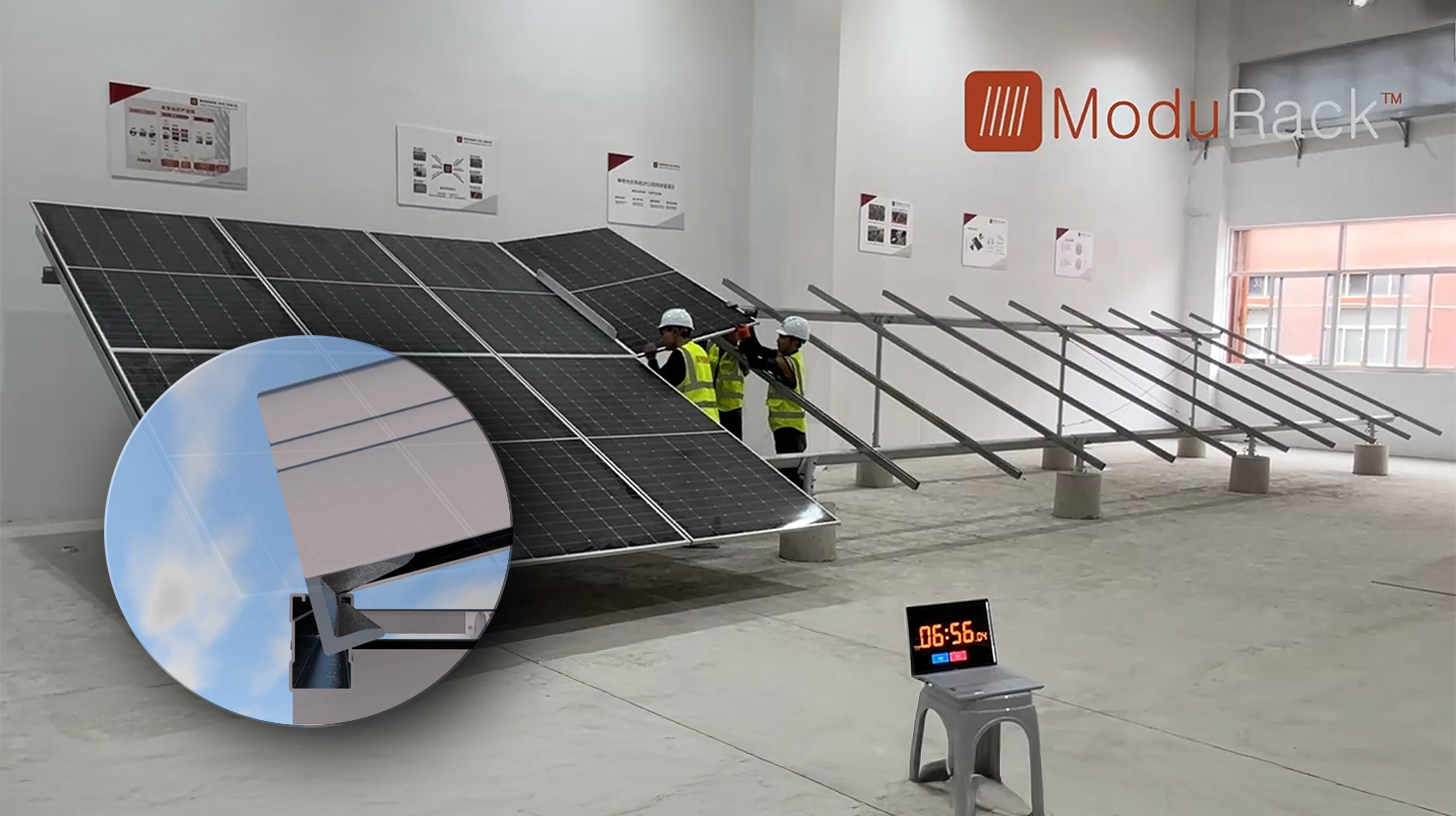
New: Patent from the USA – Install solar parks up to 30% cheaper and 40% faster and easier – with explanatory videos! - Image: Xpert.Digital
The core of this technological advancement is the deliberate departure from conventional clamp mounting, which has been the standard for decades. The new, more time- and cost-effective mounting system addresses this with a fundamentally different, more intelligent concept. Instead of clamping the modules at specific points, they are inserted into a continuous, specially shaped support rail and held securely in place. This design ensures that all forces – whether static loads from snow or dynamic loads from wind – are distributed evenly across the entire length of the module frame.
More information here:
Grid bottlenecks as an obstacle: The hidden challenges for solar expansion
Surprising figures: How much sunshine already reaches Ramstein's rooftops
To realistically assess the significance of the new solar park, it's worth looking at the existing photovoltaic capacity in the town. According to current data, 616 individual photovoltaic systems are already installed in Ramstein-Miesenbach, generating a total output of approximately 13.3 megawatts. Converted to the population, this equates to roughly 1.74 kilowatts of installed capacity per capita, with a significant portion of these systems—specifically 260 of the 616—combined with battery storage. This high storage rate is noteworthy because it demonstrates that private and commercial operators in the region increasingly want to use their self-generated solar power at a later time, rather than feeding it directly and entirely into the grid.
In the larger district of Kaiserslautern, an independent data analysis paints an even more nuanced picture. Currently, 1,493 photovoltaic systems are registered there, with a combined installed capacity of 51,153 kilowatt-peak. These systems generate approximately 45.4 million kilowatt-hours of solar power annually, representing 24.6 percent of the district's total electricity consumption. The average number of full-load hours is 888 per year, a figure that reflects the typical yield conditions of a Central European solar region without any particular climatic advantages. By comparison, in sunnier regions of southern Germany, such as Bavaria, private systems with an average capacity of 9.2 kilowatt-peak are regularly installed, while Kaiserslautern, with an average of 8.48 kilowatt-peak per system, also ranks among the top cities nationwide with a population of 100,000 or more. These figures demonstrate that the region around Kaiserslautern and Ramstein is already more committed than average to private solar expansion, which further justifies the municipal willingness to develop additional open-field installations.
To put the scale of these types of ground-mounted solar installations into perspective, a project already completed in the neighboring city of Kaiserslautern can be cited. On the site of a former inner-city landfill, the local municipal utility has been operating a solar park since 2013. Originally, it fed approximately 4.9 megawatts of power into the public grid, while an additional 1.5 megawatts were reserved for the internal use of a neighboring industrial company. In 2018, this plant was expanded with additional ground-mounted modules, adding another 750 kilowatts of capacity, in order to better utilize tax and subsidy advantages through a so-called plant split. Examples like this illustrate that ground-mounted solar installations in the medium power range of one to ten megawatts have long been established practice in the region, and the solar park near Ramstein will likely be of a similar size, even though the official planning documents do not yet publicly specify exact performance data for the Lange Gewanne site.
The land dispute: Why not every resident is celebrating
Despite its necessity from an energy policy perspective, the expansion of ground-mounted photovoltaics is not without conflict. Every new installation simultaneously means the loss of agriculturally usable land, at least for the installation's lifespan, which is typically twenty to thirty years. In a structurally agricultural region like the Western Palatinate, this inevitably raises the question of the competition between food production, nature conservation, and energy generation on the same land.
One possible solution to this conflict of objectives, though not definitively proven by the available information on the Ramstein project, lies in the concept of so-called agri-photovoltaics, where agricultural use continues below or between the solar modules, for example through extensive grazing with sheep or the cultivation of shade-tolerant crops. Many modern ground-mounted solar installations also now implement accompanying biodiversity measures, such as the creation of wildflower strips, extensively managed meadows beneath the rows of modules, or small-scale habitats for reptiles and insects, in order to at least partially compensate for the ecological footprint of land sealing. Whether such measures are also planned for the solar park in the Lange Gewanne area cannot currently be definitively determined from the publicly available planning documents, which represents a deliberate element of uncertainty in the project's evaluation.
Another often underestimated factor is the question of local economic benefits. Municipalities like Ramstein-Miesenbach benefit from ground-mounted solar power plants not only symbolically by achieving climate protection goals, but also very concretely financially, for example through the trade tax paid by the operating companies and through voluntary municipal participation models, which many German states now legally mandate when plants are built in close proximity to residential areas. This financial component partly explains why municipal bodies have been significantly more cooperative with solar projects in recent years than they were a decade ago.
Grid bottlenecks as the hidden bottleneck of the energy transition
An often overlooked but economically crucial dimension of every new solar park is the question of grid connection. Even when a development plan becomes legally binding and all permits are in place, the actual commissioning of a plant regularly depends on whether the responsible distribution network operator can provide sufficient capacity for feeding in the generated electricity. In many rural regions of Germany, the existing medium-voltage networks were historically designed for a purely consumption-based structure and are increasingly reaching their technical limits in light of the large number of new solar and wind projects.
For the Kaiserslautern region, this aspect can be indirectly deduced from the available data. If the district already covers around a quarter of its total electricity consumption with photovoltaics, and at the same time further large open-field installations like those in Ramstein and Hütschenhausen are being added, the pressure on the local grid infrastructure will increase noticeably. It can therefore be assumed that, in the case of the Ramstein solar park, a statement from the responsible grid operator was obtained as part of the zoning plan procedure. This statement examines whether and with what technical effort the new plant can be connected to the existing grid. This step is standard practice in any early and formal public participation process in German urban planning procedures and is often the truly critical factor that determines the actual start of construction for a project, far more so than the actual approval by local politicians.
Ramstein in context: A building block in the bigger picture of the German energy transition
The solar park in Lange Gewanne may be a small project by national standards. However, its true significance lies less in its individual kilowatt output than in its function as evidence of a structural trend that is being replicated in countless similar forms in numerous German municipalities. With its 2022 Easter Package, Germany committed to an ambitious goal of at least 80 percent renewable energy in its gross electricity consumption by 2030, and this goal can only be achieved, purely mathematically, if thousands of small and medium-sized open-field solar projects like the one in Ramstein are implemented simultaneously and at a high frequency.
The municipality of Ramstein-Miesenbach serves as an exemplary case study of how a community that developed its own strategic management tool early on, in the form of a ground-mounted photovoltaic concept, can now carry out planning procedures relatively quickly and with high public acceptance. The parallel development in neighboring Hütschenhausen, where a structurally almost identical procedure led to the adoption of a bylaw just a few weeks earlier, underscores that this is not an isolated case, but rather a deliberate, comprehensive municipal strategy. For companies, investors, and project developers in the field of ground-mounted photovoltaics, the Ramstein case thus provides an insightful signal: regions with an already established solar culture, a cooperative municipal administration, and clear strategic land-use planning currently offer the most reliable and fastest pathways for the implementation of new investment projects in the renewable energy sector.
In conclusion, it must be noted that a reliable assessment of the Ramstein solar park's full economic and environmental impact can only be made once concrete figures regarding output, investment volume, land use, and accompanying conservation measures are available. Until then, the Ramstein case remains primarily one thing: a vivid, well-documented example of how an abstract federal law, processed through several administrative levels, ultimately transforms a very specific piece of land from a potato or grain field into a quiet but efficient open-air power plant.
📈🚀 From visibility to trust 👀🤝 Your scalable path with Xpert.Digital


From visibility to trust: Your scalable path with Xpert.Digital - Image: Xpert.Digital
In industrial B2B, sustainable business relationships rarely emerge overnight. They develop step by step – through visibility, professional relevance, recurring touchpoints, and growing trust. Xpert.Digital's 4-stage model addresses precisely this: It offers a structured path that begins with a manageable entry point and can evolve into deeper collaboration in business development if needed.
Instead of relying on loud marketing promises, this model puts the relationship at the forefront. Companies start with clearly defined, easily calculable measures and then decide, based on their own experience, how far they want to expand the collaboration. A key factor for this undisturbed trust-building process: The platform completely avoids annoying advertising ads, so the editorial focus remains solely on the companies' expertise.
More information here:
Your partner for business development in the fields of photovoltaics and construction
From industrial rooftop PV to solar parks and larger solar parking lots
☑️ Our business language is English or German
☑️ NEW: Correspondence in your native language!

Konrad Wolfenstein
I and my team are happy to be available to you as your personal advisor.
You can contact me by filling out the contact form here wolfenstein@xpert.digital:or simply call me at +49 7348 4088 965. My email address is
I'm looking forward to our joint project.