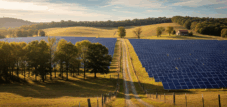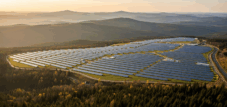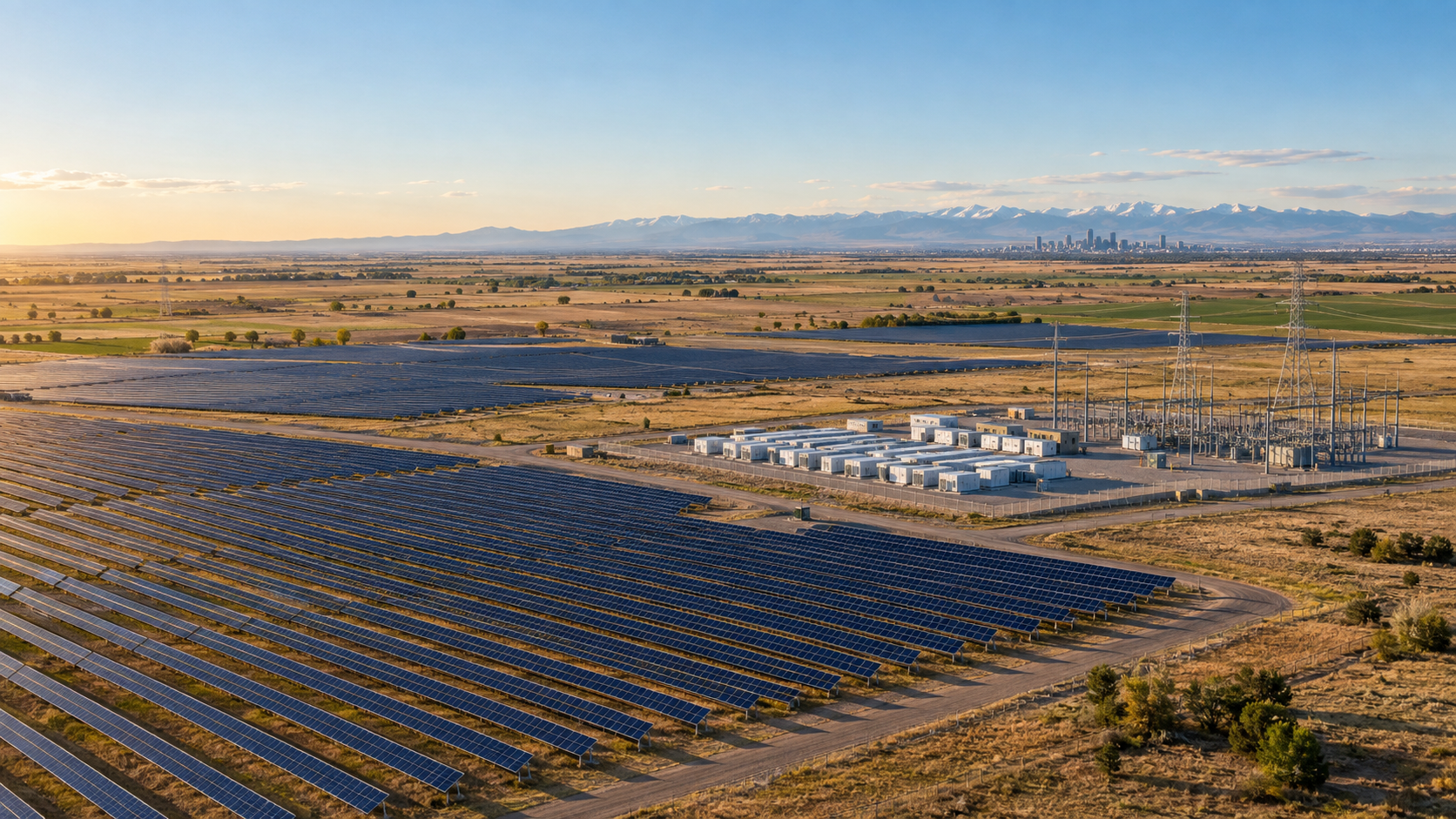
Big Bronco in Adams County, Colorado: How a $675 million solar park could transform Colorado's electricity industry – Creative image on the topic, created with AI: Xpert.Digital
From farmland to mega power plant: The incredible plans for Colorado's largest solar park
Giant battery included: Why this new 675 million euro solar park will change the power grid forever
A turning point in electricity supply: Colorado's new record-breaking solar park delivers far more than just green electricity
In Adams County, Colorado, the energy company Lightsource bp is planning "Big Bronco," one of the state's most ambitious and largest infrastructure projects. For approximately $675 million, a gigantic solar park is to be built, boasting not only a capacity of 300 megawatts but also being coupled with a massive battery storage system. However, this major project is far more than just an ordinary climate protection project: it marks the beginning of a new era in the energy transition. As the demand for electricity rises rapidly due to new data centers and growing businesses, entirely new questions come into focus. Who will bear the costs of the necessary grid expansion? How much agricultural land can be sacrificed for energy production? And how does a gigantic energy storage system change the economic value of the facility? The "Big Bronco" project exemplifies that the transformation of our electricity supply is no longer measured solely by the number of solar panels, but by technical precision, strategic land use, and public acceptance.
An energy project with regional explosive potential
In eastern Adams County, near Watkins and less than two miles north of the Colorado Air and Space Port, Big Bronco Solar and Storage is slated to become one of Colorado's largest combined solar and battery storage projects. The project is being developed by Lightsource bp, the solar subsidiary of energy giant BP. The site on Manila Road is located approximately nine miles east of Denver International Airport, placing it in a region where rural areas, transportation infrastructure, logistics, commercial development, and the growth of the greater Denver area converge. This location makes the project more economically attractive than a typical solar park on remote land.
The planning documents specify different dimensions depending on the stage of development. An early project description mentioned approximately 322 megawatts of photovoltaics and a battery storage system with a capacity of 322 megawatts and a four-hour discharge time. This would theoretically correspond to a storage capacity of just under 1.3 gigawatt-hours. The now-published project description from Lightsource bp specifies 375 megawatts of direct current (DC) power, 300 megawatts of alternating current (AC) power, and 300 megawatts of battery storage capacity. These discrepancies are not a minor contradiction, but rather a typical characteristic of large energy projects: module layout, inverter configuration, grid connection, storage capacity, and regulatory boundaries are all refined during the development process.
The total investment is estimated at US$675 million. The total project and contract area is stated as approximately 2,800 acres (about 1,133 hectares); the actual area occupied by solar panels and technical infrastructure is likely to be less. Previous estimates indicated roughly 1,800 acres for the immediate vicinity of the installation. Lightsource bp anticipates that the electricity generated could theoretically power about 99,000 households. However, this figure does not represent an uninterrupted supply for these households, but rather compares the expected annual production of the solar park to typical annual household consumption.
Big Bronco is therefore not just a climate protection project. It is a large-scale infrastructure investment, a test case for the feasibility of permitting industrial energy use on agricultural land, and a building block in the restructuring of Colorado's electricity system. Whether it will actually become an economically viable project depends not solely on the number of solar panels. Crucial factors include grid connection, electricity marketing, storage costs, local acceptance, long-term tax effects, and the ability to control construction and financing risks until commissioning.
Correctly classifying the size specifications
In solar projects, direct current (DC) and alternating current (AC) power are often conflated. The 375 megawatts of DC power refer to the combined nominal power of the modules. The 300 megawatts of AC power, on the other hand, indicate approximately the power that can be delivered via the inverter and grid connection. A higher module power output compared to the inverter output is standard practice for economic reasons. This ensures that the inverters are better utilized, even in the morning, late afternoon, and under less than ideal irradiance conditions. While a portion of the theoretical peak power can be limited during particularly sunny hours, the load on the grid connection increases over the course of the year.
The older figure of 322 megawatts cannot therefore be directly compared with the more recent figure of 375 megawatts. It is conceivable that the technical configuration has changed or that earlier documents used a different reference value. Ultimately, four values are crucial for a reliable economic assessment: the installed DC capacity, the approved AC capacity, the usable storage capacity in megawatt-hours, and the contractually guaranteed feed-in capacity at the grid connection point. Until all final contracts and technical permits are in place, any production or revenue calculation remains an approximation.
Even the designation as the state's largest solar park requires precision. Big Bronco undoubtedly belongs to the top tier of solar projects in Colorado. However, whether the project will actually hold the clear size record upon completion depends on the measurement used and the point of comparison. Other existing or planned plants in Colorado have capacities exceeding 300 megawatts, and further projects in the range of around 400 megawatts are under development. When solar and storage capacity are combined, Big Bronco achieves a particularly large system size. This combination is impressive from a marketing perspective, but from an energy economics standpoint, it is only partially comparable to the generation capacity of a pure power plant, because the storage system does not generate any additional primary energy.
The objectively correct assessment is therefore: Big Bronco would be one of Colorado's largest solar and storage projects and potentially the largest integrated project of its kind in the state. While the record-breaking title is beneficial for public perception, it is secondary to economic viability. A smaller project with a guaranteed grid connection, favorable power purchase agreement, and low financing costs can be more economically valuable than a nominally larger project plagued by delays and expensive grid connections.
Why Adams County is a strategic fit
Adams County combines several locational advantages. The western part belongs to the densely populated Denver metropolitan area, while the east comprises vast, comparatively sparsely populated areas. The region is located near major transportation routes, the international airport, and growing industrial and logistics centers. At the same time, the eastern part of the county boasts excellent solar potential and existing energy infrastructure. This combination of available land, proximity to consumers, and potential grid connections is valuable for large-scale power projects.
The county covers approximately 1,184 square miles and has a population of over half a million. Significant population growth is projected through 2040. Industrial and warehouse properties have accounted for a large portion of commercial development in recent years. Consequently, electricity demand arises not only from private households but increasingly from logistics, manufacturing, commerce, transportation, and digital infrastructure. A solar park cannot automatically meet this demand locally because electricity physically flows into the grid and is marketed through contracts. Nevertheless, additional feed-in near consumption sites generally reduces dependence on distant generation sites, provided the regional grid can accommodate the increased output.
Adams County itself aims to increase the share of renewable energy. The county plans to source all of its electricity from renewable sources for its own facilities by 2030. Furthermore, the county's planning generally supports large-scale solar energy and storage, provided that the location, design, and impacts are compatible with land-use goals. Big Bronco is therefore not operating in a politically hostile environment. However, support for the energy transition does not automatically translate into support for every project on every piece of land.
The location near the Colorado Air and Space Port brings with it additional testing requirements. Glare effects, building heights, aviation concerns, electromagnetic compatibility, and coordination with adjacent uses must be carefully assessed. While modern solar modules reflect significantly less light than glass facades or bodies of water, the proximity to an aviation site makes a comprehensible glare analysis essential. The economic advantages of the location can only be realized if the technical planning mitigates these conflicts of use at an early stage.
Colorado needs new generation
Colorado has significantly transformed its electricity system in a short period of time. As recently as 2010, roughly two-thirds of its electricity generation came from coal. By 2025, coal's share had fallen to just 24 percent. Natural gas accounted for nearly 31 percent, wind about 29 percent, and solar around 13 percent. Renewable energy sources combined made up approximately 46 percent. While the transformation is well underway, it is not yet complete: coal and natural gas will still supply more than half of the electricity production in 2025.
The political framework adds further pressure. Large utilities are required to reduce their carbon dioxide emissions associated with electricity sales by 80 percent by 2030 compared to 2005. A completely clean electricity supply is targeted for 2050, provided it is technically and economically feasible and compatible with the public interest. These requirements generate structural demand for new wind, solar, storage, and grid projects. Big Bronco should therefore not be viewed as an isolated decision, but rather as part of a government- and market-driven replacement and expansion program.
Added to this is the growth in demand. Xcel Energy anticipates that new data centers and other large consumers could require more than 1,900 megawatts of additional power by 2031. This would represent an increase of approximately 31 percent compared to the company's current power supply. Even if not all requests are fulfilled, this scale changes the planning logic. The energy transition to date has primarily consisted of replacing fossil fuel power generation with lower-emission facilities. In the future, Colorado will have to simultaneously replace aging power plants and meet a rapidly growing electricity demand.
This leads to an important shift in perspective. New solar parks are no longer just instruments for reducing emissions, but rather an integral part of an industrial and location-based capacity strategy. Regions that want to attract data centers, modern manufacturing, electric vehicle fleets, or hydrogen-based processes need large amounts of additional electricity. However, a nominally high generation capacity is not enough. Crucial factors are the hours at which the power is available, how it is transported, and whether the costs are distributed according to the polluter-pays principle.
The storage capacity changes the economic value
The battery storage system is the element that distinguishes Big Bronco from a conventional solar park. A 300-megawatt storage system operating for four hours could theoretically deliver around 1,200 megawatt-hours. With the previously mentioned 322-megawatt design, it would be just under 1,288 megawatt-hours. In practice, the usable energy output is somewhat lower due to technical limitations, conversion losses, aging, and operating strategy.
The storage system can absorb solar power generated at midday and feed it into the grid later, when the sun weakens and demand often remains high. This allows the feed-in to be shifted over time. This increases the market value of the electricity, because prices are often higher in the early evening than during sunny midday hours. Furthermore, the storage system can provide short-term system services, compensate for frequency fluctuations, buffer power peaks, and offer guaranteed capacity under certain contractual conditions.
Economically, however, a battery is not a free amplifier. It doesn't generate energy, but rather shifts it, losing some in the process. Its profitability depends on price differences between charging and discharging times, compensation for system services, capacity payments, grid fees, tax incentives, and the number of charging cycles. The more solar parks feed power into the grid simultaneously at midday, the lower the prices can become during these hours. This generally improves the arbitrage potential of a storage system. However, if the number of competing battery systems increases at the same time, these revenue opportunities can decrease again.
Combining these elements at the same location offers clear cost advantages. Project development, land acquisition, grid connection, transformers, control technology, and parts of the construction infrastructure can be shared. The storage system can also absorb energy that would otherwise be curtailed due to limited inverter or grid capacity. However, the economic benefits should not be confused with complete security of supply. Four hours of storage helps bridge the evening peak, but it cannot compensate for multi-day periods with little sun and weak wind. For a reliable electricity system, dispatchable power plants, interregional transmission lines, demand-side management, and other forms of storage remain necessary.
How much electricity can realistically be generated
The nominal power output of a solar park says little about its annual production. Solar power is not generated at night, and even during the day, output fluctuates depending on the season, weather, shading, module temperature, and system availability. For Colorado, an average capacity factor of approximately 19.6 percent for solar resources was reported for 2025. If we apply this value, only as a rough guide, to 300 megawatts of AC power, this would result in an annual production of approximately 515 gigawatt-hours. At 322 megawatts, it would be around 553 gigawatt-hours.
This rough estimate generally aligns with the statement that the plant could theoretically supply around 99,000 households. At 515 gigawatt-hours, this would correspond to roughly 5,200 kilowatt-hours per household per year. Whether this figure is ultimately achieved depends on the actual technical design and the site-specific yield assessment. A good solar site, a high DC-to-AC conversion ratio, and a well-designed storage system can improve the economically viable yield. Grid congestion, high curtailment, pollution, snow, or technical failures have the opposite effect.
The household comparison is illustrative, but shouldn't be overinterpreted. Big Bronco couldn't supply 99,000 households with electricity around the clock. The plant produces a specific amount of energy over the course of a year, while households need electricity every hour. The battery storage smooths out some of this difference over time, but doesn't eliminate it completely. The project's real value, therefore, lies in the combination of large annual production, flexible feed-in, and integration into a broader portfolio of wind, gas, hydropower, grids, and other storage options.
The impact on the climate also depends crucially on which generation sources are displaced. If solar power is used instead of coal or gas-fired power, direct emissions decrease significantly. However, if the additional production falls during hours when there is already a surplus of low-emission energy, the avoided emissions are lower. Storage can improve the climate impact by shifting clean electricity to hours when fossil fuel power plants would otherwise be needed for peak loads. Therefore, a reliable emissions assessment must consider hourly market and grid data and cannot rely solely on a general annual average.
$675 million as a regional boost
The aforementioned private investment of $675 million is substantial for Adams County. It is expected to cover modules, battery systems, inverters, transformers, a substation, transmission lines, construction, planning, development, financing, and other project costs. Not every dollar stays in the region. Solar modules, battery cells, and specialized large components are often manufactured outside of Colorado. Nevertheless, local expenditures will be incurred for earthworks, roads, electrical work, security services, accommodations, catering, transportation, and technical services.
Up to 400 jobs are projected for the construction phase. This figure likely represents peak employment, not a stable workforce over several years. Large projects require many fitters, electricians, machine operators, and site managers during construction, but significantly fewer employees during operation. Solar parks have low ongoing personnel costs, which reduces the cost of electricity generation but limits their long-term impact on employment. Therefore, economic evaluations should clearly distinguish between construction jobs, permanent positions, and indirect demand effects.
More significant than long-term employment could be the tax revenue. Public figures project approximately $39 million in new local tax revenue over the project's lifetime. However, such long-term projections are sensitive to valuation rules, depreciation, asset lifespan, tax law, and potential agreements with local authorities. The total amount should therefore not be considered an immediately available budget. Nevertheless, a large energy park can represent an attractive source of revenue for schools, fire departments, infrastructure, and county finances, especially if the land previously had a low tax base.
Payments to landowners also represent an important form of regional transfer. Since the land is, according to current information, privately leased, long-term lease agreements can provide agricultural owners with relatively stable income. Particularly in arid regions with fluctuating yields, this can diversify risks and strengthen the financial position of family farms. At the same time, high lease revenues can alter land prices and expectations, thereby placing active farmers without their own land under additional cost pressure. The distributional effect within the agricultural sector is therefore not automatically positive.
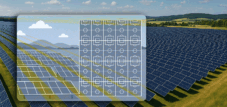
New: Patent from the USA – install solar parks up to 30% cheaper and 40% faster and easier – with explanatory videos!

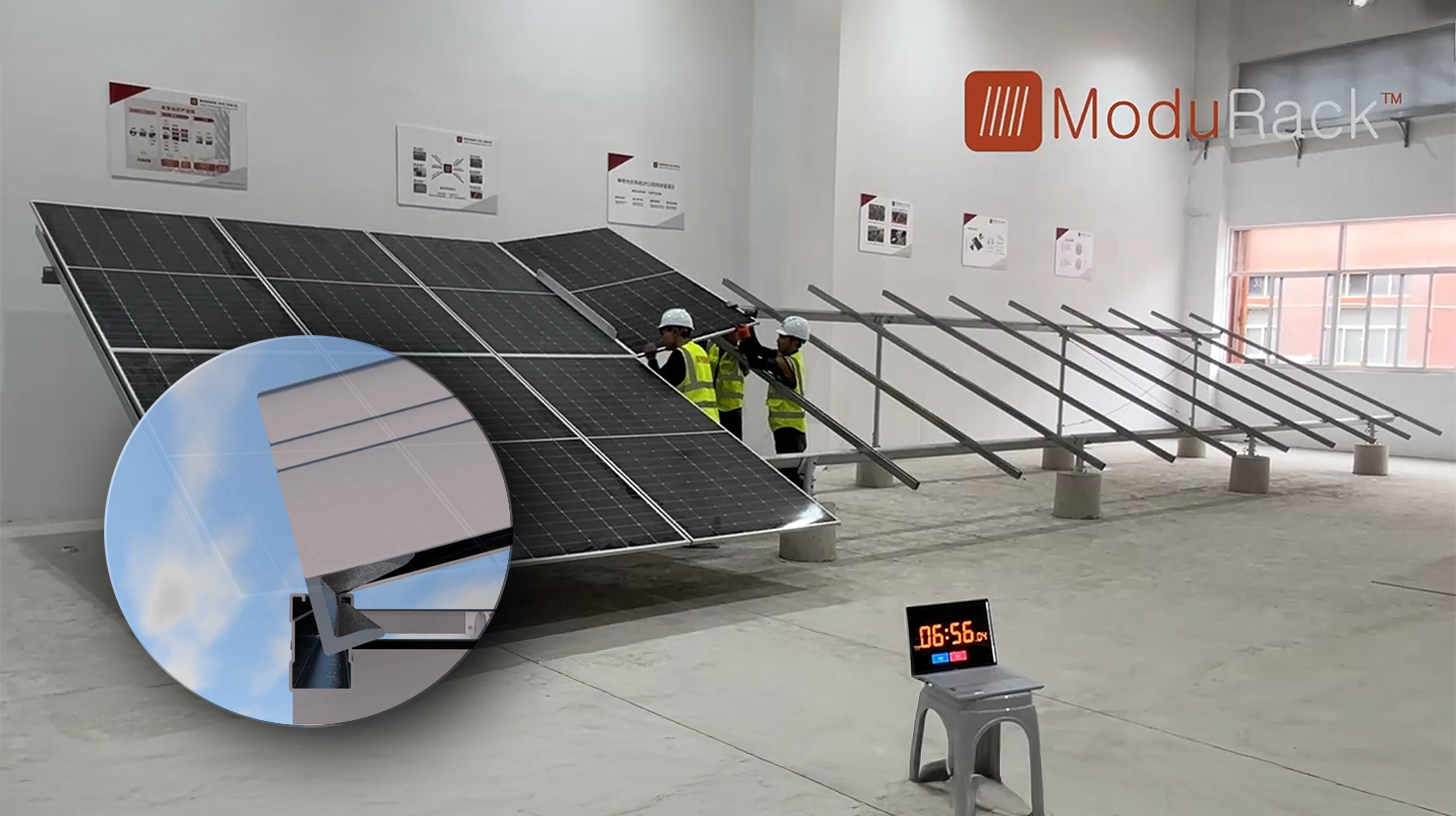
New: Patent from the USA – Install solar parks up to 30% cheaper and 40% faster and easier – with explanatory videos! - Image: Xpert.Digital
The core of this technological advancement is the deliberate departure from conventional clamp mounting, which has been the standard for decades. The new, more time- and cost-effective mounting system addresses this with a fundamentally different, more intelligent concept. Instead of clamping the modules at specific points, they are inserted into a continuous, specially shaped support rail and held securely in place. This design ensures that all forces – whether static loads from snow or dynamic loads from wind – are distributed evenly across the entire length of the module frame.
More information here:
When the power grid becomes the bottleneck: The unresolved problem of the American energy transition
Competition for space: no easy answer
A project area of approximately 2,800 acres seems large, and it is. Converted, this corresponds to roughly 11.3 square kilometers. However, a distinction must be made between the entire contractual or planning area and the area directly covered by the turbines. Distances, ecological buffers, easements, roads, and unusable areas increase the overall project area. The approximately 1,800 acres mentioned in earlier reports for the core installation correspond to roughly 5.6 acres per 322 megawatts and are therefore within a plausible range for modern ground-mounted photovoltaics.
Agricultural valuation depends on soil quality, water availability, and previous land use. Adams County has a long agricultural tradition, but large parts of the eastern area are arid and used extensively. An acre of high-yielding, irrigated specialty crop land has a different economic value than an acre of low-yielding dryland. Therefore, a blanket comparison of solar energy and food production would be too simplistic. The crucial factor is identifying the specific areas affected and determining what alternative uses would be realistic.
Furthermore, solar leasing does not necessarily mean permanent sealing of the land. The foundations of many module systems are driven into the ground, and large areas of soil remain unsealed. Vegetation can be preserved or newly planted between the rows. Dismantling is generally possible after the end of the usage period. Nevertheless, a solar park alters the soil, drainage, landscape, pathways, and land use for several decades. A robust dismantling plan with regularly updated financial security is therefore crucial. Ultimately, the costs must not fall on the landowner or the county.
A smart permitting process should address the land issue not ideologically, but by linking it to measurable conditions. These include soil protection during construction, erosion control, a plan for invasive species, water-saving vegetation management, protection of high-quality habitat areas, wildlife corridors, and clear guidelines for dismantling and recycling. Where technically and economically feasible, extensive grazing between the module rows can preserve some agricultural land use. Such models do not replace intensive agriculture, but they can mitigate the conflict between energy production and agricultural land use.
Grid connection as a crucial bottleneck
The most critical aspect of large energy projects is often not the plant itself, but its connection to the power grid. Big Bronco requires its own substation and a high-voltage line to the planned connection point. The grid operator must assess whether lines, substations, and protection systems can handle the new feed-in. If reinforcements are necessary, costs and timelines can increase significantly. In the US, many solar, wind, and storage projects wait for years in connection queues because studies, grid expansion, and cost allocation are complex.
For Big Bronco, the combination of solar and storage is an advantage because it makes feed-in more controllable. The operator can store a portion of the midday production and limit the maximum output at the grid connection point. However, this does not replace grid connection capacity. If the line is already fully utilized during certain hours, curtailment may still be necessary. Crucially, the feed-in rights contractually secured and who pays for any necessary grid reinforcements will be key factors.
Proximity to Denver doesn't automatically translate into easy sales. Power grids don't follow straight lines, but rather technical nodes, easements, and regional load flows. At the same time, demand is growing in the metropolitan area. New data centers and other large consumers could increase the value of additional generation, provided their load profiles and connection points align with the project. Direct supply contracts with large customers would be commercially viable, but the physical electricity would still be transported via the public grid.
From a consumer perspective, clear cost allocation is essential. Project-related connection costs should not be passed on to households and existing businesses without oversight. Conversely, grid customers benefit from new installations if these reduce expensive fuel costs, peak loads, and emissions. Fair regulation must therefore differentiate between costs that serve the project alone and investments that strengthen the grid in general. The debate surrounding large consumers demonstrates how politically sensitive this issue has become.
Electricity price, contracts and return on investment
A solar park of this size is not typically financed solely on the basis of short-term market prices. Lenders and investors demand predictable returns, often through a long-term power purchase agreement (PPA). An energy supplier, cooperative, or large corporation commits to purchasing electricity, environmental attributes, or capacity output under predefined conditions. Without a creditworthy buyer, financing costs and risk increase significantly.
Big Bronco's profitability depends on several revenue streams. The solar park sells energy and potentially renewable energy certificates. The storage system can capitalize on price differences, offer grid services, and potentially monetize capacity values. Depending on the contract model, these revenues flow to the project operator or are partially passed on to the customer. Optimal operation is complex because any additional battery usage causes aging and affects the future available capacity.
Large-scale ground-mounted solar power plants remain among the most cost-effective new generation technologies in the United States. However, their costs have not only fallen since their historic lows. Higher interest rates, tariffs, supply chain risks, and requirements regarding the origin of components can increase project costs. In 2026, the levelized cost of electricity (LCOE) for new large-scale solar plants without subsidies was reported to range from approximately $40 to $98 per megawatt-hour. Solar power with battery storage has a higher LCOE but offers a more valuable and time-sensitive electricity supply.
Tax incentives can significantly improve returns, but should not be confused with cost-free overall economic benefits. Investment or production credits reduce the project's tax burden and thus the required electricity price. For investors, they are an essential part of the capital structure. From a government perspective, these represent lost revenue, justified by climate protection, security of supply, industrial policy, and technological learning curves. The crucial question is not whether Big Bronco receives subsidies, but whether the public benefit justifies the subsidies and potential grid costs.
The timeline remains ambitious
Construction was initially slated to begin in 2027, with completion not expected before 2029. This timeframe is ambitious for a project of this scale, but not unrealistic. Before the first major construction phase can commence, land use permits, environmental impact assessments, technical reports, grid connection, financing, supply contracts, and procurement must be sufficiently secured. If even one key component is delayed, the entire investment will be postponed.
As of mid-September 2026, the project is still in the approval process. A review by the Planning Commission is scheduled for September 24, 2026; a hearing before the Board of County Commissioners is planned for November 2026. The application seeks conditional use permits for the large energy facility, battery storage, substation, transmission line, and large-scale solar array in a designated agricultural zone. These procedural steps are substantive and not merely formal deadlines.
Even local approval doesn't guarantee construction will begin. The developer must then fulfill all requirements, finalize detailed technical plans, and secure financing on viable terms. Exchange rates, interest rates, module and battery prices, tariffs, and national energy policies can all alter the calculations before a final investment decision is made. Even a project with strong strategic benefits can be halted or scaled back if the power purchase agreement doesn't cover the increased capital requirements.
Conversely, an advanced stage of permitting can have significant economic value. Solar and storage projects ready for construction are tradable development assets because suitable land, grid connections, and permits are scarce. Even if Lightsource bp does not ultimately operate the project itself, Big Bronco could be sold to an infrastructure investor or financed with partners after reaching certain milestones. Therefore, it is important for the county that permit conditions remain binding even after a change of ownership.
Acceptance determines pace and costs
Large energy projects rarely fail due to a single fundamental rejection of the technology. Conflicts often arise from landscape impact, construction traffic, dust, drainage, fire safety, concerns about property values, and the feeling that benefits and burdens are unequally distributed. These issues are particularly relevant in the case of Big Bronco because the project alters a very large contiguous area and requires additional high-voltage infrastructure.
Transparency is economically valuable for the local population. Clear maps, realistic visualizations, published expert reports, and comprehensible answers reduce mistrust and potential future legal risks. The developer should not only communicate the maximum number of households and the investment amount, but also explain aspects such as nighttime lighting, noise from inverters and cooling systems, construction traffic, water consumption, battery fire protection, and decommissioning. A project becomes more credible when uncertainties are not concealed but addressed with verifiable measures.
Battery storage requires special attention. Lithium-ion systems carry a low, but not insignificant, risk of thermal events. Modern systems utilize monitoring, spatial separation, fire protection concepts, and automatic shutdown. Training, access routes, fire suppression and containment strategies, and information on the cell chemistries used are crucial for fire departments and rescue services. The associated costs should be included in the project budget and not silently passed on to local authorities.
Acceptance is therefore not a soft condition, but a financial factor. Delays increase interest and development costs, jeopardize supply contracts, and can reduce tax advantages. Early involvement costs money, but is often cheaper than years of disputes. Big Bronco seems to have encountered less organized resistance so far than some other large-scale projects. This is an advantage, but should not be seen as a license to do as one pleases.
Ecology between benefit and intervention
The primary ecological benefit of a solar park is the low-emission electricity generation during operation. The more coal and gas-fired power is displaced, the greater the climate benefit. At the same time, the plant causes interventions through construction, material consumption, land conversion, and new infrastructure. An objective assessment must consider both aspects. A solar park is neither ecologically without consequences, nor is every alteration of open landscape automatically more serious than the long-term burdens of fossil fuels.
Erosion control is particularly important in dry locations. If large areas are exposed during construction, wind and heavy rain can erode the soil. Permanent vegetation cover, phased construction, and effective rainwater management reduce this risk. Cleaning the modules and maintaining the vegetation also require water or other resources, although the ongoing water consumption of photovoltaics is significantly lower than that of thermal power plants.
For wildlife, a safety fence stretching for kilometers can create barriers. Wildlife-friendly designs, passages, and corridors can mitigate habitat fragmentation. Particularly sensitive habitats and well-known migration routes should be avoided wherever possible. A sober assessment is necessary regarding pollinator plants: A suitable seed mixture can offer ecological benefits, but success depends on soil, rainfall, and long-term maintenance. A marketing label is no substitute for controlled habitat management.
At the end of its service life, the question of materials arises. The glass and aluminum of the modules are generally readily recyclable, while the economic recovery of other components depends on recycling capacities and raw material prices. Batteries contain valuable materials but require specialized processes. A credible decommissioning plan should not only address removal and site restoration but also require documentation of reuse, recycling, and disposal routes. Financial security must be regularly adjusted to account for inflation and technological advancements.
A realistic view of security of supply
Proponents of large solar farms tend to equate annual electricity production with reliable output. Critics, on the other hand, sometimes treat weather-dependent generation as if it had no capacity value. Both perspectives are too simplistic. In Colorado, solar energy predictably delivers large amounts of power during daylight hours and, in summer, is a good match for cooling and commercial loads. However, its contribution drops rapidly in the evening and is lower in winter. Storage improves this profile, but only for a limited time.
Big Bronco can make the power system more stable if solar production, battery storage, and grid connection are optimized together. The storage system can compensate for rapid fluctuations in power output and provide predictable delivery during peak hours. However, it cannot guarantee sufficient energy availability over several cloudy winter days. Colorado therefore needs a diversified portfolio: wind power often complements solar, regional grids balance weather patterns, flexible demand shifts consumption, and dispatchable resources safeguard against longer periods of limited power supply.
The most economically advantageous solution is not necessarily a system with the maximum share of a single technology. As the share of solar power increases, the additional value of further midday feed-in decreases if grids and storage facilities don't expand accordingly. This is precisely why the battery is so crucial in Big Bronco. At the same time, its added value must be weighed against high investment costs and a limited lifespan. A well-dimensioned storage system doesn't maximize the technical size, but rather the economic benefit of the shared grid connection.
This leads to a clear priority for political decisions: New generation, storage, transmission networks, and load management must be planned in a coordinated manner. Individual record-breaking projects are visible, but the less spectacular grid reinforcements determine whether their energy can actually be used. Big Bronco is therefore as much a grid project as it is a solar project.
Winners, losers, and distribution issues
The immediate beneficiaries include landowners with leases, construction companies, specialized service providers, and public institutions that receive additional tax revenue. Lightsource bp and its capital partners benefit if construction costs, subsidies, and revenues generate a reasonable return. Electricity consumers benefit if they can secure predictable energy at competitive prices over the long term. Businesses in the greater Denver area also indirectly benefit from a larger supply of low-emission electricity.
Potential disadvantages primarily affect immediate neighbors if the landscape, traffic, or land use is impacted. Tenants of agricultural land could lose out if land is taken out of production or regional lease prices rise. Network customers would be disadvantaged if project-related costs were unfairly passed on to them. Taxpayers bear the opportunity costs of government subsidies, even if these may result in overall economic benefits.
This distribution is not an argument against the project, but rather for precise conditions. A portion of the local value creation can be secured through employment and training programs, procurement from regional companies, road agreements, and support for emergency services. Direct compensation must not replace legal requirements, but it can distribute specific burdens more fairly. Crucially, agreements must be transparent, verifiable, and resilient throughout the entire operational period.
Protection against an asymmetric distribution of risk is particularly important. Private investors should be able to profit from successful projects, but must also bear the risks associated with construction, operation, and decommissioning. Public authorities should not become risk bearers through hidden guarantees or unclear network costs. At the same time, it would be short-sighted to treat every public contribution as a subsidy without any corresponding benefit. Infrastructure policy is precisely about sensibly balancing private and public returns.
What the permit must achieve
A good permit should not attempt to dictate every operational detail for decades. However, it must define clear deliverables and responsibilities. This includes binding limits for noise and lighting, construction traffic plans, drainage and erosion control, wildlife corridors, fire safety, emergency communication, and a robust decommissioning guarantee. A permanently accessible contact point with documented response times is essential for handling complaints.
Economic commitments must be distinguished between forecasts and obligations. Expected investments, jobs, and tax revenues are important decision-making criteria, but not automatically guaranteed results. The county should require regularly published reports on construction progress, local contracting, employment, and taxes, to the extent legally permissible. This will allow for later verification of whether the promised regional benefits have materialized.
Technical modifications must remain possible because modules and battery systems continue to evolve before construction begins. However, a subsequent increase in performance must not automatically lead to additional burdens on land use, traffic, or safety. Therefore, approved maximum limits for area, AC power, storage energy, building height, and noise are advisable, within which the operator can optimize. Significant exceedances should trigger a renewed public review.
Changes in ownership and insolvency must also be considered. All conditions, dismantling obligations, and security deposits must be tied to the project and its legal successors. The financial guarantee should not be established only shortly before the end of operations, as this is when the risk of default is greatest. A gradually deposited and regularly reviewed amount provides better protection for the county and landowners.
The overall economic assessment
Big Bronco possesses a fundamentally strong economic logic. Colorado needs to replace fossil fuel-based power generation, while electricity demand is growing. Adams County offers available land, solar resources, proximity to a major consumer center, and a political climate that supports renewable energy. Combining approximately 300 megawatts of grid-connected capacity with a four-hour battery storage system increases the project's value compared to a solar farm alone. A private investment of $675 million can trigger construction contracts, lease payments, and long-term tax revenue.
The weaknesses lie not in the technology itself, but in the implementation risks. The final output is not yet entirely clear, grid connection remains crucial, the construction schedule depends on permits and financing, and the claimed record size is subject to definition. Furthermore, the number of permanent jobs is significantly lower than the peak employment during construction. Land use is justifiable if it involves predominantly less productive land and strict soil, environmental, and decommissioning regulations apply; without such an assessment, blanket approval would not be justified.
From a macroeconomic perspective, the project should be approved, provided that grid, safety, environmental, and decommissioning issues are convincingly resolved and costs are fairly allocated. This position is neither unconditional approval nor technological skepticism. It stems from the assessment that Colorado needs large amounts of new clean electricity and storage, while the local impacts appear manageable with specific conditions. Rejection solely on the grounds of its apparent size would not solve the state's real energy and growth problems.
The decisive factor is not whether Big Bronco can be marketed as the largest solar park. What matters is whether the plant reliably supplies electricity for decades, relieves the grid rather than overloading it, actually generates local revenue, owners are liable for decommissioning, and neighbors are not left to bear avoidable burdens. If the project meets these conditions, it can become a model for the next generation of regionally embedded energy infrastructure.
More than a solar park
Big Bronco symbolizes a new phase of the energy transition. The first phase focused on making solar and wind energy competitive and politically acceptable. The second phase saw large installations and a reduction in the market share of fossil fuels. The third phase, now beginning, is more demanding: generation, storage, grids, large consumers, land-use policies, and local financing must be integrated into a functioning overall system.
That's precisely why the debate in Adams County is of supra-regional importance. It demonstrates that the electricity industry is no longer choosing between an old fossil fuel system and isolated green additions. It is building a new industrial infrastructure whose capital requirements, spatial impact, and technical complexity are comparable to traditional power plant projects. The term "solar park" sounds simple and decentralized; Big Bronco, on the other hand, is a large-scale power plant with storage, a high-voltage connection, and a regional impact lasting for decades.
The provocative truth is this: the success of the energy transition isn't determined by the number of solar panels, but by the quality of the contracts, grids, and permits behind them. A poorly integrated record-breaking project can curtail electricity, shift costs, and jeopardize public acceptance. A carefully planned project of the same size can provide affordable energy, local revenue, and flexible capacity. Big Bronco has the potential for the latter, but potential is not a guarantee of success.
Much remains to be proven before a potential commissioning in 2029. The upcoming hearings will reveal the robustness of the plans and the conditions Adams County demands. For Colorado, the project represents an opportunity to combine clean energy generation with flexibility. For Lightsource bp, it's a test of whether an international developer can credibly integrate local interests. And for the public, it's a reminder that modern energy policy should not be measured by ambitious targets, but by functioning facilities, fairly distributed costs, and verifiable results.
Your partner for business development in the fields of photovoltaics and construction
From industrial rooftop PV to solar parks and larger solar parking lots
☑️ Our business language is English or German
☑️ NEW: Correspondence in your native language!

Konrad Wolfenstein
I and my team are happy to be available to you as your personal advisor.
You can contact me by filling out the contact form here wolfenstein@xpert.digital:or simply call me at +49 7348 4088 965. My email address is
I'm looking forward to our joint project.