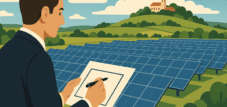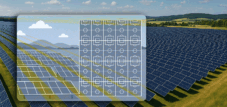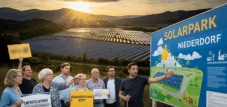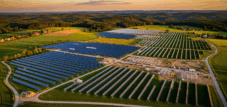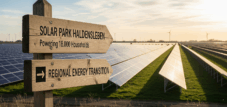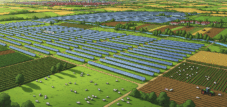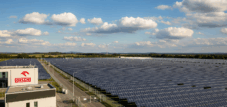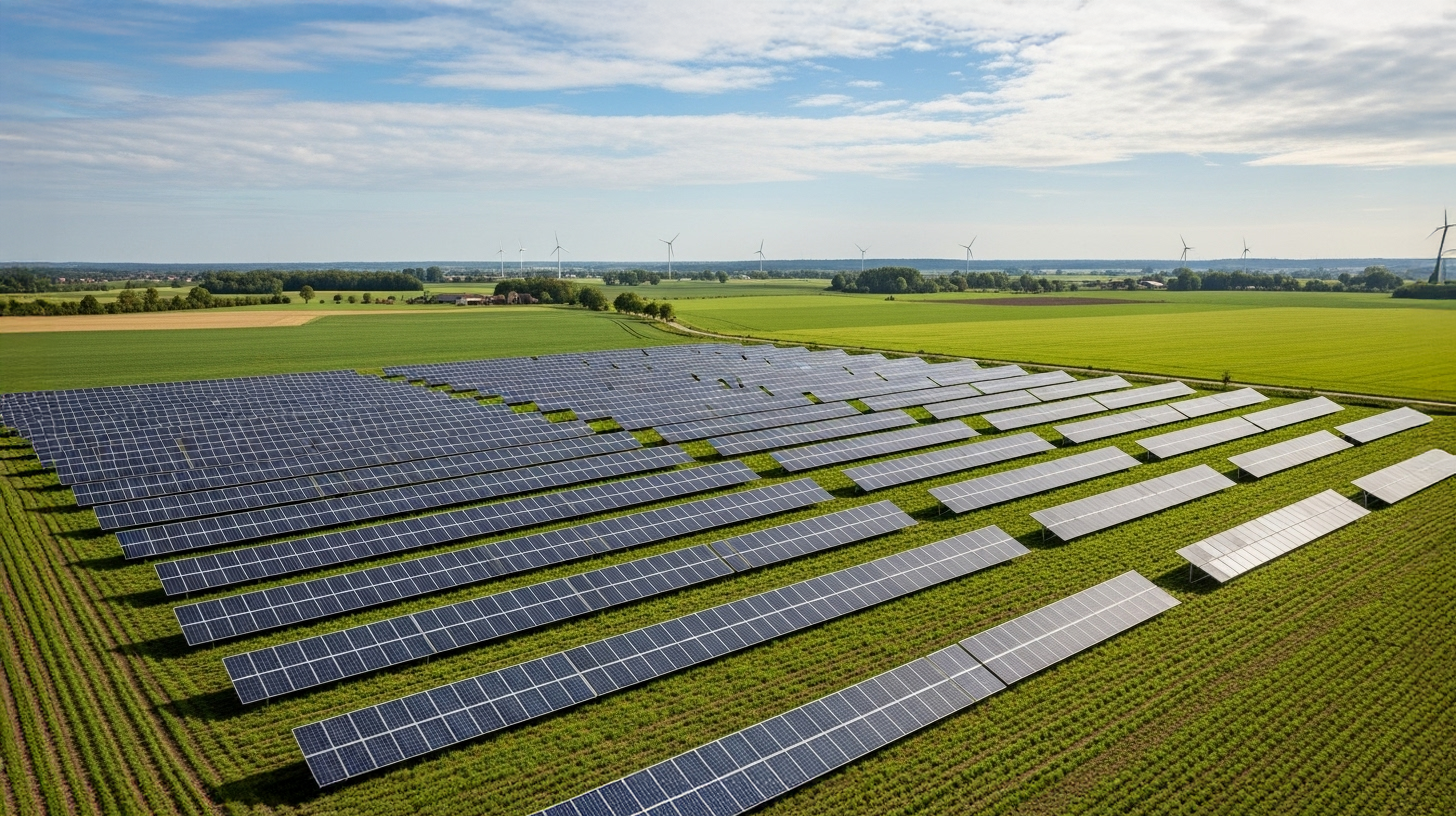
Solar park in Bürstadt on 13 hectares: Conflict between agriculture and the energy transition – Agri-PV as a compromise? – Image: Xpert.Digital
Solar park instead of agriculture: Bürstadt's political discussion about the energy transition
The solution to the solar dispute? How this ingenious technology is supposed to reconcile agriculture and the energy transition
The transformation of the German energy sector is increasingly leading to conflicts between traditional agriculture and the rapid expansion of solar energy. This issue is particularly evident in the planned solar park in Bürstadt, a Hessian town with around 15,000 inhabitants, where a photovoltaic system is to be built on 13 hectares of farmland. The project exemplifies the multifaceted challenges of the energy transition at the local level.
Bürstadt's path to solar energy
The town of Bürstadt has a long history with solar energy. As early as 2005, the world's largest rooftop photovoltaic system at the time, with a capacity of 5 megawatts, was commissioned on the building of a logistics company. In addition, an innovative photovoltaic system was installed as a noise barrier along the B47 highway in 2010, along with further community solar installations on public buildings. This prior experience has provided the town with important knowledge in managing solar projects and has raised local awareness of renewable energies.
The planned solar park will cover an area of 13 hectares south of the B47 and west of the B44, roughly equivalent to 15 football fields. Mayor Bärbel Schader emphasized that the plant could cover two-thirds of the total electricity consumption of the town of Bürstadt. The investor is GGEW (Gruppen-Gas- und Elektrizitätswerk Bergstraße), an established energy company in the region.
Economic drivers of change
Economic realities play a crucial role in farmers' decisions. While traditional agricultural lease prices in Germany average between €375 and €407 per hectare per year, landowners can achieve between €3,000 and €5,000 per hectare for photovoltaic systems. This represents a ten- to thirteen-fold increase compared to conventional agricultural leases.
This drastic difference often makes it unprofitable for farmers to bid against solar projects. One farmer in Bürstadt has already announced that he no longer wants to cultivate his fields and instead make them available for electricity generation. For the municipality, this also means additional revenue through business taxes and municipal participation agreements, which typically amount to 0.2 cents per kilowatt-hour generated.
Political reactions and citizen participation
The political reactions in Bürstadt reflect the nationwide debate. Surprisingly, the project found cross-party support. Franz Siegl of the SPD welcomed the efforts towards renewable energies, while Uwe Koch of the Greens argued that rooftops alone would not be sufficient to meet electricity demand. Even critical voices like Jürgen Heiser of the FDP, who lamented the land use, ultimately agreed.
It is noteworthy that Bürstadt's position has changed significantly since 2020. Back then, the city council rejected a 5.2-hectare solar project on Lampertheim's land, primarily due to concerns about losing its say in the matter. The current approval demonstrates a shift in awareness regarding the urgency of the energy transition.
An important aspect is the planned citizen participation. As GGEW board member Carsten Hoffmann explained, citizens are expected to benefit in two ways: through regionally sourced and therefore lower energy prices, and through the opportunity to participate financially in the project. This form of citizen participation has become a proven tool for increasing local acceptance of energy projects.
Land competition and food security
The debate surrounding photovoltaic systems on agricultural land touches upon fundamental questions of food security. Germany uses approximately 16.5 million hectares for agricultural production, which corresponds to almost 50 percent of its total land area. Experts estimate that just one percent of agricultural land would be sufficient for photovoltaic systems to make a significant contribution to the energy transition.
At the same time, lease prices for arable land are rising steadily. Between 2013 and 2023, they increased by 47 percent, further intensifying the pressure on farmers. This trend is driven by various factors: the general scarcity of land, rising food prices, government subsidies, and also competition from more lucrative alternative uses such as solar parks.
The concern about the loss of fertile soil is justified, especially since Germany already imports a significant portion of its food. Critics argue that valuable arable land with a soil quality rating of more than 50 points should not be used for solar power plants. On the other hand, proponents point out that photovoltaic systems can be completely dismantled after 20 to 30 years, while other land uses, such as housing or transportation infrastructure, lead to permanent land loss.
Agri-photovoltaics as a compromise solution
Agri-photovoltaics, which enables the dual use of land, is an increasingly discussed alternative. With this technology, solar modules are installed in such a way that agricultural production can take place simultaneously. This can be achieved through elevated mounting, vertical installation, or special module arrangements.
Initial experiences with agrivoltaic systems are showing decidedly positive results. In a project in North Rhine-Westphalia, a farmer even achieved higher agricultural yields under the solar modules than on the adjacent reference plot. The modules offer protection from extreme sunlight, heavy rain, and hail, which can be particularly advantageous in times of climate change. However, such systems are significantly more expensive than conventional ground-mounted systems, and their management is more complex.
Lease prices for agri-PV systems range between €2,000 and €3,500 per hectare per year, significantly lower than prices for pure solar parks, but still considerably higher than traditional agricultural lease prices. For farmers, this means a diversification of income sources, while at the same time partially maintaining food production.
New: Patent from the USA – install solar parks up to 30% cheaper and 40% faster and easier – with explanatory videos!

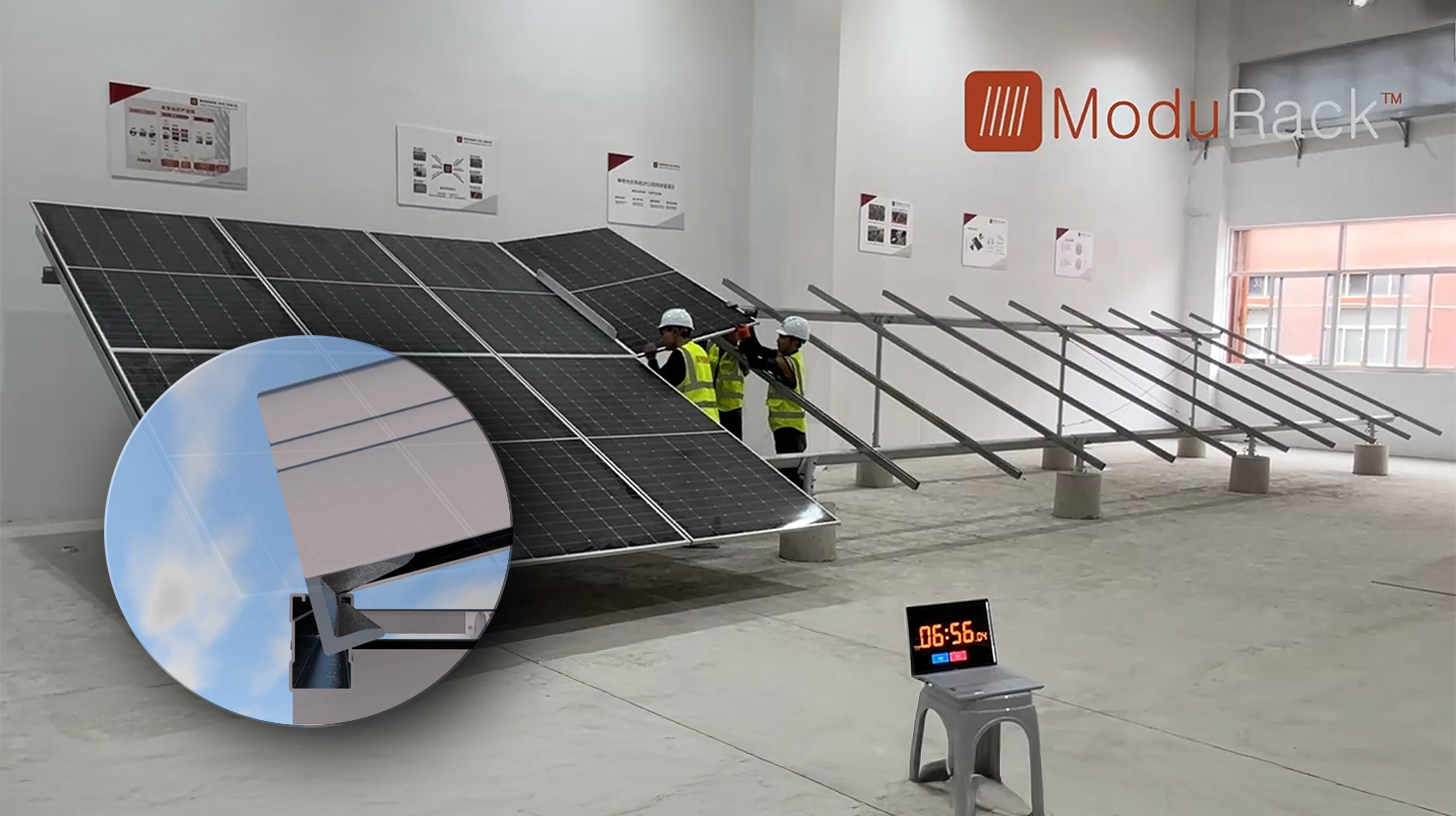
New: Patent from the USA – Install solar parks up to 30% cheaper and 40% faster and easier – with explanatory videos! - Image: Xpert.Digital
The core of this technological advancement is the deliberate departure from conventional clamp mounting, which has been the standard for decades. The new, more time- and cost-effective mounting system addresses this with a fundamentally different, more intelligent concept. Instead of clamping the modules at specific points, they are inserted into a continuous, specially shaped support rail and held securely in place. This design ensures that all forces – whether static loads from snow or dynamic loads from wind – are distributed evenly across the entire length of the module frame.
More information here:
More biodiversity thanks to solar parks? Facts and concepts
Technical and regulatory challenges
Implementing solar projects on agricultural land presents various technical and regulatory challenges. First, the land must be rezoned in the land-use plan, which entails a lengthy approval process. The municipality of Bürstadt has already passed a resolution to initiate the 17th amendment to its land-use plan, "Renewable Energies," which is intended to permit both photovoltaic and wind power projects.
A critical factor is proximity to grid connection points. The further a plant is from a substation or transformer station, the higher the connection costs. As a rule of thumb, a distance of approximately 500 meters per hectare to the grid connection point is acceptable. At greater distances, the costs of laying cables can significantly impact profitability.
Furthermore, various protected areas must be taken into account when selecting a site. Natura 2000 sites, nature reserves, and peatlands are generally excluded. Species protection also plays an important role, as demonstrated by the example of a solar park where cables had to be laid using horizontal directional drilling to avoid disturbing a bird sanctuary.
Social acceptance and citizen resistance
Public acceptance of solar parks varies considerably depending on the region and project design. While the project enjoys broad political support in Bürstadt, examples from other regions show significant public resistance. The impact on the landscape and the anticipated negative effects on tourism are often viewed particularly critically.
A frequently raised objection concerns potential glare from solar panels, especially near main roads. In the case of the planned solar park in Bürstadt, located directly next to the B44 and B47 highways, this issue was addressed during the planning phase. However, modern solar panels are designed to absorb sunlight rather than reflect it, thus minimizing glare.
Citizen participation proves to be a crucial factor for acceptance. Projects in which citizens can participate financially or where profits remain in the region encounter significantly less resistance. The model of the Starkenburg energy cooperative, which has already implemented several community solar power plants in the region, demonstrates how local participation can work.
Environmental impacts and biodiversity
Modern solar parks often have positive effects on biodiversity. Valuable habitats for various plant and animal species frequently develop between and beneath the rows of modules. The absence of pesticides and intensive management leads to the development of species-rich green spaces. Studies show that well-designed solar parks can even increase biodiversity.
Nevertheless, there are also critical aspects. Sealing should be limited to a maximum of five percent of the area, which is quite achievable with modern facilities. More problematic is the large-scale development of contiguous agricultural areas, which can lead to landscape fragmentation. Here, well-thought-out planning concepts are needed that take ecological corridors and buffer zones into account.
The limited lifespan of solar parks is an important aspect for long-term land use. Most plants are designed for an operating period of 20 to 30 years, after which the land can be fully returned to agricultural use. This fundamentally distinguishes solar parks from other infrastructure projects that result in permanent land loss.
Economic prospects and energy self-sufficiency
Energy self-sufficiency is becoming a strategic goal for many municipalities. Bürstadt aims to cover its electricity needs largely from local renewable sources. The planned 13-hectare solar park, together with existing facilities and planned wind power projects, could make a significant contribution to this goal.
For the local economy, solar parks mean added value. In addition to direct investments, jobs are created in planning, construction, and maintenance. Municipalities benefit through business tax revenue and participation agreements. In the Bürstadt project, citizens will also directly benefit through lower electricity prices and opportunities to invest.
Long-term profitability depends heavily on electricity price trends. Current forecasts predict further increases in energy prices, which further enhances the attractiveness of solar investments. At the same time, the costs of photovoltaic systems are steadily declining, leading to a further improvement in profitability.
Future prospects and innovations
Technological advancements are opening up new possibilities for integrating solar energy into agriculture. Floating PV systems on bodies of water, solar installations above parking lots and along roads, and innovative agri-PV concepts can reduce the pressure on agricultural land. The technical potential of these applications is considerable and could significantly decrease the need for ground-mounted solar installations on arable land.
Vertical agrivoltaic systems are particularly promising, as they allow for almost unrestricted agricultural use between the rows of modules. These systems also have the advantage of delivering good yields in the mornings and evenings, as well as in diffuse light, thus distributing electricity production more evenly over time.
Digitalization opens up further optimization opportunities. Smart farming technologies can make the management of agri-PV systems more efficient, while intelligent grid integration better utilizes the advantages of decentralized power generation. Furthermore, combining solar power with battery storage and power-to-X technologies can improve system integration.
Balancing competing interests
The example of Bürstadt shows that the conflict between agricultural use and solar energy is not necessarily insurmountable. Through transparent planning processes, fair citizen participation, and innovative technologies such as agri-PV, compromises can be found that meet the interests of all parties involved.
A balanced approach is crucial, one that protects high-quality arable land as much as possible while simultaneously enabling the necessary expansion of renewable energies. Policymakers are called upon to set clear guidelines and create incentives for innovative solutions. Priority should be given to previously impacted areas and synergy concepts such as agri-photovoltaics over mere competition for land.
The energy transition requires societal compromises and the willingness of all stakeholders to rethink traditional ways of thinking. The case of Bürstadt shows that this is indeed possible if all parties participate in a constructive dialogue and work together to find sustainable solutions. Balancing food security and energy security will remain one of the central challenges of the coming decades, but innovative approaches such as agrivoltaics demonstrate how both goals can be reconciled.
Look, this little detail saves up to 40% installation time and reduces costs by up to 30%. It comes from the USA and is patented.

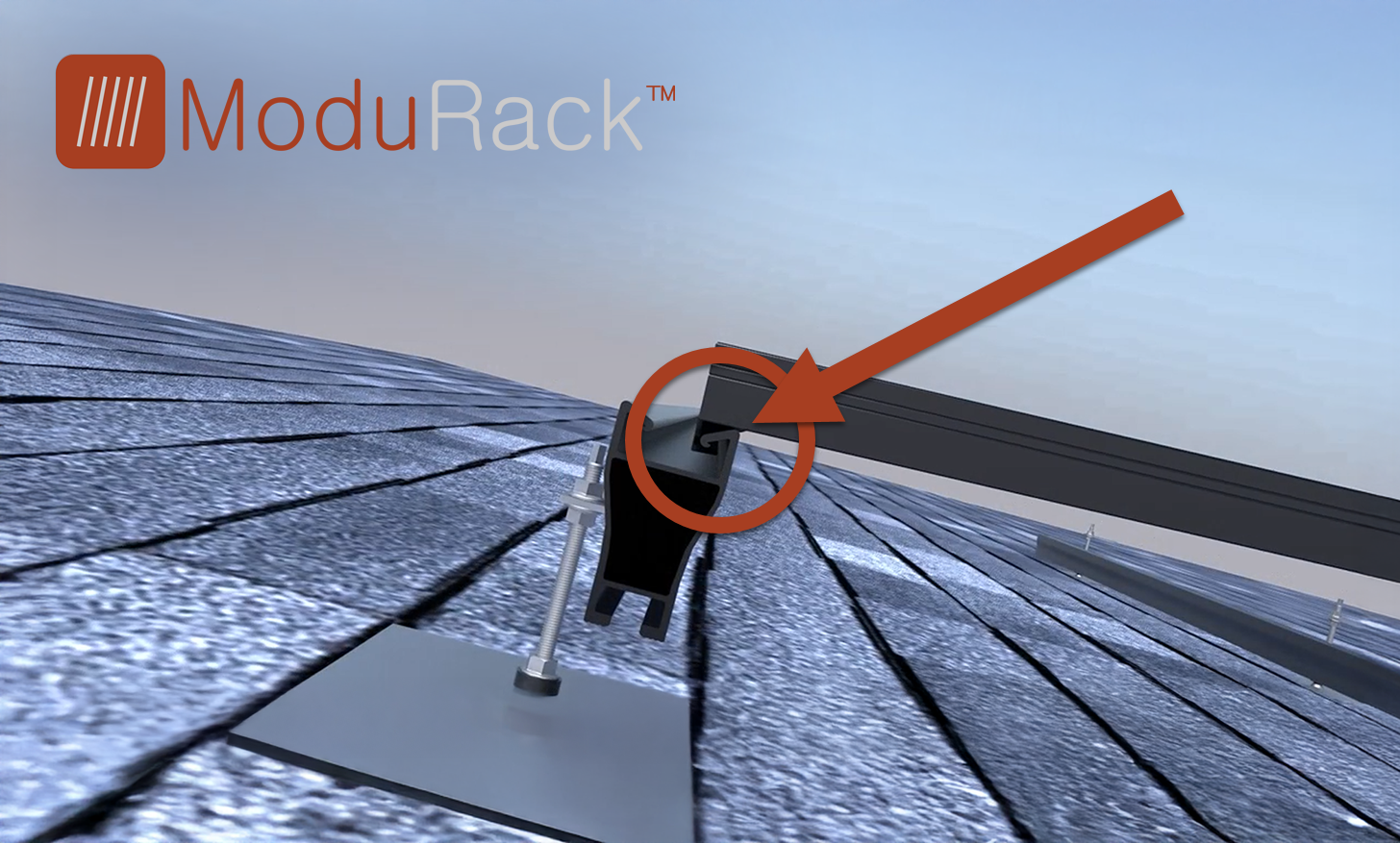
NEW: Ready-to-install solar systems! This patented innovation significantly accelerates your solar construction project
The core of ModuRack 's innovation lies in the departure from conventional clamp fastening. Instead of clamps, the modules are inserted and held in place by a continuous support rail.
More information here:
Your partner for business development in the fields of photovoltaics and construction
From industrial rooftop PV to solar parks and larger solar parking lots
☑️ Our business language is English or German
☑️ NEW: Correspondence in your native language!

Konrad Wolfenstein
I and my team are happy to be available to you as your personal advisor.
You can contact me by filling out the contact form here wolfenstein@xpert.digital:or simply call me at +49 7348 4088 965. My email address is
I'm looking forward to our joint project.