

Published on: January 23, 2025 / Updated on: January 23, 2025 – Author: Konrad Wolfenstein
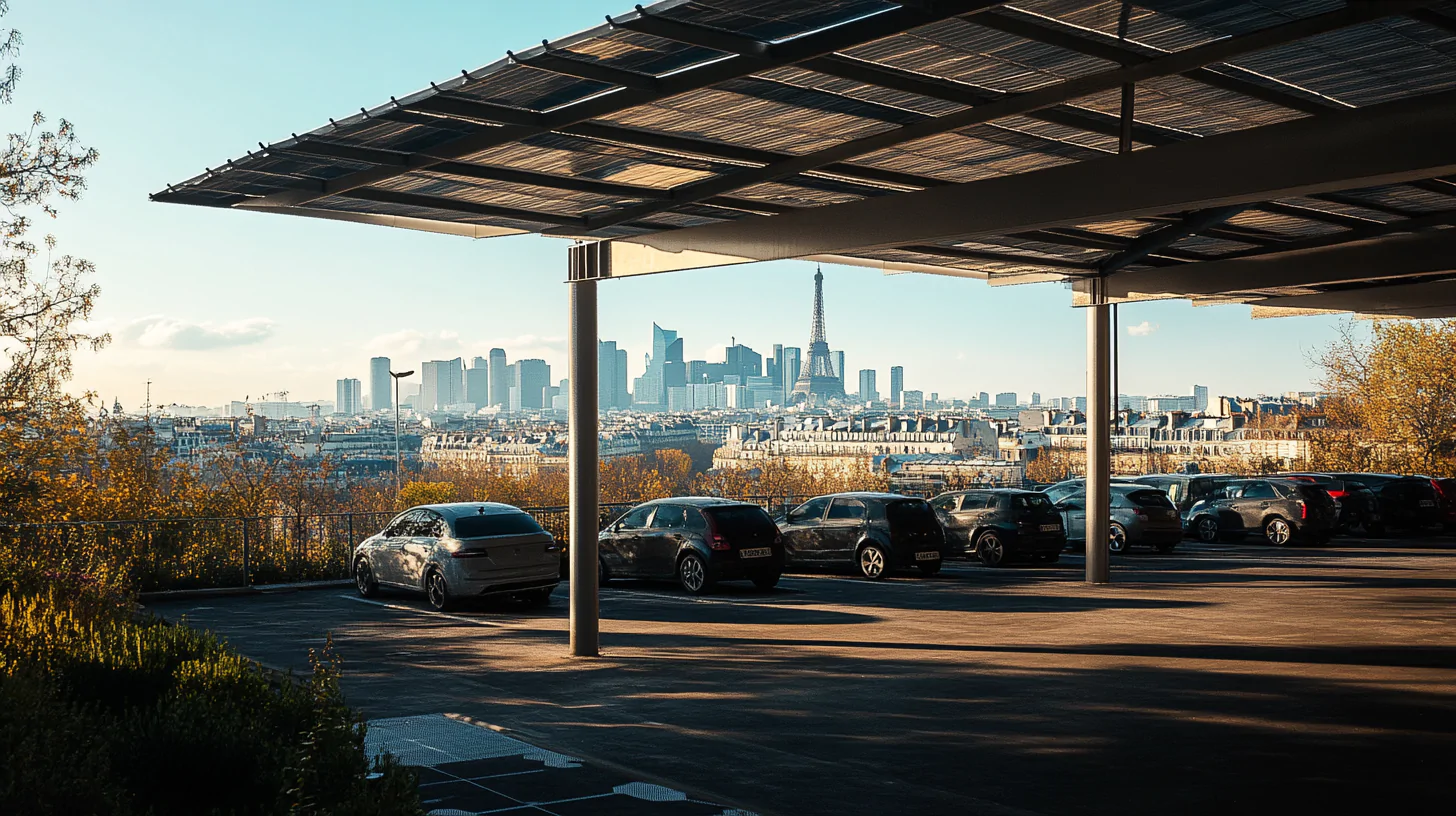
France is getting serious: Solar panels are mandatory for parking spaces – now those who refuse to install them face hefty fines! – Creative image: Xpert.Digital
France is taking further action: mandatory solar panels in parking lots and hefty fines for non-compliance
France's solar energy offensive: parking spaces targeted and harsh penalties for refusers
France is reinforcing its claim as a pioneer in renewable energy with an unprecedented initiative: the mandatory installation of photovoltaic systems in parking lots. This measure is not only a clear commitment to solar energy, but also a clear message to all those who have previously neglected the expansion of renewable energies. The introduction of this solar obligation, which comes with substantial penalties for non-compliance, marks a turning point in French energy policy. It is no longer just about voluntary contributions, but about the consistent implementation of the national energy transition plan.
The solar panel mandate in detail: A paradigm shift for parking lots
Since July 2023, the legal situation in France has been clear: parking lots with an area of 1,500 square meters or more must have at least 50 percent of their surface covered with solar panels. This regulation applies to both newly constructed and existing parking lots, demonstrating a comprehensive approach to energy generation. The definition of the parking lot area is deliberately broad to avoid loopholes: in addition to the parking spaces themselves, traffic routes, access roads, and other associated areas are also taken into account. This ensures that as much of the available area as possible is used for solar energy generation. This comprehensive approach underscores France's serious commitment to establishing solar energy not just as a marginal supplement, but as an integral component of its energy infrastructure.
The specific design guidelines stipulate that the solar panels should not merely serve as a roof, but should also create added value. For example, care is taken to ensure that the installations are aesthetically pleasing and blend harmoniously into the urban or rural environment. The integration of the solar panels into the parking lot architecture should also contribute to enhancing the parking area and generating additional benefits for users. For instance, the roofs can also serve as protection from rain or sun, thus increasing the comfort of the parking spaces.
Implementation deadlines: An ambitious timetable with clear guidelines
The implementation of the solar panel mandate is tied to clear deadlines, which depend on the size of the respective parking lot. This phased approach is intended to give operators the opportunity to adapt to the new requirements without losing sight of the government's ambitious goals. Parking lots larger than 10,000 square meters or with more than 400 parking spaces have until July 1, 2026, to comply with the solar panel mandate. For smaller parking lots between 1,500 and 10,000 square meters, the deadline is July 1, 2028. These deadlines are not to be understood as non-binding recommendations, but as binding requirements, the non-compliance with which will have serious consequences. This phased implementation also allows industry to build up the necessary capacity for installing the solar panels.
Penalties for non-compliance: A clear signal of consistency
French authorities are making no compromises when it comes to enforcing the solar panel mandate. Anyone who defies the new regulations faces hefty fines. For parking lots up to 10,000 square meters, non-compliance will result in an annual penalty of up to €20,000. For larger parking lots exceeding 10,000 square meters, this amount increases to up to €40,000 per year. These penalties are not one-time fines but will continue until the solar panel mandate is fully met. The authorities aim to ensure that operators have a financial incentive to implement the regulations quickly and avoid lengthy and costly legal battles.
The level of the fines is not arbitrary, but rather intended to send a clear signal to operators that implementing the solar panel mandate is a top priority. It can be assumed that the fines are calculated to exceed the cost of retrofitting the parking lots, thus making it economically pointless to further delay the installation of solar panels. This deterrent strategy aims to establish solar energy not just as an option, but as a necessary measure, and to contribute to France achieving its ambitious climate goals.
Goals and potential: Focus on a sustainable energy future
The mandatory installation of solar panels in parking lots is not just an isolated measure, but part of a comprehensive strategy to promote renewable energy in France. The government has set ambitious goals that are intended to fundamentally transform the country's energy landscape by 2050. The solar panels in the parking lots are expected to generate up to 11 gigawatts of renewable electricity. This output is roughly equivalent to the capacity of ten nuclear power plants and illustrates the enormous potential of this measure. By 2050, the installed photovoltaic capacity is projected to increase to 100 gigawatts, thereby significantly reducing dependence on fossil fuels. These figures speak for themselves and demonstrate that France is not just talking about the energy transition, but is also driving it forward with concrete measures.
The expansion of solar energy is a central pillar of France's energy transition. This is not only about reducing greenhouse gas emissions, but also about creating new jobs and strengthening the national economy. The French government has recognized that the energy transition presents a major opportunity for the country to position itself as a technology leader and build a sustainable economy. Investments in renewable energies are therefore intended not only to protect the environment, but also to enhance France's competitiveness.
Thinking outside the box: France's comprehensive renewable energy strategy
The mandatory installation of solar panels in parking lots is not the only measure France has taken to promote renewable energy. The government has launched a variety of initiatives aimed at significantly increasing the share of renewable energy in the country's energy mix. These include expanding the area available for photovoltaic installations to enable the widespread use of solar power. Promoting rooftop solar installations on residential and non-residential buildings is another key element of France's energy transition.
France is focusing not only on expanding solar energy, but also on other renewable energy sources such as wind, hydropower, and geothermal energy. The government recognizes that a sustainable energy supply relies on a diverse mix of renewable energy sources and is therefore pursuing a wide range of technologies. Promoting research and development in the field of renewable energies is another key focus of French energy policy, aiming to find innovative solutions to future challenges.
France as a pioneer: An example for other nations
The consistent implementation of mandatory solar panels for parking lots and the associated strict enforcement policy demonstrate France's determination to promote the expansion of solar energy and position the country as a leader in the use of renewable energies. With this initiative, France is pursuing a path that is attracting international attention and could serve as an example for other countries that have also set themselves the goal of reducing their dependence on fossil fuels.
This policy demonstrates that the energy transition is not only an environmental concern, but also an economic and social one. The solar panel mandate is a step towards a more sustainable future in which renewable energies play a central role and people's quality of life is improved.
Suitable for: