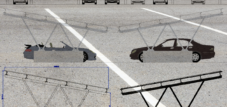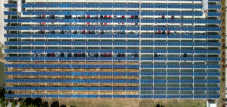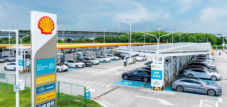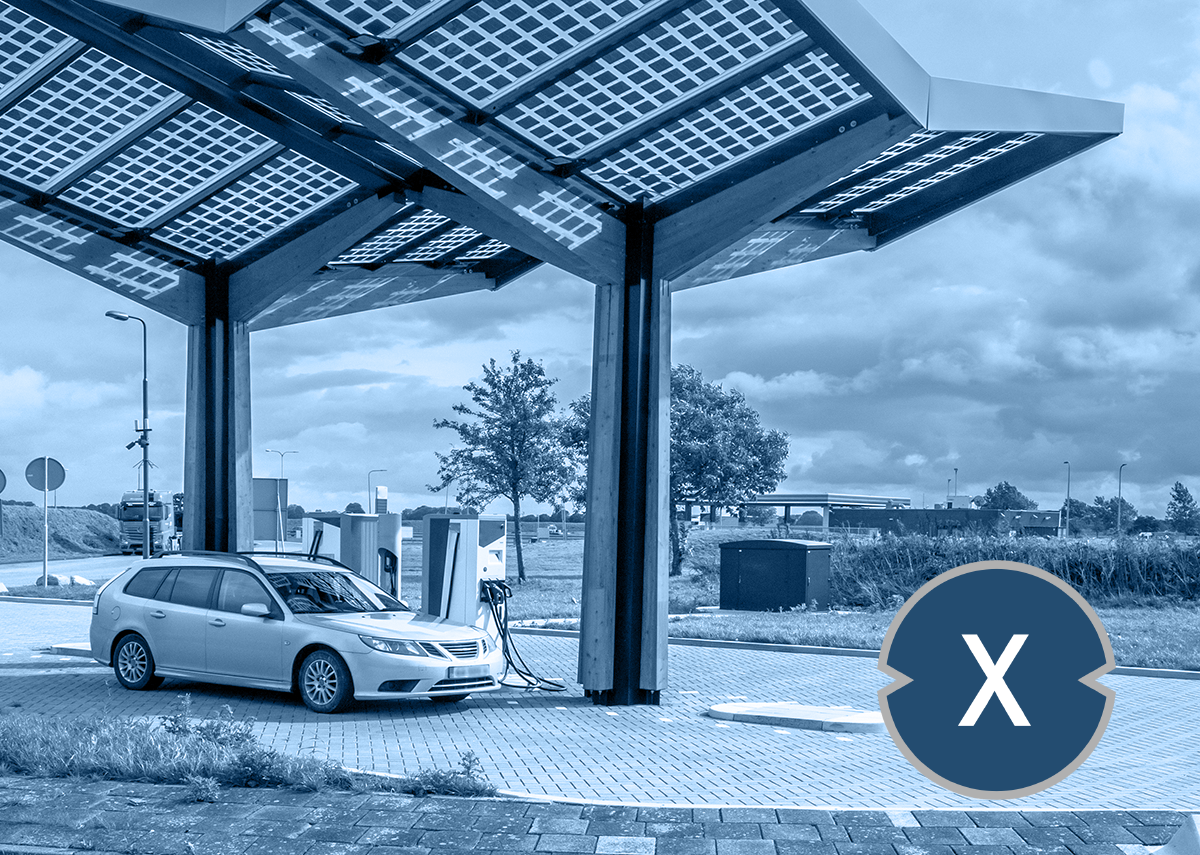
Solar carport as a solar filling station – Image: Xpert.Digital & Rudmer Zwerver|Shutterstock.com
Solar carport development and potential
In light of the EU's zero-emissions policy, rising diesel and gasoline prices, and the increasing number of electric vehicles with the associated shortage of charging stations and charging points, the next few years will not only see a completely different driving and vehicle landscape, but also a radical shift in refueling and charging behavior. Refueling and charging will no longer be concentrated on centralized solar charging stations ; instead, they will be distributed throughout the region. Charging points and charging stations will be installed wherever parking is available.
An interesting new market with great potential is emerging for solar installers, driven primarily by political initiatives. The goal is not simply to continue using electricity from the wall socket, but rather to generate it locally using photovoltaic technology, primarily through the solar carport concept in open parking areas. These are not public parking spaces; open parking areas typically include both covered and uncovered parking spaces.
Not long ago, typical solar panels were primarily in demand for pitched roofs on houses or flat roofs on production and industrial buildings. Solar parks and solar fields also enjoyed widespread acceptance. In a survey, 62% of respondents stated that they would prefer a solar park as a power generation facility in their neighborhood to, for example, a nuclear power plant. Only 5% expressed a preference for nuclear energy.
With the rise of electromobility and the lack of charging infrastructure, the idea of solar carports in open parking lots .
Solar carports as a further step towards the growing charging station infrastructure
In a survey, over 70% of experts from the e-mobility industry confirmed that the expansion of the charging station network has a strong impact on the electric vehicle market. A further 22% believe it has at least some influence on the electric vehicle market.
The number of roadside petrol stations has decreased over the past ten years. The number fell steadily from 14,410 in 2010 to 14,089 in 2020. In contrast, the number of charging points in Germany has increased almost tenfold between 2012 and 2021. With the growing popularity of electric vehicles, the number of charging stations will continue to rise in the future.
While a charging station consists of one or more charging points, the difference between a charging point and a charging station is that only one electric vehicle can be charged at a time at a charging point. Therefore, a charging station can consist of one or more charging points.
Charging stations, along with wallboxes, are part of the charging points. There are currently over 39,500 charging points (as of February 2021).
Related to this:
- Best Practice Solar Carport: What trade and industry in Baden-Württemberg need to know now
- Charging stations and solar carports together make sense: The circle is complete
39,500 charging points compared to 14,000 gas stations only looks impressive at first glance. However, the reality is that gas stations can refuel or charge far more vehicles simultaneously, and much faster. Estimates suggest that electric vehicle charging stations currently only offer about 10% of the charging capacity of gas stations. The patchy charging infrastructure further exacerbates the problem. This is especially true considering that the proportion of electric vehicles in daily traffic is still significantly lower. The issue will only worsen as the number of electric vehicles grows in the coming years, which is expected to happen.
Approval for electricity generation in the neighborhood in Germany
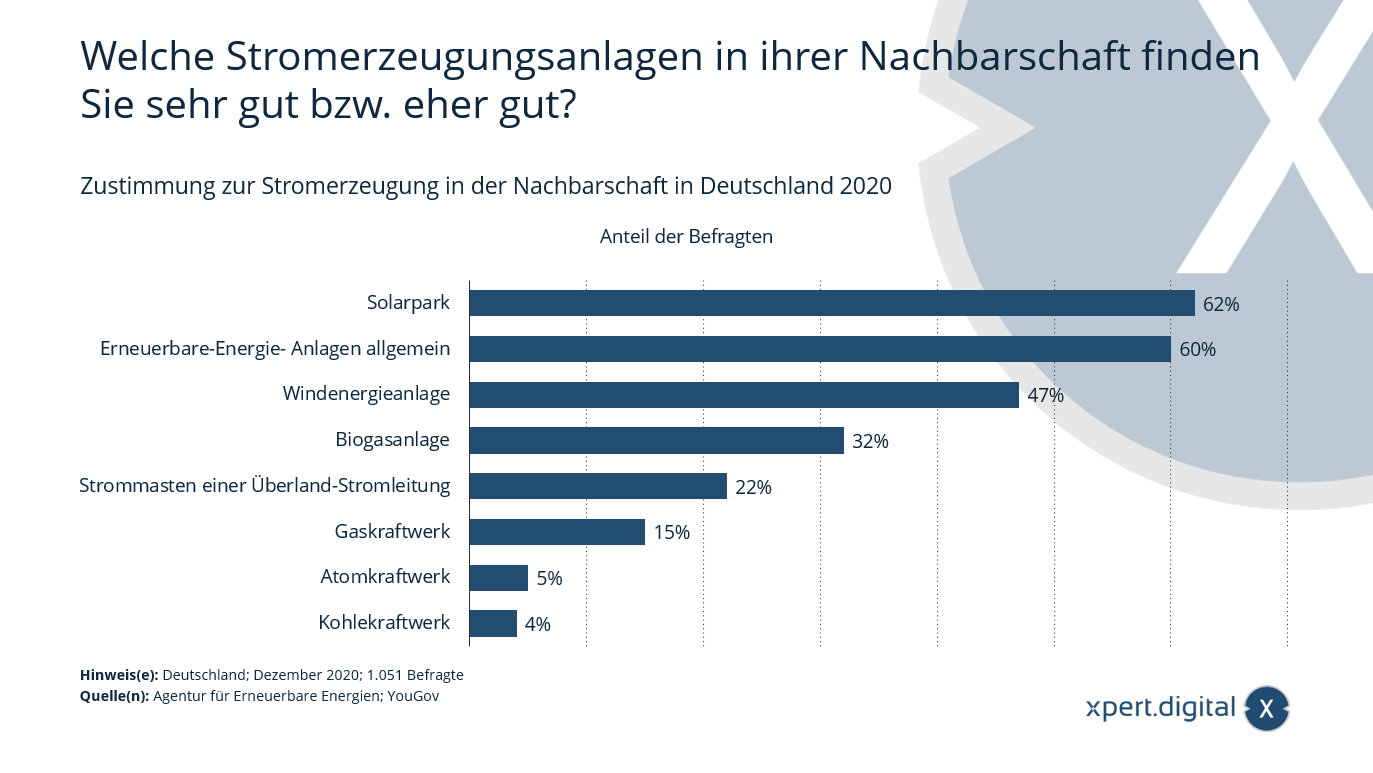
Solar parks are the most popular electricity generation facilities – Image: Xpert.Digital
- 62% – Solar parks
- 60% – Renewable energy plants in general
- 47% – Wind turbine
- 32% – Biogas plant
- 22% – Power pylons of an overhead power line
- 15% – Gas-fired power plant
- 5% – Nuclear power plant
- 4% – Coal-fired power plant
What is the development of new charging stations in Germany?

Number of new charging stations in Germany from 2010 to 2021 – Image: Xpert.Digital
- 2010 – 89 charging stations
- 2011 – 254 charging stations
- 2012 – 153 charging stations
- 2013 – 144 charging stations
- 2014 – 315 charging stations
- 2015 – 620 charging stations
- 2016 – 1,174 charging stations
- 2017 – 2,040 charging stations
- 2018 – 4,107 charging stations
- 2019 – 5,019 charging stations
- 2020 – 4,530 charging stations
- 2021 – 1,146 charging stations (January to April)
People in Germany planning to modernize or purchase a new solar system (photovoltaic system) by housing situation compared to the population
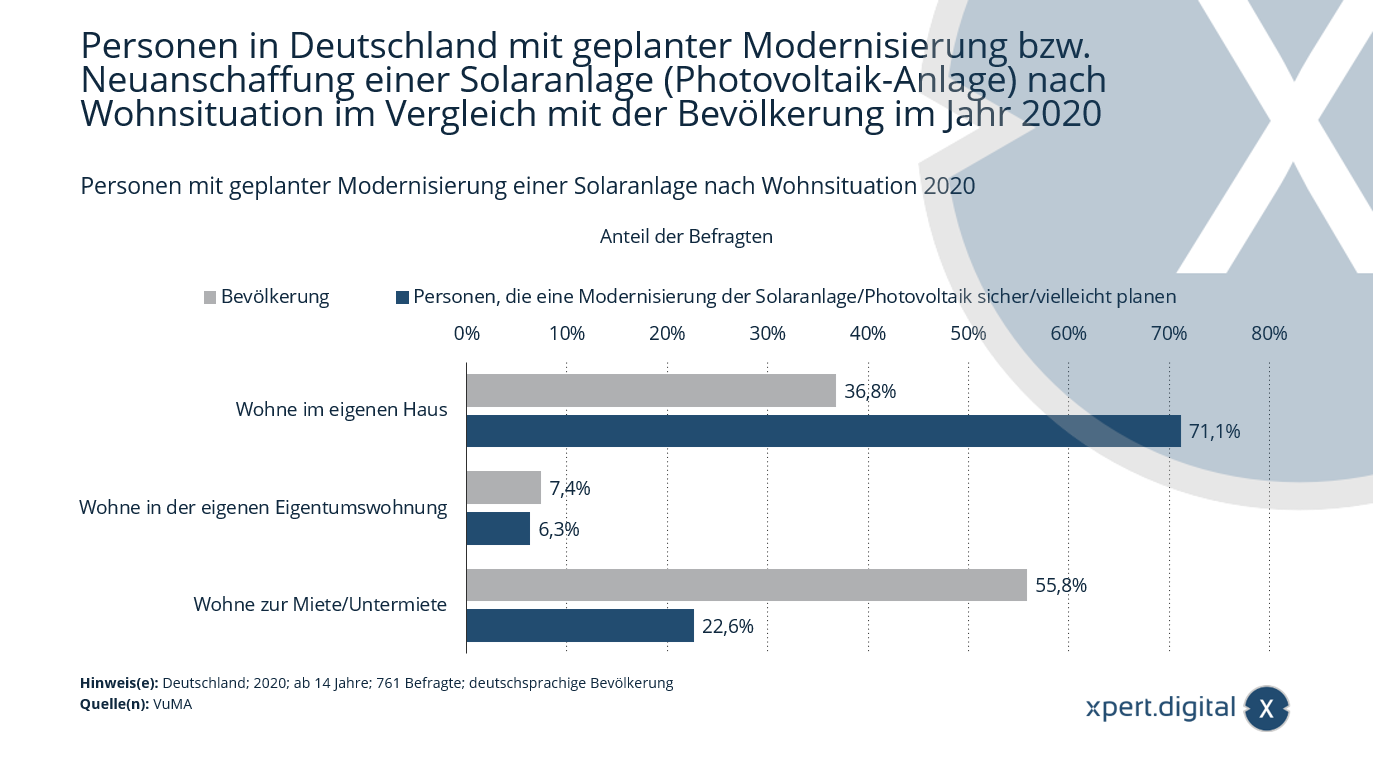
People planning to upgrade their solar power system, categorized by their living situation – Image: Xpert.Digital
Population
- 36.8% – Live in your own house
- 7.4% – Live in your own condominium
- 55.8% – Live in rented/sublet accommodation
People who are definitely/maybe planning to modernize their solar/photovoltaic system
- 71.1% – Live in their own house
- 6.3% – Live in your own condominium
- 22.6% – Live in rented/sublet accommodation
That's why Xpert.Solar offers solar carport consulting and planning as a further step towards the growing charging station infrastructure

Konrad Wolfenstein
I would be happy to serve as your personal advisor.
You can contact me by filling out the contact form below or simply call me on +49 7348 4088 965 .
I'm looking forward to our joint project.
Write to me


Xpert.Digital – Konrad Wolfenstein
Xpert.Digital is a hub for industry focusing on digitalization, mechanical engineering, logistics/intralogistics and photovoltaics.
With our 360° Business Development solution, we support renowned companies from new business to after-sales.
Market intelligence, smarketing, marketing automation, content development, PR, mail campaigns, personalized social media and lead nurturing are part of our digital tools.
You can find more information at: www.xpert.digital – www.xpert.solar – www.xpert.plus
Keep in touch