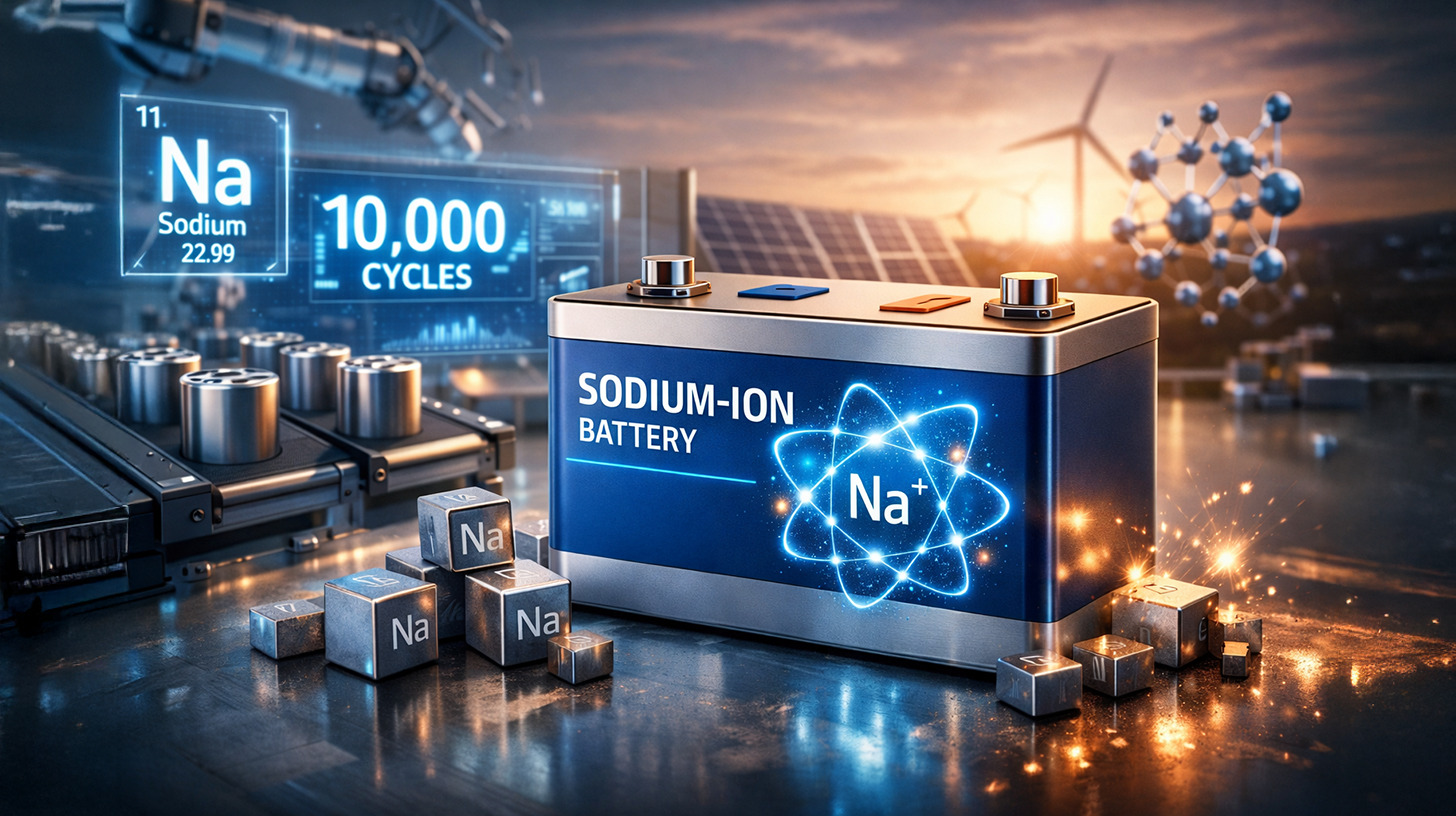
Instead of lithium battery: sodium battery from CATL and its new "Naxtra" technology – 10,000 charging cycles & dirt cheap – Image: Xpert.Digital
10,000 charging cycles & dirt cheap: This new storage technology finally makes stationary batteries profitable
Winter miracle for electric cars: Why CATL's new sodium battery doesn't give up even at -40 degrees Celsius
China's next move: CATL is devaluing the global lithium market with the Naxtra platform
The era of single-technology electric mobility is drawing to a close. What was long considered niche research or distant future pie in the sky will become industrial reality by mid-2026: The Changan Nevo A06, the world's first production vehicle powered primarily by sodium rather than lithium, will roll off the assembly line. Driven by industry leader CATL and its new "Naxtra" technology, this step marks far more than just a new model variant – it is the starting signal for a profound diversification of the global energy industry.
Sodium-ion technology aims to address the fundamental weaknesses of existing lithium-ion batteries: It eliminates dependence on scarce, geopolitically contested raw materials, offers revolutionary performance at extremely low temperatures, and promises a lifespan five times longer than conventional batteries. While lithium will remain indispensable in the high-performance segment, sodium—based on inexpensive, globally available salt—paves the way for affordable mass mobility and cost-effective large-scale stationary energy storage. However, this technological breakthrough is also a wake-up call: While China is already establishing its position and dominating supply chains, Europe and the USA must react quickly to avoid falling behind again in this key technology for the energy transition. The following article examines the technological breakthroughs, the economic advantages, and the geopolitical implications of this "salty" revolution.
China has also made progress in the development of sodium-ion batteries, which are more cost-effective than lithium-ion technology. In 2025, CATL presented the Naxtra battery with an energy density of 175 watt-hours per kilogram, supporting over 10,000 charging cycles and retaining 90 percent of its capacity even at minus 40 degrees Celsius. Such technologies could democratize access to electric mobility in poorer countries in the future.
Related to this:
The end of the lithium monopoly? How sodium is reshaping the global battery industry
When salt becomes a strategic weapon and an entire industry questions its dependence on it
The global battery industry is at a tectonic turning point. In mid-2026, the Chinese automaker Changan Automobile will launch its Nevo A06, the world's first mass-produced vehicle with a sodium-ion battery. The supplier is CATL, the world's largest manufacturer of traction batteries with a market share of approximately 38 percent. This is not a laboratory experiment or a press release with a distant future, but rather the beginning of an industrial shift with the potential to fundamentally alter supply chains, cost structures, and geopolitical power dynamics. Sodium-ion technology is emerging from the shadow of lithium dominance and marking the start of a pluralistic battery future in which different chemistries will serve different market segments.
The technological maturity behind the Naxtra platform
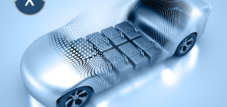
The sodium-ion battery marketed under the Naxtra brand from CATL achieves a gravimetric energy density of 175 Wh/kg, approaching the level of current LFP (lithium iron phosphate) batteries, which are around 185 Wh/kg. This value is the highest ever achieved worldwide for mass-produced sodium-ion cells. In the Changan Nevo A06, a sedan with a length of 4.88 meters and a wheelbase of 2.92 meters, the battery pack has a capacity of 45 kWh and is expected to provide a range of over 400 kilometers according to the Chinese CLTC standard. Based on the WLTP standard used in Europe, the real-world range is likely to be around 330 kilometers. CATL even specifies a range of over 500 kilometers for the next development stage, depending on the battery pack size and vehicle integration.
The Naxtra cells have a lifespan of over 10,000 charge-discharge cycles, far exceeding the typical 2,000 to 4,000 cycles of LFP batteries. This cycle stability is not only relevant for mobile applications but also makes the technology exceptionally attractive for stationary storage systems, where longevity is a crucial economic factor. In addition, they offer a 5C fast-charging capability, allowing them to be charged to 80 percent in approximately 15 minutes under optimal conditions. In safety tests such as needle penetration and compression, the Naxtra cells showed no signs of fire or explosion, which CATL describes as a transition from passive defense to intrinsic safety at the material level.
Cooling performance as an underestimated competitive advantage
One of the most serious drawbacks of conventional lithium-ion batteries concerns their performance at low temperatures. In regions like northern China, Inner Mongolia, or Scandinavia, where winter temperatures regularly drop to minus 30 to minus 40 degrees Celsius, LFP and NMC batteries lose considerable capacity and charging power. Electric vehicles are often perceived as unreliable there, which significantly limits market penetration in cold climates.
The Naxtra battery operates in a temperature range of -40 to +70 degrees Celsius. According to CATL, it retains approximately 90 percent of its available power at -40 degrees. At -30 degrees, it can be charged from 30 to 80 percent within 30 minutes, maintaining 93 percent of its usable capacity. Even at extremely low charge levels around ten percent, no significant performance loss is expected at -40 degrees. This physicochemical property is due to the fact that the electrolytes in sodium-ion cells have a significantly lower freezing point and maintain good ionic conductivity even under extreme conditions.
This performance feature opens up markets that were previously practically closed to lithium-based electric vehicles. If sodium-ion batteries actually deliver reliable results in winter operation, this could address over 40 percent of passenger car demand in China alone, as CATL itself calculates. For Northern European markets, Canada, or Russia, this would be a similarly relevant differentiating factor.
Cost Economics: From Raw Material Advantage to System Cost Revolution
The economic core of sodium-ion technology lies in its radically different raw material base. Sodium is extracted as sodium chloride, i.e., ordinary table salt, and costs about US$0.05 per kilogram. Lithium, on the other hand, costs around US$15 per kilogram, representing a price ratio of 1 to 300. Furthermore, sodium-ion cells eliminate the need for expensive and geopolitically sensitive materials such as cobalt, nickel, and, to some extent, graphite. Instead, the cathode and anode chemistry is based on materials like Prussian white and hard carbon, which can be produced industrially in large quantities and at low cost.
As of 2025, the cell price of sodium-ion batteries is still comparable to, and in some cases even higher than, lithium-ion cells due to the still low production volumes. LFP cells are already being produced in China for around US$53 to US$60 per kWh, while sodium-ion cells currently cost around US$80 to US$100 per kWh. However, this is a scaling issue, not a structural cost problem. Industry forecasts predict that cell costs for sodium-ion batteries could fall to around US$40 per kWh with mass production, as also confirmed by the International Renewable Energy Agency (IRENA) in a recent report. CATL itself has announced that sodium-ion batteries could be produced up to 60 percent cheaper than today's lithium-ion storage systems by 2030. A study from 2026 projects that the levelized storage costs (LCOS) for high learning rate sodium-ion batteries could be between 11 and 14 euros per MWh by 2050, compared to 16 to 22 euros per MWh for lithium-ion batteries.
The crucial variable is production scalability. 85 percent of lithium-ion battery production facilities can also manufacture sodium-ion cells with minor modifications. This significantly lowers the investment threshold and enables rapid capacity expansion. Massive production capacities are currently being built in China. CATL has commissioned a 30 GWh manufacturing plant in Fujian Province. HiNa Battery, in cooperation with China Three Gorges, operates a plant in Fuyang with a planned capacity of 5 GWh. Guangde Qingna Technology has announced the construction of a 20 GWh plant in Sichuan Province, with a total investment of 6 billion yuan. Industry forecasts predict that the Chinese sodium-ion market will grow from 10 GWh in 2025 to 292 GWh by 2034, with an average annual growth rate of approximately 45 percent.
Geopolitical dimension: The disentanglement of critical dependencies
The strategic importance of sodium-ion technology extends far beyond mere cost optimization. The global lithium market is characterized by extreme concentration: 85 percent of worldwide production is concentrated in just three countries (Australia, Chile, and China), and China controls 60 percent of global refining capacity. This concentration creates significant geopolitical vulnerabilities. When CATL temporarily shut down the Jianxiawo mine in Jiangxi, which accounts for six percent of global production, in early 2025, lithium carbonate prices rose by 14 percent within a week. Such price shocks highlight the structural instability of a market dominated by a few key players.
According to Wood Mackenzie, the lithium market is in a phase of significant overcapacity, which is expected to peak in 2027 before a deficit threatens from the early 2030s onward. Trade tensions between the US and China are further exacerbating this dynamic, as tariffs and export controls continue to fragment supply chains. Sodium, on the other hand, is available worldwide in virtually unlimited quantities, with production in 23 countries compared to just seven dominant lithium producers. Extraction from seawater or salt deposits eliminates dependence on specific mining regions and makes supply almost invulnerable to geopolitical disruptions. For the European Union, which currently lacks significant lithium reserves and refining capacity, sodium-ion technology offers the opportunity to establish a sovereign battery value chain.
Our China expertise in business development, sales and marketing
Our China expertise in business development, sales and marketing - Image: Xpert.Digital
Industry focus areas: B2B, digitalization (from AI to XR), mechanical engineering, logistics, renewable energies and industry
More information here:
A thematic hub offering insights and expertise:
- Knowledge platform covering global and regional economies, innovation and industry-specific trends
- A collection of analyses, insights, and background information from our key areas of focus
- A place for expertise and information on current developments in business and technology
- A hub for companies seeking information on markets, digitalization, and industry innovations
🚀 Discover how this technology will forever change the world of electromobility and energy storage
Europe's answer: Between strategic ambition and industrial reality
In Germany, the SIB:DE project was launched under the leadership of the Federal Ministry of Education and Research (BMBF). Its aim is to cover the entire value chain of sodium-ion technology, from material development and cell production to integration into energy storage systems. The consortium includes the Fraunhofer Institute for Applied Materials Research and Analysis (IFAM), the Fraunhofer Research Production Facility for Battery Cells (FFB), the University of Bremen, and industrial partners. A recent study by Fraunhofer FFB and the University of Münster confirms that sodium-ion batteries are on the verge of industrial mass production and already represent a viable alternative for applications with lower energy density requirements.
However, the massive scaling up of production is currently taking place predominantly in China. Alexander Michaelis from the Fraunhofer IKTS warns that the window of opportunity for Germany is rapidly closing if policymakers don't act quickly. The European battery industry is pursuing a so-called drop-in strategy: Since sodium-ion cells are similar in design to lithium-ion cells, they can be manufactured on existing production lines in the long term. A prerequisite, however, is the development of a European production and supply chain infrastructure. Northvolt in Sweden presented a sodium-ion battery with 160 Wh/kg as early as 2023, based on a Prussian white cathode and hard carbon anode design. In France, Tiamat, with EU funding from the Innovation Fund, is pursuing the construction of a gigafactory in Dunkirk, focusing on aqueous electrolyte chemistry for industrial applications. Natron Energy in the USA is relying on Prussian blue chemistry for data centers, telecommunications, and network infrastructure.
Stationary storage: The real mass market for sodium
The frequently asked question of whether sodium-ion batteries will prevail over lithium-ion batteries is too simplistic. The more strategically relevant question is in which market segments the technology will first establish itself. The answer clearly points to stationary energy storage as the primary growth driver.
In the field of grid-connected large-scale storage, the technology has already crossed the threshold of commercialization. In China, a 50 MW/100 MWh sodium-ion storage system was commissioned in 2024. At the end of 2025, the Xingkong Na Dazhou project, with a capacity of 1 GWh, went online, making it the world's largest sodium-ion battery storage system. In the USA, the startup Peak Energy installed the first grid-connected sodium-ion storage system at the Solar Technology Acceleration Center in Colorado in July 2025. In November 2025, Peak Energy signed a supply contract for up to 4.75 GWh with grid storage developer Jupiter Power, with a total value of over US$500 million and planned delivery between 2027 and 2030. Peak Energy is relying on a sodium iron phosphate pyrophosphate (NFPP) chemistry with passive cooling, which reduces auxiliary energy consumption by 97 percent and lowers lifetime costs by 20 percent.
The suitability for stationary storage results from a combination of factors: High cycle stability reduces the cost per unit of stored energy throughput over the project's lifetime. Wide temperature tolerance reduces the need for active cooling and thus operating costs. Inherent safety simplifies permitting processes for large-scale plants. And the availability of raw materials ensures long-term scalability, which is essential for a projected global demand of 68 to 107 TWh of stationary storage capacity by 2050.
Emerging Markets: Sodium as a lever for an electrified emerging economy
Beyond stationary applications, sodium-ion technology opens up a second strategic market segment: price-sensitive mobility markets in emerging economies. India has emerged as a particularly dynamic market. The country has no lithium reserves of its own and is entirely dependent on imports for battery production. With its acquisition of the British sodium-ion specialist Faradion for US$117 million, Reliance Industries has laid the foundation for Indian sodium-ion production. Scaling up is projected for late 2025 to early 2026.
For India, the cost structure is the decisive factor. In the largest market segment, electric two- and three-wheelers, batteries are typically smaller than 10 kWh, and buyers are extremely price-sensitive. The current energy density of batteries used in these vehicles is between 130 and 150 Wh/kg, precisely the range that sodium-ion batteries can already cover. A sodium-ion battery that is 20 to 30 percent cheaper than LFP could open up access to electromobility for millions of consumers. India is leveraging its abundant sodium reserves to achieve technological sovereignty and thereby reduce its dependence on Chinese lithium supply chains.
Similar considerations apply to the African continent, the Middle East, and Southeast Asia. Northvolt had explicitly positioned its sodium-ion technology as a solution for emerging markets in these regions, where cost-effective and heat-resistant energy storage solutions are in demand. The combination of low cost, thermal stability at high ambient temperatures, and the possibility of local raw material sourcing makes sodium-ion an ideal tool for rural electrification and decentralized energy storage.
Lithium remains, but loses its dominance
Sodium-ion technology will not replace lithium-ion, but it will fundamentally diversify the market. Lithium-ion remains the superior chemistry for applications where maximum energy density and minimum weight are paramount, such as in the premium segment of electric vehicles, consumer electronics, and high-performance applications. CATL's latest Shenxing Plus LFP battery, for example, achieves 205 Wh/kg and enables ranges of over 1,000 kilometers. Sodium-ion technology has no access to this segment for the foreseeable future.
By 2030, sodium-ion batteries could capture around five percent of the global EV battery market, with the strongest growth in the Asia-Pacific region, particularly in China and India. Two- and three-wheelers, mini-EVs, and urban fleet vehicles will be the first mass-market applications. In Europe and the US, adoption will initially remain limited to cost-effective fleet vehicles. The global sodium-ion battery market is projected to grow from US$1.83 billion in 2025 to US$2.24 billion in 2026 and US$7.08 billion by 2034, representing an average annual growth rate of 15.49 percent.
CATL's own strategic positioning as a dual strategy, in which sodium-ion and lithium-ion are further developed as two equally important pillars, underscores this logic. It's not about displacement, but about complementation. The battery future will not be dominated by a single chemistry, but by a portfolio of different technologies, each optimized for specific applications.
The regulatory dimension: Whoever controls cell chemistry controls the energy transition
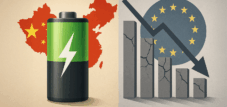
The industrial policy implications of this development are currently largely underestimated in Europe and the USA. China is systematically building a dominant position in sodium-ion battery production. According to forecasts, the country will control over 90 percent of global sodium-ion battery production by 2030. Europe and the USA face the challenge of avoiding a repeat of the asymmetric dependence on Chinese production capacities that has already occurred with lithium-ion batteries and solar cells.
The irony is that sodium-ion technology, precisely because of its simpler raw material base, actually offers the ideal prerequisite for building regionally diversified supply chains. Sodium, iron, manganese, and carbon are available globally and are not tied to specific mining regions. The 85 percent compatibility of the production facilities with existing lithium-ion lines lowers the investment threshold. What is lacking is the political will for rapid industrial scaling and a subsidy policy that specifically supports the development of European production capacities before the technological lead of Chinese manufacturers becomes insurmountable.
A plural battery landscape as the new normal
The Changan Nevo A06 with CATL's Naxtra battery doesn't mark the end of the lithium era, but rather the beginning of a new order in the battery industry. The question is no longer whether sodium-ion batteries are marketable; technical data and industrial reality have already answered that. The relevant question is how quickly production capacities can be scaled and which regions will set the industrial policy course in time. In stationary storage systems, the technology has already crossed the commercial threshold. A breakthrough in the mass market for affordable electric vehicles in China and India is imminent. For Europe and the USA, the crucial challenge will be to avoid falling behind Chinese industrial machinery for the third time in a key technology for the energy transition.
Your global marketing and business development partner
☑️ Our business language is English or German
☑️ NEW: Correspondence in your native language!

Konrad Wolfenstein
I and my team are happy to be available to you as your personal advisor.
You can contact me by filling out the contact form here wolfenstein@xpert.digital:or simply call me at +49 7348 4088 965. My email address is
I'm looking forward to our joint project.
☑️ SME support in strategy, consulting, planning and implementation
☑️ Creation or realignment of the digital strategy and digitization
☑️ Expansion and optimization of international sales processes
☑️ Global & Digital B2B trading platforms
☑️ Pioneer Business Development / Marketing / PR / Trade Fairs
🎯🎯🎯 Benefit from Xpert.Digital's extensive, five-fold expertise in one comprehensive service package | BD, R&D, XR, PR & Digital Visibility Optimization

Benefit from Xpert.Digital's extensive, five-fold expertise in a comprehensive service package | R&D, XR, PR & Digital Visibility Optimization - Image: Xpert.Digital
Xpert.Digital possesses in-depth knowledge across various industries. This allows us to develop tailored strategies precisely aligned with the requirements and challenges of your specific market segment. By continuously analyzing market trends and monitoring industry developments, we can act proactively and offer innovative solutions. The combination of experience and expertise generates added value and provides our clients with a decisive competitive advantage.
More information here: