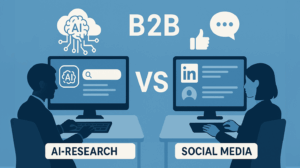
Bad news for B2B social media marketing: The reality of organic social media reach is getting worse and worse – Image: Xpert.Digital
Strategies for effective presence despite loss of reach in social media
Organic Reach in Transition: Challenges and Opportunities for Marketers
Organic reach on social media has changed dramatically in recent years. What was once considered a cost-effective method for reaching target audiences is increasingly becoming a challenge for marketers. This report analyzes the current situation, compares the most important platforms, and outlines strategies for how companies can maintain an effective social media presence despite declining organic reach.
Related to this:

Organic reach: definition and current figures
Organic reach refers to the number of people on social networks whose screens have been populated with unpaid posts from an account. This form of reach excludes paid advertising and is an important factor in generating interest and sales.
The figures for 2024 paint a clear picture: On Instagram, an average post now reaches only about 4.0% of followers – a decline of approximately 18% compared to the previous year. The situation is even more problematic on Facebook, with an average reach of just 2.6% per post. These figures stand in stark contrast to the situation a decade ago, when double-digit organic reach was still a realistic possibility.
TikTok offers a different dynamic due to its algorithmic approach. Here, the average organic reach is around 14% of followers – significantly better than on the meta-platforms, but still no guarantee of viral success.
A comparison of the platforms
Facebook: The end of organic reach?
Organic reach on Facebook has stagnated at around 5% or below for years. The platform has shifted significantly towards a paid advertising model. There are two main reasons for this decline: Firstly, the sheer volume of content – Facebook processes approximately 510,000 comments and 293,000 status updates per minute. Secondly, the personalized news feed prioritizes relevant content based on users' individual interests, further limiting the visibility of business posts.
Instagram: Between Feed and Reels
Instagram is showing a similar trend to its parent platform, Facebook. With reach now down to just 4%, it's becoming increasingly difficult for brands to reach their followers without an advertising budget. The platform is focusing more on Reels and short-form content, which often results in less visibility for traditional feed posts.
TikTok: The beacon of hope with limitations
TikTok is often described as the last bastion of organic reach. Thanks to its "For You" algorithm, the platform offers the possibility of content being seen far beyond the user's own follower count. A unique feature: On TikTok, the current reach of an account is not decisive – every video has the chance to go viral.
Nevertheless, studies also indicate changes on TikTok. An analysis of 780,000 videos from 1,000 TikTok accounts shows a decline in views over the study period. The golden age of unlimited organic reach seems to be slowly coming to an end here as well.
Why is organic reach declining?
The decline in organic reach has several causes:
- Algorithm changes: Platforms continuously adapt their algorithms, which has a direct impact on the visibility of posts.
- Content overload: The amount of shared content is constantly increasing, intensifying the competition for attention.
- Business models: Social media platforms are designed to generate advertising revenue. TikTok alone generated an estimated $23 billion in revenue in 2024, of which approximately 77% came from advertising.
- Usage patterns: Over 5.04 billion people worldwide use social media, representing an increase of 1.3 billion in just four years. With this sheer volume comes increased competition in the feed.
Strategies for increasing organic reach
Despite the challenging situation, there are strategies to improve organic reach:
Cross-platform strategies
- Quality over quantity: Focus on high-quality content rather than the sheer number of posts.
- Encourage interaction: The engagement rate is a crucial factor for visibility. Write your posts in a way that encourages interaction.
- Pay attention to timing: Analyze when your target audience is active and publish your posts accordingly.
- Maintain authenticity: Users prefer authentic content to obvious advertising.
Specific TikTok strategies
- Storytelling: TikTok videos that tell a story attract more attention.
- Create original content: Create content from scratch and focus on topics you can speak authentically about.
- Try longer videos: Contrary to the assumption that only short videos work, TikTok now also rewards longer content. The platform even financially incentivizes videos longer than one minute.
- Leverage social SEO: TikTok is increasingly being used as a search engine. Optimize your content accordingly.
Related to this:
New content trends
The Social Media Trends Report from HubSpot and Meltwater reveals important developments:
- Balance in video lengths: While short videos remain important, longer, more informative videos are becoming more significant.
- AI-generated content: More and more content is being created using AI.
- Trust through User Generated Content: Authentic, user-created content and influencer marketing are gaining in importance.
- Social Selling: Direct sales via social media are becoming more important.
Related to this:

Accept and adapt to the new reality
Declining organic reach is a reality that marketers have to deal with. The days when an organic post reached a large portion of one's community are over. Nevertheless, social media still offers valuable opportunities for customer engagement.
TikTok stands out with its For You algorithm and currently offers the best opportunities for organic reach, but even here, the first signs of change are emerging. For sustainable success on social media, a balanced mix of organic strategies and targeted advertising expenditures is essential today.
The challenge for marketing professionals lies in finding the right balance: between authentic, valuable content that can thrive organically and strategic investments in paid reach to maximize visibility. Those who master this balance and understand the specific strengths of each platform can also succeed in the new feed landscape.
Related to this:
Your global marketing and business development partner
☑️ Our business language is English or German
☑️ NEW: Correspondence in your native language!

Konrad Wolfenstein
I and my team are happy to be available to you as your personal advisor.
You can contact me by filling out the contact form here wolfenstein@xpert.digital:or simply call me at +49 7348 4088 965. My email address is
I'm looking forward to our joint project.