+++ SMEs 4.0 +++ The larger, the more digital +++ Digitalization of processes in companies +++ Obstacles to digitalization for companies +++ Digitalization shapes the business of German start-ups +++
SMEs 4.0
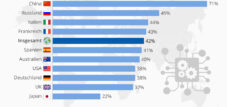
Digitalization is increasingly encompassing more and more sectors of the economy and has long since arrived in Austria's small and medium-sized enterprises (SMEs). However, significant differences are emerging between the individual sectors. The proportion of companies where digital technologies play a major role in their business model is particularly high in the financial and service sector (74 percent), the retail sector (73 percent), and the transport and logistics sector (72 percent). Here, keywords such as FinTech and e-commerce come to mind.
At the other end of the scale are traditional industrial sectors such as metal production and processing (35 percent), mechanical engineering (41 percent), and automotive manufacturing (46 percent). These results demonstrate that Industry 4.0 has not yet reached all factory floors – smaller companies, in particular, are still quite hesitant, according to Martin Unger, Partner at EY Austria.


The larger the size, the more digital
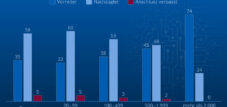
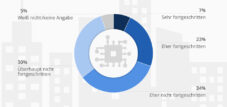
How far has the German economy progressed in terms of digitalization? The industry association Bitkom investigated this question in a study, which Michael Kroker, among others, reported on at wiwo.de. According to the study, 89 percent of the 604 participating companies see digitalization primarily as an opportunity, and 78 percent state that they now have a digital strategy. Nevertheless, over half of the companies consider themselves laggards when it comes to digitalization. The smaller the company, the higher the proportion of laggards. Only among companies with more than 2,000 employees are the majority pioneers.

Digitalization of processes in companies
Digital transformation presents companies with major challenges. In light of changing customer expectations, digital business models must be developed, organizations must become more agile, and processes must be digitized and designed to be more customer-centric. Sustainable and holistic Business Process Management (BPM) serves as an important foundation in this regard.
Many companies share this view; however, according to a study by BearingPoint and BPM&O, only a few digital transformation initiatives and BPM are aligned. Furthermore, customer orientation is often not yet a sufficient focus of many companies' optimization efforts.
Selected results of the Business Process Management Study 2017 can be found in the infographic, which was created in collaboration with our client BearingPoint.

Obstacles for companies in digitalization
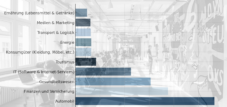
Here we show what obstacles companies see in digitalization.

Digitalization is shaping the business of German start-ups
Anyone starting a business in Germany cannot ignore digitalization. According to the "German Startup Monitor 2017" by the auditors at KPMG , 61.1 percent of German founders state that digitalization has a very significant impact on their business model.
As our infographic shows, Germany is also the most important market for German startups, accounting for 78.7 percent of their revenue. The rest of the EU is the second most important market. According to the monitor, differences in legislation and regulations are the biggest challenge for internationalization for two out of three startups.

Digital natives don't want to go to the provinces
"Small and medium-sized enterprises are lagging behind in digitalization" or "Small and medium-sized companies are missing the boat on digitalization": These are common headlines in the newspaper. Commentators often blame the company bosses, claiming they lack the knowledge, understanding of the new opportunities, or the will to digitalize.
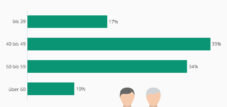
Asking those in charge within the companies themselves reveals a completely different problem. Many German medium-sized businesses are located far from the trendy metropolitan areas. And that's precisely where young, digitally minded professionals don't want to go, as our infographic based on a new McKinsey survey shows. According to the survey, more than half of the companies are having trouble recruiting digital specialists. The primary obstacle is location disadvantages. The executives surveyed also admit that they may not speak the language of these sought-after professionals well enough or be unable to accurately assess the required qualifications.
The study also analyzes the potential for growth and added value in the consistent digitalization of SMEs and emphasizes that SMEs, where rapid decision-making processes are often found, have great potential for a rapid transition to digital technology.

Keep in touch