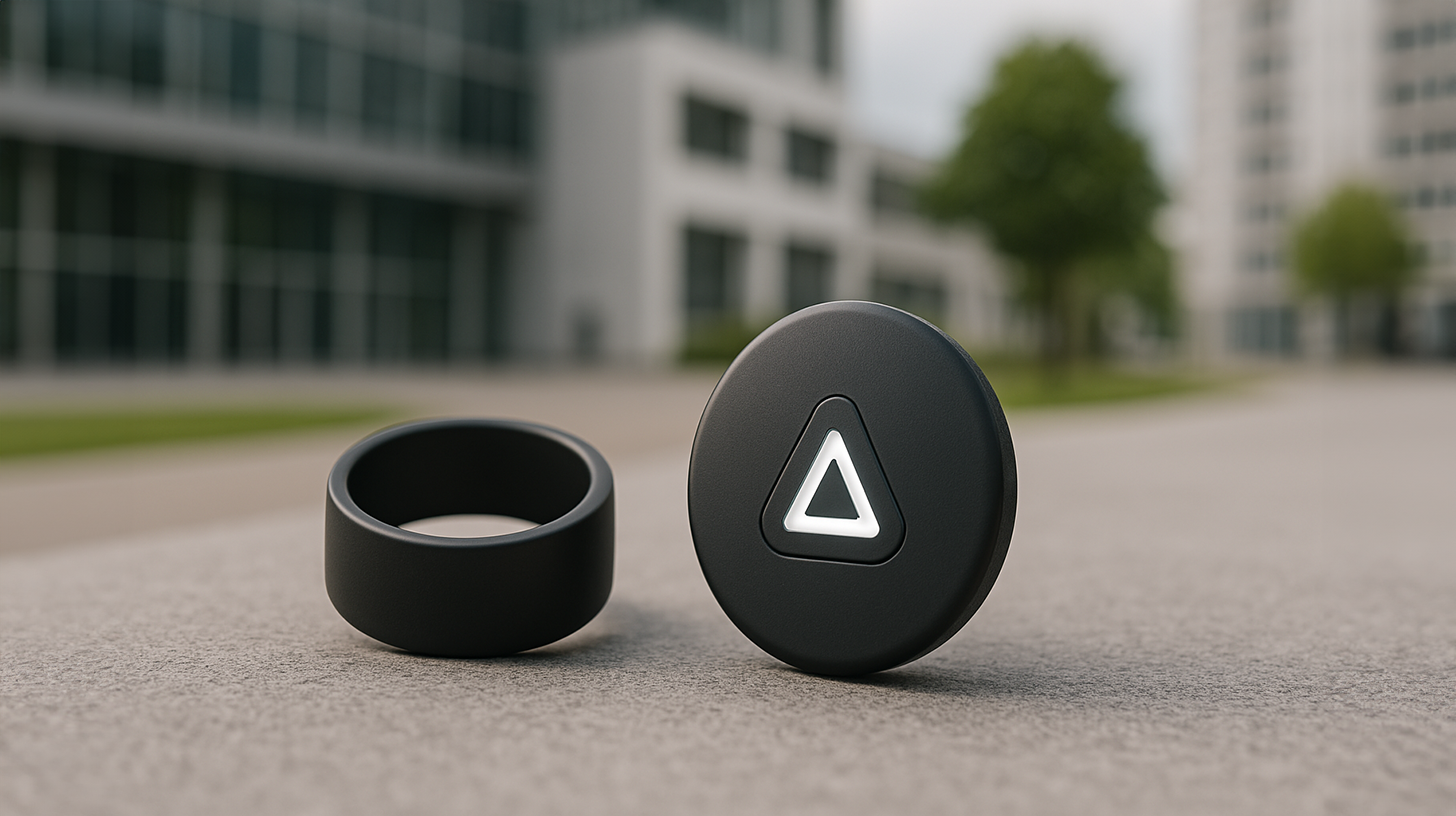
Smart Rings and AI Pins – The Future of Wearables: From B2B Applications to the Post-Smartphone Era – Creative Image: Xpert.Digital
AI, Mixed Reality and more: The rise of modern wearables
Smart rings and glasses: How the wearable revolution is changing companies
The market for wearable technologies is rapidly evolving from simple fitness trackers to complex devices with AI integration and mixed-reality capabilities. While smart rings and connected glasses offer increasingly sophisticated features, visionaries like Mark Zuckerberg predict a future where AI-powered wearables could become everyday companions. Emerging technologies like the Humane AI Pin point to a potential "post-smartphone era" in which specialized wearables could take over the functions of smartphones. Significant growth potential is emerging, particularly in the B2B sector, as companies recognize the benefits of these technologies for productivity and security.
Related to this:


The current wearable market and its development
The wearables market has expanded significantly in recent years, now encompassing not only smartwatches and fitness trackers but also innovative devices such as smart rings, mixed reality glasses, and AI-powered wearables. According to market analysts, the global B2B market for enterprise and industrial wearables is projected to grow at a compound annual growth rate (CAGR) of approximately 15% between 2021 and 2026. This growth is driven by increasing demand for hands-free devices, IoT integration, and enhanced security in industrial environments.
Smart rings as a discreet alternative
Smart rings have established themselves as a discreet alternative to larger wearables like smartwatches. They are small, lightweight, and barely noticeable when worn. The Oura Ring is considered the market leader, having been the first to gain an international following and originally financed through crowdfunding. Other providers such as Ultrahuman, Evie, and Samsung are also trying to gain a foothold in the growing smart ring market.
A major advantage of this technology lies in its impressive battery life: while most smartwatches need to be charged daily, many smart rings last for several days, up to a week. However, the compact design also brings limitations, as the lack of a display means users are more reliant on their smartphone to view the collected data.
AI integration in smart rings is also progressing. Oura recently introduced an AI update with features like the "Oura Advisor," which combines sensor data with a large language model. This allows the ring, for example, to detect elevated stress levels, ask the user about the cause, and provide personalized stress-reduction tips.
Wearables in the B2B sector
The B2B sector represents a particularly promising market for wearable technologies. As early as 2015, experts predicted that the "Wear Your Own Device" (WYOD) trend would have enormous consequences for companies. While 41 percent of respondents in Germany at that time expected a clear increase in private wearable devices, expectations in other European countries were somewhat more subdued.
Enterprise and industrial wearables are specifically designed for use in industrial and business environments. These devices are typically robust and durable, able to withstand harsh environments and conditions, and are often equipped with various sensors and technologies to improve efficiency, safety, and productivity. Examples of B2B wearables include smart glasses, smartwatches, head-mounted displays, wearable cameras, and exoskeletons, which can be used in various industries such as manufacturing, healthcare, logistics, and construction.
Challenges for IT managers
The increasing prevalence of wearables in the corporate environment presents IT managers with new challenges. Similar to the BYOD (Bring Your Own Device) trend, network administrators must develop solutions to ensure the performance and stability of corporate networks. According to experts, many IT managers are not yet taking these new technologies seriously enough, which could lead to them being "overwhelmed" by their rapid development.
Mixed Reality: The merging of AR and VR
Mixed Reality (MR) represents an innovative form of augmented reality that integrates aspects of both Augmented Reality (AR) and Virtual Reality (VR). This technology enables a seamless fusion of real and virtual worlds, allowing users to interact with both simultaneously.
MR creates an environment in which physical objects from the real world can influence digital elements in the virtual world, and vice versa. The practical application of this technology typically requires specialized MR headsets and powerful hardware, with the Microsoft HoloLens, first introduced in 2015, serving as a prime example.
Technical characteristics of MR glasses
Mixed reality glasses typically consist of a stereoscopic display, headphones for stereo sound, and sensors to track head movements. More advanced models may also include eye-tracking sensors that register eye movements and can be complemented with gaming controllers for control.
Image quality depends on the display resolution, refresh rate, and field of view. Unlike regular screens, a VR headset delivers a separate image for each eye to create the three-dimensional effect. Because the displays occupy a large portion of the human field of vision, VR headsets require very high resolution to ensure a high-quality viewing experience.
Zuckerberg's vision and the AI-driven future
Mark Zuckerberg predicts a future where AI-powered glasses become everyday technology. In a conversation with Nvidia CEO Jensen Huang, the Meta CEO said: "I believe that in the end there will be a whole range of different potential glasses products at different price points and with varying levels of technology.".
Zuckerberg anticipates that AI glasses without a display, priced at around $300, will be a product that "tens or hundreds of millions of people will own," featuring a "super interactive AI that you can talk to." Meta launched its smart glasses, a collaboration with eyewear brand Ray-Ban, back in 2021 and announced an update to Meta's AI in early 2024 that would allow the technology to work for the wearer.
At the SIGGRAPH conference, Zuckerberg emphasized that the company is working on the next generation of AI glasses, designed with fashion-conscious wearers in mind: "The goal was to limit the form factor to something that looks good." This development underscores the trend that wearables must be not only functional but also aesthetically pleasing to gain widespread acceptance.
This goes well with:

The “post-smartphone era” and innovative AI wearables
A particularly interesting example of the potential "post-smartphone era" is the Humane AI Pin, designed as an alternative to the smartphone, which has attracted considerable attention in recent months. This AI wearable is a magnetic pin that can be attached to clothing and is completely screenless.
Humane's AI Pin utilizes OpenAI's Large Language Model GPT-4 and doesn't require pairing with a smartphone or other companion device. The device features AI-powered optical recognition and a laser-projected display, powered by a Qualcomm Technologies Snapdragon platform. Of particular interest is its privacy feature: the AI Pin has no wake-up function and therefore doesn't constantly listen. It includes a "Trust Light" that illuminates whenever the device's camera, microphone, or other sensors are recording data.
The renowned Time magazine has already named the AI Pin one of the "best inventions of 2023," and Sam Altman, CEO of OpenAI, is among the company's first investors. Whether this device can actually replace the smartphone remains to be seen, but it clearly shows the direction in which wearable technology could develop.
Mixed Reality and AI Pins: The Next Generation of Wearable Technologies
Wearable technology is at an exciting turning point. From smart rings and mixed-reality glasses to AI-powered pins, innovation in wearable technology is progressing at a remarkable pace. In both the consumer and B2B sectors, these technologies are opening up new possibilities for productivity, health monitoring, and immersive experiences.
While visions like Mark Zuckerberg's point to a future where AI-powered glasses could be commonplace, innovations like the Humane AI Pin show that the "post-smartphone era" may be closer than we think. The global B2B wearables market will continue to grow, driven by the increasing demand for IoT integration and hands-free solutions in industrial environments.
The real challenge for manufacturers will be developing devices that are not only functional and powerful, but also aesthetically pleasing and comfortable to wear. Furthermore, data privacy and security will continue to be crucial factors in the development and acceptance of these technologies. One thing is certain, however: wearables will play an increasingly important role in our daily and working lives in the coming years.
Related to this:
Your global marketing and business development partner
☑️ Our business language is English or German
☑️ NEW: Correspondence in your native language!

Konrad Wolfenstein
I and my team are happy to be available to you as your personal advisor.
You can contact me by filling out the contact form here wolfenstein@xpert.digital:or simply call me at +49 7348 4088 965. My email address is
I'm looking forward to our joint project.