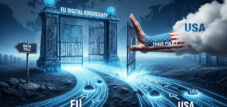
USA | Secret BMI (Federal Ministry of the Interior) report reveals the illusion of digital sovereignty – Symbolic image: Xpert.Digital
Why European firewalls are powerless against US law: “Server location Germany” does not protect against US access
A shocking analysis has surfaced: Your data belongs to the USA – no matter where it is located.
Cloud liability trap: Why AWS and Microsoft are now becoming a risk for German CEOs
A bombshell for German IT security: A long-secret report dismantles the myth that data on European servers is safe from access by US authorities. The analysis reveals an uncomfortable reality in which European law is effectively undermined by US security doctrines.
For a long time, a simple rule of thumb served as a reassuring mantra in German boardrooms and government agencies: as long as the data is physically located in data centers in Frankfurt or Dublin and managed by a national limited liability company (GmbH), European data protection laws apply. However, an expert report, now made public through the Freedom of Information Act and prepared by Cologne legal scholars on behalf of the Federal Ministry of the Interior, exposes this assumption as a dangerous illusion. The document reads like a declaration of bankruptcy for the existing European strategy for digital sovereignty and makes it clear that in the digital realm, physical geography is subordinate to the legal geography of the USA.
The report's significance lies in its detailed breakdown of the legal powers granted to US authorities by laws such as the CLOUD Act or FISA 702. Regardless of whether a company establishes a German subsidiary or uses trustee models, as soon as a connection to a US parent company exists—even if only through technical control over software updates—US agencies can compel the release of data. The analysis makes it clear that technical measures such as encryption or organizational structures like the "sovereign cloud" are often nothing more than mere delaying tactics that, in a serious situation, cannot withstand the American doctrine of "compelled assistance." For European businesses, which rely heavily on the infrastructures of Amazon, Google, and Microsoft for their digital transformation, this represents a fundamental, systemic risk that can no longer be contractually mitigated.
Related to this:

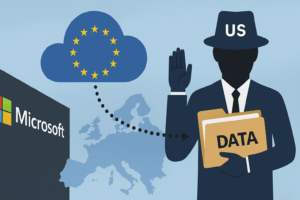
The lie of the "sovereign cloud": Why German subsidiaries offer no security
The debate surrounding Europe's digital sovereignty has taken on a new, sobering dimension with the release of a previously confidential expert report. Commissioned by the German Federal Ministry of the Interior and prepared by legal scholars in Cologne, the document, which was made public through a Freedom of Information Act request, acts as a catalyst for a long-overdue reality check. It deconstructs the widespread assumption that data, once physically stored on European servers, is protected from access by foreign powers. This assumption has long served as the reassuring narrative used by both political decision-makers and IT managers in companies to justify the massive deployment of US cloud infrastructures.
The economic relevance of this finding can hardly be overstated. In an era where data is considered the primary asset for value creation, the legal uncertainty surrounding its confidentiality represents a massive investment risk. European companies and public authorities that base their digital transformation almost exclusively on the platforms of major US hyperscalers like Amazon Web Services, Microsoft Azure, or Google Cloud are therefore operating on a foundation that is legally more porous than its technical capabilities suggest. The report makes it clear that physical geography in the digital realm is subordinate to the legal geography of the United States. It reveals an asymmetrical distribution of power in which European data protection standards such as the General Data Protection Regulation (GDPR) can be effectively circumvented by US security laws if the service providers in question fall under US jurisdiction. This is not merely a legal technicality, but a fundamental shift in risk assessment for every CIO and compliance officer in the European Economic Area.
Related to this:


The architecture of extraterritorial access
The legal mechanisms enabling this access are complex and have evolved historically, but together they form a tightly woven network from which hardly any globally operating IT service provider can escape. The Cologne-based experts identify an interplay of various legal norms, originally conceived for combating terrorism or national security, which today legitimize a universal data extraction infrastructure. At the heart of this are the Stored Communications Act, expanded by the CLOUD Act, and the notorious Section 702 of the Foreign Intelligence Surveillance Act.
These laws create a situation of obligation that allows US authorities direct access to cloud providers. Unlike traditional mutual legal assistance treaties, which require lengthy bureaucratic processes between states, these instruments allow for direct orders to be issued to the company. The Foreign Intelligence Surveillance Act allows US intelligence agencies to monitor the communications of non-US citizens located outside the US, provided this serves the purpose of gathering intelligence. The term "intelligence" is defined so broadly that it can potentially also encompass economically relevant data or research findings, as long as these have relevance to US foreign policy or national security.
From an economic perspective, this means that US cloud providers are forced into a permanent dilemma. On the one hand, they must contractually guarantee their European customers data security and GDPR compliance, but on the other hand, US law compels them to break these commitments if necessary. The CLOUD Act, the Clarifying Lawful Overseas Use of Data Act, codified precisely this requirement: It clarifies that US authorities can demand access to data, regardless of whether that data is stored in Virginia, Frankfurt, or Dublin. This creates a massive compliance risk for the companies concerned, as complying with a US disclosure order often inevitably constitutes a violation of European law. This legal uncertainty is often overlooked in day-to-day operations, but it represents a systemic, latent threat to the integrity of European trade secrets.
Corporate structures as legal transmission belts
A particularly critical aspect of the analysis concerns the definition of data control. The report dispels the misconception that establishing a national subsidiary, such as a German GmbH (limited liability company), could serve as an effective shield against US access. In the legal logic of the US authorities, the physical location of the data is irrelevant. The decisive factor is solely the criterion of so-called "possession, custody, or control"—that is, the possession, custody, or control of the data.
As long as a US parent company is legally or factually able to order its foreign subsidiary to disclose data, US courts uphold this control. The corporate separation between a US Inc. and a German GmbH becomes permeable in this context. US courts argue pragmatically: If the CEO of the US parent company can order the managing director of the German subsidiary to provide data, then this data falls under US jurisdiction. This applies even if the data has never actually entered US territory.
This has far-reaching consequences for the European economy. Models marketed as sovereign cloud solutions that rely solely on local data storage prove inadequate from this perspective. Even trustee models, where a European company acts as the formal operator but the technology is licensed from a US corporation, are not entirely risk-free if maintenance access or administrative backdoors exist that allow de facto control by the US licensor. The analysis demonstrates that the US's legal power extends deep into corporate structures and renders the traditional notion of national borders obsolete in the digital realm. Anyone who becomes technologically dependent on American platforms automatically imports their legal system into their own data processing, regardless of what the legal notice of their local branch states.
The infectious effect of global business relationships
Even more worrying for European businesses is the report's finding that the scope of US law is not necessarily limited to US companies and their subsidiaries. Over decades, US jurisprudence has developed a doctrine that extends the jurisdiction of its courts very broadly. As soon as a company maintains significant business connections in the US—whether through subsidiaries, extensive trade relations, or financial transactions—it can potentially be subject to US jurisdiction.
The concept of "minimum contacts" means that even purely European companies serving the US market can become targets of US orders. This creates a scenario in which US jurisdiction takes on a viral quality. A German industrial group using cloud services from a purely European provider could still come under scrutiny if the provider itself or its subcontractors have relevant connections to the US legal system. The risk of direct or indirect data outflow thus transforms from a specific problem for US cloud users into a systemic risk for the entire globally interconnected single market.
This extraterritorial reach leads to an asymmetric competitive situation. While US companies can operate relatively freely in Europe, European companies must always reckon with the possibility that their most sensitive data will flow out via the US justice system or intelligence agencies. This is particularly critical in the area of industrial espionage or in large M&A transactions, where informational advantages can determine the value of billions. The report implies that it is virtually impossible for internationally operating companies to completely escape the reach of these laws unless they were to completely decouple themselves from the US market and US technology – an economically suicidal step in today's global economy.
Our US expertise in business development, sales and marketing

Our US expertise in business development, sales and marketing - Image: Xpert.Digital
Industry focus areas: B2B, digitalization (from AI to XR), mechanical engineering, logistics, renewable energies and industry
More information here:
A thematic hub offering insights and expertise:
- Knowledge platform covering global and regional economies, innovation and industry-specific trends
- A collection of analyses, insights, and background information from our key areas of focus
- A place for expertise and information on current developments in business and technology
- A hub for companies seeking information on markets, digitalization, and industry innovations
Digital sovereignty instead of US lock-in: Why encryption alone won't save Europe
Technical protection mechanisms in the context of compliance
Faced with this legal impasse, many responsible parties are resorting to technical solutions, particularly encryption. The hope is that data which must be handed over but cannot be decrypted will be useless to US authorities. However, the report also dampens the spirits of these techno-optimists. While encryption – especially when the customer manages the key themselves (Bring Your Own Key) – is a significant obstacle, it is not an absolute protection against the legal obligations of cloud providers.
US procedural law and related security laws are designed to enforce cooperation. A provider that systematically deprives itself of the ability to comply with court orders through technical measures is treading on thin ice. There is an implicit or sometimes explicit expectation that systems must be designed in such a way as to allow for lawful interception. Companies that refuse to comply risk not only astronomical fines but also criminal prosecution for their executives.
Furthermore, the report points to a procedural trap: The obligation to retain evidence (litigation hold) often applies long before actual proceedings begin or an official order for disclosure is issued. A cloud provider that anticipates that certain data might be relevant to US authorities could be forced to secure it preventively or to make interventions in the encryption infrastructure to avoid accusations of obstruction of justice.
Furthermore, a purely technical perspective is often short-sighted. Modern cloud applications, particularly in the fields of artificial intelligence and big data analytics, often require data to be processed in plaintext. End-to-end encryption, where the cloud provider never has access to the plaintext, often reduces the cloud to a mere data repository (bit bucket) and deprives it of its intelligent capabilities. However, as soon as data is decrypted for processing, a window of opportunity for access opens. The notion that one can leverage the advantages of US hyperscalers while simultaneously immunizing oneself completely against their legal framework through encryption thus proves to be a technocratic illusion that cannot withstand the legal reality of "compelled assistance.".
Related to this:
The fragile balance of transatlantic data agreements
The findings of the report shed a harsh light on the fragile construct of transatlantic data transfers. European supervisory authorities face the monumental task of enforcing the strict requirements of the General Data Protection Regulation (GDPR), which permits the transfer of data to third countries only if an adequate level of protection exists there. The European Court of Justice (ECJ) has already ruled twice in the past – in the Schrems I and Schrems II judgments – that US laws undermine this level of protection and declared corresponding agreements (Safe Harbor, Privacy Shield) invalid.
Currently, data transfers are based on the "EU-US Data Privacy Framework." However, the present report essentially provides ammunition for the next legal collapse of this framework. It demonstrates that the fundamental conflicts—in particular, the far-reaching access of US intelligence services without effective judicial protection for EU citizens—remain structurally intact. US laws such as FISA 702 remain fundamentally aggressive.
For the European economy, this means it is sitting on a regulatory powder keg. Current legal certainty is deceptive and based more on the political will of the EU Commission to maintain the flow of data than on a sound legal foundation. Should the European Court of Justice again conclude in the future that US surveillance laws are incompatible with fundamental European rights, an immediate disruption of digital supply chains is imminent.
The report thus underscores the urgency of developing genuine alternatives. It is a plea against the naive belief that diplomatic agreements can bridge the deep-seated doctrinal differences between US security thinking and the European understanding of freedom. As long as the US adheres to its doctrine of global data availability for its security agencies, Europe's digital sovereignty based on US technology remains an oxymoron. The conclusion for political and economic decision-makers can only be that risk minimization can no longer be achieved solely through contracts ("Standard Contractual Clauses"), but rather that technological independence and the development of independent, legally compliant infrastructures are becoming a matter of strategic survival.
Related to this:
Economic asymmetry and the lock-in effect
To fully grasp the implications of the report, one must move beyond the purely legal framework and consider the economic realities that cement this legal dependency. The European cloud market is effectively dominated by US providers; estimates suggest that AWS, Microsoft, and Google together hold a market share of over two-thirds in Europe. This dominance is not accidental, but rather the result of massive economies of scale and a pace of innovation that European providers have so far been unable to keep up with.
The problem is exacerbated by so-called vendor lock-in. Companies that have deeply integrated their IT architecture into the proprietary ecosystems of US hyperscalers—for example, through the use of specific serverless functions, AI APIs, or database management systems—cannot simply switch to another provider. The migration costs would be prohibitively high, and the technical effort immense. The report thus indirectly demonstrates that European companies are in a kind of hostage situation: They are technologically and operationally bound to platforms that cannot legally offer the security guarantees that European law actually requires.
This asymmetry leads to a competitive disadvantage. While US companies know their data is protected worldwide by their own government and its aggressive pursuit of interests, European firms must constantly factor in the risk of their data being compromised. Furthermore, the use of US cloud services drains billions in added value out of Europe, which is then reinvested in research and development by US corporations, further increasing their technological lead. The legal analysis in the Cologne report is therefore also an indictment of European industrial policy over the last two decades, which has failed to create a competitive digital infrastructure that is both technologically state-of-the-art and legally sovereign.
The fiction of the “sovereign cloud”
In response to this threat, US providers and their European partners have recently launched an increasing number of products under the label "Sovereign Cloud." These structures, often joint ventures or special licensing models (such as between T-Systems and Google or Microsoft's Cloud for Sovereignty), promise to technically and organizationally isolate control over the data to such an extent that US access becomes impossible. However, the report also raises considerable doubts about the robustness of these structures.
As long as the technological core, the software stack, and the update loops are controlled from the US, a residual risk remains. The definition of "control" in US law is, as explained, extremely broad. If a US software company is theoretically able to alter functionalities or redirect data streams via a software update, a US court could already consider this sufficient control to compel disclosure. The "sovereign cloud" based on US technology is therefore like trying to build a house on land owned by someone else: You can paint the walls and lock the doors, but if the landowner decides to sell or develop the land beneath the house, the tenant's options are limited.
The report forces us to face the uncomfortable truth: there is no "light" version of sovereignty. Either you control the entire value chain – from the chip to the server and operating system to the application – or you accept a certain degree of external control. The strategy of making US technology "European" through legal and contractual wrappers runs up against the hard limits of US security doctrine.
Strategic imperatives for the future
What are the implications of this sobering analysis? For Europe, it reveals the compelling need to understand digital sovereignty not as a regulatory, but as a technological project. Legal safeguards like the GDPR are ineffective if the physical and logical infrastructure on which the data is processed is controlled by legal systems that do not respect these safeguards.
Investing in open-source cloud infrastructures, promoting genuine European hyperscalers, and developing technologies like confidential computing, which enables the processing of encrypted data, are no longer mere industrial policy aspirations, but matters of national security and economic self-assertion. As long as Europe fails to achieve parity in these areas, the access potential of US authorities, as described in the report, will remain a permanent Damocles' sword hanging over the European digital economy. The report's conclusion is painful, but salutary: sovereignty cannot be rented; it must be forged.
EU/DE Data Security | Integration of an independent and cross-data-source AI platform for all business needs
Independent AI platforms as a strategic alternative for European companies - Image: Xpert.Digital
AI Game Changer: The most flexible AI platform - Tailor-made solutions that reduce costs, improve your decisions and increase efficiency
Independent AI platform: Integrates all relevant company data sources
- Rapid AI integration: Tailor-made AI solutions for businesses in hours or days, instead of months
- Flexible infrastructure: Cloud-based or hosting in your own data center (Germany, Europe, free choice of location)
- Maximum data security: its use in law firms is irrefutable proof
- Deployment across a wide variety of enterprise data sources
- Choice of own or different AI models (DE, EU, USA, CN)
More information here:
Your global marketing and business development partner
☑️ Our business language is English or German
☑️ NEW: Correspondence in your native language!

Konrad Wolfenstein
I and my team are happy to be available to you as your personal advisor.
You can contact me by filling out the contact form here wolfenstein@xpert.digital:or simply call me at +49 7348 4088 965. My email address is
I'm looking forward to our joint project.