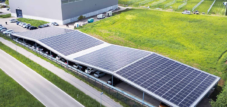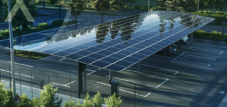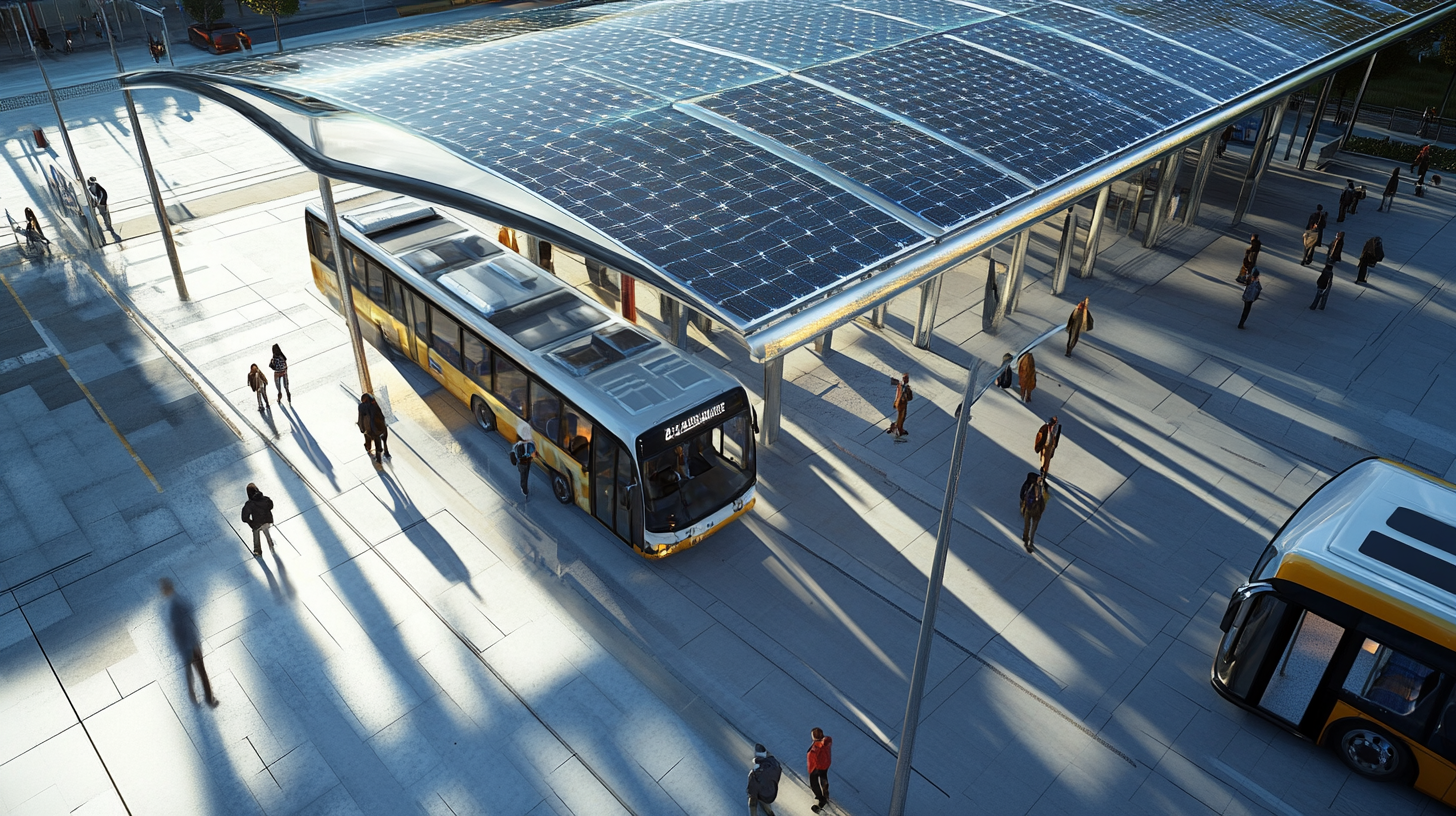
Covering asphalt surfaces with semi-transparent photovoltaic modules: It doesn't always have to be a solar parking lot – Creative image: Xpert.Digital
Potential of covering asphalt surfaces with semi-transparent photovoltaic modules
The use of semi-transparent photovoltaic modules to cover asphalt surfaces offers innovative and versatile applications – far beyond their familiar use as solar parking lots. This technology allows for the multiple uses of existing sealed surfaces by combining protection, energy generation, and in some cases, even additional social or environmental benefits. The following sections present and explain various potential applications of this future technology:
1. Covering of highways
The idea of covering highways with photovoltaic modules is still in the pilot phase, but the advantages are promising. Installing PV modules over roadways could address several problems simultaneously:
- Electricity generation: Kilometer-long stretches of highway offer enormous potential for the production of renewable energy. The electricity generated could be fed directly into the grid or used for electric vehicle charging stations along the route.
- Asphalt protection: The modules protect the asphalt from strong sunlight, which could significantly extend its lifespan.
- Noise reduction: The roof would also act as sound insulation, as it absorbs or reflects the noise from vehicles.
- Weather protection: Drivers would be better protected from adverse weather conditions such as rain or snow, which could increase road safety.
Another major advantage would be that no new areas would need to be sealed, as existing infrastructure would be used.
2. Bicycle parking spaces and charging infrastructure for e-bikes
With the growing popularity of e-bikes, the need for suitable charging and parking facilities is constantly increasing. Covered bicycle parking spaces with integrated PV modules offer an ideal solution:
- Charging stations: Solar power can be used directly for charging e-bikes, creating an independent and sustainable charging infrastructure.
- Weather protection: Cyclists benefit from a sheltered parking area that protects against rain, snow or intense sunlight.
- Increasing attractiveness: Municipalities and companies that provide such facilities can make their locations more attractive and thus actively contribute to the promotion of cycling.
3. Storage and shelter areas in the commercial sector
Commercial areas such as storage yards or vehicle parking areas also offer potential for the integration of semi-transparent PV modules. Particularly in industries with large space requirements, the following advantages arise:
- Cost savings: Companies can partially or completely cover their own electricity needs with the energy they generate.
- Flexibility: Such modules can be adapted to different building shapes and surfaces, meaning that almost any sealed surface can be used.
- Sustainability: Integrating PV technology can support a company's sustainability goals while also improving its image.
4. Public squares and urban areas
In urban areas, public squares, parks, or pedestrian zones could be covered with semi-transparent PV modules. This solution offers numerous advantages:
- Shade and comfort: The canopy provides shade and makes waiting areas more pleasant for visitors.
- Power supply: The generated electricity could be used for lighting, water fountains, or charging stations for mobile devices.
- Attractiveness: Innovatively designed PV roofs could also serve as an architectural highlight and increase the attractiveness of urban areas.
5. Bus stops and waiting areas
Bus stops are another promising area of application. Here, semi-transparent PV modules could offer both functional and aesthetic advantages:
- Lighting and security: The generated electricity could be used for lighting waiting areas or for digital information systems.
- Weather protection: Passengers would be protected from rain and sun, which could make the use of public transport more attractive.
- Environmental awareness: Such facilities would underline the sustainable orientation of transport companies.
6. Sports facilities
Sports facilities also offer an interesting opportunity to use PV roofing. Asphalted areas in particular, such as running tracks, basketball courts, or tennis courts, could offer the following advantages:
- Protection from the weather: Athletes would be better protected from rain or intense sunlight, making the use of the facilities less dependent on the weather.
- Electricity for the facility: The energy generated could be used for lighting, heating in changing rooms or other purposes within the sports facility.
- Attractive design: Modern PV systems could also enhance the appearance of sports facilities, thus increasing their appeal to visitors and users.
7. Commercial and industrial areas
Commercial and industrial areas also contain large paved surfaces, such as parking lots, logistics centers, or warehouses. A roof with PV modules offers potential for:
- Energy self-sufficiency: Companies could reduce their energy costs and become more independent from rising electricity prices.
- Environmental awareness: Sustainable energy projects can strengthen a company's image and be perceived positively by customers and business partners.
- Additional revenue: Unused electricity could be fed into the grid and sold.
A multitude of innovative applications
Covering asphalt surfaces with semi-transparent photovoltaic modules offers a multitude of innovative applications that extend far beyond the traditional use of solar parking lots. From highways and public squares to sports facilities and commercial areas, this technology utilizes existing surfaces efficiently, generates sustainable electricity, and simultaneously offers additional benefits such as weather protection, comfort, and increased attractiveness of the areas. With further technological advancements and the growing societal importance of renewable energies, this form of land use will undoubtedly play a crucial role in the energy transition.
Plan your solar system for the most common applications conveniently online with our solar system planner!
With our user-friendly solar system planner, you can design your individual solar system online. Whether you need a solar system for your home, your business, or for agricultural purposes, our planner allows you to consider your specific requirements and develop a customized solution.
The planning process is simple and intuitive. You simply enter the relevant information. Our planner takes this information into account and creates a customized solar system that meets your needs. You can try out different options and configurations to find the optimal solar system for your application.
Furthermore, you can save your plan to review it later or share it with others. Our customer service team is also available to answer any questions and provide support to ensure your solar system is optimally planned.
Use our solar system planner to design your individual solar system for the most common applications and accelerate the transition to clean energy. Get started now and take an important step towards sustainability and energy independence!

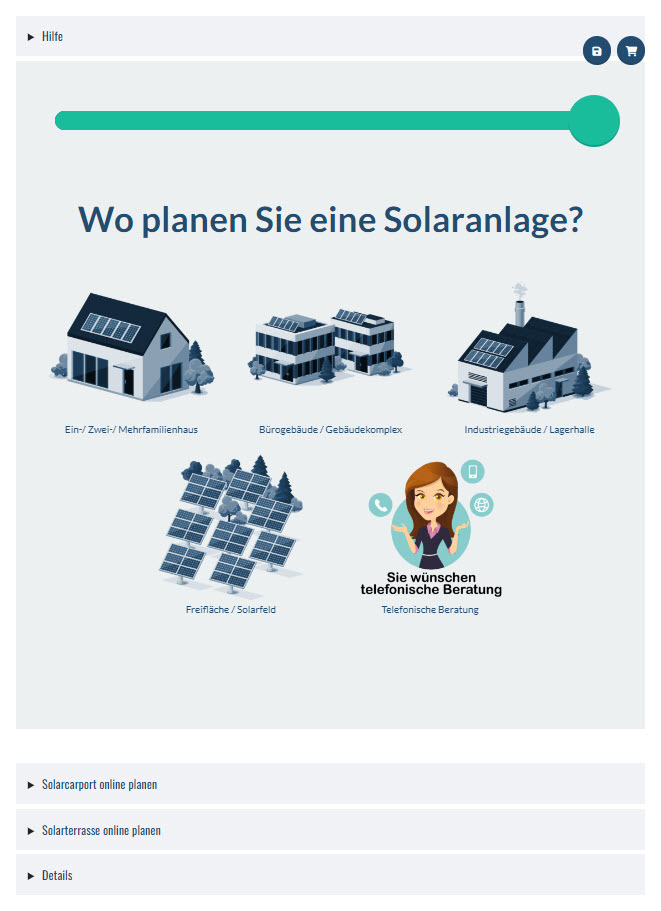
The solar system planner for the most common applications: Plan your solar system online here - Image: Xpert.Digital
More information here:
Photovoltaic roofs on asphalted surfaces: A sustainable solution with great potential
The idea behind semi-transparent photovoltaic systems
The idea of covering asphalt surfaces with semi-transparent photovoltaic modules is gaining increasing traction, as it promises far more advantages than just the classic "solar parking lot." Often, the first thought is of parking areas that, through solar roofing, can not only generate electricity but also protect vehicles from rain and sun. However, the potential extends far beyond parking lots. This text explores various application possibilities and expands upon them with additional aspects that make this technology even more appealing. Aspects such as noise reduction, extending the lifespan of roads, improving the urban climate, aesthetics, integration into urban infrastructure, and the creation of new usage concepts play a central role. As one expert once said, "The future of urban infrastructure lies in multifunctional photovoltaic systems." Covering asphalt surfaces aims precisely in this direction by making existing space usable in multiple ways.
Properties of semi-transparent photovoltaic modules
Semi-transparent photovoltaic modules differ from conventional full-coverage systems primarily due to their translucent areas. This effect generates electricity and, at the same time, prevents the areas beneath from being completely darkened. "A slight degree of sunlight transmission can be crucial for creating a pleasant atmosphere under a PV roof," explain proponents of this technology. The natural light maintains the feeling of an open space while simultaneously providing effective protection from rain, snow, or excessive sunlight.
Covering highways: A showcase project with many advantages
A prime example of this application is the covering of highways. Pilot projects are already underway, investigating whether extensive stretches of highway can be covered with photovoltaic modules. At first glance, this undertaking seems ambitious, but the concept offers a wide range of opportunities. Large amounts of electricity could be generated by covering the highway, as highways are generally wide and continuous. The asphalt would be protected from intense sunlight, which could lead to a longer lifespan for the road surface. Furthermore, there is the possibility of reducing noise emissions for adjacent areas, as the PV modules could potentially have a sound-absorbing or sound-reflecting effect. One transportation expert emphasizes: "With such innovative coverings, the energy transition could be brought directly to the road."
Bicycle parking spaces and charging stations: A contribution to a sustainable mobility transition
Equally promising is the option of covering bicycle parking spaces and charging stations, especially given the e-bike boom. With rising sales figures for electrically assisted bicycles, the question of suitable charging infrastructure is becoming increasingly urgent. Instead of simply installing conventional bicycle racks, municipalities, companies, or even residential complexes could opt for semi-transparent PV canopies that offer cyclists both weather-protected parking and electricity for charging. These smart canopies would increase convenience and simultaneously make an ecological statement by making the direct use of solar energy for sustainable mobility visible.
Industrial applications: Protection and energy for storage and shelter areas
The potential of PV roofs on asphalt surfaces can also be readily applied to storage areas and covered parking spaces in the commercial sector. Companies that utilize large outdoor areas for goods or vehicles could benefit in several ways from semi-transparent PV modules: firstly, they generate their own electricity, and secondly, they protect their goods from the elements. By integrating intelligent management systems, the generated energy could even be used directly to power machinery or electric forklifts. Industry representatives emphasize: "By utilizing already sealed surfaces, we can make production and storage processes more efficient and climate-friendly."
Photovoltaics in the city: pedestrian zones and public squares
Such canopies are also conceivable in public spaces, for example in urban pedestrian zones or squares. Here, in addition to the practical aspect – such as protection from rain or excessive heat – urban design plays an important role. Semi-transparent modules can allow natural light to filter through, thus maintaining a pleasant and inviting atmosphere. At the same time, these surfaces could be combined with seating or greenery to give the urban space added recreational value. This would create a "modern urban canopy" that not only offers protection to residents and tourists but also actively contributes to the energy transition.
Bus stations and waiting areas: Increased comfort through integrated PV solutions
A similar picture emerges at bus stops and waiting areas. Whether at large bus stations or smaller stops, a solar roof could not only provide shade but also simultaneously generate electricity for lighting, passenger information displays, or Wi-Fi hotspots. Particularly in regions with intense sunlight, the functionality and cleanliness of the facilities would be improved because the waiting areas would become less dirty and protected from rain. At the same time, it offers the opportunity to install smartphone charging stations, which would represent a real increase in convenience for those waiting in an increasingly digital society.
Sports facilities: Improved usability and energy generation
Roofing sports facilities represents another exciting application. Asphalted areas of sports fields, running tracks, or basketball courts, which are often directly exposed to the sun, could be shaded and protected from precipitation by semi-transparent PV systems without completely blocking out play and training activities. Athletes and organizers would benefit from more comfortable playing in intense heat, and less rain damage to the outdoor facilities. At the same time, the generated solar power can be used for lighting, scoreboards, or the operation of changing rooms.
Urban climate and infrastructure planning: A look into the future
Beyond the applications mentioned so far, the concept of semi-transparent PV roofs offers new approaches to urban and infrastructure planning in the long term. Many large cities are currently struggling with the so-called urban heat island effect, in which asphalt and concrete surfaces heat up dramatically during the summer months, store the heat, and negatively impact the local climate. Greening these surfaces is often difficult or very expensive. A photovoltaic roof could offer a partial solution here, as it converts some of the solar radiation into electrical energy while simultaneously reducing the direct heating of the asphalt. The atmosphere, pedestrians, and residents all benefit when the summer heat is kept in check under a solar roof.
Challenges and ecological benefits of photovoltaic roofs
In addition to the ecological advantages, technical and economic challenges must also be considered. The structural design of large roofs requires meticulous planning to ensure they can withstand storms, snow loads, and other weather conditions. Many planners also rely on a robust substructure, which, especially for very wide roofs such as those over highways or large warehouses, necessitates enormous quantities of material. Furthermore, the costs for semi-transparent modules remain higher than for conventional ones. Nevertheless, it is often said: "Innovation requires initial investment but is rewarded in the long run through efficiency gains and energy yields."
Legal framework and necessary coordination
Another fundamental aspect is the legal framework. For example, cooperation with the relevant authorities and administrative bodies is essential for covering highways or public squares. States and municipalities must clarify whether and to what extent permits can be granted, whether safety aspects such as the impact of light on traffic are adequately considered, and which insurance policies apply in the event of damage to the structures or vehicles. Urban planners emphasize: "The realization of such large-scale projects can only succeed through close coordination among all parties involved."
Public acceptance
Public acceptance also plays a crucial role. While photovoltaic roofs may seem sensible at first glance, the appearance of some installations occasionally sparks debate. Some people find them futuristic, modern, or aesthetically pleasing, while others see them as a potential eyesore. Therefore, it is all the more important to ensure appealing designs and architectural solutions that blend harmoniously into the surroundings. Furthermore, information campaigns can help raise awareness of the benefits and reduce any reservations.
Combination with other technologies
An exciting prospect is the combination with other technologies. For example, rainwater harvesting systems could be integrated to collect rainwater from the roof and make it available for irrigating urban green spaces. The installation of "solar trees"—roofing structures that branch out in the shape of trees—is also an interesting option for combining maximum efficiency with an aesthetically pleasing appearance. Furthermore, more transparent modules could enable even better light management in the future, thanks to new materials, thus achieving higher efficiency. Current research shows that advances in organic solar cells or tandem solar cells could revolutionize energy generation in semi-transparent architecture.
Contribution to the mobility and energy transition
Furthermore, these solutions can make a significant contribution to electromobility. If the generated solar energy is used directly on-site to charge electric cars, e-bikes, e-scooters, or electric delivery vehicles, a regional, self-sufficient supply network is created. The charging infrastructure could be expanded across the board and installed at parking lots, bus stops, and transport hubs – the energy transition and the mobility transition go hand in hand. As one urban planner summarizes: "The better we link energy generation with local use, the more sustainable and space-saving our overall infrastructure will be."
Symbolic significance for the energy transition
Furthermore, the enormous symbolic power of such installations should not be underestimated. A rooftop photovoltaic system over a heavily trafficked road or public square is visible and makes the energy transition tangible. It signals that renewable energies have arrived in everyday life and that even urban spaces can be thoughtfully used for energy generation. This could provide important impetus, especially in densely populated regions where space is limited. Many people feel motivated to take action themselves, whether by investing in renewable energies or by adjusting their own consumption habits.
Future visions and urban decentralization
Future scenarios go so far as to envision entire city districts where streets, parking lots, walkways, and squares are covered with semi-transparent photovoltaic systems. In this advanced scenario, there would not only be a significant reduction in noise, heat, and weather-related impacts, but local energy cells could also be created to supply residential complexes, public facilities, and businesses. Everyone would benefit from this decentralized approach: municipal utilities could feed surplus electricity into the public grid, and private individuals or companies could draw power as needed or contribute to the grid themselves.
More than just a "solar parking lot"
Covering asphalt surfaces with semi-transparent photovoltaic modules is far more than just a "solar parking lot." The diverse applications—from highway overpasses and bicycle parking to commercial storage areas, bus stops, sports facilities, and urban squares—demonstrate that this technology offers practical and sustainable solutions in a wide range of sectors. It creates added value by not only generating electricity but also improving comfort, extending the lifespan of infrastructure, protecting against extreme weather, and providing a future-oriented aesthetic. At the same time, it raises questions, such as those concerning technical requirements, economic viability, legal regulations, and the integration of such systems into urban and rural landscapes.
But those who plan thoughtfully, ensuring stable structures, good light transmission, appealing design, and professional maintenance will benefit not only in terms of energy but also socially. Previously unused, already sealed surfaces are coming into focus for modern, climate-friendly, and future-oriented urban development. "The vision is clear: by covering asphalt surfaces and supplying them with solar power, we gain valuable space for environmentally friendly energy production, reduce urban heat islands, protect our infrastructure, and make the city more livable," say supporters. This is precisely what the use of semi-transparent photovoltaics is all about – it is an important building block for meaningfully combining sustainability and quality of life and anchoring the energy transition directly in the urban environment.
We are here for you - Consulting - Planning - Implementation - Project Management
☑️ From simple solar carports to large parking facilities
☑️ Get personalized photovoltaic parking space consulting with Xpert.Solar
Xpert.Solar is your ideal partner for the planning, consulting, and construction of ground-mounted photovoltaic systems and agri-photovoltaic projects, thanks to our many years of experience and expertise in the solar energy sector. Xpert.Solar has an experienced team of professionals who offer farmers and investors tailored solutions. From site analysis and financial and legal advice to technical implementation and monitoring, Xpert.Solar provides its clients with professional and reliable support to ensure successful and sustainable project implementation.

Konrad Wolfenstein
I would be happy to serve as your personal advisor.
You can contact me by filling out the contact form below or simply call me on +49 7348 4088 965 .
I'm looking forward to our joint project.
Write to me


Xpert.Digital - Konrad Wolfenstein
Xpert.Digital is a hub for industry focusing on digitalization, mechanical engineering, logistics/intralogistics and photovoltaics.
With our 360° Business Development solution, we support renowned companies from new business to after-sales.
Market intelligence, smarketing, marketing automation, content development, PR, mail campaigns, personalized social media and lead nurturing are part of our digital tools.
You can find more information at: www.xpert.digital - www.xpert.solar - www.xpert.plus
Keep in touch