


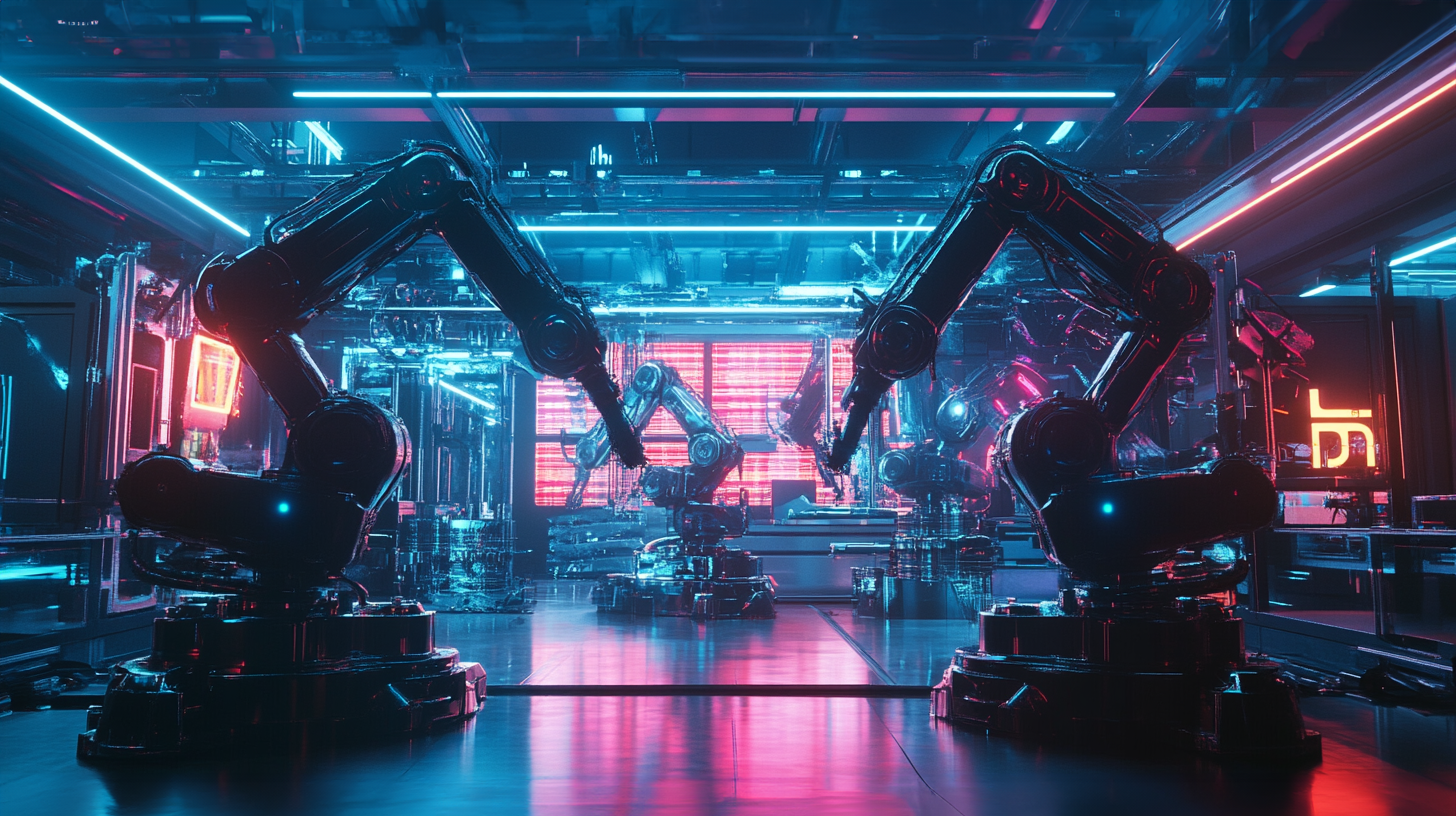
Automation, innovation, progress: The next era of robotics in the USA – Creative image: Xpert.Digital
🌟 A journey to visionary minds, innovative companies and their shared vision
Robotics development in the USA: Opportunities, challenges and innovations
Robotics in the US has made remarkable progress in recent years. This development is primarily driven by increasing automation in the manufacturing industry and technological innovations that enable the use of robots in more and more areas. While progress is evident across industries, some sectors show particularly high growth rates and potential, while at the same time challenges must be overcome to fully realize the potential of robotics.
Development of robotics in the USA
The USA is among the world's leading nations in robotics, particularly in industrial applications. In 2023, a total of 44,303 industrial robots were installed there, representing a 12% increase compared to the previous year. The driving forces behind this growth are the increasing demand for efficiency improvements, labor shortages in many industries, and the shift to more sustainable production methods.
Related to this:
- Skillful package handling: Why Stretch from Boston Dynamics is the new star in warehouse robotics
- Humanoid and dynamic robots like robotics – a comparison: Atlas from Boston Dynamics and Walker X from UBTECH
automotive industry
The automotive industry remains the largest consumer of industrial robots, accounting for 33% of all robotics installations in the US. In 2023, 14,678 robots were installed in this sector, a 1% increase compared to 2022. The focus is on the transition to electric vehicles, which places new demands on production and technology. Automation helps to bridge bottlenecks caused by a shortage of skilled workers while simultaneously reducing production costs. International competitiveness remains a key aspect, as the US ranks second globally in vehicle production, behind China.
Electrical and electronics industry
The electrical and electronics industry is experiencing the most dynamic growth among industrial sectors. With 5,120 new robots installed in 2023 (an impressive 37% increase compared to the previous year), this sector accounts for 12% of total installations. Key drivers include energy transition projects, particularly those related to renewable energy and the strengthening of local supply chains. Automation not only expands production capacity but also improves product quality and reliability.
Metal and mechanical engineering
The metal and mechanical engineering sectors are also benefiting significantly from increasing automation. With 4,123 installed units in 2023, this sector recorded growth of 6% and a market share of 9%. Companies are increasingly relying on robotic solutions, particularly in precision manufacturing, where the highest accuracy is required.
Plastic and chemical products
The plastics and chemicals industry installed approximately 3,213 robots in 2023, representing a growth of 5%. The primary goal of automation in this sector is to improve production capacity and product quality. While this industry plays a smaller role with a market share of 7%, it remains a stable growth sector.
New growth areas
Alongside traditional industries, new sectors such as life sciences, pharmaceuticals and biomedicine, as well as the food and consumer goods industries, are experiencing a boom. The use of robots in areas like pharmaceuticals (+72%) and consumer goods (+32%) is rapidly gaining importance. These sectors are using robotics solutions to improve efficiency and quality, which in turn gives them a competitive edge. Another exciting field is service robotics, which is becoming increasingly important in areas such as healthcare, smart homes, and logistics.
Annual growth rate of 8.5% until 2029
Forecasts for the robotics market in the US are extremely promising. Experts predict an annual growth rate of 8.49% until 2029. The market volume could rise to around €13 billion during this period. In addition to industrial robots, which will continue to form the core of the market, the service robotics sector will also grow. In healthcare, for example, surgical robots are becoming increasingly important, while smart home applications and AI-powered assistance systems are gaining acceptance in the private sector.
Challenges in implementation
Despite the promising developments, companies face various challenges that could slow down the wider adoption of robotic systems.
1. High implementation costs
The acquisition and implementation of industrial robots require significant investments in hardware, software, infrastructure, and training. These costs can represent a considerable barrier, especially for small and medium-sized enterprises (SMEs). In the long term, profitability is heavily dependent on stable production volumes and sales figures to justify the high initial investment.
2. Skilled worker shortage
Another obstacle is the shortage of skilled workers needed to operate and maintain the robots. Programming and customizing robots is complex and time-consuming. Many companies find it difficult to recruit personnel with sufficient expertise in robotics and automation.
3. Integration into existing systems
Integrating robots into existing production lines is technically challenging. Manufacturing processes often need to be redesigned and new interfaces created to enable collaboration between robots and existing systems. The lack of standardization between systems from different manufacturers further complicates this process.
4. Safety concerns
The increasing use of robots, particularly in human-robot collaboration, brings new safety risks. Companies must adhere to strict safety standards and implement comprehensive measures to prevent accidents, which further complicates implementation.
5. Acceptance problems
Employees are sometimes critical of the use of robots, as they perceive automation as a threat to their jobs. This mistrust can hinder the success of automation projects and requires measures to involve the workforce early on and alleviate their fears.
6. Technological limitations
Not all robot systems are flexible enough to adapt quickly to changing requirements or small batch sizes. This is a particular problem in industries with variable product portfolios. Furthermore, some robot models have limitations in their sensor technology and control capabilities, which restricts their use in demanding scenarios.
7. Sustainability
Companies are under pressure to implement more sustainable and energy-efficient production methods. The challenge lies in developing robotics systems that meet the high demands for resource conservation without compromising productivity.
Robotics solutions are a crucial strategy
Robotics in the US is on a clear growth trajectory and has the potential to bring about profound changes in both traditional industries and emerging sectors. Despite existing challenges, such as high costs and technical complexity, the adoption of robotics solutions remains a crucial strategy for increasing efficiency, quality, and competitiveness. Advances in technology, particularly through AI and simplified programming, will help overcome existing barriers. The US remains a global leader, and future developments promise exciting innovations and new applications.
Related to this: