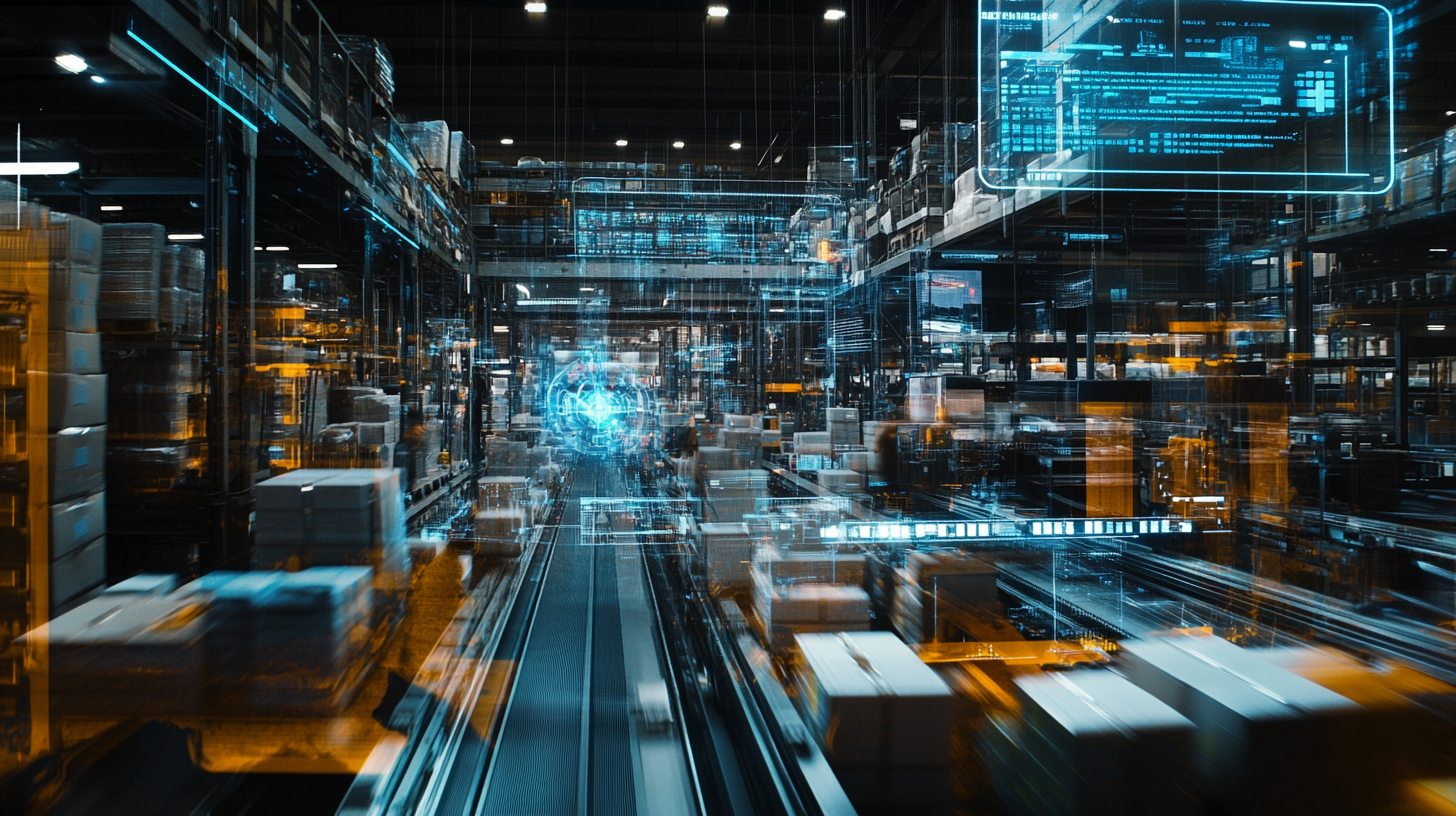
Intralogistics chaos? Robot transformation in intralogistics: AI takes the reins – 3 paths to digital salvation – Image: Xpert.Digital
Key to competitiveness: Intralogistics in the digital transformation
Intralogistics in the digital age: Increasing efficiency and reducing costs through smart solutions
In today's business world, characterized by speed, flexibility, and efficiency, intralogistics plays a crucial, yet often underestimated, role. Although it forms the backbone of every manufacturing or distribution-oriented company, digitalization in this area still remains largely neglected in many organizations. Yet, the intelligent networking and automation of internal material flows holds enormous potential for optimizing processes, reducing costs, and sustainably strengthening competitiveness.
However, reality often paints a different picture. Internal transport, order picking, warehousing, and material movements are frequently still carried out using outdated systems, manual processes, and high personnel costs. This not only leads to unnecessary delays and increased costs but also carries the risk of errors, inefficiencies, and a lack of transparency across the entire value chain. At a time when companies are under enormous pressure to optimize their processes and adapt to rapidly changing market conditions, it is therefore essential to awaken intralogistics from its slumber and catapult it into the digital age.
Automation and flexibility as the key to success
In the field of automation and robotics, key trends in intralogistics are currently being identified. A major focus is on the easy integration of new developments into existing infrastructures and their scalability to enable flexible responses to changing requirements. Based on this, digitized and automated processes can significantly contribute to increasing productivity and flexibility along supply chains. Furthermore, rising energy prices and stricter legal regulations are driving increasing demand for efficient and sustainable solutions.
Current economic challenges and dynamic market demands present many companies with complex tasks. Regulatory requirements, such as the Cyber Resilience Act, as well as ambitious climate targets, necessitate measures to improve IT security and sustainability. However, the development and implementation of new automation solutions—especially their integration into existing processes and IT systems—is associated with high costs and significant resource expenditure. Furthermore, proprietary interfaces hinder the seamless collaboration of solutions from different vendors.
One possible answer to these challenges lies in the use of digital ecosystems, which create new forms of networking and thus expand the scope of action. Scalable automation solutions make it possible to start with smaller projects and expand systems gradually as needed, offering both short-term benefits and long-term investment security. Open automation standards and pre-configured mechatronic solutions can also accelerate the planning and commissioning of new and existing plants. The use of design tools, simulation models, and the remanufacturing of automation components is suggested for more efficient resource utilization. Specific technologies, such as servo drive systems with energy management functions, can further contribute to optimizing energy consumption. Digital ecosystems also promote networking and collaboration both within and outside of companies.
Related to this:

Integration, AI and sustainability as competitive advantages
Logistics and supply chain management experts emphasize the crucial importance of comprehensively integrating machines and processes into IT systems. This integration forms the basis for automation, optimized control, and AI-supported decision-making. With a growing focus on efficiency improvements, the use of artificial intelligence and machine learning is becoming increasingly important for optimizing processes and responding flexibly to changes. The networking of systems is thus becoming a significant competitive advantage. Furthermore, in light of legal requirements and growing environmental awareness, resource conservation in intralogistics is gaining increasing importance. Sustainability will be considered a fundamental expectation in the future.
At the same time, the increasing individualization of intralogistics requirements is coming to the fore – from specific shipping regulations to the optimization of manufacturing processes. Flexibility in IT systems that can be seamlessly integrated into existing workflows is therefore essential. The shortage of skilled workers presents a further challenge, which is why systems must be not only high-performance but also intuitive to use.
To successfully meet the challenges of intralogistics in the coming years, companies are advised to develop and implement a clear digitalization strategy early on. The focus should not only be on digitizing existing processes, but on rethinking them end-to-end – with particular attention to flexibility and user-friendliness. A holistic approach that considers both technological and human aspects is considered crucial. New technologies should be carefully evaluated and only deployed where they offer genuine added value.
Digital processes, automation and sustainability as drivers
Experts from the strategy and solutions departments of leading providers of industrial trucks and intralogistics solutions highlight several key trends. The first trend is the transformation toward digital business processes, which are intended to increase efficiency in areas such as warehouse management, truck deployment, and maintenance. The second significant trend is the automation of material flow processes. Scalable solutions make this approach particularly attractive for medium-sized businesses. Another important aspect is the development toward more sustainable manufacturing processes and products that meet both legal requirements and increased customer demands. Alternative energy options for industrial trucks play a key role in this. Furthermore, the increasing integration of applications with artificial intelligence is gaining in importance.
It is emphasized that companies are currently facing challenges such as increasing cost pressures, skills shortages, demographic change, demands for greater sustainability, the need for supply chain resilience, and a high level of operational security. Investing in new technologies is essential to meeting these challenges.
Continuous monitoring of material flow processes is recommended as a solution approach to identify potential improvements, for example, through the automation of repetitive logistics processes. A comprehensive solution portfolio includes automated guided vehicles (AGVs) and mobile robots, scalable software solutions for planning and commissioning, as well as consulting and service offerings. The increased integration of AI applications is also considered a crucial future trend.
Expert partner in warehouse planning and construction

Expert analysis: Future strategies for intralogistics
In-depth analysis of intralogistics trends in 2025 and beyond
The experts' assessments paint a clear picture of the most important trends that will shape intralogistics in the coming years. Several overarching themes can be identified that are of central importance to companies:
1. Automation and robotics: The path to increased efficiency and flexibility
Automation and the use of robotics in intralogistics are no longer a thing of the future, but already a reality in many companies. This trend will intensify in the coming years, driven by the desire for increased efficiency, cost reduction, and flexibility. Automation solutions range from simple conveyor belts and automated storage systems to complex automated guided vehicles (AGVs) and mobile robots.
Related to this:
Automated guided vehicles (AGVs)
AGVs are self-driving vehicles that can transport materials within a warehouse or production area without a human driver. They navigate using sensors and software and can handle complex routes and tasks. AGVs offer the advantage of being able to operate around the clock, requiring no breaks, and exhibiting high precision and reliability. They are particularly well-suited for repetitive transport tasks and can significantly accelerate and optimize material flow within companies.
Mobile robots
Mobile robots go a step further than AGVs. They are more versatile and can handle complex tasks such as order picking, sorting, and packaging. Modern mobile robots are equipped with advanced sensors, cameras, and AI algorithms that enable them to navigate dynamic environments, detect obstacles, and collaborate with humans. They offer high flexibility and scalability and can quickly adapt to changing requirements.
Automated storage systems
Automated storage systems, such as high-bay warehouses or shuttle systems, enable efficient storage and order picking of goods. They are characterized by high storage density, fast access times, and precise inventory management. Automated storage systems can reduce warehouse space requirements, shorten picking times, and minimize error rates.
Related to this:
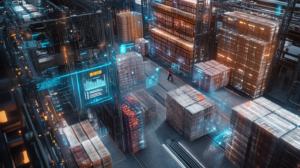
Robotics in order picking
Order picking, or the assembly of orders, is a particularly labor-intensive and error-prone process in intralogistics. Robotics offers great potential here to increase efficiency and reduce the error rate. Picking robots can take on various tasks, such as gripping and placing items, packing, and labeling. They work precisely and quickly and can significantly improve picking performance.
The advantages of automation and robotics in intralogistics are manifold:
Increased efficiency and productivity
Automated systems work faster, more precisely and around the clock, leading to a significant increase in efficiency and productivity.
Reduced costs
Automation can reduce personnel costs, minimize errors and use resources more efficiently, leading to significant cost savings.
Improved flexibility and scalability
Automated systems can be flexibly adapted to changing requirements and can be quickly expanded or reconfigured if necessary.
Increased security
Automated systems can take over dangerous or repetitive tasks, which increases workplace safety and reduces the risk of workplace accidents.
Improved quality and accuracy
Automated systems operate more precisely and reliably than manual processes, leading to higher quality and accuracy in intralogistics.
2. IT Integration and Artificial Intelligence (AI): Data as fuel for optimization and decision-making
The comprehensive integration of machines, systems, and processes into IT systems is another key trend in intralogistics. This integration creates the foundation for transparent data collection and analysis, which in turn forms the basis for optimization potential and AI-supported decisions. Modern intralogistics systems are closely networked with higher-level systems such as Enterprise Resource Planning (ERP), Warehouse Management Systems (WMS), and Manufacturing Execution Systems (MES) to ensure a seamless flow of information.
Warehouse Management Systems (WMS)
Warehouse Management Systems (WMS) are software solutions that optimize warehouse management and all related processes. They enable efficient control of goods receipt, storage, order picking, packing, and shipping. WMS offer functions such as storage location management, inventory control, order management, route planning, and reporting. They ensure transparency in the warehouse, optimize warehouse processes, and reduce errors.
Artificial Intelligence (AI) and Machine Learning (ML)
AI and ML are playing an increasingly important role in intralogistics. They enable the analysis of large datasets, pattern recognition, forecasting, and process optimization. Examples of AI applications in intralogistics include:
Demand forecasts
AI algorithms can analyze historical data, seasonal fluctuations, and external factors to create more accurate demand forecasts. This enables optimized inventory management and production planning.
Route optimization
AI can calculate the optimal routes for AGVs and mobile robots to shorten transport routes and minimize throughput times.
Dynamic warehouse space optimization:
AI can dynamically optimize storage locations to shorten picking routes and make optimal use of storage capacity.
Quality control
AI-based image recognition systems can automatically check products for defects or damage and improve quality assurance.
Predictive Maintenance
AI can analyze sensor data from machines and systems to identify maintenance needs early and avoid downtime.
The advantages of IT integration and AI in intralogistics are enormous:
Improved transparency and data basis
IT integration creates a continuous data collection and analysis system, enabling comprehensive transparency across all intralogistics processes.
Optimized processes and decisions
AI-supported analyses and forecasts enable companies to continuously optimize their processes and make informed decisions.
Increased responsiveness and flexibility:
Real-time data and AI-supported analyses enable companies to react more quickly to changes and make their intralogistics more flexible.
Proactive maintenance and failure prevention
Predictive maintenance using AI makes it possible to identify maintenance needs early and minimize downtime, thus increasing plant availability.
New business models and services
The digitalization of intralogistics opens up new opportunities for companies for data-based business models and services, such as logistics-as-a-service or predictive maintenance services.
3. Sustainability and resource conservation: Responsibility for the environment and the future
Sustainability and resource conservation are not only ethical obligations, but also increasingly important competitive factors for companies. Legal requirements, growing environmental awareness among customers, and pressure from investors are forcing companies to make their processes more sustainable – including in intralogistics. This affects various aspects:
Energy efficiency
Intralogistics is an energy-intensive field, particularly due to the use of industrial trucks, conveyor belts, and automated storage systems. Companies are increasingly relying on energy-efficient technologies, such as:
Electric industrial trucks
Electric industrial trucks are significantly more energy-efficient and produce fewer emissions than diesel or gas-powered vehicles. Modern electric vehicles also offer comparable performance and range to combustion engine vehicles.
Energy recovery
Energy can be recovered and reused during braking or lowering movements of loads. This reduces energy consumption and operating costs.
LED lighting
The use of LED lighting in warehouses and production facilities can significantly reduce energy consumption for lighting.
Energy management systems
Energy management systems monitor and optimize energy consumption in intralogistics and help to identify potential savings.
Material efficiency
Using resources responsibly and reducing material consumption and waste are key goals of sustainable intralogistics. This can be achieved through:
Optimized packaging
Using recyclable or reusable packaging materials and reducing packaging volume can reduce material consumption and waste.
Circular economy
The reuse of materials and components, the recycling of waste and the remanufacturing of products contribute to the conservation of resources and the reduction of environmental pollution.
Digital documentation
Switching from paper-based documentation to digital processes reduces paper consumption and conserves resources.
Emissions reduction
Reducing emissions, especially CO2, is a key goal of sustainability. In intralogistics, this can be achieved through:
Use of low-emission or emission-free drives
Switching to electric or hydrogen drives for industrial trucks and other means of transport reduces emissions.
Optimized transport routes
Route optimization using AI can shorten transport routes and reduce fuel consumption and emissions.
Consolidation of transports
Consolidating shipments and avoiding empty runs reduces transport costs and emissions.
Emissions offsetting
Companies can offset unavoidable emissions by investing in climate protection projects.
The advantages of sustainability in intralogistics are manifold:
Reduced costs
Energy efficiency and resource conservation lead to lower operating costs and can increase competitiveness.
Improved image and customer loyalty
Sustainable practices are increasingly expected by customers and business partners and can improve image and customer loyalty.
Compliance with legal requirements
Stricter environmental regulations and laws require sustainable processes and products. Companies that focus on sustainability early on have an advantage here.
Contribution to environmental protection
Sustainable intralogistics makes an important contribution to environmental protection and the conservation of natural resources.
Long-term competitiveness
Sustainability will be a crucial competitive factor in the future. Companies that adapt to this trend early on will secure long-term competitive advantages.
Challenges and solutions for the intralogistics of the future
In addition to the trends mentioned, companies in the intralogistics sector also face a number of challenges that need to be addressed. These include, in particular:
Economic pressure and cost reduction
Global competition and the current economic situation are forcing companies to reduce their costs and operate more efficiently. Intralogistics plays a crucial role here, as it accounts for a significant portion of total costs.
Skills shortage and demographic change
The shortage of skilled workers is a growing problem in many sectors, including logistics. At the same time, demographic change is leading to an aging workforce and a decline in the working-age population. Companies must therefore find ways to achieve more with fewer employees and increase the attractiveness of jobs in intralogistics.
Related to this:

Complexity and individualization
Increasing product diversity, shorter product lifecycles, and individualized customer demands are leading to growing complexity in intralogistics. Companies must be able to respond flexibly to these requirements and adapt their processes accordingly.
Sustainability requirements and regulations
Stricter environmental regulations and laws, as well as increasing pressure from customers and investors, necessitate sustainable intralogistics processes. Companies must invest in sustainable technologies and processes and make their sustainability performance transparent.
Safety and resilience
Intralogistics must be not only efficient and flexible, but also secure and resilient. Disruptions in the supply chain, cyberattacks, or natural disasters can cause significant damage. Companies must make their intralogistics systems more resilient and implement measures to minimize risks.
To successfully meet these challenges, companies must pursue different approaches:
Holistic digitalization strategy
A clear digitalization strategy is the foundation for a successful transformation of intralogistics. This strategy should define the most important goals, measures, and timelines, and encompass all areas of intralogistics.
End-to-end process optimization
Digitalization should not only optimize individual processes, but also consider the entire value chain from beginning to end. End-to-end process optimization makes it possible to eliminate inefficiencies and media breaks and to ensure a continuous flow of information.
Focus on flexibility and scalability
Intralogistics systems must be flexible and scalable to adapt quickly to changing requirements. Modular systems, cloud-based solutions, and standardized interfaces enable a high degree of flexibility and scalability.
User-friendliness and employee participation
New technologies and systems must not only be powerful, but also user-friendly and intuitive to operate. Employees must be involved in the digitalization process and receive the necessary training and support.
Targeted technology selection and implementation
Companies should carefully evaluate new technologies and only implement them where they offer genuine added value. Thorough planning, pilot projects, and a phased rollout are essential for successful technology implementation.
Cooperations and partnerships
Intralogistics is a complex field that often requires specialized expertise and technologies. Collaborations with technology providers, logistics service providers, and research institutions can help companies optimize their intralogistics and drive innovation.
Continuous improvement and innovation
The digitalization of intralogistics is a continuous process. Companies must regularly review their processes and systems, identify potential for improvement, and drive innovation in order to remain competitive.
Intralogistics as the key to competitiveness in the digital age
Intralogistics is a crucial success factor for companies in today's business world. The digitalization and automation of internal material flows offer enormous potential for increasing efficiency, reducing costs, enhancing flexibility, and achieving sustainability goals. Companies that recognize the signs of the times and consistently digitalize and modernize their intralogistics will secure a decisive competitive advantage and be ideally equipped for the challenges of the future. Expert opinions confirm that the intralogistics of the future will be characterized by automation, IT integration, artificial intelligence, and sustainability. Companies that embrace these trends and implement the right strategies and technologies will transform their intralogistics into a genuine competitive advantage and sustainably strengthen their market position. It is time to bring intralogistics out of the shadows and place it at the forefront of corporate management as a strategic success factor.

Xpert.Plus Warehouse Optimization - High-bay warehouses and pallet warehouses: Consulting and planning
We are here for you - Consulting - Planning - Implementation - Project Management
☑️ SME support in strategy, consulting, planning and implementation
☑️ Creation or realignment of the digital strategy and digitization
☑️ Expansion and optimization of international sales processes
☑️ Global & Digital B2B trading platforms
☑️ Pioneer Business Development

Konrad Wolfenstein
I would be happy to serve as your personal advisor.
You can contact me by filling out the contact form below or simply call me on +49 7348 4088 965 .
I'm looking forward to our joint project.
Write to me


Xpert.Digital - Konrad Wolfenstein
Xpert.Digital is a hub for industry focusing on digitalization, mechanical engineering, logistics/intralogistics and photovoltaics.
With our 360° Business Development solution, we support renowned companies from new business to after-sales.
Market intelligence, smarketing, marketing automation, content development, PR, mail campaigns, personalized social media and lead nurturing are part of our digital tools.
You can find more information at: www.xpert.digital - www.xpert.solar - www.xpert.plus
Keep in touch