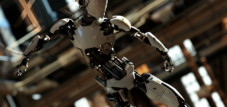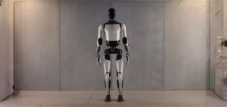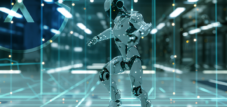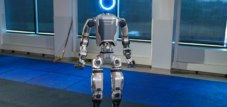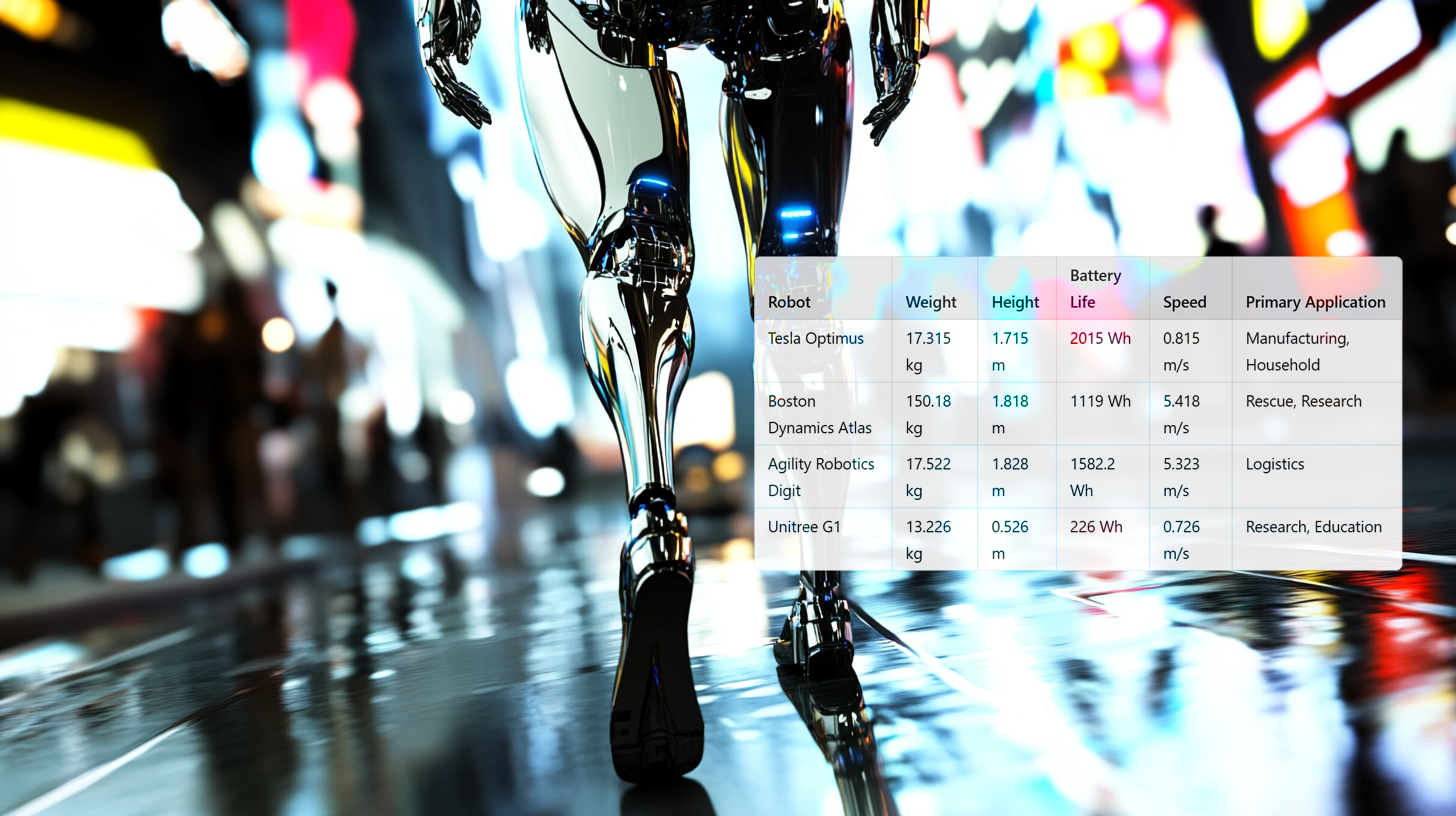
Humanoid robots compared: Tesla Optimus, Boston Dynamics Atlas, Agility Robotics Digit and Unitree G1 – Image: Xpert.Digital
🤖 Humanoid robots are becoming increasingly important in the modern technological landscape
🌟 Fascination with Tesla Optimus
Tesla Optimus, developed by the company best known for its electric vehicles and advanced driver assistance systems, presents itself as a remarkably versatile humanoid. Its appearance is sleek, its height is roughly that of an average adult, and its weight is optimized for swift and safe movement without excessive energy consumption. Optimus features a neural network whose principles are similar to those of Tesla's Autopilot: it processes its environment in real time, recognizes objects, adapts its movements, and autonomously handles complex tasks such as grasping, lifting, or transporting objects. Equipped with high-resolution cameras, advanced sensors in its hands and feet, and a power controller that gives it responsive, precise motor skills, Optimus continuously evolves. Through machine learning, it can acquire new skills and dynamically adapt to changing situations. The goal is to deploy it in industrial settings, for example, to make monotonous tasks on production lines or in logistics centers more efficient and safer. The design is strongly based on human proportions in order to achieve an ideal balance of stability, range and precision.
🏋️♂️ Dynamic mobility with Boston Dynamics Atlas
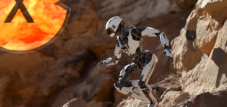
Another well-known example is Boston Dynamics Atlas. This model is a prime example of dynamic, highly agile movement patterns reminiscent of human athletes. Atlas is known for performing complex motor maneuvers once considered impossible for robots. These include balanced walking on uneven terrain, acrobatic jumps, precision leaps, and even moving through obstacle courses. Boston Dynamics has developed a comprehensive control architecture that gives Atlas remarkable adaptability to its environment. Equipped with LiDAR and depth cameras, it detects obstacles, calculates its next steps in real time, and can thus adapt to changes with lightning speed. This high degree of mobility makes Atlas interesting for rescue missions in complex environments or potentially dangerous scenarios where a human would have difficulty or face high risks. The interplay of precise actuators, sophisticated sensors, and intelligent software enables Atlas to respond confidently to a variety of situations. It is not only fast and agile, but can also handle objects, balance, and quickly stabilize itself after bumps or shocks.
📦 Efficiency through Agility Robotics Digit
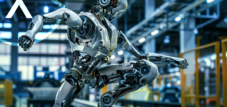
Agility Robotics Digit takes a slightly different approach. This robot is designed for tasks where reliable locomotion, a stable, human-like gait, and skillful object handling are paramount. Digit is roughly the size of an average adult, but lighter than one would expect from such a functional robot. Its special end effectors—its "hands" or grippers—allow it to perform logistics tasks such as picking up, carrying, and setting down boxes or containers. This makes it ideal for use in warehouses, factory floors, or transshipment points where items need to be regularly sorted, moved from point A to point B, or placed on shelves. Digit's locomotion is remarkably stable, thanks in part to its sophisticated balance and control technology. Its sensor system, based on advanced 3D cameras, depth cameras, and LiDAR sensors, enables it to navigate autonomously in complex environments. Stairs, narrow corridors, or changing light conditions pose little obstacle for Digit. Through machine learning, Digit can also refine its movement patterns and react to new situations. Its LED eyes, which serve as a visual interface, can be used to interact with human employees: Digit can use visual signals to make its intentions or current status clearer.
🧩 Innovation with the Unitree G1
The Unitree G1 is a relatively new player in this field, but one that builds on a solid foundation of robotics expertise. Unitree is primarily known for its agile quadruped robots, but with the G1, the company demonstrates its ambitions in the field of humanoid robotics. The G1 is designed to perform a wide range of tasks, from precise object manipulation to challenging navigation. It also utilizes advanced AI techniques such as imitation and reinforcement learning to continuously improve its capabilities. 360-degree environmental awareness through depth cameras and 3D LiDAR enables it to operate confidently even in dynamic, ever-changing environments. Hybrid force and position sensor control makes it exceptionally adept at picking up delicate objects or placing them in a specific location. The flexible joint structure, supported by a powerful, multi-core CPU, allows for rapid response times and adaptable movement patterns. This means the G1 can be used for industrial assembly tasks, assistance functions in warehouses or potentially even in the service or care sector, provided the technical and regulatory framework conditions are met.
🔍 Different philosophies in robotics
The differences between these four humanoid robots are evident not only in their movement patterns but also in their underlying philosophies. Tesla Optimus pursues the approach of merging AI and robotics to create a particularly versatile, learning, and adaptive assistant for industrial production. Here, the focus is on the continuous learning process, enabled by neural networks and sensor-based data analysis. Boston Dynamics Atlas, on the other hand, impressively demonstrates how far dynamic stabilization, force-weight optimization, and precise control have already progressed. The vision here is to have a robot that possesses human or even superhuman physical capabilities to master rough terrain and execute the most demanding movements.
🤖 Agility Robotics Digit bridges the gap between mobility and practical applications in logistics
Its value lies in its ability to perform routine physical work that is often strenuous, monotonous, or potentially harmful to human health. Digit's focus on human-robot interaction is also noteworthy: through its "eyes," it can send signals to human colleagues, for example, indicating where it will move next. This fosters safe and productive collaboration in a mixed workforce of humans and machines.
✋ The Unitree G1 as a further step in humanoid robotics
The Unitree G1, in turn, demonstrates that more and more companies are entering the humanoid robotics market to fill niche markets, explore new application areas, or address specific customer requirements. By combining advanced sensors, adaptive AI, and a flexible hardware architecture, it can be configured for a wide range of tasks. Its ability to exert precise force control qualifies it, among other things, for precise assembly work or for sorting and handling delicate materials.
💡 Humanoid robots in the future world of work
Humanoid robots could play a crucial role in the future world of work. They can take over dangerous tasks that pose a high risk to humans, such as disaster relief, rescue operations, or work with hazardous chemicals. At the same time, they can act as assistants in industrial production, delivering consistently precise performance around the clock. Robots don't experience fatigue, nor do they require breaks, allowing for optimized production processes and cost reductions. However, the technology is not yet at its peak: battery capacity needs to be improved to achieve longer, uninterrupted operating times. Computing power and the refinement of AI will also continue to grow, making the robots even more autonomous, safer, and more flexible.
🧑🤝🧑 Humans and Robots: Interaction and Safety
A particularly interesting aspect is the ongoing optimization of human-robot interaction. The more intuitive and understandable the communication becomes, the better employees and robots can work together. Body language, symbolic gestures, and visual signals could help facilitate smooth collaboration. Safety aspects also play a crucial role: As robots increasingly operate in close proximity to humans, mechanisms such as automatic emergency shutdowns, collision avoidance, safe materials, and reliable sensors must be ensured. The long-term goal will be to establish standards that enable the safe use of humanoid robots in industrial and public spaces.
🛠️ Different fields of application for humanoid robots
Furthermore, the question arises as to in which areas humanoid robots can offer the greatest added value. The four models presented demonstrate different fields of application: While Tesla Optimus targets industrial processes and assembly work, Atlas focuses on highly dynamic tasks and rough terrain, where its athletic agility is advantageous. Digit from Agility Robotics, on the other hand, specializes in transporting, sorting, and handling goods, which is of increasing importance in the globalized economy. The Unitree G1 could prove to be an all-rounder, suitable for use in a variety of industries depending on its configuration and software adaptation. Further development of these systems into personal assistant robots that help elderly people or those with limited mobility in their daily lives is also conceivable. The basic technology for this exists: grasping, reaching, room recognition, opening doors, retrieving items from shelves – all of this could be accomplished by future generations of humanoid robots.
🎯 The future of humanoid robotics – diverse and exciting
Even though today's models are not yet fully perfected and are often still in development or testing phases, the direction is clear: Robotics is increasingly approaching an interface where machines become true partners of humans. Humanoid robots symbolize this development particularly vividly, as their form, movements, and gestures strongly resemble those of humans. This could help to reduce the apprehension and skepticism that often exists towards purely mechanical, impersonal machines. Furthermore, the similarity to the human body opens up new possibilities in the ergonomic design of workplaces, since the robots can use the same tools, vehicles, or infrastructure as human workers without requiring specially adapted work environments.
🌐 The range of humanoid robots
Overall, Tesla Optimus, Boston Dynamics Atlas, Agility Robotics Digit, and Unitree G1 demonstrate the diverse development paths in the field of humanoid robotics. Their different focuses, strengths, and applications illustrate that humanoid robots are not a single, unified concept, but rather a broad spectrum of technological solutions that will continue to branch out and specialize over time. From highly dynamic movements and precise object handling to adaptive learning systems that can learn and adjust to new tasks, the possibilities are virtually limitless. With each further development stage, we come closer to the vision of humanoid robots becoming a valuable part of our work and living environments.
📣 Similar topics
- 📣 Advanced AI in humanoid robots
- 🤖 The pioneers: Tesla Optimus, Atlas, Digit & Unitree
- ⚙️ How robots are revolutionizing the world of work
- 🌍 Applications of humanoid robots in real life
- 💡 Tesla Optimus: Where AI meets robotics
- 🏋️ Boston Dynamics Atlas: The athletic helper
- 📦 Agility Robotics Digit: Specialist for logistics tasks
- 🔧 Unitree G1: Versatile all-rounder in robotics
- 🧠 Machine learning in humanoid assistants
- 🤝 Humans and robots: A new era of collaboration
#️⃣ Hashtags: #HumanoidRobots #RoboticsFuture #ArtificialIntelligence #IndustrialAutomation #HumanMachineInteraction
Our recommendation: 🌍 Limitless reach 🔗 Connected 🌐 Multilingual 💪 Sales power: 💡 Authentic with strategy 🚀 Innovation meets 🧠 Intuition


From local to global: SMEs conquer the world market with a clever strategy - Image: Xpert.Digital
In an era where a company's digital presence determines its success, the challenge lies in creating an authentic, personalized, and far-reaching presence. Xpert.Digital offers an innovative solution that positions itself as the intersection of an industry hub, a blog, and a brand ambassador. It combines the advantages of communication and sales channels in a single platform and enables publication in 18 different languages. Cooperation with partner portals and the ability to publish articles on Google News and a press distribution list with approximately 8,000 journalists and readers maximize the reach and visibility of the content. This represents a crucial factor in external sales and marketing (SMarketing).
More information here:
🤖 Humanoid robots compared: Tesla Optimus, Boston Dynamics Atlas, Agility Robotics Digit and Unitree G1
🤖 Tesla Optimus
- Weight: 17315 kg
- Height: 5715 mm
- Battery life: 2015 Wh
- Speed: 815 mm/s
Optimus is powered by advanced AI, enabling the robot to learn and adapt to new tasks and environments. Using machine learning algorithms for object recognition and navigation, Optimus operates similarly to Tesla's Autopilot technology. The robot autonomously performs complex movements and tasks, including walking, lifting, and interacting with objects in a human-like manner.
Features:
- Humanoid design with movable limbs.
- High-resolution cameras for visual perception.
- Neural network for real-time processing.
- 40 electromechanical actuators for dexterity and movement.
- Force sensors in hands and feet for interaction with the environment.
🤖 Boston Dynamics Atlas
- Weight: 15018 kg
- Height: 8018 mm
- Battery life: 1119 Wh
- Speed: 5.418 m/s
Atlas uses advanced AI to learn in real time and interact with its environment. LiDAR and depth cameras enable precise navigation and task execution.
Features:
- Fully electric design.
- Advanced control algorithms for dynamic movements.
- High strength-to-weight ratio that enables tasks such as running and jumping.
🤖 Agility Robotics Digit
- Weight: 17522 kg
- Height: 64822 mm
- Battery life: 15822 Wh
- Speed: 5.323 m/s
Digit is equipped with advanced sensors, including LiDAR and depth cameras, to navigate complex environments and interact effectively with objects. It can walk, climb stairs, and handle objects in dynamic environments.
Features:
- Sensor-equipped head with LED eyes for improved human-robot interaction.
- Specialized end effectors for logistics tasks such as moving containers and boxes.
🤖 Unitree G1
- Weight: 13226 kg
- Height: 3526 mm
- Battery life: 226 Wh
- Speed: 726 mm/s
The Unitree G1 uses advanced AI techniques, including imitation and reinforcement learning, to improve its performance in various tasks. It navigates through complex environments and executes precise movements with high accuracy.
Features:
- Depth camera and 3D LiDAR for 360-degree environmental perception.
- Hybrid control for force and position for precise object manipulation.
- High-performance 8-core CPU for fast processing.
- Flexible design with 23-43 joint motors.
📣 Similar topics
- 🤖 Humanoid Robots: A Comparison of the Latest Technologies
- 🛠️ Robot functions in detail: Optimus, Atlas, Digit and G1 under review
- 🏃♂️ Speed meets precision: Who's leading the race?
- 🌐 AI-powered movements: The future of humanoid robots
- 🔋 Focus on the energy efficiency of humanoid robots
- 👀 Sensors and perception: How robots “see” their environment
- 💡 From vision to reality: Tesla's Optimus and its humanoid design
- 📊 Boston Dynamics Atlas: Dynamics and strength redefined
- 📦 Agility Robotics Digit: The robot for logistics and everyday life
- 🧠 Artificial intelligence at work: Progress in robotics
#️⃣ Hashtags: #RobotTechnology #ArtificialIntelligence #TeslaOptimus #BostonDynamicsAtlas #HumanoidRobots
We are here for you - Consulting - Planning - Implementation - Project Management
☑️ SME support in strategy, consulting, planning and implementation
☑️ Creation or realignment of the digital strategy and digitization
☑️ Expansion and optimization of international sales processes
☑️ Global & Digital B2B trading platforms
☑️ Pioneer Business Development

Konrad Wolfenstein
I would be happy to serve as your personal advisor.
You can contact me by filling out the contact form below or simply call me on +49 7348 4088 965 .
I'm looking forward to our joint project.
Write to me


Xpert.Digital - Konrad Wolfenstein
Xpert.Digital is a hub for industry focusing on digitalization, mechanical engineering, logistics/intralogistics and photovoltaics.
With our 360° Business Development solution, we support renowned companies from new business to after-sales.
Market intelligence, smarketing, marketing automation, content development, PR, mail campaigns, personalized social media and lead nurturing are part of our digital tools.
You can find more information at: www.xpert.digital - www.xpert.solar - www.xpert.plus
Keep in touch