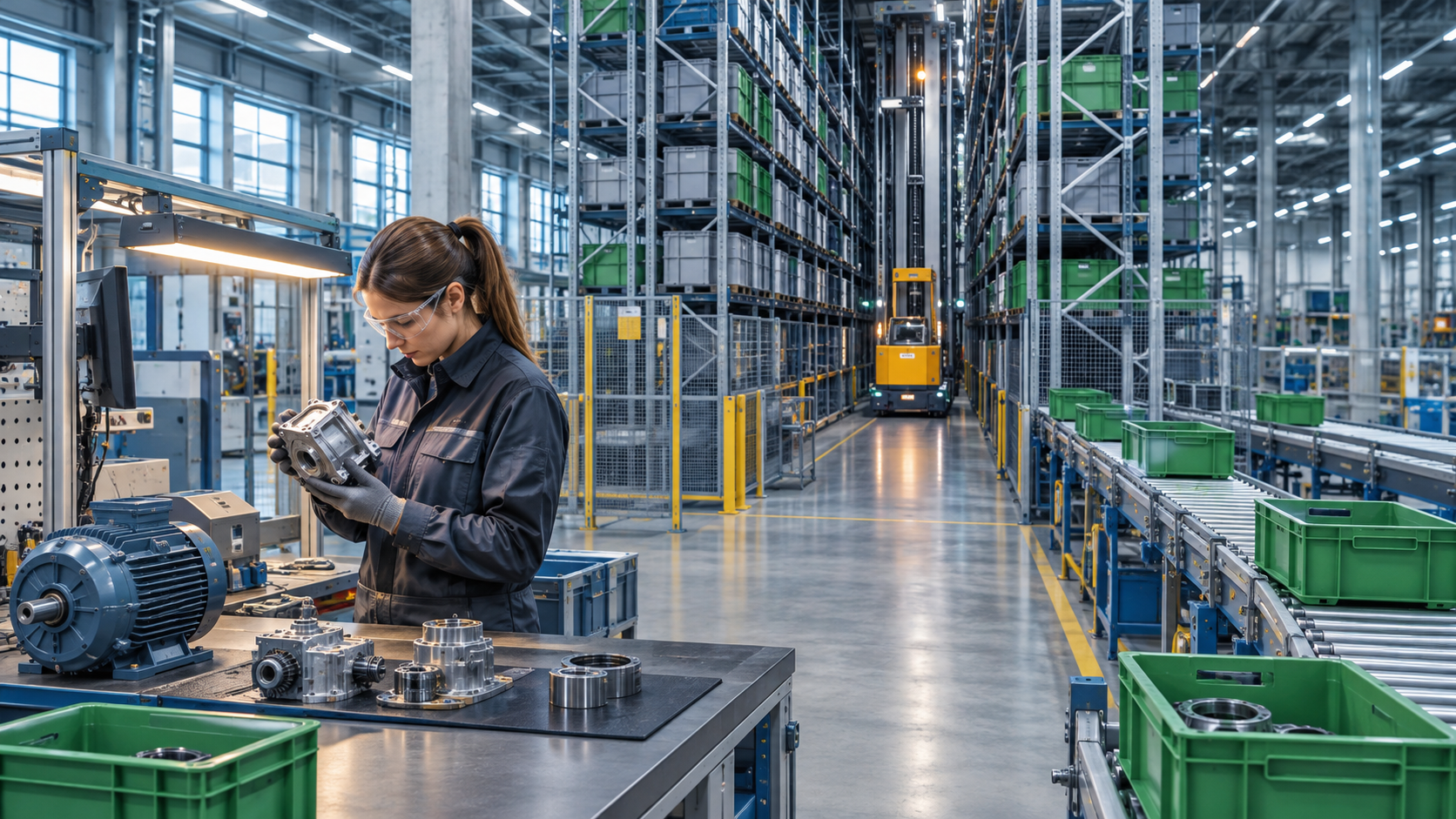
Reusing instead of storing: How companies make returned goods economically viable – Creative image on the topic, with AI: Xpert.Digital
From warehouse to value creation center: How high-bay warehouses advance the circular economy
Returned goods represent tied-up capital: This is how inventory becomes real value again
More than just shelves and conveyor technology: Why high-bay warehouses are crucial for the circular economy
High-bay warehouses have long since become more than just places where goods are stored in a space-saving manner. In a circular economy, they are intended not only to ensure the supply of new goods, but also to quickly repurpose returns, used components, and reusable containers. This holds economic potential: Inspected and refurbished products can replace new parts, generate additional revenue, and strengthen security of supply. However, a returned item is not automatically a valuable asset. Only when its condition is known, the processing costs are proportionate to the benefit, and there is actual demand does a return become an economic advantage. Therefore, what matters is not the number of storage spaces or high return volumes, but rather good data, clear inspection processes, and rapid decision-making. This article shows how high-bay warehouses can become value creation hubs, which key performance indicators and costs are relevant, and why not every return is suitable for reuse.
Note on spelling:
The delivered text contained, among other things, a grammatically incorrect phrase: "jede einlagerungen Tonne" (every stored tonne). The correct form is "jede einlagerunge Tonne" (every stored tonne). The headings and the introductory text above are written in German spelling.
From high-bay warehouse to value creation center: The economics of closed material cycles
Those who simply store returned goods are hoarding their profits
A high-bay warehouse doesn't earn its money simply by storing goods in the smallest possible space. Its economic contribution stems from how reliably it makes products available, manages inventory, prevents damage, and aligns material movements with the demands of production and sales. In a more circular economy, this task expands considerably: The warehouse must no longer just distribute new goods, but also repurpose returned products, used components, and reusable load carriers for economically viable uses.
This changes the role of intralogistics. From an infrastructure for supplying the next process step, it becomes a central hub between initial sale, use, returns, inspection, repair, refurbishment, and remarketing. A product may pass through the warehouse multiple times and in varying economic conditions. It may initially be saleable new merchandise, later arrive as an uninspected return, and after technical refurbishment become available again as a spare part or used item.
The crucial difference lies not in the number of these movements, but in the value retained. A returned component does not create economic value simply because it has physically arrived at the company. Only when its condition is known, its further use is determined, and a real need can be met, does it become a usable asset.
The central economic perspective is therefore this: High-bay warehouses can significantly contribute to the circular economy if they reduce uncertainty about returned goods and accelerate their reuse. Additional storage capacity alone is not enough. Without clear decisions, suitable data, and a market for recovered products, the circular warehouse risks becoming merely a technically complex interim storage facility for unresolved problems.
Why resource efficiency does not automatically result in a functioning circular economy
The economic significance of closed-loop material cycles can only be understood by distinguishing between resource efficiency and the circular economy. Resource efficiency initially describes how much economic output is achieved with a specific input of materials. The circular economy goes further: it asks how long products, components, and materials retain their usefulness and how often they can be reused.
Germany increased its raw material productivity by 73.6 percent between 1994 and 2020. During this period, the direct use of abiotic materials decreased by 21.6 percent, while gross domestic product (GDP) increased by 36 percent. The original target of doubling raw material productivity was nevertheless missed. The figures refer to a specific indicator and time period; they should not be interpreted as the current reuse or recycling rate. However, they do show that higher economic output per unit of material is possible without automatically creating closed product cycles.
This leads to an important distinction for companies. A more efficient packaging machine can reduce material consumption per delivered product. A repairable product, on the other hand, can enable additional usage cycles. A high-bay warehouse can support both developments, but in different ways: through more precise supply on the one hand, and through the organized return of valuable goods on the other.
The macroeconomic perspective must also remain nuanced. If material-intensive production stages are outsourced, a national indicator may appear more favorable without a corresponding decrease in global raw material consumption. Therefore, the more advanced overall raw material productivity metric also considers the raw material equivalents associated with imported goods. This leads to the same requirement for corporate investments: the decisive factor is the impact along the value chain, not solely the improvement within the company's own inventory.
The economic core lies in preserving existing value
An industrial product contains more than just the value of its raw materials. It also includes design, processing, energy consumption, quality control, assembly, and transport. If a functional product is prematurely dismantled or melted down, some of this already achieved value is lost.
From an economic perspective, it should therefore be examined which use yields the highest achievable value. Direct reuse can be cheaper than repair. Repair can be more economical than comprehensive remanufacturing. Reconditioning at the component level, in turn, can deliver a higher return than pure material recycling. However, this order is not an absolute rule. Safety, technical aging, energy consumption during use, and lack of demand can all argue against further use.
The high-bay warehouse influences these decisions because it determines availability, condition transparency, and response speed. A repairable component that sits unchecked for several months can lose its market share. Conversely, an identified and documented component can quickly meet a spare parts requirement and avoid the need to procure a new part.
The relevant benchmark is therefore not the theoretical residual value, but the value that can actually be achieved after all additional costs. These include return transport, acceptance, inspection, cleaning, storage, refurbishment, redistribution, and any warranty expenses.
A circular economy is not economically viable simply because an item is technically reusable. It must be put to use at a reasonable cost and in demand. The warehouse thus becomes the link between technical possibility and economic reality.
Why returns challenge traditional warehouse logic
Conventional goods flows are relatively easy to plan. Item number, packaging unit, dimensions, and quality status are often fixed before goods are received. Returns, on the other hand, bring several uncertainties simultaneously: It is unclear when they will arrive, what condition they will be in, and what proportion can actually be reused.
A product that appears undamaged on the outside may have a hidden defect. A component reported as defective may be usable again after a simple inspection. Missing markings make identification difficult, while dirty or deformed load carriers can impair automated conveying processes.
This results in a fundamental organizational requirement: Unchecked returns must not simply become part of the regular available inventory. A controlled evaluation process is needed between arrival and reuse.
For the high-bay warehouse, this means an expansion of its inventory logic. In addition to items and quantities, technical conditions, ownership, approvals, and potential uses become relevant. Two outwardly identical components can represent completely different inventory levels from an economic perspective if one has been inspected and approved, while the functionality of the other remains unknown.
This differentiation initially creates additional work. However, it prevents uncertain inventory levels from being planned for as available supply. Without this separation, a seemingly high inventory range can mask an actual supply gap. The company then possesses many parts but cannot reliably access them.
High automation requires a preliminary sorting of uncertainty
The strength of an automated high-bay warehouse lies in repeatable processes under defined conditions. This strength can only be utilized if the incoming goods meet the technical requirements. Therefore, highly variable shapes, damaged pallets, or unclear load distributions are not merely minor process deviations, but potential sources of disruption for the entire system.
A viable solution often lies in reducing uncertainty before the actual storage process. Returned goods are first identified, inspected, and transferred into standardized loading units. Only then do suitable goods enter the automated area.
In this model, automation does not replace every human decision. It takes over the planned movements, while qualified employees handle complex condition assessments, exceptional cases, and technical inspections. Especially in circular logistics, such a division of labor can be more economical than attempting to fully automate all variations.
Spatial separation is also important. Uninspected returns, approved products, and materials to be discarded require different processing routes. Damaged energy storage devices, contaminated components, or other safety-relevant goods have additional protection requirements. A standard storage area is not automatically suitable for every type of return.
The economic benefit arises from a clear boundary: Uncertainty is addressed where it can be controlled. Standardized inventory is then moved with high reliability. In this way, the upstream inspection protects not only product quality but also the productivity of the automated system.
Data transforms physical assets into reliably usable capital
A stored item only has a reliable economic value if the company knows what it possesses and what it can be used for. In a circular economy, an item number is often insufficient for this purpose.
Depending on the product, information required includes serial number, manufacturing status, previous use, test results, repair history, and approved applications. For materials, composition, purity, or origin can be crucial. Therefore, these data requirements are not merely a matter of digitization, but a prerequisite for proper evaluation and use. Especially in metallic material cycles, material qualities, secondary raw materials, and reliable recycling indicators are key areas of information.
The warehouse management system should not manage this information in isolation. It must be linked to production planning, maintenance, purchasing, sales, and, if applicable, service. Only this integration reveals whether a returned part can meet a specific need.
It is important to distinguish between physical identity and economic status. A product may remain the same object, but change from customer ownership to inspection stock, then to a repair process, and finally to saleable stock. Without accurate status management, incorrect entries, unjustified availability indications, or inaccurate inventory valuations are likely.
Data quality itself also requires an economic analysis. Not every piece of information justifies the effort it requires to collect. The crucial factor is whether it improves a relevant decision: speeds up approval, prevents misuse, enables a higher selling price, or avoids unnecessary reviews. Therefore, good digitization doesn't collect as much data as possible, but rather reliably gathers the data relevant to decision-making.
The key indicator is not the return flow rate
High return volumes initially appear to be a success. However, they say little about how much value is actually being returned to the cycle. A company can increase its collection rate while simultaneously generating growing inventory for inspection, higher storage costs, and decreasing recycling revenues.
The economic valuation should therefore distinguish between several stages: quantity received, quantity identified, quantity tested, quantity technically suitable, and quantity actually reused or sold. Significant losses can occur between these stages.
The time between return and reuse is particularly telling. It combines process efficiency with capital commitment and marketing risk. The longer a product remains untested, the later it can replace the purchase of a new part or generate revenue from a sale.
In addition, a value-based perspective is needed. A thousand returned small parts may be less economically significant than ten high-quality drives. A purely quantitative approach therefore distorts priorities. It is more appropriate to combine quantity metrics with recovery values, processing costs, and actual sales opportunities.
Even the utilization rate of a high-bay warehouse is not a reliable measure of success. A warehouse that is almost completely full may appear efficient, but offer little room for fluctuating returns. If this leads to delayed decisions or an increase in relocations, system performance decreases.
A good key performance indicator system therefore does not reward the accumulation of material, but rather its rapid and economically sensible return to use.
A model calculation shows how significant the impact of processing time is
The importance of lead time can be illustrated with a simplified example. The following values are explicitly model assumptions and not industry averages.
A company receives 120,000 components back annually. Assuming 300 operating days, this averages out to 400 parts per day. If, on average, 20 operating days elapse between goods receipt and final evaluation, then under steady-state conditions, approximately 8,000 parts are in this process at any given time.
If the processing time decreases to eight working days, the average inventory in process is reduced to approximately 3,200 parts. The difference amounts to 4,800 components. Assuming an average economic inventory value of €150, this corresponds to a reduction in tied-up value of €720,000.
This sum does not represent additional annual profit. It primarily describes a potential reduction in tied-up capital. At a calculated financing rate of eight percent, the financing effect alone would amount to €57,600 per year. Additional benefits could arise from reduced space requirements, less search effort, and faster remarketing.
The calculation has clear limitations. It assumes a sufficiently stable cash flow and uses a uniform average value. In reality, processing times and values vary considerably. Furthermore, not every reduced backlog of work is immediately available as payment.
Nevertheless, this example illustrates the key connection: Better organization of returns can be more economically important than additional parking spaces. Faster decision-making reduces the need for temporary inventory and allows for earlier utilization of existing assets.
LTW Intralogistics Solutions

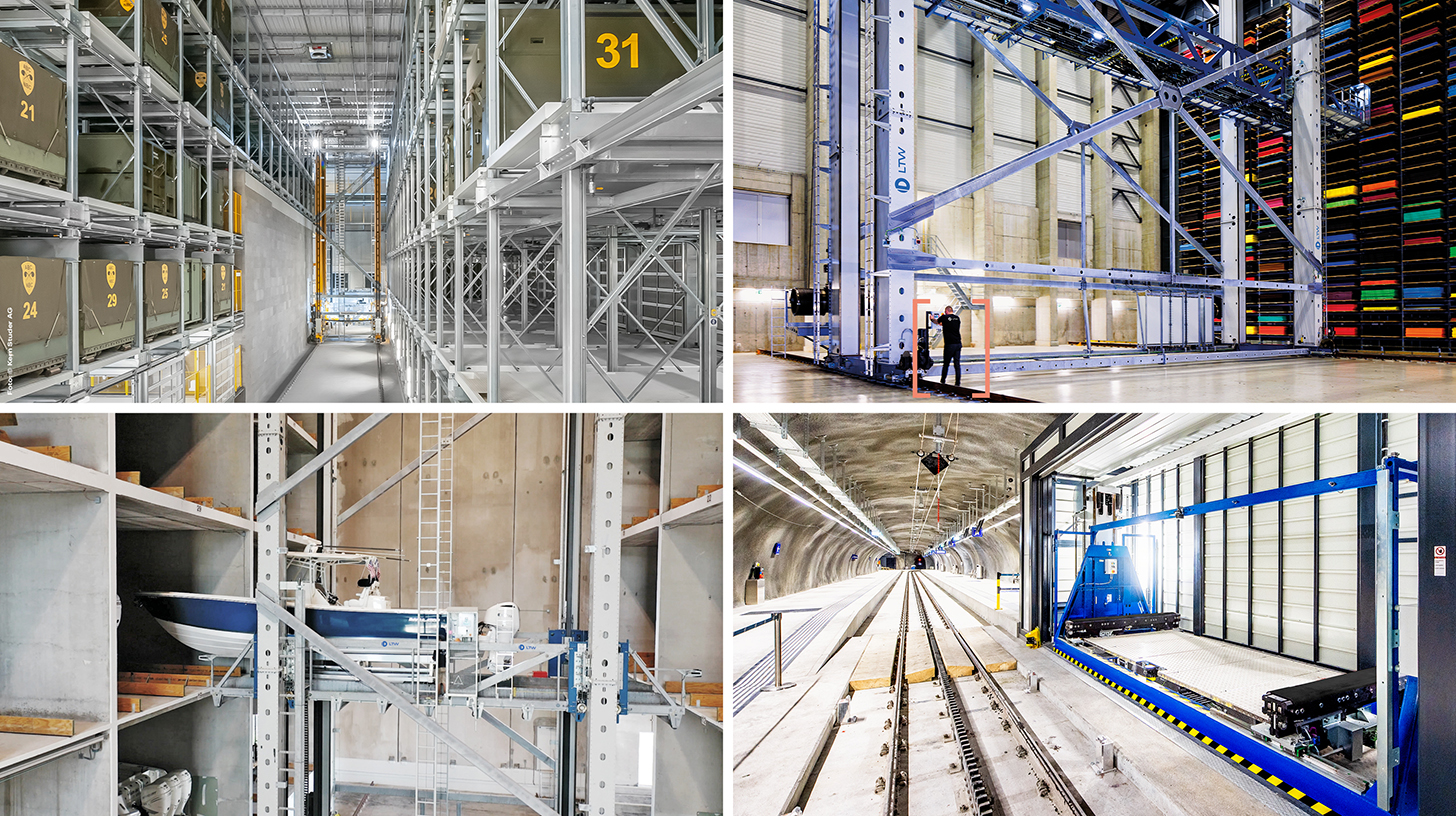
LTW Intralogistics – Engineers of Flow - Image: LTW Intralogistics GmbH
LTW offers its customers not individual components, but integrated complete solutions. Consulting, planning, mechanical and electrotechnical components, control and automation technology, as well as software and service – everything is networked and precisely coordinated.
In-house production of key components is particularly advantageous. This allows for optimal control of quality, supply chains, and interfaces.
LTW stands for reliability, transparency, and collaborative partnership. Loyalty and honesty are firmly anchored in the company's philosophy – a handshake still means something here.
Related to this:
The importance of returns for the circular economy
Investments must be measured by the additional cash flow they generate
The economic viability of a circular economy-oriented high-bay warehouse should not be reduced to a comparison of personnel and automation costs. What matters is the additional cash flow compared to a realistic alternative.
On the benefits side, there can be lower procurement costs, additional revenue from refurbished products, avoided disposal costs, and reduced inventory losses. There may also be fewer production interruptions or improved spare parts availability. On the cost side, there are investment, maintenance, software, energy, testing, cleaning, qualification, and ongoing operations.
A second, simplified model clarifies the scale. Let's assume additional technical and digital equipment costs three million euros. This enables an additional contribution margin of 900,000 euros annually. Simultaneously, it generates additional ongoing payments of 350,000 euros. This results in a simplified annual surplus of 550,000 euros. The static repayment period is therefore approximately five and a half years.
This metric is only a preliminary guide. It ignores the time value of money, start-up losses, taxes, residual values, and subsequent replacement investments. A sound decision therefore requires a multi-year cash flow analysis and various scenarios.
It is particularly important to avoid double counting. If a remanufactured component is used internally, its benefit may lie in the avoided costs of new parts. If it is sold externally, a sales revenue is generated. Both advantages cannot be fully claimed for the same part simultaneously. Similarly, a reduction in inventory cannot be counted as a full saving every year.
Not every returned product deserves storage space
A frequently underestimated problem in the circular economy is economic waste disposal. Once reuse is considered a strategic goal, the willingness to consistently reduce unsuitable inventory can decrease. The result is warehouses full of theoretically usable parts with no realistic use.
A sound decision takes into account the expected proceeds from the sale, the likelihood of successful reprocessing, and all remaining costs. This also includes the value of the occupied storage space. A slowly rotating returned item can block space that would be more valuable for a much-needed product.
The problem worsens with increasing storage time. Technical changes, discontinued product lines, or falling market prices can reduce the expected benefits. At the same time, storage and administrative costs increase.
Therefore, a closed-loop warehouse needs binding decision deadlines and escalation procedures. Unchecked inventory cannot remain unchecked indefinitely. A technically approved part without demand requires different handling than a spare part needed at short notice.
This approach does not contradict the concept of a circular economy. On the contrary, it prevents materials from missing out on their most economically or technically beneficial use due to prolonged storage. Not all storage preserves value. Sometimes, the better decision is to integrate a product into a suitable material cycle early on, rather than waiting for an unlikely reuse.
Reusable packaging needs a circulation system, not a storage area
Pallets, containers, and other load carriers are among the most direct starting points for closed-loop systems. However, their economic benefit does not arise from their mere reusability, but from the number of cycles actually achieved.
A robust container often incurs higher initial costs than simple disposable packaging. These additional costs can be spread over repeated use. However, this requires that return, cleaning, inspection, repair (if necessary), and redeployment function smoothly. Losses and long return times worsen the overall cost.
The high-bay warehouse can ensure the availability of such load carriers. At the same time, it must not become a permanent collection point for empty containers. A reusable system requires a well-coordinated fleet: large enough for peak periods and turnaround times, but not so large as to tie up unnecessary capital and space.
The European Packaging Regulation increases the strategic importance of such systems. Article 29 of Regulation (EU) 2025/40 stipulates that, from 2030 onwards, at least 40 percent of certain transport packaging must be reusable within a reuse scheme. More stringent requirements apply to certain transport operations within a company or between affiliated companies. The scope, packaging format, and exceptions must be examined separately in each case; a general quota for all packaging cannot be derived from these requirements.
From an economic perspective, this primarily results in an organizational challenge: companies need to know where their load carriers are located, their condition, and when they will be returned. Without this transparency, a container that is formally reusable can effectively function like expensive single-use packaging.
Energy efficiency arises from the interaction between the building and its operation
Automated high-bay warehouses offer opportunities for space- and energy-efficient operation. However, this does not translate into a general advantage over every other type of warehouse. Actual energy consumption depends on factors such as geometry, capacity utilization, moving masses, travel profiles, and technical settings. Studies on the energy efficiency of storage and retrieval machines clearly illustrate this dependence on numerous influencing factors.
The assessment should therefore differentiate between several levels. First, the building requires energy, for example for lighting and, if applicable, temperature control. Second, conveyor technology and storage and retrieval systems consume energy. Third, additional testing, cleaning, and reprocessing processes generate their own energy demand.
In a circular economy, total electricity consumption can increase because more products are processed. Nevertheless, the overall effect can be beneficial if it avoids the need to manufacture new products. Conversely, low energy consumption per storage movement is not necessarily proof of a sensible overall process if there are unnecessarily many movements.
Operational control also offers flexibility. Maximum speed is not required in every situation. Research into automated storage systems therefore investigates adaptive operating parameters that meet time requirements while simultaneously limiting energy consumption. However, such approaches must be tested under actual load profiles.
The right question, therefore, is not just how energy-efficient a single device is. The crucial question is how much energy is expended to achieve an economically viable and actually required output.
Climate benefits must be measured by the amount of new product avoided
The environmental assessment of a circular economy facility must not end at the warehouse door. Return transport, cleaning, testing, repairs, additional energy consumption, and the construction of the necessary infrastructure must all be taken into account.
This is offset by potential benefits: less primary material, avoided manufacturing steps, longer product lifespan, and possibly lower waste volumes. Whether this results in an advantage depends largely on what the reused unit actually replaces.
If a refurbished component is used instead of an equivalent new part, substitution is plausible. However, if only additional demand arises without a corresponding decrease in new production, the relief effect is less pronounced.
The same applies to reusable packaging. Crucial factors are the number of uses achieved, transport distances, return organization, and cleaning effort. A long technical lifespan is of little use if containers are lost early on.
For a sound assessment, economic and environmental indicators must therefore be considered side by side. A profitable return on investment is not automatically climate-friendly. Conversely, an ecologically advantageous solution is not necessarily economically viable without additional financing.
This distinction increases the credibility of the analysis. It prevents every return from being treated as avoided production and every stored ton as an immediate environmental benefit. The contribution of the high-bay warehouse lies in enabling better circular economies. Whether these are actually beneficial in any given case must be assessed across the entire relevant life cycle.
Security of supply is enhanced by tested alternatives
An additional benefit can lie in a more robust supply. If certain new parts are difficult to obtain, tested returns or refurbished components can provide a supplementary procurement channel.
This advantage is particularly relevant where a missing part causes high downtime costs. In such a case, the economic value of an available component is not solely determined by its selling price. Equally important is the amount of operational disruption that can be avoided through its timely deployment.
However, the contribution to security of supply should not be overestimated. Return volumes often occur with a time lag and cannot be increased indefinitely. Furthermore, many returned products can be subject to the same aging or damage mechanisms. Therefore, a large inventory of used parts does not automatically equate to a reliable reserve.
Technical approvals, appropriate operating limits, and precise knowledge of the actual inventory are required. For safety-critical applications, reuse may be prohibited or only justifiable under special conditions.
The high-bay warehouse thus supports resilience not through the sheer quantity of stored returns, but through the reliable provision of suitable alternatives. With sound planning, the supply of new parts, repair capacity, and recovery remain coordinated. Recycling processes complement procurement, but do not automatically replace all other preventative measures.
New business models are changing the importance of existing assets
When manufacturers take back products, refurbish them, or market their use instead of ownership, the economic role of warehousing changes. Inventories then no longer serve solely for the next sale, but rather for the maintenance of a product inventory that has been used over a longer period.
For example, a company can keep replacement components on hand to quickly repair defective customer devices. The returned item is then tested and, if necessary, refurbished for the next use. This inventory allows for a balance between immediate customer demand and later repairs.
Selling refurbished products can also attract new customer groups. This requires a transparent quality positioning and a clear differentiation from new goods. If prices and performance promises are not clearly defined, however, there is a risk of cannibalization, complaints, or loss of trust.
Business responsibilities are redistributed. Those who promise to take back products must consider future return costs. Those who guarantee availability need sufficient and actually usable inventory. Those who own their own products bear the risk of damage, technological change, and declining residual values for a longer period.
The high-bay warehouse thus becomes part of the business model architecture. Its performance influences whether exchange promises, service times, and resale strategies can be economically fulfilled. Therefore, the investment decision should not be made in isolation within the logistics sector.
Regional cycles need more than just short distances
Spatial organization plays a crucial role in economic efficiency. Short return routes can limit transport costs and response times. However, regional processing is not automatically the most cost-effective solution.
Specialized testing and repair centers can offer economies of scale. They combine expertise, technical equipment, and sufficiently high production volumes. Decentralized locations, on the other hand, can work closer to the customer and pre-sort returns more quickly. Which structure is better depends on product value, transportability, the nature of the defect, and the required processing.
A tiered organizational structure is often advantageous: customer-facing intake, regional initial assessment, and centralized processing of complex cases. High-bay warehouses can fulfill different roles within such a network. One location maintains inspected replacement stock, while another buffers standardized components for reconditioning.
The location decision must also take into account the uncertainty of the return flow. A large central warehouse can consolidate fluctuations but may result in longer transport times. Several smaller warehouses shorten distances but require additional safety stock and local expertise.
From an economic perspective, the goal is therefore not maximum centralization or regionalization. The aim is to find the structure with the lowest overall costs while maintaining sufficient speed and quality. Simply considering storage costs is insufficient.
The existing location is often the more realistic starting point
The transformation doesn't necessarily begin with a new building. Many companies need to continue using existing halls, facilities, and IT systems. That's precisely why a phased expansion is often the more realistic approach.
First, it's important to examine which returns have already arrived, how long they remain unused, and what information is missing. Often, delays are not caused by a lack of shelf space, but rather by unclear responsibilities, insufficient testing capacity, or uncoordinated booking processes.
Building on this, defined return zones, standardized containers, and digital status transitions can be introduced. Only when the processes are sufficiently understood can it be assessed which movements should be automated.
Modernizing existing technology is also part of the circular economy perspective. Extending the use of racking systems or suitable plant components can be economically attractive, provided that safety, performance, and spare parts availability are guaranteed. Conversely, clinging to outdated technology can lead to high costs for malfunctions and integration.
The appropriate benchmark is therefore neither a blanket commitment to new construction nor the maximum extension of every existing plant. What matters are the total future costs and the ability to reliably implement the required processes. A technically impressive solution is economically weak if it fails to meet actual return volumes and quality requirements.
Employees will become more important for evaluation and exception treatment
With increasing automation, human work does not disappear, but its focus shifts. In circular processes, condition assessment, fault diagnosis, quality decisions, and process monitoring gain in importance.
A storage and retrieval machine can reliably transport a container. However, determining whether a used component should be repaired, what damage is relevant, or whether documentation is sufficient often requires expertise and responsibility.
This creates qualification requirements. Employees must assess technical conditions, operate digital systems, and understand the economic consequences of their decisions. Premature approval can lead to complaints. Conversely, unnecessary disposal destroys potentially usable inventory.
Collaboration between departments is also becoming more important. Purchasing, service, production, and logistics must not manage returns according to conflicting objectives. If purchasing focuses solely on low new part prices, while remanufacturing aims for the highest possible recovery volumes, economically unfavorable parallel inventories can arise.
The transformation therefore requires clear decision-making authority and common key performance indicators. Responsibility must lie not only with who accepts a returned item, but also with who decides on its further use and by when this decision must be made.
A viable restructuring begins with a limited economic problem
A compelling entry point focuses on a clearly defined product group. Suitable examples include standardized components with sufficiently high value, recurring returns, and verifiable demand.
First, an initial assessment is needed. This includes quantities, conditions, processing times, actual revenues, reprocessing costs, and inventory losses. Without this foundation, subsequent improvements are difficult to distinguish from normal fluctuations.
A target process is then designed that maps the entire journey from return to reuse. Technical investments only follow once the bottlenecks are identified. If the problem lies in a lack of test benches, additional conveyor technology will solve little. If there is a lack of sales, faster storage will not provide any viable benefit.
A pilot project should answer several questions: How stable is the data? Which returns can be processed economically? What is the actual reuse rate achieved? What costs arise from exceptional cases? And how does the need for storage space change?
Only after this review does scaling up make sense. Volume growth and process complexity must be considered separately. Twice as many identical returns are often easier to manage than a smaller quantity of very different products.
The competitive advantage lies in the quality of the decisions
Transforming a high-bay warehouse into a value creation center is neither a purely automation project nor simply a matter of additional storage height. It changes how companies assess inventory, organize returns, and reuse existing value.
The economic leverage lies in the combination of speed, knowledge of the product's condition, and demand. A product must be identified in a timely manner, appropriately assessed, and assigned to a realistic use. The high-bay warehouse supports this process through orderly availability and reliable material movements. However, it cannot replace the underlying decisions.
This leads to a sobering perspective: Closed-loop systems are particularly attractive where high product value, standardizable processes, and reliable sales opportunities converge. It becomes more difficult with low residual values, highly variable quality, long return transport routes, and a lack of demand. In such cases, consistent material recycling can be more sensible than costly reprocessing.
Companies should therefore not base their investments on achieving the most impressive take-back volumes. What matters is the additional value that is actually retained after all costs are covered, and how reliably the system delivers this value.
The future-proof high-bay warehouse doesn't simply store as many items as possible. It ensures that valuable goods are lost as little as possible. This is precisely its contribution to a circular economy, which is not only ecologically sound but also operationally viable.
Consulting - Planning - Implementation

Konrad Wolfenstein
I would be happy to serve as your personal advisor.
You can contact me at wolfenstein∂xpert.digital or
Just call me on +49 7348 4088 965 .
Your intralogistics experts

Consulting, planning and implementation of complete solutions for high-bay warehouses and automated storage systems - Image: Xpert.Digital
More information here: