
EU Packaging Regulation changes pallet management: How pallets are becoming a key resource – Creative image on the topic, with AI: Xpert.Digital
Pallets in transition: Sustainability and digitalization as drivers of logistics
The economic dimension of pallets: More than just a load carrier
Return logistics and pallet management: How to secure your competitiveness
Pallets have long been invisible yet essential resources in the supply chain. Their importance was often reduced to availability and load-bearing capacity, while aspects such as circulation, repair history, and return processes were overlooked. However, the EU regulation on packaging and packaging waste, which comes into force on August 12, 2026, brings about a fundamental change. Transport packaging, including pallets, is no longer seen merely as a means of moving goods, but as a crucial component of a regulated European circular economy.
This new perspective has far-reaching implications for the economic valuation of pallets. In the future, their value will be determined not only by the material used, but also by factors such as standardization, recyclability, repairability, and the quality of the accompanying data. Companies that embrace these changes early and adapt their processes accordingly can not only reduce their costs, but also develop new services and strengthen their market position.
The following text examines the various facets of pallet management and discusses how companies can prepare for the new requirements to succeed in tomorrow's competitive environment. The challenges and opportunities arising from the regulation encompass not only technical aspects but also strategic considerations that can affect the entire business model.
Those who do not master load carriers will lose margin, transparency and market access in the future
From invisible operating resource to strategic asset
Pallets were long among those operating resources that received little attention in the economic analysis of the supply chain. They simply had to be available, durable, and as cheap as possible. Whether a pallet completed five, twenty, or fifty cycles, where it was repaired, and how it was ultimately disposed of, often remained unclear outside of professionally managed pallet pools. The EU regulation on packaging and packaging waste, which has been in effect since August 12, 2026, fundamentally changes this logic. Transport packaging is no longer treated merely as an aid to the movement of goods, but as a regulated component of a European circular economy.
This shifts the economic significance of the pallet. Its value will no longer lie solely in its wood, plastic, or metal construction, nor solely in its load-bearing capacity. Value increasingly arises from standardization, recyclability, repairability, data quality, and verifiable integration into a reuse system. A pallet without reliable information may still be physically usable, but it will lose its appeal from a regulatory and economic perspective. Conversely, a standardized and digitally identifiable load carrier can deliver greater economic benefits despite higher initial costs if it is reused more frequently, experiences less loss, and its conformity can be more easily verified.
For industry, trade, and logistics, this is more than just an environmental regulation. The regulation impacts procurement, production, storage, transport, contract design, IT, controlling, and financing. It makes visible what was previously often recorded as incidental costs or unavoidable losses. Companies must therefore clarify not only which pallets they use, but also who owns them, in which system they circulate, how many cycles actually take place, and who is responsible for returns, repairs, data maintenance, and disposal.
The key economic message is this: pallet management is evolving from a peripheral operational issue to a core management task. Those who standardize and digitize this task early on can reduce costs and develop new services. Conversely, those who merely generate additional documents without altering their physical goods and return flows will end up with expensive bureaucracy without any corresponding productivity gains.
The regulation creates a new European regulatory framework
The Packaging Ordinance replaces the previous, more nationally implemented directive logic with directly applicable EU law. This is generally an advantage for internationally operating companies, as a harmonized legal framework is intended to limit fragmentation and differing national interpretations. At the same time, it increases binding force. Sustainability is no longer primarily managed through voluntary programs or general corporate objectives, but rather through concrete requirements regarding design, recyclability, reuse, labeling, conformity, and producer responsibility.
Transport packaging is explicitly included. This includes, among other things, pallets, collapsible plastic boxes, crates, trays, plastic boxes, large containers, buckets, drums, and canisters. Intermodal containers for road, rail, sea, and air transport must be distinguished from the legal definition of transport packaging. This distinction is important because the term "container" refers to very different load carriers in business practice. A reusable container used in production supply may be classified differently under regulations than a standardized freight container.
From 2030, packaging must meet the requirements for recyclable design. Recyclability is assessed according to performance levels. Packaging below the required minimum level will generally lose its marketability. From 2035, the actual large-scale recycling of a format will become a more important factor; from 2038, the requirements will increase again. Therefore, it is not enough for companies to simply point to the possibility of material recycling in theory. Design, collection, sorting, and established industrial recycling processes must all be aligned.
The regulation also sets reuse targets. For the transport packaging covered, a minimum reuse quota of 40 percent within a reuse scheme applies from 2030 onwards. A target of at least 70 percent is planned for 2040. Particularly stringent reuse requirements apply to transport between sites of the same company or affiliated companies, as well as to certain deliveries within a Member State. Exceptions exist, among others, for certain dangerous goods packaging, customer-specific packaging for large machinery, certain contact-sensitive formats, and cardboard packaging. The specific legal classification must therefore be determined based on format, material, and process.
Crucially, reuse should not be equated with mere multiple uses. A pallet does not become a regulatory-compliant reusable format simply because it is occasionally reused. What is required is its integration into a system that includes return, collection, reconditioning, redistribution, clear responsibilities, and appropriate documentation. This is precisely where the greatest economic transformation takes place.
The pallet has a measurable life cycle
In the old practice, inventory was often counted, not the life cycle. Companies knew how many pallets they had purchased or kept in stock at a location, but not reliably how many cycles individual load carriers had completed. The new logic requires a different approach. Key factors include origin, material, production date, conformity, owner, location, handover events, repairs, damage, cycle count, and final disposal method.
This creates a kind of operational lifecycle for the pallet. Not every company necessarily needs to track every pallet in real time. However, the more complex the supply chain and the higher the economic value of the pallet pool, the more important a unique identifier becomes. Open standards, serial numbers, QR codes, RFID technology, and event-based data systems make it possible to link physical movements with business transactions. A goods issue can then simultaneously document the transfer of a load carrier; a repair becomes a status event; a return updates inventory, liability, and circulation figures.
The benefits extend beyond simply meeting legal requirements. Precise inventory data reduces safety stock, search efforts, incorrect entries, and unresolved discrepancies. Damage patterns can be attributed to specific locations, transport methods, or loading processes. Return times become measurable, and the pallet pool size can be more closely aligned with actual demand rather than with flat-rate surcharges. Especially in automated warehouses, consistent pallet quality is a prerequisite for stable processes. Data on dimensions, condition, and repair history can therefore directly impact system availability.
The open EPAL system demonstrates the industrial scale that standardized reusable packaging has already reached. Around 670 million EPAL Euro pallets and approximately 20 million wire mesh containers are in circulation. More than 1,700 licensees produce and repair these load carriers. Since the introduction of individually marked QR pallets in 2024, their number has risen to around ten million by autumn 2026. While this is still a small proportion of the total inventory, the growth dynamic clearly shows that digitalization is not limited to closed plastic pallet pools but is also encompassing open wooden pallet cycles.
Unit costs become system costs
A procurement strategy focused solely on purchase price will be insufficient in the future. Economic comparisons must consider the total costs per usable unit of inventory. This includes acquisition or rental fees, financing, transport to the point of use, return, sorting, cleaning, inspection, repair, downtime, loss, IT tracking, contract management, and disposal. Furthermore, potential consequential costs due to production downtime, damage to goods, malfunctions of automated systems, or missing documentation must be considered.
An inexpensive pallet can prove costly if it achieves few cycles, requires frequent replacement, or gets lost in an open supply chain. Conversely, a more expensive pallet can be economically superior if it achieves many cycles, can be repaired, and is readily available through a dense pool with virtually no empty runs. Therefore, the crucial metric is not the purchase price per unit, but the risk-adjusted cost per actual use.
This perspective changes investment decisions. Owning your own pallet pools ties up capital and requires sufficiently large reserves. Between shipping and returning a pallet, there's a turnaround time that can be several weeks or months, depending on the network. The longer this period and the higher the loss rate, the more inventory needs to be financed. Rental and pooling models convert some of this capital commitment into operating expenses. However, they don't automatically reduce overall costs, because the service provider charges for financing, network operation, repairs, risk, data management, and margin.
A pool system is particularly economically attractive when network density and standardization are high. Numerous drop-off and pick-up points shorten return routes. Repair facilities located near customers reduce transport costs. Widespread acceptance facilitates exchange and reuse. Conversely, proprietary systems can offer advantages in tightly closed industrial cycles when specific hygiene, quality, or automation requirements apply. However, they become expensive as soon as containers have to be returned over long distances or collected from numerous independent partners.
The Packaging Ordinance therefore does not simply promote the most expensive reusable solution. It strengthens models that effectively manage the recycling process. The winner is not necessarily the material with the longest theoretical lifespan, but rather the system with the best combination of lifespan, return rate, space efficiency, repairability, data quality, and network coverage.
Return logistics determine profitability
Reusable packaging only becomes economically viable through return transport. Transporting a loaded pallet to a destination generates value because goods are being moved. Returning an empty pallet initially incurs costs. These costs can be minimized by combining returns with existing transport operations, stacking empty pallets, using collapsible containers, or utilizing regional balancing mechanisms. Without such optimization, the circular economy can generate additional mileage, storage space, and transshipment.
The geographical structure of the supply chain is therefore crucial. In dense national trade networks with regular routes, load carriers can be returned relatively efficiently. More difficult are highly asymmetric flows, seasonal peaks, exports to regions with low return load volumes, and supply chains with many small recipients. In these cases, a formally closed system can incur high operational costs or require additional inventory because the return of packaging is too slow.
Companies must therefore plan their returnability as a separate production system. This includes collection points, sorting rules, quality classes, repair capacities, transport windows, and escalation processes for discrepancies. Space requirements are also frequently underestimated. Empty pallets and containers compete with saleable goods in the warehouse. Incorrectly sorted or damaged load carriers block space and increase manual effort. In highly automated facilities, even a small variety of incompatible formats can cause significant disruptions.
An economically viable reusable packaging system also requires an incentive model. Deposits, rental periods, loss fees, or bonus-malus rules influence the behavior of those involved. Fees that are too low encourage indifference, while fees that are too high increase disputes, auditing costs, and liquidity strain. Good contracts combine clear ownership rules with timely data collection. Only when transfers are confirmed can it be traced who owns, owes, or has damaged a container.
This makes reverse logistics a matter of institutional design. Technology can capture identities, but it cannot resolve conflicts of interest. The best results are achieved when suppliers, logistics providers, retailers, and pool operators use the same definitions for handover, quality, repairability, and loss.
Open and closed pools follow different rules
Closed pools offer a high degree of control. The operator defines specifications, owns or manages the load carriers, and controls issuance, return, inspection, repair, and disposal. This simplifies documentation and ensures consistent data. This control can be particularly valuable in standardized production cycles, in food retail, in the automotive industry, or in hygienically sensitive applications.
This is countered by dependency and pricing power. The more a company aligns its processes, material handling technology, and contracts with a specific pool, the higher the switching costs become. The pool operator has access to usage data and can charge fees for rental, loss, additional transport, or late returns. The Packaging Ordinance could increase demand for such services and thus strengthen the market position of large providers. Therefore, it is becoming increasingly important for customers to contractually secure data access, portability, service quality, and the consequences of termination.
Open pools like the Euro pallet exchange, on the other hand, rely on a common format and a network of independent manufacturers, repair shops, and users. This limits dependence on a single operator and fosters broad acceptance. At the same time, individual traceability is more difficult. Quality differences, exchange debts, unauthorized repairs, and shrinkage can lead to conflicts. Digital identities can mitigate these weaknesses, provided enough participants collect and exchange data interoperably.
Economically, no single system type can be declared the clear winner. Closed pools excel in governance and data consistency, while open pools shine in reach, fungibility, and supplier diversity. In many companies, a hybrid model will prevail: standardized open wooden pallets for broad product flows, closed plastic or specialized containers for defined production cycles, and single-use formats only where exceptions, product protection, or the overall environmental impact justify them.
The strategic challenge lies in choosing the right system boundary. A closed loop that is too small will not achieve sufficient utilization. A loop that is too open can lead to a loss of control and data quality. Crucial factors include shipment structure, number of partners, distance, return probability, quality requirements, and the value of the transported product.
Data is becoming the new infrastructure of the circular economy
Industrial-scale reuse requires common data models. If every manufacturer, distributor, and pool operator uses their own numbers, events, and condition classes, media breaks and manual reconciliation occur. Global identification standards can uniquely describe packaging, locations, and business partners. Two-dimensional codes, RFID, and standardized event data enable the link between load carriers and the delivery process.
The technical challenge is smaller than the organizational one. A QR code can be applied quickly. More difficult is determining who scans it and when, what data is stored, how long it remains available, and who is authorized to use it. Master data must also be accurate. A digital label on a pallet won't solve any problems if the material, owner, or status is incorrectly recorded in the system.
For companies, a new layer of packaging data is emerging alongside product, supplier, and transport data. This layer should not be set up as an isolated sustainability register. Integration into inventory management, warehouse management, transport management, procurement, and financial accounting is more effective. Then, a single event can serve multiple purposes: inventory adjustment, transfer of ownership, proof of circulation, invoice verification, and sustainability reporting.
Data security and competitive interests should not be underestimated. Pallet movements can reveal production volumes, supply relationships, and site utilization. Companies therefore need role models and a clear separation between regulatory requirements, operational pool data, and commercially sensitive information. At the same time, a minimum level of interoperability must be maintained. Proprietary data silos would increase the cost of the circular economy and could create new dependencies.
Digitalization opens up additional business models. Pool operators can guarantee availability instead of simply renting out load carriers. Logistics service providers can offer returns, repairs, and data management as an integrated service. Insurers can adjust premiums based on loss and damage data. Manufacturers of pallets and containers can demonstrate lifespan, repairability, and recycled content. A simple product thus becomes a combination of physical asset and data-driven service.
LTW Intralogistics Solutions

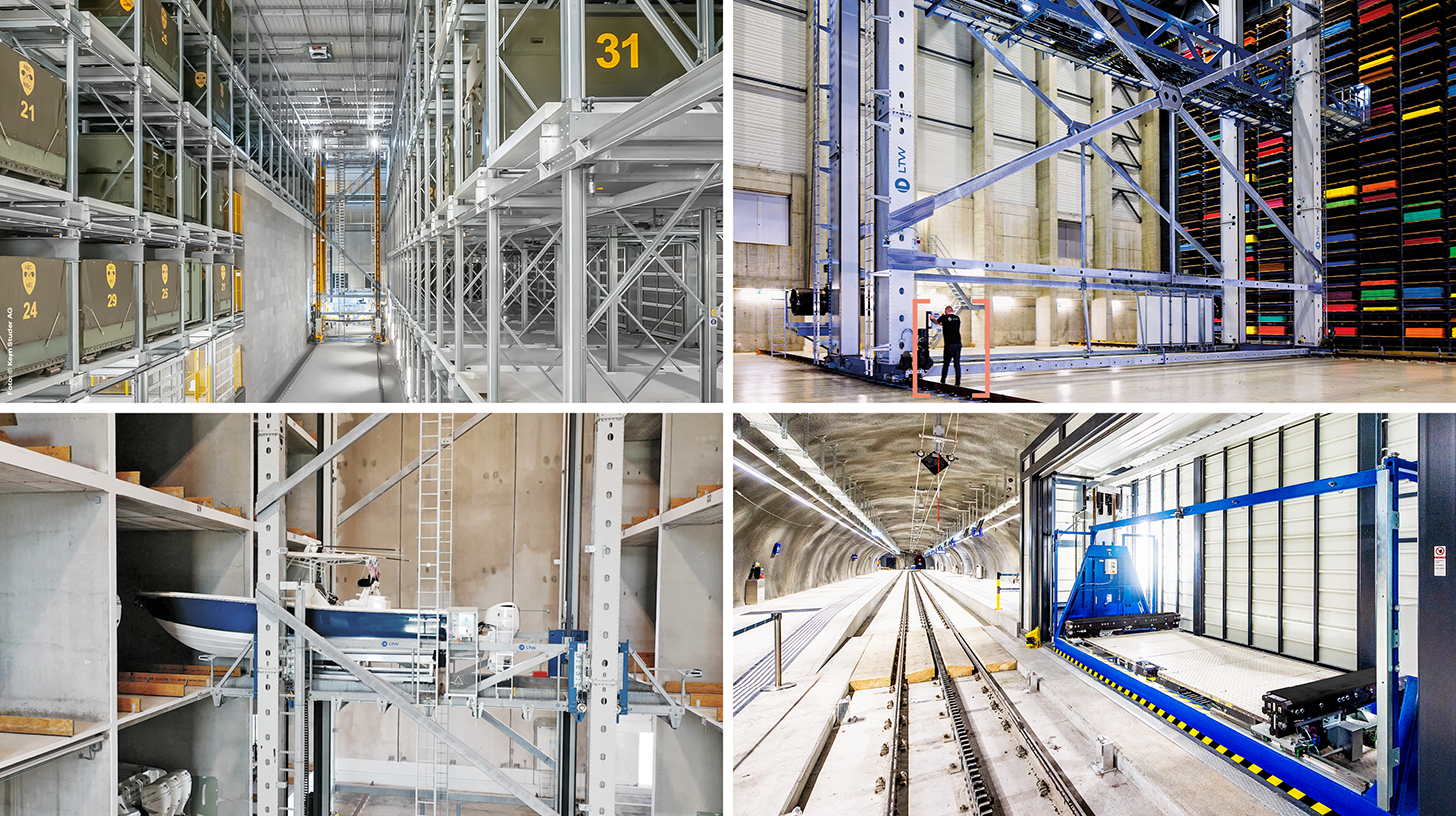
LTW Intralogistics – Engineers of Flow - Image: LTW Intralogistics GmbH
LTW offers its customers not individual components, but integrated complete solutions. Consulting, planning, mechanical and electrotechnical components, control and automation technology, as well as software and service – everything is networked and precisely coordinated.
In-house production of key components is particularly advantageous. This allows for optimal control of quality, supply chains, and interfaces.
LTW stands for reliability, transparency, and collaborative partnership. Loyalty and honesty are firmly anchored in the company's philosophy – a handshake still means something here.
Related to this:
Innovative approaches to return logistics in pallet management
Sustainability is not an automatic consequence of reusable products
The political preference for avoidance and reuse is understandable. In 2023, the EU generated around 79.7 million tons of packaging waste, equivalent to 177.8 kilograms per capita. Despite progress in recycling, the per capita amount was significantly higher than ten years prior. A circular economy that simply sorts ever-increasing quantities of waste more effectively does not completely solve the problem of sheer volume.
Nevertheless, reusable packaging is not ecologically superior under all conditions. The environmental impact depends on material usage, lifespan, actual number of uses, repairs, cleaning, return transport, utilization, and recycling at the end of its life. A robust container often requires more material to manufacture than a lightweight single-use package. This initial additional expense must be spread over a sufficient number of uses. If the container is lost early on or transported empty over long distances, the expected advantage can diminish or disappear.
The limitations of blanket regulations become particularly apparent with films and strapping bands. They stabilize heterogeneous loads with very little material. Reusable nets, covers, or strapping systems can function with standardized load profiles, but they don't achieve the same stability, automation capabilities, and space efficiency in every application. Current life cycle analyses conclude that, for certain applications, lightweight, single-use solutions with a high recycled content can be more environmentally friendly than heavy, reusable alternatives. Such findings should be examined with a view to vested interests, but they refute the notion that the number of reuses alone is a reliable environmental indicator.
Pallets often have a more favorable overall impact due to established exchange, pooling, and repair networks. Wooden pallets can be repaired multiple times, and their material can be recycled or used for energy recovery at the end of its lifespan. Plastic pallets offer advantages in terms of hygiene, dimensional stability, and sensor integration, but require a high turnover rate and controlled return processes to justify the higher manufacturing costs. Metal pallets are durable but heavy and economically unsuitable for many mass-market applications.
A proper assessment must therefore require functional equivalence. The comparison should not be between one piece of packaging and another, but rather the safe transport of the same quantity of goods under realistic conditions of loss, return, and damage. The Packaging Ordinance will only be ecologically successful if it maintains this systems perspective in the subsequent technical regulations.
The costs are unevenly distributed along the supply chain
The regulation creates macroeconomic opportunities, but the burdens are not distributed equally among stakeholders. Large trading and industrial groups can establish data platforms, centralized purchasing teams, and pan-European pooling agreements. They have sufficient volumes to negotiate prices and utilize return networks effectively. Small and medium-sized enterprises (SMEs) have lower volumes and less influence over their partners. For them, software, consulting, compliance documentation, and additional space can represent relatively high fixed costs.
This asymmetry fosters service models. Pooling, pallet accounts, inspection, repair, compliance data, and reporting can all be outsourced. This lowers barriers to entry but creates dependencies. Smaller companies, in particular, should therefore ensure they can export their data and are not locked in by proprietary tags or long-term contracts.
Distribution conflicts also arise between sender and recipient. The sender often chooses the packaging, while the recipient has to organize storage space, sorting, and returns. A format might be efficient for the sender but expensive for the recipient. Without contractual compensation, costs are passed on or hidden. Market power then determines who finances additional processes.
Logistics service providers find themselves in an ambivalent position. They have to record and manage more load carriers, but at the same time, they have the opportunity to expand their role. Those who can combine transport, warehousing, returns, and data management will transform from freight carriers into circular economy managers. Repair shops benefit from the longer use of high-quality load carriers. Manufacturers of simple, non-standardized, disposable, or cheap pallets, on the other hand, come under pressure as customers increasingly demand documented conformity and poolability.
The waste management and recycling industry is also changing. Reuse reduces certain waste volumes but increases the need for high-quality sorting and reliable secondary raw materials. If extended producer responsibility fees are more closely aligned with recyclability, easily recyclable designs will receive a financial advantage. Formats that are difficult to separate or only theoretically recyclable will become more expensive.
Procurement becomes the interface between price, law and risk
Purchasing departments must expand their evaluation models. In addition to price, quality, and delivery time, traceability, repair network, take-back options, recycled content, recycling pathway, data access, and system compatibility are now crucial. In the future, a pallet will no longer be fully specified if only its dimensions, load capacity, and wood quality are given. Equally important are conformity documentation, permissible repairs, labeling, assumed service life, and end-of-life responsibilities.
Framework agreements should define who is the manufacturer in a legal sense, who provides technical documentation, and who approves changes to materials or design. For rental and pooling models, ownership, loss, damage, tolerances, return deadlines, and data rights must be clearly defined. Force majeure, sanctions, border disruptions, or failures of repair networks also warrant consideration, as a heavy reliance on a few pools can increase operational risk.
Another important factor is pricing. Pallet prices fluctuate with the availability of wood, energy, transportation, and the state of the construction industry. Increased demand for standardized reusable solutions can temporarily lead to shortages and price increases. At the same time, a functioning repair market increases the supply of usable pallets and reduces dependence on new production. In the long term, the market is likely to divide more sharply into demonstrably compliant, poolable quality products and riskier residual segments.
Companies should therefore compare offers on a uniform total cost basis. A low rental price can be offset by high loss charges or additional costs for unbalanced relationships. A low purchase price can mask high shrinkage and administrative expenses. Scenarios for different cycle times, loss rates, repair costs, and transport distances are useful. The sensitivity of these factors is often greater than the difference in unit price.
Procurement thus assumes a strategic translation function. It must translate regulatory requirements into economically viable specifications and contracts. This can only be achieved through collaboration with logistics, production, quality, sustainability, legal, IT, and finance.
Balance sheets and key figures change management behavior
Pallet inventories represent economic assets, but in practice, they are not always managed with the same precision as machinery or vehicles. High losses are often considered an unavoidable consequence. Once pallets become identifiable and their movements traceable, this loss can be assessed more accurately. Transparency can thus reveal unpleasant truths: oversized inventory, long dwell times at customers, internal accounting errors, or systematic theft.
The new data enables better key performance indicators (KPIs). Relevant metrics include annual cycles, average cycle time, loss per hundred shipments, repair rate, cost per cycle, percentage of unresolved transfers, pool utilization, and remaining service life. These values link sustainability with productivity. A higher cycle rate generally reduces both resource consumption per use and capital tied up per unit of output. Shorter return cycles reduce the required inventory.
However, incorrect key performance indicators (KPIs) can create perverse incentives. Focusing solely on maximizing the number of material cycles might lead to postponing necessary repairs. Minimizing only losses could result in the implementation of excessively expensive controls. Considering the recycling rate without addressing waste prevention might reward high material throughput. A balanced management model integrates cost, availability, safety, service life, and environmental impact.
Financing and insurance are also affected. Well-documented pools are easier to value and can potentially be used as a financeable asset base. At the same time, new cyber and data risks emerge. If portfolio management depends on a platform, outages or faulty interfaces can disrupt physical operations. Insurers and lenders will therefore focus not only on the portfolio itself, but also on governance, data quality, and buyback agreements.
In the long term, the line between product and service is likely to blur. Companies will then no longer primarily buy pallets, but rather guaranteed load carrier availability per location, quality class, and time period. The impact on the balance sheet can vary depending on the contract model, but economically, the efficiency of the underlying network remains crucial.
Standardization strengthens Europe, but can concentrate market power
A common European framework can create economies of scale. Manufacturers will have to consider fewer national regulations, pool operators can expand cross-border systems, and software providers will gain access to a larger market for standardized solutions. Harmonization thus fundamentally improves the conditions for investments in circular economy technology, repair networks, and digital platforms.
At the same time, high fixed costs favor large systems. Those who already possess millions of load carriers, dense service networks, and established customer relationships can integrate additional compliance functions more cost-effectively than a new provider. Network effects amplify this advantage: a pool becomes more attractive the more participants and return points it has. This can lead to a concentration in which a few operators control central logistics infrastructure.
From a competition policy perspective, open interfaces and portable data are therefore important. Standardization must not mean that only one specific technical system is accepted. A unique identifier can be provided via QR code, RFID, or other suitable technology. Crucially, business partners must be able to exchange the necessary information interoperably, and switching providers must not result in the loss of data history.
This also presents an industrial policy opportunity for Europe. The continent boasts strong machine manufacturers, logistics companies, packaging producers, standards bodies, and recycling technologies. If the regulation produces practical standards, European suppliers can export solutions for digital reusable logistics. However, if the rules become too complex, contradictory, or frequently amended, internal costs will only increase, while investments will be delayed.
The quality of subsequent legal acts is therefore of great importance. Many technical criteria, calculation methods, and data formats are only being finalized gradually. Companies have to invest even though some details are not yet definitively settled. This argues in favor of modular systems that can incorporate new attributes and reporting requirements, rather than rigid, custom solutions.
The transition until 2030 is shorter than it seems
Four years until key reuse and recycling requirements come into effect may seem like a comfortable timeframe at first. However, this period is tight for international supply chains. Packaging and load carriers have long lifespans, IT projects require multiple budget cycles, contracts run for years, and technical modifications to automated systems cannot be implemented quickly. Furthermore, suppliers, customers, and logistics providers must work together.
The first task is to conduct a reliable inventory. Companies need to know which transport packaging they use, in what quantities, on which routes, and under which ownership models. This should not only include the standard Euro pallet. Intermediate sheets, pallet collars, wire mesh boxes, plastic containers, drums, canisters, films, and strapping can also be relevant. The variety of materials and formats determines the subsequent complexity.
Subsequently, goods flows must be segmented. Stable cycles within a plant network are more suitable for controlled reusable systems than one-off exports to changing recipients. Domestic deliveries may be subject to different requirements than cross-border flows. Hazardous goods, food contact materials, and customer-specific machine packaging require separate testing. A blanket company-wide quota without process-related considerations would be risky.
Pilot projects should measure real-world returns. Laboratory assumptions about a hundred possible uses are of little help if, in practice, a third of the containers are missing after eight cycles. Data on cycle duration, loss, damage, manual labor, space requirements, and additional mileage are needed. Only then can the correct pool size and a realistic economic comparison be derived.
Simultaneously, governance needs to be clarified. A central team should define standards, the data model, and the verification logic, while individual locations contribute their operational specifics. Without central rules, incompatible, isolated solutions are likely. Without local responsibility, codes remain unscanned and return areas remain disorganized. Successful implementation therefore combines a centralized architecture with decentralized process discipline.
The regulation changes business models more than products
At first glance, the PPWR appears to primarily impose new requirements on packaging. However, its deeper economic impact lies in the transformation of business models. A manufacturer who previously sold pallets can now offer availability, maintenance, and compliance data. A logistics provider can integrate returns and reconditioning into its network. A software provider can link physical load carriers with delivery, emissions, and financial data.
Pooling will become more attractive, but not automatically dominant. Companies will choose between in-house operation, exchange, rental, and fully managed services. The market is likely to differentiate itself according to complexity. Standardized mass flows favor large pools. Specialized industry cycles offer opportunities for sector-specific providers. Small businesses will likely demand modular services, while corporations can operate their own platforms with multiple pool partners.
New revenue models also emerge from data. Condition information enables preventative repairs. Location data improves distribution. Circulation histories document environmental performance. Such information has economic value, but must not become opaque add-on products. Customers should know which data is included in the basic fee and who benefits from aggregated movement data.
At the same time, business models based on a lack of transparency are disappearing. Unclear exchange accounts, substandard repairs, undocumented material changes, or systematic pallet loss will become harder to accept. The industry is professionalizing. This process initially increases costs but can reduce friction in the long run.
The real competitive advantage lies not in simply meeting a quota. It arises when companies use cycle data to reduce inventory, prevent damage, consolidate return shipments, and operate facilities more reliably. Compliance is then not the end product, but a byproduct of good process control.
Between regulatory success and bureaucratic trap
The Packaging Ordinance addresses a real market failure. The costs of waste, resource consumption, and insufficient recyclability have not yet been fully borne by those responsible. At the same time, common rules to safeguard investments in reusable systems across company and national borders have been lacking. Binding minimum standards can solve this coordination problem.
The risk lies in over-regulation. If companies collect extensive data for every pallet that is neither needed for monitoring nor for recycling, administrative costs increase without any environmental benefit. If theoretical reusability becomes more important than actual circulation performance, perverse incentives arise. If exceptions and technical regulations are defined too late, investments are postponed or made multiple times.
An economically sound implementation therefore requires proportionality. High-quality, established open pallet pools should not be disadvantaged compared to closed systems by unnecessary individual verification requirements. At the same time, general system membership should not suffice if load carriers are actually lost or discarded after only a few uses. The regulatory focus should be on measurable circular economy performance.
The environmental assessment must also remain technology-neutral. Wood, plastic, metal, and lightweight single-use materials have different strengths depending on their application. Regulations should set targets for waste prevention, reuse, and recycling without mandating unsuitable formats. Transport safety and product protection, in particular, must not be compromised, as damaged goods usually cause significantly higher environmental and economic costs than their packaging.
The clear perspective is therefore this: PPWR makes economic sense when it rewards standardization, transparency, and functioning circular economies. It becomes expensive and counterproductive when it confuses documentation with effectiveness. Companies should also consider this distinction internally. A digital dashboard does not replace return logistics, and a sustainability strategy does not replace clear ownership and contractual rules.
Pallet management is becoming a competitive issue
By 2030, the market is expected to split into two groups. The first will treat the regulation as a mandatory project, supplementing existing processes with reports, forms, and individual labels. Their physical flows will remain largely unchanged, resulting in additional administrative burden. The second will leverage the regulatory pressure to standardize load carriers, clarify responsibilities, integrate data into operational systems, and reorganize returns. These companies can derive productivity gains from the same obligations.
The ability to manage economic and environmental indicators together is particularly valuable. A pallet that is returned more quickly, used more frequently, and repaired promptly reduces capital requirements, material consumption, and the risk of failure simultaneously. Here, business interests and the circular economy goal align. Where this alignment is lacking, for example, with extremely long return routes or unsuitable reusable alternatives, exceptions and life cycle analyses must be appropriately applied.
This product range thus exemplifies a broader transformation in European industry. Resources are no longer evaluated solely at the point of purchase, but across their entire life cycle. Ownership is losing importance compared to availability and performance. Data is becoming the link between physical material, legal compliance, and financial management.
This leads to a clear priority for company management. Pallets and other transport packaging must be integrated into the planning of the supply chain, IT, purchasing, sustainability, and finance. They should not be left solely to the shipping department or exclusively to the compliance team. Operational expertise must be combined with legal and economic responsibility.
The provocative claim that companies could lose market share due to their pallets is therefore less exaggerated than it sounds. It's not the pallet itself that determines competition, but rather the ability to reliably manage millions of seemingly small operating resources. This is precisely where the industrial significance of the new packaging regulations lies: it transforms an invisible cost factor into a measurable management performance.
Consulting - Planning - Implementation

Konrad Wolfenstein
I would be happy to serve as your personal advisor.
You can contact me at wolfenstein∂xpert.digital or
Just call me on +49 7348 4088 965 .
Your intralogistics experts

Consulting, planning and implementation of complete solutions for high-bay warehouses and automated storage systems - Image: Xpert.Digital
More information here: