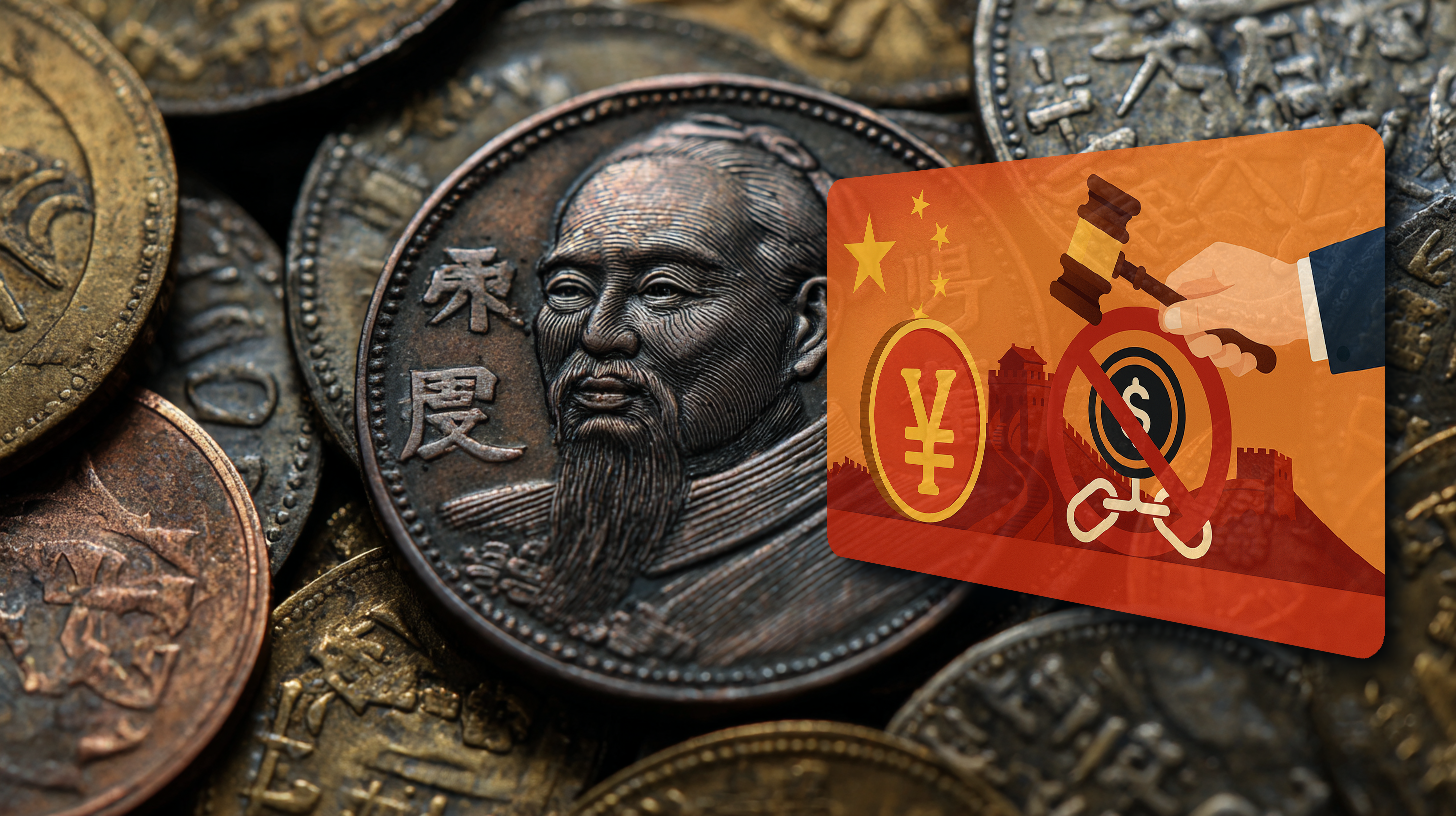
Beijing's monetary sovereignty: Why China is putting a stop to the stablecoin ambitions of tech giants – Creative image: Xpert.Digital
When tech giants become too powerful: The battle for control of the digital money of the future
Power struggle in the financial system: Who will shape the currency of tomorrow?
“Chinese Tech Giants Pause Stablecoin Plans After Beijing Intervenes” – this headline marks far more than just another regulatory intervention in China’s tightly controlled financial sector. It reveals a fundamental conflict that will shape the global financial architecture of the coming decades: Who holds the ultimate right to create money – sovereign states or private technology companies? When the People’s Bank of China and the Cyberspace Administration of China ordered companies like Ant Group and JD.com to put their plans to issue stablecoins in Hong Kong on hold in October 2025, Beijing sent an unmistakable message. The episode offers unprecedented insight into China’s strategic calculations between technological innovation, monetary sovereignty, and the struggle for global currency dominance in an increasingly digitalized world economy.
This analysis examines the multifaceted economic, geopolitical, and systemic dimensions of this development. It first illuminates the historical roots of China's ambivalent relationship with fintech innovation, then analyzes the complex market mechanisms and constellations of actors in the global stablecoin ecosystem, assesses the current situation using quantitative indicators, and situates China's intervention within an international comparative framework. Finally, it discusses the long-term strategic implications for the global monetary order, digital payment systems, and the power dynamics between states and technology companies.
Historical roots: From fintech enthusiasm to a regulatory turnaround
The history of China's handling of digital financial innovation is one of spectacular successes, dramatic reversals, and increasing state control. To understand the current intervention against private stablecoins, one must look back to the early 2010s, when China rose to become the global spearhead of the fintech revolution.
Between 2010 and 2020, China experienced an unprecedented expansion of digital payment systems. Alipay, originally founded in 2004 as a payment processor for Alibaba's e-commerce platform Taobao, and WeChat Pay, launched in 2013 as an extension of the messaging app WeChat, transformed the country's entire payments landscape within just a few years. By 2025, these two platforms together controlled over 90 percent of the Chinese mobile payment market, with Alipay holding a market share of approximately 53 percent and WeChat Pay around 42 percent. Transaction volumes reached dizzying heights: Alipay alone processed an estimated US$20.1 trillion in transactions in 2025.
This development was initially welcomed and promoted by the Chinese authorities. Digital payment systems increased financial inclusion in rural areas, reduced transaction costs, and created an efficient, cashless payment ecosystem. Mobile payment penetration reached over 85 percent in urban areas and around 65 percent in rural regions. However, with the growing dominance of private fintech giants, the central government's concerns also increased.
The turning point came in November 2020 when Chinese regulators halted Ant Group's planned initial public offering (IPO) at the last minute. The $37 billion IPO would have been the largest in history. But just two days before the scheduled listing, the Shanghai Stock Exchange and the Hong Kong Stock Exchange suspended the offering. Officially, the decision was attributed to "significant changes in the regulatory environment for financial technology." In reality, just days earlier, Alibaba founder Jack Ma had sharply criticized China's financial system at a financial conference in Shanghai, calling traditional banks "pawnshops" that only lend money to companies that don't need it. Moreover, Ma denounced the regulatory standards as stifling innovation and argued that China did not have a "systemic financial risk problem" but rather suffered from a "lack of system.".
What followed was a comprehensive regulatory offensive against China's tech sector, which continues to this day. Between 2020 and 2023, authorities forced Ant Group to undergo a fundamental restructuring that reduced Jack Ma's voting rights from over 50 percent to 6.2 percent. In July 2023, regulators imposed fines of 7.123 billion yuan on Ant Group and 2.99 billion yuan on Tencent for violations of consumer protection, anti-money laundering, and other regulations. Alibaba itself had already received a record fine of $2.75 billion in 2021 for alleged monopolistic practices.
In parallel, China intensified its efforts to develop its own state-controlled digital currency. The People's Bank of China began research on the digital yuan, the e-CNY, as early as 2014. By 2025, the digital yuan had reached a user base of approximately 260 million people and a cumulative transaction volume of 7.3 trillion yuan. Unlike private cryptocurrencies, the e-CNY allows the central bank complete monitoring and control over money flows, programmable monetary policy, and direct intervention capabilities.
This historical development illustrates a fundamental paradigm shift: While China largely gave free rein to private innovation in the fintech sector during the 2010s, the leadership has since recognized that the unchecked dominance of private actors in payment systems and money creation could threaten monetary sovereignty and financial stability. The recent intervention against stablecoin plans is the logical continuation of this about-face.
Systemic drivers: Actors, incentives and power relations in the digital currency system
Beijing's decision to suppress private stablecoin initiatives is deeply rooted in the structural dynamics and power constellations of the global digital currency system. To understand the underlying economic mechanisms, we must analyze the key players, their incentive structures, and the systemic interactions.
The primary actors can be divided into four categories: firstly, sovereign central banks and regulatory authorities; secondly, private technology companies and fintech firms; thirdly, financial institutions; and fourthly, end users. Each group of actors pursues different, often conflicting, objectives.
Central banks like the People's Bank of China prioritize monetary sovereignty, financial stability, and macroeconomic governance. Monetary policy transmission only works if the central bank controls the money supply and can effectively set interest rates. Private stablecoins circulating alongside state currencies could undermine this control. As one insider familiar with the regulatory discussions told the Financial Times, "The central regulatory concern is who has the ultimate right to coinage – the central bank or private companies operating in the market?"
For technology companies like Ant Group and JD.com, stablecoins represent a logical extension of their business models. With hundreds of millions of users on their digital platforms, they could establish stablecoins as an efficient means of payment for cross-border trade, e-commerce, and financial services. The economic incentives are considerable: Stablecoin issuers generate income from the interest earned on the deposited reserves. Tether, the world's largest stablecoin issuer, earned a profit of $4.9 billion in the second quarter of 2025. Circle, issuer of the second-largest stablecoin, USDC, earned $251 million during the same period. With a total market volume exceeding $300 billion in 2025, the stablecoin market is a lucrative business.
The geopolitical dimension further amplifies this dynamic. With the passage of the GENIUS Act in July 2025, the US established a comprehensive regulatory framework for stablecoins. The law allows licensed issuers to issue dollar-based stablecoins with full reserve backing and regular audits. This regulatory clarity significantly accelerated the growth of dollar-denominated stablecoins. Tether (USDT) dominates with a market share of approximately 58 percent and a supply of $173 billion, followed by USDC with $74 billion and a 25.5 percent market share. Together, these two dollar-denominated stablecoins control over 80 percent of the global stablecoin market.
For China, this dollar dominance in the emerging digital currency system poses a strategic threat. Wang Yongli, former vice president of the Bank of China, warned that China should establish an offshore-based renminbi stablecoin system to compete with the growing dominance of dollar-based stablecoins. Huang Yiping, an advisor to the People's Bank of China, argued that Hong Kong could be well-positioned to pioneer the issuance of offshore renminbi stablecoins. The logic is compelling: stablecoins could accelerate the internationalization of the renminbi by providing an efficient, low-cost alternative for cross-border payments.
But this is precisely where Beijing faces a dilemma. While renminbi stablecoins could theoretically increase the global reach of the Chinese currency, they also pose significant risks to China's rigid capital controls. China maintains one of the strictest capital control systems in the world. Companies, banks, and individuals can only transfer money abroad under strict conditions. Private individuals are limited to exchanging a maximum of US$50,000 into foreign currency annually. These controls are essential for China's macroeconomic stability, prevent capital flight, and allow the government to manage the exchange rate.
Stablecoins, inherently borderless and programmed for seamless international transfers, could circumvent these control mechanisms. Even if stablecoins were issued only offshore in Hong Kong, there would be a risk that mainland Chinese could exploit technical loopholes to gain access and move capital out of the country. Zhou Xiaochuan, former governor of the People's Bank of China, warned of the systemic risks of speculative stablecoin use at a closed financial forum in August 2025 and questioned their real utility for payments. His intervention marked a significant shift in sentiment within China's financial circles.
Another key mechanism is the network dynamics of digital payment systems. Money works best when it is universally accepted—everyone uses a particular currency because everyone else does too. These network effects lead to natural monopolies or duopolies. The success of Alipay and WeChat Pay is based precisely on this mechanism: with hundreds of millions of users and near-universal merchant acceptance, they have become virtually indispensable. The same logic applies to stablecoins. USDT and USDC are dominant because they are available on over 25 different blockchains, accepted by virtually all exchanges, and held by over 109 million wallets. A newly introduced renminbi stablecoin would first have to establish these network effects—a significant barrier to market entry.
At the same time, the concentration of issue among a few private issuers carries systemic risks. The collapse of the algorithmic stablecoin TerraUSD (UST) in May 2022 wiped out approximately $45 billion in market value within a week and triggered panic across the entire crypto market. UST lost its peg to the dollar as large investors withdrew massive amounts of capital, triggering a downward spiral: The attempt to restore UST parity by minting new LUNA tokens led to hyperinflation in LUNA and ultimately caused both currencies to collapse. This episode vividly demonstrated how fragile inadequately backed stablecoins are and the contagion effects that can result from their collapse.
The Terra crash served as a warning signal for regulators worldwide. The European Commission responded with the Markets in Crypto-Assets Regulation (MiCA), which has been fully applicable since December 2024 and imposes strict requirements on reserve backing, transparency, and governance for stablecoin issuers. Hong Kong introduced its own comprehensive regulatory regime for stablecoins in August 2025, requiring issuers to have full reserve backing, minimum equity capital of HK$25 million, and regular audits.
Against this background, Beijing's intervention must be understood as an attempt to maintain control over the financial system, minimize systemic risks and protect monetary sovereignty – even if this means foregoing potential benefits for the internationalization of the renminbi.
Our China expertise in business development, sales and marketing

Our China expertise in business development, sales and marketing - Image: Xpert.Digital
Industry focus areas: B2B, digitalization (from AI to XR), mechanical engineering, logistics, renewable energies and industry
More information here:
A thematic hub offering insights and expertise:
- Knowledge platform covering global and regional economies, innovation and industry-specific trends
- A collection of analyses, insights, and background information from our key areas of focus
- A place for expertise and information on current developments in business and technology
- A hub for companies seeking information on markets, digitalization, and industry innovations
Why Dollar Stablecoins Will Dominate the Global Monetary Order in 2025
The current situation: indicators, data and structural tensions
The current situation in October 2025 is characterized by fundamental tensions between various trends: rapid growth of the global stablecoin market, increasing regulatory clarity in Western jurisdictions, China's push with the digital yuan, and now the abrupt intervention against private stablecoin plans.
Quantitatively, the global stablecoin market reached new highs in 2025. The total supply exceeded $300 billion for the first time, driven by institutional adoption and regulatory clarity. In August 2025 alone, Tether generated weekly revenues of $149 million, while Circle earned $49 million. These figures illustrate the economic significance of the business model.
Dollar-denominated stablecoins dominate with a combined market share of approximately 85 percent. USDT is the undisputed market leader with a 58 percent share, followed by USDC with 25.5 percent. Other stablecoins, such as Ethena's USDe, reach only 5 percent. This concentration on the dollar solidifies its role as the dominant international currency, even in the digital age. According to Federal Reserve data, the US dollar accounted for about 58 percent of global foreign exchange reserves in 2024—a share that has remained remarkably stable since 2022 despite US sanctions against Russia.
In contrast, the renminbi's international role is modest. Despite years of internationalization efforts, the renminbi accounts for only about 2 to 3 percent of global foreign exchange reserves and ranks only sixth in international payments. In June 2025, the renminbi's share of global payments was 2.88 percent, significantly behind the dollar at 47 percent and the euro at 23 percent. In some months, the renminbi even slipped to sixth place, behind the Japanese yen.
China's digital yuan, while showing growth, remains a niche product. With 260 million users and cumulative transactions of 7.3 trillion yuan, the figures initially sound impressive. However, compared to Alipay and WeChat Pay, which together processed a transaction volume of approximately US$70 trillion in 2023, its limited reach becomes clear. The e-CNY accounted for only 0.16 percent of China's money supply (M0) in June 2023. Less than a fifth of the Chinese population appears to have used the new currency, often motivated by government incentives or mandates. Data privacy concerns and the dominance of established payment platforms hinder wider adoption.
Against this backdrop, the stablecoin plans of Chinese tech companies were quite understandable. Hong Kong had introduced its stablecoin licensing regime in August 2025, creating a regulatory framework that, in principle, enabled issuance. Over 40 companies were said to have already expressed interest in obtaining licenses. Ant Group and JD.com were both interested in Hong Kong's pilot program in the summer of 2025 or were planning to issue tokenized financial products such as digital bonds. Some sources reported that both companies intended to issue Hong Kong dollar-pegged stablecoins.
The intervention came abruptly. In October 2025, Ant Group and JD.com received instructions from the People's Bank of China and the Cyberspace Administration of China to pause their stablecoin ambitions. At the same time, Beijing reportedly instructed brokers and think tanks to cease promoting stablecoins. A report by the Chinese financial publication Caixin about Beijing's restrictions on Hong Kong's stablecoin activities was deleted shortly after publication, raising doubts about its credibility.
In parallel, China's securities regulator ordered several local brokers to pause their real-world asset tokenization activities in Hong Kong, signaling Beijing's growing unease about the rapid expansion of offshore digital asset initiatives. These actions contrast with concurrent tokenization successes: CMB International Asset Management, a Hong Kong subsidiary of China Merchants Bank, tokenized its $3.8 billion money market fund on the BNB Chain in October 2025.
These contradictions highlight Beijing's dilemma: On the one hand, China wants to profit from blockchain innovation and Hong Kong's attractiveness as a fintech hub. On the other hand, the leadership fears losing control over money creation and capital flows. The solution appears to be a strictly controlled two-track strategy: state-controlled innovation (e-CNY, selected tokenization projects of state institutions) is promoted, while private initiatives that could gain systemic importance are suppressed.
Another important indicator is the development of cross-border payment systems. China is promoting alternatives to the dollar-dominated SWIFT system with the Cross-Border Interbank Payment System (CIPS) and the mBridge project. In 2024, CIPS processed transactions worth 175 trillion yuan, a 43 percent increase year-on-year. The mBridge project, a collaboration between the People's Bank of China, the Hong Kong Monetary Authority, the Bank of Thailand, the Central Bank of the United Arab Emirates, and the Bank for International Settlements, enables direct cross-border CBDC transactions without traditional correspondent banks. Tests showed a reduction in transaction costs of 50 to 70 percent and a speedup from days to seconds. By July 2025, the Bank of China in Hong Kong had processed nearly 200 transactions via mBridge, with a volume of over HK$11 billion, 80 percent of which was in renminbi.
These infrastructure investments demonstrate China's long-term strategy: building a parallel, state-controlled digital payment system that promotes the internationalization of the renminbi without jeopardizing monetary sovereignty. Private stablecoins do not fit into this strategy, as they would undermine central bank control.
Diverging Paths: Regulatory Models in International Comparison
A comparative look at different regulatory approaches in key jurisdictions reveals fundamentally different philosophies in dealing with stablecoins and highlights the peculiarities of the Chinese position.
With the GENIUS Act, passed in July 2025, the US established a market-oriented yet regulated framework. The law permits various entities to issue stablecoins: subsidiaries of insured deposit institutions, non-banks licensed by the Office of the Comptroller of the Currency, and government-licensed issuers with issues up to $10 billion. Issuers must back stablecoins one-to-one with US dollars or low-risk assets such as US Treasury securities and are subject to regular audits and anti-money laundering regulations. Approved stablecoins are not considered securities or commodities and are therefore not subject to SEC or CFTC oversight. This regulatory clarity has significantly accelerated the growth of dollar-based stablecoins and cemented their dominance in the global market.
The underlying philosophy is clear: The US is using stablecoins as a tool to solidify dollar hegemony in the digital age. As economist Barry Eichengreen argues, currencies are often used in commerce first before becoming reserve currencies. Dollar-based stablecoins already fulfill this function in large parts of the crypto economy and are now expanding into cross-border payments.
With its MiCA regulation, the European Union is pursuing a more comprehensive, but also more restrictive, approach. Fully applicable since December 2024, MiCA covers not only stablecoins but all crypto assets and establishes harmonized rules for the entire EU. The regulation categorizes crypto assets into asset-referenced tokens, e-money tokens, and other crypto assets. Particularly stringent requirements apply to "significant stablecoins" that could pose systemic risks. Issuers must meet comprehensive transparency, governance, and reserve management standards. The EU thus prioritizes consumer protection, financial stability, and the prevention of market abuse, even if this may create barriers to innovation.
Hong Kong is positioning itself as a bridge between Eastern and Western approaches. The Stablecoins Ordinance, which came into effect on August 1, 2025, establishes a licensing regime for fiat-pegged stablecoins. Issuers must hold HK$25 million in equity, HK$3 million in liquid assets, and additional liquid assets to cover 12 months of operating expenses. Reserve assets must be fully segregated, highly liquid, and match the nominal value of the circulating stablecoins. Repayments must be made within one business day. Hong Kong's model is stricter than Singapore's but more flexible than EU regulations and aims to establish the city as a global hub for regulated stablecoin innovation.
Singapore pursues a tiered, market-oriented approach under its Payment Services Act. The Monetary Authority of Singapore regulates single-currency stablecoins, with specific requirements for tokens pegged to the Singapore dollar or G10 currencies. Reserve requirements are similar to those in Hong Kong, but Singapore allows a redemption period of up to five business days instead of one. Capital requirements are significantly lower at 1 million Singapore dollars compared to Hong Kong's 25 million. Singapore prioritizes market flexibility and fosters innovation, but also accepts higher risks.
China stands in fundamental contrast to all these approaches. The mainland completely prohibits cryptocurrency trading and mining. Stablecoins are considered virtual goods, not legal tender. Courts have recognized crypto as property for civil purposes, but commercial activities remain prohibited. Financial institutions are required to block crypto-related transactions and report suspicious activity. The philosophy is clear: complete state control over money creation and payment transactions.
The recent intervention against stablecoin plans in Hong Kong illustrates that Beijing intends to enforce this control even in the special administrative region, despite Hong Kong's theoretically high degree of autonomy. The "one country, two systems" principle stipulates that Hong Kong can pursue its own economic and monetary policies. However, on issues of potentially systemic importance to the mainland, Beijing is increasingly demonstrating a willingness to restrict this autonomy.
The comparison reveals two fundamentally different worldviews. Western jurisdictions see stablecoins as innovations that can be contained through appropriate regulation to manage both benefits (efficiency, financial inclusion, technological leadership) and risks (systemic instability, money laundering, consumer protection). China, on the other hand, views private digital currencies as an existential threat to monetary sovereignty and social control. This divergence will shape the global digital currency landscape for years to come.
Critical risks: Systemic distortions and unresolved conflicts of objectives
The suppression of private stablecoin initiatives in China poses significant risks for both the country itself and the global financial system, revealing fundamental conflicts of objectives that cannot be easily resolved.
For China, the most obvious risk is falling behind in the global race for digital currency systems. While the US is aggressively promoting dollar-denominated stablecoins with the GENIUS Act and accelerating their global adoption, China is drastically limiting its own options. The renminbi already accounts for only 2 to 3 percent of global payments and reserves. Without innovative digital payment solutions that simplify cross-border transactions, the internationalization of the renminbi will continue to stall. As Wang Yongli, former vice president of the Bank of China, warned, if China cannot compete with dollar-denominated stablecoins in terms of payment efficiency and clearing costs, progress in the international use of the renminbi will remain limited.
A second risk lies in the stifling of innovation. China's tech sector has developed tremendous momentum over the past two decades. Companies like Ant Group and Tencent pioneered digital payment systems that transformed the daily lives of over a billion people. Continued regulatory repression could permanently damage this innovative capacity. Talented developers and entrepreneurs might migrate to more liberal jurisdictions. Venture capital might withdraw. The long-term economic damage from the loss of innovation could outweigh the short-term benefits of increased control.
Third, there is a fundamental conflict of objectives between capital controls and currency internationalization. To become a truly international currency, the renminbi must be freely convertible and tradable. However, this very convertibility would undermine China's ability to control capital flows and ensure financial stability. Economists have described this trilemma as the "impossible trinity": a country cannot simultaneously maintain a fixed exchange rate policy, free capital mobility, and an independent monetary policy. China has opted for capital controls and monetary autonomy, which fundamentally limits currency internationalization.
The intervention against stablecoins exacerbates this conflict of objectives. Offshore renminbi stablecoins could theoretically be a middle ground: they would operate outside the mainland but could promote the international use of the renminbi. However, as Zhou Xiaochuan warned, the risks are difficult to control. Even with IP blocking and other technical restrictions, mainland Chinese could find ways to access offshore stablecoins and move capital out of the country.
From a global perspective, China's intervention cements dollar dominance in the digital currency system. With dollar-denominated tokens accounting for 85 percent of the global stablecoin market and the US providing regulatory clarity, the dollar will further solidify its position as the dominant digital reserve currency. Economists and regulators have repeatedly emphasized that the factors supporting dollar dominance—the size of the US economy, financial market liquidity, the rule of law, military alliances, and network effects—remain effective in the digital age.
Another systemic risk is the concentration of market power among a few private issuers. Tether and Circle control over 80 percent of the stablecoin market. This concentration creates potentially systemic risks. Should one of these issuers collapse—whether through mismanagement, reserve problems, or external shocks—contagion effects could spread to the entire financial system. The Terra crash of 2022 was a foretaste of such risks. In October 2025, the European Systemic Risk Board warned of “elevated” risks in the stablecoin sector due to geopolitical uncertainty and multi-jurisdictional structures. Without international regulatory coordination, these risks could increase further.
Furthermore, there is a risk that stablecoins will be misused for illegal activities. Their pseudonymous nature on public blockchains and the ability to circulate in self-custodial wallets make Know Your Customer (KYC) controls more difficult. Mixer services can obscure transactions. The Bank for International Settlements warned in its 2025 annual report that stablecoins are attractive to criminal and terrorist organizations because they can circumvent integrity safeguards. While analytics firms are working with law enforcement, this approach does not scale for the billions of everyday transactions.
Ultimately, there is a fundamental philosophical conflict: Who should have the power to create money? Historically, this has been a state monopoly or at least a heavily regulated privilege. Stablecoins represent a partial privatization of money creation. As one commentator aptly put it: “Money is not a private commodity. It is a public institution that constitutes a social contract guaranteed by the state. When private corporations create quasi-currencies, they are effectively privatizing part of that social contract.” The Chinese government has accepted this logic and acted accordingly. Western democracies face the challenge of finding a balance between innovation and public control—a balance that has yet to be convincingly achieved.
🎯🎯🎯 Benefit from Xpert.Digital's extensive, five-fold expertise in one comprehensive service package | BD, R&D, XR, PR & Digital Visibility Optimization

Benefit from Xpert.Digital's extensive, five-fold expertise in a comprehensive service package | R&D, XR, PR & Digital Visibility Optimization - Image: Xpert.Digital
Xpert.Digital possesses in-depth knowledge across various industries. This allows us to develop tailored strategies precisely aligned with the requirements and challenges of your specific market segment. By continuously analyzing market trends and monitoring industry developments, we can act proactively and offer innovative solutions. The combination of experience and expertise generates added value and provides our clients with a decisive competitive advantage.
More information here:
Beijing's coup against stablecoins: Turning point in the monetary system
Scenarios of the global digital monetary order
The medium-term development paths of the global digital monetary order depend on multiple, sometimes unpredictable, variables. Nevertheless, several plausible scenarios can be outlined based on current trends and structural dynamics.
Scenario 1: Dollar Hegemony in the Digital Age
In this scenario, dollar-denominated stablecoins further consolidate their dominance. Regulatory clarity in the US through the GENIUS Act attracts institutional investors and companies. Tether and Circle expand their market share, while new issuers—potentially large banks like JPMorgan—also issue dollar stablecoins. Network effects intensify: the more users and merchants accept dollar stablecoins, the more attractive they become to further participants. Within five to ten years, dollar stablecoins could become a dominant medium for cross-border payments and an on-ramp for digital assets. The market could grow to $2 trillion by 2028, according to some analysts. China remains confined to its digital yuan, whose international use remains marginal. The renminbi stagnates at 2 to 3 percent of global payments. The US leverages its digital currency dominance as a geostrategic tool, much like it uses the SWIFT system.
Scenario 2: Multipolar digital currency system
In this scenario, the landscape diversifies. Alongside dollar stablecoins, euro stablecoins (supported by MiCA regulation), renminbi offshore stablecoins in select regions, and potentially stablecoins in other currencies such as the pound sterling or Swiss franc will establish themselves. Different currency blocs will utilize different stablecoins: Europe will be dominated by euro stablecoins, Southeast Asia will increasingly use renminbi stablecoins for trade with China, while the dollar will remain dominant in global markets. The European Central Bank could intensify its efforts to give the euro a more prominent role, as ECB President Christine Lagarde has indicated. The Bank for International Settlements and multilateral platforms like mBridge enable interoperable cross-border CBDC transactions. This scenario would bring more competition and potentially greater efficiency, but also fragmentation and increased complexity.
Scenario 3: CBDC Dominance
In this scenario, state-issued central bank digital currencies (CBDCs) prevail over private stablecoins. China aggressively expands the digital yuan, making it the mandatory means of payment for government transactions, social benefits, and increasingly, the private sector. Other central banks—the European Central Bank with the digital euro, potentially the Federal Reserve, the UK, and Japan—launch their own CBDCs. These state-issued digital currencies offer advantages: direct control by central banks, no private intermediaries, programmable monetary policy, and robust security. Regulators could increasingly restrict private stablecoins to promote CBDCs. The irony would be that China's authoritarian approach—total control over digital money—becomes the global model, albeit for different reasons in different countries.
Scenario 4: Fragmentation and Instability
In this pessimistic scenario, the proliferation of unregulated or weakly regulated stablecoins leads to repeated crises. Following the Terra crash, further stablecoins collapse, triggered by reserve problems, bank runs, or external shocks. Regulators respond with fragmented, incoherent measures that stifle innovation without guaranteeing stability. Geopolitical tensions lead to "currency wars" in the digital space, with competing stablecoin systems separated by mutual sanctions and technical incompatibilities. Users and businesses suffer from high uncertainty, volatility, and a lack of interoperability. Overall, trust in digital currencies declines.
Interoperability, regulation, trust: The three levers of digital currencies
Which scenario is most likely depends on several critical factors: First, the ability and willingness of international institutions and regulators to develop coordinated standards. The Financial Stability Board has issued recommendations for global stablecoins, but their implementation varies considerably. Second, geopolitical developments. Increasing tensions between the US and China, the EU's stance on digital sovereignty, and the position of emerging markets will be crucial. Third, technological developments. Advances in the interoperability, scalability, and security of blockchain systems could increase the appeal of digital currencies. Fourth, public trust. Repeated crises or cases of abuse could undermine confidence in private stablecoins and make government-backed solutions more attractive.
Based on current trends, a combination of scenarios 1 and 2 appears most likely: Dollar-based stablecoins will remain dominant, but other currencies, particularly the euro, will play significant roles in their respective regions. CBDCs will coexist, primarily for domestic transactions and selected cross-border corridors. China will occupy a special position: internally, a strictly controlled digital yuan system; externally, limited renminbi use via platforms like mBridge; and potentially highly regulated offshore stablecoins in select partner markets.
In the long term, over a time horizon of 20 to 50 years, disruptive technologies or fundamental geopolitical shifts could render these scenarios obsolete. Quantum computers could threaten existing cryptography systems and necessitate entirely new security paradigms. Decentralized autonomous organizations and algorithmic governance systems could give rise to alternative forms of money that elude state control. Climate change, pandemics, or geopolitical conflicts could fundamentally reshape the global economic order and thus redefine monetary systems.
One thing is certain: Beijing's decision in October 2025 to block private stablecoin initiatives was a significant turning point that will shape the fundamental tension between innovation and control, between global integration and national sovereignty, and between private and state power over money for years to come.
Strategic decisions: The reorganization of monetary power
Beijing's intervention against private stablecoin plans by Chinese tech giants in October 2025 is far more than an isolated regulatory event. It marks a defining moment in the struggle over the architecture of the global financial system in the 21st century. Analysis has shown that this decision is deeply rooted in historical experience, structural economic constraints, geopolitical calculations, and fundamental questions about the nature of money and state sovereignty.
The key findings can be summarized in five theses:
First: Monetary sovereignty as the non-negotiable core of state power
The Chinese leadership has unequivocally signaled that control over money creation and payment systems is a red line that even powerful private actors must not cross. Historical precedents—the halted Ant IPO in 2020, the billions in fines levied against tech companies, and the enforcement of restructurings—demonstrate a consistent course. This position is not irrational. Uncontrolled private money creation could undermine monetary policy transmission, circumvent capital controls, and create systemic instability. The theoretical basis of this position is empirically supported by the Terra Crash of 2022, which showed how catastrophic the collapse of inadequately regulated digital currencies can be.
Secondly: The fundamentally unresolved conflict of objectives between currency internationalization and capital control
China faces a trilemma that cannot be resolved through technical finesse. To become a truly international currency, the renminbi would need to be freely convertible. However, this would undermine China's ability to control capital flows and ensure financial stability. The modest successes in renminbi internationalization—2 to 3 percent of global payments and reserves after years of effort—reflect this structural constraint. Offshore renminbi stablecoins could theoretically offer a middle ground, but carry the risk of uncontrolled capital flight. Beijing's decision not to take this risk prioritizes stability over expansion—a rational, albeit costly, choice.
Third: The consolidation of dollar hegemony in the digital age
By rejecting private stablecoins, China is foregoing a potential tool to challenge dollar dominance, while the US is doing precisely the opposite with the GENIUS Act. Dollar stablecoins already control 85 percent of the global market, and their institutional adoption is accelerating. Network effects reinforce this dominance: the more users, exchanges, and companies adopt dollar stablecoins, the more difficult it becomes for alternatives to gain a foothold. In the long term, dollar stablecoins could become the dominant medium for digital cross-border payments, positioning the US currency as centrally in the digital age as it was in the analog one.
Fourth: The growing gap between authoritarian and liberal models of digital currency systems
China pursues a model of total state control: a state-issued, centrally controlled, and comprehensively monitored digital yuan, flanked by strict bans on private cryptocurrencies and now also private stablecoins. Western democracies, on the other hand, attempt to contain innovation and market dynamics through regulation without stifling them. These diverging approaches reflect fundamentally different values and political systems. The long-term consequences are difficult to predict. Authoritarian control may guarantee stability in the short term but could stifle innovation. Liberal approaches may be more dynamic but carry higher risks of instability and abuse.
Fifth: The critical role of regulatory coordination and international standards
In a globalized, interconnected economy, isolated national regulatory approaches can create loopholes and arbitrage opportunities. The European Systemic Risk Board has warned of the risks of multi-jurisdictional stablecoin structures without coordinated standards. The Financial Stability Board has issued recommendations, but their implementation varies. Without stronger international coordination—similar to the Basel Accords in the banking sector—digital currency systems could remain fragmented, inefficient, and unstable.
The strategic implications for various stakeholder groups are significant
For policymakers, the fundamental challenge lies in navigating the tension between innovation and control. An overly restrictive approach risks stifling innovation and a decline in global influence. An overly permissive approach risks systemic instability and loss of control over critical infrastructure. The optimal path likely lies in thoughtful, adaptive regulation that sets clear rules but allows room for experimental learning. The approaches of Singapore and Hong Kong—regulatory sandboxes, tiered licensing systems, and close collaboration between regulators and industry—may offer viable models.
For business leaders, particularly in the fintech and technology sectors, this episode serves as a reminder of the limits of private power. Even the largest, most innovative companies operate within a framework of state sovereignty. Strategic planning must centrally address regulatory risks. At the same time, the diverging regulatory approaches of different jurisdictions present opportunities: companies can engage in "regulatory shopping" and operate in more favorable environments, provided they manage the risks of cross-border compliance.
For investors, this development signals both risks and opportunities. Dollar-denominated stablecoins, particularly those from well-capitalized, regulated issuers like Circle, are likely to continue growing. Investments in infrastructure for digital payment systems—blockchain protocols, custody solutions, compliance technology—should offer attractive returns. At the same time, significant risks remain: regulatory uncertainty in many jurisdictions, potential stablecoin collapses, and geopolitical tensions. A diversified, risk-based strategy is advisable.
The long-term significance of China's intervention against private stablecoins will depend on how the tension between state sovereignty and technological innovation develops globally. Should authoritarian control models prove superior—whether through greater stability, more effective enforcement of monetary policy objectives, or other advantages—more countries could follow China's example. Conversely, should more liberal models prove convincing through greater innovation, stronger economic growth, and wider international acceptance, China might be forced to reconsider its position.
One thing is certain: the struggle for control over digital money has only just begun. It will shape the coming decades and raise fundamental questions about power, sovereignty, and the organization of modern societies. Beijing's decision in October 2025 was an important move in this game – but the endgame is far from over.
Your global marketing and business development partner
☑️ Our business language is English or German
☑️ NEW: Correspondence in your native language!

Konrad Wolfenstein
I and my team are happy to be available to you as your personal advisor.
You can contact me by filling out the contact form here wolfenstein@xpert.digital:or simply call me at +49 7348 4088 965. My email address is
I'm looking forward to our joint project.