What are Power Purchase Agreements (PPAs)? – Economical operation of renewable energy plants without EEG subsidies – Image: Xpert.Digital
What are Power Purchase Agreements (PPAs)? – Economical operation of renewable energy plants without feed-in tariffs
PPAs: A key to the economic independence of electricity generation
In Germany, renewable energy generation plants are increasingly being operated economically outside the traditional EEG subsidy scheme through so-called Power Purchase Agreements (PPAs). These long-term electricity supply contracts between producers and consumers enable predictable financing and represent an important alternative to government subsidies.
Related to this:


What are Power Purchase Agreements?
Power Purchase Agreements (PPAs) are long-term electricity supply contracts between the operator of a renewable energy plant (seller) and an electricity consumer (buyer). These contracts stipulate all commercial terms for the electricity supply, including the price, the delivery volume, the contract duration, and other conditions such as the transfer of Guarantees of Origin. The contracts typically have a term of between 5 and 20 years, although in practice, terms of 5 to 10 years are frequently agreed upon.
Power Purchase Agreements (PPAs) enable the financing and operation of solar power plants without the German Renewable Energy Sources Act (EEG). While previously large-scale photovoltaic (PV) plants could only be operated economically with EEG subsidies, operators can now use PPAs to conclude a direct electricity supply contract, whereby the generated electricity is delivered directly to the consumer.
Types of Power Purchase Agreements
Depending on their design, different types of PPAs can be distinguished:
Physical PPAs
With physical PPAs, there is an actual delivery of electricity from the producer to the consumer. The electricity is delivered directly from the plant operator to the consumer, which is particularly attractive for companies with high energy demands.
Synthetic or virtual PPAs
In synthetic PPAs, producers and consumers agree on a fixed price per kWh without the electricity being physically delivered. Instead, it is included in the balancing group of an energy service provider and traded on the power exchange. An additional contract, the "Contract for Difference," provides for compensation payments should the market prices achieved deviate from the agreed PPA price.
Corporate PPAs
These contracts are concluded directly between plant operators and companies as end consumers. Large technology companies like Google, Facebook, and Microsoft have been instrumental in bringing this model to Europe. It enables companies to meet their electricity needs directly from renewable sources.
Economic aspects of PPAs
For plant operators
PPAs offer plant operators crucial economic advantages:
- Predictable revenues: Through long-term fixed prices, PPAs create a secure basis for calculation for operators and investors.
- Risk hedging: The long-term contracts make plant operators less dependent on volatile electricity market prices and thus reduce operational risk.
- Financing advantages: The secured revenues increase creditworthiness and can lead to lower capital costs, which improves the profitability of the projects.
- Marketing of certificates of origin: Plant operators can sell the valuable certificates of origin in addition to the electricity, generating additional revenue.
For plant operators, the right time for price fixing is of great importance, as the price depends heavily on the time of contract conclusion.
For electricity consumers
PPAs also offer significant economic advantages for the customers:
- Long-term price security: Companies protect themselves against price fluctuations on the electricity market and gain planning security regarding their energy costs.
- Sustainability strategy: Sourcing electricity from renewable energy sources with certificates of origin enables companies to improve their CO2 balance and achieve sustainability goals.
- Independence from market fluctuations: Companies minimize the risk of rising energy prices and protect themselves against price spikes in the electricity market.
- Branding benefits: Companies can position themselves as a sustainable brand and demonstrably prove this.
Related to this:

Use cases for PPAs in Germany
In Germany, two main application areas for PPAs have developed:
Continued operation of post-EEG plants
Since 2021, the first plants have been losing their 20-year feed-in tariffs under the German Renewable Energy Sources Act (EEG). Power Purchase Agreements (PPAs) offer these plants a way to secure follow-up financing and ensure their continued economic viability. PPAs guarantee that operating costs (maintenance, lease payments) can be covered even without government subsidies.
An example of this is the contract between Engie and Google, which allows the continued use of 22 wind farms in five federal states after the end of the EEG subsidy.
Financing of new plants without EEG subsidies
Power purchase agreements (PPAs) are increasingly enabling the financing and construction of new plants without government subsidies. This is particularly relevant for large-scale ground-mounted photovoltaic systems or wind farms that do not receive feed-in tariffs.
The long-term purchase agreements provide the necessary investment security, which would otherwise be guaranteed by government subsidies.
Market development in Germany
The PPA market in Germany is growing steadily. Corporate PPAs account for the largest share of this market growth and remain the most important market segment. Demand for PPAs from companies currently exceeds the supply of available projects.
The most important customer sectors are information technology (especially for data centers), raw materials and telecommunications, which together account for more than half of the PPA volume on the customer side.
In 2023, the first PPAs for the production of green hydrogen in Germany were also signed, opening up new market opportunities.
Challenges in implementing PPAs
Despite the advantages, there are also challenges:
- Complex contract drafting: A standardized contract adapted to the specific characteristics of the German market is currently lacking. Commercial and legal details must be negotiated individually, making preparation complex and time-consuming.
- Long-term commitment: The long contract durations represent a significant commitment for both parties.
- Price risks: Depending on the contractual situation, price risks can arise if market prices develop differently than expected.
Why Power Purchase Agreements accelerate the energy transition
Power Purchase Agreements (PPAs) have established themselves as a promising instrument for the economically viable operation of renewable energy plants outside of the feed-in tariff system. They offer significant economic advantages to both plant operators and electricity consumers and drive the expansion of renewable energies. With the phasing out of feed-in tariffs for more and more existing plants and the goal of a faster energy transition, PPAs are likely to gain further importance in the coming years and become a central element of the energy transition in Germany.
Related to this:
Innovative photovoltaic solution for cost reduction (up to 30%) and time savings (up to 40%)

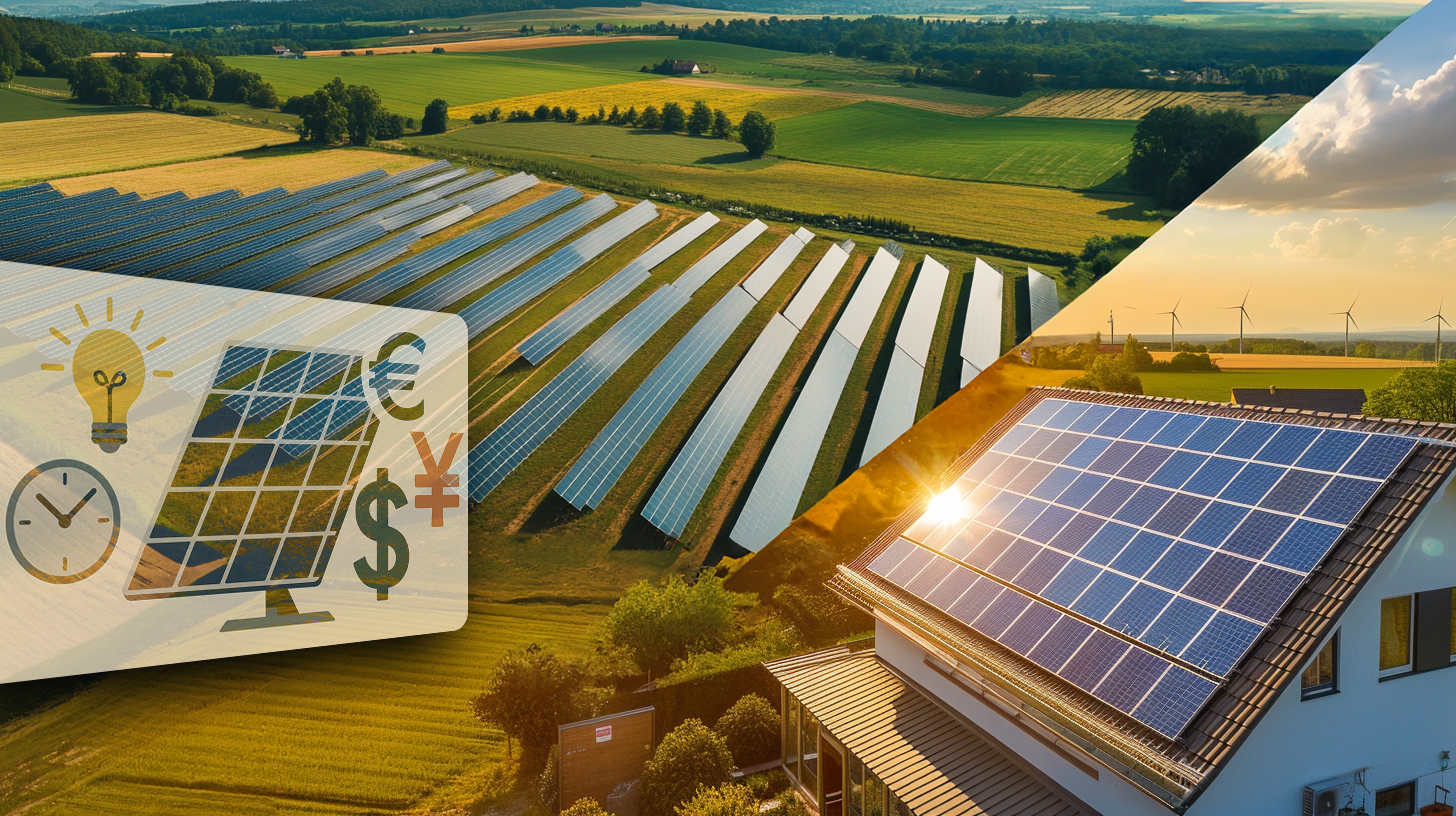
Innovative photovoltaic solution for cost reduction and time savings - Image: Xpert.Digital
More information here:
Your partner for business development in the fields of photovoltaics and construction
From industrial rooftop PV to solar parks and larger solar parking lots
☑️ Our business language is English or German
☑️ NEW: Correspondence in your native language!

Konrad Wolfenstein
I and my team are happy to be available to you as your personal advisor.
You can contact me by filling out the contact form here wolfenstein@xpert.digital:or simply call me at +49 7348 4088 965. My email address is
I'm looking forward to our joint project.