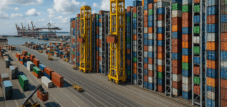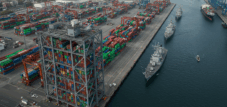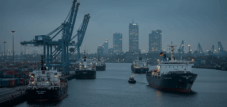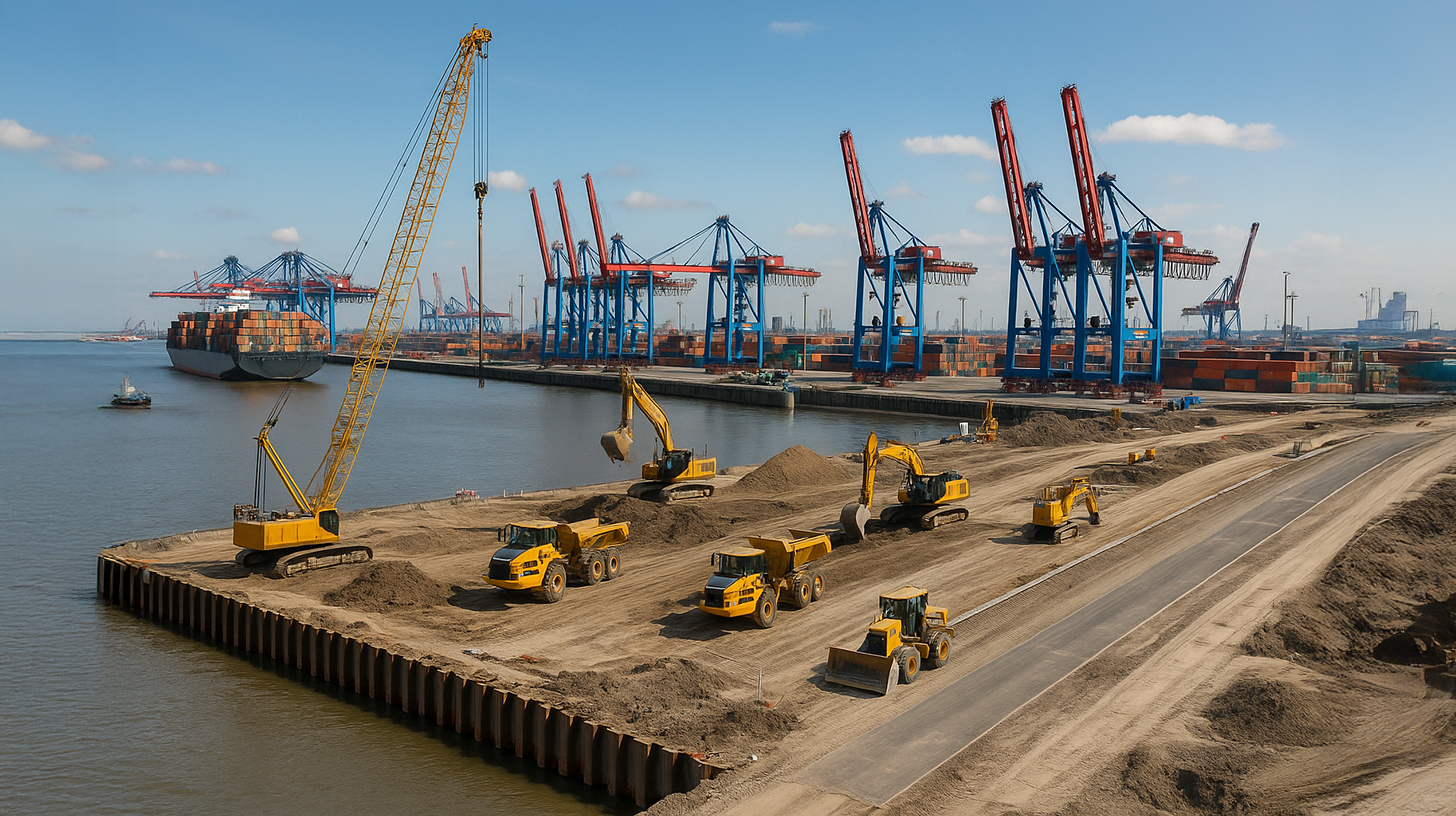
Mega-port or green Elbe forest? Port expansion in Hamburg: A comprehensive project to secure the future of the container port – Creative image: Xpert.Digital
Eurogate Container Terminal | Robots, AI and new giant ships: This is how Hamburg wants to conquer Europe's top port
### Mega-port or green Elbe forest? Hamburg's most controversial project divides the city ### Noise, light & lost green space: What the port expansion really means for residents along the Elbe ### Port only 60% utilized? Why Hamburg is still expanding for 2 billion euros ### Billion-euro project in the Port of Hamburg: This is how gigantic the largest expansion in decades will be ###
Hamburg's billion-euro bet on the future: All the facts about the controversial port expansion
The Port of Hamburg is facing its largest and most controversial transformation in decades: the so-called western expansion. With a total investment of almost two billion euros, the Eurogate container terminal is to be massively expanded to secure the port's competitiveness in the struggle against the European giants Rotterdam and Antwerp. The project envisions reclaiming an area of 38 hectares – equivalent to more than 50 football fields – by filling in the Petroleumhafen (Petroleum Port). The aim is to increase handling capacity by 50 percent to up to six million standard containers per year and, with two new berths, to be able to handle even the world's largest container ships more efficiently.
While proponents see the expansion as an essential investment in the future, one that will pave the way to climate neutrality through automation and electrification, widespread resistance is forming. Critics and citizens' initiatives denounce the massive environmental impact, including the destruction of an important greenbelt, and question the economic necessity of the project, arguing that the port is not currently operating at full capacity. Although all legal hurdles have been cleared and building permits are in place, the project is dividing the city and raising a crucial question: What price is Hamburg willing to pay for its position as a European logistics hub?
What is the Western Enlargement Project?
What are the dimensions of the planned expansion project in the Port of Hamburg? The so-called western expansion represents the largest port development project in decades and comprises several key components. The project envisions expanding the Eurogate container terminal by 38 hectares, an area equivalent to more than 50 football fields. This will include the construction of a quay wall over one kilometer long and the creation of two new berths for large container ships as well as a feeder berth.
How will the project be implemented technically? The petroleum port in the area behind the Eurogate terminal will be filled in to create the necessary space. At the same time, the turning circle for container ships at this location will be increased from the current 480 meters to 600 meters. This measure is intended to make navigation safer and more efficient, as currently the large ships can only be turned within a two-and-a-half-hour window – with the expanded turning circle, four hours could be used.
Financing and investment volume
What is the total cost of the project? Financing is shared between two main players: The Hamburg Port Authority (HPA) will invest approximately €1.1 billion in public infrastructure. Eurogate has simultaneously committed to investing at least €700 million in expanding the container terminal. This brings the total investment volume to almost €2 billion.
How will the infrastructure be financed? The resulting land will remain in public ownership and will be leased by the HPA to Eurogate at market rates. Since public funding is planned for the construction of the public infrastructure, the European Commission must approve the project. This state aid review can take several years. To ensure maximum legal certainty, the HPA is also conducting a preliminary ex-ante procedure, the results of which are expected in 2026.
Timetable and implementation
When will the project be realized? The Hamburg Port Authority plans to complete the infrastructure by the mid-2030s. Eurogate intends to complete the container terminal expansion within two years of taking possession of the newly created areas. Planning for the western expansion has been underway since the 1990s, and all legal challenges against the port expansion have since been dismissed.
What is the legal status of the project? A valid planning approval has already been granted, and construction has been permitted since 2022 following the dismissal of all legal challenges. The Hamburg Higher Administrative Court ruled on May 12, 2021, that the planning approval for the western expansion is lawful. The Federal Administrative Court has also confirmed the legality of the project.
Capacity expansion and economic importance
What capacity increase will be achieved? The expansion is intended to increase the handling capacity of the Eurogate terminal at the Waltershof port from its current approximately four million standard containers (TEU) to up to six million TEU per year. This corresponds to an increase of 50 percent. The western extension would add two large vessel berths and one feeder berth with a total of about ten container cranes, generating a theoretical capacity gain of up to two million TEU.
How does Hamburg compare to other European ports? With its four container terminals, the Port of Hamburg is the third largest container port in Europe, after Rotterdam and Antwerp. In the first half of 2025, 4.2 million TEU were handled, representing an increase of 9.3 percent. This growth in container throughput was stronger than that of its competitors in Rotterdam and Antwerp-Bruges. The theoretical total capacity of all four container terminals is approximately 13 million TEU per year, while the actual throughput currently stands at around eight million TEU.
Modernization and automation
What technical innovations will the project bring? Eurogate is using the expansion and modernization to mark the beginning of the transition from manual handling operations to an automated operating concept at its Hamburg site. In the future, containers will be moved using electrically powered, autonomous vehicles. The superstructure, major equipment, and IT infrastructure are being designed for an automated handling system for the entire terminal, including the expansion.
How does the project contribute to climate neutrality? Automated and electrified processes will not only increase productivity but also advance climate neutrality by 2040. The complete electrification of handling equipment is an important step towards decarbonization. The Port of Hamburg is already increasingly relying on renewable energies and electrification – for example, 95 battery-electric vehicles powered by electricity from renewable sources are in operation at the HHLA Container Terminal Altenwerder.
Environmental impacts and compensatory measures
What are the environmental impacts of the project? The planning approval clearly states that the habitat of many animals and plants on the long-fallow land near Övelgönne would be completely destroyed. The green belt of trees between the container terminal and the Airbus site, approximately one kilometer long, is slated to disappear for the planned expansion. Nesting boxes are planned as compensatory measures for certain bird species.
How are environmental concerns being addressed? The BUND (Friends of the Earth Germany) insists that concrete compensatory measures must first be decided upon before the project can be assessed. The experts commissioned by the HPA (Hamburg Port Authority) conclude that genuine compensatory measures in the immediate vicinity are "simply not possible." As compensation for the development of other areas within the port, dry grassland areas in the Vollhöfner Weiden (Vollhöfner Pastures) have been designated.
Criticism and resistance
What criticisms are being raised? A newly founded citizens' initiative called "Save the Elbe Forest" is sharply criticizing the project. According to their research at the Chamber of Commerce, the port is only operating at 60 percent capacity, which is why, in their view, the two new berths are unnecessary. The economic planning assumptions are long outdated – the planning approval, now almost ten years old, projected a container throughput of 14.5 million TEU for 2025, while the actual throughput in 2024, at 7.8 million TEU, was only slightly more than half that.
How are the residents reacting? Residents and inhabitants of the directly opposite, northern bank of the Elbe have submitted 250 objections. They fear that noise, pollutants, and huge floodlight systems would significantly impair the recreational area along the Elbe riverbank from Övelgönne to Teufelsbrück. Even now, the nighttime container handling activities can be heard far into Altona, Ottensen, and Bahrenfeld.
Your container high-bay warehouse and container terminal experts

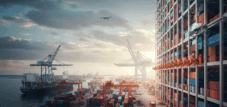
Container high-bay warehouses and container terminals: The logistical interplay – expert advice and solutions - Creative image: Xpert.Digital
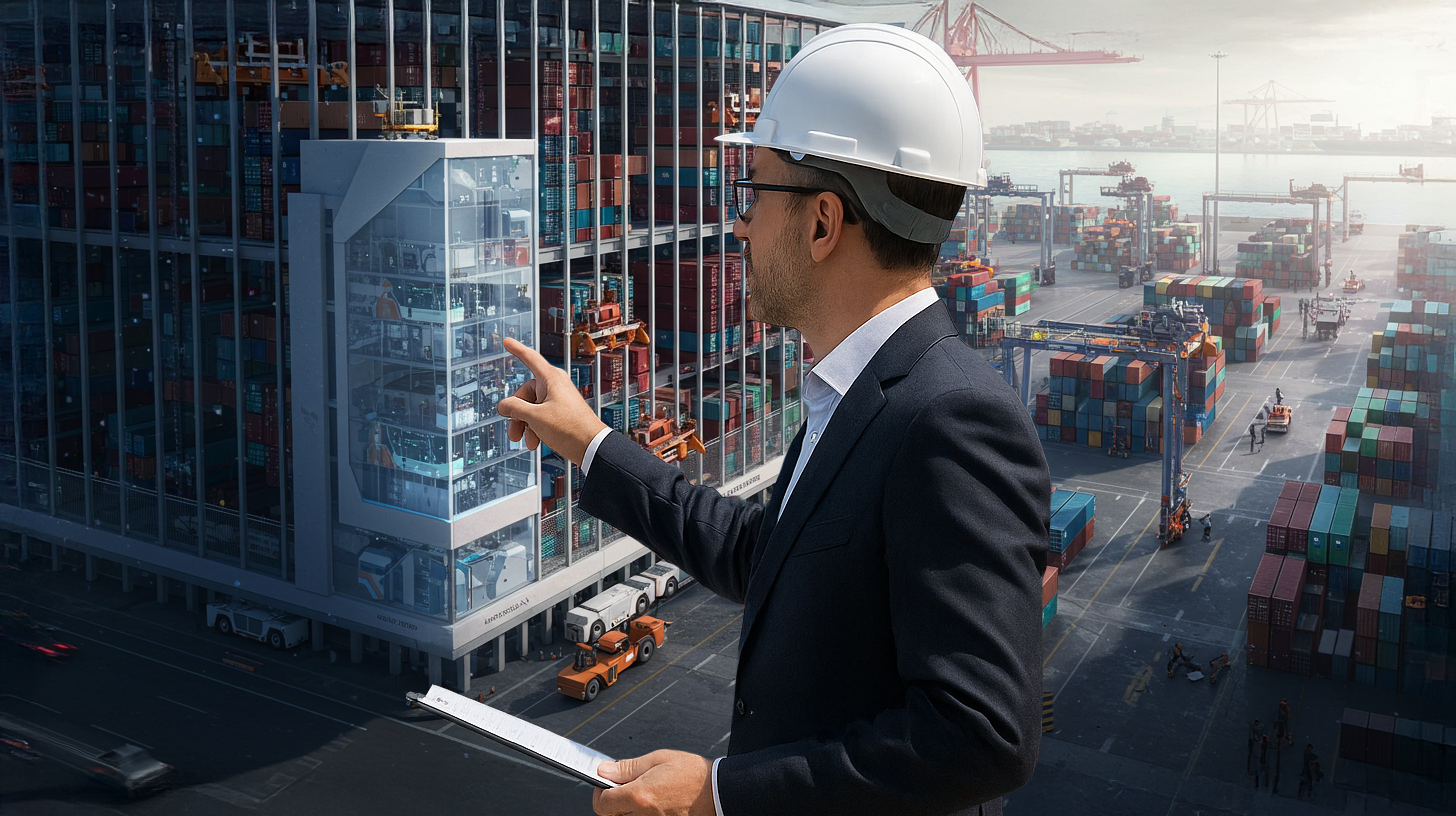
This innovative technology promises to fundamentally change container logistics. Instead of stacking containers horizontally as before, they will be stored vertically in multi-story steel racking structures. This not only allows for a drastic increase in storage capacity within the same area, but also revolutionizes all processes at the container terminal.
More information here:
How Hamburg is regaining ground in the race with Rotterdam and Antwerp
Competitive situation and port competition
How is the competitive situation developing? In other North Sea ports, especially Antwerp and Rotterdam, huge new terminals have been built in recent years. According to a study by the Hamburg School of Business Administration, some of these are technically far more modern than the newest facility in Hamburg and therefore also more productive. This is one reason why the ports in neighboring countries have gained significantly, while Hamburg is losing cargo throughput.
What alternatives are there? The Hamburg Chamber of Commerce proposes building a new container terminal in the central port area on Steinwerder. A new container terminal could increase competition in the port, as it would bring a third company to the port in addition to the existing port operators HHLA and Eurogate. However, the City of Hamburg reacted cautiously to this proposal.
Logistical importance and hinterland connections
What role does hinterland connectivity play? Hamburg is positioning itself as by far the leading rail port in Europe. The fact that all Hamburg container terminals are equipped with integrated rail terminals contributes significantly to this. In 2024, approximately 5.2 million TEUs were recorded in containerized hinterland traffic, which is more than 100,000 standard units more than in 2023. In terms of tonnage, 83.1 million tons were recorded for hinterland transport.
How does international connectivity work? The Port of Hamburg is connected to more than 900 ports in over 170 countries via shipping routes. As Germany's largest and Europe's third-largest container port, Hamburg plays a crucial distribution role for global trade flows. Container throughput with the Far East grew by 10.7 percent in the first half of 2025, while throughput with the Baltic Sea region increased by 20.8 percent.
Technical challenges and ship sizes
What ship sizes can be handled? Around 90 percent of the largest container ships arriving in Hamburg are currently handled at the Waltershof port. With the expansion of the turning circle, ships will have a larger water area available for maneuvering. The larger turning circle is intended to facilitate access to the Eurogate terminal for container ships up to 400 meters in length. This could halve the time required for necessary turning maneuvers to approximately 20 minutes.
What are the draft restrictions? The Port of Hamburg has modern container terminals designed for the world's largest container ships. The modern container cranes can move two 40-foot containers or four 20-foot containers, weighing a total of 110 tons, in a single lift. At the HHLA Container Terminal Burchardkai, there are 23 of these giants, 18 of which are so-called Megaship cranes.
Planning history and approval process
How long has the planning been underway? Planning for the western expansion has been ongoing since the 1990s. The planning approval process for the western expansion has been in progress for a long time, during which it was important to plan and approve the expansion in such a way that it would withstand any subsequent legal review.
What legal hurdles were overcome? All lawsuits against the port expansion have now been dismissed. The Hamburg Higher Administrative Court confirmed in its ruling of May 12, 2021, that the planning approval for the western expansion is lawful. The demand forecast underlying the planning approval was found to be legally sound. The considerations regarding the acceptability of emissions during the construction and operational phases for the neighborhood also contained no fundamental errors.
Jobs and regional economy
What is the significance of this project for jobs? The Port of Hamburg is a major employer, directly or indirectly supporting thousands of people. The western expansion will contribute to securing the competitiveness of the Port of Hamburg and creating new jobs. The project is considered an important investment in the port's future competitiveness.
How will this affect regional development? Hamburg is hoping for financial support from Berlin for its port expansion. According to Senator for Economic Affairs Melanie Leonhard, the best solution would be for the federal government to pay a three-figure million-euro sum annually to the North German ports for new projects and infrastructure maintenance. The project aims to further establish Hamburg as a hub for the most important shipping routes.
Sustainability and future technologies
What sustainability goals are being pursued? The port expansion is part of the path to climate neutrality by 2040. In the future, containers will be moved using electrically powered, automated vehicles. The complete electrification of handling equipment is an important step towards decarbonization. The Port of Hamburg already relies on shore power supply for cruise ships and increasingly also for container ships.
What innovative technologies are being used? The integration of digital and autonomous systems can increase the efficiency of the Port of Hamburg while simultaneously reducing its environmental impact. Intelligent warehouse management systems ensure optimal container placement and reduce unnecessary transport routes. Automated crane systems accelerate handling and lower energy consumption. At the Altenwerder Container Terminal, the smaller carriers are already operating autonomously and powered by electricity.
Impact on shipping
How will nautical safety improve? The widening of the turning circle at the entrance from the Elbe to the Waltershof port increases nautical safety and efficiency. All berths in the Waltershof port will benefit from this measure, which will improve handling efficiency. Entering and exiting Hamburg's busiest container terminal will thus become safer and faster, and navigation on the Elbe will be simpler and more resilient.
Which ship types can be handled more efficiently? With additional berths for large vessels and new container cranes, Eurogate aims to increase handling capacity. This infrastructure will ensure that large ships can continue to be handled reliably and efficiently in the Port of Hamburg. Hamburg is expanding its capacity and remains a hub for the most important shipping routes.
Land use and urban development
How is the area being prepared? To create the new port operating area, soil from the eastern tip of the peninsula north of the Petroleum Port and along the Bubendey shore will be excavated. This will fill in the existing port basin, which has been separated from the water by a dam. The project also includes the removal of the promontory and the raising of the ground level.
What impact will this have on the city's structure? The green belt of trees between the container terminal and the Airbus site is slated to disappear. Anyone sitting on the Elbe beach in Hamburg-Övelgönne has a direct view of this roughly one-kilometer-long row of trees, which is to be removed to make way for the port expansion. The newly created port area is designed to accommodate various port uses that are currently anticipated.
Market developments and forecasts
How have the cargo handling figures developed? Container throughput in the Port of Hamburg reached 7.8 million TEU in 2024, representing slight growth of 0.9 percent. In the first half of 2025, 4.2 million TEU were handled – an increase of 9.3 percent. This means Hamburg grew faster than its competitors Rotterdam and Antwerp-Bruges. However, trade with the USA plummeted by 19.3 percent due to the uncertain tariff policy.
What are the long-term forecasts? Recent forecasts continue to indicate significant growth potential for the Port of Hamburg. The original planning approval projected a container throughput of 14.5 million TEU for 2025, but this has proven to be overly optimistic. New studies have revised the growth forecast downwards, now predicting an increase to only 13.1 million standard containers by 2035.
Eurogate as terminal operator
What role does Eurogate play in the Port of Hamburg? Eurogate is one of the four major terminal operators in the Port of Hamburg, handling approximately one-third of all containers there. The other three container terminals belong to Hamburger Hafen und Logistik AG (HHLA). The Eurogate terminal shares the Waltershof port area with the Burchardkai container terminal located opposite it. Eurogate operates a total of ten seagoing vessel terminals in Europe.
How are Eurogate's throughput figures developing? At the Eurogate Container Terminal Hamburg, almost 1.5 million container units were handled from January to September 2024, representing an increase of 1.8 percent compared to the same period of the previous year. Eurogate GmbH & Co. KGaA is owned 50 percent each by Hamburg-based Eurokai KGaA and Bremen-based BLG Logistics Group AG & Co. KG.
The western expansion project is therefore a key element for the future viability of the Port of Hamburg. With an investment volume of almost two billion euros, state-of-the-art automation technology, and a significant increase in capacity, Hamburg aims not only to maintain but also to further expand its position as one of Europe's most important container ports. Despite legitimate environmental concerns and legal disputes, the project is considered indispensable for the location's competitiveness and is scheduled for completion by the mid-2030s.
Consulting - Planning - Implementation

Markus Becker
I would be happy to serve as your personal advisor.
Head of Business Development
Consulting - Planning - Implementation
Konrad Wolfenstein
I would be happy to serve as your personal advisor.
You can contact me at wolfenstein∂xpert.digital or
Just call me on +49 7348 4088 965 .