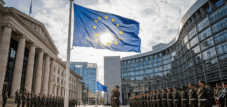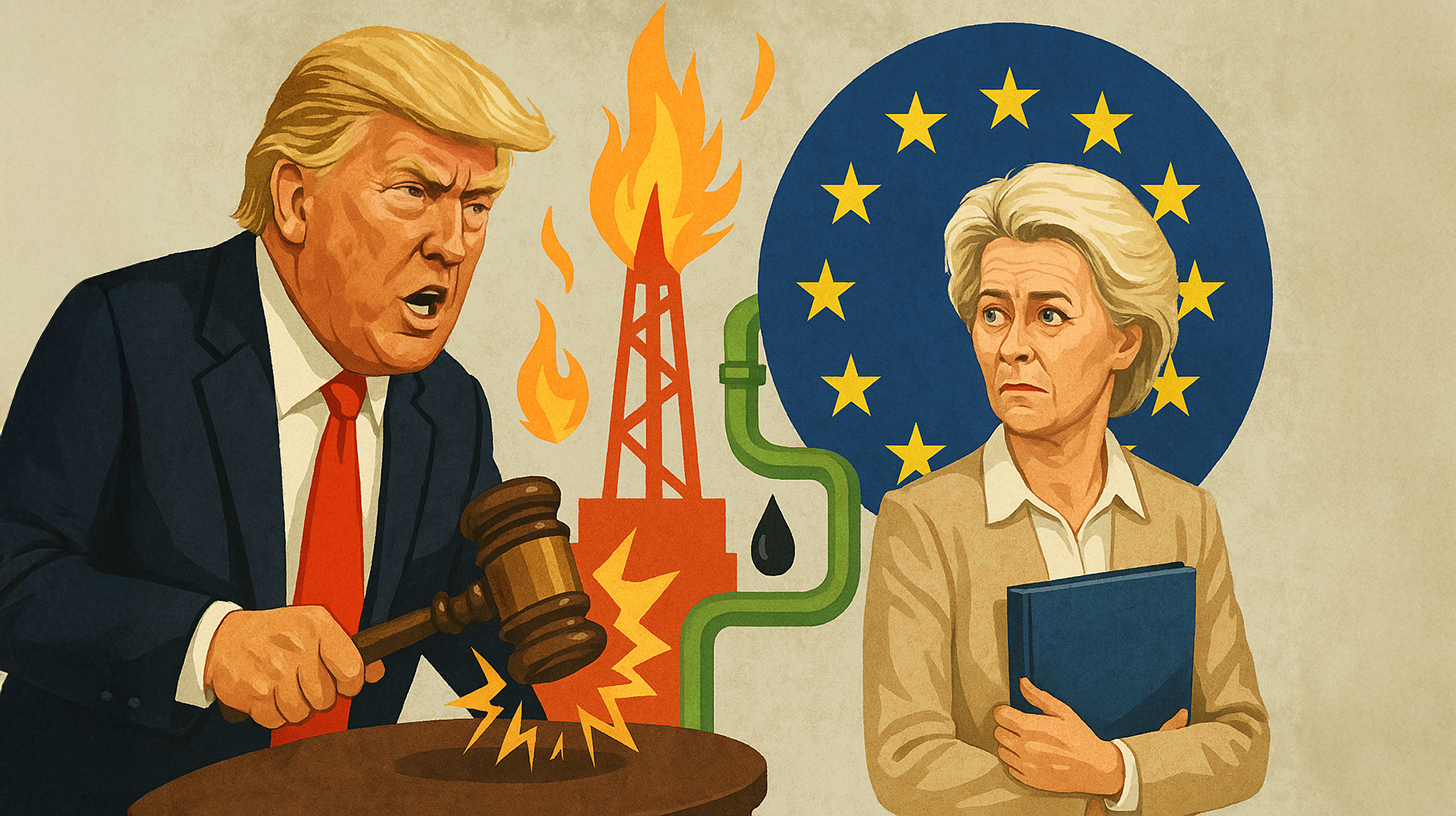
One round of ranting, please: How Donald Trump is forcing the EU Commission and von der Leyen to take action on Russia's energy – Image: Xpert.Digital
The Trump bombshell: EU plans radical cuts – no more oil and gas from Russia?
### Shocking figures: Why the EU is still paying more for Russia's energy than for aid to Ukraine ### Energy cutoff for Russia: What the new EU plan means for your heating bills and fuel prices ### Russian gas is dividing Europe: These countries are resisting the immediate import ban – is a major test of unity imminent? ### The billion-dollar loophole: How more Russian liquefied natural gas is flowing to Europe than before, despite sanctions ### The great energy transition: EU plans accelerated phase-out of Russian imports ###
Energy transition in the fast lane: Why the EU now wants to stop all gas and oil imports from Russia
The European Union is facing a dramatic acceleration of its energy transition, triggered by massive political pressure from the US. Following talks between Commission President Ursula von der Leyen and US President Donald Trump, the EU Commission is now pushing ahead with a plan to end all oil and gas imports from Russia significantly faster than previously planned. This move is a direct response to Trump's demand to completely cut off funding to Moscow before the US imposes further sanctions.
The urgency of the project is underscored by alarming figures: between February 2024 and February 2025 alone, almost €22 billion flowed from the EU to Moscow for Russian energy resources – a sum that exceeds the financial aid provided to Ukraine during the same period. Although dependence has been reduced since the start of the war, it remains a massive source of funding for Russia's war effort and a geopolitical lever. However, the path to full independence is fraught with difficulties and exposes the deep divisions within the Union. While most member states are seeking alternatives, Hungary and Slovakia, in particular, are vehemently opposed to a rapid withdrawal, citing the threat of economic disruption. The new plan is therefore not only a technical but, above all, a political test of European cohesion.
What is the current state of the discussion?
The European Union is facing a crucial phase in its energy policy. Following talks between European Commission President Ursula von der Leyen and US President Donald Trump, the Commission has announced an initiative to accelerate the cessation of all European oil and gas imports from Russia. This development comes after Trump's demand that NATO countries completely abandon Russian energy before he imposes further sanctions against Russia.
What are the economic dimensions of this problem?
The figures illustrate the scale of the challenge: In the first half of 2025, the EU imported liquefied natural gas (LNG) from Russia worth approximately €4.48 billion, representing a 29 percent increase compared to the previous year. Overall, the EU spent almost €22 billion on Russian energy resources between February 2024 and February 2025, including €9.6 billion for pipeline natural gas, €7 billion for LNG, and €4 billion for crude oil. This sum even exceeded the €18.7 billion in EU financial aid to Ukraine during the same period.
Dependence on Russian energy sources varies considerably among EU member states. In 2024, gas deliveries from Russia accounted for approximately 19 percent of all EU gas imports. Despite a significant decline since the start of the war, 13 million tons of Russian crude oil still reached the European market in 2024.
Why does the dependency persist?
This continued dependence has several reasons. Unlike with oil and coal, the EU has not yet imposed comprehensive gas sanctions. Russian gas continues to reach Europe as liquefied natural gas (LNG) via tankers and the TurkStream pipeline. Deliveries via TurkStream even increased by 6.8 percent in the first half of 2025 compared to the previous year.
The situation is particularly problematic in Hungary and Slovakia. Hungary's dependence on Russian oil rose from 61 percent before the invasion to 86 percent in 2024, while Slovakia remains almost entirely dependent on Russian supplies. These countries have raised serious concerns about the EU's plan to phase out Russian energy, citing logistical challenges and increased costs.
What plans has the EU Commission already developed?
The Commission had already presented a multi-stage plan in June 2025. This plan stipulates that new gas supply contracts with Russia will be prohibited from January 1, 2026. Existing short-term contracts are to expire by June 17, 2026, while long-term contracts are to be terminated by the end of 2027.
The Commission's original timetable stipulated that no gas imports from Russia would enter the EU until 2028. According to current plans, oil imports are to be completely halted by the end of 2027.
What does the 19th sanctions package include?
Von der Leyen announced the swift presentation of the 19th sanctions package, which will target Russian banks and the energy sector in particular, as well as the use of cryptocurrencies to circumvent sanctions. This package follows the 18th sanctions package from July 2025, which already contained comprehensive measures.
The 18th package included a reduction in the price cap for Russian crude oil from $60 to $47.60 per barrel, with an automatic adjustment mechanism. Additionally, 105 more ships in the Russian shadow fleet were listed, bringing the total number of affected vessels to 444. Sanctions were also imposed on further Russian banks, and restrictions were placed on Russian liquefied natural gas (LNG).
What role does US politics play?
Trump had made new US sanctions against Russia contingent on all NATO states agreeing to stop buying Russian oil and imposing high tariffs on Chinese imports. He described the purchase of Russian oil as "shocking" and stated that it significantly weakened the US negotiating position with Russia.
The demand is not only directed at EU member states, but also includes NATO countries like Turkey, which receives large quantities of cheap energy from Russia. This makes implementation particularly complex, as Turkey has so far shown no indication of wanting to change this situation quickly.
What practical challenges exist?
The greatest challenges lie with landlocked countries. Hungary and Slovakia are particularly affected, as they can replace heavy Russian pipeline gas with LNG delivered by ship. However, both countries have alternatives: they can obtain non-Russian oil from Croatia via the Adriatic pipeline, and the Central European market has sufficient gas supplies from the US and Qatar.
The EU Commission has proposed transitional arrangements for these countries. Deliveries via pipelines to countries without access to water and ports, linked to long-term contracts, are exempt until the end of 2027. This means that Hungary and Slovakia could continue to import large quantities of gas from Russia for the next two years.
How are energy flows currently developing?
Energy flows have changed significantly since the start of the war. While Russia's share of EU pipeline gas fell from over 40 percent in 2021 to around 11 percent in 2024, LNG imports increased. In 2024, 15.93 million tons of Russian LNG were imported into the EU, compared to 13.35 million tons in 2023 – an increase of 19.3 percent.
The most important buyer was the German federally owned company SEFE, which purchased 58 shipments with a total volume of 4.1 million tons in 2024, compared to only 12 shipments and 880,000 tons in 2023. This illustrates how the dependency persists in new forms despite sanctions.
🔄📈 B2B trading platform support – Strategic planning and support for export and the global economy with Xpert.Digital 💡


B2B trading platforms - Strategic planning and support with Xpert.Digital - Image: Xpert.Digital
Business-to-business (B2B) trading platforms have become a critical component of global trade dynamics and thus a driving force for exports and global economic development. These platforms offer significant advantages to companies of all sizes, especially SMEs—small and medium-sized enterprises—which are often considered the backbone of the German economy. In a world where digital technologies are increasingly prominent, the ability to adapt and integrate is crucial for success in global competition.
More information here:
Transparency instead of detours: How the EU wants to stop Russian energy flows
What impact do the Ukrainian attacks have on the infrastructure?
Ukraine has repeatedly attacked the Druzhba pipeline, through which Hungary and Slovakia still receive Russian oil. These attacks led to short-term supply disruptions but also highlighted the vulnerability of the infrastructure. Deliveries were resumed after each attack.
Ukraine earns approximately US$200 million annually from transit fees, a considerable sum for a war-torn country. At the same time, in 2024, Ukraine blocked its section of the pipeline for deliveries to Slovakia and Hungary in response to their pro-Russian stance.
How are the affected countries reacting?
Hungary under Viktor Orbán has adopted a particularly controversial position. The country has made no discernible effort to find alternative suppliers, even though technical solutions are available. Orbán claims that the energy security of the entire EU is at risk, although experts confirm that alternatives exist.
Slovakian Economy Minister Denisa Sakova hopes for stable supplies and no further attacks on the energy infrastructure. Since the outbreak of war, the two countries have transferred €5.4 billion to Moscow for crude oil alone – a sum sufficient to finance 1,800 Iskander-M missiles.
What economic consequences can be expected?
An accelerated phase-out of Russian energy would require significant economic adjustments. Energy prices in the EU, and particularly in Germany, rose considerably shortly after the first sanctions were imposed. In 2022 alone, EU member states spent approximately €390 billion on gas and electricity subsidies to protect households and businesses.
Although prices later stabilized at pre-crisis levels, the European Court of Auditors warned of a lack of affordability guarantees in the event of future shortages. CREA researchers estimate that Russian revenues from energy commodities would fall by a fifth if sanctions were tightened and loopholes closed.
What is the long-term strategy?
The EU is pursuing a comprehensive diversification of its energy supply. The US is already the EU's largest supplier of LNG, accounting for almost 45 percent of total imports. A recently concluded trade agreement between the EU and the US stipulates that the EU will import billions of euros in additional energy from the US over the next three years.
Member States will be required to develop national diversification plans by the end of 2025, containing concrete measures to substitute Russian energy imports. In parallel, the energy transition and the expansion of renewable energies will be accelerated to eliminate risks to security of supply and market stability.
What role do transparency and surveillance play?
A key aspect of the new strategy is improving the transparency and traceability of energy flows. Companies will be required to comprehensively document the origin of their energy imports. The Commission, in cooperation with the Agency for the Cooperation of Energy Regulators, will monitor progress.
These measures are intended to prevent Russian energy from entering the EU indirectly. The 18th sanctions package already banned the import of products made from Russian crude oil that had been refined in third countries.
What geopolitical consequences can be foreseen?
An accelerated phase-out of Russian energy would significantly alter the geopolitical balance of power. Russia would lose a key lever of economic pressure, while the EU could strengthen its strategic autonomy. However, there is a risk of renewed dependence on the US, which is already the most important alternative supplier.
Turkey, as a NATO partner, plays a particularly complex role, as it acts both as a transit country for Russian gas and as a major importer of Russian energy. Its willingness to cooperate will be crucial for the success of the new strategy.
How realistic are the chances of success?
The initiative's prospects for success are mixed. While technical alternatives exist for most EU countries, the political will for rapid change is sometimes lacking. Trump's inclusion of Turkey in his demands makes implementation even more complex, as it is unclear whether a purely EU-led initiative would suffice for him.
Experts confirm that the EU initiative would not jeopardize the energy security of Hungary and Slovakia. These countries have sufficient reserves and alternative routes. The biggest obstacles are therefore political, not technical.
What role do sanctions evasion play?
A key problem is the various methods used to circumvent existing sanctions. The 19th sanctions package is specifically targeting the use of cryptocurrencies. The 18th package already introduced stricter controls on cryptocurrencies and shadow fleet financing.
Russia's shadow fleet of aging tankers with opaque ownership structures is increasingly being used to circumvent sanctions. Besides oil transport, there are concerns about potential sabotage operations against underwater infrastructure.
How might relations with Ukraine develop?
The Ukrainian leadership supports the accelerated phase-out of Russian energy. President Zelenskyy called on allies to stop making excuses for imposing sanctions. At the same time, Ukraine is expanding its capabilities for new types of missiles to attack Russian energy infrastructure, making Russian energy imports increasingly insecure.
Tensions with Hungary have escalated further due to the attacks on the Druzhba pipeline. Zelenskyy alluded to the pipeline's name, stating that friendship with Hungary depended on its position. These bilateral conflicts are complicating the development of a unified EU strategy.
What alternatives are available?
The EU has already significantly diversified its energy supply. Besides the US, Norway, Qatar, and other countries supply gas to the EU. The Adriatic pipeline offers an alternative for Central European countries, even though the Hungarian company MOL cites capacity constraints and different oil grades as obstacles.
In the long term, the EU is focusing on accelerating the expansion of renewable energies and developing a hydrogen economy. The REPowerEU plan contains concrete targets for ramping up hydrogen production and designated areas for accelerating the expansion of renewables.
Between political will and practical hurdles
The initiative for an accelerated phase-out of Russian energy faces significant challenges. While the technical and economic alternatives are largely available, some member states lack the political will for rapid change. The link to US demands and the involvement of Turkey as a NATO partner further complicate the situation.
The success of the initiative ultimately depends on whether the EU is prepared to accept short-term economic costs and political tensions in order to achieve long-term strategic autonomy. Past developments show that despite extensive sanctions, new dependencies can arise if all loopholes are not consistently closed.
Your global marketing and business development partner
☑️ Our business language is English or German
☑️ NEW: Correspondence in your native language!

Konrad Wolfenstein
I and my team are happy to be available to you as your personal advisor.
You can contact me by filling out the contact form here wolfenstein@xpert.digital:or simply call me at +49 7348 4088 965. My email address is
I'm looking forward to our joint project.