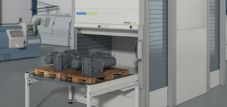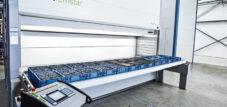
Pharmaceutical logistics – a specialized subfield of logistics and intralogistics – Image: Xpert.Digital / paulista|Shutterstock.com
Pharmaceutical logistics – a lot of effort for sensitive substances
Logistics is not a one-size-fits-all solution. This becomes particularly clear when considering the many requirements pharmaceutical products have for transport and storage. A temperature-sensitive serum, for example, has completely different needs than a painkiller. Furthermore, no other globally operating industry faces such diverse national regulations for manufacturing and distribution as the pharmaceutical industry.
Challenges from all sides
Distribution and storage of a wide range of products with diverse requirements, compliance with strict government regulations, and constant cost pressures are just some of the challenges facing pharmaceutical logistics. From the producer of raw materials to manufacturers, wholesalers, and finally to the end customer, the entire logistics chain must meet the highest standards at every stage.
It is therefore no wonder that the pharmaceutical industry's supply chain is constantly undergoing change. Global production and distribution, as well as the outsourcing of entire service sectors, have led to increasingly complex logistics chains. Control and transparency of the supply chain quickly fall by the wayside, since the traditional ERP systems of most companies are primarily designed for managing internal business processes.
At the same time, the expansion of procurement and distribution networks across national borders, market shifts by generic drug manufacturers, and an increase in temperature-controlled products are creating high market dynamics, which further intensifies the cost pressure on companies.
Further topics on the focus of warehouse optimization can be found here:
- If SEO is the optional extra, warehouse optimization is the mandatory part – methods
- Warehouse optimization methods: Warehouse optimization with order picking: 5 steps to increased productivity with optimized order picking
Complex logistics chain at pharmaceutical companies
The logistics chain is further complicated by strict government regulations (GDP guidelines, Good Distribution Practice). These regulations, based on acceptance criteria, specify requirements for transport and storage equipment and operations. To comply with these regulations, pharmaceutical logistics providers must undertake extensive modifications to their transport and storage capacities, as illustrated by the logistics chain described below.
Special measures already in place at the production site
The complex requirements begin with the storage of intermediate products in the production facilities. Based on the nature of the materials, these must be stored in different locations with differently equipped equipment.
The goods are usually either in
- conventional rack storage or automated high-bay and carousel storage systems
- in warehouses with special climate control systems to protect sensitive items and materials
accommodated.
Related to this:
- Buffer storage for the manufacturing industry
- High-bay warehouse consulting & planning: Automated high-bay warehouse – Optimize pallet storage fully automatically – Warehouse optimization
At the start of production, the preliminary products are retrieved, retrieved, and transported to the production line. Due to the high order volume, the required precision, and the time-critical processing of the materials, this process is largely automated and controlled and monitored by the companies' ERP systems. Once the process is complete, the items are temporarily stored or prepared for shipment.
Transport to the distribution center
The next hurdle is organizing the often international shipment of products to the various warehouses. Since the items have different handling requirements, this results in a virtually unmanageable number of individual transport options, posing an extremely complex task for everyone in intralogistics . A task that would be impossible to manage without precise software monitoring.
For transport by ship or plane, specially designed refrigerated containers are used to meet the requirements of the pharmaceutical industry. For example, in accordance with the applicable EU regulations for pharmaceutical transport (EU-GDP), medicines must be transported at a constant temperature between 15 and 25°C. For critical shipments, temperatures between 2 and 8°C apply.
When the goods are finally transported to the centers by truck, special trailers equipped according to current GDP guidelines are used. These include fully refrigerated trailers and temperature-controlled trucks for the delivery of sensitive goods. For the transport of mixed items with varying requirements, vehicles equipped with special thermal boxes for temperature-sensitive products are used.
Storage in the distribution center
Here, items are temporarily stored before being picked and prepared for shipment to the end customer as needed. On average, these central warehouses hold between 30,000 and 50,000 SKUs.
The selection and design of the warehouse equipment is based on adherence to strict GDP regulations. Particular attention is paid to ensuring cold chains and clean conditions in the automated storage and retrieval systems.
The most important aspect is the climate control function of the equipment. The required temperature range extends from -25°C to +60°C. For example, +60°C is needed for plastics or adhesives, +5°C for vaccines and insulin, and -25°C for enzymes or serum. To ensure constant temperatures inside the multiply insulated storage and retrieval systems, sealed airlock doors minimize air exchange during storage and retrieval. Cooling is achieved energy-efficiently using refrigerants such as carbon dioxide or propane.
For the storage of particularly sensitive substances and liquids, equipment that guarantees cleanroom conditions must be provided . These substances must be safely and dust-free separated from less sensitive and potentially contaminated substances by integrated high-speed doors within the storage unit. The airlock function is also crucial, as it minimizes direct air exchange between the inside and outside of the equipment. The storage systems are equipped with two doors for this purpose. When a tray is brought in from the inside, the front door remains closed, and only the rear door opens. The tray moves into the retrieval position, then the rear door closes, and only then does the front door open. This prevents a continuous airflow. Ventilation technology plays a decisive role in this process, as only controlled airflow ensures the necessary cleanroom conditions inside the equipment.
also places very high demands on traceability . This is partly due to the high-quality products. Furthermore, the chemical and biological processes must be so safe that they pose no risk to anyone. Material flow, as well as storage and retrieval, are therefore subject to several control mechanisms. For example, when picking goods, a pick-by-light display can show the employee exactly what to take from the staging system. In addition, the employee can manually confirm the removal and check the barcode using a scanner.
For these reasons, distribution centers for pharmaceutical products often install different storage systems in parallel. For example, alongside high-bay warehouses with space for thousands of Euro pallets and automated small parts warehouses for ready-to-ship drug packages, there are separate refrigerated and deep-freeze storage rooms or vertical lift systems with cooling or cleanroom functions. In addition, multifunctional, software-supported picking areas are provided, where items can be packed efficiently and in a resource-saving manner.
The high degree of automation serves not only efficiency but also consumer and patient protection. The GDP guidelines aim, among other things, at compliance with defined storage periods under specified environmental conditions, precise quality management, and complete traceability of articles. All of these requirements can be fully met with the use of fully automated storage systems or automated small parts warehouses . The desired zero-defect strategy can, of course, only be achieved if all hardware and software components are precisely coordinated.
Related to this:
Transport to the end customer
If no decentralized intermediate storage is used, the items are transported directly from the distribution center to hospitals, pharmacies, or end customers. Requirements for cooling and dust protection also apply here. However, given the more precisely specified customers, the final leg of the journey usually involves a smaller range of items, which simplifies the selection of the transport vehicles.

outlook
The challenges described above clearly demonstrate that pharmaceutical logistics is an area that can only be managed with a high degree of precision and effort. Looking ahead, the hurdles are expected to increase further due to rising cost factors such as ever-stricter government regulations, intensifying global competition, and the expanding range of services offered. It is therefore not surprising that many companies are becoming convinced that, for efficiency reasons, they should outsource parts of their logistics chain to external service providers or enter into partnerships with other companies.
Xpert.Plus cleanroom and pharmaceutical logistics solutions as well as warehouse optimization: pharmaceutical logistics, storage and supply chains with Industry 4.0 – IoT technology
Xpert.Plus is a project by Xpert.Digital. We have many years of experience in supporting and consulting on warehouse solutions and in warehouse optimization, which we combine under Xpert.Plus in a large network.

Konrad Wolfenstein
I would be happy to serve as your personal advisor.
You can contact me by filling out the contact form below or simply call me on +49 7348 4088 965 (Munich) .
I'm looking forward to our joint project.
Write to me


Xpert.Digital – Konrad Wolfenstein
Xpert.Digital is a hub for industry focusing on digitalization, mechanical engineering, logistics/intralogistics and photovoltaics.
With our 360° Business Development solution, we support renowned companies from new business to after-sales.
Market intelligence, smarketing, marketing automation, content development, PR, mail campaigns, personalized social media and lead nurturing are part of our digital tools.
You can find more information at: www.xpert.digital – www.xpert.solar – www.xpert.plus
Keep in touch